
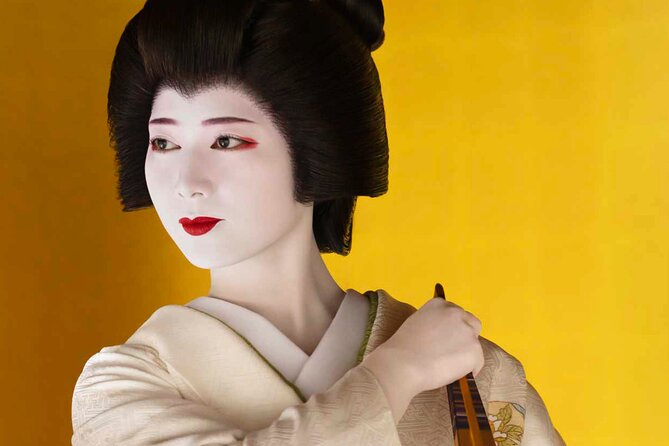
Reviewed · GION DISTRICT TOURS
Kyomai Dance by Maiko Geiko and Visits of Gion Art Museum Kyoto
The main reason to book this experience is simple: you get to see a live Kyomai dance in Gion instead of only reading about geiko and maiko culture. The performance lasts about 15 minutes and includes two songs, followed by access to the museum’s exhibits.
I like the small, focused setting, where you can see the dancer clearly, and the chance to study beautiful kimono, obi sashes, hair ornaments, and makeup tools afterward. The $20 price is fair for a short introduction, though the experience may feel too brief if you expect a full evening of entertainment.
Key points to know before you go
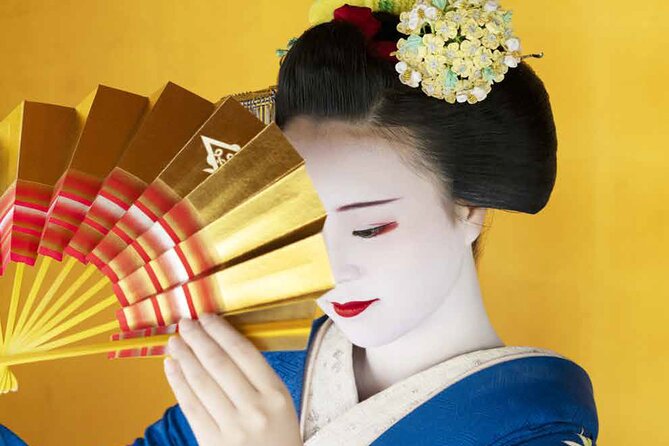
- A live Inoue-style dance: A maiko or geiko performs two songs in a traditional Kyomai style.
- A 15-minute performance: The dance is graceful and concentrated, not a long stage show.
- Museum admission included: You can see Yuzen kimono, Nishijin brocade obi, kanzashi, makeup, and personal items.
- A useful first look at Gion culture: The museum gives context that makes the dance easier to appreciate.
- Shoes come off indoors: Wear footwear that is easy to remove and put back on.
- Photography has limits: Dance photography is not allowed, but a paid photo session costs 2,000 yen per group of up to five people.
A short but memorable look at Gion culture
Kyoto’s Gion district is closely linked with geiko and maiko, the highly trained performers associated with the city’s traditional entertainment quarters. This experience gives you a controlled, respectful way to see part of that world without booking a private banquet or spending an entire evening at a formal dinner.
The setting is the Gion Kagai Art Museum, located at the Yasaka Club at 570-2 Gionmachi Minamigawa in Higashiyama Ward. The museum presents itself as the only facility devoted specifically to helping the public understand the culture of Kyoto’s kagai districts. That focus makes it more useful than a generic cultural show.
You will not receive a long theatrical production. The dance is the heart of the visit, and it is brief. The performance runs about 15 minutes, with two songs, while the full activity lasts around 20 minutes. That makes it easy to fit into a day of sightseeing around Gion, Yasaka Shrine, Higashiyama, or the nearby lanes.
More ways to walk Gion:
- Kyoto Geisha Walking Tour: Gion District & Hidden Gems
★ 4.7 · 3,273 reviews - Kyoto: Gion Magical Night Walking Tour with Geisha Trivia
★ 4.9 · 2,393 reviews - Kyoto: Gion Geisha District Walking Tour – Stories of Geisha
★ 4.7 · 2,187 reviews
What the Kyomai performance is like
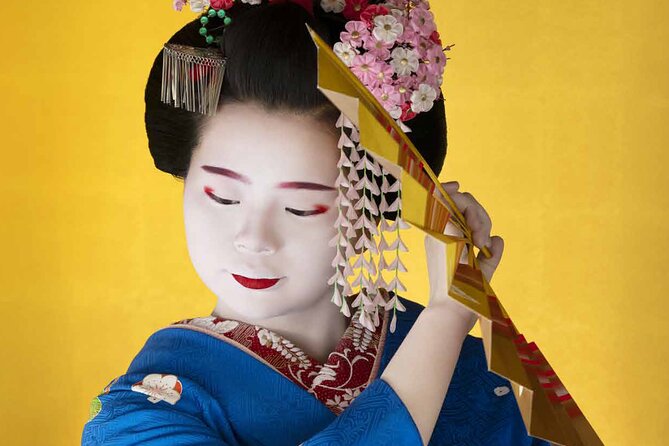
The dance is performed in the Inoue style of Kyomai, or Kyoto dance. A geiko or maiko takes the stage in traditional dress and presents carefully controlled movements, gestures, and musical expression.
The performance’s short length is both its strength and its limitation. I like the fact that you can watch closely without committing half a day to a cultural program. If you are curious about geiko traditions, this is enough time to see the form, posture, costume, and restraint that make Kyomai different from a modern dance show.
You should also set your expectations correctly. This is not a fast, dramatic spectacle. The movements are subtle, and the mood is formal. One critical response described the performance as too simple, and that reaction makes sense if you are hoping for a large production with several performers or a long explanation in English.
For many people, the simplicity is the point. The dancer’s movements are precise rather than flashy. You are seeing a traditional art form in a setting designed to keep attention on the performer, not on stage effects.
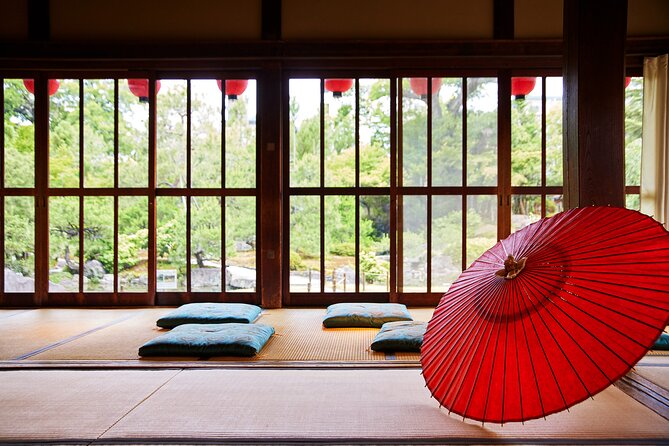
The performance is held in an atmospheric banquet-room setting. The venue details indicate that groups are kept fairly small, with the booking limited to a maximum of 25 people. A small room matters here because Kyomai depends on details that can be lost in a large theater. You should have a much better view of the costume and hand movements than you would at a major stage show.
Photography of the dance is not allowed. This is worth knowing before you arrive, especially if you are hoping to document every part of the visit. If you want a picture with the maiko, a separate photo session costs 2,000 yen per group, with a maximum of five people.
Visit the museum before the dance
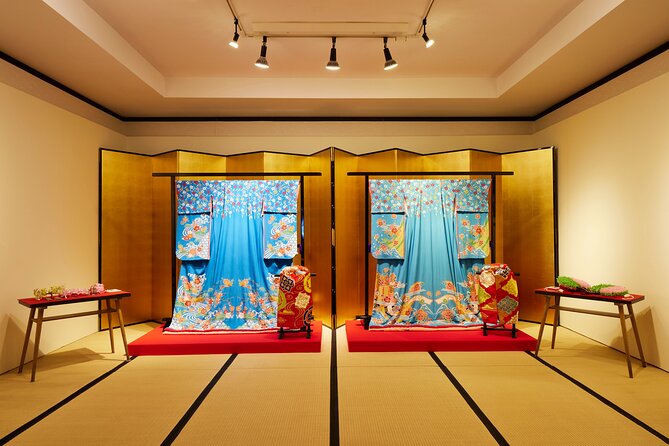
The museum is not just an add-on to fill time. I recommend looking through the permanent exhibit before the performance if your schedule allows. Seeing the clothing, accessories, and personal items first gives you more to notice when the dancer appears.
The collection covers several parts of geiko and maiko culture. You might see:
- Hand-painted Yuzen kimono
- Nishijin brocade obi sashes
- Seasonal kanzashi hair ornaments
- Makeup used by maiko
- Personal belongings
- Black crested formal kimono
These objects help explain the work behind the appearance. A kimono is not simply a costume, and a kanzashi is not just decoration. Seasonal details, fabric, color, and formal dress all carry meaning within the traditional world represented here.
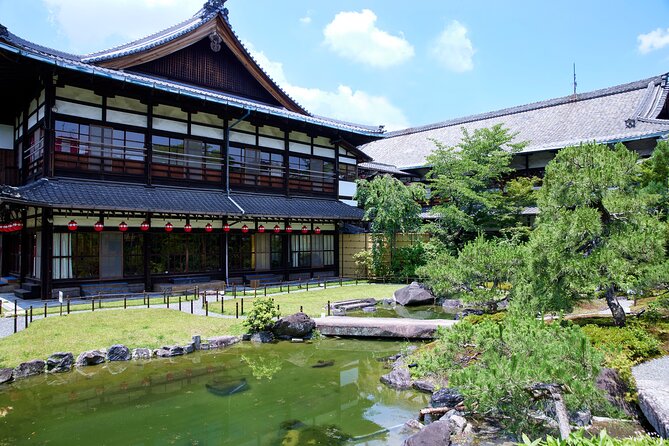
The museum also has a beautiful garden. It is a helpful pause before or after the performance, especially if you need a quiet moment during a busy day in Kyoto. Families should note that the museum may hold a child’s attention less easily after the dance, though the garden gives younger children a little room to move around.
Do not rush through the exhibits. The performance is short, so the museum is where you can add depth to the visit. You can look closely at the clothing and accessories, then return to the dance with a clearer sense of what you are seeing.
How the two stops fit together
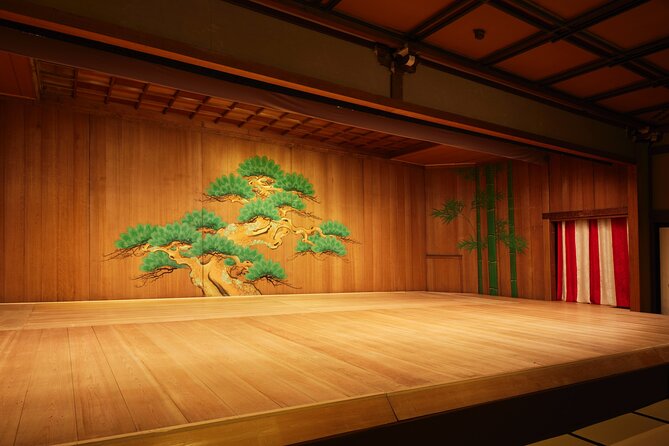
The experience refers to the Gion Kobu Kaburenjo Theater and the Gion Kagai Art Museum. The meeting point listed for the activity is the Gion Kagai Art Museum at the Yasaka Club, and the activity ends back at that meeting point.
The first stop introduces Gion Kobu and the traditions of Kyoto’s kagai district. The area has passed down its customs for more than three centuries, and the visit is framed around that continuity.
The museum stop includes both the performance and the permanent exhibition. Admission and the dance are included in the price, so you do not need to arrange separate tickets for those parts.
Since the entire experience is short, check your scheduled performance time and arrive ready to use the museum visit well. Going early is a smart choice because you can examine the displays before sitting down for the dance. The venue is near public transportation, making it practical to add before or after other Gion sights.
More geisha and maiko evenings in Kyoto:
- Best of Kyoto: Gion, Geisha, Pagodas & Cobblestones
★ 4.9 · 2,058 reviews - Night Walk in Gion: Kyoto’s Geisha District
★ 4.5 · 2,003 reviews - Kyoto Gion Geisha District Walking Tour – The Stories of Geisha
★ 5.0 · 1,441 reviews - Kyoto Gion: 2-Hour Geisha Culture & History Walking Tour
★ 5.0 · 1,186 reviews
Is $20 good value?
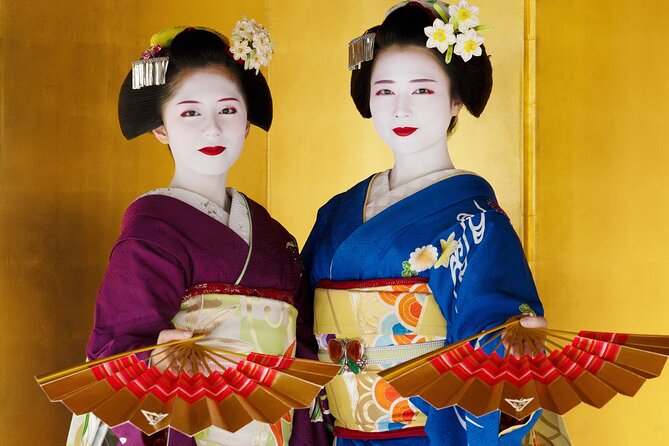
At $20, this is a reasonably priced cultural stop in central Kyoto. You are paying for museum admission and a live dance, not just a quick photo opportunity. The value is strongest if you want a first introduction to geiko and maiko traditions but do not want to arrange a costly private experience.
The price is less attractive if you measure value only by time. Twenty minutes is short, and the actual dance takes about 15 minutes. If you are looking for a full afternoon activity, this will not fill the gap.
The museum improves the calculation. You are not simply watching two songs and leaving. You can look at the permanent exhibit, study the garden, and use the visit to understand the setting. The activity becomes a compact cultural lesson rather than only a performance.
The included mobile ticket also makes the visit simple. You can show your ticket at the venue instead of dealing with a separate admission purchase. Still, it is worth checking the direct price at the museum when planning your day, since one visitor found that buying directly might be cheaper and that several performance times were available. Prices and availability can change, so compare before booking.
Practical details that affect your visit
Wear shoes that are easy to remove. Visitors are required to take off their shoes before entering the building, and slip-on footwear will save time and fuss.
Keep your phone and camera ready for the museum, but follow the photography rules during the dance. Dance photography is prohibited. The separate photo session is optional and costs 2,000 yen for a group of up to five people.
The experience is suitable for most people, and service animals are allowed. It is located near public transportation, though the supplied details do not identify a specific station or route. Use the full address when planning your walk: Gion Kagai Art Museum, Yasaka Club, 570-2 Gionmachi Minamigawa, Higashiyama Ward, Kyoto, 605-0074.
The booking confirmation arrives at the time of reservation. Free cancellation is available if you cancel at least 24 hours before the start time. Within 24 hours, you will not receive a refund, and changes are not accepted.
Who will enjoy this experience most
I would choose this activity if you have a clear interest in Kyoto’s traditional arts, clothing, or geiko culture. It is also a good first-night activity because it gives you a gentle introduction to Gion without requiring a long evening commitment.
Families can attend, and one 10-year-old enjoyed the visit. Still, younger children may lose interest during the museum portion, and quiet behavior is important during the dance. The garden helps, but this is not designed as a children’s entertainment show.
The experience also suits photographers who want to study kimono and accessories, but not those expecting to photograph the performance. You can take in the visual details, then pay for the optional portrait session if you want a formal keepsake.
If you already understand Kyomai or have attended a longer geiko performance, you may find this too basic. The presentation is best seen as an introduction, not a complete look at the life and training of a geiko or maiko.
Should you book it?
Book this experience if you want an affordable and compact way to see a real Kyomai performance in Gion. The museum’s kimono, obi, kanzashi, and makeup displays add useful context, and the intimate room helps you see the dancer clearly.
Skip it if you want a long show, extensive narration, or a large cast. At roughly 20 minutes, this is a small cultural encounter. Go early, explore the museum first, remove your shoes without a fuss, and treat the dance as a quiet glimpse into Kyoto’s traditional performing arts.
FAQ
Where does the experience start?
It starts at the Gion Kagai Art Museum, Yasaka Club, 570-2 Gionmachi Minamigawa, Higashiyama Ward, Kyoto, 605-0074, Japan.
Where does the experience end?
The activity ends back at the meeting point.
How long does the experience last?
The full activity lasts approximately 20 minutes. The Kyomai dance itself lasts about 15 minutes and includes two songs.
Who performs the dance?
A geiko or maiko performs the Kyomai dance in the Inoue style.
What is included in the ticket?
Admission to the Gion Kagai Art Museum and the dance performance are included. All fees and taxes are also included.
What can I see in the museum?
The permanent exhibit includes Yuzen kimono, Nishijin brocade obi sashes, seasonal kanzashi hair ornaments, maiko makeup, personal belongings, and black crested formal kimono.
Can I take photographs during the dance?
No. Photography during the dance is not allowed.
Is a photo session available?
Yes. An optional photo session costs 2,000 yen per group, with a maximum of five people.
Do I need to remove my shoes?
Yes. Shoes must be removed before entering the building.
What happens if I need to cancel?
You can receive a full refund if you cancel at least 24 hours before the experience start time. Cancellations or changes made within 24 hours are not accepted, and the amount paid is not refunded.
More Museums in Kyoto
- Kyoto: Tea Museum Tickets and Matcha Grinding Experience
★ 4.9 · 739 reviews - Skip the lines Basic Ticket at SAMURAI NINJA MUSEUM KYOTO
★ 4.5 · 632 reviews - Kyoto : Geiko Maiko Dance of Kyoto & Visits of Gion Museum
★ 4.6 · 415 reviews - Kyoto Sword Experience – includes Museum Ticket/Ninja Experience
★ 4.5 · 149 reviews
Newest Kyoto experiences on the site
- Treasures of Kyoto: Gion & historical Walking Tour★ 5.0 · 6 reviews
- Whisk Your Own Matcha: A Zen Matcha Experience at Temple★ 3.6 · 7 reviews
- Kyoto tea town for matcha lovers★ 5.0 · 16 reviews
- Uji: Private immersion into Kyoto’s tea and reglious culture★ 5.0 · 17 reviews
- Kyoto Matcha Green Tea Tour★ 4.5 · 23 reviews
- Uji and Wazuka Matcha Farm Half Day Private Guided Tour★ 5.0 · 21 reviews
- Utilising upcycled Matcha! Creating matcha incense (Uji, Kyoto)★ 5.0 · 6 reviews
- Sacred Temple Yoga Experience in Japan★ 5.0 · 3 reviews
Gion District Tours, compared.

Kyoto Geisha Walking Tour: Gion District & Hidden Gems
Read our review →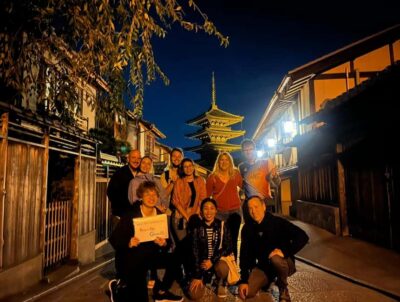
Gion Magical Night Walking Tour with Geisha Trivia
Read our review →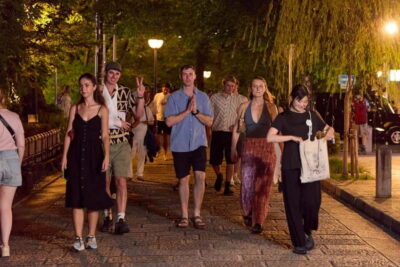
Gion Geisha District Walking Tour – Stories of Geisha
Read our review →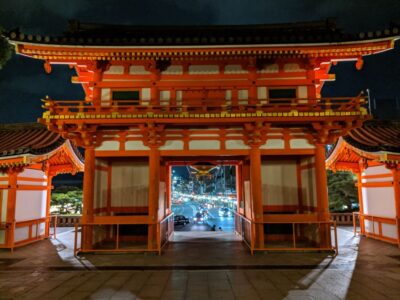
Best of Kyoto: Gion, Geisha, Pagodas & Cobblestones
Read our review →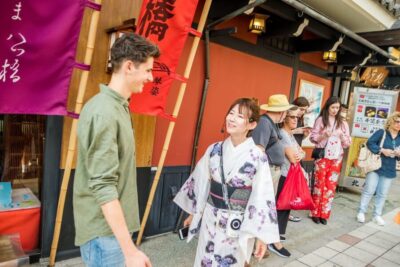

Kyoto Night Foodie Tour in Gion (9+ dishes + 6 Sake tastings)
Read our review →
Kyoto Gion Geisha District Walking Tour – The Stories of Geisha
Read our review →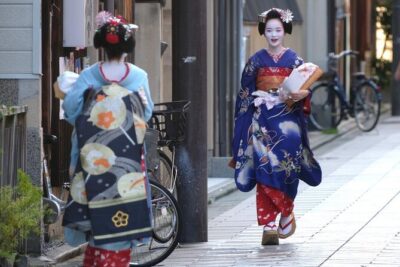
Kyoto Gion: 2-Hour Geisha Culture & History Walking Tour
Read our review →Browse the lists this tour appears in