
Reviewed · KYOTO TEA CEREMONIES
Traditional Tea Ceremony with Matcha and Sweets in Kyoto
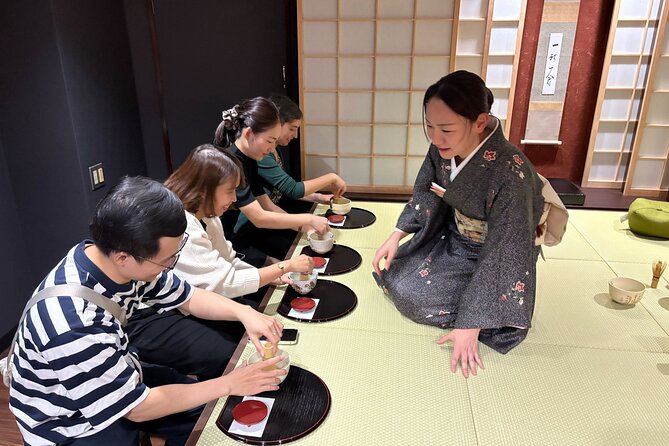
Kyoto’s tea ceremony can look solemn and mysterious from the outside. This one-hour experience opens the door without making you sit on the floor or pretend you already understand the rules. In Gion, a tea master explains the history, Zen ideas, and careful movements behind chanoyu, then lets you prepare your own matcha.
I like two things right away: chair seating makes the session easier for people unused to kneeling, and the class includes both a demonstration and hands-on practice. The second half also pairs the tea with traditional sweets from long-established artisans, which gives the ceremony a tasty, practical finish.
The main consideration is its short length. At about an hour, you get a clear introduction rather than a full study of tea culture. That suits most sightseeing schedules, but anyone seeking a long, highly formal ceremony may find this format too brief.
Key points at a glance
- A one-hour introduction in Gion: You learn the basics of chanoyu without giving up half a day.
- Tea masters explain the meaning: The session covers tea history, Zen philosophy, and omotenashi, or Japanese hospitality.
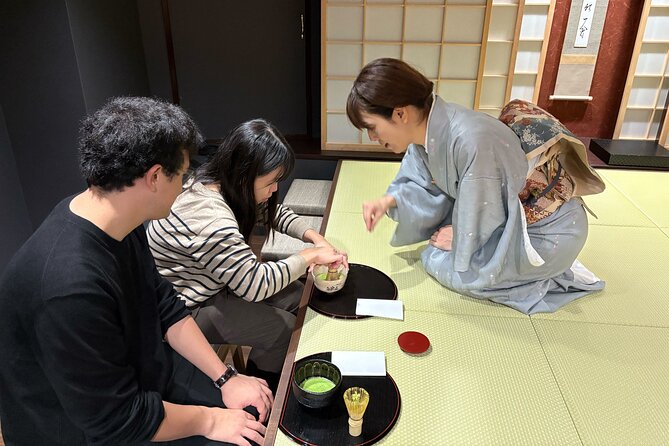
- You make your own matcha: After watching the proper technique, you whisk a bowl yourself using tea from a family-run farm.
- Traditional sweets are part of the lesson: Carefully selected confections help you understand how Japanese tea is served.
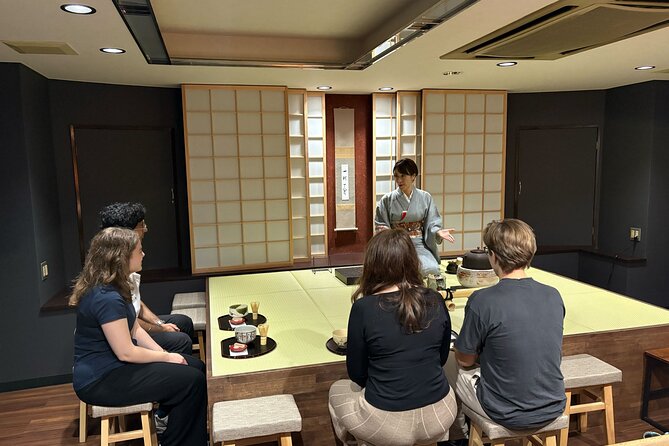
- Chairs replace floor seating: This makes the experience more approachable for people with limited mobility or little practice sitting on the floor.
- Small group, mobile ticket: The class allows a maximum of 13 people and ends where it begins.
Starting in Gion, Kyoto’s tea-country setting
The meeting point is at 1 Yamatocho, in Kyoto’s Higashiyama Ward, inside the Gion Tanakaya Building, postal code 605-0802. This puts you in one of Kyoto’s best-known historic districts, where traditional architecture and tea culture are part of the setting rather than a distant museum display.
You will start and finish at the same location. That simple arrangement matters in Kyoto, where a one-way tour can leave you guessing which station or street to find next. Here, you can continue exploring Gion afterward or move on to another part of the city without arranging a separate return transfer.
The location is near public transportation, though the supplied details do not name a specific station or give walking directions. I would save the address on your phone before setting out. The mobile ticket is useful for the same reason: you can keep the booking details together rather than carrying paper.
The group is capped at 13 people. That is not a private lesson, but it is small enough for the demonstration to remain visible and for the question period to have some value. If everyone asks several questions, the short schedule may feel full, so think of this as a compact cultural class rather than an extended private tutorial.
More tea ceremonies in Kyoto:
- Kyoto: Tea Ceremony in a Traditional Tea House in Kiyomizu
★ 4.9 · 3,519 reviews - Kyoto: Tea Ceremony Ju-An at Jotokuji Temple
★ 4.9 · 3,207 reviews - Kyoto: 45-Minute Tea Ceremony Lesson Experience
★ 4.3 · 2,378 reviews
What happens before you touch the tea
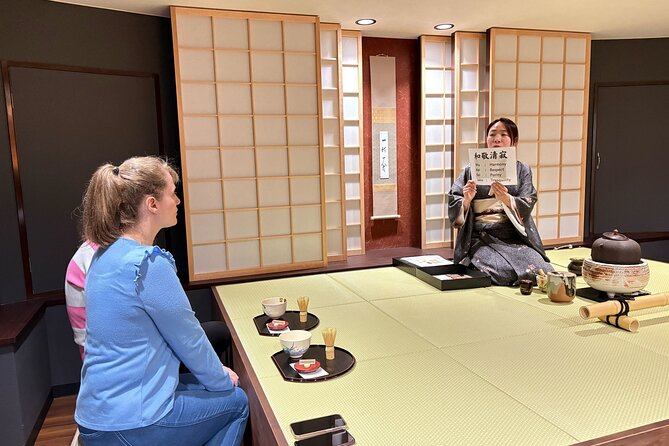
The first part is about understanding what you are seeing. A tea master introduces the history of tea in Japan and explains how Zen thought helped shape the ceremony’s attention to calm, order, and the present moment.
That explanation is important because the movements can seem overly precise if you see them without context. The placement of a bowl, the way tea is whisked, and the sequence of actions are not random decoration. They express care, hospitality, and respect for the people sharing the room.
You will hear about omotenashi, the Japanese idea of attentive hospitality. In this setting, it is not simply a matter of serving a drink. It includes preparing the space, choosing suitable sweets, handling the utensils carefully, and making the other person feel considered.
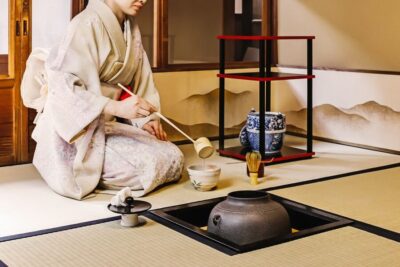
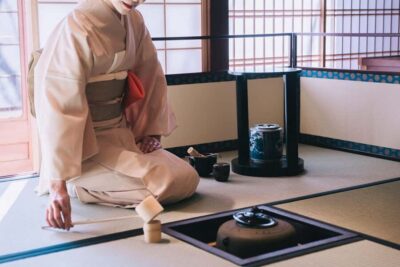
The tea master then demonstrates the ceremony up close. This is where the experience gains much of its value. A video or a quick explanation can tell you what to do, but watching the hand movements in person helps you notice the quiet rhythm and discipline of the practice.
The instructors’ personal connection to the subject is also part of the appeal. Mitsune is associated with a friendly, informative presentation, while Yuki is especially noted for explaining the philosophy behind the ceremony and showing how closely she connects with it. The exact instructor may depend on the session, so do not book on the assumption that one named guide is guaranteed.
Making matcha instead of only watching
The second half turns you from observer into participant. After the demonstration, you prepare your own bowl of matcha. That hands-on step is the part you are most likely to remember, because it turns an abstract cultural lesson into a physical task.
You will use premium tea sourced from a family-run farm. The details provided do not identify the farm or explain the tea’s particular growing region, so do not expect a tasting lecture focused on agricultural production. The point here is to connect the drink in your bowl with the care behind its ingredients and preparation.
Whisking matcha looks easy until you try to create the right texture. The experience gives you a chance to follow the tea master’s method and see how the drink changes as you work. You do not need prior experience, and the format is designed for first-time participants.
This is not a test of your technique. The value comes from trying the process, noticing the sound and movement of the whisk, and understanding why preparation is treated as part of the ceremony rather than as a rushed step before drinking.
The matcha itself has been praised as delicious, but taste is personal. Matcha has a strong, grassy character that can be unfamiliar if you normally drink black tea or coffee. The traditional sweets help balance that flavor and make the tasting easier for newcomers.
Why the sweets matter
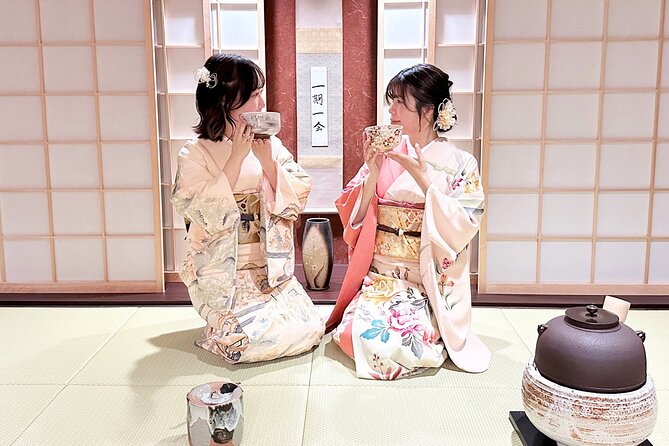
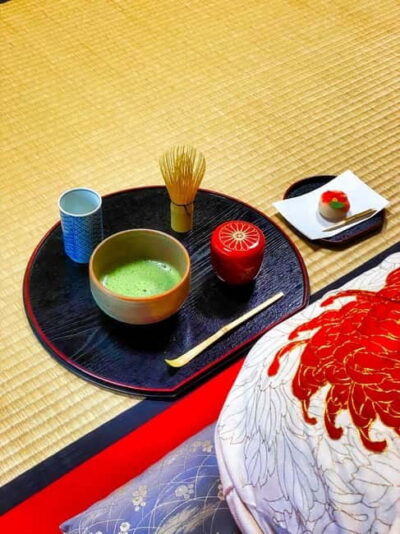
The sweets are not an afterthought. They are carefully selected traditional confections from long-established artisans, and they help show how Japanese tea service balances bitterness with sweetness.
You will savor the sweets during the second half of the session, alongside your matcha. This gives you a small lesson in contrast: the tea brings a firm, earthy taste, while the confection adds sweetness and texture. The pairing makes the experience feel more complete than a simple matcha-making class.
The supplied details do not name the individual sweet makers or specify exactly which treats will be served. That means you should not book expecting one particular confection. Instead, think of the sweets as a seasonal or carefully chosen part of the tasting, with the selection determined by the provider.
I particularly like this part for visitors who want a gentle introduction to Japanese food culture. You are not only watching a ritual. You are tasting the relationship between the ingredients, the utensils, and the way the food is presented.
More matcha experiences in Kyoto:
- Kyoto: Arashiyama Bamboo Forest, Monkeys, Matcha & Temple Tour
★ 5.0 · 759 reviews - Kyoto: Tea Museum Tickets and Matcha Grinding Experience
★ 4.9 · 739 reviews - Kyoto: Tea Ceremony Meditation – Make Matcha with Tea Master
★ 4.8 · 406 reviews - Kyoto: Kimono Tea Ceremony with Matcha and Sweet
★ 4.9 · 249 reviews
Chair seating changes the tone
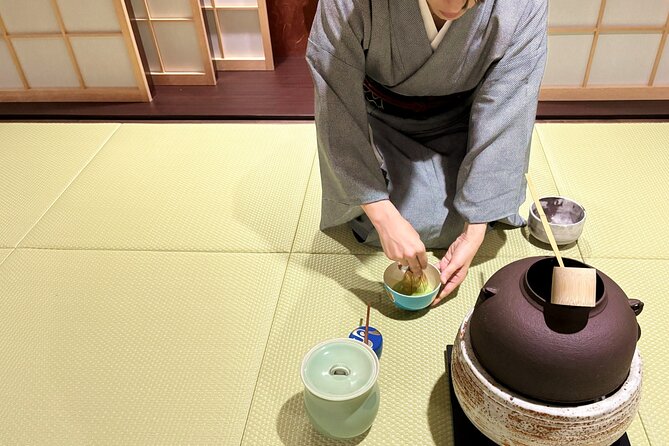
Traditional tea ceremony is often associated with sitting on the floor in a formal posture. That can be difficult if you have limited mobility, stiff knees, or simply no practice with floor seating.
This experience uses chairs. That does not remove the ceremony’s key ideas, but it changes the physical demand and makes the class easier to approach. You can concentrate on the explanation and the movements rather than worrying about how long you can kneel.
The description specifically presents the seating as suitable for people unfamiliar with floor seating or with limited mobility. It does not promise full accessibility for every condition, so you should contact the provider if you need details beyond chair seating.
The chair format also supports the experience’s general mood. This is a welcoming introduction, not a strict examination of etiquette. You are still learning about a formal art, but the setup gives first-time participants room to watch, ask, and try.
The final questions are worth using
The session ends with a Q&A. Use it. The ceremony has many small details, and the answers can help connect the observed movements with daily Japanese customs, Zen thought, and the host’s own practice.
You may want to ask about the meaning of a particular gesture, how matcha differs from other Japanese teas, why sweets are served first or alongside the drink, or how formal ceremonies differ from this shorter introduction. The available information confirms that questions are part of the ending, but it does not promise a set list of topics or a private question period.
Because the activity lasts only about an hour, keep your questions focused. A small group of up to 13 people can cover plenty of ground, but a long discussion may not fit into the schedule. The question period is best seen as a chance to clear up what you noticed, not as a full lecture after the ceremony.
The value of $22.86
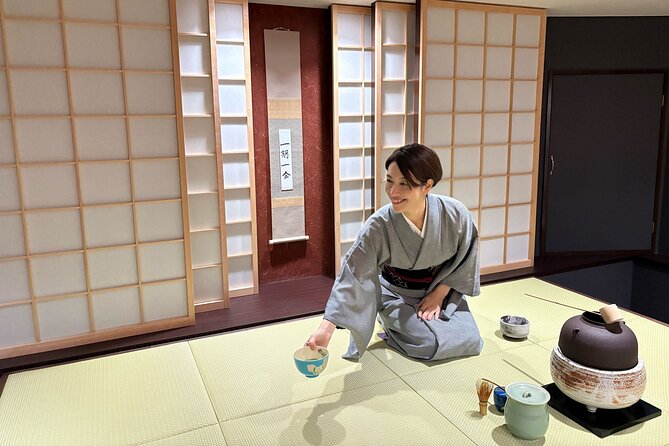
At $22.86 per person, this is a reasonably priced cultural activity in central Kyoto. You receive instruction from a tea master, a demonstration, sweets, premium matcha, your own preparation attempt, and a Q&A. The one-hour length keeps the total cost down and makes it easier to fit into a busy sightseeing day.
The value depends on what you want. If you mainly want a photo in a kimono or a very formal performance with little explanation, this may not be the right choice. The emphasis here is learning and participation, not costume or spectacle.
If you want a short, structured way to understand a familiar symbol of Japanese culture, the price is easier to justify. A tea ceremony can be confusing when you only see it from a distance. This class explains the purpose behind the actions and lets you try the central skill yourself.
The strong rating of 4.9 from 13 reviews and a 100 percent recommendation record suggest that the teaching style has landed well with the people who booked it. Those figures come from a small sample, so I would treat them as encouraging rather than conclusive. The repeated praise centers on clear explanations, a warm welcome, the instructors’ passion, and the taste of the matcha.
Who will enjoy this Kyoto activity most
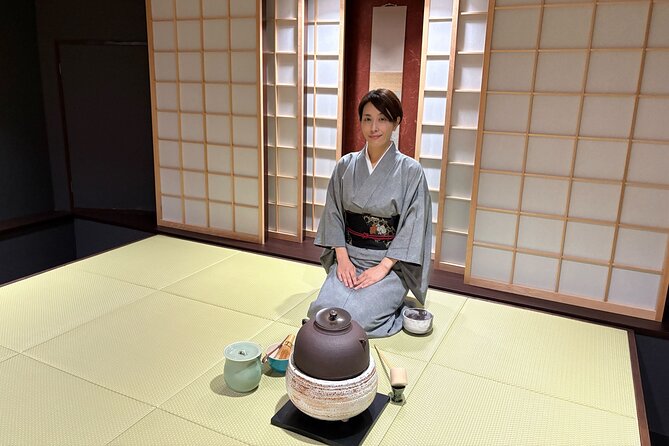
I would recommend this experience to first-time visitors who want more than a quick photo of a tea room. It gives you enough history and philosophy to understand what you are seeing, without asking you to commit to a long study session.
It also suits returning visitors who have already walked through Gion and want a quieter activity with a clear cultural focus. The class provides a different way to experience the district, one that depends less on sightseeing and more on attention.
Families and mixed-age groups may find the chair seating useful, though the supplied details do not specify a minimum age or a child price. Anyone booking with children should confirm those points directly.
People with limited mobility may prefer this format over a floor-based ceremony, since chairs are provided. Still, chair seating is the only accessibility detail given, so contact Japan Wonder Travel if you need more specific arrangements.
I would be less likely to choose it if I wanted a full-length, highly formal ceremony conducted entirely in traditional floor seating. The welcoming, modern approach is its strength, but it also means the experience is intentionally simplified.
Practical planning in Gion
Plan for about one hour, plus the time needed to reach the meeting point and continue your day afterward. Since the activity ends back at the starting location, you can pair it neatly with other time in Higashiyama and Gion.
Bring a phone with the mobile ticket available. Confirmation is provided at booking, and the activity is near public transportation. Since no detailed station instructions are provided here, check your route before leaving rather than trying to work it out on a narrow Gion street.
Arrive ready to listen and participate. You do not need prior knowledge of tea ceremony, and the class is built for beginners. You also do not need to worry about producing a perfect bowl of matcha. The tea master’s role is to show you the method and help you understand the practice.
Cancellation is free if you cancel at least 24 hours before the local start time. Changes or cancellations made less than 24 hours ahead are not accepted for a refund, so keep that cutoff in mind when arranging a Kyoto schedule that may change with the weather.
Should you book this tea ceremony?
Book it if you want an affordable, compact introduction to Japanese tea culture in Gion, especially if you value explanation, hands-on practice, and a relaxed setting. The chair seating, small maximum group, sweets, and final Q&A make it friendly to beginners.
Skip it if you want a long, strictly formal ceremony or a detailed tasting focused on specific tea farms and confectioners. For most visitors, though, this is a sensible way to slow down for an hour, learn why the ceremony matters, and leave Kyoto having whisked a bowl of matcha yourself.
FAQ
How long does the tea ceremony last?
The experience lasts approximately one hour.
Where does the activity meet?
It begins at Japan, 605-0802 Kyoto, Higashiyama Ward, Yamatocho, 1, inside the Gion Tanakaya Building. The activity ends back at the same meeting point.
Is floor seating required?
No. Participants sit on chairs, which makes the experience easier for people unfamiliar with floor seating or with limited mobility.
Will I make my own matcha?
Yes. After watching the tea master demonstrate the techniques, you prepare your own bowl of matcha using premium tea sourced from a family-run farm.
Are sweets included?
Yes. The experience includes carefully selected traditional sweets from long-established artisans.
Can I cancel for a full refund?
Yes, if you cancel at least 24 hours before the experience’s local start time. Cancellations or changes made less than 24 hours before the start time are not accepted for a refund.
More Wagashi Workshops in Kyoto
- Kyoto: Japanese Traditional Sweets Making and Tea Ceremony
★ 4.4 · 314 reviews - Kyoto Wagashi(Japanese sweets) Cooking Class near Fushimiinari
★ 5.0 · 60 reviews - Kyoto: Wagashi (Japanese sweets) Cooking near Fushimiinari
★ 5.0 · 40 reviews - Kyoto: Traditional Tea Ceremony with Matcha & Sweets in Gion
★ 4.9 · 27 reviews
Newest Kyoto experiences on the site
- Treasures of Kyoto: Gion & historical Walking Tour★ 5.0 · 6 reviews
- Whisk Your Own Matcha: A Zen Matcha Experience at Temple★ 3.6 · 7 reviews
- Kyoto tea town for matcha lovers★ 5.0 · 16 reviews
- Uji: Private immersion into Kyoto’s tea and reglious culture★ 5.0 · 17 reviews
- Kyoto Matcha Green Tea Tour★ 4.5 · 23 reviews
- Uji and Wazuka Matcha Farm Half Day Private Guided Tour★ 5.0 · 21 reviews
- Utilising upcycled Matcha! Creating matcha incense (Uji, Kyoto)★ 5.0 · 6 reviews
- Sacred Temple Yoga Experience in Japan★ 5.0 · 3 reviews
Kyoto Tea Ceremonies, compared.
Tea Ceremony in a Traditional Tea House in Kiyomizu
Read our review →
Tea Ceremony in 100-year-old Kyo-Machiya Townhouse
Read our review →
Browse the lists this tour appears in