
Reviewed · KYOTO TEA CEREMONIES
Kyoto: Japanese Traditional Sweets Making and Tea Ceremony
The most appealing part of this Kyoto experience is that you do not simply watch a confectioner work. You color white bean paste, shape it into seasonal flowers or fruit, and then eat your creations with matcha you prepare yourself. It is a small, hands-on look at a food tradition that can otherwise feel rather mysterious.
I like the excellent $18 price and the use of bean paste from long-established Kyoto shops. I also like the relaxed, creative work: the sweets are pretty, but you do not need expert craft skills to take part. The main thing to consider is that this is an introduction, not a formal tea ceremony in a historic tea house. English support is available, but the level may vary.
- Make two seasonal nerikiri sweets from colored white and red bean paste.
- Prepare single-origin Uji matcha and learn basic tea etiquette.
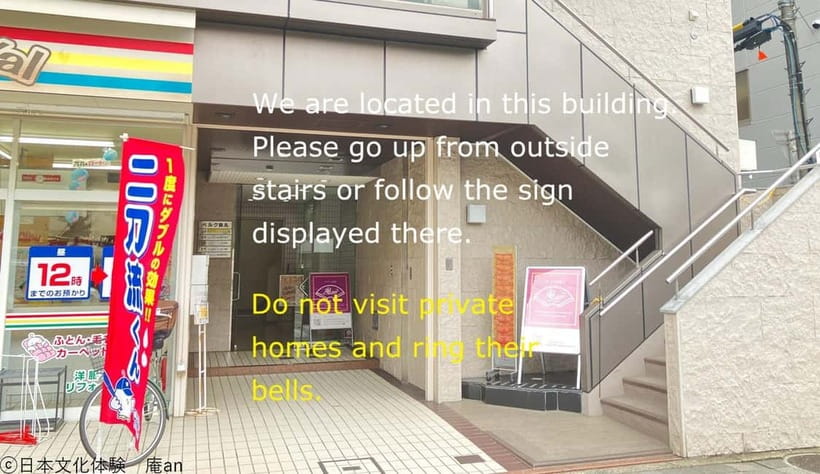
- Meet at Gojo Station, just one minute from Exit 1 on Gojo-dori.
- Expect a 95-minute class with a Japanese-speaking instructor and English help when requested.
- Plan for stairs, since the building has no elevator.
- Bring patience for a mixed-language class, especially during busy sessions.
Why This Small Kyoto Class Works So Well
Kyoto is famous for temples, gardens, and tea houses, but its food culture deserves equal time. This class gives you a taste of Kyoto through two linked crafts: wagashi, the traditional sweets served with tea, and matcha preparation.
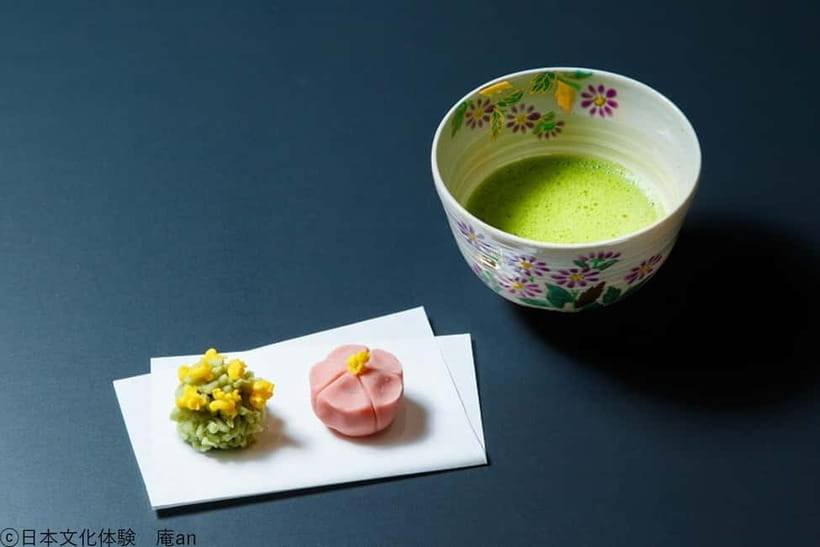
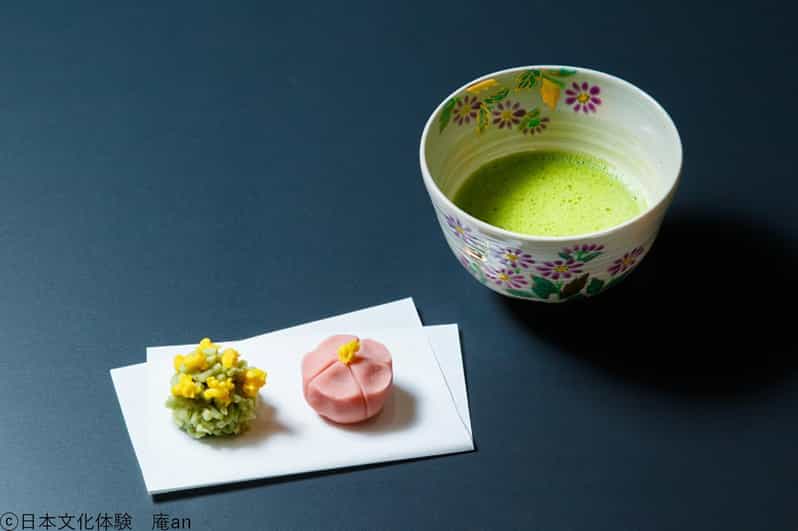
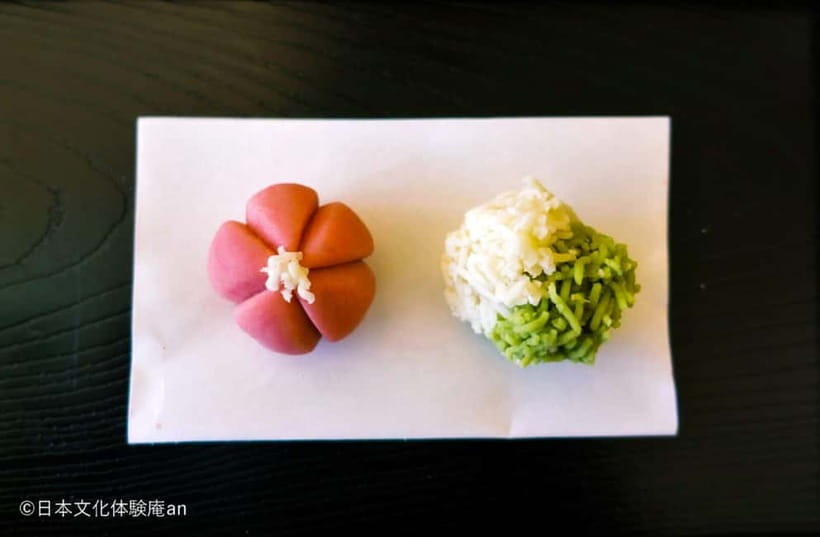
The sweets are called nerikiri, a refined confection made mainly from white bean paste. The paste is colored and shaped to suggest seasonal flowers, leaves, fruit, or other natural forms. You are not starting with raw beans or making mochi from scratch. Instead, the prepared paste lets you focus on the delicate coloring and shaping, which is exactly what makes this activity manageable within 95 minutes.
I see the class as a good fit for someone who wants more than a photo stop but less than a full culinary course. You get to use your hands, learn a few cultural details, and enjoy the result before moving on with your Kyoto day.
The setting is practical rather than grand. The venue is about one minute from Exit 1 of Gojo Station on the Subway Karasuma Line, with the entrance facing Gojo-dori. That easy location matters, especially if you are fitting this into a day of sightseeing around central Kyoto.
Coloring and Shaping Two Seasonal Nerikiri
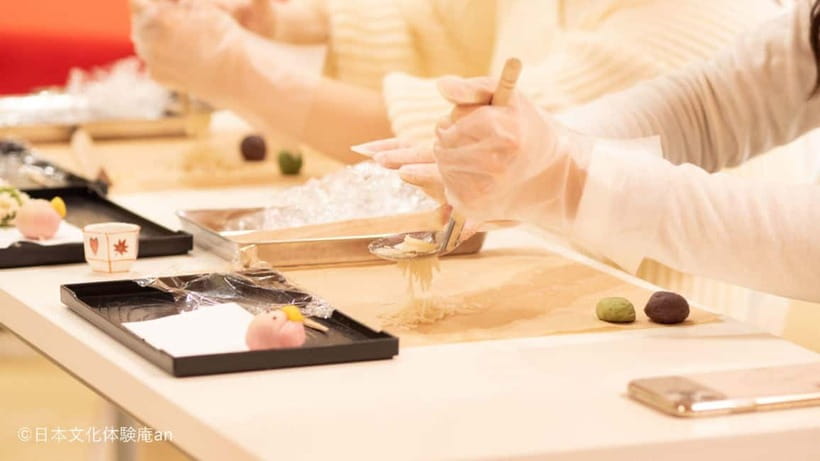
The first part centers on the sweets. You begin with white bean paste and add color before shaping it into two designs that match the season. The exact forms change through the year, so spring, autumn, and other seasons may bring different colors and motifs.
This is the most playful part of the class. You can copy the instructor’s method, then adjust the shape with your fingers and simple tools. The process rewards care rather than speed. A neat result is satisfying, but a slightly uneven flower still tastes just as good.
The use of paste made by established Kyoto shops adds value. You are working with the same kind of high-quality base associated with refined Japanese sweets, rather than a generic mixture chosen only for convenience. The flavor is gently sweet, with the bean paste providing the soft, smooth center.
A useful expectation check: this is assembly and shaping, not a professional confectionery lesson. You will not spend the session cooking bean paste, building a full wagashi business, or learning every stage of production. That is not a flaw for most visitors. It keeps the activity friendly and lets you leave with two finished sweets.
The work is also low intensity. You sit, listen, copy the demonstration, and shape the paste at your own pace. Parents have found the activity suitable for children, including children around elementary and early secondary school age. Younger children may need help with the finer steps.
More tea ceremonies in Kyoto:
- Kyoto: Tea Ceremony in a Traditional Tea House in Kiyomizu
★ 4.9 · 3,519 reviews - Kyoto: Tea Ceremony Ju-An at Jotokuji Temple
★ 4.9 · 3,207 reviews - Kyoto: 45-Minute Tea Ceremony Lesson Experience
★ 4.3 · 2,378 reviews
Learning Matcha Etiquette After the Sweets
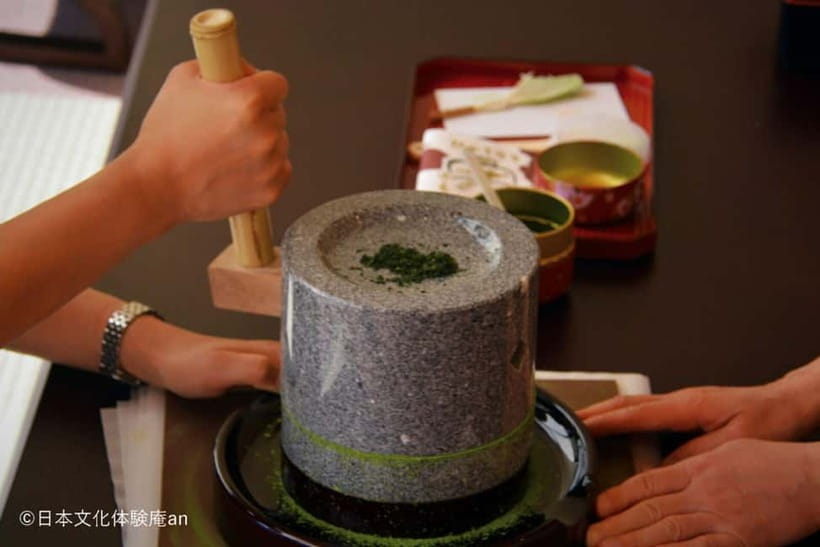
After making the nerikiri, you prepare matcha using single-origin Uji tea. Uji, near Kyoto, is one of Japan’s best-known tea-producing areas, so this gives the drink a clear connection to the region.
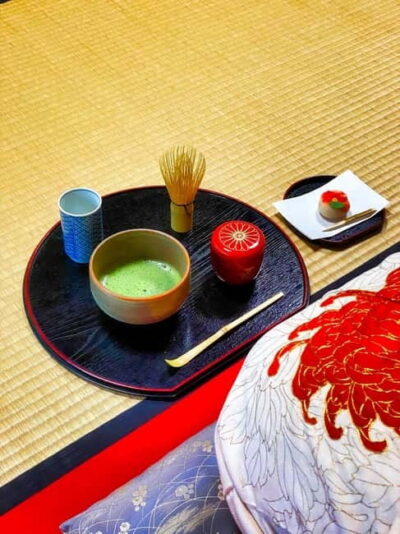
The matcha portion covers basic preparation and manners. You learn how to handle the bowl, whisk the powder, and drink it according to simple tea etiquette. The sweet is traditionally eaten with the tea because its sugar softens matcha’s bitter, grassy edge.
This part is useful because matcha can seem formal when you first encounter it. A short explanation of how to turn the bowl, when to eat the sweet, and how to drink the tea makes the custom less intimidating. You are not expected to perform a complete tea gathering.
The phrase tea ceremony needs a little care here. The experience uses tea ceremony customs, but the format is closer to a hands-on matcha lesson than a long, formal ceremony. The session may move quickly, and the focus is on participation and etiquette rather than quiet ritual in a traditional tea room.
Timing can affect the feel of this section. If another class is taking place nearby, the room may be noisier, and a few people have found it harder to hear. A larger group can also make the tea portion feel less personal. If a full ceremonial performance is your main goal, I would choose a dedicated tea house experience instead.
Japanese Instruction With English Help
The official teaching language is Japanese. English translation is provided as much as possible, and the instructor may shift between Japanese and English when it is clear that international participants need help.
In practice, the English support can vary by session. Some instructors have explained each step clearly in English and made sure everyone kept up. Other sessions have relied more on visual demonstration, simple phrases, and copying the instructor’s hands.
That is usually enough for the sweets because the process is visible. You can watch the color being added and follow the shaping technique. Matcha etiquette is more dependent on spoken explanation, so ask politely when you miss a detail.
I would not book this class expecting a long lecture in polished English. I would book it if you are comfortable learning through demonstration, gestures, and short explanations. The class has worked well for English speakers, but the experience is strongest when you bring a little flexibility.
The instructors are repeatedly described as friendly, patient, and attentive. Some sessions have included Japanese students alongside international participants, which can give the room a more local feel than a class made only for overseas visitors. That mixed setting may also explain why the language balance changes from one date to another.
A Good 95 Minutes for Families and First-Time Visitors
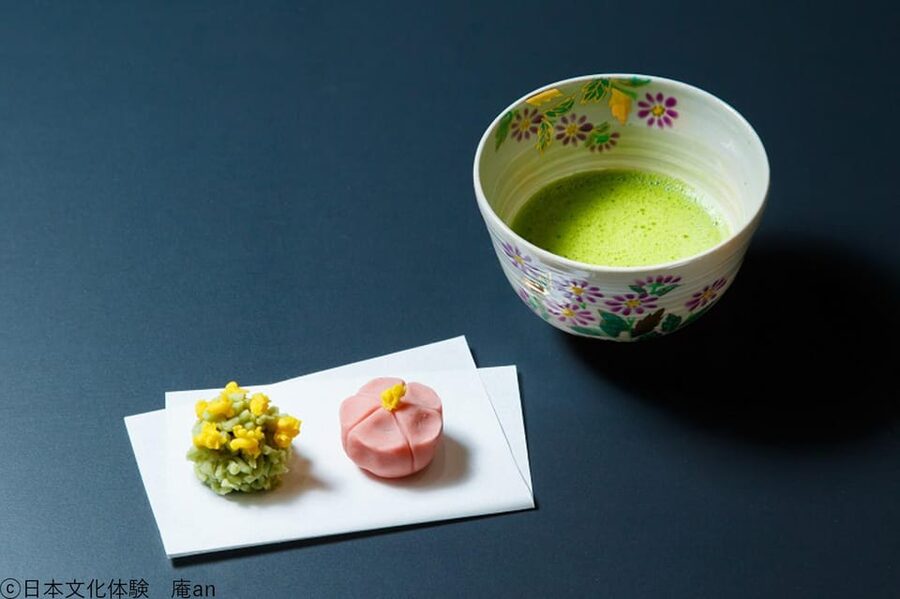
Ninety-five minutes is about right for this activity. You have enough time to make two sweets and prepare matcha without turning the class into an all-day commitment.
The pace is generally gentle. The instructions are broken into small steps, and the instructor can help if your shape goes astray. You do not need previous cooking experience or knowledge of Japanese tea customs.
Families should find the format approachable. The sweets offer an immediate goal, while the matcha gives older children a cultural lesson with a clear ritual. The work is seated and low intensity, which also makes it a sensible choice on a hot, rainy, or tiring Kyoto afternoon.
The activity also suits couples and solo visitors. Making two sweets gives you enough to stay occupied without creating a large amount of food. It is a pleasant change from walking through another temple when you want a quieter indoor stop.
You should arrive on time. The class cannot be held for delayed participants, and the provider does not pause the event because someone is late. Since the venue is close to Gojo Station, finding the building is simple, but you still need to allow time to leave the station and locate the entrance facing the main street.
More wagashi and sweets workshops in Kyoto:
- Kyoto Wagashi(Japanese sweets) Cooking Class near Fushimiinari
★ 5.0 · 60 reviews - Kyoto: Wagashi (Japanese sweets) Cooking near Fushimiinari
★ 5.0 · 40 reviews - Kyoto: Traditional Tea Ceremony with Matcha & Sweets in Gion
★ 4.9 · 27 reviews - Japanese Traditional Sweets ”Nerikiri” making
★ 4.3 · 17 reviews
What $18 Really Buys You
At $18 per person, this is one of the easier Kyoto activities to justify. The price includes the sweets-making and tea experience, plus the ingredients and instruction needed to take part.
The value comes from the combination. A short craft session alone might feel thin, and a brief matcha demonstration alone might feel too passive. Together, the two parts create a clear beginning, middle, and end: prepare the sweets, make the tea, then eat and drink what you made.
You can add a sweets take-out box for 100 yen if you want to carry your creations away. There is also a 300-yen completion certificate, but neither extra is required. The sweets are meant to be enjoyed during the class, so you do not need to spend more unless you specifically want a souvenir or certificate.
The price is especially good for families and budget-conscious visitors. You receive a cultural activity, edible results, and a regional ingredient connection without paying for an elaborate setting. The tradeoff is that the venue is functional, and the tea portion may not have the ceremony, silence, or individual attention found at a more expensive specialist experience.
Practical Details Before You Book
The meeting point is one minute from Exit 1 of Gojo Station on the Subway Karasuma Line. The entrance faces Gojo-dori, so look for the street-level access rather than relying only on the station name.
The operation runs from 10:00 to 17:00. Reservations received after 17:00 are handled the following day. The experience lasts 95 minutes, and starting times depend on availability.
The building has no elevator, and you need to use stairs to reach the venue. The activity is described as wheelchair accessible, but this stair information is important. If you use a wheelchair or have difficulty with stairs, contact the provider before booking to confirm how access is handled for your specific needs.
Children under two can attend free when sitting on a parent’s lap. Non-participants cannot enter, so every person who plans to join the room should be included in the reservation.
Cancellation is free up to 24 hours before the experience for a full refund. After that point, a fee applies, including when a date or time is changed after the fee has started. The provider also does not cover your travel costs if you cancel.
Who Should Choose This Experience
I would choose this class for a first visit to Kyoto when you want a hands-on cultural activity that does not require a full day. It is particularly good for families, couples, food-minded visitors, and anyone curious about matcha but unsure how the traditional customs work.
It is also a smart rainy-day option. The class gives you a break from wet streets, and the focused activity helps you slow down after a busy morning of sightseeing. In hot weather, an air-conditioned classroom can be a welcome pause.
You should think twice if your priority is a formal tea ceremony. The matcha section teaches the basics and includes etiquette, but it is brief. A busy session may include other groups, background noise, or a larger crowd than expected.
You should also be comfortable with a Japanese-led class. English help is available and can be quite good, but it is not guaranteed to be equally detailed in every session. Watch closely, ask questions, and treat the language difference as part of the experience rather than a reason to worry.
Should You Book the Kyoto Sweets and Matcha Class?
Book it if you want a friendly, affordable introduction to Kyoto food culture. Making two seasonal nerikiri, whisking Uji matcha, and eating the results gives you more to remember than a simple demonstration. The short walk from Gojo Station and 95-minute schedule make it easy to fit into a busy itinerary.
Skip it if you want a full tea ceremony in a historic setting, highly polished English instruction, or a serious pastry course. For everyone else, the low price, seasonal sweets, helpful instructors, and chance to create something with your own hands make this a strong Kyoto value.
FAQ
How long does the Japanese sweets and tea experience last?
The experience lasts 95 minutes.
How much does the activity cost?
The listed price is $18 per person.
Where is the meeting point?
The venue is one minute from Exit 1 of Gojo Station on the Subway Karasuma Line. The entrance faces Gojo-dori.
Is English instruction available?
The instructor teaches in Japanese, and English translation is provided as much as possible. You can contact the provider if you would like English support added.
Can I take the sweets home?
A sweets take-out box is available for 100 yen. It is not included in the activity price.
Can I cancel for a full refund?
You can cancel up to 24 hours in advance for a full refund. Cancellation fees apply after that point.
Newest Kyoto experiences on the site
- Treasures of Kyoto: Gion & historical Walking Tour★ 5.0 · 6 reviews
- Whisk Your Own Matcha: A Zen Matcha Experience at Temple★ 3.6 · 7 reviews
- Kyoto tea town for matcha lovers★ 5.0 · 16 reviews
- Uji: Private immersion into Kyoto’s tea and reglious culture★ 5.0 · 17 reviews
- Kyoto Matcha Green Tea Tour★ 4.5 · 23 reviews
- Uji and Wazuka Matcha Farm Half Day Private Guided Tour★ 5.0 · 21 reviews
- Utilising upcycled Matcha! Creating matcha incense (Uji, Kyoto)★ 5.0 · 6 reviews
- Sacred Temple Yoga Experience in Japan★ 5.0 · 3 reviews
Kyoto Tea Ceremonies, compared.
Tea Ceremony in a Traditional Tea House in Kiyomizu
Read our review →
Tea Ceremony in 100-year-old Kyo-Machiya Townhouse
Read our review →
Browse the lists this tour appears in