Reviewed · PRIVATE
Private Japanese Sound Bath in Kyoto
The unusual heart of this Kyoto activity is the Singing Ring, a Japanese harmonic instrument made by hand. You lie down, close your eyes, and let Junichiro play around you before placing a bowl on your body so you can feel the vibration as well as hear it.
I like the total privacy, with no unrelated people added after your booking, and the thoughtful setup of a heated mat, blanket, and eye mask. Junichiro also explains what is happening clearly, which helps if this is your first sound bath.
The main consideration is that this is a quiet, passive hour rather than a sightseeing tour. You need to be comfortable lying still, and the traditional tatami-room option is at a separate venue, so you must follow the post-booking directions carefully.
Key things to know before booking
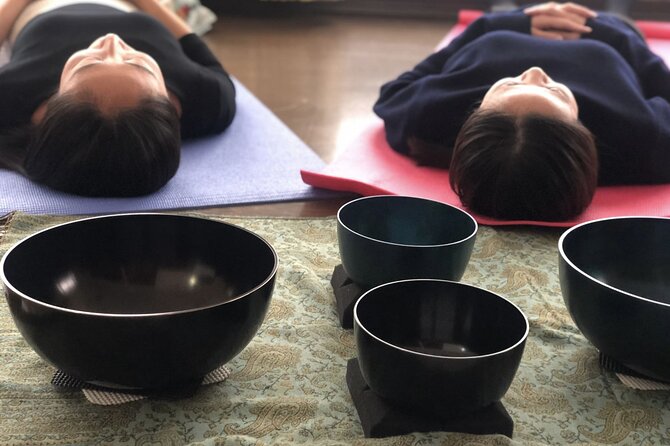
- Handmade Japanese Singing Ring: The session centers on a special harmonic instrument crafted by Japanese artisans.
- Private for up to two people: Your time slot is reserved for your party, with no unrelated participants added afterward.
- Body-level vibration: Junichiro may place the bowls on your body, allowing you to feel the sound through vibration.
- Comfortable one-hour format: The full appointment lasts about 80 minutes, including the session itself.
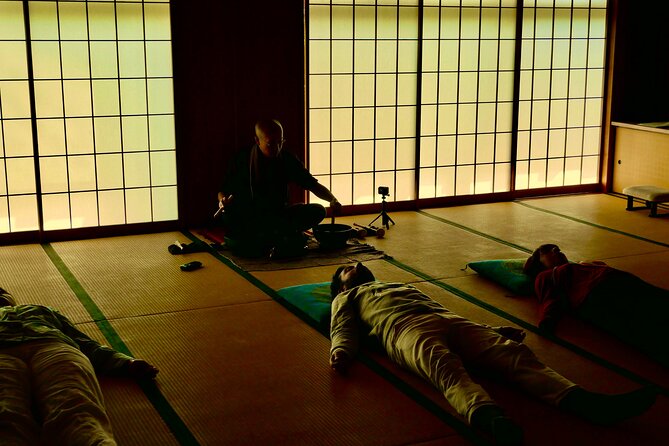
- Possible tatami-room setting: A traditional Japanese room is available as an option at a separate venue.
- Easy cancellation window: You receive a full refund if you cancel at least 24 hours before the start time.
A Japanese sound bath, not a temple tour
Kyoto offers endless temples, gardens, lanes, and food stops. This activity gives you something different: a quiet pause in which you do almost nothing.
The central session lasts 60 minutes. You lie on a mat while Junichiro creates layered sounds with Japanese instruments. At points, he plays beside you. At other points, he places a bowl on your body so the vibration becomes physical.
That change matters. A normal concert keeps sound at a distance. Here, the sound reaches you through the air and through the mat or your body. You may notice the low hum first, followed by smaller tones and fading echoes. The goal is relaxation, not performance in the usual sense.
You do not need prior meditation or sound-bath experience. The structure is simple enough for a first visit: arrive, settle in, listen, and let the session end at its own pace. Junichiro explains the process, so you are not left guessing what to do.
The activity uses the language of stress relief and inner peace. It is best to treat that as the purpose of the session, not as a medical promise. This is a wellness activity designed to help you rest and focus, not a substitute for medical care.
A few more Kyoto tours worth putting on the shortlist
- PERFECT KYOTO 1-Day Bus Tour
★ 5.0 · 13,518 reviews - Kyoto: Fushimi Inari, Kinkakuji, Bamboo Grove 1 Day Bus Tour
★ 4.8 · 4,316 reviews - Kyoto: Tea Ceremony in a Traditional Tea House in Kiyomizu
★ 4.9 · 3,519 reviews
Meeting Junichiro near central Kyoto
The meeting point is Little Granmy Kyoto at 85-10-203 Koinaricho, Shimogyo Ward, Kyoto 600-8208. It is near public transportation, but the address may not be instantly obvious if you are new to Kyoto’s compact streets and building numbers.
One useful touch is that Junichiro has met people at a nearby FamilyMart to help them find the place. If you are worried about getting lost, read the directions sent after booking and allow extra time. A calm arrival makes a real difference when the activity itself is meant to settle your mind.
The mobile ticket keeps the booking simple. Confirmation arrives within 48 hours, subject to availability. Since the activity is often booked about 38 days ahead, last-minute planners should not assume a preferred time will be free.
The end point is the same as the meeting point. You do not need to arrange a separate ride at the end, though you should confirm the directions for the exact room before setting out.
Settling onto the heated mat
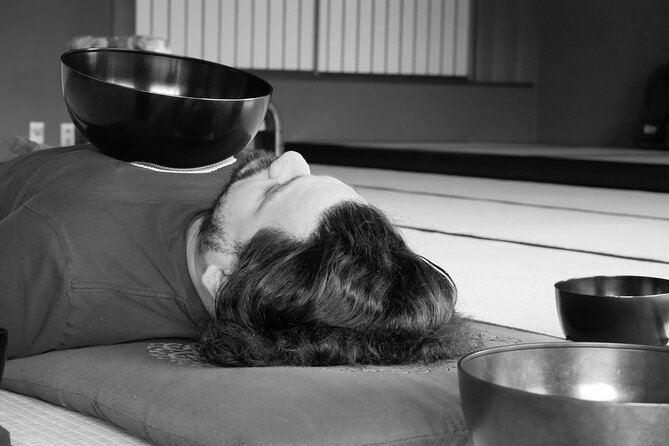
The first practical surprise is how little equipment you need. You lie on a heated mat with a blanket and eye mask. That setup helps you stop watching the room and gives your body a clear signal that the hour is for rest.
The heated mat is especially useful in a quiet room, where you may otherwise notice small discomforts. Still, lying still for a full hour is not for everyone. If you have trouble with floor-level seating or need to change position often, ask about comfort when arranging the session.
The eye mask is a small but useful detail. Kyoto can be visually busy, even indoors, and removing the visual part of the room makes it easier to pay attention to sound. You are not asked to perform a complicated breathing routine or follow a difficult meditation method.
Junichiro begins by explaining the process and then plays near you. His manner has been described as friendly and reassuring, which matters for anyone who has never tried a sound bath. The instructions are not the point of the activity, but clear guidance lets you relax sooner.
Hearing and feeling the Singing Ring
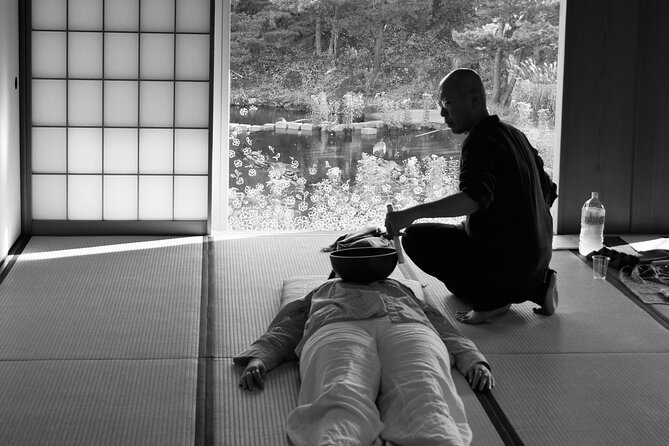
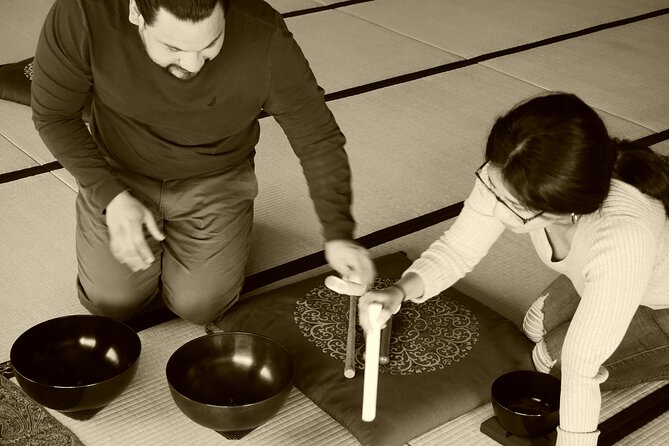
The main attraction is the instrument itself. The Singing Ring is described as a special harmonic instrument made one by one by Japanese artisans. That gives the session a more specific identity than a generic sound bath using familiar meditation bowls.
You hear the tones from beside the mat first. The sound is the part you expect from a sound bath, but the physical vibration adds another layer. Junichiro may place the bowl on parts of your body during the session, allowing you to feel the resonance directly.
That contact is gentle in concept, but you should only participate if you are comfortable with it. If you prefer not to have an instrument placed on your body, explain that before the session begins. The supplied information does not spell out a detailed medical screening process, so anyone with health concerns should use personal judgment and ask questions in advance.
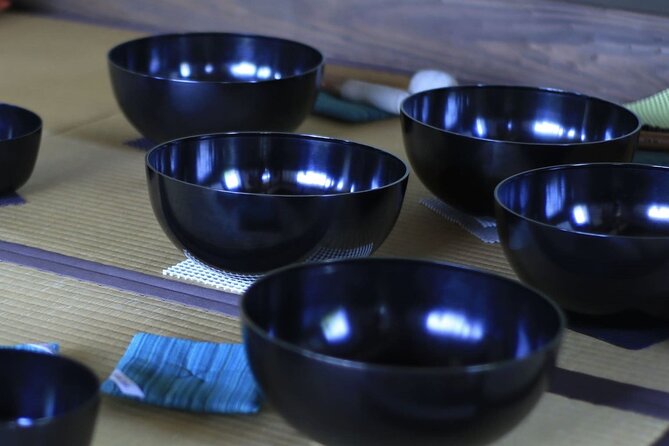
Some sessions use copper bowls as well as the Singing Ring. Their vibrations are especially noticeable when the bowls rest on the body. The result is less like listening to recorded music and more like paying attention to sound as a physical sensation.
You may finish feeling sleepy, calm, or simply more alert. One useful point is that relaxation does not always mean drowsiness. A sound bath can leave you quiet but clear-headed, which makes this a reasonable option before an evening meal or a slower part of your Kyoto day.
Same city, a completely different kind of day:
- Kyoto Geisha Walking Tour: Gion District & Hidden Gems
★ 4.7 · 3,273 reviews - Kyoto: Tea Ceremony Ju-An at Jotokuji Temple
★ 4.9 · 3,207 reviews - Kyoto: Gion Magical Night Walking Tour with Geisha Trivia
★ 4.9 · 2,393 reviews - Kyoto: 45-Minute Tea Ceremony Lesson Experience
★ 4.3 · 2,378 reviews
Why private format matters
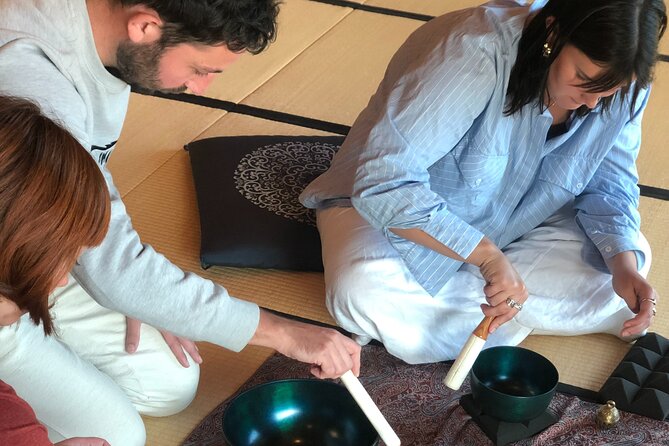
The session allows up to two people, and once your booking is confirmed, no unrelated people are added to the time slot. That is a major part of the value.
In a group sound bath, you share the room, the timing, and the atmosphere with strangers. Here, you can attend alone or with one companion. A private setting may feel more comfortable if you are trying this for the first time, and couples, friends, or family members can share the hour without a larger class around them.
It also makes the activity flexible in mood. You do not need to worry about making noise in front of a group, arriving with a certain level of meditation skill, or matching someone else’s pace. The room belongs to your booking.
The limit is two people per session. An optional traditional tatami room may accommodate up to three, but that is not automatic. You need to contact the provider after booking if you want to ask about a third person.
The private format also helps explain the price. At $97.73 per person, this is not a cheap way to fill an hour. You are paying for a personal session rather than a large class, a private guide, Japanese instruments, and individual attention. For a solo visitor, the cost may feel high. For two people sharing a rare Kyoto activity, it can make more sense.
Choosing the traditional tatami room
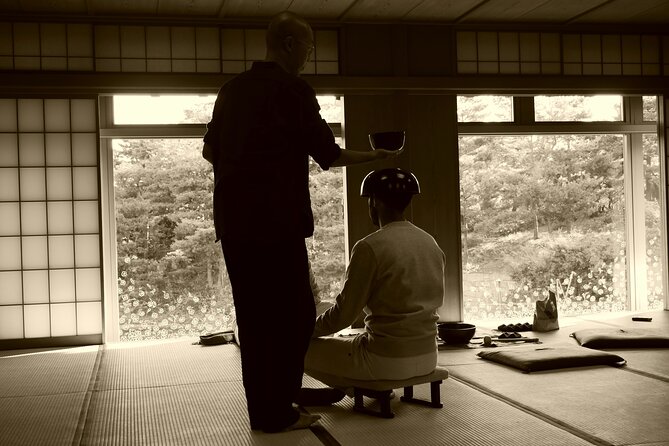
The standard meeting point and the traditional tatami room are not the same place. This is the detail most likely to cause trouble if you skim the instructions.
A Google Maps link may appear in the option information, but the tatami-room location cannot be set directly on the supplied map. After booking, you receive guidance for the correct venue. Read that message carefully rather than relying only on the first address you see.
A tatami room can add a stronger Japanese sense of place to an activity that already uses Japanese instruments. It may appeal to you if the room itself matters as much as the sound. One session has also included a traditional Japanese room overlooking a bota, though the supplied details do not promise that view for every booking.
Do not assume the tatami room is included in every option. Check the choice you book and contact Miracle.Sound.Vibration afterward if you want to ask about the room or a third participant.
How long the appointment really feels
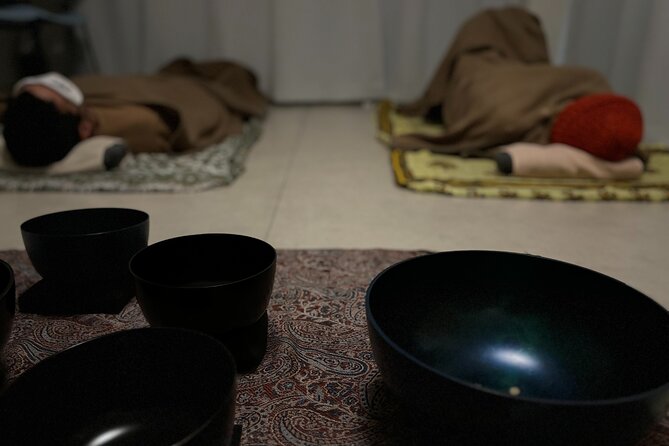
The advertised duration is about 1 hour 20 minutes, while the sound bath itself lasts 60 minutes. The remaining time allows for meeting, settling in, explanations, and the transition out of the session.
That length works well in a Kyoto schedule. It is long enough to leave sightseeing mode, but short enough to fit between other plans. You might place it after a busy morning of temples or before dinner, when an hour of stillness sounds better than another crowded attraction.
Do not schedule it so tightly that you must rush away the moment the session ends. The activity finishes back at the meeting point, but the practical time needed for directions and settling is part of the appointment.
The session also works for a parent and older teenager. A 16-year-old has enjoyed it with a parent, showing that this does not have to be an adults-only wellness activity. Still, the quiet format will suit people who are willing to try something unfamiliar and remain still.
Who will get the most from this Kyoto activity
I would point this experience toward several types of visitors:
- You want a break from temples and busy streets.
- You are curious about Japanese sound and craft.
- You have tried sound baths before and want something more local and personal.
- You are traveling as a couple or with one companion and prefer privacy.
- You want a calm activity that does not require physical exertion.
- You are open to meditation but do not want a formal class.
It may not suit you if you want a packed schedule, a cultural demonstration with lots of talking, or a performance you can watch. Most of the hour is spent lying down with your eyes covered. That is the point, but it may feel too passive if you need constant activity.
The activity is described as suitable for most people. No detailed accessibility information is provided beyond that, so ask before booking if you have specific mobility, health, or floor-seating needs.
Value at $97.73 per person
At nearly $100 per person, this is a special-interest purchase. You are not paying for a long tour, transportation around Kyoto, or several attractions. You are paying for roughly 80 minutes of private attention and a sound session built around instruments associated with Japan.
The cost is easier to justify if you value privacy. A group class might cost less, but it would not give you the same control over the atmosphere or the same direct attention from Junichiro. The unusual instrument also separates this from a standard relaxation session you could find in many cities.
I would compare it to the cost of a private treatment or a small private workshop, not to the price of a museum ticket. If your trip budget is tight, you may prefer to spend the money on food, a garden, or a day trip. If you want one unusual hour that slows the pace of your visit, the private format gives the price a clear reason.
The strong satisfaction record and full recommendation rate point to a consistent experience, though the number of published ratings is still small. I would use that as helpful evidence, not a guarantee that every person will respond to sound in the same way.
Booking, timing, and cancellation
The activity is often reserved about 38 days ahead, so book early if you need a particular date or want the tatami-room option. Confirmation is sent within 48 hours, subject to availability.
You can cancel for a full refund up to 24 hours before the local start time. Cancellations or changes made less than 24 hours ahead are not accepted for a refund, so keep Kyoto traffic, illness, and changing plans in mind.
Most people can participate, and the location is near public transportation. The exact guidance matters more than the general area, especially for the separate tatami venue. Save the post-booking message to your phone and check it before leaving your hotel.
Should you book this private Kyoto sound bath?
Book it if you want a quiet, personal activity that connects Japanese craft with rest. Junichiro’s clear explanations, the heated mat and blanket, and the option to feel the bowls on your body make this more distinctive than simply listening to a meditation recording.
I would especially choose it for a couple, a parent and older teenager, or a solo visitor who has already seen Kyoto’s major sights and wants an hour away from the crowds. The private setting is the strongest reason to pay the price.
Skip it if you want active sightseeing, a long cultural lesson, or a lower-cost group activity. Also check the floor setup and the separate tatami-room directions before booking. For the right person, this is a memorable pause in Kyoto, built around sound rather than a checklist of sights.
FAQ
Where does the private Japanese sound bath meet?
The meeting point is Little Granmy Kyoto, 85-10-203 Koinaricho, Shimogyo Ward, Kyoto 600-8208. The activity ends back at the meeting point.
How long does the activity last?
The total activity takes about 1 hour 20 minutes. The sound bath portion lasts 60 minutes.
How many people can join?
The standard private session allows up to two people. No unrelated participants are added to your confirmed time slot.
Is the traditional tatami room at the same location?
No. The traditional tatami room is at a separate venue. You should follow the guidance message sent after booking because the location cannot be set directly on the supplied map.
What happens during the sound bath?
You lie on a heated mat with a blanket and eye mask while Junichiro plays Japanese instruments, including the Singing Ring and copper bowls. He may place a bowl on your body so you can feel the vibration.
Can I cancel for a full refund?
Yes. You can cancel at least 24 hours before the local start time for a full refund. Cancellations or changes made less than 24 hours before the start time are not accepted for a refund.
Newest Kyoto experiences on the site
- Treasures of Kyoto: Gion & historical Walking Tour★ 5.0 · 6 reviews
- Whisk Your Own Matcha: A Zen Matcha Experience at Temple★ 3.6 · 7 reviews
- Kyoto tea town for matcha lovers★ 5.0 · 16 reviews
- Uji: Private immersion into Kyoto’s tea and reglious culture★ 5.0 · 17 reviews
- Kyoto Matcha Green Tea Tour★ 4.5 · 23 reviews
- Uji and Wazuka Matcha Farm Half Day Private Guided Tour★ 5.0 · 21 reviews
- Utilising upcycled Matcha! Creating matcha incense (Uji, Kyoto)★ 5.0 · 6 reviews
- Sacred Temple Yoga Experience in Japan★ 5.0 · 3 reviews
Private, compared.
Fushimi Inari Hidden Hiking Tour (Private Option Available)
Read our review →
Private Kyoto Tour with a Local, Highlights & Hidden Gems, Personalised
Read our review →
Kyoto 6hr Private Tour with Government-Licensed Guide
Read our review →
10 Must-see Spots in Kyoto One Day Private Tour (up to 7 people)
Read our review →
Kyoto 4hr Private Tour with Government-Licensed Guide
Read our review →
Private Kyoto Tour with Licensed Guide & Vehicle (Max 15 persons)
Read our review →