
Reviewed · NIJO CASTLE TOURS
Nijo Castle Samurai Inside Story — Top-Rated Guide (Max 8)
Nijo Castle is far more than grand gates and polished floors. With guide Richard, you get the stories behind the castle’s samurai systems, unspoken rules, changing political roles, and daily life. The details help you read the building instead of simply walking through it.
I like the small group limit of eight, which should make questions and conversation easy. I also like that admission and green tea are included, so the three-hour visit has a clear, simple price. The main drawback is that the tour is not recommended for small children, and the price may feel high if you prefer to explore historic sites at your own pace.
Key points to know before booking
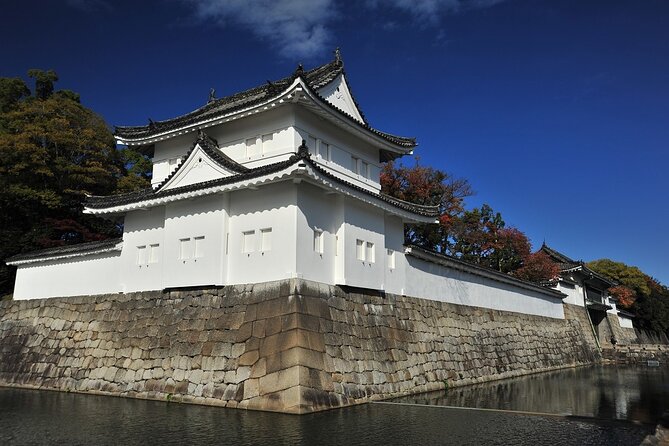
- Richard’s strongest skill is explanation: He connects Nijo Castle with samurai life, the shogun, the emperor, Japanese customs, and Kyoto’s wider story.
- The castle visit lasts about three hours: That gives you time for a full visit rather than a quick pass through the best-known rooms.
- Groups are limited to eight people: This is a useful middle ground between a private tour and a large group walk.
- Admission is included: You receive access to Nijo Castle’s full course, not just an outside view of the grounds.
- A green tea break is built in: The pause gives the tour a natural rhythm and a chance to ask questions.
- You meet at the west-side main gate: The activity begins and ends at Nijo Castle, with no private transportation provided.
Why Nijo Castle makes a good samurai lesson
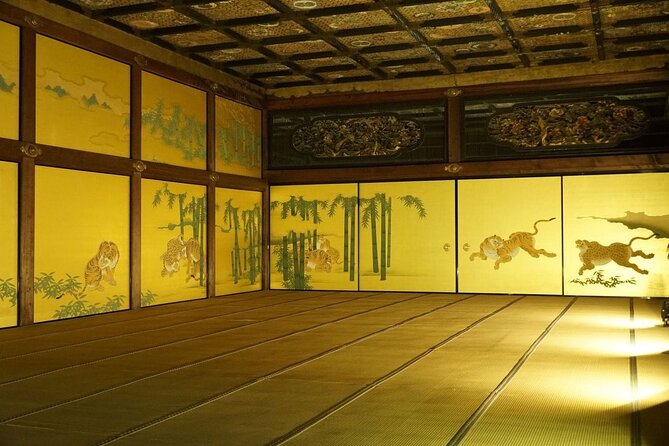
Nijo Castle works well with a guide because its importance is not always obvious from its architecture alone. You can see a large fortified complex, formal rooms, gardens, and gates, but the meaning of each space depends on knowing who used it and why.
This was not simply a military stronghold. It was also a place of power, ceremony, control, and political theater. The tour focuses on the people and systems behind the building, especially the samurai and the changing relationship between shogun and emperor.
I like that focus. Many castle visits leave you with a few dates and photographs. Here, you are encouraged to think about how people moved through the building, what they were expected to say, and how status shaped daily behavior.
The guide also brings Japanese culture into the discussion. That matters because samurai history can easily become a string of battles and famous names. The more useful questions are often smaller ones: How did people behave in formal rooms? What rules were spoken aloud, and which ones were understood without being stated? How did the castle communicate authority?
More Nijo Castle visits:
- Kyoto: Nijo-jo Castle and Ninomaru Palace Guided Tour
★ 4.7 · 1,020 reviews - Kyoto: Nijo Castle, Kiyomizu & Fushimi Inari Guided Tour
★ 4.7 · 700 reviews - Kyoto: Nijo, Kinkaku-ji, Arashiyama, Kiyomizu & Fushimi Inari
★ 5.0 · 699 reviews
Meeting Richard at the west-side gate
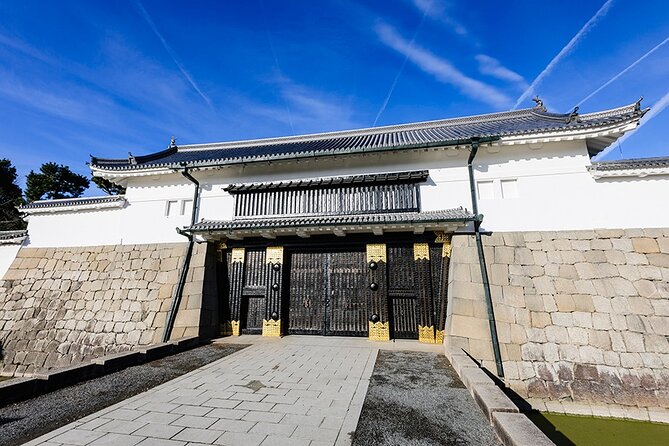
The meeting point is in front of Nijo Castle’s main gate on the west side, at 541 Nijojocho, Nakagyo Ward, Kyoto. The description identifies it as a large white gate, which is an important detail because Nijo Castle has several entrances and the grounds are substantial.
Give yourself enough time to reach the correct side of the castle. The tour does not include private transportation, but the meeting point is near public transportation. Your confirmation is provided at booking, so keep the mobile ticket and meeting details easy to access.
Richard is the named guide associated with this experience. His English is described as clear, and the strongest praise centers on his ability to explain Japanese history and culture in a way that feels personal rather than mechanical.
That makes a difference at a site like Nijo Castle. You can ask about the building, the samurai, the imperial connection, or Japanese customs, and the guide is prepared to place those questions in a wider context. Several comments also describe him as enthusiastic and attentive, so this should suit you if you prefer a conversational tour instead of a one-way lecture.
Walking through the castle grounds
The main portion of the activity is a guided walk through Nijo Castle. You will see the castle’s major areas while Richard points out details connected with samurai life, the structure of authority, and the practical systems that helped the castle function.
The tour description emphasizes details that many people miss, including secret roles, unspoken rules, and hidden systems. That wording does not mean you should expect a theatrical treasure hunt. It means the guide’s job is to interpret the less obvious parts of the site and explain how people used the castle.
I find that approach especially useful for first-time visitors. Without help, it is easy to focus only on the most ornate rooms. A guide can direct your attention to the relationship between spaces and show how design supported ceremony, security, and social order.
You should also expect a steady amount of historical context. Richard’s explanations connect Nijo Castle with the shogun, the emperor, the Edo period, and Kyoto’s role in Japanese history. If you are already familiar with those subjects, you can use the small group to ask for more detail. If you are new to them, the wider explanation should help the castle make sense.
The possible downside is time. Three hours is a serious visit, not a quick stop between other attractions. You may appreciate that pace if you enjoy historical sites, but it could feel long if your main goal is a short look at the gardens and a few photographs.
Samurai life beyond the usual battle stories
The most appealing part of this tour is its attention to the samurai as people within a system, not just warriors in armor. The guide discusses how samurai operated, what their roles involved, and how their lives connected with the formal structure of the castle.
That can give you a better sense of the social world surrounding Nijo Castle. Samurai culture involved rank, duty, ceremony, and rules of conduct. Those subjects help explain why rooms were arranged as they were and why movement through a castle could carry political meaning.
The information supplied for the tour also points to hidden roles and unspoken rules. I would treat this as one of the main reasons to book. You are not just receiving a standard list of construction dates. You are getting an explanation of the behaviors and systems that made the place work.
Several people who praised the tour also appreciated Richard’s views and willingness to encourage thought about how history is understood. That is a useful quality in a guide. You should still expect interpretation rather than a purely neutral audio recording. If you enjoy discussing historical meaning, this format will likely suit you.
More samurai experiences in Kyoto:
- Kyoto Samurai Experience
★ 5.0 · 1,294 reviews - Kyoto: Kendo and Samurai Experience with Uniform and Gear
★ 4.9 · 815 reviews - Kyoto: Samurai Sword Class by Experts in Traditional Arts
★ 4.9 · 657 reviews - Skip the lines Basic Ticket at SAMURAI NINJA MUSEUM KYOTO
★ 4.5 · 632 reviews
The shogun, emperor, and wider Kyoto story
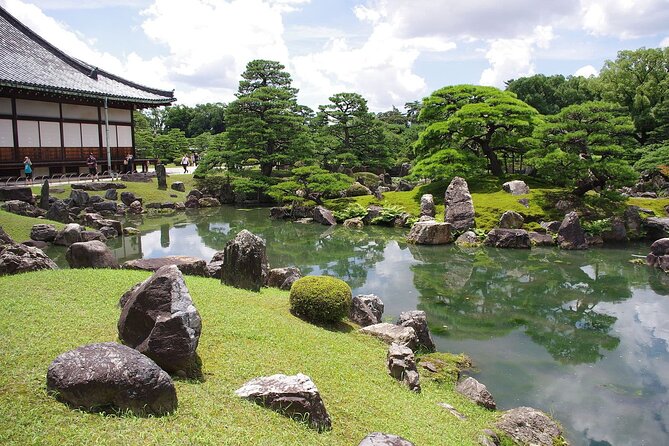
Nijo Castle becomes more interesting when you understand the shift between military rule and imperial authority. Richard connects the castle to the shogun, the emperor, and the Edo period, helping you see why the site matters beyond its walls.
Some people combine this visit with Kyoto’s Imperial Palace on the same day. That comparison can be helpful because the two places offer different views of power and ceremony. The tour itself centers on Nijo Castle, but Richard has been praised for explaining the Imperial Palace and using it to clarify Japanese history and culture.
Do not assume that a separate Imperial Palace visit is formally included. The stated stop is Nijo Castle, and the admission included is for the castle’s full course. Still, if you have questions about the Imperial Palace, the guide’s wider knowledge may add useful context.
This broader frame is one of the tour’s best features. You will not only learn what a room or gate is called. You will get help understanding why Kyoto contains both imperial and shogunal sites, and how those institutions fit into Japan’s past.
Why the small group matters
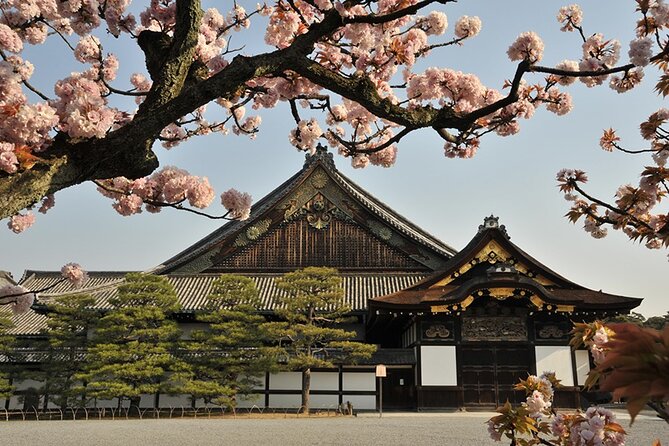
The maximum group size is eight people. That is not the same as a private tour, but it is small enough to keep the walk manageable and allow personal attention.
I like this size for Nijo Castle because questions are part of the value. A large group can make it hard to hear, and a self-guided visit gives you no one to consult when a detail catches your attention. With eight or fewer people, you should have a better chance to ask about samurai customs, castle design, Japanese culture, or the political background.
The small group also helps with pacing. Richard can spend more time on a subject that interests the group and avoid wasting time on information everyone already knows. The exact balance will depend on the guide and the people booked that day, so do not treat the small group as a guarantee of a custom itinerary.
It is best for adults and older children who can stay engaged during a three-hour historical walk. The information specifically says the activity is not recommended for small children.
The green tea pause
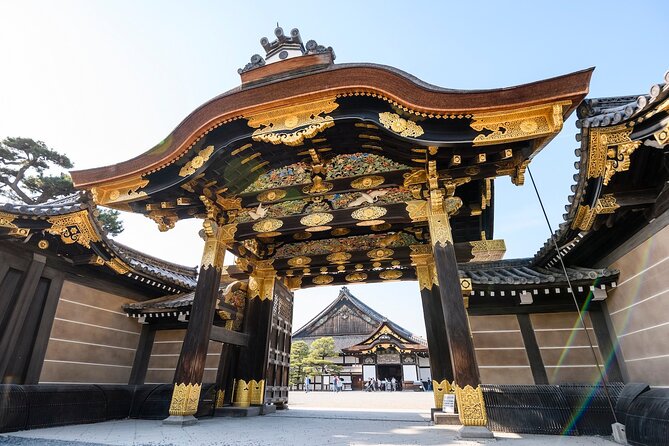
Coffee or tea is included, with a green tea break in the middle of the tour. This is a modest feature, but it improves the rhythm of a three-hour visit.
A pause gives you time to rest, collect your questions, and take in what you have seen before moving on. Green tea also fits the setting better than a rushed snack stop would, since it adds a small cultural touch without turning the activity into a food tour.
Do not book this expecting a formal tea ceremony. The information only promises a refreshing green tea break. Its value is practical: it breaks up the walk and gives you a natural moment to talk with Richard.
Is $98 a fair price?
At $98 per person, this is not the cheapest way to enter Nijo Castle. You are paying for more than admission, though. The price includes the full castle admission, a three-hour guided visit, a small group capped at eight, and green tea.
The value depends on how you like to visit historic places. If you are comfortable reading signs, following a map, and doing your own research, a self-guided visit will cost less. If you want help understanding the castle’s political meaning, samurai customs, hidden systems, and cultural setting, the guide is the main reason to pay more.
I would consider the price reasonable for a visitor who wants a serious historical explanation and personal attention. It is less compelling for someone who mainly wants to see the grounds quickly. You should also remember that gratuities are not required, though they are appreciated if you feel the guide provided a strong experience.
The perfect score from 20 ratings gives the tour a strong record, but the sample is still small. I would place more weight on the repeated themes than on the number alone: clear English, careful explanations, enthusiasm, and a strong grasp of Japanese history and culture.
What the tour does especially well
The guide appears to be the central strength. Richard is repeatedly described as thorough, clear, personable, and enthusiastic. That combination matters because historical information can become dry when it is delivered without a sense of place.
The tour also earns praise for connecting Nijo Castle with the Imperial Palace and the wider story of Kyoto. That is particularly useful if you are visiting several major sites and want them to fit together rather than remain separate stops.
Another strong point is the attention to questions. You are encouraged to ask about Japan, its customs, the samurai, and the castle itself. This makes the tour a good choice for curious visitors who do not want to be limited to a fixed script.
Finally, the experience appears to give the castle emotional weight without relying only on spectacle. You learn about the people who lived and worked there, the rules they followed, and the political forces that shaped the site.
Limits to keep in mind before you book
This is a guided historical visit, so you need to be willing to spend about three hours at one major site. It is not designed as a quick orientation or a simple photo stop.
The activity also ends back at the meeting point, so you will need to plan your next stop from Nijo Castle rather than expecting transportation elsewhere. Since private transportation is not included, you are responsible for getting to and from the castle.
The weather requirement is another practical point. If poor weather causes cancellation, you are offered a different date or a full refund. If your plans are tight, keep that possibility in mind.
You can cancel for a full refund up to 24 hours before the start time. Changes or cancellations inside that 24-hour window are not accepted for a refund.
Who should book the Nijo Castle Samurai Inside Story?
I would choose this tour if you want the castle to make historical sense, not just look impressive. It is a strong fit for first-time visitors to Kyoto, history fans, people interested in samurai culture, and anyone who values a guide who can answer questions in clear English.
It is also a good choice if you are visiting the Imperial Palace and want help comparing imperial and shogunal power. The group size offers more personal attention than a large coach tour, while the included admission keeps the arrangements simple.
I would skip it if you have only a short amount of time, dislike guided pacing, or mainly want to wander independently. Families with very small children should also look elsewhere because the activity is not recommended for them.
For everyone else, the deciding question is simple: do you want to see Nijo Castle, or do you want to understand it? At $98, this tour makes the most sense for the second group.
FAQ
Where does the Nijo Castle tour meet?
The guide meets you in front of the main gate on the west side of Nijo Castle. The address is 541 Nijojocho, Nakagyo Ward, Kyoto, 604-8301, Japan.
How long does the tour last?
The tour lasts approximately three hours.
What is included in the price?
The price includes admission to Nijo Castle’s full course and a green tea break. Private transportation and gratuities are not included.
How many people can join the tour?
The activity has a maximum of eight travelers.
Who is the guide?
The named guide is Richard. The tour focuses on samurai life, Nijo Castle, Japanese history, and Japanese culture.
Is the tour suitable for small children?
The activity is not recommended for small children. Most travelers can participate.
What happens if the weather is poor?
The experience requires good weather. If it is canceled because of poor weather, you will be offered a different date or a full refund.
Newest Kyoto experiences on the site
- Treasures of Kyoto: Gion & historical Walking Tour★ 5.0 · 6 reviews
- Whisk Your Own Matcha: A Zen Matcha Experience at Temple★ 3.6 · 7 reviews
- Uji: Private immersion into Kyoto’s tea and reglious culture★ 5.0 · 17 reviews
- Kyoto tea town for matcha lovers★ 5.0 · 16 reviews
- Kyoto Matcha Green Tea Tour★ 4.5 · 23 reviews
- Uji and Wazuka Matcha Farm Half Day Private Guided Tour★ 5.0 · 21 reviews
- Utilising upcycled Matcha! Creating matcha incense (Uji, Kyoto)★ 5.0 · 6 reviews
- Sacred Temple Yoga Experience in Japan★ 5.0 · 3 reviews
Nijo Castle Tours, compared.
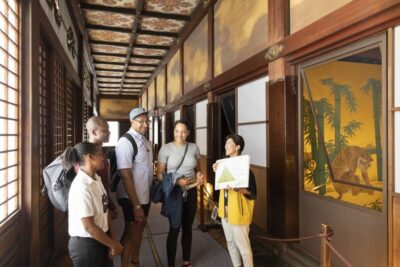
Nijo-jo Castle and Ninomaru Palace Guided Tour
Read our review →
Nijo Castle, Kiyomizu & Fushimi Inari Guided Tour
Read our review →
Nijo, Kinkaku-ji, Arashiyama, Kiyomizu & Fushimi Inari
Read our review →
Imperial Palace & Nijo Castle Guided Walking Tour
Read our review →
Nijo Castle World Heritage Guided Tour with Admission
Read our review →
Kyoto Imperial Palace & Nijo Castle Guided Walking Tour – 3 Hours
Read our review →
Nijo Castle and Kyoto Imperial Palace Guided Tour
Read our review →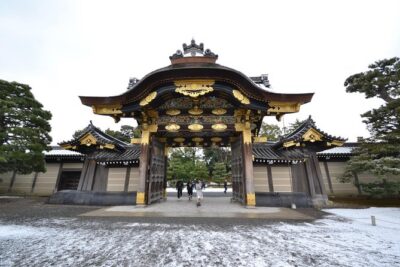
Nijo Castle and Imperial Palace Visit with Guide
Read our review →Browse the lists this tour appears in