Reviewed · PRIVATE
Kyoto: The Path Less Traveled (Private)
Kyoto’s best moments are often found behind a temple gate, down a quiet garden path, or inside a room most visitors skip. This private tour with Andrew links several of those places, from peaceful Zen gardens to Sanjusangendo’s astonishing hall of 1,001 golden Buddhas, with a local lunch and a folk art museum along the way.
I like the way this route mixes famous sights with places that rarely make a first-time visitor’s list. I also like the private format: your group of up to four can set the pace and decide what to drop if the day runs long. The main drawback is cost, since the $690 group fee is only part of the bill. You must also pay cash for lunch, transport, and five site admissions.
Key points at a glance
- Andrew leads a private route through seven very different Kyoto sites, from gardens and shrines to a potter’s former home.
- Sanjusangendo’s 1,001 golden Buddhas is the visual knockout, but the quieter gardens give the tour its character.
- The route begins at Keage Station at 9:00 a.m. and ends near Kawai Kanjiro’s house in eastern Kyoto.
- Plan on extra cash: ¥3,500 per person for five admissions, ¥1,500 for lunch, and ¥1,000 for transport.
- The itinerary is flexible but not guaranteed in full. If time runs short, your group chooses which stop to remove.
- The private setting suits repeat Kyoto visitors and anyone who wants context instead of a quick checklist of major sights.
Kyoto beyond the usual temple circuit
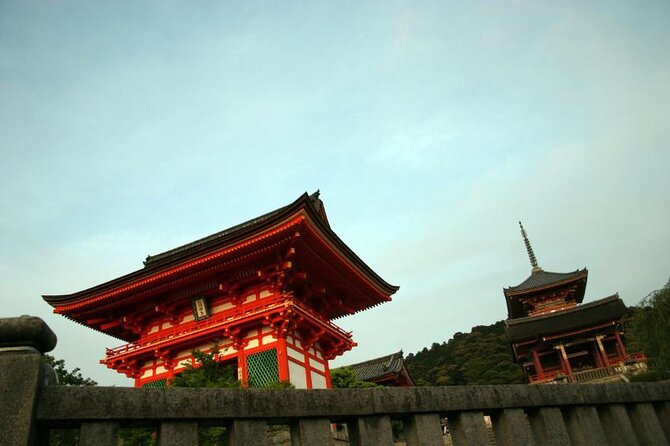
This is not a greatest-hits tour of Kyoto. You will not spend the day racing between the city’s most crowded landmarks. Instead, Andrew takes you through a thoughtful sequence of gardens, religious buildings, art, and design.
The appeal is strongest if you already know that Kyoto has more to offer than Kinkaku-ji and Fushimi Inari. The route gives you a chance to look closely at spaces that reward patience: moss, stone arrangements, painted screens, carved details, old timber, and the way a garden changes as you walk through it.
The private format matters here. Gardens are not places to rush. You may want time to sit, look, and ask why a particular composition feels so calm. With only your own group, the day can respond to your interests more easily than a large scheduled tour.
Andrew is the guide named in the experience details and in the supplied guest comments. His strongest quality, based on the feedback provided, is his ability to explain the meaning and design of Kyoto’s gardens rather than simply point them out. One guest who had visited Kyoto for decades considered this the most worthwhile experience of many trips. That is high praise, especially from someone already familiar with the city.
A few more Kyoto tours worth putting on the shortlist
- PERFECT KYOTO 1-Day Bus Tour
★ 5.0 · 13,518 reviews - Kyoto: Fushimi Inari, Kinkakuji, Bamboo Grove 1 Day Bus Tour
★ 4.8 · 4,316 reviews - Kyoto: Tea Ceremony in a Traditional Tea House in Kiyomizu
★ 4.9 · 3,519 reviews
Starting at Konchi-in and Tenjuan
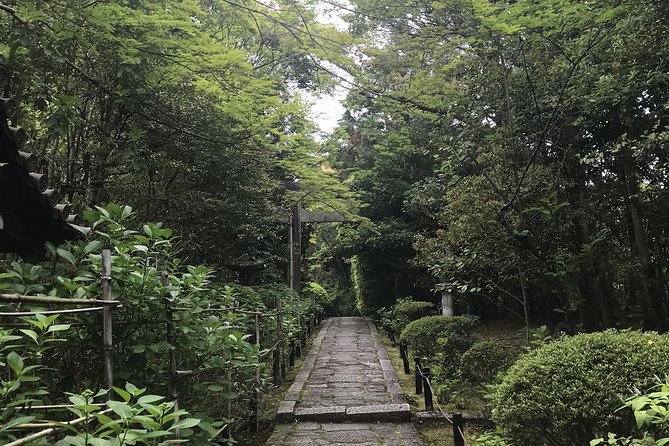
You meet at Keage Station at 9:00 a.m. The first stop is Konchi-in, where you can expect a quiet setting with temple architecture, gardens, statuary, and paintings. The point is not one single dramatic object. It is the way several forms of Japanese art and religious design sit together in a calm setting.
Konchi-in should appeal to you if you enjoy gardens as places for thought rather than decoration. Andrew’s explanations are especially useful here because a dry garden can look simple at first glance. Stones, open space, and carefully placed plants carry more meaning when someone helps you notice how the composition works.
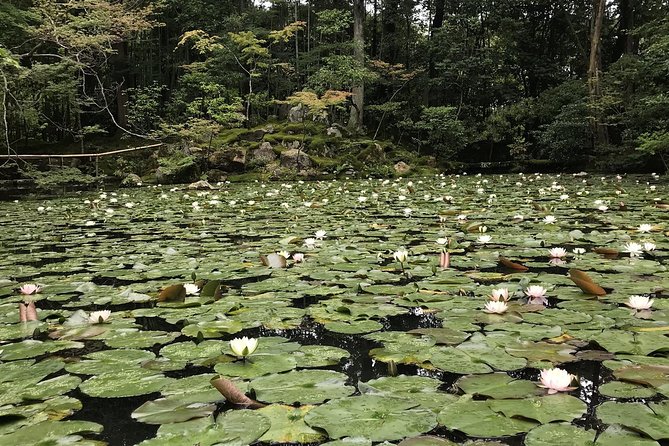
The next stop, Tenjuan Garden, offers two distinct gardens. One creates the feeling of moving suddenly from a temple into a wooded storybook setting. That contrast is important. Kyoto’s garden tradition is not only about neat gravel and clipped plants. It can also feel thick, shaded, and slightly mysterious.
You spend about an hour at each of these first two stops. That sounds generous, but gardens absorb time. If you like photography, quiet observation, or design, these visits may be the part of the day you remember best. If your group prefers fast sightseeing, they may feel long.
Admission is not included at either temple. Keep your cash ready, since the total admission charge for five sites is ¥3,500 per person.
Heian Shrine’s garden, away from the main crowd
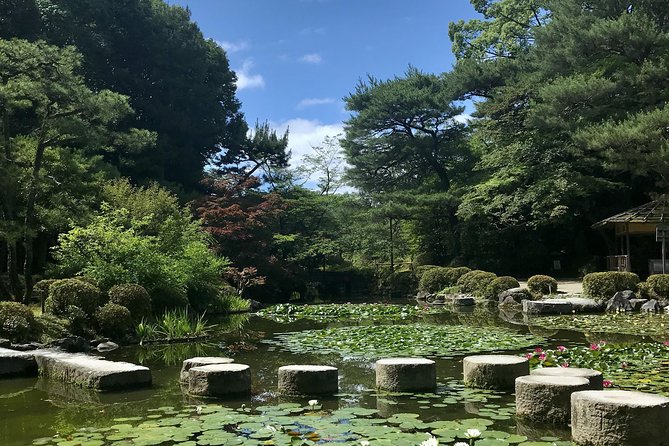
Heian Shrine is a well-known Kyoto stop, but the garden behind the shrine receives far less attention than the large torii and main buildings. This tour deliberately takes you past the obvious photo stop and into the garden, where you spend about an hour.
That choice captures the whole idea of the day. You still see a major name, but you experience it from a quieter angle. The garden is described as one of Kyoto’s most picturesque, and its value comes from walking through it rather than merely viewing the shrine from the front.
I like this stop for practical reasons. If you have already visited Heian Shrine, you may still find something new here. If you have not visited, you get both the grand approach and the less-visited garden without giving the entire day to the shrine complex.
The pace also gives Andrew room to discuss how the garden is arranged and how the view changes as you move. That kind of interpretation can make the difference between taking a pleasant walk and understanding why the place feels carefully composed.
Chishaku-in and its painted screens
Chishaku-in is another quieter stop, with a garden meant to transport your thoughts far from the city. The language used to describe it is poetic, but the practical point is simple: this is a place for atmosphere, not a quick monument photo.
You also see sliding-door paintings by one of Japan’s most celebrated painters. The combination of garden and interior art makes Chishaku-in different from the earlier stops. You are not only reading the shape of outdoor space. You are also looking at how painted scenes, architecture, and garden views work together.
This is a good section of the tour for anyone interested in Japanese design. It also helps break up the day. Seven stops could feel like a long string of similar temples, but the route changes focus from stones and plants to interior paintings and religious architecture.
Again, the site admission is extra. Since the tour lists five paid sites but seven stops, you should expect that not every stop carries the same ticket arrangement. The supplied cost is ¥3,500 per person for the five-site total.
Same city, a completely different kind of day:
- Kyoto Geisha Walking Tour: Gion District & Hidden Gems
★ 4.7 · 3,273 reviews - Kyoto: Tea Ceremony Ju-An at Jotokuji Temple
★ 4.9 · 3,207 reviews - Kyoto: Gion Magical Night Walking Tour with Geisha Trivia
★ 4.9 · 2,393 reviews - Kyoto: 45-Minute Tea Ceremony Lesson Experience
★ 4.3 · 2,378 reviews
Sanjusangendo and the wall of golden figures
Sanjusangendo is the day’s most immediately dramatic sight. Inside the long temple hall are 1,001 golden Buddha statues. The scale is hard to grasp from a description alone. You enter a space filled with repeated figures, and the effect is very different from looking at a single statue in an otherwise open room.
This stop gives the tour a useful change of rhythm. The gardens ask you to slow down and study details. Sanjusangendo confronts you with quantity, repetition, and visual force. It is one of those Kyoto sights that can remain memorable even if you have little interest in garden design.
The temple is also described as one of Kyoto’s oldest structures. You spend about an hour here, which should allow time to take in the hall without treating it as a quick pass-through.
Photography rules and interior procedures are not provided in the tour details, so follow the instructions at the temple. Admission is part of the five-site cash total, not part of the $690 guide fee.
Toyokuni Shrine and its giant bell
Toyokuni Shrine receives a shorter visit of about 20 minutes. It is dedicated to Toyotomi Hideyoshi, one of the major samurai figures in Japanese history. The shrine has a more lavish feel than the restrained gardens earlier in the day, giving you another change of tone.
The grounds also contain what is described as the largest bell in Japan. Even with only 20 minutes, this stop adds historical and visual variety. You are not spending the entire day looking at one style of religious site.
The short timing is worth noting. This is more of a focused visit than a long exploration. If your group has to remove a stop because of pace, you may want to discuss how much time you prefer at Toyokuni Shrine compared with a garden or museum.
Kawai Kanjiro’s house and the art of ordinary life
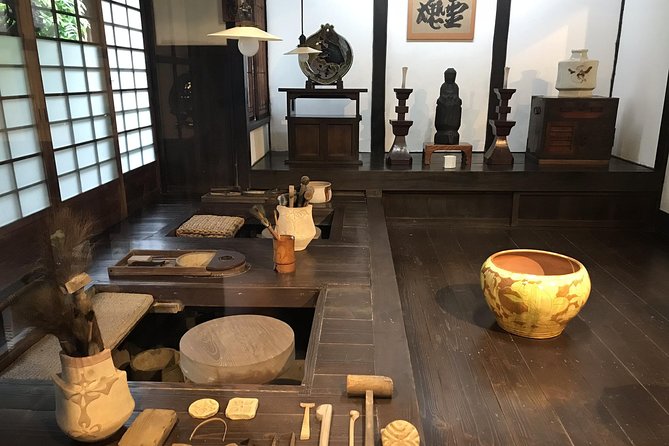
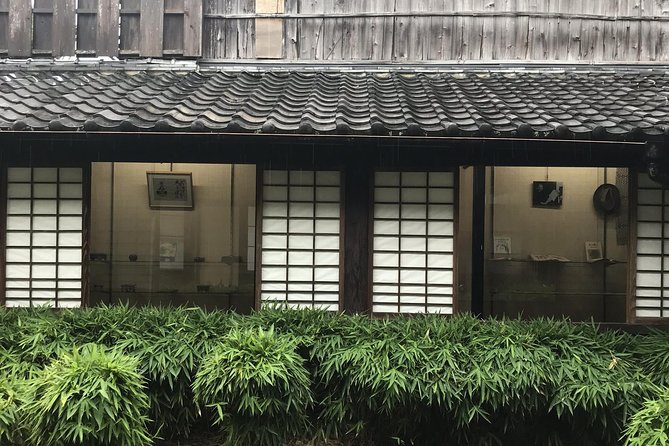
The tour ends at the Kawai Kanjiro Memorial Museum, a converted home belonging to a major 20th-century potter. This is not a conventional museum full of large galleries. The house itself is part of the experience.
The space shows the wabi sabi approach to design and living, with beauty found in modest materials, handmade objects, and signs of daily use. That makes the final stop a fitting counterpoint to the grand shrine halls and the thousand golden figures at Sanjusangendo.
I especially like the placement of this museum at the end. After a day of formal gardens and religious buildings, you finish with a more personal view of Japanese creativity. You can see how design shapes a home, not only a temple or garden.
The experience ends outside Kawai Kanjiro’s house. From there, it is about a five-minute walk to the Umamchi Bus Stop. This is useful to know if you plan to continue sightseeing or return to your accommodation by public transport.
What the eight-hour schedule really means
The listed visit times add up to roughly six hours and 20 minutes. The tour lasts about eight hours, leaving time for walking, transport, lunch, and the transitions between sites.
Still, the schedule is full. The experience clearly warns that every listed stop may not fit, depending on your pace. This is not a flaw, but you should understand the tradeoff before booking. You are choosing a menu of strong places, not receiving a guarantee that every item will be completed.
The good news is that your group decides what to cut if needed. That is much better than having a guide silently remove a stop based on a fixed group schedule. Discuss your priorities early. Garden lovers may want to protect Konchi-in, Tenjuan, Heian Shrine’s garden, and Chishaku-in. Art fans may give extra weight to the painted screens and Kawai Kanjiro’s house. Anyone most excited by major sights may put Sanjusangendo first.
Lunch is not included. Each person must bring ¥1,500 in cash for a local traditional lunch. The exact restaurant and menu are not specified, so treat the meal as part of the day’s local rhythm rather than a separately described food tour.
You also need ¥1,000 per person in cash for transportation. Since the group begins at a train station and finishes near a bus stop, the transport allowance is a practical part of the route, not an optional extra.
Is the private price good value?
The tour costs $690 per group of up to four. For four people, that works out to $172.50 each before lunch, transport, and admissions. For two people, the per-person cost is much higher. Solo travelers will find the price hardest to justify.
The value comes from the private guide service and the unusual mix of places. You are not paying only to be taken from one famous temple to another. You are paying for a full day of interpretation, a flexible schedule, and access to a route that avoids the standard top-ten pattern.
Extra costs are clear:
- $690 per group, for up to four people
- ¥3,500 per person for admission to five sites
- ¥1,500 per person for lunch
- ¥1,000 per person for transportation
For four people, the listed extras total ¥24,000 for the group, before any other personal spending. That makes the tour more attractive for a family or group of friends sharing the guide fee.
I would not book this solely for bargain sightseeing. I would book it for depth, privacy, and the chance to see Kyoto through gardens, art, and smaller religious sites. If you only want the city’s biggest landmarks, a cheaper shared tour may suit you better.
Who will get the most from this day?
This tour is a strong match for repeat visitors. The supplied comments include people who had been visiting Kyoto for many years and still found the route fresh. That makes sense: the itinerary avoids the usual first-trip checklist and spends time on places you may have missed.
It also suits couples, families, and small groups with different interests. One person can focus on gardens, another on samurai history, another on ceramics and home design. The private format lets you talk through those interests with Andrew as the day unfolds.
You should have enough stamina for an eight-hour outing with several stops and transport between them. The tour information says most people can participate and that the route is near public transportation. It does not provide detailed accessibility information, so ask the provider directly if steps, walking distance, or garden paths are a concern.
This is less ideal if you want a slow morning, a long restaurant meal, or a single neighborhood explored at leisure. It is also not the best choice if you dislike gardens. Several hours are devoted to them, and they are central to the tour’s purpose.
Booking advice and final call
Book this tour if you want Kyoto’s quieter side explained by a private guide, especially if gardens, traditional design, and Buddhist art interest you. The strongest moments are likely to be the calm sequence of Konchi-in, Tenjuan, Heian Shrine’s rear garden, and Chishaku-in, followed by the visual shock of 1,001 golden Buddhas.
Before you reserve, gather three or four people if possible. Confirm that everyone is comfortable carrying the required cash and spending a full day on foot and in temples. Also decide which stops matter most, since the complete route is not guaranteed.
I would choose this experience over a standard city tour for a repeat Kyoto visit or for a first visit when you prefer quiet places to famous crowds. I would skip it if the $690 fee feels uncomfortable or if your main goal is simply to tick off Kyoto’s most famous sights.
FAQ
How long is the tour?
The tour lasts approximately eight hours.
What time does the tour begin?
The start time is 9:00 a.m.
Where does the tour begin?
The meeting point is Keage Station at Higashikomonozacho in Kyoto’s Higashiyama Ward.
Where does the tour end?
The tour ends outside Kawai Kanjiro’s House. The Umamchi Bus Stop is about a five-minute walk away.
How many people can join the private tour?
The price covers one private group of up to four people.
Is lunch included?
No. Each person must bring ¥1,500 in cash for lunch.
Are transportation costs included?
No. Each person must bring ¥1,000 in cash for transportation.
Are admission fees included?
No. Admission to five sites costs ¥3,500 per person in cash.
Will every listed stop be visited?
Not necessarily. Depending on the group’s pace, one or more stops may need to be removed. Your group decides what to eliminate.
What happens if bad weather cancels the tour?
If poor weather causes cancellation, you can choose a different date or receive a full refund. You can also cancel for a full refund if you do so at least 24 hours before the start time.
Newest Kyoto experiences on the site
- Treasures of Kyoto: Gion & historical Walking Tour★ 5.0 · 6 reviews
- Whisk Your Own Matcha: A Zen Matcha Experience at Temple★ 3.6 · 7 reviews
- Uji: Private immersion into Kyoto’s tea and reglious culture★ 5.0 · 17 reviews
- Kyoto tea town for matcha lovers★ 5.0 · 16 reviews
- Kyoto Matcha Green Tea Tour★ 4.5 · 23 reviews
- Uji and Wazuka Matcha Farm Half Day Private Guided Tour★ 5.0 · 21 reviews
- Utilising upcycled Matcha! Creating matcha incense (Uji, Kyoto)★ 5.0 · 6 reviews
- Sacred Temple Yoga Experience in Japan★ 5.0 · 3 reviews
Private, compared.
Fushimi Inari Hidden Hiking Tour (Private Option Available)
Read our review →
Private Kyoto Tour with a Local, Highlights & Hidden Gems, Personalised
Read our review →
Kyoto 6hr Private Tour with Government-Licensed Guide
Read our review →
10 Must-see Spots in Kyoto One Day Private Tour (up to 7 people)
Read our review →
Kyoto 4hr Private Tour with Government-Licensed Guide
Read our review →
Private Kyoto Tour with Licensed Guide & Vehicle (Max 15 persons)
Read our review →