
Reviewed · KYOTO BUS TOURS
Kyoto Hop-On, Hop-Off Sightseeing Bus Tour
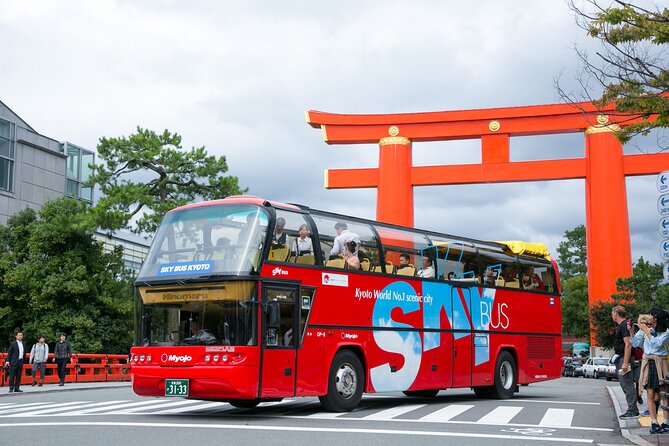
Kyoto’s SKY HOP BUS gives you a quick way to see the city’s major sights without working out every train, bus, and walking connection. I like the open-top double-decker views, and I like having stops near big-ticket sights such as Kinkakuji, Kiyomizu-dera, Gion, and Fushimi Inari’s wider area.
The main catch is the long wait between buses, reported at about 50 minutes. That can be fine for a relaxed day, but it limits how freely you can hop off, especially if you want to visit several temples before sunset.
- Two sightseeing routes from Kyoto Station cover eastern Kyoto and the northern and western temple area.
- One-day and two-day passes let you build your own schedule.
- Multilingual audio commentary adds basic context while you ride.
- Unreserved seating means you may need to wait for another bus if the first one is full.
- Major stops include Kiyomizu-dera, Ginkakuji, Kinkakuji, Nijo Castle, Gion, and Nishiki Market.
- Children under five ride free when seated on a parent or guardian’s lap.
A practical first look at Kyoto from the top deck
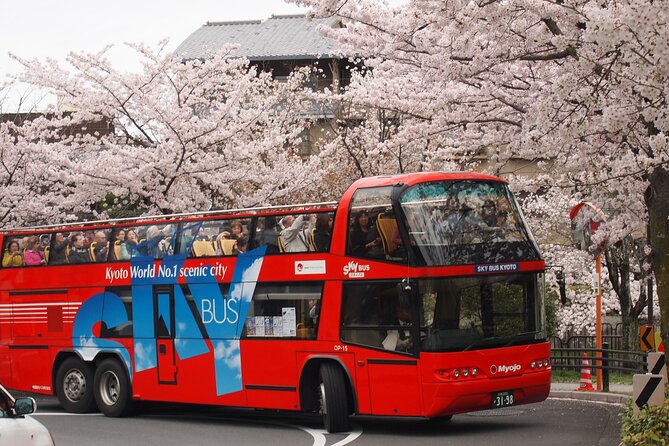
I see this bus as a sightseeing tool first, and a full guided tour second. You are not joining a guide-led walk through each temple. Instead, you are buying a moving overview of Kyoto, with the freedom to get off near the places you care about and continue later.
That difference matters. Kyoto’s sights are spread across a wide area, and a first visit can involve a lot of route planning. The bus removes some of that work, though it does not remove the need to plan around bus frequency, opening hours, crowds, or walking distances.
The advertised ride duration is about 1 hour and 8 minutes, but that figure should not be treated as the length of your complete sightseeing day. Once you get off at Kiyomizu-dera, Ginkakuji, Kinkakuji, or Nijo Castle, your visit can take much longer.
What you actually receive for $45.56
At about $45.56 per person, this is not the cheapest way to move around Kyoto. Local trains and city buses can cost less, especially if you are visiting only one or two areas.
The pass becomes more useful when you want an easy city overview, prefer not to navigate several public transport changes, or plan to ride between multiple major sights. A two-day pass, if selected, gives you more breathing room. A one-day pass makes the most sense if you start early and choose a clear route.
Your ticket includes:
- A one-day pass or two-day pass, depending on your selection
- Multilingual audio commentary
- Earphones
- Onboard Wi-Fi
- A poncho if rain arrives
There are no reserved seats. Personal expenses are also not included, so temple admission, food, drinks, and anything you buy along the way are extra.
I would compare prices before booking. A current score of 3.2 from five ratings suggests a mixed experience, and one direct concern is that the same type of hop-on, hop-off service may cost less through another seller. The bus itself may still suit you, but price checking is sensible.
More bus tours from Kyoto:
- PERFECT KYOTO 1-Day Bus Tour
★ 5.0 · 13,518 reviews - Kyoto: Fushimi Inari, Kinkakuji, Bamboo Grove 1 Day Bus Tour
★ 4.8 · 4,316 reviews - Kyoto: Hop-on Hop-off Sightseeing Bus Ticket
★ 3.9 · 2,034 reviews
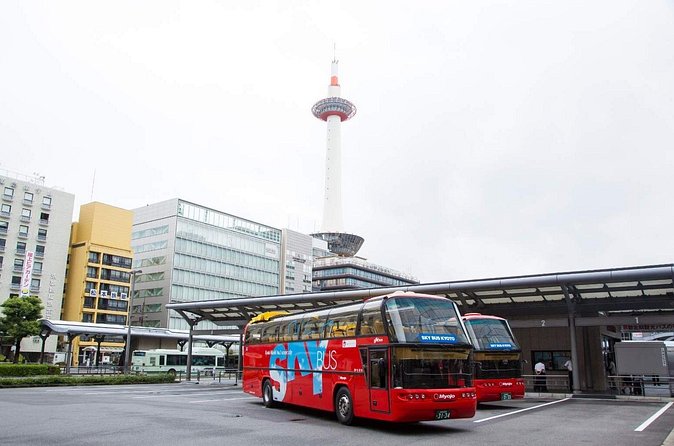
Kyoto Station is the key starting point
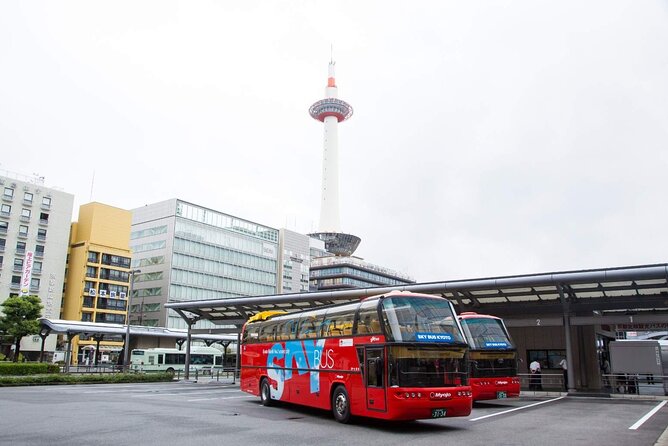
Kyoto Station is the most useful place to begin. It is a major transport hub, and the bus returns there on the eastern route. Starting here lets you get your bearings before choosing a direction.
Allow extra time to find the correct bus position. The terminal is large, and locating the stop can be confusing on a first visit. This is one place where arriving early helps, especially if you are trying to catch a particular departure.
The stop list shows two broad sightseeing patterns. One heads through central Kyoto and the eastern temple district. The other reaches Nishi Honganji, Nijo Castle, Kitano Tenmangu, Kinkakuji, Daitokuji, the Imperial Palace area, and Nishiki Market.
Use Kyoto Station as your reset point. If you have had enough temple time, you can return there rather than forcing yourself to complete every stop.
Karasuma Gojo, Nishiki Market, and Kyoto City Hall
The Karasuma Gojo stop places you in central Kyoto, near an area with everyday city streets, shops, and transport links. It is less of a headline attraction than Kinkakuji or Kiyomizu-dera, but it can be useful if your hotel or plans are in central Kyoto.
Shijo Karasuma and Nishiki Market are more appealing for food and local atmosphere. Nishiki is a covered market street where you can browse snacks, pickles, sweets, seafood, and small food shops. Go at a comfortable pace and remember that market lanes can be narrow, so this is a place for walking rather than a quick photo stop.
Kyoto City Hall gives you access to the Oike area and central neighborhoods. The value of these stops is flexibility. You can use the bus for the main temples and then get off in the center for lunch or a short walk.
Do not expect every central stop to feel like a major attraction by itself. These stops are useful connectors, not all-day destinations.
Ginkakuji and the eastern Kyoto route
Ginkakuji, the Silver Pavilion, is one of the strongest stops on the eastern route. The temple is known for its restrained design and garden setting. Even though the pavilion itself is not silver, the name points to the refined, understated character of the site.
From here, you can follow the famous Philosopher’s Path toward the Nanzenji area, though the bus details provided do not include a separate Nanzenji stop. Plan enough time for the temple visit and nearby walking before you return to the bus.
The drawback is timing. If buses arrive around every 50 minutes, a short visit can turn into a long wait. Check the next departure before leaving the stop, and keep the bus schedule in mind if you have a timed reservation elsewhere.
A few more Kyoto tours worth putting on the shortlist
- Kyoto: Tea Ceremony in a Traditional Tea House in Kiyomizu
★ 4.9 · 3,519 reviews - Kyoto Geisha Walking Tour: Gion District & Hidden Gems
★ 4.7 · 3,273 reviews - Kyoto: Tea Ceremony Ju-An at Jotokuji Temple
★ 4.9 · 3,207 reviews - Kyoto: Gion Magical Night Walking Tour with Geisha Trivia
★ 4.9 · 2,393 reviews
Heian-jingu and Okazaki Park
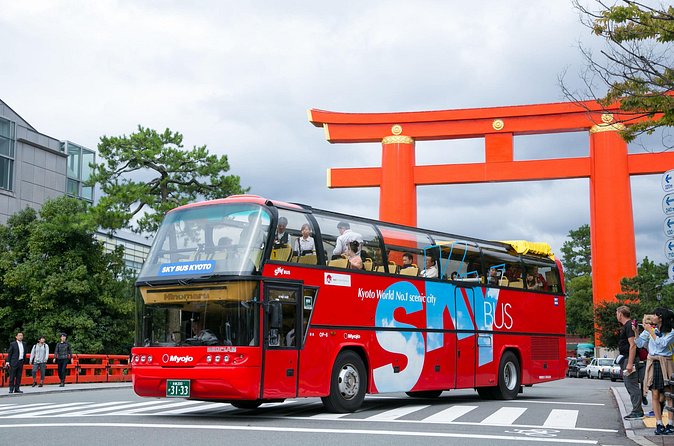
The Heian-jingu stop is a good choice if you want a broad shrine approach and access to the Okazaki area. The shrine is easy to recognize for its large torii and spacious grounds.
This stop works well with Ginkakuji because both are on the eastern side of the city. You can make a temple-and-shrine day here, then continue toward Gion or Kiyomizu-dera.
The practical issue is that shrine grounds and nearby attractions can take longer than expected. If you are trying to fit Ginkakuji, Heian-jingu, Gion, and Kiyomizu-dera into one short afternoon, the 50-minute bus cycle may work against you.
Gion and Gojozaka for Kiyomizu-dera
The Gion stop, near KOTOWA KYOTO YASAKA, puts you close to one of Kyoto’s best-known historic districts. You can walk through lanes around Yasaka Shrine and continue toward traditional streets in the Higashiyama area.
Gion is most rewarding when you slow down. It is not simply a photo stop. The streets are attractive, but they are also working neighborhoods, so keep voices low and follow local rules around photography.
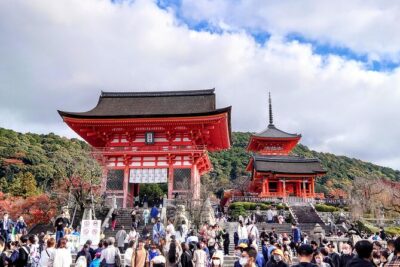
The Gojozaka stop is the practical choice for Kiyomizu-dera. The temple sits uphill, so expect a walk from the bus stop rather than a drop-off at the entrance. The approach is part of the visit, with shops and old streets along the way, but the slope may be tiring in hot weather.
A useful plan is to visit Kiyomizu-dera first, then walk downhill toward Gion. If you do this, make sure you know where the next bus stop is before setting off. The bus route helps with the large distances, but it does not replace walking inside each district.
Sanjusangendo and the Kyoto National Museum
The Sanjusangendo, Kyoto National Museum, and Hyatt Regency Kyoto stop brings you into southern Higashiyama. Sanjusangendo is famous for its long wooden hall and rows of Buddhist statues. The Kyoto National Museum adds a strong art and culture option for a rainy day or a break from outdoor sightseeing.
This is a useful stop for visitors who want more than temple exteriors. It gives you a chance to spend time indoors and focus on objects, architecture, and religious art.
The stop also shows why the bus can be valuable. Several sights that look close on a map can take time to connect on foot. You can choose one attraction, then ride onward instead of retracing your route.
Nishi Honganji and Nijo Castle
The second route begins again at Kyoto Station and then reaches Nishi Honganji. This large Buddhist temple offers impressive wooden architecture and a quieter counterpoint to Kyoto’s more heavily visited sights.
Nijo Castle is one of the strongest stops on this side of the city. Its painted interiors, broad grounds, and connection with the Tokugawa shoguns give you a different view of Kyoto from the temples and shrines.
Plan a proper visit here. Nijo Castle is not something I would squeeze into a 20-minute gap before the next bus. If you get off, check the next departure and allow time for the grounds, the palace interiors, and the walk back to the stop.
Kitano Tenmangu, Kinkakuji, and Daitokuji
Kitano Tenmangu Shrine, near Kamishichiken, is a useful stop for a northwestern Kyoto day. The shrine is linked with scholarship and is known for plum trees and seasonal interest, though the tour information does not promise any particular seasonal display.
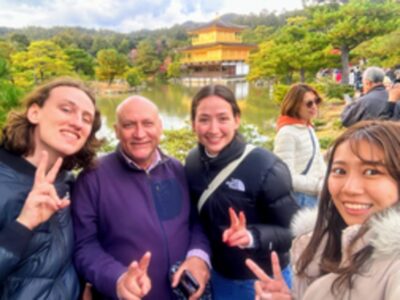
Kinkakuji, the Golden Pavilion, is the major draw on this route. The gold-covered pavilion beside the pond is one of Kyoto’s most recognizable sights. It is visually striking, but your visit follows a set walking path, and the site can feel quick compared with the time needed to reach it.
The best advice here is simple: go early if your schedule allows, and do not assume you can see Kinkakuji, Kitano Tenmangu, and Daitokuji in a rushed sequence. Bus spacing matters more than the number of stops on the map.
Daitokuji offers a temple district atmosphere with several sub-temples in the surrounding area. The exact admission arrangements and opening times are not specified here, so check locally before building your day around a particular sub-temple.
Kyoto Imperial Palace and Nishiki Market
The Kyoto Imperial Palace stop is near Doshisha University. The palace grounds provide open space and a useful change of pace after several compact temple visits.
You can pair this stop with central Kyoto, but allow time for walking. The palace area is not the same kind of quick stop as Nishiki Market. It needs more time if you want to understand the grounds rather than simply pass through.
The route returns to Shijo Karasuma and Nishiki Market. That makes the market a handy end point for a meal, snack, or final walk before returning to Kyoto Station.
Bus frequency, comfort, and weather
The biggest practical weakness is frequency. A bus interval of about 50 minutes means one missed departure can alter your whole afternoon. I would photograph or note the timetable at your first stop and plan around two or three priority sights, not every attraction listed.
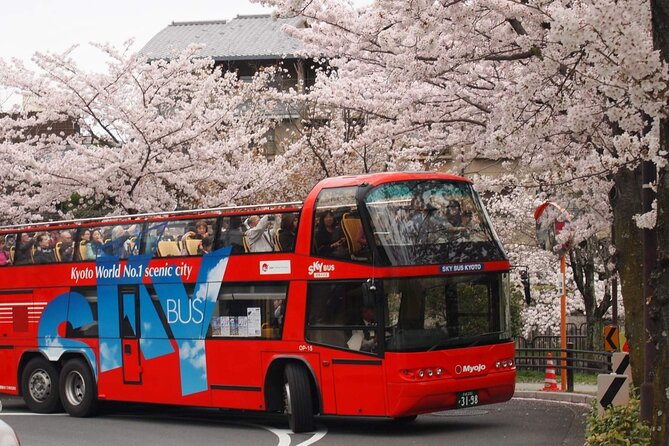
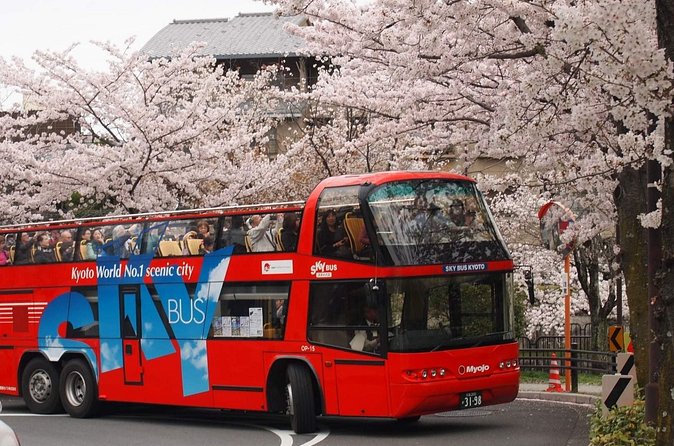
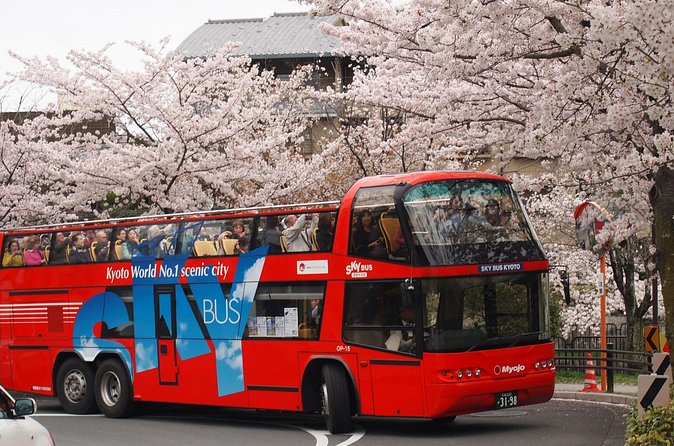
The bus has an open-top double-decker design, so the upper deck gives you broad views while moving through Kyoto. The experience is most pleasant in mild weather. A poncho is supplied if it rains, but rain protection does not make a wet day comfortable.
Heat is another concern. One direct account described the East side ride as enjoyable from the top, but also wished there had been water available during very hot weather. Bring your own water. Do not count on refreshments being supplied.
The seats are unreserved. If you need a particular seat, arrive early. If the bus is full, you may need to wait for the next one, which makes the long interval even more important.
Multilingual audio commentary is helpful for a first look, especially when you are passing places you do not have time to visit. It is not a substitute for a specialist guide, and no individual guide is named for this experience. You are getting recorded information through earphones rather than personal conversation.
Who will get the most from this pass
I would consider this bus if you are visiting Kyoto for the first time and want a simple overview before choosing where to spend more time. It also suits anyone who finds Kyoto’s spread-out temple districts tiring to connect by local transport.
Families may appreciate the straightforward format, and children under five can ride free while sitting on a parent or guardian’s lap. The open top deck can also make a long transfer feel more like sightseeing.
This is less suitable if you want a tightly timed day. It is also a poor fit if you plan to visit many sights quickly, dislike waiting, or are focused only on one neighborhood.
Most people can participate, and the stops are near public transportation. Still, expect walking at each attraction, especially up toward Kiyomizu-dera. The bus takes you near sights, not through their gates.
Should you book the Kyoto SKY HOP BUS?
Book it if you value easy orientation, panoramic city views, and a flexible pass that links Kyoto Station with the main eastern, northern, and central sights. The strongest parts are the coverage, the audio commentary, and the chance to avoid piecing together every connection yourself.
Think twice if $45.56 feels high for transport, or if your schedule is short and precise. The bus interval can be frustrating, and another operator or local public transport may offer better value.
My practical choice would be the one-day pass only if I planned a clear route around two or three major stops. Choose the two-day option if you want a gentler pace and are willing to accept that the bus is a scenic connector, not a fast shuttle. Check the price against other sellers before paying, and remember that the booking is non-refundable unless the operator cancels because of poor weather.
FAQ
How long does the Kyoto Hop-On, Hop-Off bus ride take?
The approximate stated duration is 1 hour and 8 minutes. Your total sightseeing time will be longer because you can get off at stops and continue later within the pass validity period.
What attractions can I visit on the route?
Stops include Kyoto Station, Ginkakuji, Heian-jingu Shrine, Gion, Kiyomizu-dera, Sanjusangendo, Nijo Castle, Kitano Tenmangu, Kinkakuji, Daitokuji, the Kyoto Imperial Palace area, Nishi Honganji, and Nishiki Market.
Can I get off and board again?
Yes. You can get on and off as often as you like at Sky Hop Bus stops during the valid period of your one-day or two-day pass.
Are seats reserved?
No. All seats are unreserved, so you may need to wait for another bus if seating is unavailable.
Is an audio guide included?
Yes. Multilingual audio commentary and earphones are included.
Are children under five charged?
Children under five can ride free when sitting on the lap of a parent or guardian.
What happens if the weather is bad?
The experience requires good weather. If it is canceled because of poor weather, you will be offered a different date or a full refund. Otherwise, the booking is non-refundable and cannot be changed.
Newest Kyoto experiences on the site
- Treasures of Kyoto: Gion & historical Walking Tour★ 5.0 · 6 reviews
- Whisk Your Own Matcha: A Zen Matcha Experience at Temple★ 3.6 · 7 reviews
- Kyoto tea town for matcha lovers★ 5.0 · 16 reviews
- Uji: Private immersion into Kyoto’s tea and reglious culture★ 5.0 · 17 reviews
- Kyoto Matcha Green Tea Tour★ 4.5 · 23 reviews
- Uji and Wazuka Matcha Farm Half Day Private Guided Tour★ 5.0 · 21 reviews
- Utilising upcycled Matcha! Creating matcha incense (Uji, Kyoto)★ 5.0 · 6 reviews
- Sacred Temple Yoga Experience in Japan★ 5.0 · 3 reviews
Kyoto Bus Tours, compared.
Fushimi Inari, Kinkakuji, Bamboo Grove 1 Day Bus Tour
Read our review →
Nara, Fushimi Inari Taisha, Arashiyama Bus Tour
Read our review →
Nara History Guided Half Day Bus Tour with Lunch
Read our review →
Nara History Guided Half Day Bus Tour with lunch
Read our review →Kyoto Bus Tour: Sagano Railway & Hozugawa River Boat Ride
Read our review →Browse the lists this tour appears in