
Reviewed · GION DISTRICT TOURS
Kyoto Gion Walking Tour for First Time Visitors
Gion is easiest to understand on foot, and this two-hour route gives you a useful first look at Kyoto’s old streets, shrines, temples, and wooden townhouses. Instead of simply pointing out pretty buildings, the guide explains what you are seeing and adds stories along the way. Guide Jay, praised for clear English, map skills, and detailed explanations, is one guide you may be assigned.
I like the small group limit of 15 and the way the walk links several major sights without charging separate entrance fees. I also like the finish at Yasaka Shrine, which leaves you in a handy part of eastern Kyoto. The main drawback is that the tour covers a lot of ground in about two hours, so stops are brief and Ninenzaka can feel crowded at popular times.
Key points at a glance
- A useful first-day orientation: The route covers Gion and several Higashiyama landmarks, helping you understand how this part of Kyoto fits together.
- Six historic stops: You visit Gion, Kennin-ji, Yasui-Konpiragu, Yasaka Pagoda, Ninenzaka, and Yasaka Shrine.
- Small-group format: The group can include up to 15 people, a more manageable size than a large city walk.
- Strong guide element: The guide handles navigation and adds cultural background, with Jay noted for excellent English and map-based explanations.
- Good value at $20: Admission fees and taxes are included, so you are paying mainly for route planning and interpretation.
- A practical finish: The tour ends at Yasaka Shrine rather than returning to the starting point.
Why this Gion walk works for a first day
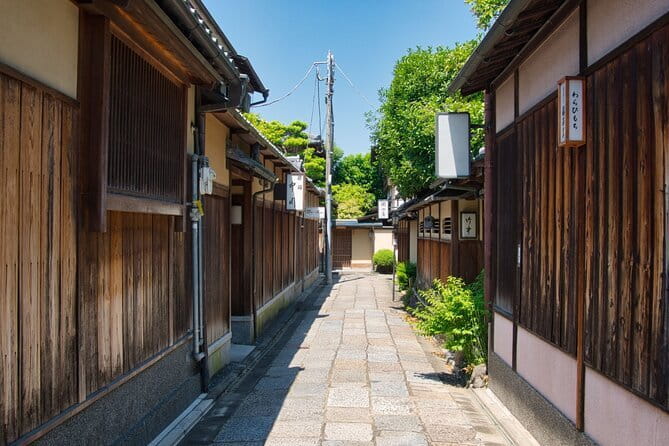
Gion can look simple on a map, but its appeal is in the small details: narrow lanes, dark timber facades, quiet temple grounds, stone paths, and streets where a modern shop can sit beside a centuries-old building. A solo walk may show you the main sights, yet you can easily miss the meaning behind them or take an inefficient route.
This experience gives you a framework. You begin near the Kyoto Tourist Lounge at 557-4 Komatsu Cho and finish at Yasaka Shrine, moving through Gion and into the Higashiyama area. The route is not built around one major attraction. Instead, it connects a string of smaller experiences, which is often the best way to see this part of Kyoto.
I especially like this format if you arrive in Kyoto without a clear sense of direction. The guide takes care of the route while you focus on the streets and buildings around you. The walks between stops also matter. Kyoto’s character often appears between the famous places, not only inside them.
The price is $20 per person. That is a fair rate for a two-hour guided walk in one of Kyoto’s most visited districts, especially since all listed fees and taxes are included. You are not paying for admission to a paid attraction, though. The value comes from the guide’s explanations, the planned route, and the time saved by not having to sort out the area alone.
More ways to walk Gion:
- Kyoto Geisha Walking Tour: Gion District & Hidden Gems
★ 4.7 · 3,273 reviews - Kyoto: Gion Magical Night Walking Tour with Geisha Trivia
★ 4.9 · 2,393 reviews - Kyoto: Gion Geisha District Walking Tour – Stories of Geisha
★ 4.7 · 2,187 reviews
Gion: wooden streets and teahouse country
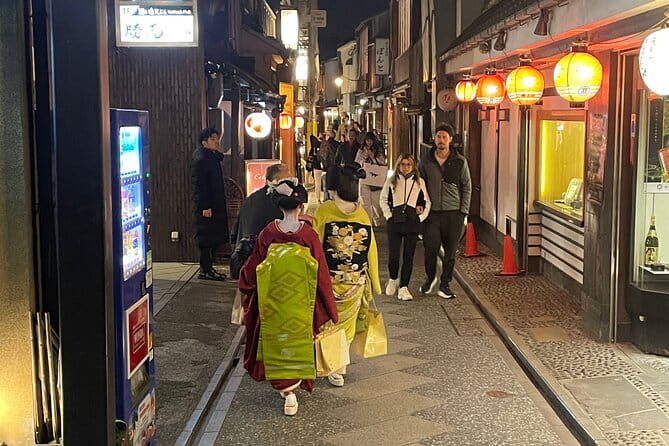
The tour begins in Gion, Kyoto’s best-known geisha district. Its traditional wooden machiya houses, teahouses, and narrow streets give the area its familiar look, but the district is more than a photo stop.
A guide can help you read the street scene with more care. You may pass a quiet entrance, a traditional facade, or a lane that seems ordinary at first glance. Context makes these details more useful. The tour’s purpose is not simply to lead you to a landmark, but to explain the area as you walk through it.
The Gion stop lasts about 20 minutes, making it the longest scheduled stop on the route. That gives the guide time to establish the district’s cultural setting before the tour moves on. The walk is especially useful for first-time visitors who want to return later and explore on their own.
There is a practical catch. Gion is a popular place, and the streets may be busy depending on the day and hour. Keep your group together, pay attention to the guide, and avoid treating working streets and private entrances as photo props. The walk offers a look at the district, not a guarantee of seeing geisha.
Kennin-ji: a quiet temple pause
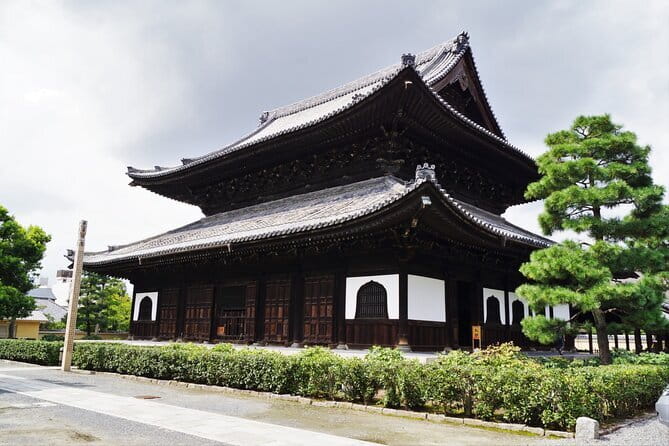
Kennin-ji is one of Kyoto’s oldest Zen Buddhist temples. It was founded in 1202 by Eisai, the monk associated with bringing Zen Buddhism and tea culture to Japan. Its location near Gion makes it a natural change of pace after the narrow streets of the district.
The scheduled stop is about 15 minutes. That is enough for an introduction and a short look around, but not enough for a slow, detailed temple visit. If you have a strong interest in Zen art, architecture, or temple gardens, you may want to return independently with more time.
That short visit is still valuable. The temple provides a calmer setting and shows how close Kyoto’s religious spaces are to its entertainment district. The contrast helps you understand the area rather than seeing Gion as a single theme park for old-fashioned scenery.
Because admission is listed as free for this experience, you do not need to budget an extra ticket at the stop. The guide’s explanation is the main benefit here. Listen for the connection between the temple, Zen practice, and tea culture, since those ideas help explain several parts of Japanese cultural life.
Yasui-Konpiragu and its unusual stone
Yasui-Konpiragu is a small Shinto shrine tucked into the Gion area. It is known for the enkiri and enmusubi stone, a large stone associated with ending unwanted ties and forming beneficial ones.
The stop lasts about 15 minutes. The shrine is not as visually grand as Yasaka Shrine or Yasaka Pagoda, but that is part of its appeal. It adds a less obvious destination to the route, the kind of place you could pass without knowing why it matters.
This is one of the clearest examples of the tour’s value over a basic map walk. A map can show you where the shrine is. A guide can explain why people visit the stone and how its meaning differs from the grander religious sites nearby.
As with any active place of worship, follow the guide’s lead and be respectful. The stop is brief, so you will get an introduction rather than a long ritual or personal visit. If this shrine catches your interest, note its location so you can come back later at your own pace.
More walking tours in Kyoto:
- Night Walk in Gion: Kyoto’s Geisha District
★ 4.5 · 2,003 reviews - Kyoto Gion Geisha District Walking Tour – The Stories of Geisha
★ 5.0 · 1,441 reviews - Nishiki Market Brunch Walking Tour (7 Tastings + Brunch)
★ 5.0 · 1,355 reviews - Kyoto Arashiyama Walking Tour: Bamboo, Monkeys, Gardens & Secrets
★ 5.0 · 1,216 reviews
Yasaka Pagoda and the Higashiyama streets
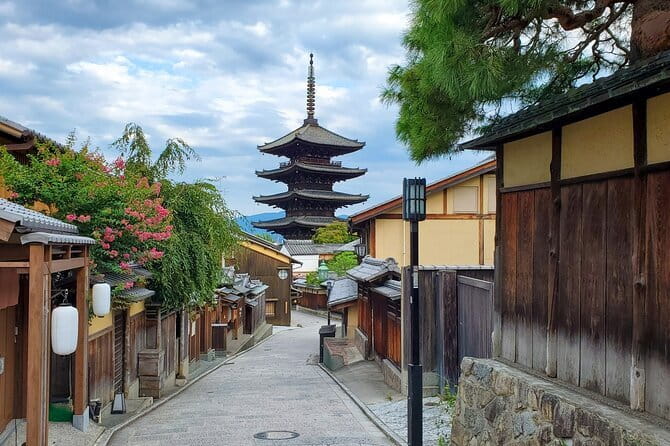
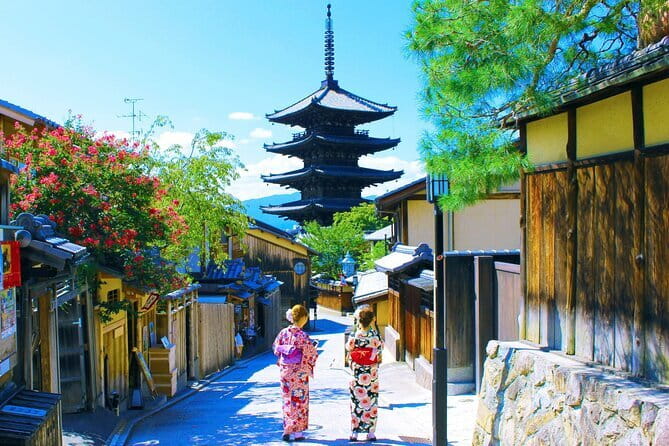
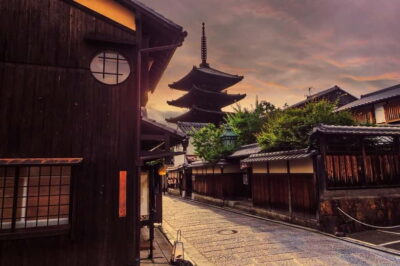
Hōkan-ji Temple, commonly called Yasaka Pagoda, is one of the most recognizable sights in eastern Kyoto. Its five-story pagoda rises above the traditional streets of the Higashiyama district, making it a strong visual marker as the tour moves away from central Gion.
The scheduled stop is about 10 minutes. That tells you what to expect: a quick orientation and a chance to appreciate the setting, not an extended temple visit. The pagoda is especially useful for understanding how Kyoto’s old streets are arranged around religious landmarks.
The area around the pagoda can be crowded, and the narrow streets leave little room for a group to stop for long. Your guide may need to keep the party moving so the route does not block other people. Take your photos quickly and listen for the meeting instructions.
Even with limited time, this stop earns its place. Yasaka Pagoda is an easy landmark to recognize later, and it helps connect the previous walk through Gion with the next stretch toward Ninenzaka.
Ninenzaka: a stone-paved slope with a catch

Ninenzaka is a historic slope lined with traditional buildings and shops. Its stone pavement and preserved architecture make it one of Kyoto’s most attractive walking streets, but its popularity also creates the tour’s most obvious crowd issue.
The planned stop is about 10 minutes. You will get a quick look at the street, its buildings, and its link to the wider Higashiyama district. The guide can point out details you might overlook while trying to avoid other pedestrians.
This is not the place for a relaxed browse during the tour. Ten minutes passes quickly, and the group still has to reach the final stop. I would treat Ninenzaka as an introduction, then return later if you want to shop, take photographs, or explore side streets.
Watch your footing on the stone slope, stay aware of the group, and do not expect a completely quiet old-Kyoto scene. The charm is real, but so is the foot traffic. The tour helps you see the street without asking you to spend your whole afternoon finding it.
Yasaka Shrine: a useful ending point
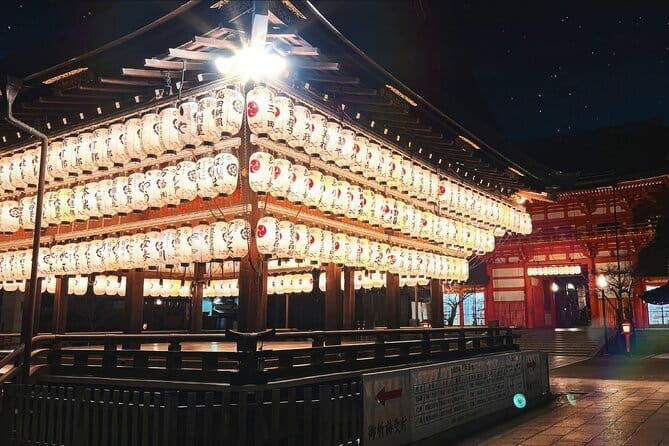
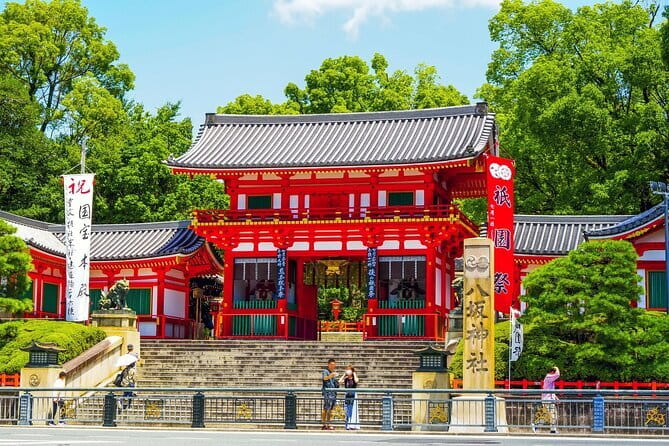
The walk ends at Yasaka Shrine, also known as Gion Shrine. Located at 625 Gionmachi Kitagawa, it is one of Kyoto’s major Shinto shrines and an important landmark at the edge of Gion.
The visit lasts about 10 minutes. That is enough for the guide to explain the shrine and point out its vermilion gates and lanterns, but again, this is a compact introduction. You will not have time for a long, unhurried exploration as part of the scheduled tour.
Ending here is practical. Yasaka Shrine is a clear place to orient yourself after the walk, and you can continue exploring Gion or the surrounding Higashiyama area on your own. The tour does not return you to the starting point, so make sure you understand that the route is one-way.
I like the finish because it gives the whole walk a clear endpoint rather than leaving you somewhere in a side lane. It also leaves you with one of Kyoto’s major shrines fresh in your mind, which can help when you revisit the area later.
What the guide adds
The guide is the heart of this experience. The route itself is easy to copy from a map, but a guide can explain the cultural background, point out less obvious places, and keep the group moving through streets that can be confusing on a first visit.
Jay receives particular praise for clear English, useful maps, and visual material that supports the explanations. The direct advice here is simple: ask questions. The schedule allows only short stops, but the guide can often clarify what you are seeing while you walk.
The strongest guide-based benefit is context. You hear why Kennin-ji matters, what makes Yasui-Konpiragu different, and how Gion’s streets relate to Kyoto’s religious sites. Those details make the rest of your Kyoto sightseeing easier to understand.
The small-group cap of 15 is also important. It is not a private tour, and 15 people can still feel like a crowd on a narrow lane. Still, it is more manageable than a large group, especially when the guide is explaining something in a busy street.
Timing, meeting point, and comfort
The total duration is about two hours. The listed stop times add up to roughly 80 minutes, leaving the remaining time for walking, explanations, and transitions. That is a sensible design for Gion, where the distance between sights is part of the experience.
You meet at the Kyoto Tourist Lounge, at 557-4 Komatsu Cho, and finish at Yasaka Shrine. The tour is near public transportation, though the supplied details do not identify a specific station or give a precise walking time from one.
Wear comfortable shoes. You will walk on ordinary streets and stone-paved sections, including the slope at Ninenzaka. Most people can participate, and service animals are allowed, but the route’s full accessibility details are not provided.
The tour requires good weather. If poor weather cancels it, you are offered another date or a full refund. You can cancel for a full refund up to 24 hours before the start time. Changes or cancellations inside that window are not accepted.
Snacks are not included. That is easy to manage, since the walk lasts about two hours, but you should plan your own food and drinks around the start or finish.
Who will get the most from this walk?
This experience fits first-time Kyoto visitors who want a quick orientation before exploring independently. It also suits anyone who prefers a guide for cultural background rather than simply following a printed route.
I would choose it if you have limited time in Kyoto and want to see several well-known parts of Gion and Higashiyama in one outing. The $20 price keeps the commitment low, and the walk can help you decide which places deserve a longer return visit.
It is less suitable if you want long temple visits, extended shopping time, or a slow photography walk. The schedule moves steadily, and each stop is short. It is also not the right choice if you expect an intimate private experience, since the group can include up to 15 people.
Should you book the Kyoto Gion Walking Tour?
Book this tour if you are new to Kyoto, want a clear route through Gion, and value explanations from an in-person guide. The combination of Gion, Kennin-ji, Yasui-Konpiragu, Yasaka Pagoda, Ninenzaka, and Yasaka Shrine gives you a useful overview for $20.
Skip it if you already know Gion well or prefer to spend 30 minutes or more at each temple and shrine. For most first-time visitors, though, this is a practical way to get oriented, learn what you are looking at, and leave with a better plan for exploring Kyoto on your own.
FAQ
How long does the Kyoto Gion Walking Tour last?
The tour lasts approximately two hours.
How much does the tour cost?
The price is $20 per person.
What places are included on the route?
The route includes Gion, Kennin-ji Temple, Yasui-Konpiragu, Hōkan-ji Temple, also called Yasaka Pagoda, Ninenzaka, and Yasaka Shrine.
Where does the tour begin and end?
The tour begins at the Kyoto Tourist Lounge at 557-4 Komatsu Cho and ends at Yasaka Shrine at 625 Gionmachi Kitagawa.
How large is the tour group?
The experience allows a maximum of 15 people.
Are entrance fees included?
All listed fees and taxes are included. The stops are listed with free admission.
What happens if the weather is poor?
The experience requires good weather. If it is canceled because of poor weather, you can choose another date or receive a full refund.
Newest Kyoto experiences on the site
- Treasures of Kyoto: Gion & historical Walking Tour★ 5.0 · 6 reviews
- Whisk Your Own Matcha: A Zen Matcha Experience at Temple★ 3.6 · 7 reviews
- Kyoto tea town for matcha lovers★ 5.0 · 16 reviews
- Uji: Private immersion into Kyoto’s tea and reglious culture★ 5.0 · 17 reviews
- Kyoto Matcha Green Tea Tour★ 4.5 · 23 reviews
- Uji and Wazuka Matcha Farm Half Day Private Guided Tour★ 5.0 · 21 reviews
- Utilising upcycled Matcha! Creating matcha incense (Uji, Kyoto)★ 5.0 · 6 reviews
- Sacred Temple Yoga Experience in Japan★ 5.0 · 3 reviews
Gion District Tours, compared.
Kyoto Geisha Walking Tour: Gion District & Hidden Gems
Read our review →
Gion Magical Night Walking Tour with Geisha Trivia
Read our review →
Gion Geisha District Walking Tour – Stories of Geisha
Read our review →
Best of Kyoto: Gion, Geisha, Pagodas & Cobblestones
Read our review →
Kyoto Night Foodie Tour in Gion (9+ dishes + 6 Sake tastings)
Read our review →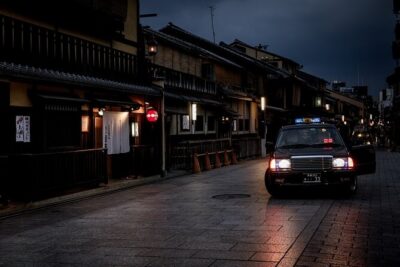
Kyoto Gion Geisha District Walking Tour – The Stories of Geisha
Read our review →
Kyoto Gion: 2-Hour Geisha Culture & History Walking Tour
Read our review →Browse the lists this tour appears in