
Reviewed · GION DISTRICT TOURS
Kyoto Gion Tea ceremony & Wabi-sabi Walking Tour
Kyoto’s tea ceremony makes more sense after you have first walked through the places and objects that shaped it. This tour takes you from Gion’s old streets to Kenninji, pottery, Japanese paintings, a dry Zen garden, and finally a quiet matcha ceremony with a tea master. The point is not simply to drink tea. It is to notice the beauty in humble things, changing seasons, and careful gestures.
I like the small group of no more than seven, which gives you a fair chance to ask questions without being lost in a crowd. I also like the way the tour builds toward the ceremony instead of dropping you into it cold. The main drawback is its strict timing: if you arrive late, you can miss the group and lose the ceremony altogether. One booking also had a time-detail problem, so check your start time carefully before setting out.
Key points to know before booking
- The tea ceremony comes after the walking lesson: Gion, Kenninji, pottery, art, and Zen gardens give context to the final matcha experience.
- You visit two temples: Entrance fees for both are included, including Kenninji and Entoku-in.
- The group is capped at seven: This suits people who prefer conversation and room for questions.
- Masa may be your guide: One particularly praised guide is Masa, who helped explain temple details and made the walk enjoyable.
- The ceremony includes more than tea: You choose a bowl according to season and taste, then receive matcha and a small seasonal sweet.
- The route is not wheelchair-friendly: Some locations cannot accommodate wheelchairs or strollers, and the ceremony is for children aged seven and older.
Why this Kyoto tea tour begins with wabi-sabi
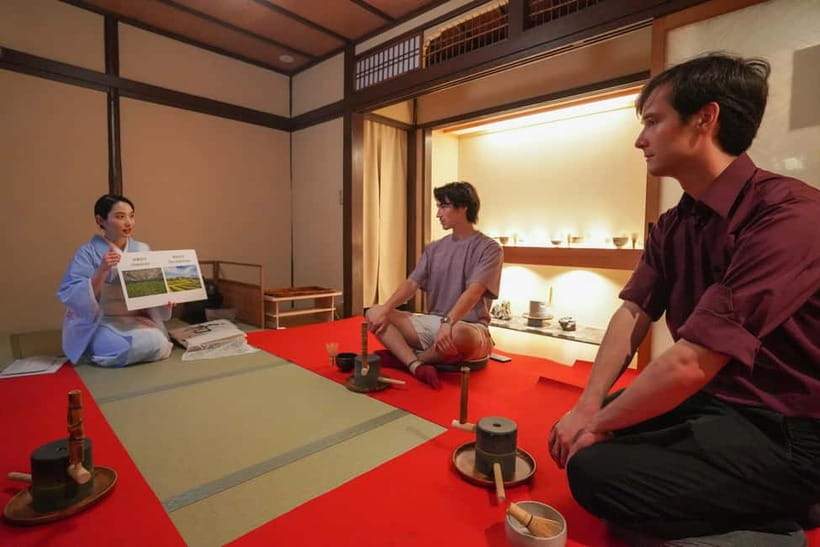
Many tea experiences start and finish with a bowl of matcha. This one takes a longer route, both literally and culturally. Over 210 minutes, you walk through Gion and Higashiyama while your guide explains how tea, Zen practice, Japanese art, pottery, and the idea of wabi-sabi fit together.
The tour presents tea ceremony as a way to notice inward beauty rather than simply admire outward polish. That idea can sound abstract in a classroom, but here you meet it through tea bowls, old temples, dry gardens, paintings, and the small actions of preparing tea.
You should not expect a formal academic lecture. The value lies in having an English-speaking guide point out what you might otherwise pass without noticing. The guide helps connect the city walk to the final ceremony, so the quiet gestures at the tea room have more meaning.
The experience is especially useful if you are new to Japanese tea culture. You do not need to arrive with a working knowledge of Zen or Japanese aesthetics. Come ready to look closely, listen, and accept that the tour is about feeling an idea as much as defining it.
More ways to walk Gion:
- Kyoto Geisha Walking Tour: Gion District & Hidden Gems
★ 4.7 · 3,273 reviews - Kyoto: Gion Magical Night Walking Tour with Geisha Trivia
★ 4.9 · 2,393 reviews - Kyoto: Gion Geisha District Walking Tour – Stories of Geisha
★ 4.7 · 2,187 reviews
Meeting at Gion-Shijo Station
The meeting point is in front of the Izumo no Okuni statue, directly outside Exit 5 of Gion-Shijo Station on the Keihan Line. Look for an orange sign marked Magical Trip Tour.
This is an important detail in a busy part of Kyoto. Gion-Shijo has several exits and plenty of foot traffic, so do not simply enter Gion and hope to spot the group. Give yourself time to find Exit 5 and the statue. The tour starts on time, and you cannot join later, receive a refund, or reschedule if you miss the group.
The route is a walking tour, so wear shoes that can handle several hours on city streets and temple grounds. The schedule includes several short stops, followed by longer visits at Kenninji and Entoku-in and a 45-minute tea ceremony.
Gion sets the scene in 30 minutes
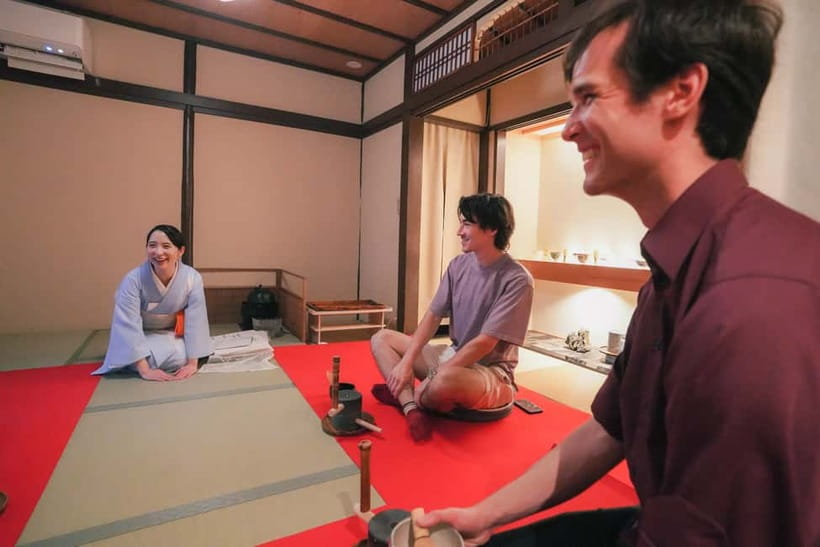
The first guided section takes you through Gion, Kyoto’s best-known traditional entertainment district. The purpose here is not simply to take pictures of old buildings. Your guide begins placing tea culture in the setting where it developed and remains visible today.
You spend about 30 minutes in this area. That gives you enough time for an introduction without using up the hours needed for the temples and ceremony. The guide may also help you get your bearings in central Kyoto before the group moves toward Higashiyama.
One stop is a well-known matcha shop. This gives you a direct look at the ingredient behind the tea ceremony, rather than treating matcha as just another café drink. The experience does not focus only on flavor. It also explains why matcha and tea ceremony are so closely linked with Kyoto.
Gion can be busy, and this part of the walk will not feel like a private retreat. That is part of the setting. The tour uses the city itself as the first classroom, then moves into quieter temple spaces.
Kenninji offers the first major temple visit
Kenninji, described as Kyoto’s oldest Zen temple, is one of the main stops. You spend about 30 minutes here with a guided visit.
This is where the tour’s Zen connection becomes more concrete. Your guide explains the history of the tea ceremony and the ideas behind it, helping you see why tea is tied to discipline, attention, and simplicity. The stop is not just a quick photograph outside a gate.
Kenninji is also a useful counterpoint to the busy streets of Gion. A temple visit asks you to slow your pace and look at spaces designed for quiet attention. The tour’s focus on wabi-sabi fits naturally here, particularly as you move from large historic settings toward smaller art and craft details.
The schedule gives you a clear amount of time, but not unlimited time. If you prefer to study every temple detail at length, you may find the group pace brisk. For most people, the guide’s explanation will be more valuable than wandering without context.
More tea ceremonies in Kyoto:
- Kyoto: Tea Ceremony in a Traditional Tea House in Kiyomizu
★ 4.9 · 3,519 reviews - Kyoto: Tea Ceremony Ju-An at Jotokuji Temple
★ 4.9 · 3,207 reviews - Kyoto: 45-Minute Tea Ceremony Lesson Experience
★ 4.3 · 2,378 reviews - Kyoto: Table-Style Tea Ceremony at a Kyo-Machiya
★ 4.9 · 1,211 reviews
Short Higashiyama stops add craft and texture
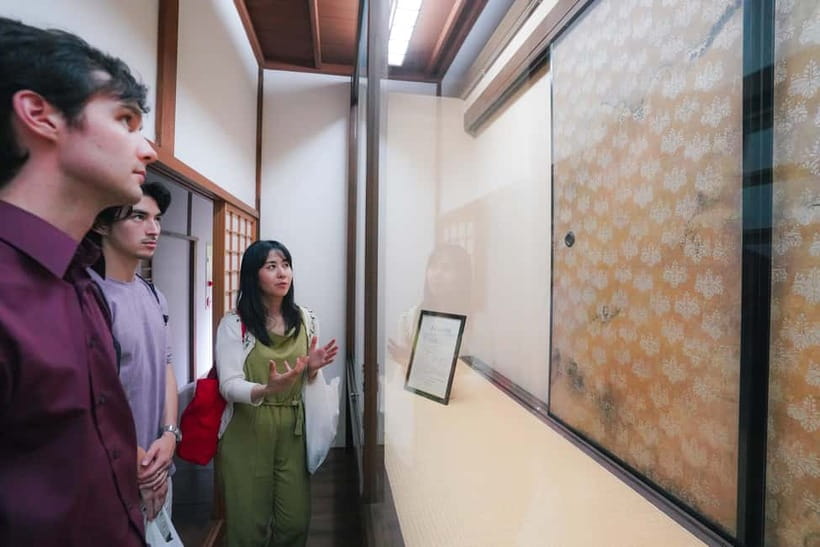
After Kenninji, the route includes several short stops in Higashiyama. Each is listed at about 10 minutes, so these are focused visits rather than long breaks.
One stop includes a tea ceremony-related setting, and another offers a chance to look at local sights. A pottery shop is especially important to the theme. Here you can admire tea bowls connected with wabi-sabi and see how the objects used in tea carry their own visual character.
This is a practical strength of the tour. You are not told that the bowl matters and then asked to accept the idea. You get to look at actual bowls and compare their shapes, surfaces, and seasonal feel. The guide can explain what makes these utensils meaningful within the ceremony.
There is also time for shopping and browsing. Do not expect a long retail session. Ten minutes is enough for a quick look, but not for a leisurely hunt through every shelf. If you hope to buy pottery, keep your expectations modest and remember that the central purpose is understanding the objects before your own ceremony.
Entoku-in brings paintings and a dry Zen garden
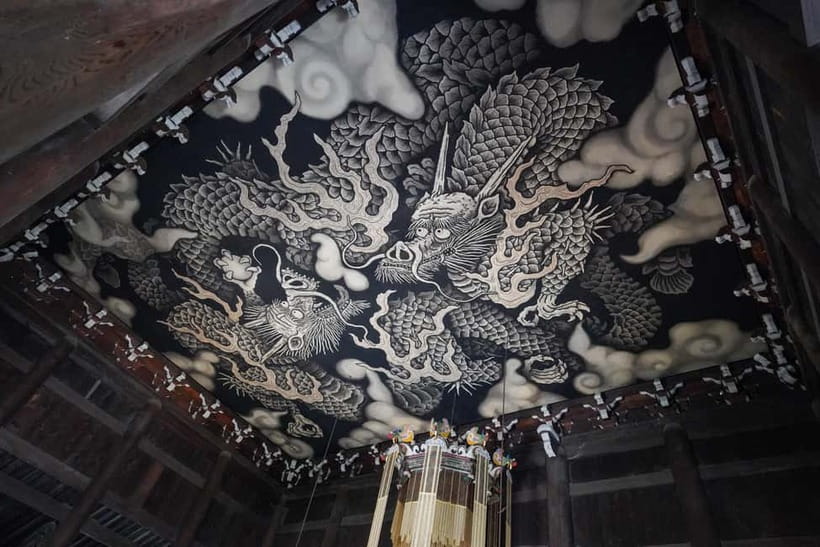
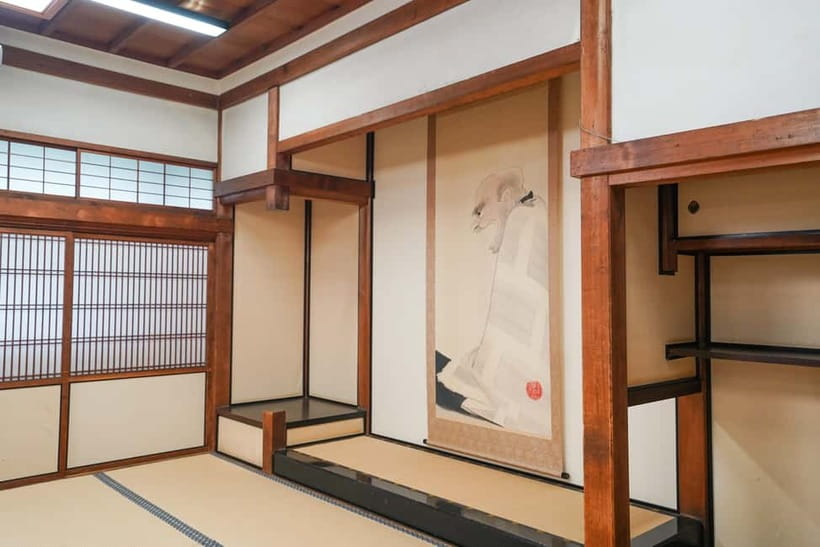
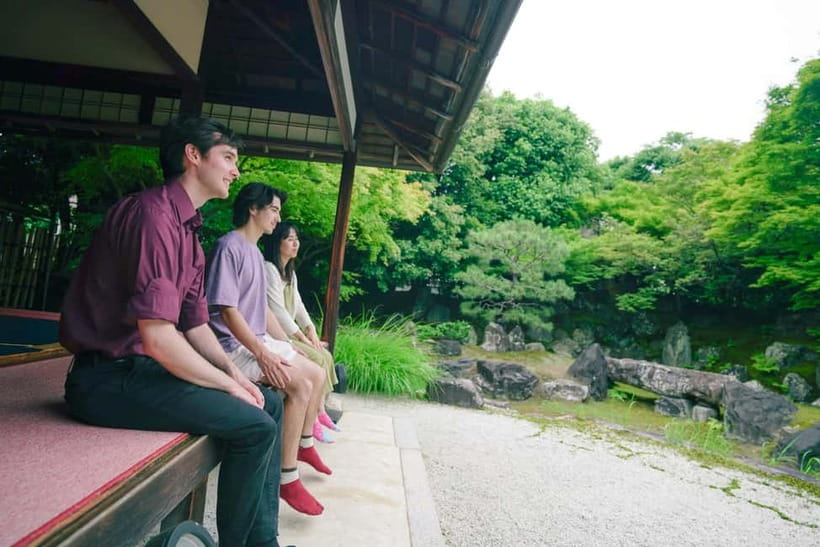
Entoku-in is the next substantial temple visit, with about 30 minutes for sightseeing and explanation. This quieter stop adds Japanese paintings and a karesansui, or dry landscape Zen garden, to the tour.
The garden is made for looking rather than walking through. That makes it a good place to consider the tour’s central idea: beauty does not always depend on decoration, size, or spectacle. Lines, stones, empty space, and careful arrangement can carry the experience.
Your guide helps link the temple art and garden to wabi-sabi. You may find the concept easier to grasp here than through a definition alone. Instead of chasing a checklist of famous sights, you are asked to pay attention to texture, restraint, and the feeling of a place.
Thirty minutes is enough for a calm visit, but the tour still has a timetable. If you are hoping for a long period of silent garden contemplation, this may feel short. The benefit is that Entoku-in works as part of a larger progression. You will soon use what you have seen when choosing a bowl and taking part in the ceremony.
Choosing a bowl before the 45-minute ceremony
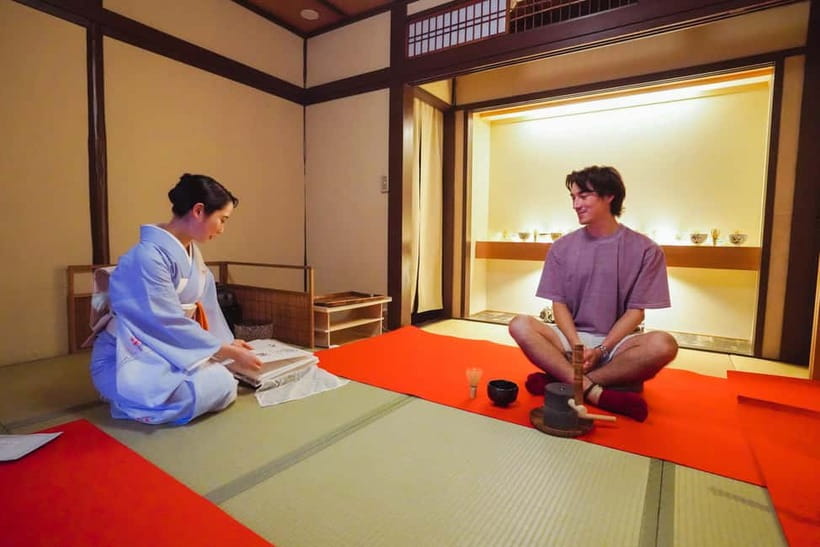
The final tea ceremony lasts about 45 minutes and is led by a tea master. This is the heart of the experience, but it works better because the earlier walk has prepared you for it.
You choose a tea bowl according to the season and your taste. That choice gives you a personal connection to the object in front of you. Rather than receiving an anonymous cup and moving quickly to the drink, you get a chance to notice the bowl as part of the ceremony.
The experience includes matcha and a small seasonal snack, usually a Japanese sweet. The food is not presented as a full meal, so plan to eat separately if you need lunch or dinner. Here, the sweet serves as part of the tea ritual and balances the strong, grassy taste of matcha.
The ceremony is described as authentic and is conducted under a tea master. You will learn about the proper flow of the ritual while also taking part in it. Some visitors may find the formality calming. Others may wish for more hands-on activity. This is a time to watch carefully and follow the instructions rather than expect a casual tea tasting.
The final ceremony also brings together the themes from the walk. You have seen the city, the temple spaces, the garden, the paintings, and the bowls. Now you experience how those ideas appear in a sequence of deliberate movements.
What the guide adds to the experience
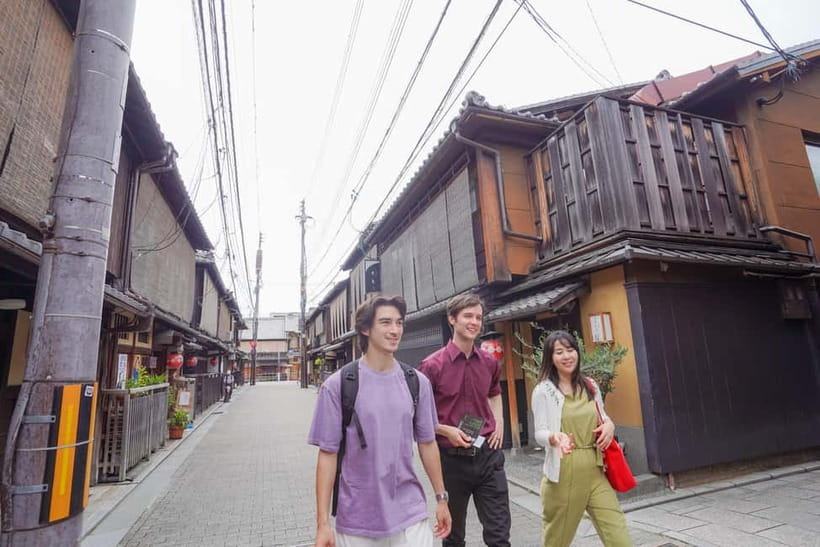
The guide is more than a person who leads you from one address to another. The tour depends on explanations, because the meaning of the stops is not always obvious at first glance.
Masa is one guide named in the experience, and his warm manner has been singled out in feedback. He has helped with temple details and even made room for practical moments such as adding stamps to a personal stamp book at a shrine or temple. That small detail says something useful about the tone: the tour can make space for personal interests while keeping to its route.
The most praised qualities are the detailed explanations of the temples and tea ceremony, along with the sense that the final ceremony feels authentic. If you want a guide who can explain why an object or garden matters, this is a better fit than a simple sightseeing walk.
The tour is conducted in English. Since the group is limited to seven, you should have a better chance to ask about unfamiliar terms or customs than on a large bus outing. Still, the exact guide and group mix can vary, so do not assume Masa will lead every departure.
Is $92 a fair price?
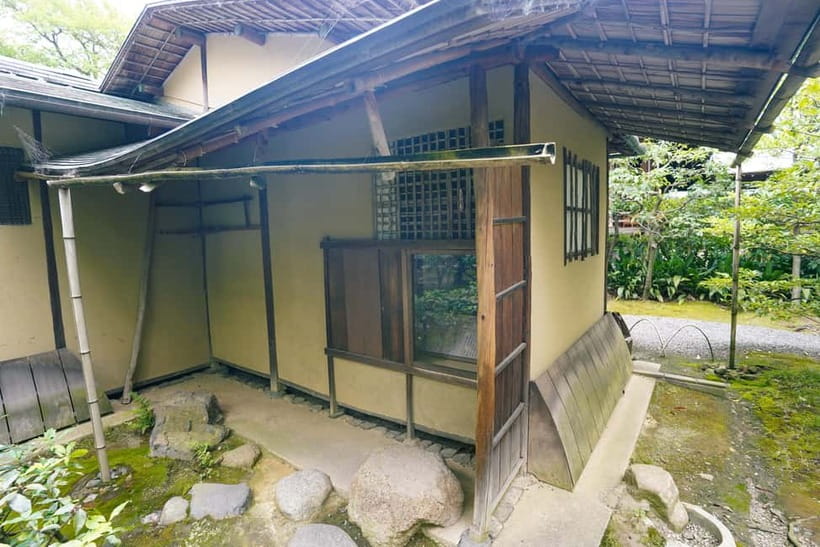
At $92 per person, this is not the cheapest way to drink matcha in Kyoto. You can find simpler tea tastings for less. The price makes more sense if you want the full three-and-a-half-hour program, including two temple admissions, a local English-speaking guide, a tea master, matcha, a seasonal snack, and photos taken during the tour.
You are also paying for the structure. The guide connects Gion, Zen temples, pottery, gardens, and tea rather than leaving you to assemble those pieces yourself. For a first visit to Kyoto, that context can be worth more than a stand-alone cup of tea.
The value is weaker if you mainly want a quick ceremony or already know Japanese tea culture well. In that case, much of the walking and explanation may feel like extra time. The tour suits you best if you want the ceremony to make cultural sense, not just serve as a short photo opportunity.
Weather, age, and walking concerns
Kyoto can be very hot or very cold. Summer temperatures may reach 40°C, while winter temperatures can fall to -5°C. Dress for the forecast, carry water in hot weather, and use warm layers in winter. The tour may be cancelled if weather conditions become unsafe.
The route includes places that are not accessible by wheelchair or stroller, so this is not suitable for wheelchair users. A child must be at least seven years old to take part in the ceremony. Younger children may come along, but one adult must stay outside the facility with them during that portion.
You should also keep your schedule clear after booking. Free cancellation and rescheduling are available until 24 hours before the start time. Within the final 24 hours, the strict no-late-entry rule matters much more. One person had to leave after only 90 minutes because of a time confusion and missed the ceremony, so confirm the start time and meeting point before the day begins.
Who should book this Gion experience?
I would choose this tour if you want a cultural explanation before the ceremony, prefer a small group, and have about half a day available for walking. It is a good match for first-time visitors who want help understanding the role of tea, Zen, pottery, and Japanese aesthetics.
It also suits people who enjoy quiet observation. The walk includes shopping and sightseeing, but the main reward comes from looking closely at bowls, gardens, paintings, and ritual gestures.
I would hesitate if you have limited mobility, need a flexible start time, or want a short and informal matcha tasting. Families with children under seven will need to arrange adult supervision during the ceremony. If you are comfortable with the pace and arrive early, the combination of Gion streets, two temples, wabi-sabi, and a tea master gives you a well-shaped introduction to Kyoto’s tea culture.
FAQ
How long does the Kyoto Gion tea ceremony tour last?
The tour lasts 210 minutes, or about three and a half hours.
How much does the tour cost?
The price is $92 per person.
Where does the tour meet?
Meet in front of the Izumo no Okuni statue, directly outside Exit 5 of Gion-Shijo Station on the Keihan Line.
How will I identify the guide?
The guide will hold an orange signboard marked Magical Trip Tour.
What language is the tour conducted in?
The live tour guide speaks English.
How large is the group?
The tour is limited to seven participants, although other participants may be joining your departure.
What does the tea ceremony include?
The ceremony includes matcha, a small seasonal snack, and the chance to choose a tea bowl according to the season and your taste.
Which temples are included?
The route includes visits to Kenninji and Entoku-in, and the entrance fees for two temples are included.
Can children join the tea ceremony?
Only children aged seven and older can take part in the tea ceremony. Younger children may come on the tour, but one adult must accompany them outside the facility during the ceremony.
Is the tour wheelchair accessible?
No. Some locations on the route are not accessible by wheelchair or stroller, and the experience is not suitable for wheelchair users.
More Walking Tours in Kyoto
- Night Walk in Gion: Kyoto’s Geisha District
★ 4.5 · 2,003 reviews - Kyoto Gion Geisha District Walking Tour – The Stories of Geisha
★ 5.0 · 1,441 reviews - Nishiki Market Brunch Walking Tour (7 Tastings + Brunch)
★ 5.0 · 1,355 reviews - Kyoto Arashiyama Walking Tour: Bamboo, Monkeys, Gardens & Secrets
★ 5.0 · 1,216 reviews
Newest Kyoto experiences on the site
- Treasures of Kyoto: Gion & historical Walking Tour★ 5.0 · 6 reviews
- Whisk Your Own Matcha: A Zen Matcha Experience at Temple★ 3.6 · 7 reviews
- Kyoto tea town for matcha lovers★ 5.0 · 16 reviews
- Uji: Private immersion into Kyoto’s tea and reglious culture★ 5.0 · 17 reviews
- Kyoto Matcha Green Tea Tour★ 4.5 · 23 reviews
- Uji and Wazuka Matcha Farm Half Day Private Guided Tour★ 5.0 · 21 reviews
- Utilising upcycled Matcha! Creating matcha incense (Uji, Kyoto)★ 5.0 · 6 reviews
- Sacred Temple Yoga Experience in Japan★ 5.0 · 3 reviews
Gion District Tours, compared.
Kyoto Geisha Walking Tour: Gion District & Hidden Gems
Read our review →
Gion Magical Night Walking Tour with Geisha Trivia
Read our review →
Gion Geisha District Walking Tour – Stories of Geisha
Read our review →
Best of Kyoto: Gion, Geisha, Pagodas & Cobblestones
Read our review →

Kyoto Night Foodie Tour in Gion (9+ dishes + 6 Sake tastings)
Read our review →
Kyoto Gion Geisha District Walking Tour – The Stories of Geisha
Read our review →
Kyoto Gion: 2-Hour Geisha Culture & History Walking Tour
Read our review →Browse the lists this tour appears in