
Reviewed · KYOTO TEMPLE TOURS
Kyoto E-Bike Tour of Hidden Gems, Backstreets and Temples
Kyoto’s best moments are often found between the famous sights. This four-hour e-bike tour lets you move from Gion’s canal streets to forested shrine paths, temple grounds, and the Imperial Palace without spending the morning studying a map. The route covers a surprising amount of the city, yet the small maximum of eight people keeps the ride manageable.
I especially like the e-bikes, which make Kyoto’s distance and occasional hills much easier, and the local guides, including Ben, Yuki, and Jay, who explain religion, history, food, and daily life in clear English. The main drawback is that this is not a pure cycling tour: you will park often and walk at temples and shrines, so comfortable shoes matter.
Key points to know before you book
- A wide-ranging four-hour route: You visit seven major areas, from Gion Shirakawa to the Philosopher’s Walk.
- E-bike and helmet use included: You can cover more ground than on foot without needing serious cycling strength.
- Small group, maximum eight people: It is easier to hear the guide and stay together.
- Several local English-speaking guides: Ben, Yuki, and Jay have led tours praised for clear explanations and useful Kyoto advice.
- Walking is part of the experience: Plan on getting off the bike at temples, shrines, and gardens.
- Best for visitors over 145 centimeters: Children under 12 are not recommended, and moderate fitness is required.
Why an e-bike works so well in Kyoto
Kyoto is compact on a map but spread out enough to make sightseeing on foot tiring. Gion, Nanzen-ji, Heian Shrine, Shimogamo Shrine, the Imperial Palace, and the Philosopher’s Walk do not form one short walking circuit. Public transportation can connect them, but you lose time finding stations, waiting, and walking the final blocks.
An e-bike gives you a useful middle ground. You get the pace and fresh air of cycling, but the motor takes the sting out of longer stretches. You still need to pay attention, follow the guide, and handle the bike properly, but the tour is not aimed at serious cyclists.
I would not call it effortless in every sense. You will ride through city streets and stop frequently. You also need enough balance and confidence to cycle in an urban setting. The stated requirement is moderate physical fitness, with a minimum height of 145 centimeters. The tour is not recommended for children under 12.
The group limit of eight is important here. A large cycling group can become a slow-moving line that blocks streets and loses people at crossings. With a smaller group, the guide can keep an eye on everyone, answer questions, and adjust explanations to the group.
More bike days around Kyoto:
- Hidden Kyoto E-Biking tour
★ 5.0 · 1,843 reviews - Bike Tour Exploring North Kyoto plus Lunch
★ 5.0 · 1,087 reviews - Arashiyama Bamboo Forest & Hidden Gems Bike Tour (Early Bird)
★ 5.0 · 613 reviews
Starting in Gion Shirakawa at 9:00 a.m.
The meeting point is Kyoto Tourist Lounge Gion at 557-4 Komatsu Cho, in the Gion area. The tour begins at 9:00 a.m. and returns to the same meeting point, which makes the morning easy to fit into a larger Kyoto plan.
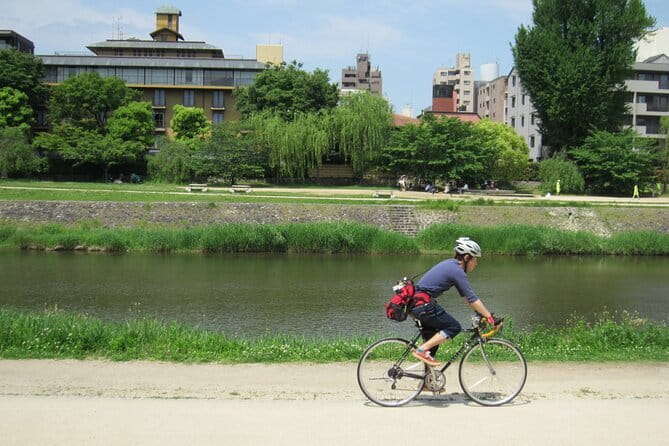
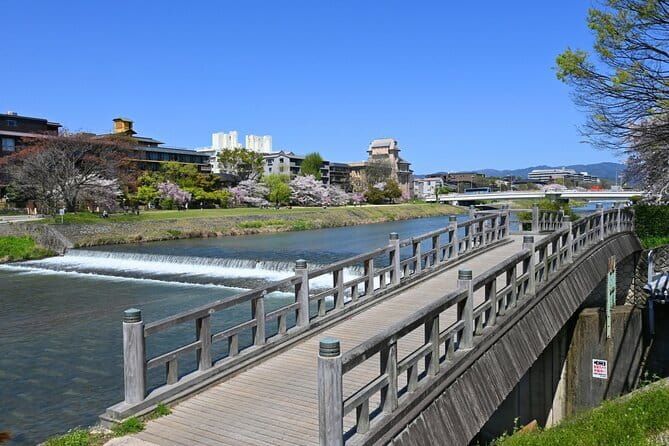
Gion Shirakawa is a smart place to begin. Along the Shirakawa Canal, you see wooden buildings, narrow streets, bridges, and a quieter side of the famous entertainment district. It feels more intimate than simply passing through Gion’s main lanes by taxi or bus.
The scheduled stop is about 30 minutes, including time to look around and take photos. Keep your camera ready, but do not expect a long, leisurely visit to every corner. This opening stop helps you settle onto the bike and gives the guide a chance to introduce Kyoto’s traditional neighborhoods.
Starting early also helps. Kyoto’s popular districts become busier as the day goes on, and the morning light is useful for photographs along the canal. The tour does not promise empty streets, but the early departure gives you a better chance at a calm beginning.
Nanzen-ji and the city’s eastern edge
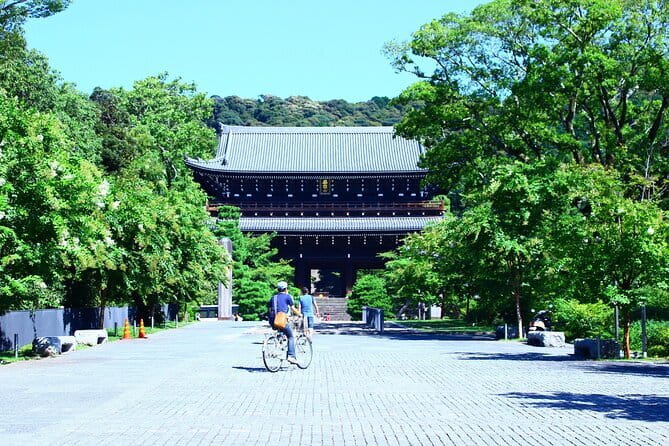
From Gion, the route heads toward Nanzen-ji, one of Kyoto’s major Zen temple complexes. The temple sits near the Higashiyama mountains, and its spacious grounds feel very different from the close streets of Gion.
You will have around 30 minutes here. That is enough to see the principal areas, listen to an explanation, and take in the architecture, gates, gardens, and broad temple spaces. Nanzen-ji is also a useful stop for understanding Zen Buddhism in Kyoto, particularly when the guide can explain what you are looking at instead of leaving you with a quick photograph and no context.
The tour information lists admission as free for this stop. Still, remember that a timed group tour cannot give you the same unhurried experience as spending half a day at Nanzen-ji on your own. If you want to explore every subtemple or sit quietly in a garden, plan a return visit.
This is one of the places where the e-bike earns its keep. You reach a major temple without using up your legs before the rest of the morning has even started.
Heian Shrine’s grand approach
Heian Shrine brings a different visual mood. Its large red and white structures recall an older imperial style, and the broad approach gives you a dramatic change from Nanzen-ji’s restrained Zen setting.
The visit lasts about 30 minutes. That makes it a good photo stop and a useful introduction, but not a full garden visit. The shrine grounds include more than the time allows, so you should think of this stop as a guided overview.
I like the contrast in the route. Kyoto is not one continuous old-town scene. You move between quiet temple grounds, formal shrine architecture, wooded paths, and major civic spaces. Seeing those differences by bike helps you understand the city’s layout instead of experiencing each place as an isolated attraction.
The stop is listed as free admission. The guide can also help explain the basic differences between a Buddhist temple and a Shinto shrine, a distinction that can otherwise blur when you are visiting several religious sites in one morning.
More temples worth an hour in Kyoto:
- Kyoto: Tea Ceremony Ju-An at Jotokuji Temple
★ 4.9 · 3,207 reviews - Arashiyama Bamboo, Temple, Monkeys, or Secret Sake Brewery
★ 4.8 · 886 reviews - Kyoto: Arashiyama Bamboo Forest, Monkeys, Matcha & Temple Tour
★ 5.0 · 759 reviews - Kyoto Zen Meditation & Garden Tour at a Zen Temple with Lunch
★ 5.0 · 441 reviews
Honen-in, a quiet pause on the route
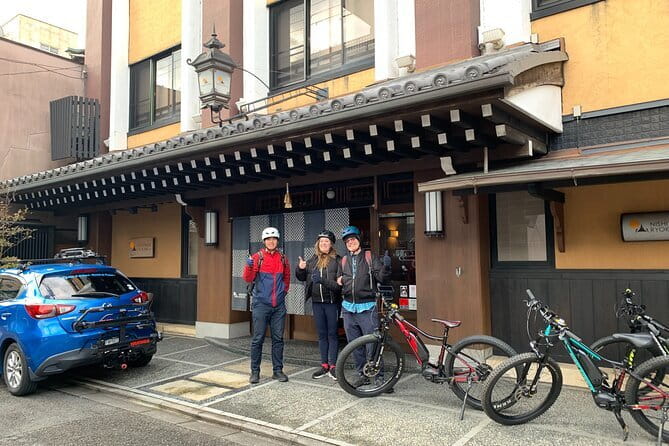
Honen-in is likely to feel calmer than the larger sights. Tree-lined paths lead you through a smaller temple setting, where the atmosphere matters as much as any single building. The scheduled visit is about 20 minutes.
This is a short stop, so you should not expect a full exploration. It is better viewed as a peaceful break in the middle of a fairly active route. You may walk through the grounds, see the main hall from the permitted areas, and hear about Honen’s teachings.
Admission is not included at this stop. The supplied tour details do not give the extra charge, so check the current arrangements when booking or at the meeting point. This is a small but important detail if you are carrying only a set amount of cash.
Wear shoes that are comfortable for walking. Several people who enjoyed the tour specifically pointed out that cycling is only part of the morning. At Honen-in and the other religious sites, you will leave the bike behind and explore on foot.
Shimogamo Shrine and the old forest
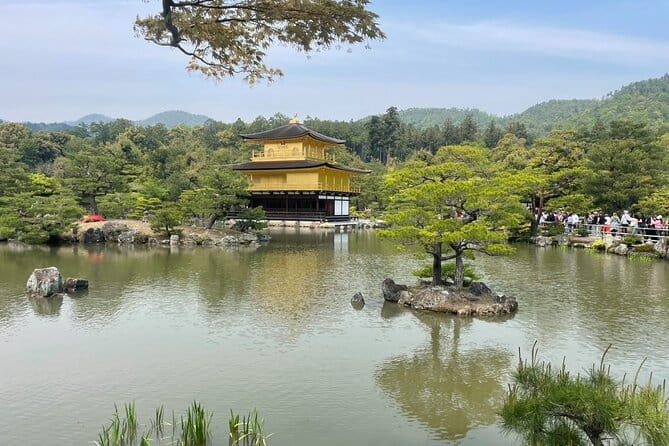
Shimogamo Shrine is one of Kyoto’s oldest Shinto sites. It sits at the northern edge of the central city, surrounded by ancient forest and quiet paths. That setting gives the stop a stronger sense of separation from the streets than you might expect.
You get about 30 minutes here. The guide can explain the shrine’s role and point out details you might pass without noticing. The forested approach is also a welcome change after riding through built-up districts.
The shrine is listed as free to enter. As with the other stops, the tour gives you an introduction rather than unlimited time. If the forest and shrine appeal to you most, note the location and return later for a slower walk.
This section of the ride shows the practical value of a guide who knows Kyoto’s streets. You do not have to work out the best connection between distant areas, and you can ask about restaurants, shopping, or other places to visit after the tour. Ben, Yuki, and Jay are each described as local or highly familiar with Kyoto, with clear English and a willingness to answer questions.
Kyoto Imperial Palace in Kyoto Gyoen
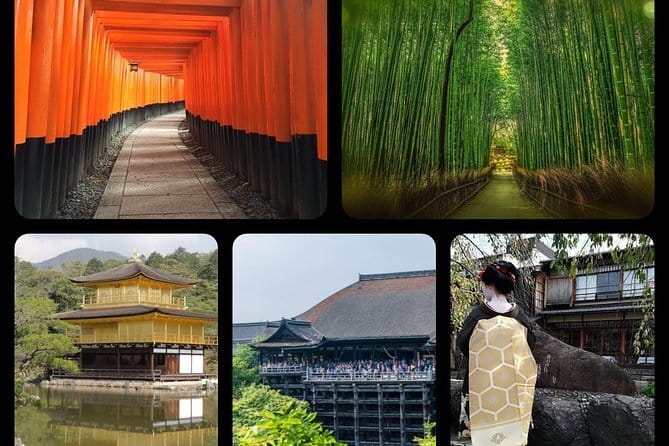
The Kyoto Imperial Palace sits within Kyoto Gyoen National Garden, a broad green area in the middle of the city. The former imperial residence gives the tour another strong contrast: formal court architecture and wide open grounds after the smaller lanes and wooded temples.
The planned stop is around 30 minutes, with free admission listed. That timing lets you see the principal setting and hear the basic story of the palace, but it is not enough for every building or garden detail. If the imperial court period interests you, you may want to return independently.
The palace also offers a useful rest point in the route. Four hours on a bike can feel fast, and open grounds make it easier to pause, take photographs, and listen without standing in a cramped street.
Do not assume that a visit to the Imperial Palace means an indoor tour of every room. The supplied details promise a look at the palace area and its traditional architecture, not a private or extended interior visit. Treat it as a guided overview of one of Kyoto’s central landmarks.
The Philosopher’s Walk and the final ride
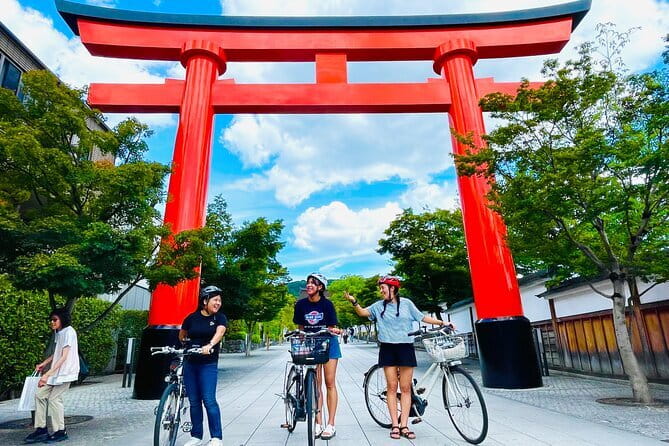
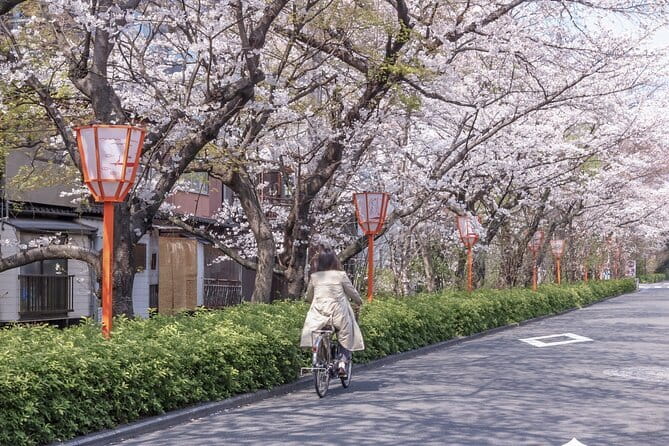
The route ends with the Philosopher’s Walk, a scenic path beside a canal and lined with cherry trees and traditional tea houses. Its name comes from philosopher Nishida Kitaro, who was associated with walking there.
The timing is listed as about 30 minutes. You will cycle along the route, though conditions and local rules may require some walking or slower riding. This is another place where comfortable shoes help.
Spring can be especially appealing here. One tour experience in late March found the blossoms just beginning, with fuller flowering expected soon after. That is a useful reminder not to judge the season by a single tree. Cherry conditions change from year to year and even from one part of Kyoto to another.
The Philosopher’s Walk is a fitting final stop because it combines scenery with a slower pace. After several major religious sites, you get time to enjoy the canal, trees, and small shops before riding back toward Gion.
What the guides add to the morning
The bikes get you around, but the guide determines how much you take away. Ben is repeatedly praised for his humor, clear explanations, and broad understanding of Kyoto and Japan. Yuki is described as a local guide who explains Japanese culture well and offers practical suggestions. Jay is noted for strong English, useful historical context, and a friendly approach to questions.
Those details matter because the tour visits several religious sites in a short time. Without explanation, the morning could become a blur of gates, roofs, statues, and gardens. A good guide gives each stop a purpose and helps you notice the differences between Zen temples, Shinto shrines, imperial spaces, and traditional neighborhoods.
You should also use the question time. Ask about food, shopping, local customs, or places to visit later. The guides have been especially appreciated for giving practical Kyoto advice, not just delivering a memorized speech.
The experience can vary by guide, as it does on any guided tour. Still, the named guides receive strong praise for being approachable and easy to understand, which is particularly valuable when English is not your first language.
Price, pace, and overall value at $70
At $70 per person, the tour is not the cheapest way to see Kyoto. You could walk through some of these areas independently and use public transportation for less. You would then need to rent a bike, plan a sensible route, manage navigation, and research the sights yourself.
The price makes more sense if you value time and interpretation. The e-bike is included, the route is planned, and an English-speaking guide leads you between seven areas. In four hours, you see far more than a typical walking tour can cover.
I see the strongest value for a first or short visit. Several hours with a guide can help you decide which temples, shrines, neighborhoods, and food areas deserve a second look. One useful strategy is to take this tour early in your Kyoto stay, then return later to the places you want to explore slowly.
The tour has a five-star average from 43 reviews and is recommended by 100 percent of the supplied ratings. That points to a consistently positive experience, especially around the bikes, guide quality, and amount of Kyoto covered. It does not remove the normal tradeoffs: four hours is a quick survey, and you will not have time for long visits at every stop.
Practical details that affect your choice
Your booking confirmation is provided at booking, and the meeting point is close to public transportation. The tour starts at 9:00 a.m. and ends back at the Gion meeting point.
E-bike use is included, as is an in-person English-speaking guide. Insurance is not included, and the provider accepts no responsibility for injury, illness, accidents, or lost, damaged, or stolen belongings. Take ordinary care with phones, cameras, and bags.
The route may change or be canceled if severe weather makes cycling unsafe or impractical. The experience requires good weather. If the provider cancels because of poor weather, you are offered another date or a full refund.
You can cancel for a full refund up to 24 hours before the start time. Cancellations or changes inside that 24-hour window are not refunded or accepted.
Who should book this Kyoto e-bike tour?
I would choose this tour if you want a broad first look at Kyoto and do not want to spend your morning navigating. It suits couples, friends, and small groups who can ride a bike, walk at several stops, and keep to a four-hour schedule.
It is also a strong fit if you enjoy asking questions. The guides have received praise for explaining history, religion, and local culture, then helping with restaurant and shopping suggestions.
I would be more cautious if you want long, quiet visits at each temple. Seven stops in four hours means the experience is active and selective. It is also not the right choice for anyone below 145 centimeters, most children under 12, or anyone uncomfortable riding in city streets.
Should you book it?
Book it if you want to cover a lot of Kyoto before lunch, prefer a local guide to a map app, and like mixing cycling with short walks. The included e-bike, small group, and strong guide record make the $70 price reasonable for a first day in the city.
Skip it if your priority is slow temple study, extensive garden time, or a completely relaxed pace. For everyone else, this is a practical way to connect Gion, eastern Kyoto, northern shrines, the Imperial Palace, and the Philosopher’s Walk in one well-packed morning.
FAQ
How long is the Kyoto e-bike tour?
The tour lasts approximately four hours. It begins at 9:00 a.m. and returns to the meeting point in Gion.
Where does the tour start and finish?
The tour starts at Kyoto Tourist Lounge Gion, 557-4 Komatsu Cho, Kyoto. It ends back at the same meeting point.
Is the e-bike included?
Yes. Use of the bicycle is included, along with an in-person English-speaking guide.
How many people can join the tour?
The maximum group size is eight people.
Is the tour suitable for children?
The tour is not recommended for children under 12. Participants must be taller than 145 centimeters and should have a moderate level of physical fitness.
What happens if bad weather cancels the tour?
The experience requires good weather. If it is canceled because of poor weather, you can choose a different date or receive a full refund. You can also cancel for a full refund up to 24 hours before the start time.
Newest Kyoto experiences on the site
- Treasures of Kyoto: Gion & historical Walking Tour★ 5.0 · 6 reviews
- Whisk Your Own Matcha: A Zen Matcha Experience at Temple★ 3.6 · 7 reviews
- Kyoto tea town for matcha lovers★ 5.0 · 16 reviews
- Uji: Private immersion into Kyoto’s tea and reglious culture★ 5.0 · 17 reviews
- Kyoto Matcha Green Tea Tour★ 4.5 · 23 reviews
- Uji and Wazuka Matcha Farm Half Day Private Guided Tour★ 5.0 · 21 reviews
- Utilising upcycled Matcha! Creating matcha incense (Uji, Kyoto)★ 5.0 · 6 reviews
- Sacred Temple Yoga Experience in Japan★ 5.0 · 3 reviews
Kyoto Temple Tours, compared.
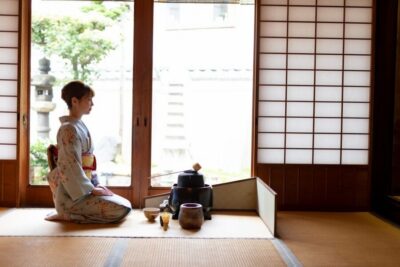
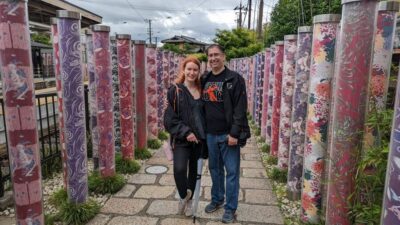
Arashiyama Bamboo, Temple, Monkeys, or Secret Sake Brewery
Read our review →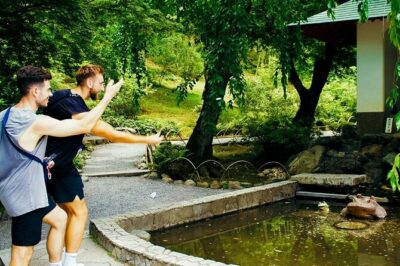
Arashiyama Bamboo Forest, Monkeys, Matcha & Temple Tour
Read our review →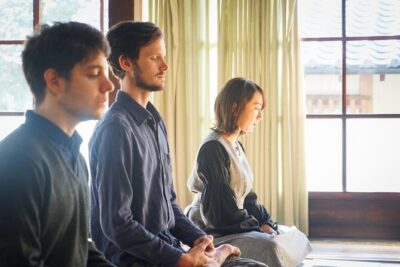
Kyoto Zen Meditation & Garden Tour at a Zen Temple with Lunch
Read our review →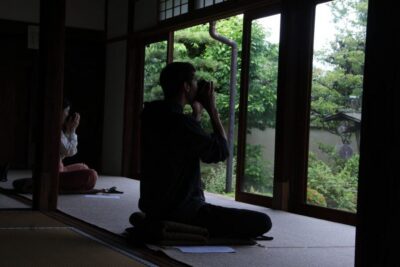

Arashiyama Bamboo, Temple, Matcha, Monkeys & secret spots
Read our review →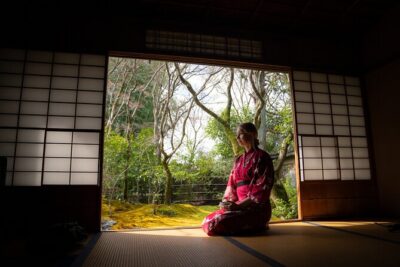
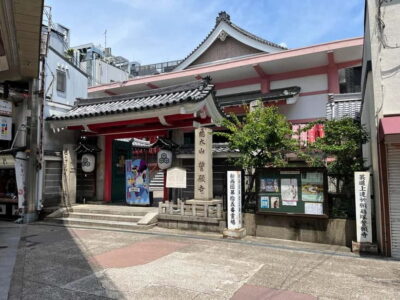
Calligraphy class at Buddhist temple in city center
Read our review →Browse the lists this tour appears in