Reviewed · TOURS
Dark Kyoto Tour
Kyoto’s polished temples and lantern-lit lanes have a darker side, and this four-hour walk brings it forward with ghost stories, old religious beliefs, plague lore, and tales tied to famous sights. I like the way Gion and Kiyomizudera gain a new edge here, instead of being treated as postcard stops. I also like the small group, capped at 10, and the chance to see lesser-known places such as cemeteries and a haunted candy store.
The main consideration is simple: this tour is built around supernatural stories and unsettling history. If you want only serene gardens and temple architecture, the mood may not suit you. If scary tales are your kind of fun, guide Atticus Sims adds the personal storytelling and historical context that make the walk work.
Key points to know before booking
- Four hours on foot: Plan for a substantial walking experience through eastern Kyoto.
- A small group of up to 10: The size should make it easier to follow stories and ask questions.
- Atticus Sims leads the experience: He brings together Japanese religion, culture, history, and folklore.
- Famous sights take on a darker meaning: Yasaka Shrine, Gion, Kennin-ji, and Kiyomizudera all receive a supernatural twist.
- You visit less familiar places too: Cemeteries and a haunted candy store add variety beyond the usual temple route.
- The mood is spooky, not purely historical: This is best for people comfortable with ghost stories and creepy subjects.
Why Kyoto’s dark side makes a good walking tour
Kyoto has more than 1,200 years of history, so its famous beauty comes with plenty of difficult, strange, and unsettling stories. This tour uses that contrast well. You are not simply looking at an old shrine or temple. You are hearing how people understood disease, death, spirits, religion, and bad luck across the centuries.
That approach gives familiar Kyoto a second layer. You may already have Yasaka Shrine or Kiyomizudera on your sightseeing list. Here, those places are tied to plague, death, old beliefs, and local tales. The result is less polished than a standard city walk, but often more memorable.
I especially like that the experience is not limited to headline sights. The route includes back streets, cemeteries, and a haunted candy store, so you get a sense of Kyoto beyond the usual temple gates. Those smaller stops matter because ghost stories often belong to ordinary corners, not just grand monuments.
The tour is also a good match for repeat visitors. You do not need to have seen Kyoto before, but if you already know the main attractions, the darker interpretation can make them feel fresh again.
A few more Kyoto tours worth putting on the shortlist
- PERFECT KYOTO 1-Day Bus Tour
★ 5.0 · 13,518 reviews - Kyoto: Fushimi Inari, Kinkakuji, Bamboo Grove 1 Day Bus Tour
★ 4.8 · 4,316 reviews - Kyoto: Tea Ceremony in a Traditional Tea House in Kiyomizu
★ 4.9 · 3,519 reviews
Starting at Yasaka Shrine and the story of plague
The meeting point is Yasaka Shrine at 625 Gionmachi Kitagawa in Kyoto’s Higashiyama Ward. This is a practical starting place because the shrine is already connected to the history of Gion and the surrounding old streets.
The first stop lasts about 15 minutes, and admission is free. The focus is Yasaka Shrine’s role in efforts to ward off a plague that struck Kyoto in the ninth century. That gives the tour an early example of how religion and public fear worked together. In a city facing disease without modern medicine, rituals and sacred places became part of the answer.
This opening also sets the tone. The tour is not only about ghosts appearing in dark corners. It looks at the wider world of Japanese belief, where illness, spirits, religious practice, and community life could overlap.
You will not spend a long time at Yasaka Shrine, so the stop works best as an introduction rather than a full shrine visit. If you want detailed architectural information about every gate and building, this is not that kind of tour. The emphasis is on the stories attached to the place.
Gion after dark stories and old street tales
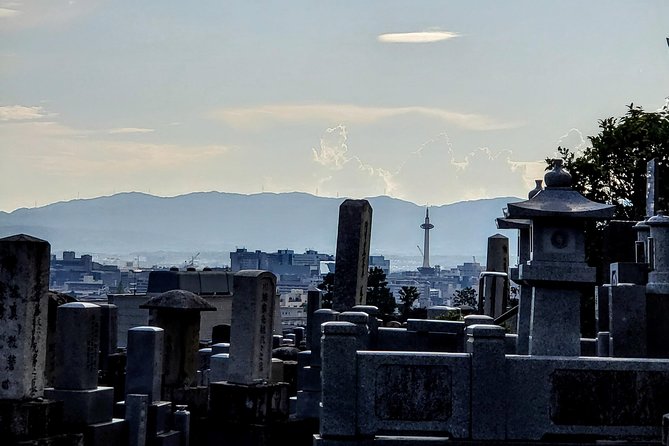
From Yasaka Shrine, the walk continues into Gion. The back streets receive about 30 minutes, and this is one of the stronger parts of the experience for anyone who likes atmosphere.
Gion is famous for traditional wooden buildings, narrow lanes, and its connection with geisha culture. This tour turns your attention away from the most photographed views and toward haunting tales linked to the district. You get a different reason to notice the quiet lanes and older buildings.
The route is not just a parade of spooky claims. The useful part is the cultural setting around them. Japanese ghost stories are tied to ideas about death, spirits, religious practice, and places where the boundary between ordinary life and the supernatural feels thin. Atticus Sims connects those ideas to the streets you are walking through.
I would pay close attention here rather than rushing ahead for photographs. The value comes from hearing the story in the place where it is set. Gion is easy to visit independently, but it is much harder to understand the local tales without someone who can explain their meaning and historical setting.
The drawback is that the experience relies on imagination. You may not see anything unusual, and the pleasure comes from the story, the setting, and the mood. Anyone expecting a theatrical haunted-house attraction should adjust expectations.
Kennin-ji and the religious side of the stories
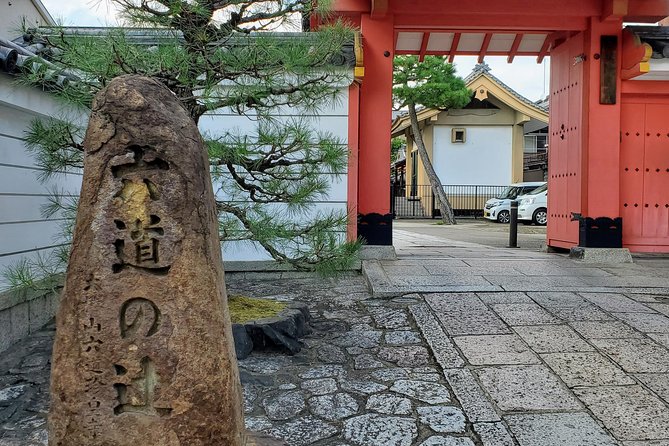
Kennin-ji Temple is the oldest Zen temple in Japan, according to the tour description, and the stop lasts about 15 minutes. Admission is listed as free.
This brief visit helps place the supernatural material inside Japan’s religious culture. Zen Buddhism is only one part of the larger religious picture, but its presence adds weight to the discussion of temples, death, spirits, and the ways people make sense of frightening events.
Kennin-ji is also useful as a change of pace. After walking through Gion’s lanes, you move into a major religious site with a long institutional history. The tour does not treat the temple as a detached monument. Instead, it becomes part of a broader story about belief and the role of sacred places in Kyoto.
Because the stop is short, do not book this experience expecting a full temple tour. You will get context and a dark historical angle, not an extended examination of the temple’s art, halls, and garden. That focused approach keeps the tour moving, but it means you may want to return to Kennin-ji separately if you want more time there.
Same city, a completely different kind of day:
- Kyoto Geisha Walking Tour: Gion District & Hidden Gems
★ 4.7 · 3,273 reviews - Kyoto: Tea Ceremony Ju-An at Jotokuji Temple
★ 4.9 · 3,207 reviews - Kyoto: Gion Magical Night Walking Tour with Geisha Trivia
★ 4.9 · 2,393 reviews - Kyoto: 45-Minute Tea Ceremony Lesson Experience
★ 4.3 · 2,378 reviews
Kiyomizudera with a darker reputation
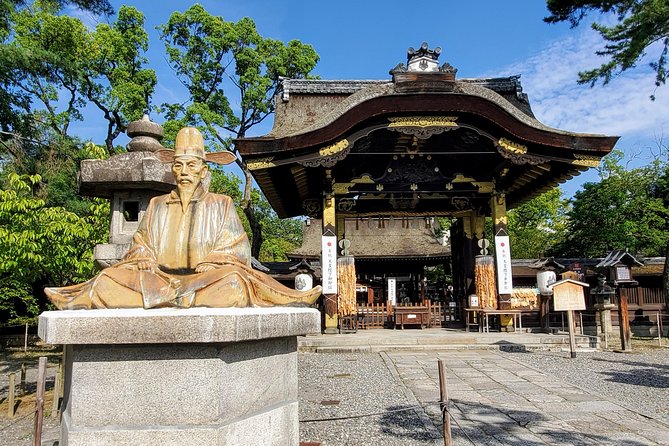
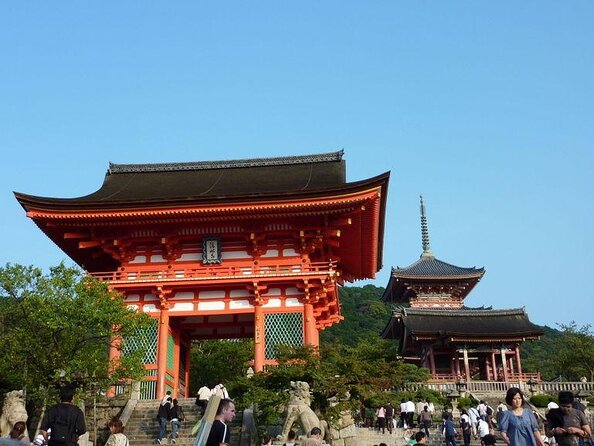
Kiyomizudera is the best-known stop on the route and receives about 30 minutes. Admission is included here, unlike the free stops at Yasaka Shrine, Gion, and Kennin-ji.
The temple is a UNESCO World Heritage Site, so many people visit for its architecture, views, and famous wooden stage. This tour asks you to look at the site differently, through its local dark history. That shift is the point. You are seeing a major Kyoto attraction while hearing stories that do not appear in a standard sightseeing introduction.
I like this part because it shows how one place can carry several meanings at once. Kiyomizudera can be beautiful, religious, historic, and unsettling, depending on the story being told. The tour makes that contrast clear without requiring you to leave the main tourist route entirely.
The 30-minute timing gives you enough space for a meaningful stop, but it is still not a full temple visit. If Kiyomizudera is high on your list, you may want to schedule separate time for it. The tour’s purpose is the dark interpretation, not a complete guide to every building or artwork.
The included admission also matters when judging the $175 price. It is only one included ticket, but it removes one small cost and keeps the group moving together.
Toyokuni Shrine and Hideyoshi’s presence
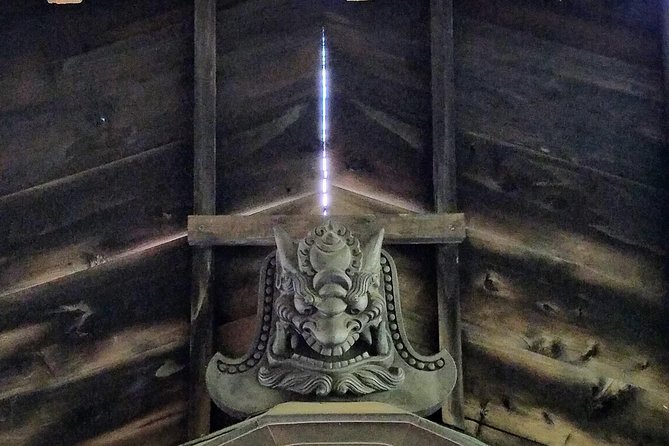
Toyokuni Shrine is a shorter stop, lasting about 10 minutes, and admission is free. This is where the shogun Hideyoshi is enshrined.
The stop adds a political and historical thread to the supernatural route. Kyoto’s darker stories are not limited to anonymous ghosts or mysterious alleyways. They can also connect to powerful figures, death, memory, and the way history preserves certain people in sacred places.
Ten minutes is enough for an explanation and a look around, but not enough for a long visit. Think of Toyokuni Shrine as a compact piece of the larger story rather than a major standalone stop.
That brevity is typical of the tour. You cover several sites in four hours, and each one contributes a particular idea: plague at Yasaka Shrine, haunting tales in Gion, Zen at Kennin-ji, dark local history at Kiyomizudera, and Hideyoshi at Toyokuni Shrine.
What Atticus Sims adds to the experience
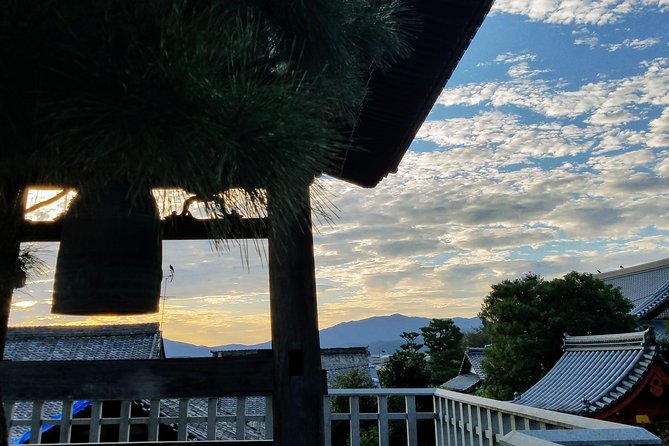
A dark-history walk depends heavily on the guide. The route itself is not enough. You need someone who can explain the setting, keep the stories clear, and connect religion, culture, and history without making the walk feel like a lecture.
Atticus Sims leads this experience. The available feedback describes him as fun to talk with, well informed, and able to give context to the meanings and history of the shrines and sites. That is important because the tour covers subjects that can easily become a string of sensational ghost stories.
The strongest praise points to his storytelling and the way he kept the experience entertaining for a mixed group that included discerning teenagers. That suggests the tone is accessible rather than overly academic, with enough substance for adults and enough atmosphere to hold younger family members’ attention.
You should still expect a tour focused on stories, not a formal religious studies class. Atticus’ role is to make the history understandable and engaging as you walk. The small group limit of 10 is a real advantage here. It is easier to hear a story in a narrow lane, stop for questions, and keep the group together than it would be with a large busload.
Is $175 a fair price?
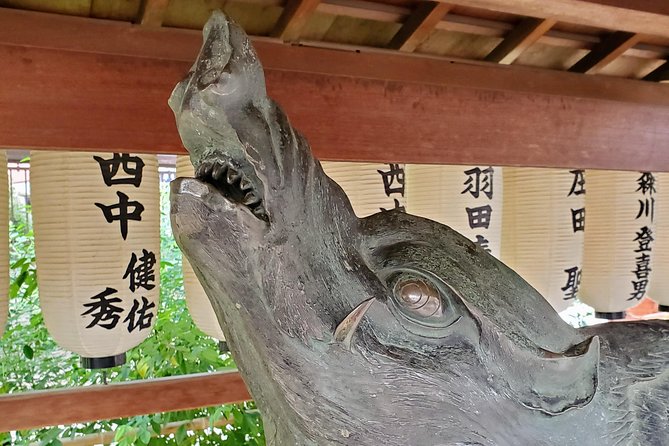
At $175, this is not a budget walking tour. The value depends on how much you want a guided interpretation rather than a list of sights.
You are paying for roughly four hours, a small group of no more than 10, a guide who connects several subjects, and admission to Kiyomizudera. Most stops are free, so the price is not mainly buying entrance tickets. It is buying the route, research, storytelling, and the chance to understand familiar Kyoto places through a specialized theme.
I would consider the price easier to justify if you enjoy guided cultural experiences and want something different from a standard temple circuit. The tour also works better for repeat visitors who have already seen the obvious sights and want a new angle.
For a first-time visitor on a tight budget, $175 may feel steep, especially since several stops are free. You can visit Yasaka Shrine, Gion, Kennin-ji, and Toyokuni Shrine without this tour. What you cannot easily reproduce is the carefully linked set of dark stories and the guide’s explanation of how they connect to Japanese religion and history.
In other words, this is a specialty experience. It is good value for the right person, but not a general-purpose Kyoto orientation tour.
Walking, group size, and practical expectations
The tour lasts about four hours and moves between several sites in Kyoto. You should be ready for a substantial walk, although the supplied details do not give a precise distance or terrain breakdown.
The meeting point is Yasaka Shrine, and the tour is near public transportation. A mobile ticket is provided, which keeps the entry details simple. Confirmation is sent within 48 hours of booking, subject to availability.
The experience requires good weather and may also require a minimum number of participants. If poor weather causes cancellation, you are offered another date or a full refund. The same applies if the minimum number is not met.
Service animals are allowed, and most people can participate. The group size is limited to 10, which is small enough for a personal feel without making the tour private.
You can cancel for a full refund up to 24 hours before the start time. Cancellations or changes made less than 24 hours ahead are not accepted for a refund, and cut-off times use Kyoto’s local time.
Who will enjoy this Kyoto experience most?
I would recommend this tour to you if you like history with a strange edge, enjoy ghost stories, or want to understand how religion and folklore shape a city. It is also a smart choice if you have already visited Kyoto’s major temples and want familiar places presented in a new way.
Families with older children or teenagers may enjoy it, particularly if they like mystery and spooky subjects. The feedback about discerning teenagers is useful here: the stories appear to have enough substance to interest adults while still being entertaining.
Couples may also find the route appealing, especially if you want an evening-style cultural activity with a moody setting. The experience is described as entertaining and engaging rather than purely frightening.
I would skip it if you are sensitive to ghost stories, death-related subjects, or unsettling tales. I would also skip it if your main goal is detailed architecture, quiet meditation, or a complete introduction to every major Kyoto landmark. This tour has a clear personality, and it works best when you want that personality.
Should you book the Dark Kyoto Tour?
Book it if you want Kyoto to feel less polished and more mysterious. The route covers major sights, but its real strength is the way Atticus Sims links them to plague, religion, local legends, death, and historical memory.
The best reasons to choose it are the small group, the mix of famous and lesser-known stops, and the guide’s engaging storytelling. The main reason to hesitate is the $175 price, especially if you are happy exploring free sites on your own.
For a first visit, this can add an unusual layer to the city. For a repeat visit, it may be even more valuable because you are likely to recognize the places while hearing stories you would not find in a basic sightseeing guide. If you are comfortable being a little creeped out and want more than pretty temple views, this is a distinctive way to spend four hours in Kyoto.
FAQ
How long does the Dark Kyoto Tour last?
The tour lasts approximately four hours.
Where does the tour begin?
The meeting point is Yasaka Shrine at 625 Gionmachi Kitagawa in Kyoto’s Higashiyama Ward.
How many people can join the tour?
The experience has a maximum group size of 10 participants.
Is admission included?
Admission is included for Kiyomizudera. Yasaka Shrine, Gion, Kennin-ji Temple, and Toyokuni Shrine are listed with free admission.
Is the tour suitable for people who dislike scary stories?
The tour is designed around ghostly, haunted, supernatural, and otherwise creepy subjects. It is best for people who are comfortable with scary ghost stories.
Can I cancel for a refund?
You can cancel up to 24 hours before the experience starts for a full refund. Cancellations or changes made less than 24 hours before the start time are not accepted for a refund.
Newest Kyoto experiences on the site
- Treasures of Kyoto: Gion & historical Walking Tour★ 5.0 · 6 reviews
- Whisk Your Own Matcha: A Zen Matcha Experience at Temple★ 3.6 · 7 reviews
- Kyoto tea town for matcha lovers★ 5.0 · 16 reviews
- Uji: Private immersion into Kyoto’s tea and reglious culture★ 5.0 · 17 reviews
- Kyoto Matcha Green Tea Tour★ 4.5 · 23 reviews
- Uji and Wazuka Matcha Farm Half Day Private Guided Tour★ 5.0 · 21 reviews
- Utilising upcycled Matcha! Creating matcha incense (Uji, Kyoto)★ 5.0 · 6 reviews
- Sacred Temple Yoga Experience in Japan★ 5.0 · 3 reviews
Tours, compared.
Fushimi Inari, Kinkakuji, Bamboo Grove 1 Day Bus Tour
Read our review →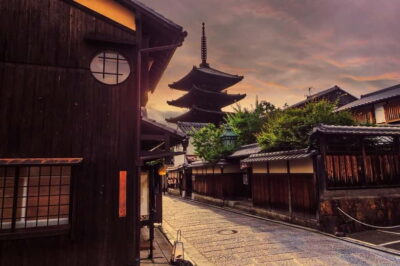
Kyoto Geisha Walking Tour: Gion District & Hidden Gems
Read our review →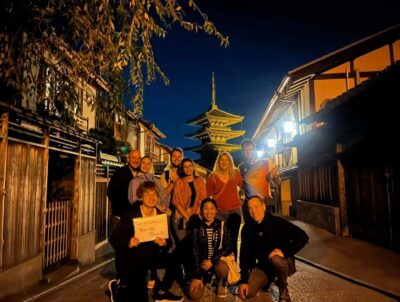
Gion Magical Night Walking Tour with Geisha Trivia
Read our review →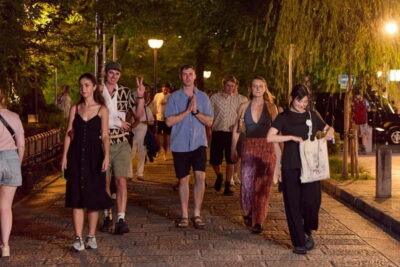
Gion Geisha District Walking Tour – Stories of Geisha
Read our review →

Kyoto Night Foodie Tour in Gion (9+ dishes + 6 Sake tastings)
Read our review →