Reviewed · PRIVATE
Invitation to Japanese Whisky: Exclusive TastingTime/Private
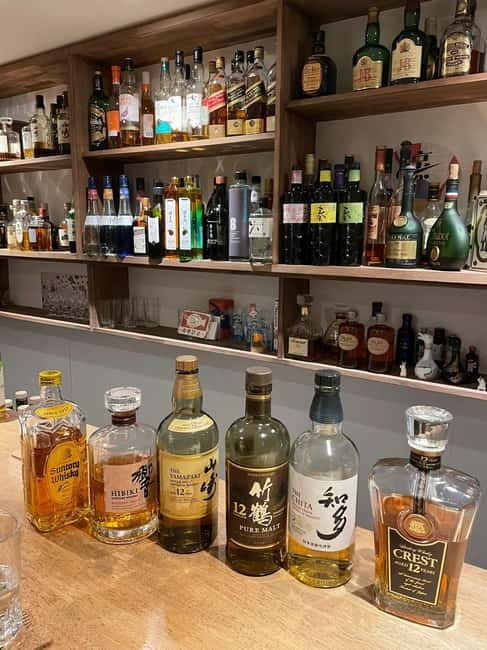
Japanese whisky gets much more interesting once you move beyond the familiar bottles. This 90-minute private tasting begins with a Suntory Kaku highball, then shifts to costly, harder-to-find pours such as Yamazaki 12 Years, Taketsuru 12 Years, Hibiki Blender’s Choice, and Suntory Royal 12 Years.
I like two things here: Kenji’s hands-on tasting lesson, which shows you how a few drops of water can change a whisky, and the small private setting, where you can ask questions without fighting for the guide’s attention. You also get time to chat with local whisky fans and receive restaurant suggestions for the rest of your Kyoto evening.
The drawback is the price: $245 per person is a serious outlay for 90 minutes, and food beyond snacks is not included. This is best for a whisky lover who wants rare pours and personal guidance, not for someone seeking a broad Kyoto sightseeing tour.
Key points to know before booking
- Rare Japanese pours: The usual tasting lineup includes Yamazaki 12 Years, Taketsuru 12 Years, Hibiki Blender’s Choice, and Suntory Royal 12 Years.
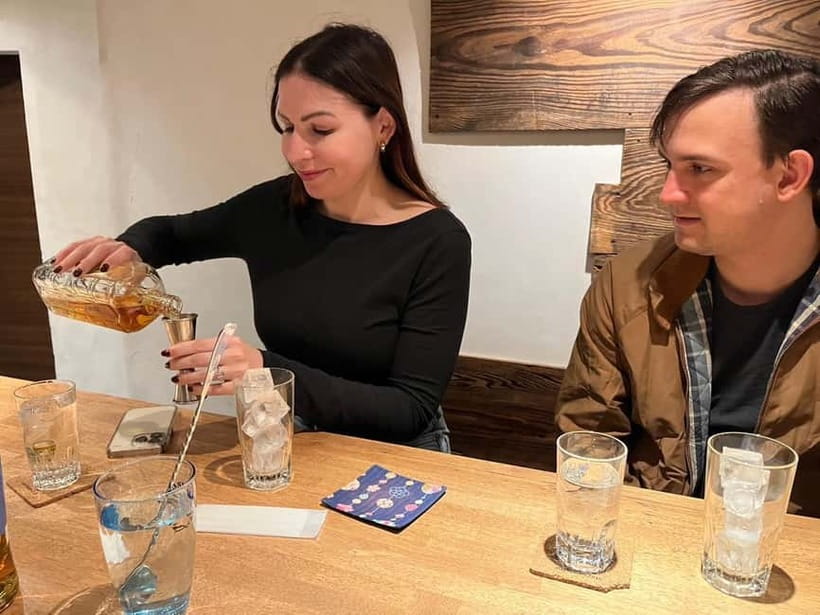
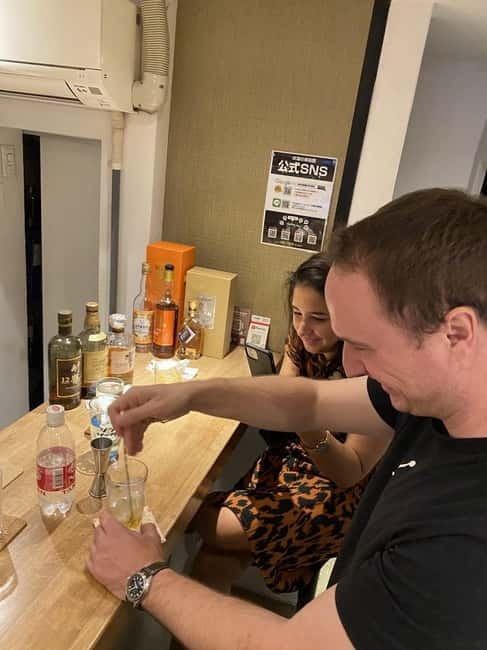
- A practical first lesson: You make and drink a Suntory Kaku highball, Japan’s common whisky-and-soda serve.
- Two tastes from one glass: Try the whisky straight, then add two drops of water to bring out a sweeter, softer character.
- Private and English-speaking: You meet guide Kenji for a private group experience rather than a large bar crawl.
- Kyoto evening setting: The meeting point is by the kneeling-man statue at the southeast corner of Sanjo Ohashi.
- More than whisky: Snacks may include fresh chocolate with Yamazaki whisky and smoked foods, followed by restaurant recommendations.
Why this Kyoto whisky tasting is different
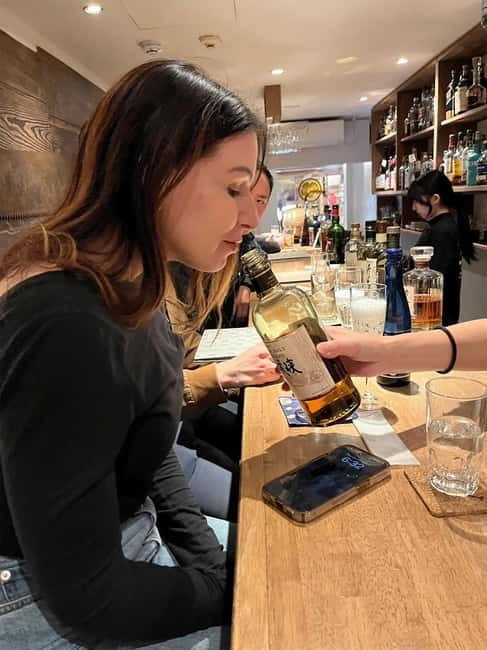
Many Japanese whisky tastings focus on famous labels and a quick explanation. This experience puts more attention on how to taste. That matters because Japanese whisky can be subtle, and a hurried sip does not tell you much about it.
Kenji starts with general information about Kyoto and Sanjo, one of the city’s main entertainment areas. This gives the evening a local frame before you enter the bar. You are not simply being handed a flight and left to guess what makes each bottle special.
The private format also changes the mood. You can ask about production, serving styles, bottle differences, or buying whisky to take home. One recent booking used Kenji’s help with a takeaway order for family, which is useful if you want to bring home a bottle but are unsure what suits your taste.
The setting is a Japanese whisky bar chosen by the guide. The exact bar name is not provided, so you should not book this expecting a famous landmark venue or a formal distillery visit. The appeal is the selection behind the counter and the chance to speak with people who care about whisky.
A few more Kyoto tours worth putting on the shortlist
- PERFECT KYOTO 1-Day Bus Tour
★ 5.0 · 13,518 reviews - Kyoto: Fushimi Inari, Kinkakuji, Bamboo Grove 1 Day Bus Tour
★ 4.8 · 4,316 reviews - Kyoto: Tea Ceremony in a Traditional Tea House in Kiyomizu
★ 4.9 · 3,519 reviews
Meeting Kenji at Sanjo Ohashi
You meet at the kneeling-man statue at the southeast corner of the Sanjo Ohashi intersection. From the east end of Sanjo Ohashi Bridge, cross the street and look for the statue. If you arrive by subway, it is quicker to come up to street level first, then find the meeting point.
This is a sensible place to begin because Sanjo is one of Kyoto’s main entertainment areas. The guide can give you a quick orientation before the tasting, and you finish close to restaurants and evening activity.
Give yourself enough time to locate the statue. The instructions are clear, but a major intersection can still be confusing if you are looking only at a phone map. Comfortable shoes are requested, and you should carry an ID card. A copy is accepted.
Transportation to and from the meeting point is not included. The experience is not a vehicle tour, and no alcohol is allowed in a vehicle. Plan your route before you arrive and arrange your return from the bar on your own.
First glass: Suntory Kaku as a highball
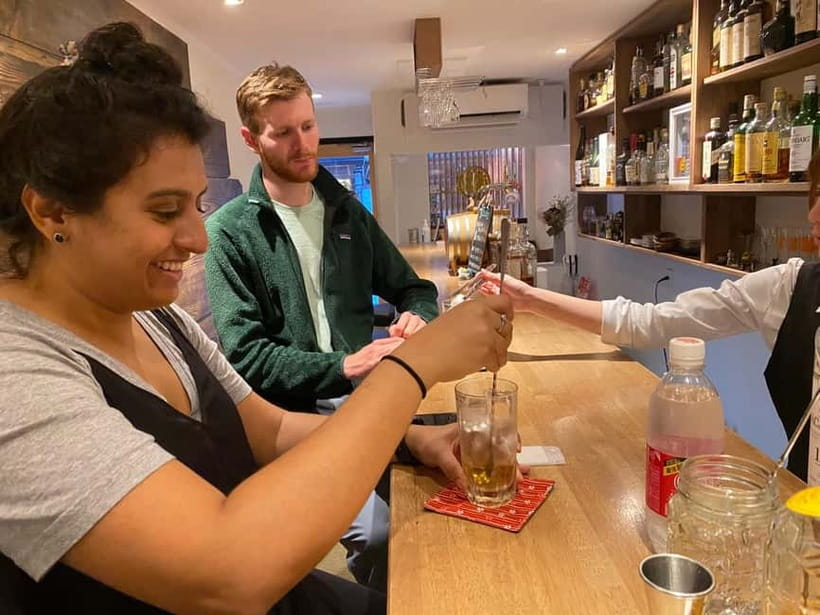
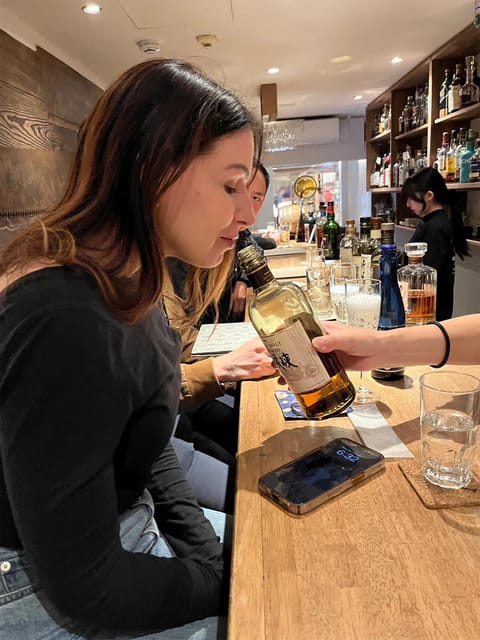
The tasting opens with Suntory Kaku, one of Japan’s best-known whisky brands. You learn to make a highball by mixing whisky with soda. This is a useful start because it shows how whisky is commonly enjoyed in Japan, rather than treating the spirit as something reserved for slow sipping.
A highball is lighter and more refreshing than a neat pour. It also gives you a simple reference point before the more expensive whiskies arrive. You can compare the easygoing soda drink with the aromas and texture of whisky served straight.
For a first-time whisky drinker, this opening makes the session less intimidating. You do not need to know the difference between a single malt and a blended whisky before you arrive. For an experienced drinker, the highball is still worthwhile because it connects the tasting to everyday Japanese bar culture.
The highball is included as a welcome drink. Food is not included, but snacks are provided for pairing with the whisky.
The rare pours: Yamazaki, Taketsuru, Hibiki, and Royal
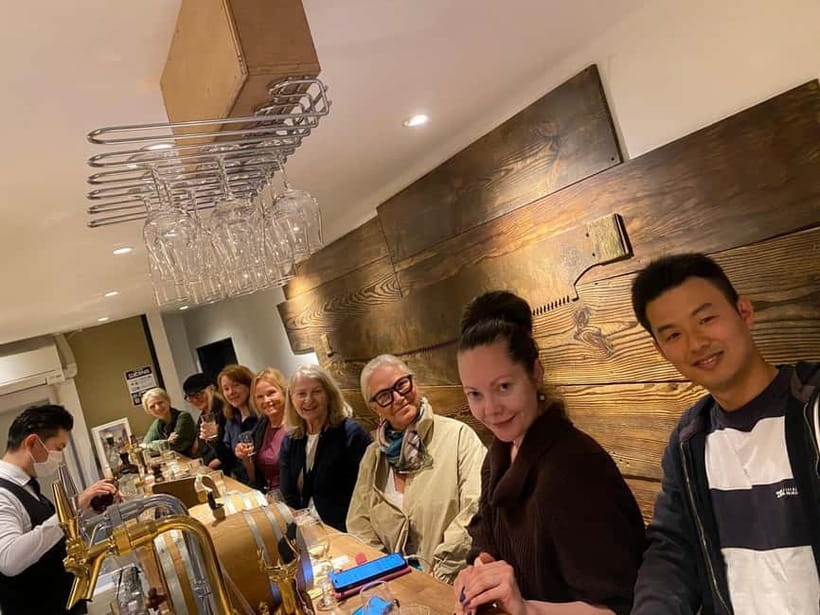
The standard lineup includes Yamazaki 12 Years, Taketsuru 12 Years, Hibiki Blender’s Choice, and Suntory Royal 12 Years. The precise bottles may vary, so treat this as the normal selection rather than an absolute guarantee.
These are not the sort of pours you should assume will be available at every bar. Japanese whisky has strong international demand, and older bottles can be costly. That is one reason the price of this experience is high: you are paying not only for the guide, but also for access to pours that can be expensive to order separately.
The tasting is especially useful if you already know a few Japanese whisky names but have not compared them side by side. You can notice how different bottles behave in the glass and decide what you actually like, rather than buying based only on a famous label.
Yamazaki 12 Years is part of the usual lineup, as is Taketsuru 12 Years. Hibiki Blender’s Choice gives you a blended whisky option, while Suntory Royal 12 Years adds another respected bottle to the comparison.
Do not expect a full meal or a long list of every Japanese distillery. Ninety minutes is enough for a focused tasting, but not for a full survey of the country’s whisky industry.
Same city, a completely different kind of day:
- Kyoto Geisha Walking Tour: Gion District & Hidden Gems
★ 4.7 · 3,273 reviews - Kyoto: Tea Ceremony Ju-An at Jotokuji Temple
★ 4.9 · 3,207 reviews - Kyoto: Gion Magical Night Walking Tour with Geisha Trivia
★ 4.9 · 2,393 reviews - Kyoto: 45-Minute Tea Ceremony Lesson Experience
★ 4.3 · 2,378 reviews
The two-step tasting lesson
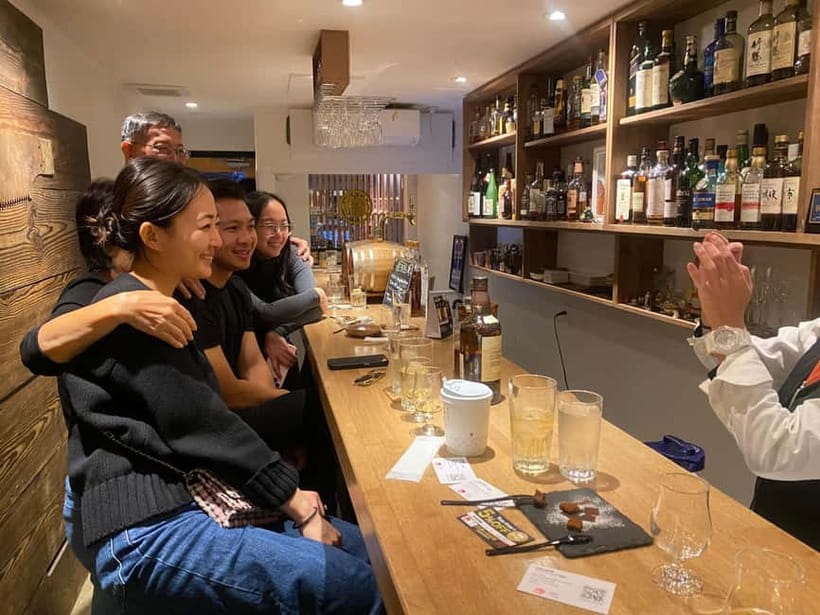
Kenji’s most useful lesson is simple: taste the whisky straight first, then add two drops of water. This lets you compare the original aroma and palate with the softer profile that appears after dilution.
You begin with a small sip and pay attention to the first notes, the feel in your mouth, and the finish in your throat. Then you add the water and taste again. The whisky may seem sweeter and more mellow, with different aromas opening up.
This is a good skill to take home. You do not need special glassware or a complicated ritual. Two drops can be enough to change what you notice, and the method works with bottles you may already have in your cabinet.
The lesson also helps you slow down. Japanese whisky is not simply about identifying a list of flavors. It is about noticing how the spirit changes as you taste it, add water, and give it time.
If you are new to whisky, do not worry about using the right vocabulary. The point is to describe what you sense and ask questions. If you are already experienced, you can use the private format to discuss more precise differences between bottles and serving methods.
Snacks that support the whisky
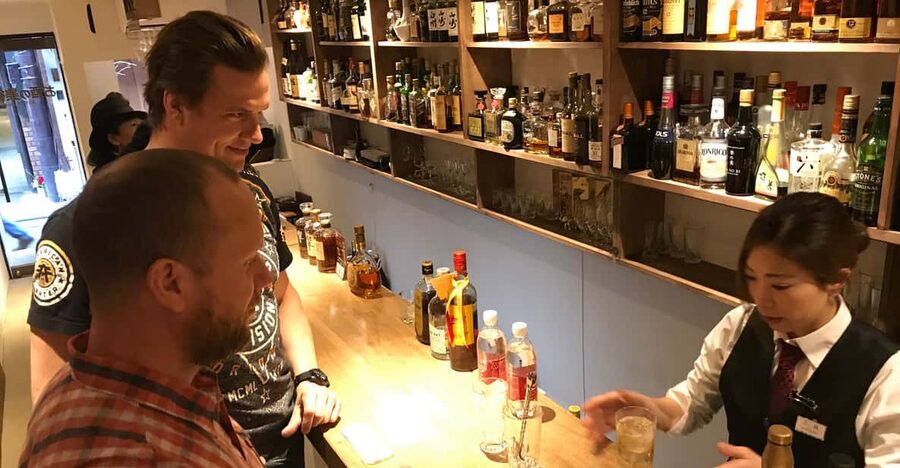
Snacks are included, with examples such as fresh chocolate paired with Yamazaki whisky and smoked foods. These are small pairings, not dinner.
That distinction matters. If you book this near mealtime, eat beforehand or plan a restaurant afterward. The tasting may include food that helps with the whisky, but it will not replace a meal.
Chocolate can bring attention to sweeter or rounder notes in a whisky. Smoked food can create a different contrast, making the spirit seem stronger or more savory. Pairing gives you another way to notice the drink, instead of tasting every pour in isolation.
The snack selection may change, so do not book this expecting a fixed menu. The useful part is the idea of pairing, and you can ask Kenji which local foods work well with Japanese whisky.
A private bar conversation, not a sightseeing tour
This is a focused evening activity. You spend most of the time at the bar, talking, tasting, and learning. The short introduction to Kyoto and Sanjo helps you get oriented, but the experience does not include a city walk or a series of sightseeing stops.
The private group format is a strong point for couples, friends, and serious whisky drinkers. You can set the pace with questions, and the guide can respond to your interests. That is much harder in a large group where everyone must follow the same script.
You may also have a chance to speak with local whisky enthusiasts at the bar. This is not promised as a formal exchange, but the setting allows for local conversation. If you enjoy hearing how people in Japan drink and choose whisky, this can be more rewarding than a polished presentation.
Kenji’s help does not stop with the final pour. He can suggest restaurants based on your preferences, which is practical in Sanjo, where you have many evening choices. You will still need to pay for your own meal and make your own way there.
Is $245 per person good value?
At $245 per person, this is not a bargain tasting. The price makes sense only if you place real value on the private guide and the rare pours.
You receive a welcome Suntory Kaku highball, snacks, and a tasting of premium Japanese whisky. The usual bottles include several names that can be difficult or expensive to find. You also get direct instruction from Kenji and the freedom to ask questions in a private setting.
I would compare the cost with what you might spend ordering rare whisky independently. The problem is that you do not know in advance exactly which bottles will be available, and food beyond snacks is extra. You are paying for access, guidance, and the chance to taste several premium options in one sitting.
For a dedicated whisky drinker, that can be fair value. For a casual drinker, the price will probably feel steep. A standard bar visit would cost less, but it would not necessarily offer the same tasting structure or personal explanation.
The two recent five-star ratings point to the strongest parts of the experience: Kenji’s clear tasting instruction and his help choosing whisky to take home. Those details are more important than a simple list of brands. If you want to learn how to taste, the experience has more value than a basic flight.
Who should book, and who should skip it?
Book this if you already enjoy whisky or want a serious introduction to Japanese bottles. It also suits a couple or small private group that prefers conversation over a crowded nightlife stop.
You will get the most from it if you are curious about neat whisky, water dilution, highballs, and bottle differences. It is also useful if you hope to buy Japanese whisky during your trip and want advice before spending money.
Skip it if you want a full meal, a distillery tour, or a broad Kyoto sightseeing experience. The bar location is part of the appeal, but the activity itself stays centered on tasting.
Pregnant people and those with mobility impairments should not book this experience. Smoking is not allowed. Children aged 0 to 3 are free, while those aged 4 to 19 pay 3,000 JPY for one soft drink and a snack. Anyone under 20 cannot drink alcohol in Japan, though an adult may accompany them into the bar.
The activity is conducted in English. Free cancellation is available up to 24 hours before the start, and you can reserve now and pay later, which helps if your Kyoto schedule is still changing.
Should you book this Japanese whisky experience?
Book it if premium whisky is one of the reasons you came to Japan. Kenji’s lesson on tasting straight whisky and then adding water gives you a practical skill, while the private bar setting lets you focus on bottles that may be hard to find elsewhere.
I would not book it simply because you need something to do for 90 minutes. The price is too high for that. But if you want Yamazaki, Taketsuru, Hibiki, and other Japanese pours explained clearly, with snacks and local advice on top, this is a thoughtful choice for a whisky-centered evening in Kyoto.
FAQ
Where does the Japanese whisky tasting meet?
Meet at the kneeling-man statue at the southeast corner of the Sanjo Ohashi intersection. From the east end of Sanjo Ohashi Bridge, cross the street to find the statue.
How long does the experience last?
The tasting lasts 90 minutes. Starting times vary, so check availability when booking.
Who leads the tasting?
The English-speaking guide is Kenji. He provides information about Kyoto and Sanjo, leads the tasting, and can offer restaurant suggestions afterward.
Which whiskies are usually included?
The normal lineup includes Yamazaki 12 Years, Taketsuru 12 Years, Hibiki Blender’s Choice, and Suntory Royal 12 Years. The lineup may vary.
Is a drink included at the start?
Yes. A Suntory Kaku whisky highball is included as the welcome drink.
Are food and snacks included?
Snacks are included, with examples such as fresh chocolate paired with Yamazaki whisky and smoked foods. A full meal is not included.
Can people under 20 attend?
People under 20 cannot drink alcohol in Japan. Children aged 0 to 3 are free, and those aged 4 to 19 pay 3,000 JPY for one soft drink and a snack. Anyone under 20 may enter the bar when accompanied by an adult.
Can I cancel or pay later?
You can cancel up to 24 hours in advance for a full refund. You can also reserve now and pay later.
Newest Kyoto experiences on the site
- Treasures of Kyoto: Gion & historical Walking Tour★ 5.0 · 6 reviews
- Whisk Your Own Matcha: A Zen Matcha Experience at Temple★ 3.6 · 7 reviews
- Kyoto tea town for matcha lovers★ 5.0 · 16 reviews
- Uji: Private immersion into Kyoto’s tea and reglious culture★ 5.0 · 17 reviews
- Kyoto Matcha Green Tea Tour★ 4.5 · 23 reviews
- Uji and Wazuka Matcha Farm Half Day Private Guided Tour★ 5.0 · 21 reviews
- Utilising upcycled Matcha! Creating matcha incense (Uji, Kyoto)★ 5.0 · 6 reviews
- Sacred Temple Yoga Experience in Japan★ 5.0 · 3 reviews
Private, compared.
Fushimi Inari Hidden Hiking Tour (Private Option Available)
Read our review →
Private Kyoto Tour with a Local, Highlights & Hidden Gems, Personalised
Read our review →
Kyoto 6hr Private Tour with Government-Licensed Guide
Read our review →
10 Must-see Spots in Kyoto One Day Private Tour (up to 7 people)
Read our review →
Kyoto 4hr Private Tour with Government-Licensed Guide
Read our review →
Private Kyoto Tour with Licensed Guide & Vehicle (Max 15 persons)
Read our review →