
Reviewed · GION DISTRICT TOURS
Authentic Kyoto Gion Geisha/Maiko Cultural Experience
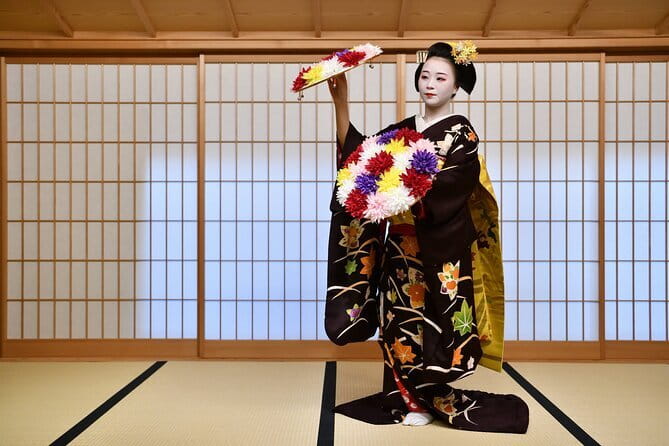
Kyoto’s geisha culture is usually glimpsed from a distance, if at all. This 90-minute Gion experience gives you a seat inside a teahouse, where a maiko or geiko speaks with your small group, performs traditional dance, and shares tea customs. Your English-speaking guide explains what you are seeing, so the rituals do not remain a pretty mystery.
I like the short walk along Hanamikoji Street, which puts the teahouse visit in its proper setting. I also like the direct question-and-answer time, plus the chance to take photos in a tatami room. The main drawback is price: at $155.22 per person, this is a costly 90 minutes, and you cannot request a maiko or geiko.
Key Points to Know Before You Book
- Small group setting: The teahouse group is limited to 10 people, making questions and photos easier.
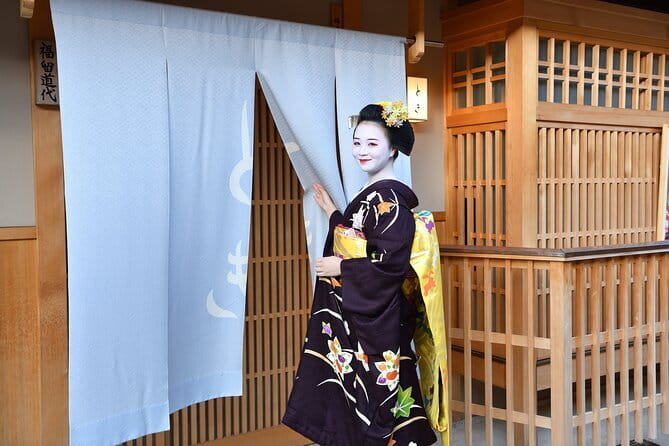
- A real Gion setting: The walk begins at Gion-Shijo Station and follows Hanamikoji Street before ending at a teahouse in Gion.
- Performance and conversation: Expect traditional dance, music or other cultural demonstrations, followed by time to ask questions.
- Tea and sweets included: Matcha, tea, a flour-based sweet, dessert, and matcha ice cream have been served during the experience.
- The performer is assigned: Depending on the day, you meet either a maiko or geiko, along with a tea master. You cannot choose.
- Wear socks: The tatami room requires clean, dry feet and care with wet clothing or bags.
Why This Gion Experience Feels Different
Many visitors see Kyoto’s geisha district as a pretty street lined with old-style buildings. That is only the outside layer. This experience gives you a chance to hear about the people and customs behind the district, then enter a teahouse where the performance is part of a small cultural gathering rather than a street sighting.
A maiko is an apprentice geisha, while geiko is the term used in Kyoto for a geisha. The experience may feature either one, and the exact performer depends on the day. That uncertainty is worth noting, but it also keeps the event from feeling like a fixed stage show with a guaranteed cast.
The strongest part is the combination of explanation and access. A dance alone can be beautiful but hard to understand. A guide such as Yuko, Youko, Yoshi, or Tomato-Sun, depending on the scheduled departure, can explain local customs and translate questions. The guide also helps you notice details in Gion that you could easily walk past.
More ways to walk Gion:
- Kyoto Geisha Walking Tour: Gion District & Hidden Gems
★ 4.7 · 3,273 reviews - Kyoto: Gion Magical Night Walking Tour with Geisha Trivia
★ 4.9 · 2,393 reviews - Kyoto: Gion Geisha District Walking Tour – Stories of Geisha
★ 4.7 · 2,187 reviews
From Gion-Shijo Station to Hanamikoji Street
You meet at Gion-Shijo Station, at 1 Chome Miyagawasuji in Kyoto’s Higashiyama Ward. From there, the English-speaking guide leads you toward the teahouse, with about 15 minutes spent walking through Gion.
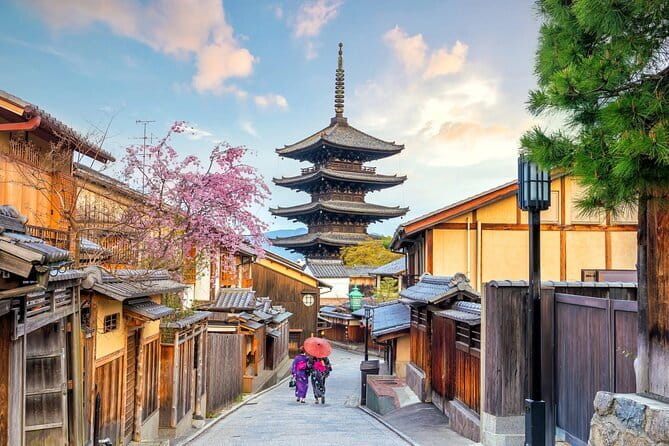
The route includes Hanamikoji Street, one of the district’s best-known lanes. The walk is short, but it matters. You get context about Gion before sitting down, rather than trying to understand the teahouse tradition in isolation.
I like this opening because it gives the experience a sense of place without turning it into a long walking tour. You are not spending most of your paid time on the pavement. The route is simply enough to point out local details and prepare you for the quieter setting ahead.
Wear comfortable shoes, though the walking portion is modest. The more important clothing tip comes later: you need socks for the tatami room. If rain has left your feet, clothing, or bag wet, dry them with a towel before entering. Tatami is treated with care, and you are expected to help keep it clean.
Inside the Gion Teahouse
The main visit lasts about one hour. You enter a traditionally styled tatami room in the teahouse, where the group meets a maiko or geiko and, depending on the day, a tea master.
The room setting is part of the value. You are not watching from a large theater with rows of seats. The small group, capped at 10 people, allows for conversation and makes it easier to see the performer’s clothing, movements, and presentation.
The atmosphere is formal but not silent or stiff. Your guide explains proper behavior and translates the exchange, allowing you to ask questions directly. This is especially useful because geisha culture can be difficult to understand from photographs or short online descriptions.
The performers cannot be selected in advance. You may meet a maiko, a geiko, or both as part of the day’s program. The experience can also include a tea master, and one account describes music from the teahouse owner, a former geiko. Treat that as a possible part of the visit, not a guaranteed feature for every departure.
Traditional Dance, Music, and Questions
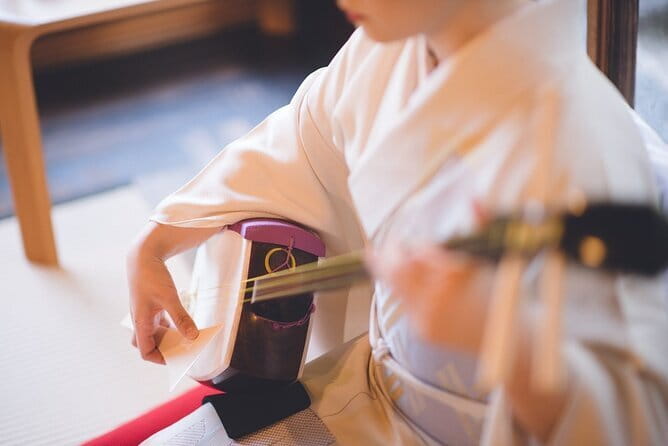
The performance is the visual center of the visit. You watch a traditional dance, and music may accompany the program. The measured movements and formal presentation are a sharp contrast to the quick sightseeing rhythm found elsewhere in Kyoto.
You should allow yourself to watch quietly at first. The guide will help with etiquette, but this is not the place for constant chatter or casual interruptions. After the performance, the question period gives you a more relaxed way to learn about the profession and daily life connected with geisha culture.
This direct exchange is where the experience earns much of its appeal. A guide can translate, but the maiko or geiko is the person who gives the tradition a human presence. You can ask about the performance and the customs you have just seen, rather than receiving only a prepared talk.
The guide’s role matters a great deal. Yoshi has been praised for sharing personal connections to growing up in Kyoto and explaining geisha tradition in clear English. Tomato-Sun has been described as entertaining and easy to follow, while Yuko and Youko have helped connect the street walk with the teahouse visit. Since you are not guaranteed a particular guide, consider these names examples of the type of guide assigned, not a promise.
More geisha and maiko evenings in Kyoto:
- Best of Kyoto: Gion, Geisha, Pagodas & Cobblestones
★ 4.9 · 2,058 reviews - Night Walk in Gion: Kyoto’s Geisha District
★ 4.5 · 2,003 reviews - Kyoto Gion Geisha District Walking Tour – The Stories of Geisha
★ 5.0 · 1,441 reviews - Kyoto Gion: 2-Hour Geisha Culture & History Walking Tour
★ 5.0 · 1,186 reviews
Matcha, Sweets, and the Tea Ritual
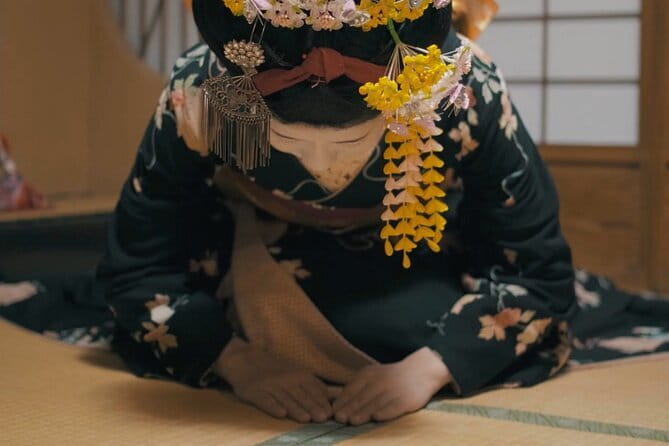
The tea portion adds a hands-on detail to the performance. You receive matcha and take part in a ceremonial tea experience, with sweets served alongside it. Matcha ice cream, dessert, a flour-based sweet, and tea have all been part of the food and drink offered.
Do not book this as a full meal. The refreshments are a cultural tasting and a pleasant finish, not lunch or dinner. If you need substantial food, eat beforehand or plan another stop afterward.
The tea ritual is valuable because it slows the visit down. You are not simply looking at costumes or taking quick photos. You get to see how hospitality, presentation, and attention to small movements shape the occasion.
If you have never had matcha, expect a distinct taste rather than a sweet café drink. The accompanying sweets help balance it. The exact refreshments may vary, so do not book based on one particular dessert.
Photos Without Losing the Moment
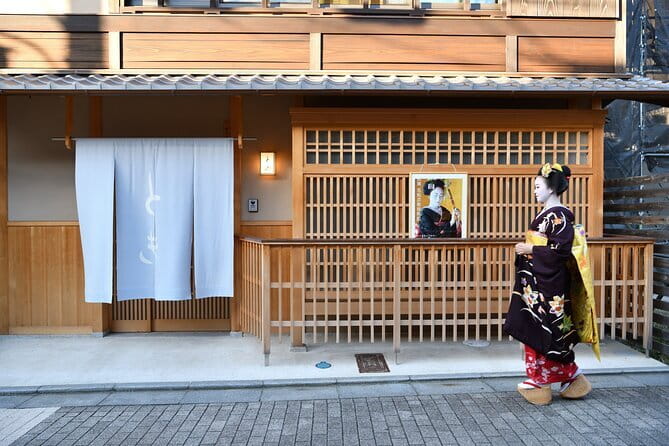
Photography is allowed during the experience, and you can take pictures of the performer and with her. The tatami room and traditional clothing create memorable images, but remember that the setting is also someone’s working space.
A respectful approach is best. Wait for instructions, follow the guide’s lead, and avoid turning every moment into a camera session. You will get more from the visit if you watch the dance first and photograph afterward when invited.
The small group helps here. With a maximum of 10 people, you are less likely to fight through a crowd for a clear view. It also gives the room a calmer feel than a large group photo stop.
Is $155.22 Good Value?
At $155.22 per person, this is not a bargain attraction. The paid time is about 90 minutes, and the walking portion is only around 15 minutes. If you judge the cost by minutes alone, it will feel steep.
The better comparison is access. You are paying for a small group, an English-speaking guide, translation, entry to a Gion teahouse, a live performance, direct conversation, tea, sweets, and photos. Reproducing that combination independently would be difficult, especially if you do not speak Japanese or know how to arrange a respectful teahouse visit.
The value is strongest for someone who already has a serious interest in maiko and geiko culture. It is also a good choice for a first visit to Kyoto when you want one focused cultural event instead of another broad sightseeing loop.
The price may feel less worthwhile if you mainly want to photograph traditional clothing or see a quick dance. In that case, the visit may seem short. You are paying for the setting and conversation as much as for the performance.
Who Should Book This Experience?
I would recommend it to adults and older children who enjoy cultural explanation, small groups, and personal questions. It suits a couple, a family with older children, or a solo visitor who wants a structured way to approach a tradition that can otherwise seem closed to outsiders.
It is especially useful if you are fascinated by geisha culture but want more than a costume photo. The guide’s translation and local context make the visit easier to understand, while the teahouse setting gives the afternoon a sense of occasion.
Children aged 0 to 5 cannot join. Participants under 18 need written parental permission, and anyone under 15, or not yet enrolled in middle school, must be accompanied by a parent or guardian.
This is not the best match for someone who dislikes sitting on tatami, cannot follow quiet cultural etiquette, or wants a long walking tour. The walking is brief, and the main event takes place indoors.
Practical Details That Matter
Confirmation arrives within 48 hours of booking, subject to availability. The experience needs at least two participants, and if that number is not reached 10 days before the scheduled date, the date may be canceled.
The meeting point is Gion-Shijo Station. The experience ends at the teahouse in Gion, at Gionmachi Minamigawa, rather than returning you to the station. Plan the rest of your day from that point.
A mobile ticket is provided, which keeps check-in simple. Still, arrive on time. The guide leads the short walk, and joining after the group has left could be difficult.
Free cancellation is available up to 24 hours before the start time for a full refund. Changes or cancellations made less than 24 hours before the start time are not accepted for a refund.
The experience is listed as suitable for most people, but the tatami setting and sock requirement are important. Keep bags and clothing dry, and bring a small towel if rain is in the forecast.
The Main Strengths and Limitations
The strongest feature is the close contact. You are not merely watching a performance from far away. You can ask questions, hear translation, and take photos in a real teahouse setting.
The guide is another major strength. The best version of this experience depends on someone who can explain Gion in plain English and help the conversation feel natural. Names such as Yuko, Youko, Yoshi, and Tomato-Sun have been associated with especially warm and informative guiding, but the assigned guide can vary.
The biggest limitation is the fixed format and price. You cannot choose the maiko or geiko, and the event is short. The small group helps, but it is still a shared experience rather than a private meeting.
There is also a practical uncertainty in the program. A maiko or geiko attends along with a tea master depending on the day, so details such as the exact performer and musical elements may change. Book for the overall cultural experience, not for one guaranteed individual or a specific song.
Should You Book the Gion Maiko Experience?
Book it if you want a respectful, guided introduction to Kyoto’s geisha culture and value direct conversation over a cheap photo stop. The short walk, small group, dance, tea, sweets, and translated questions fit neatly into a Kyoto sightseeing day.
Skip it if $155.22 feels too high for 90 minutes, or if you want a full meal, a long tour, or control over which performer you meet. For the right visitor, though, the chance to sit inside a Gion teahouse and speak through a guide with a maiko or geiko is the part that makes this experience hard to arrange on your own.
FAQ
Where does the experience begin?
It begins at Gion-Shijo Station, at 1 Chome Miyagawasuji in Kyoto’s Higashiyama Ward.
Where does the experience end?
It ends at the teahouse in Gion, at Gionmachi Minamigawa in Kyoto’s Higashiyama Ward.
How long does the experience last?
The total experience lasts approximately 1 hour and 30 minutes. About 15 minutes is used for the walk from Gion-Shijo Station, followed by about one hour at the teahouse.
How many people can join?
The maximum group size is 10 people.
Will I meet a maiko or a geiko?
You will be accompanied by either a maiko or geiko, along with a tea master depending on the day. You cannot select which performer you meet.
Is an English-speaking guide included?
Yes. An English-speaking guide leads the walk, provides cultural context, and translates during the teahouse visit.
Are photos allowed?
Yes. Photo taking is included, and you can take photos during the teahouse experience, including photos of the performer and with her.
Is tea included?
Yes. The experience includes a ceremonial matcha tea experience. Tea and sweets are served, with refreshments such as dessert or matcha ice cream included in the program.
Can young children join?
Children aged 0 to 5 cannot join. Participants under 18 need written parental permission, and anyone under 15, or not yet enrolled in middle school, must be accompanied by a parent or guardian.
What should I wear or bring?
You must wear socks for the tatami room. If your feet, clothing, or bag are wet, dry them before entering. A towel can be useful on rainy days.
What happens if the minimum group size is not reached?
The minimum number of participants is two. If that number is not reached 10 days before the scheduled date, the experience may be canceled.
Can I cancel for a refund?
You can cancel up to 24 hours before the experience start time for a full refund. Cancellations or changes made less than 24 hours before the start time are not refunded or accepted.
Newest Kyoto experiences on the site
- Treasures of Kyoto: Gion & historical Walking Tour★ 5.0 · 6 reviews
- Whisk Your Own Matcha: A Zen Matcha Experience at Temple★ 3.6 · 7 reviews
- Kyoto tea town for matcha lovers★ 5.0 · 16 reviews
- Uji: Private immersion into Kyoto’s tea and reglious culture★ 5.0 · 17 reviews
- Kyoto Matcha Green Tea Tour★ 4.5 · 23 reviews
- Uji and Wazuka Matcha Farm Half Day Private Guided Tour★ 5.0 · 21 reviews
- Utilising upcycled Matcha! Creating matcha incense (Uji, Kyoto)★ 5.0 · 6 reviews
- Sacred Temple Yoga Experience in Japan★ 5.0 · 3 reviews
Gion District Tours, compared.

Kyoto Geisha Walking Tour: Gion District & Hidden Gems
Read our review →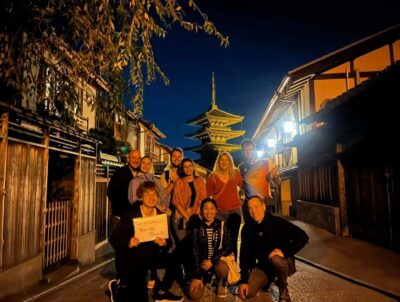
Gion Magical Night Walking Tour with Geisha Trivia
Read our review →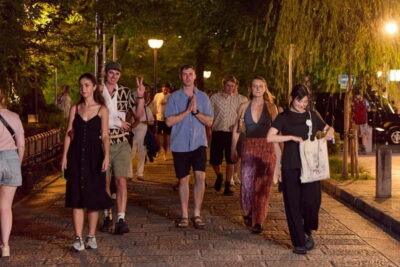
Gion Geisha District Walking Tour – Stories of Geisha
Read our review →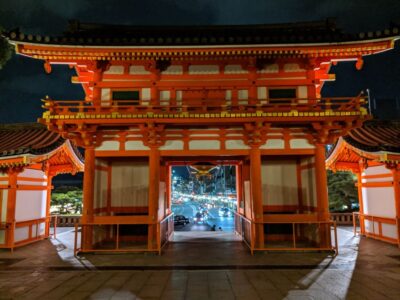
Best of Kyoto: Gion, Geisha, Pagodas & Cobblestones
Read our review →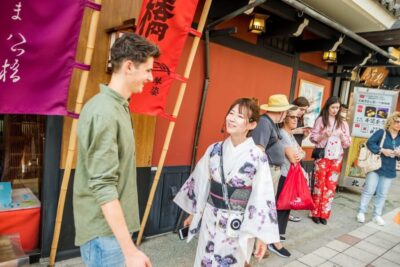

Kyoto Night Foodie Tour in Gion (9+ dishes + 6 Sake tastings)
Read our review →
Kyoto Gion Geisha District Walking Tour – The Stories of Geisha
Read our review →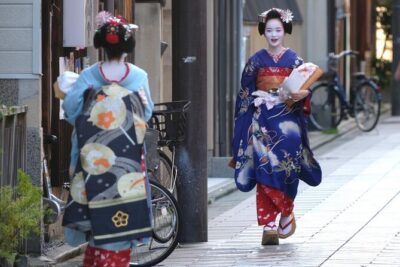
Kyoto Gion: 2-Hour Geisha Culture & History Walking Tour
Read our review →Browse the lists this tour appears in