
Reviewed · MARKETS
Kyoto Flea Market Cultural Exchange with English Learners
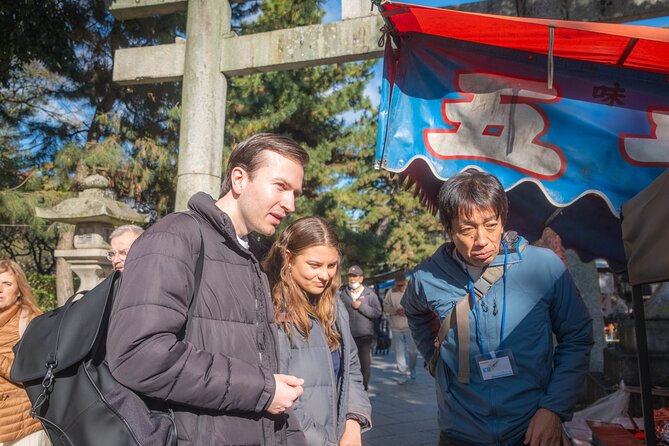
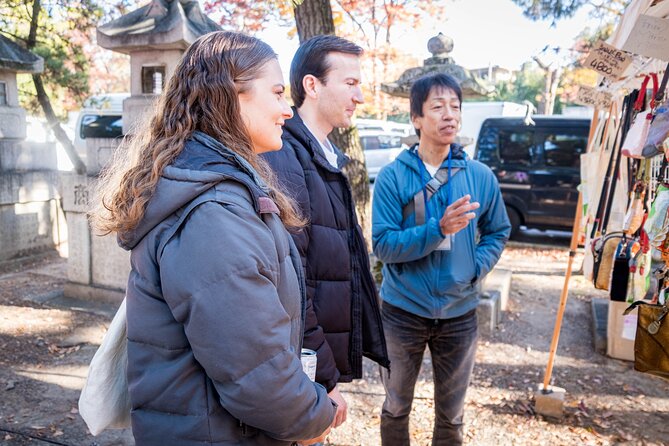
The best part of this Kyoto experience is the human exchange. Instead of simply walking past market stalls, you explore Kobo-ichi and Kotto-ichi with a local English learner who wants to talk with you about Japan. You can ask about customs, compare daily life, and get help with friendly price negotiations.
I like the private format and the chance to browse old ceramics, vintage clothes, toys, and collectibles at To-ji Temple. The price is also unusually low for a private two-hour outing. The main drawback is that your guide is practicing English, so conversation may be less polished than on a standard professional tour.
Key points at a glance
- A private local exchange: Only your group joins the activity, giving you more time for questions and conversation.
- Two To-ji markets: Kobo-ichi and Kotto-ichi offer antiques, household items, clothing, toys, and unusual keepsakes.
- English practice built in: Your guide is an English learner, so the tour has a friendly, informal feel.
- Haggling help: You can get advice on polite price discussions and assistance when talking with sellers.
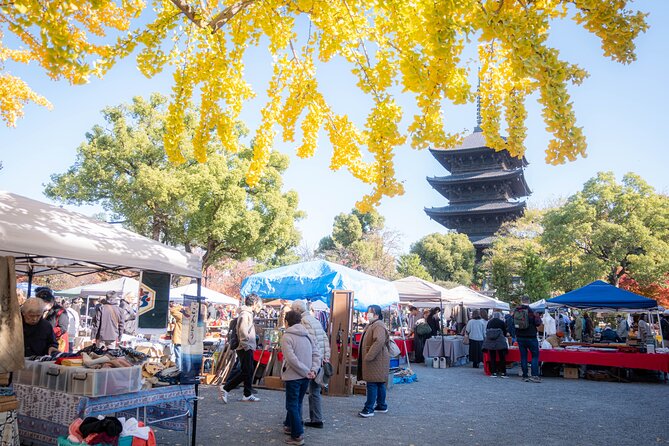
- Temple setting: The walk includes the free area of To-ji Temple and views of its famous five-story pagoda.
- Low-cost Kyoto outing: At $13.01 per person, the experience offers personal guidance without the cost of a large private tour.
Why this Kyoto market walk feels different
Kyoto has plenty of polished sightseeing routes. This one takes a quieter path into ordinary social life: browsing goods, talking with a local, and noticing how a Japanese market works.
Your guide is not presented as a formal historian or professional antiques dealer. The guide is a local resident and English student who wants to practice conversation while introducing you to Kyoto. That distinction matters. You get a chance to ask natural questions about customs and daily habits, and your guide gets a real conversation rather than a memorized speech.
I find that appealing because flea markets leave room for curiosity. You can stop when something catches your eye, ask what an object might be used for, or simply enjoy the odd mix of old and new goods. The conversation can also move beyond the market, since your guide may suggest places to see or things to do elsewhere in Kyoto.
The outing is private, which makes it easier to set the pace. If you are fascinated by old pottery, you can spend more time looking. If you prefer conversation to shopping, you can keep walking and ask questions. A large group would make that harder.
More market walks in Kyoto:
- Nishiki Market Brunch Walking Tour (7 Tastings + Brunch)
★ 5.0 · 1,355 reviews - Kyoto Nishiki Market Food and Culture Walking Tour
★ 5.0 · 412 reviews - Kyoto: Nishiki Market Tea Ceremony with Koto Performance
★ 4.8 · 294 reviews
Starting near central Kyoto at 1:00 pm
The meeting point is at 544 Yamabushiyamacho in Nakagyo Ward, with the tour beginning at 1:00 pm. The activity is near public transportation, but you pay for your own transport during the experience.
The supplied information does not name a particular station or give step-by-step directions from your hotel, so check the meeting point carefully before leaving. A mobile ticket is provided, and confirmation arrives at booking. I would save the address on your phone and allow extra time to find the exact starting spot.
The opening location is not To-ji Temple itself. The experience begins in central Kyoto and ends at To-ji, so you should expect a short transfer as part of the outing. Your guide uses public transportation with you, and that is part of the local feel. It also means you should have a transit card or enough cash for the fare.
Since the tour starts in the afternoon, it can fit well after a morning temple visit or breakfast stop. The market portion is the main focus, so avoid filling the first half of your day with a long cross-town excursion. You will have more fun if you arrive relaxed and ready to browse.
Riding to To-ji Temple with a local guide
The transfer to To-ji is not just dead time between stops. It gives you the first chance to talk with your guide and ask simple questions about Kyoto.
Your guide may be a student from an English conversation school. One account describes a friendly young woman in that role, and the personal tone is central to the activity. You should expect conversation rather than a tightly scripted lecture.
That can be a real advantage if you enjoy meeting people. You can ask how certain goods are used, what kinds of items people look for, or how market shopping fits into local life. You may also get suggestions for places beyond the usual sightseeing circuit.
It is wise to keep your questions clear and patient. An English learner may understand more than they can quickly express. The point is not perfect grammar. The point is an exchange where both sides have room to talk, clarify, and laugh at the occasional language mix-up.
This setup suits independent-minded visitors who like a little unpredictability. If you want a polished historical presentation with dates and formal commentary, this will feel more casual. If you want a friendly local connection, the format works in its favor.
Kobo-ichi and Kotto-ichi: shopping without a fixed script
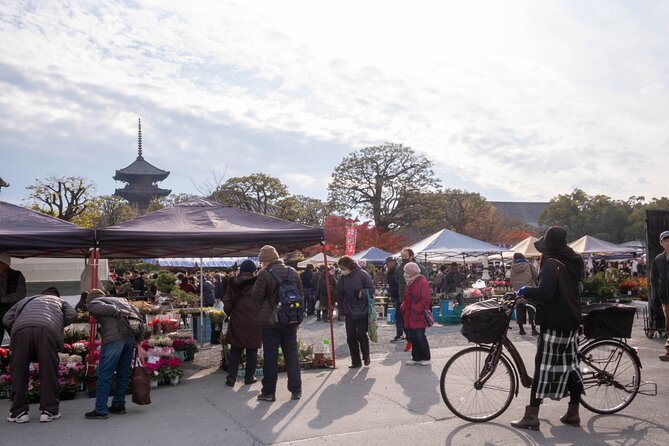
At To-ji, the tour takes you through Kobo-ichi and Kotto-ichi, the temple’s antique and flea markets. The selection can include antique ceramics, vintage clothing, old toys, and rare collectibles.
A market like this is best approached slowly. You will not receive a checklist of famous objects. Instead, you look from stall to stall and decide what interests you. One table may have useful household pieces, while another may be full of decorative items or things that make better conversation starters than souvenirs.
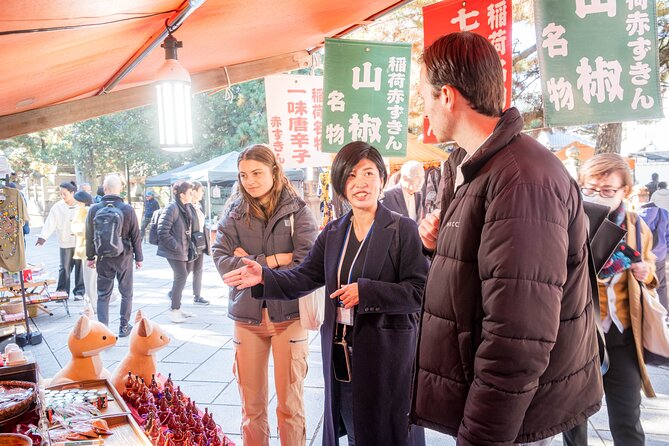
Your guide can help you notice items you might otherwise pass by. They can also explain local customs and help you speak with sellers. That support is especially useful if you do not know how to ask about a price or are unsure how direct to be.
Do not assume every object is a bargain. Flea markets mix inexpensive items with pieces priced for collectors. The smart approach is to set your own limit before you start shopping and treat the purchase as a memory, not a guaranteed investment.
The market is also a good place to practice looking without buying. You can ask questions, handle the experience at an easy pace, and enjoy the visual variety. Since the tour price is low, you do not need to purchase anything to make the outing worthwhile.
Same city, a completely different kind of day:
- PERFECT KYOTO 1-Day Bus Tour
★ 5.0 · 13,518 reviews - Kyoto: Fushimi Inari, Kinkakuji, Bamboo Grove 1 Day Bus Tour
★ 4.8 · 4,316 reviews - Kyoto: Tea Ceremony in a Traditional Tea House in Kiyomizu
★ 4.9 · 3,519 reviews - Kyoto Geisha Walking Tour: Gion District & Hidden Gems
★ 4.7 · 3,273 reviews
Friendly haggling with practical help
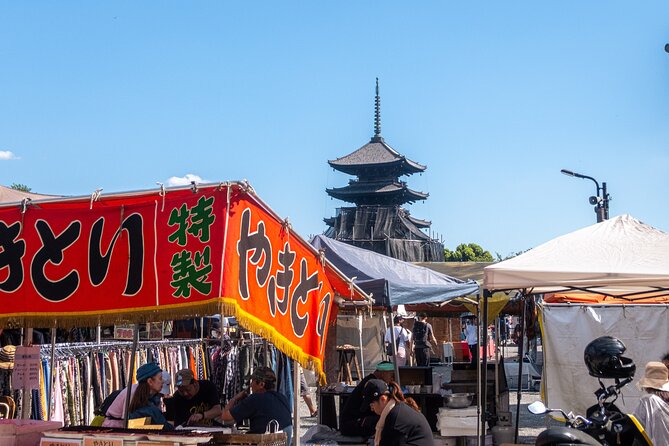
The guide’s assistance with bargaining is one of the more useful parts of the walk. In Japan, price negotiation depends on the setting and the seller, so a local can help you avoid a clumsy approach.
This is not a promise that every price will drop. Think of it as guidance on when a question is appropriate and how to keep the exchange polite. Your guide may help with communication at tourist spots as well as at the market, according to the experience description.
That practical help can make shopping less stressful. You can point to an item, ask for assistance, and let the guide explain the situation. If you are buying a small keepsake, the conversation itself may be as memorable as the object.
Keep in mind that the guide is still an English student. You should not expect professional translation or specialist advice about an antique’s age and value. For an expensive purchase, rely on your own judgment and remember that the activity is a cultural walk, not an appraisal service.
I would use the guide’s help for simple price discussions and social cues. For something valuable, take your time and buy only if you are comfortable with the price and condition.
To-ji’s five-story pagoda and temple grounds
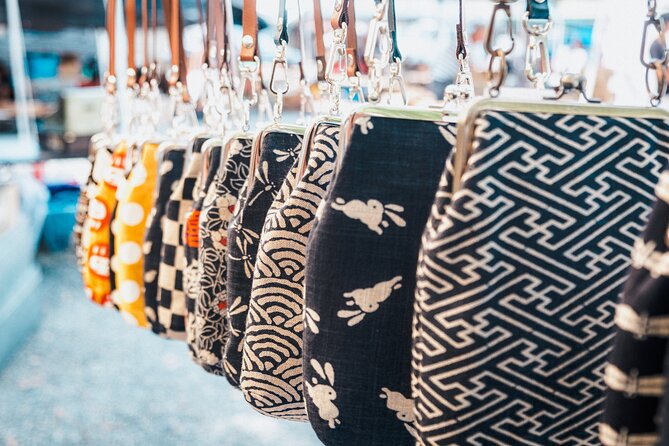
To-ji gives the market a strong setting. The temple is known for its five-story pagoda, and the walk includes the free area of the grounds.
This part adds balance to the shopping. You get a chance to step away from the stalls, look around the temple site, and hear local thoughts about its history and atmosphere. The information provided does not promise admission to paid interior areas, so plan on enjoying the free outdoor portion rather than expecting a full temple tour.
The pagoda is an especially useful visual marker. Even if your main interest is shopping, the temple grounds give the outing a sense of place. You are not browsing in an anonymous commercial district. You are looking at everyday objects beside one of Kyoto’s important religious sites.
The temple visit is not a long formal sightseeing stop. The total experience lasts about one hour and thirty minutes to two hours, and the market remains the main event. If you want a detailed architectural tour of To-ji, you will need a separate visit.
That limited scope is not necessarily a weakness. It keeps the experience focused and leaves you free to return later if the temple deserves more time.
What the two-hour private format means
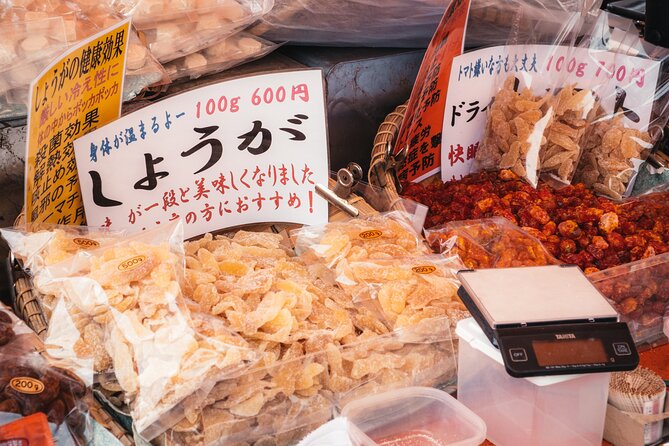
The tour is private, with only your group participating. That is a meaningful benefit at this price. You do not need to match the pace of strangers or wait while a large group gathers around a stall.
A private format also makes the English practice more natural. You can speak directly with the guide instead of competing for attention. If you are traveling with a friend or family member, you can share the conversation and compare what you notice.
The length is enough for a clear introduction to the markets and temple grounds, but it is not a full afternoon. You should see it as a focused cultural outing. You will get a taste of the market, some local conversation, and an introduction to To-ji.
The timing may vary slightly within the stated one-and-a-half to two-hour range. Public transportation, the pace of shopping, and the amount of conversation can all affect the length. Keep your next booking flexible rather than scheduling something immediately after the tour.
Because gratuities are included, you do not need to calculate a separate tip for the guide. Public transportation is not included, so budget for that small additional cost.
Is $13.01 good value?
At $13.01 per person, this is inexpensive for a private walking experience in Kyoto. The price is strongest if you value personal conversation and local help more than formal sightseeing.
You are paying for access to a guide who can introduce the market, help with communication, explain customs, and offer recommendations. You are not paying for temple admission, a museum ticket, or a specialist antiques lecture. That distinction keeps expectations realistic.
For a couple or small group, the value improves because you share the private experience while still receiving direct attention. Group discounts may also be available, which can make the outing appealing for a larger party.
The low price also means you can add it to a Kyoto itinerary without committing a large part of your budget. It works nicely for an afternoon when you want something more personal than wandering alone but less formal than a full-day guided tour.
I would not book it primarily to find a valuable antique. Market stock changes, and no particular item is guaranteed. Book it for the combination of browsing, conversation, temple scenery, and help with local etiquette.
Who will enjoy this most
This outing fits you best if you enjoy talking with local people, asking questions, and leaving room for chance discoveries. It is also a good pick if you want to practice simple cultural exchange rather than listen to a long speech.
It can suit:
- First-time visitors who want an easy introduction to Kyoto markets
- Repeat visitors who have already seen the major temples
- Shoppers interested in old objects, clothing, toys, and ceramics
- Couples or friends who prefer a private activity
- Visitors who appreciate recommendations from a local resident
- People comfortable with informal English conversation
Families may also find the old toys and unusual objects interesting, although the supplied information does not give a specific minimum age or child policy.
You may want a different experience if you dislike shopping, need a fully scripted tour, or want guaranteed access to paid temple interiors. The guide’s English-learning role is part of the charm, but it also means the conversation may require patience.
Practical details before you book
The tour begins at 1:00 pm and ends at To-ji Temple, at 1 Kujocho in Minami Ward. Since the start and finish are in different areas, plan your afternoon around that route rather than assuming you will return to your starting point.
Wear comfortable shoes. The activity involves walking through market stalls, temple grounds, and public transportation connections. You may also want a small bag for purchases, although no luggage or storage details are provided.
Weather matters. The experience requires good weather, and poor conditions can lead to cancellation. If that happens, you are offered another date or a full refund.
The standard cancellation policy is strict. The booking is non-refundable and cannot be changed for any reason if you cancel or request an amendment. That makes a reliable weather forecast and careful scheduling important.
Most people can participate, and the activity is near public transportation. Still, the information does not provide detailed accessibility notes, so contact the provider if you need specific assistance.
Should you book the Kyoto flea market exchange?
Book this if you want a low-cost, private way to meet a local, browse To-ji’s markets, and hear about Kyoto from someone still actively learning English. The personal exchange is the main reason to choose it, and the market gives you plenty to talk about.
I especially like the mix of practical help and relaxed conversation. You can learn how to approach prices, ask about Japanese customs, and receive ideas for the rest of your stay. The pagoda and temple grounds give the outing a memorable setting.
Skip it if you want a formal expert guide, a long architectural tour, or certainty that you will find a particular antique. Also remember the strict cancellation rule and extra public transportation cost.
For the right kind of visitor, this is a smart little Kyoto experience: affordable, flexible in spirit, and much more personal than simply walking through a market alone.
FAQ
Where does the tour start?
The tour starts at 544 Yamabushiyamacho, Nakagyo Ward, Kyoto, at 1:00 pm.
Where does the tour finish?
The tour finishes at To-ji Temple, 1 Kujocho, Minami Ward, Kyoto.
How long does the experience last?
It lasts approximately one hour and thirty minutes to two hours.
Is the tour private?
Yes. Only your group participates in the activity.
Is public transportation included?
No. Public transportation is not included in the price.
Are gratuities included?
Yes. Gratuities are included.
What markets will I visit?
You will visit Kobo-ichi and Kotto-ichi at the historic To-ji Temple.
What kinds of things might I find at the markets?
You might find antique ceramics, vintage clothing, old toys, and rare collectibles.
Is temple admission included?
The activity includes the free area of the To-ji Temple grounds. The information provided does not include admission to paid areas.
What happens if bad weather cancels the tour?
If poor weather causes cancellation, you will be offered a different date or a full refund.
Newest Kyoto experiences on the site
- Treasures of Kyoto: Gion & historical Walking Tour★ 5.0 · 6 reviews
- Whisk Your Own Matcha: A Zen Matcha Experience at Temple★ 3.6 · 7 reviews
- Kyoto tea town for matcha lovers★ 5.0 · 16 reviews
- Uji: Private immersion into Kyoto’s tea and reglious culture★ 5.0 · 17 reviews
- Kyoto Matcha Green Tea Tour★ 4.5 · 23 reviews
- Uji and Wazuka Matcha Farm Half Day Private Guided Tour★ 5.0 · 21 reviews
- Utilising upcycled Matcha! Creating matcha incense (Uji, Kyoto)★ 5.0 · 6 reviews
- Sacred Temple Yoga Experience in Japan★ 5.0 · 3 reviews
Markets, compared.
Nishiki Market Brunch Walking Tour (7 Tastings + Brunch)
Read our review →
Kyoto Nishiki Market Food and Culture Walking Tour
Read our review →
Nishiki Market Tea Ceremony with Koto Performance
Read our review →
Nishiki Market and Depachika Food Tour with a Local
Read our review →
Nishiki Market Tour with a Local Foodie & Tastings
Read our review →
Browse the lists this tour appears in