
Reviewed · NISHIKI MARKET TOURS
Kyoto: Nishiki Market Tea Ceremony with Koto Performance
The unusual pleasure here is the pairing of two Japanese arts in one small Kyoto studio: you prepare your own matcha, then listen to live koto music while you drink it. Yurika, also known as Yuika in some bookings, explains the meaning behind the tea ritual in clear English and plays several pieces on the traditional Japanese harp.
I like the small group limit of eight, which gives the ceremony a personal feel, and I like the central Nishiki Market location, especially on a rainy day. The main consideration is time: one hour passes quickly, and kimono dressing and koto lessons cost extra rather than forming part of the basic $56 experience.
Key points at a glance
- Two Japanese traditions in one hour: Prepare matcha and hear a live koto performance.
- Personal teaching: Yurika explains the movements, tea etiquette, and cultural meaning in English or Japanese.
- Small, central setting: KOTOLILY KYOTO is near Nishiki Market, with room for no more than eight participants.
- A calm pause in central Kyoto: The studio offers a quiet break from the shops and food stalls outside.
- Optional kimono photos: You can pay extra to dress in a kimono and have photos and video taken.
- Extra music lesson available: Ask on-site about trying the koto yourself after the ceremony.
A tea ceremony with a musical second act
Many short tea activities in Kyoto focus almost entirely on the mechanics of matcha. This one adds a live performance, so the hour has two distinct parts. First, you learn how to prepare and drink the tea. Then the room settles into a listening session as Yurika plays the koto.
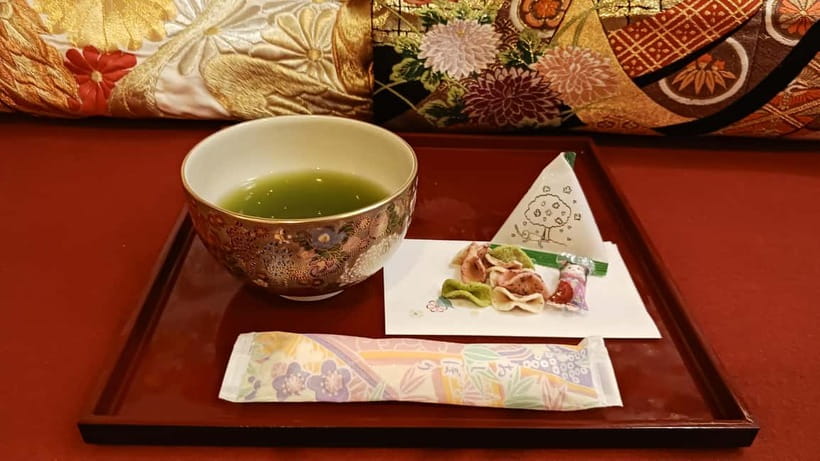
That combination gives the experience a pleasant rhythm. You are not simply watching someone perform a ritual. You take part by measuring, adding water, and whisking your own tea. Afterward, you can sit back with matcha and a traditional sweet while the music takes over.
The ceremony is presented for international visitors, but it does not feel like a stage show with a large audience. The group size is capped at eight, and several bookings have been private or nearly private. That makes it easier to ask questions, follow the instructions, and see the details of the tea tools.
More Nishiki Market walks and tastings:
- Nishiki Market Brunch Walking Tour (7 Tastings + Brunch)
★ 5.0 · 1,355 reviews - Kimono Tea Ceremony at Kyoto Maikoya, NISHIKI
★ 5.0 · 911 reviews - Kyoto Nishiki Market Food and Culture Walking Tour
★ 5.0 · 412 reviews
Finding KOTOLILY KYOTO near Nishiki Market
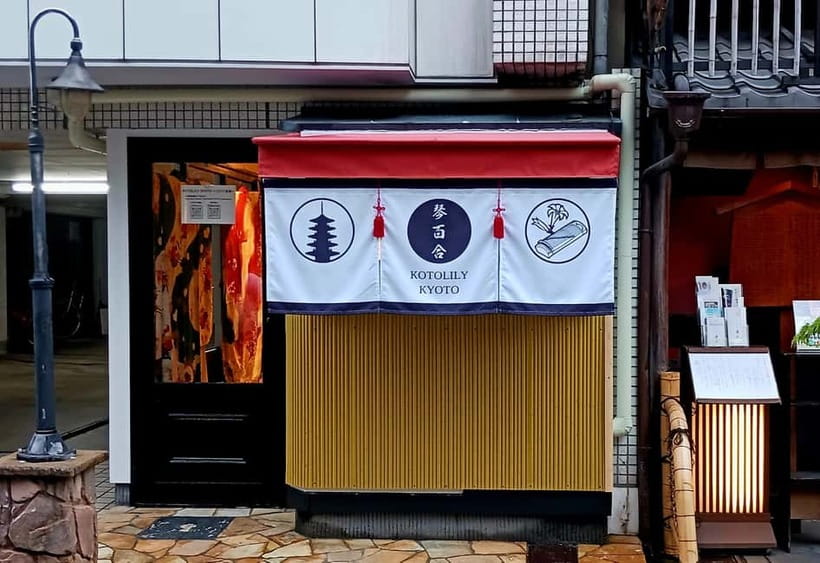
The shop is called KOTOLILY KYOTO. It is next to KINMATA Restaurant and opposite Hotel GOCO stay. Go inside the shop when you arrive. Do not wait at the hotel across the street, since it is only a landmark for finding the address.
The location is one of the strongest practical features. You can combine the booking with a visit to Nishiki Market, nearby shopping streets, and central Kyoto restaurants. It is also useful in wet weather because you are close to covered shopping areas and do not need to travel far from the city center.
Allow enough time to identify the shop, particularly if you are coming through the market area. The meeting instructions are specific, but central Kyoto can still be confusing when you are looking for a small storefront among many signs.
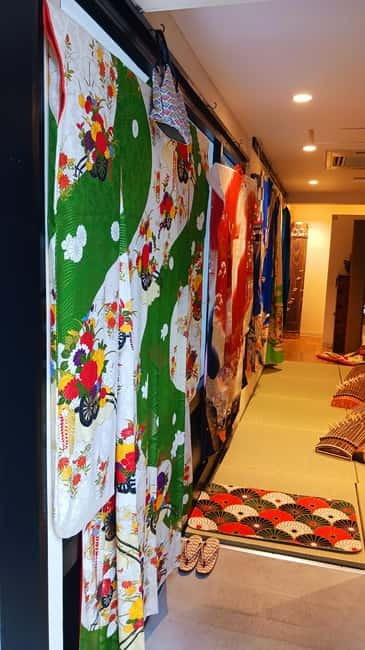
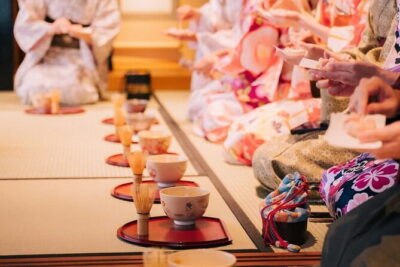
Inside, expect a compact studio rather than a large formal tea house. Kimonos line the walls, and the setting has the intimate, decorative feel that makes a one-hour cultural stop work well between other sightseeing plans.
What happens when you arrive
You will remove your shoes at the door, so wear clean socks if that matters to you. Comfortable clothing is recommended, and large bags are best left at your hotel or in luggage storage. A large backpack may be manageable, but the room does not offer much spare space for suitcases.
The host welcomes the group and introduces the basic idea of the tea ceremony. This introduction matters because the movements are not just a series of instructions. You learn why the bowl is handled in a particular way, how tea and sweets are enjoyed together, and how the ceremony reflects attention, respect, and quiet conversation.
The teaching is gentle rather than stiff. You do not need prior knowledge of matcha or Japanese etiquette. Yurika uses English and Japanese, and her warm, humorous manner helps take the pressure off anyone worried about making a mistake.
Making matcha instead of just watching
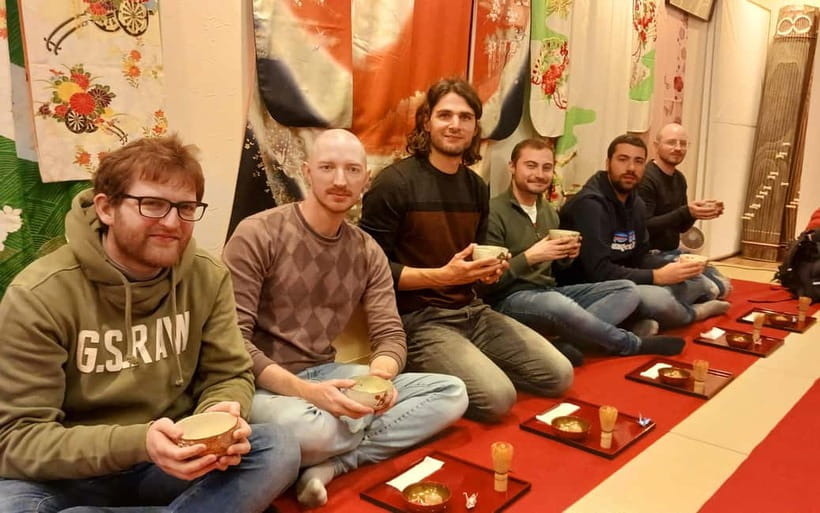
The hands-on portion is the heart of the activity. With guidance, you make your own matcha from the first pour of water through whisking. The aim is a smooth, creamy cup with less bitterness, and the instructor shows you how the preparation affects the taste.
This is a small task, but it gives you a better sense of what goes into the drink. Matcha can taste sharp when it is poorly mixed or served without balance. Here, the sweet served alongside it softens the experience, and the instructions help you approach the tea with more confidence.
You will also learn basic tea etiquette as you drink. The ceremony is adapted for visitors, so you are not expected to memorize a long list of rules. Instead, you learn enough to understand the order of events and take part respectfully.
Some sessions include two different green teas, according to the activity format described by past participants. The exact selection can vary, so think of this as an introduction to tea preparation rather than a tasting course. Meals are not included, and the sweets are a small accompaniment rather than a substitute for lunch.
More tea ceremonies in Kyoto:
- Kyoto: Tea Ceremony in a Traditional Tea House in Kiyomizu
★ 4.9 · 3,519 reviews - Kyoto: Tea Ceremony Ju-An at Jotokuji Temple
★ 4.9 · 3,207 reviews - Kyoto: 45-Minute Tea Ceremony Lesson Experience
★ 4.3 · 2,378 reviews - Kyoto: Table-Style Tea Ceremony at a Kyo-Machiya
★ 4.9 · 1,211 reviews
The koto performance changes the mood
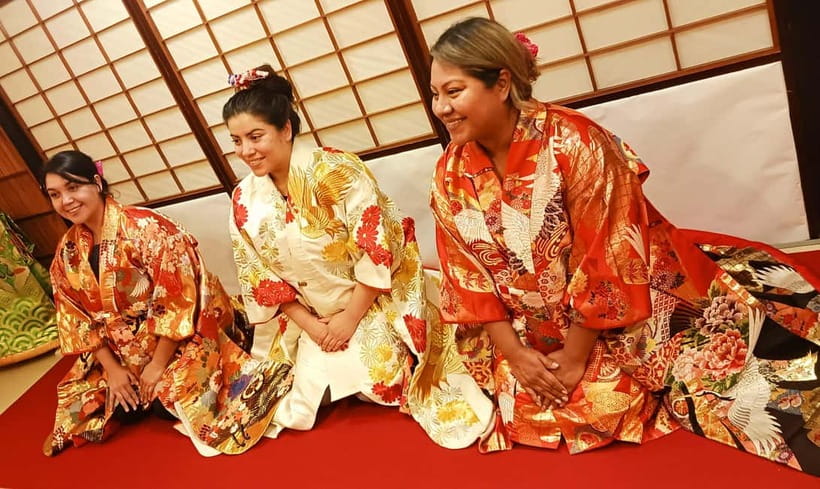
The koto is a traditional Japanese string instrument often described as a Japanese harp. Yurika plays before and after the tea-making portion, with several pieces performed during the hour. The music adds a strong sense of place without requiring you to visit a concert hall.
This is not background music piped into the room. You are watching a live musician, and the performance is part of the experience. Yurika also talks about the instrument and its musical tradition, giving you a basic idea of what you are hearing.
I especially like the order of the activity. The first performance helps you settle into the room. The tea preparation gives you something active to do. The later pieces let you relax with your finished drink and sweet.
The music may be the highlight for you if you enjoy traditional arts, quiet performances, or cultural activities that do not feel rushed. If you are mainly looking for a formal, highly elaborate tea ceremony, this format may feel more relaxed and adapted for visitors. That is not a flaw, but it is worth understanding before you book.
What makes the host important
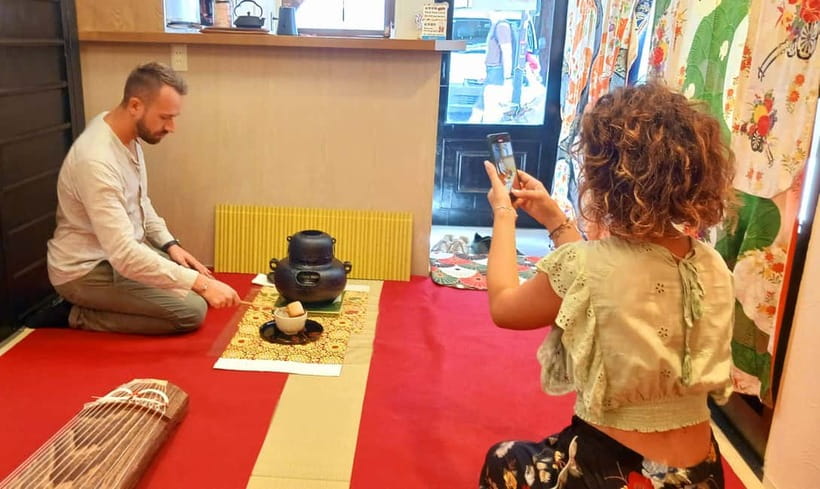
The host is a major part of the value here. Yurika is not only guiding the tea ritual. She is also the koto performer, explains the history and use of the instrument, answers questions about Japanese culture, and keeps the session moving in English.
That gives the hour a personal thread. You are learning from one person who connects the tea, the music, the room, and the clothing on display. Several visitors have highlighted her warmth, clear explanations, sense of humor, and ability to make beginners comfortable.
The English instruction is a practical advantage. You can ask why a gesture matters or how to handle the bowl without relying on a printed script. The experience is still held in a traditional style, but the explanation helps you understand what you are doing instead of copying movements blindly.
Kimono photos and the optional koto lesson
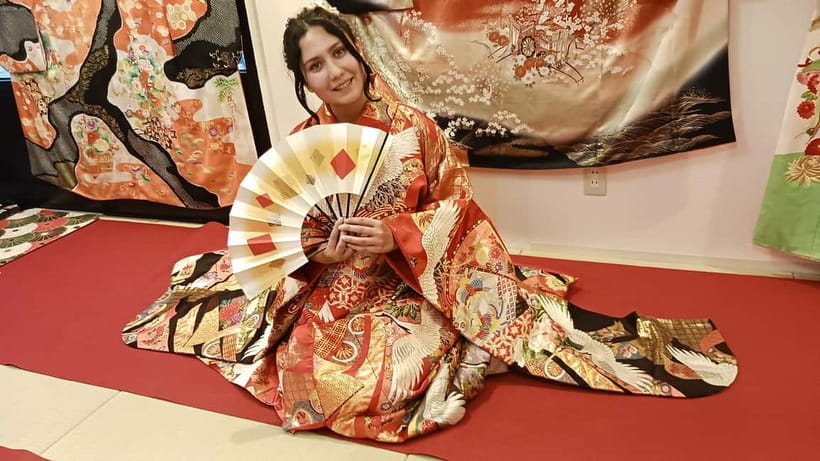
Kimono dressing, photos, and video are not included in the $56 price. You can ask the staff about the extra package after the tea ceremony. The studio has several attractive kimono options and traditional hair accessories, according to the available on-site setup.
This add-on is best for people who want a keepsake from the experience. It is not the same as wearing a kimono throughout the tea ceremony. The basic booking centers on tea and music, while the kimono option is an additional photo session, often taken after the ceremony.
That distinction matters. If your main goal is to sit in kimono while preparing and drinking matcha, ask the staff exactly what the extra package includes before paying. Some people have wished the clothing could be part of the tea portion rather than used mainly for photographs.
You can also ask about a short koto-playing lesson for an additional fee. This is a good choice if you are curious about the instrument and want more than a performance. Both extras should be treated as optional additions, not required parts of the one-hour booking.
Is $56 good value for one hour?
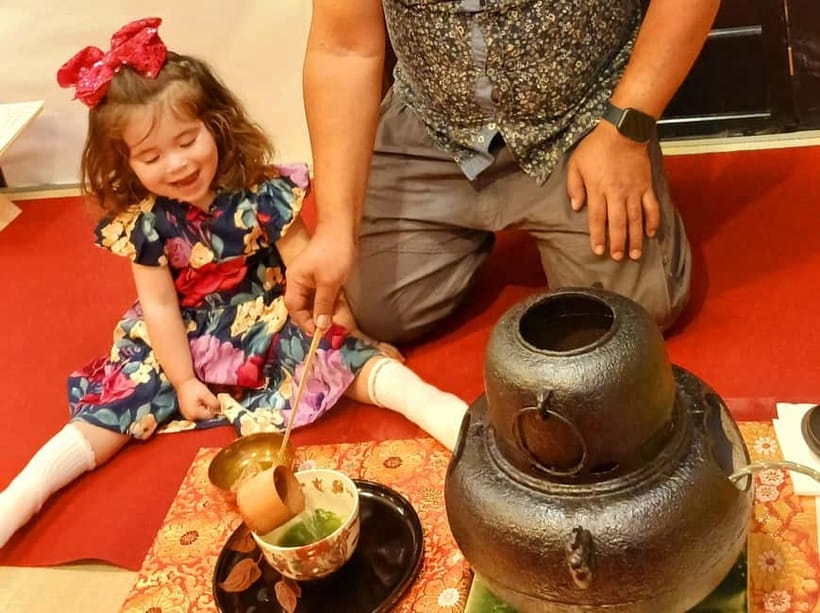
At $56 per person, this is not the cheapest way to sample matcha in Kyoto. The value comes from combining several elements in a compact session: guided tea preparation, sweets, cultural explanation, and a live koto performance.
If you paid separately for a formal tea experience and a traditional music performance, you would likely spend more time and money arranging both. Here, the two activities are connected by the same host and held in one central location.
The small group also matters. A limit of eight means the instructor can watch how you whisk the tea, correct your technique, and answer questions. You are paying for participation and explanation, not just a cup of matcha.
The price is less attractive if you only want to taste tea or take a quick kimono photograph. In that case, the additional kimono fee and the short duration may feel like extra cost. It makes the most sense when you want a guided cultural activity with live music and have one open hour in central Kyoto.
Timing, comfort, and practical limits
The activity lasts one hour, with starting times available according to the date you choose. That short format makes it easy to fit before or after Nishiki Market, but it also limits how much can be covered.
You should not expect a long history lecture, a full meal, or a lengthy music class. The focus is on participation, basic context, and a few live performances. That focus keeps the session manageable, but anyone wanting a detailed study of tea schools or koto technique should book something more specialized.
The room is small, and wheelchair users cannot be accommodated. Children under eight are not suitable for this activity. People with food allergies should also avoid booking, since tea sweets are included and the activity does not advertise allergy accommodations.
Flash photography is not allowed. You may bring a camera, and you can ask about the paid photo and video session, but use your device without flash during the ceremony and performance.
Who will enjoy this most

I would choose this for a first visit to Kyoto when you want cultural context without giving up half a day. It suits couples, families with older children, solo visitors, and anyone who wants a quiet hour between shopping and sightseeing.
It is particularly good for people who enjoy learning by doing. You will get more from it if you want to whisk your own tea, ask questions, and listen closely to the music rather than simply collect a photograph.
The experience also works well for people who are unsure about matcha. The careful preparation and accompanying sweet make the tea approachable, even if you do not usually enjoy its bitter edge.
I would think twice if you dislike removing your shoes, have limited mobility, need a large amount of personal space, or have food allergies. I would also choose another activity if your priority is a long kimono outing, since the kimono option is separate and the main ceremony does not center on costume rental.
How to fit it into a Kyoto day
Plan the activity around Nishiki Market rather than treating it as an isolated appointment. You can visit the market before or after the ceremony, then continue into central shopping streets and nearby restaurants.
A rainy day is a good time to schedule it. The central location keeps you near covered shopping areas, and the hour gives you a calm indoor break without sending you across the city.
Keep your schedule flexible enough to arrive inside the shop at the stated meeting point. Do not wait at Hotel GOCO stay, and avoid carrying more luggage than you need. Clean socks, a camera without flash, and comfortable clothes are the only specific items recommended.
Should you book KOTOLILY KYOTO?
Book it if you want a compact, friendly introduction to matcha and traditional music, especially if you value clear English instruction and a small group. The strongest reason to choose it is the pairing of hands-on tea preparation with live koto music from the same host.
The $56 cost is fair when you use the full experience: make the tea, listen to the performance, enjoy the sweet, and ask questions. Add the kimono photos or koto lesson only if those extras match your interests and budget.
Skip it if you want a highly formal, lengthy tea ceremony, a full meal, or a kimono experience included in the base price. For everyone else, this is a smart one-hour cultural stop in central Kyoto, with enough substance to feel worthwhile and enough flexibility to fit around Nishiki Market.
FAQ
How long does the Kyoto tea ceremony and koto experience last?
The experience lasts one hour.
How much does the activity cost?
The listed price is $56 per person.
Where is KOTOLILY KYOTO located?
The shop is in central Kyoto, next to KINMATA Restaurant and opposite Hotel GOCO stay. You should go inside KOTOLILY KYOTO rather than wait at the hotel.
Is the experience available in English?
Yes. The instructor speaks English and Japanese.
Is kimono rental included?
No. Kimono dressing, photos, and video are available for an additional fee on-site.
Can I try playing the koto?
Yes. You can ask about adding a koto-playing lesson for an additional fee after the tea ceremony.
Newest Kyoto experiences on the site
- Treasures of Kyoto: Gion & historical Walking Tour★ 5.0 · 6 reviews
- Whisk Your Own Matcha: A Zen Matcha Experience at Temple★ 3.6 · 7 reviews
- Kyoto tea town for matcha lovers★ 5.0 · 16 reviews
- Uji: Private immersion into Kyoto’s tea and reglious culture★ 5.0 · 17 reviews
- Kyoto Matcha Green Tea Tour★ 4.5 · 23 reviews
- Uji and Wazuka Matcha Farm Half Day Private Guided Tour★ 5.0 · 21 reviews
- Utilising upcycled Matcha! Creating matcha incense (Uji, Kyoto)★ 5.0 · 6 reviews
- Sacred Temple Yoga Experience in Japan★ 5.0 · 3 reviews
Nishiki Market Tours, compared.
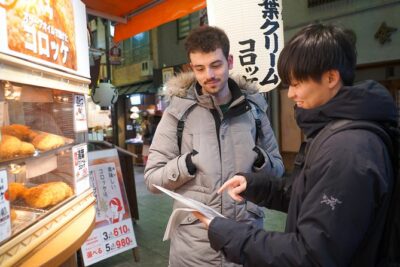
Nishiki Market Brunch Walking Tour (7 Tastings + Brunch)
Read our review →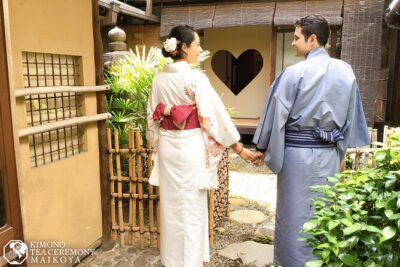
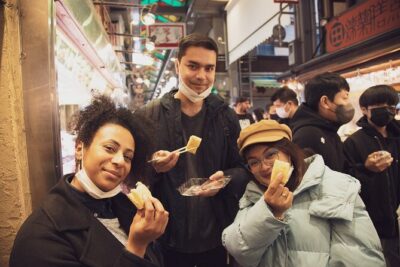
Kyoto Nishiki Market Food and Culture Walking Tour
Read our review →
Kimono Tea Ceremony Experience at Kyoto Oritzuruya, Nishiki
Read our review →
Nishiki Market and Depachika Food Tour with a Local
Read our review →
Nishiki Market Tour with a Local Foodie & Tastings
Read our review →
Browse the lists this tour appears in