
Reviewed · NARA DAY TRIPS
Kyoto Day Trip to Nara with a Local – Private & Personalized
Nara’s big appeal is easy to grasp: deer wander through the parks, giant Buddhist statues fill ancient halls, and lantern-lined paths lead into quiet shrine grounds. This private day trip from Kyoto lets you see those famous sights with a local host rather than trying to sort out the city alone.
I like the flexible plan and the help with the train from Kyoto Station. I also like that the day covers both major sights and calmer places such as Isui-en Garden. The main drawback is price: at $378.76 per person, this makes the most sense for a small group that values private guiding, not for someone happy to follow a standard sightseeing route.
Key points to know before booking
- A private host for roughly nine hours: Your group has the guide to itself, with travel time from Kyoto included.
- The train journey is guided: Your host organizes the ticket process and travels with you from Kyoto Station, though transport costs are not included.
- The classic Nara sights are covered: Expect Todai-ji, Nara Park, Kasuga Taisha, Isui-en Garden, and Kofuku-ji, depending on your final plan.
- The day can change to fit you: The route is personalized, so the listed stops are examples rather than a fixed schedule.
- Several guides receive especially warm praise: Taiga, Alex, Kenya, and Milos are named in the feedback, with Taiga noted for being funny and good with children.
- Cancellation is forgiving: You can cancel up to 24 hours before the start for a full refund.
Why a private Kyoto to Nara day works well
Nara is close enough to visit from Kyoto, yet it feels different in pace and character. The trip gives you about nine hours from the Kyoto meeting point and includes the journey to and from Nara, so you do not have to spend a separate day figuring out the city’s layout.
The useful part is not simply having someone point out buildings. Your host travels with you from Kyoto Station, helps organize the train tickets, and can explain the area as you go. That removes one of the small but annoying tasks of a Japan trip: reading timetables and deciding which train detail matters.
The experience is private, so you can ask questions without holding up a large group. If your party includes children, older relatives, or people with very different interests, that flexibility may be worth the extra cost.
The tradeoff is clear. A private guide costs much more than visiting Nara independently, and the $378.76 price is listed per person. You also pay for food, drinks, and transportation separately. If you already feel comfortable using Japanese trains and researching temples, you may find the price hard to justify.
More day trips down to Nara:
- Osaka/Kyoto:Kinkakuji,Arashiyama,FushimiInariShrine,NaraPark
★ 4.1 · 1,596 reviews - Kyoto/Osaka: Nara, Fushimi Inari Taisha, Arashiyama Bus Tour
★ 4.7 · 1,275 reviews - Osaka/Kyoto: Arashiyama, Nara & Fushimi Inari Shrine w/Lunch
★ 4.4 · 754 reviews
From Mister Donut to Nara Station
The meeting point is Mister Donut in the JR Kyoto Station Building, at Shop 901 in the Higashishiokoji area. The tour ends back at this same meeting point.
That central start is practical, especially if you are staying near Kyoto Station. Give yourself enough time to find the exact shop inside the station building, rather than assuming you can walk up at the last second. Your host then travels with you by train to Nara.
The train ride is part of the guided experience. Your host organizes the ticket process and helps remove the stress of checking train schedules. Still, transportation costs are not included in the tour price. If you hold a Japan Rail Pass, the supplied information says you can travel free on JR, but you should still confirm that your chosen service is covered.
Todai-ji and the giant Daibutsuden
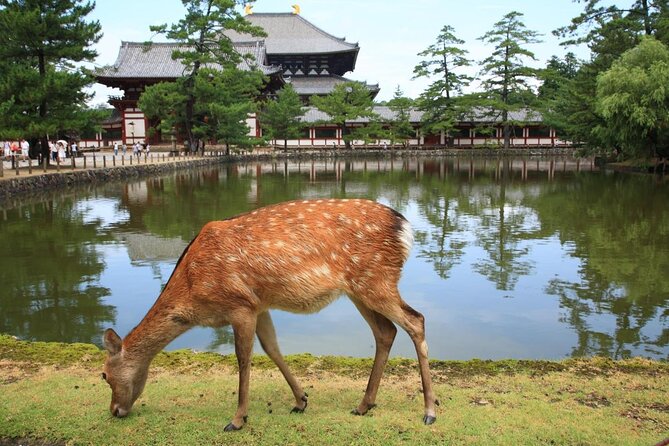
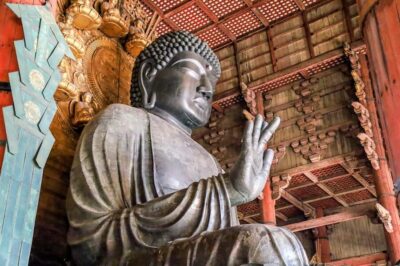
Todai-ji is likely to be the day’s most powerful stop. It was the head temple of Japan’s provincial Buddhist temples, and its main hall, the Daibutsuden, houses the Daibutsu, a bronze Buddha about 15 meters tall.
The scale matters. You do not just look at an old temple from the outside. You enter a vast hall and come face to face with one of Japan’s best-known Buddhist images. Your host can give the building and statue a human scale, explaining what you are seeing instead of leaving you to read a few signs.
A popular feature is a pillar with a hole in it. The details provided do not specify the story attached to it, but it is clearly one of the temple’s familiar points of interest. Ask your host about it when you arrive.
Todai-ji can also be the busiest part of the day. The private format helps you decide how long to stay, but it cannot make a major temple empty. If you want quiet, tell your host early so the day can balance Todai-ji with more peaceful stops.
Meeting Nara’s famous deer
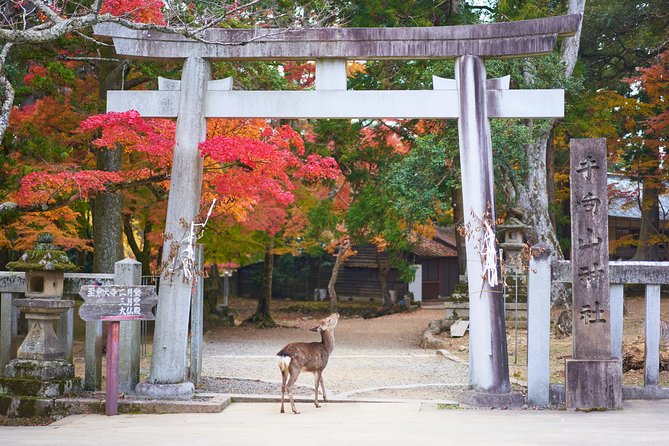
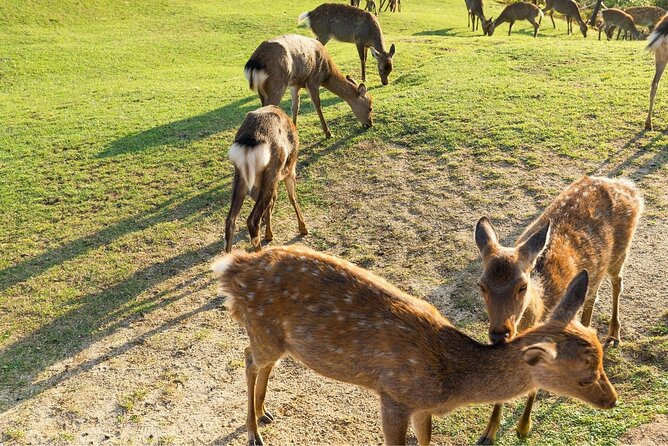
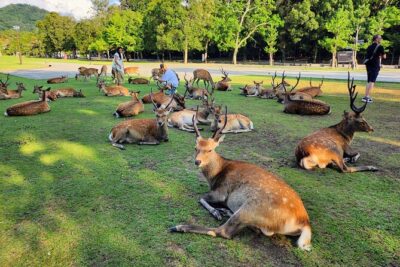
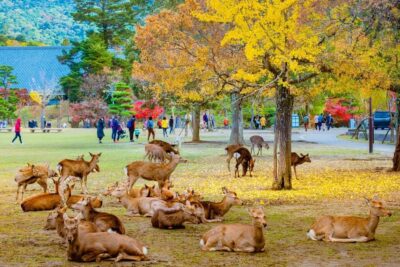
Nara’s deer are not confined to a zoo. You see them roaming through the city’s streets and parks, especially around Nara-koen Park. This gives the day an unusual rhythm: one moment you are looking at a major religious site, and the next you are watching deer move through the public space.
For many people, this is the most memorable part of Nara. It also works well for families, since the animals add a playful break between temple visits. A guide can help you understand how to behave around them, though you should still follow local instructions and use common sense.
The deer are part of a public setting, not a controlled attraction. Expect an open-air experience rather than a formal animal encounter. Your time here may vary because the route is private and personalized.
A few more Kyoto tours worth putting on the shortlist
- PERFECT KYOTO 1-Day Bus Tour
★ 5.0 · 13,518 reviews - Kyoto: Fushimi Inari, Kinkakuji, Bamboo Grove 1 Day Bus Tour
★ 4.8 · 4,316 reviews - 10 Must-see Spots in Kyoto One Day Private Tour (up to 7 people)
★ 5.0 · 1,108 reviews - Kyoto 1 Day Tour from Kyoto
★ 4.0 · 582 reviews
Isui-en Garden, a quiet pause
Isui-en Garden stretches between Todai-ji and Kofuku-ji. It is included in the experience, along with Todai-ji, Kasuga Taisha, and Kofuku-ji.
This garden gives the day a needed change of pace. After the size of Todai-ji and the activity around the deer, Isui-en offers a quieter place where you can slow down and take in carefully arranged views. The description emphasizes its calm, almost separate-from-the-world feeling, and that is exactly why it earns space in the itinerary.
I especially like having a garden included in a Nara day trip. A route made only of famous temples can start to blur together, while a garden gives you a different kind of Japanese aesthetic. If you prefer gardens and peaceful walks to packed sightseeing, tell your host that this stop matters to you.
Kasuga Taisha and the Fujiwara connection
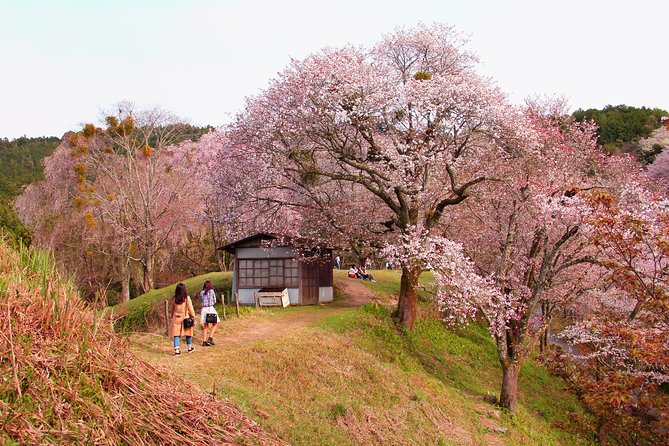
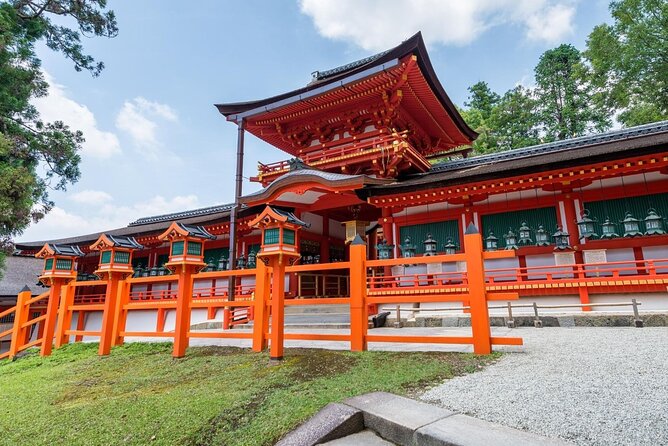
Kasuga Taisha is Nara’s best-known shrine and was the tutelary shrine of the Fujiwara, one of Japan’s most powerful family clans. That connection gives the visit more context than simply admiring a religious building.
The shrine was rebuilt every 20 years for many centuries, until the Edo period. That rebuilding tradition is a useful reminder that what you see at a historic Japanese site may be part of a long cycle of renewal, not one untouched structure surviving unchanged.
Kasuga Taisha also offers a different religious setting from Todai-ji. Todai-ji is known for its huge hall and bronze Buddha, while Kasuga Taisha brings you into shrine grounds associated with the Fujiwara family. A local host can help connect those differences as you move through the day.
Kofuku-ji and Nara’s famous pagodas
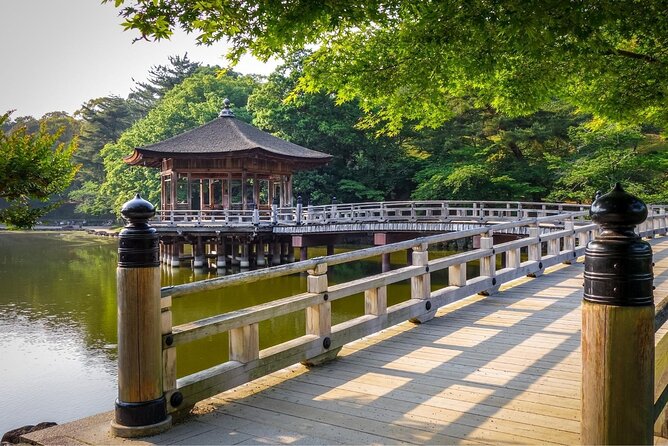
Kofuku-ji brings another strong visual stop, especially its five-storied pagoda. It is described as Japan’s second-tallest wooden pagoda, and the temple grounds also include three-storied pagodas.
Pagodas are easy to photograph, but the value of having a host here is the chance to understand what makes these structures important beyond their appearance. The five-storied form gives the skyline a clear focal point, while the smaller pagoda adds another historic landmark nearby.
Kofuku-ji may be especially appealing if you enjoy architecture and old wooden construction. If your interests lean more toward food, shopping, or quiet streets, you can ask for a different balance. The itinerary is not locked to every listed stop.
What the flexible format really means
The experience is sold as a personalized day, so the route may differ from the stops described above. That is both its strength and its limitation.
You can shape the day around temples, gardens, deer, culture, or a mix of all four. A family might want more time at Nara Park. A couple interested in religious architecture might prefer longer visits at Todai-ji, Kasuga Taisha, and Kofuku-ji. A first-time visitor may want the full classic circuit.
You should discuss priorities with your host at the start. The more clearly you explain what you care about, the more useful the flexibility becomes. Private does not automatically mean perfectly tailored, so speak up about walking pace, children, photo stops, and the sights you do not want to miss.
The tour includes walking once in Nara. Other transportation can be arranged, but the details supplied do not specify what that transport costs. Ask before booking if your group needs to limit walking or wants to add rides.
The guides: Taiga, Alex, Kenya, and Milos
The strongest praise centers on the hosts themselves. Taiga is repeatedly singled out as funny, professional, and good with children. One family found that their children especially enjoyed his company, which is a useful sign for parents who worry that a full temple day may feel long.
Alex is described as patient, helpful, and strong on the history and culture of both Kyoto and Nara. His support also covered the escorted train journey in both directions. One party arrived late because of a mix-up in their notes, and Alex waited, which shows the kind of practical help that can matter on a tightly timed day.
Kenya is praised for being kind, helpful, and attentive to what the group wanted. Milos is noted for making the day fun, covering the major sights, and creating a friendly atmosphere.
Guides can change, so you cannot book this experience on the guarantee of receiving one particular person unless the provider confirms it. Still, these names give you a useful sense of the guiding style: friendly, flexible, social, and willing to explain more than just the buildings in front of you.
Is $378.76 per person good value?
The price is high for a day trip, especially because food, drinks, and transportation costs are not included. You should calculate the total cost for your group before booking.
The value comes from several things bundled together: a private host, roughly nine hours of time, the Kyoto to Nara journey with assistance, a custom route, and admission to Isui-en Garden, Todai-ji, Kasuga Taisha, Kofuku-ji, and other listed attractions.
For two people, the private attention may feel worthwhile if you want a relaxed day with plenty of questions and no strangers in the group. For a larger party, group discounts may improve the per-person value, though the supplied information does not give the discount amount.
I would not choose this tour solely to save time or money. I would choose it for convenience, personal attention, and the chance to adjust the day. If your priority is the lowest possible cost, take the train independently and visit Nara on your own.
Who should book this Nara day trip?
This is a strong match for first-time visitors who want to see Nara’s major sights without planning every train and temple detail. It also fits families, since Taiga’s reported rapport with children suggests that the guiding style can be warm rather than formal.
It suits couples and small private groups who want conversation and control over the pace. The private format also helps if one person is especially interested in Buddhist temples, while another prefers gardens and deer.
I would be more cautious if you dislike walking. The Nara portion is described as a walking experience, and the day lasts about nine hours including travel. Ask about arranged transport if mobility is a concern.
The tour is also less appealing for independent Japan visitors who already know the train system and enjoy setting their own route. You can visit these sights without a guide, and the extra cost is significant.
Practical details before you go
Confirmation is provided at booking. The activity is near public transportation, and most people can participate. Service animals are allowed.
The tour is private, with only your group participating. It begins and ends at the stated Kyoto Station meeting point, so plan your evening around returning there rather than ending in Nara.
Food and drinks are not included. Plan to buy them separately, but do not assume that any particular restaurant or meal is part of the experience. Bicycle rentals are also excluded.
The cancellation terms are useful if your plans are still shifting. You receive a full refund when you cancel at least 24 hours before the local start time. Cancellations or changes made inside that 24-hour window are not accepted for a refund.
Should you book it?
Book this experience if you want a private, flexible Nara day and value having a local host beside you from the Kyoto train station to the final temple. It is particularly appealing for families, small groups, and first-time visitors who want the major sights explained without managing the day alone.
Skip it if price is your main concern or if you are comfortable arranging trains, admissions, and a walking route yourself. At $378.76 per person, this is a personal-guiding service, not a budget excursion. The best reason to book is the combination of convenience and human connection, with hosts such as Taiga, Alex, Kenya, and Milos bringing the temples, gardens, and deer into a day that feels shaped around your group.
FAQ
How long does the Kyoto to Nara experience last?
The experience lasts approximately nine hours, including travel time from Kyoto.
Where does the tour start and finish?
It starts at Mister Donut, JR Kyoto Station Building Shop 901, in Higashishiokoji, Shimogyo Ward, Kyoto. It ends back at the same meeting point.
Is this a private tour?
Yes. Only your group participates in the activity.
Is the itinerary fixed?
No. The experience is private and personalized, so the places you visit may differ from the listed stops.
Are train tickets included?
Transportation costs are not included. Your host travels with you from Kyoto Station and organizes the ticket process. Japan Rail Pass holders can travel free on JR.
Which attractions are included?
Admission to Isui-en Garden, Todai-ji Temple, Kasuga Taisha Shrine, Kofuku-ji Temple, and other listed attractions is included.
Are food and drinks included?
No. Food and drinks are not included in the tour price.
Can I cancel for a full refund?
Yes, if you cancel at least 24 hours before the experience start time. Cancellations made less than 24 hours before the start are not refunded.
Newest Kyoto experiences on the site
- Treasures of Kyoto: Gion & historical Walking Tour★ 5.0 · 6 reviews
- Whisk Your Own Matcha: A Zen Matcha Experience at Temple★ 3.6 · 7 reviews
- Kyoto tea town for matcha lovers★ 5.0 · 16 reviews
- Uji: Private immersion into Kyoto’s tea and reglious culture★ 5.0 · 17 reviews
- Kyoto Matcha Green Tea Tour★ 4.5 · 23 reviews
- Uji and Wazuka Matcha Farm Half Day Private Guided Tour★ 5.0 · 21 reviews
- Utilising upcycled Matcha! Creating matcha incense (Uji, Kyoto)★ 5.0 · 6 reviews
- Sacred Temple Yoga Experience in Japan★ 5.0 · 3 reviews
Nara Day Trips, compared.
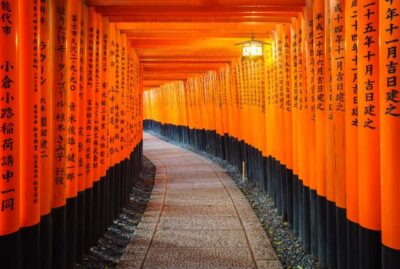
Kinkakuji,Arashiyama,FushimiInariShrine,NaraPark
Read our review →
Nara, Fushimi Inari Taisha, Arashiyama Bus Tour
Read our review →
Arashiyama, Nara & Fushimi Inari Shrine w/Lunch
Read our review →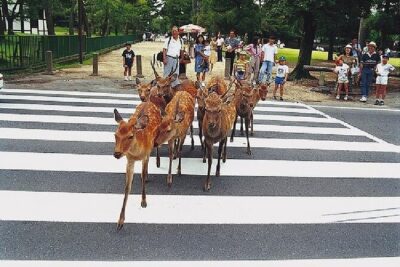
Full Day Guided Tour to Kyoto and Nara from Osaka by Van
Read our review →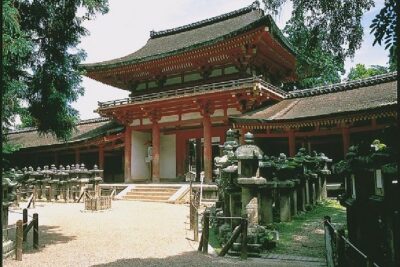
Browse the lists this tour appears in