
Reviewed · KYOTO ZEN MEDITATION
Kyoto: Zen Experience in a Hidden Temple
Kyoto’s Jusho-in Temple offers something rare: quiet time with a Zen abbot in a temple that still feels like a place of practice, not a sightseeing stage. Abbot Eitetsu Nishida leads two 20-minute zazen sessions, explains the basics of Rinzai Zen, and then shares matcha and seasonal sweets beside a 400-year-old garden.
I like the thoughtful two-part meditation, with time to stretch and ask questions between sessions. I also like the personal touch of the tea lesson and the photographer, who lets you focus on the experience while creating a few keepsake images. The main consideration is physical comfort: sitting upright for 20 minutes can be hard, and the temple is not wheelchair accessible.
Key points to know
- Two 20-minute zazen sessions: A short break between sittings makes this approachable for first-time meditators.
- Led by Abbot Eitetsu Nishida: The 16th-generation priest teaches with warmth, humor, and practical guidance.
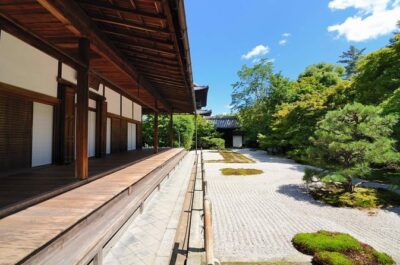
- Jusho-in’s old garden: The garden, associated with painter Eitoku Kano, changes character with every season.
- Matcha with seasonal wagashi: The tea portion explains the connection between Zen attention and Japanese tea customs.
- Small-group or private format: The calm setting works best when you want conversation and personal attention.
- Photos included: A photographer captures the experience, with image data sent within a few days.
A quiet corner of Myoshin-ji
The meeting point is at the north gate of Myoshin-ji Temple, at 18 Taniguchisonomachi. From there, a guide leads you through the large temple complex to Jusho-in, one of 46 sub-temples within Myoshin-ji.
That short walk matters. You do not simply arrive at a room prepared for an activity. You pass from the streets of Kyoto into a working religious complex, then into a smaller temple where the pace changes. Myoshin-ji is one of Japan’s largest Zen temple compounds, and its collection of smaller temples gives the area a quieter feel than Kyoto’s famous central sights.
Jusho-in was founded in 1599 and has about 420 years of history. The temple’s age is not presented as a museum display. You sit in a functioning Zen setting, with the garden and architecture doing much of the talking.
The meeting point can vary depending on the booking option, so check the confirmation carefully. Hotel pickup and drop-off are not included. Plan to arrive at the specified gate rather than heading straight to Jusho-in on your own.
More zen sittings and garden visits in Kyoto:
- Kyoto Zen Meditation & Garden Tour at a Zen Temple with Lunch
★ 5.0 · 441 reviews - Kyoto: Tea Ceremony Meditation – Make Matcha with Tea Master
★ 4.8 · 406 reviews - Kyoto: Zen Meditation at a Private Temple with a Monk
★ 5.0 · 202 reviews
Meeting Eitetsu Nishida, the 16th-generation abbot
The central figure here is Eitetsu Nishida, the 16th-generation abbot of Jusho-in. Before entering monastic life, he worked as a national public servant for ten years. He later completed three and a half years of demanding Zen training.
That background gives the session a useful balance. You are not only hearing abstract religious ideas from a distant figure. Nishida is known for a cheerful manner, a love of animals, and a sense of humor that helps beginners relax.
The English presentation is supported by a live guide or interpreter. One practical point is worth keeping in mind: Nishida’s English can be difficult to follow at times because of his strong accent. The interpreter is especially helpful during longer explanations, and you should feel free to ask for a point to be repeated.
The session introduces Zen as a branch of Mahayana Buddhism that places strong value on direct experience. Instead of treating meditation as a theory to study, the emphasis is on sitting, breathing, posture, and attention.
This is Rinzai Zen, a tradition introduced to Japan in the 12th century and associated with sudden insight, or satori. You will not be expected to reach enlightenment in 40 minutes. The useful takeaway is simpler: you learn how Zen treats the act of sitting as a serious practice in its own right.
Two zazen sessions, not one long ordeal
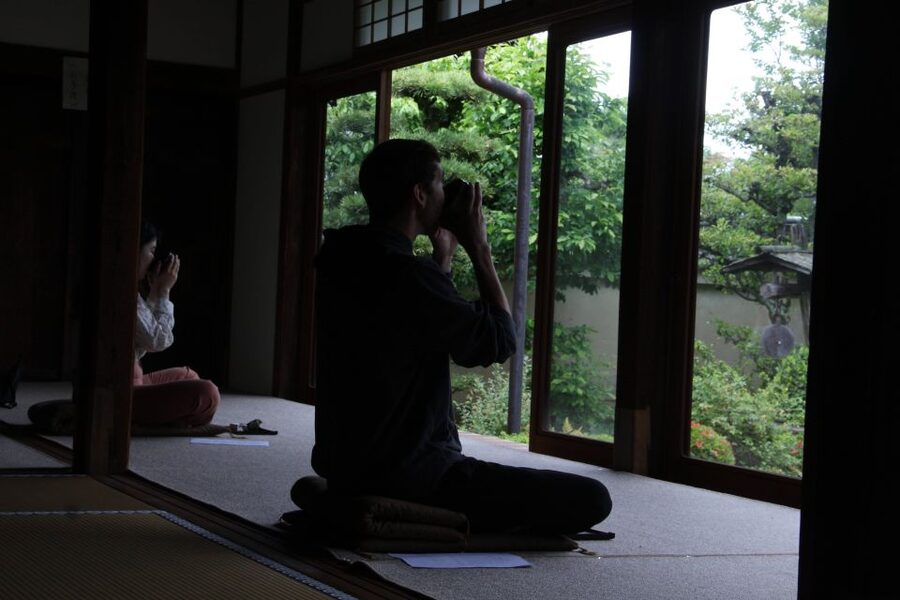
The meditation begins with an explanation of zazen. You receive guidance on posture and the general attitude of the practice before sitting with the group.
There are two sessions of about 20 minutes each. Between them, you have time to stretch, ask questions, and reset your legs. That break is one of the best choices in the schedule. Twenty minutes may sound easy until you try to keep your back upright and your attention steady.
For a beginner, the goal is not to force your mind to become blank. The difficulty is noticing thoughts without chasing each one. The priest’s instructions and the quiet room give you a clear starting point, but the practice still requires effort.
You may sit in the traditional manner, but chairs are available if your knees, hips, or back make floor sitting uncomfortable. This is not wheelchair accessible, and the experience is not a good match for anyone who cannot sit on the floor or in a chair for sustained periods.
I would avoid wearing a rented kimono. The clothing can make it harder to sit and meditate comfortably. Wear simple clothes that allow you to bend your legs and keep an upright posture.
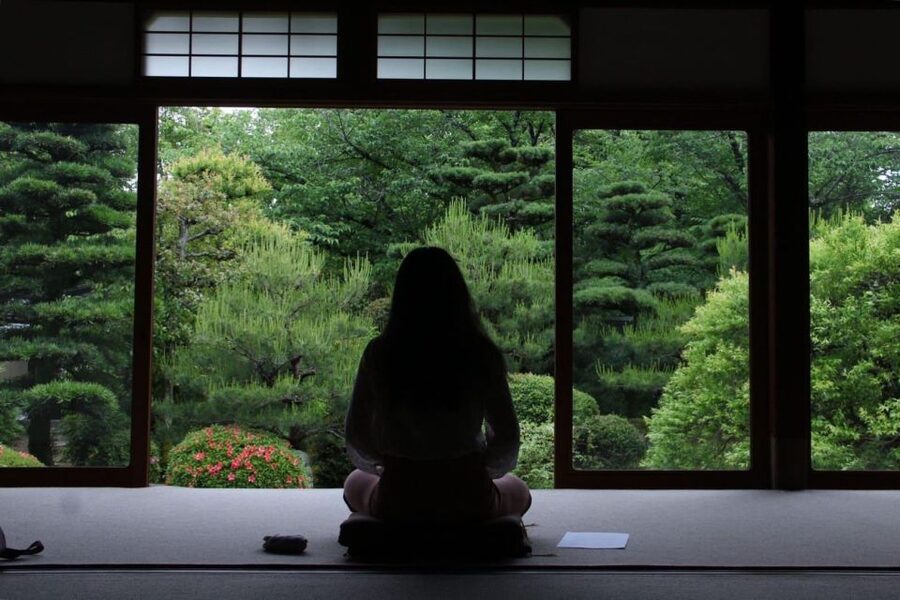
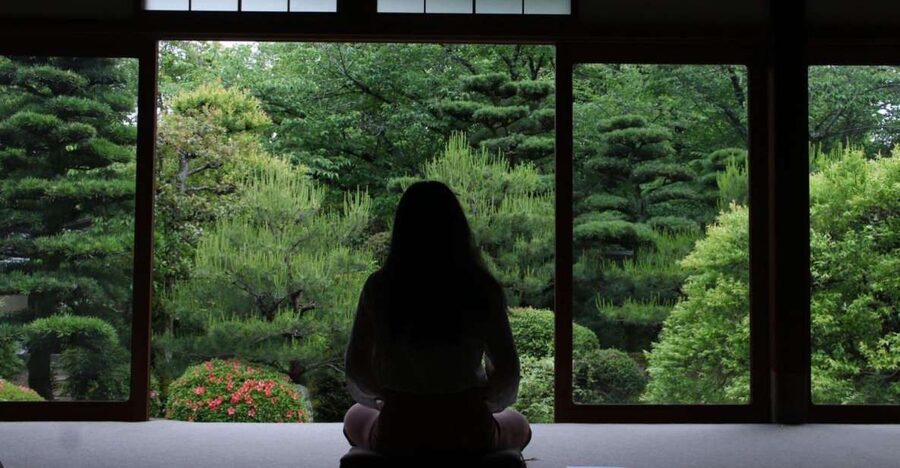
The doors may be open toward the garden, depending on conditions. That can bring in cool air, seasonal sounds, and a closer sense of nature. It can also feel chilly, particularly in winter. Blankets may be provided, but a light layer is still sensible.
The garden is part of the meditation
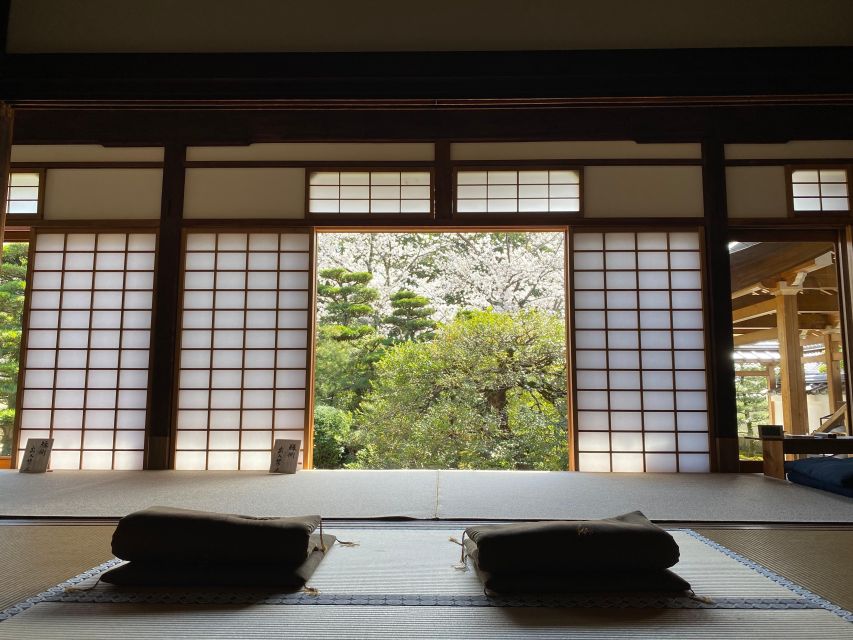
Jusho-in’s garden is attributed to Eitoku Kano, a celebrated 16th-century painter. It has remained largely unchanged since its creation and is one of the main reasons this experience feels different from a meditation class in a hotel or studio.
You sit facing the garden rather than a blank wall. In spring, cherry blossoms add a soft burst of color. Summer brings fresh greenery, autumn brings changing leaves, and winter can offer a spare view of snow and bare branches.
The garden is not simply background scenery. Its restraint suits zazen. There is no need for a long explanation when the view gives you a fixed point for attention.
The best approach is to avoid treating the garden as a photo stop during the meditation. Let the photographer handle the formal pictures later. Your job during zazen is to sit, breathe, and notice the changing light and weather.
More temples worth an hour in Kyoto:
- Kyoto: Tea Ceremony Ju-An at Jotokuji Temple
★ 4.9 · 3,207 reviews - Arashiyama Bamboo, Temple, Monkeys, or Secret Sake Brewery
★ 4.8 · 886 reviews - Kyoto: Arashiyama Bamboo Forest, Monkeys, Matcha & Temple Tour
★ 5.0 · 759 reviews - Kyoto: Arashiyama Bamboo, Temple, Matcha, Monkeys & secret spots
★ 5.0 · 219 reviews
Matcha, wagashi, and the Zen connection
After meditation, the mood shifts from inward attention to a shared tea experience. Eitetsu Nishida explains matcha and its history, while the tea team demonstrates how to receive and drink the powdered green tea.
The matcha is served with a seasonal Japanese sweet, or wagashi. The pairing is carefully selected, and the sweet is more than a snack. Its shape, texture, and flavor are part of the seasonal setting.
You learn the basic etiquette of accepting the bowl, appreciating the presentation, and drinking the tea. The details may feel formal at first, but they give you a practical way to understand how Japanese tea connects with Zen. You slow down, pay attention to small movements, and respect the moment in front of you.
This is not necessarily a full-length tea ceremony with every formal stage. It is better understood as an accessible introduction to matcha customs, taught in the calm setting of a Zen temple.
The tea can also be a welcome relief after sitting. It gives you something warm to hold, a chance to talk, and time to ask the priest more personal questions about Zen life.
Why the photography is useful
A photographer using a single-lens reflex camera records parts of the session and sends the photo data within a few days. This is included in the price.
The practical value is that you do not need to interrupt meditation to take pictures. You can keep your phone away and let someone else document the setting, the tea service, and the group.
Do not expect a full personal photo shoot. The experience is still a meditation and cultural lesson, not a portrait session. But the images provide a meaningful reminder of the temple, particularly because the setting is difficult to recreate elsewhere in Kyoto.
What the $109 price gets you
At $109 per person, this is not a cheap way to fill two hours. You are paying for a small-scale experience with a senior priest, an English-speaking guide, temple access, meditation instruction, matcha, sweets, and professional photographs.
The value depends on what you want from Kyoto. If you only want a quick temple visit, the cost may feel high. You can see many temple exteriors for little or no money. If you want direct conversation, guided practice, and access to a quiet interior space, the price is easier to justify.
The private or small-group format also matters. A large class would change the mood and limit questions. Here, the schedule leaves room for explanations and conversation, and the group size helps preserve the quiet of the temple.
The experience has earned a 5.0 rating from 437 ratings, with repeated praise for the priest, the calm setting, the matcha, and the organization. That broad response fits the structure: there is enough guidance for beginners, but still enough silence for the meditation to feel real.
Who will enjoy this most
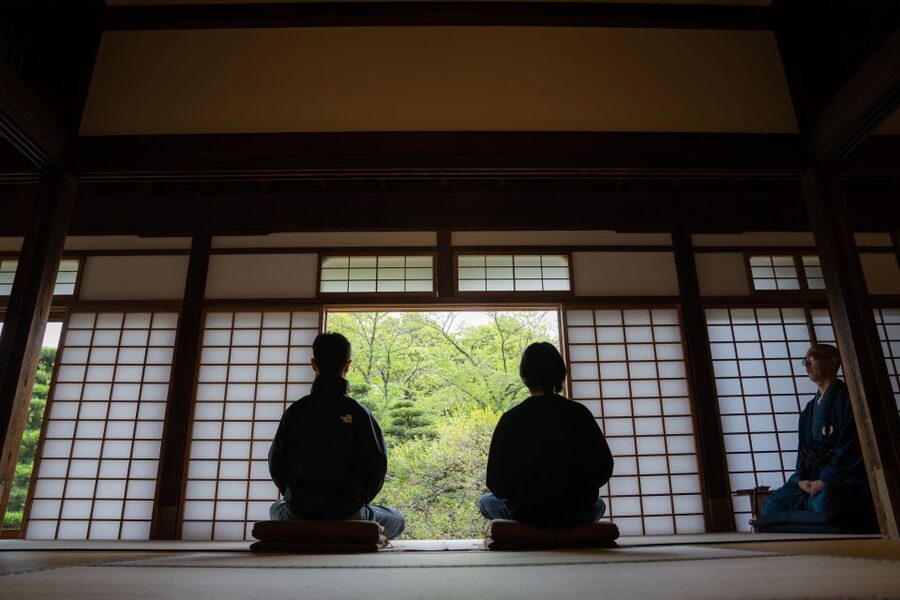
I would recommend this to you if you want a break from Kyoto’s crowded sightseeing routes and are curious about how Zen is practiced rather than simply photographed.
It suits:
- First-time meditators who want clear instruction
- People who already practice yoga or meditation
- Couples and families seeking a quieter cultural activity
- Visitors interested in Japanese religious traditions
- Anyone who values conversation with a local priest
- People who prefer a small-group experience to a large tour
Children can join, and the activity is open to all ages. Still, a child needs to be able to sit quietly for two 20-minute sessions. The tea portion and garden may hold their interest, but the meditation requires patience.
This is also a good rainy-day plan because it takes place indoors and runs rain or shine. The garden remains part of the experience in wet weather, though open doors may make the room cooler.
Practical details before you reserve
The full experience lasts about two hours. The itinerary begins at Myoshin-ji’s north gate, continues to Jusho-in, and ends back at the north gate or the listed drop-off point.
The activity is offered in English, with private or small-group options. Seating is assigned in reservation order, so booking early may help if you want a particular position in the room.
No special equipment is required. Wear comfortable clothing, avoid a rented kimono, and bring a layer if you are sensitive to cool air. Weapons, sharp objects, alcohol, and drugs are not allowed.
You can cancel up to 24 hours before the start for a full refund. The reserve-now, pay-later option also helps if your Kyoto schedule is still taking shape.
If you have extra time, consider walking through more of the Myoshin-ji complex before or after the session. The larger compound includes many small Zen temples, and the experience gives you a useful reason to explore the area slowly instead of rushing to the next famous sight.
Should you book Jusho-in’s Zen experience?
Book it if you want a genuine pause in Kyoto, not just another quick temple visit. The combination of two guided meditation sessions, a senior abbot, matcha, seasonal sweets, the old garden, and photographs gives the two hours a clear sense of purpose.
Think twice if floor sitting is difficult, if you need wheelchair access, or if you want a highly formal tea ceremony with a long sequence of traditional procedures. This experience is more personal and practical than ceremonial.
For most visitors who want to understand Zen through direct practice, the $109 cost is fair. You leave with new meditation skills, a better sense of Japanese tea etiquette, time spent in a remarkable temple, and photos that can bring the quiet morning back to mind long after Kyoto’s crowds have faded.
FAQ
Where does the experience meet?
The meeting point is at Myoshin-ji Temple’s north gate, at 18 Taniguchisonomachi. The exact meeting point may vary by booking option, so check your confirmation.
How long does the activity last?
The experience lasts about two hours, including explanations of zazen, meditation sessions, the matcha lesson, tea, sweets, and the final photo.
Is the experience offered in English?
Yes. The experience includes an English-speaking live guide. Interpretation supports the abbot’s explanations.
Who leads the meditation?
Eitetsu Nishida, the 16th-generation abbot of Jusho-in Temple, leads the zazen sessions and explains Zen practice.
How long are the meditation sessions?
You take part in two zazen sessions of about 20 minutes each, with a break between them for stretching and questions.
Can beginners join?
Yes. The experience explains zazen before you begin and is designed to welcome people with no previous meditation experience.
Are chairs available during meditation?
Yes. Chairs are available for people who need assistance sitting on the floor.
Is the temple wheelchair accessible?
No. The experience is not wheelchair accessible.
What is included in the price?
The price includes the guide, temple entry, the abbot’s teaching, Japanese tea and sweets, and photos taken with a single-lens reflex camera. Hotel transportation is not included.
Newest Kyoto experiences on the site
- Treasures of Kyoto: Gion & historical Walking Tour★ 5.0 · 6 reviews
- Whisk Your Own Matcha: A Zen Matcha Experience at Temple★ 3.6 · 7 reviews
- Kyoto tea town for matcha lovers★ 5.0 · 16 reviews
- Uji: Private immersion into Kyoto’s tea and reglious culture★ 5.0 · 17 reviews
- Kyoto Matcha Green Tea Tour★ 4.5 · 23 reviews
- Uji and Wazuka Matcha Farm Half Day Private Guided Tour★ 5.0 · 21 reviews
- Utilising upcycled Matcha! Creating matcha incense (Uji, Kyoto)★ 5.0 · 6 reviews
- Sacred Temple Yoga Experience in Japan★ 5.0 · 3 reviews
Kyoto Zen Meditation, compared.
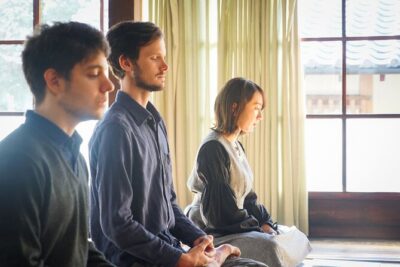
Kyoto Zen Meditation & Garden Tour at a Zen Temple with Lunch
Read our review →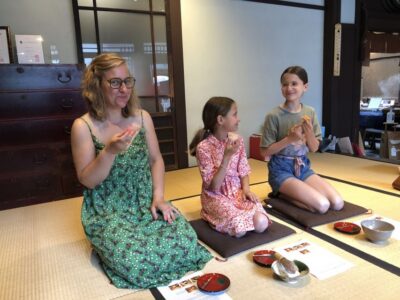
Tea Ceremony Meditation – Make Matcha with Tea Master
Read our review →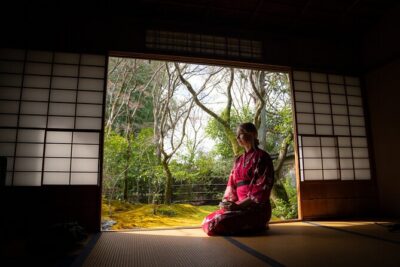
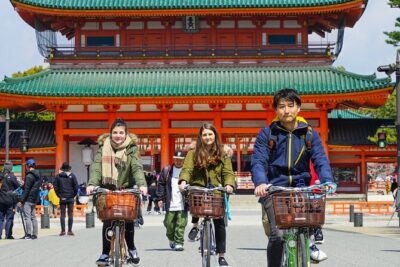
4.5-Hour Kyoto Bike Tour with Lunch and UNESCO Zen Temples
Read our review →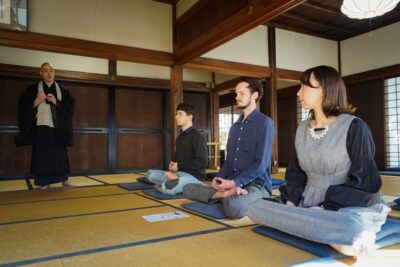
Zen Meditation and Garden Tour at a Temple with Lunch
Read our review →
Arashiyama Guided Tour, Bamboo, Monkey, Zen Temple
Read our review →Browse the lists this tour appears in