
Reviewed · KYOTO ZEN MEDITATION
Kyoto: Zen and Yoga Experience at Myoshinji Temple
Myoshinji Temple offers something Kyoto sightseeing rarely does: quiet time with a purpose. In a normally non-public part of this large Rinzai Zen complex, you learn about Zen, practice yoga beside a garden, and finish with Japanese tea and conversation. I like the setting and the small, private format. I also like that the session is built for beginners, not people who already know every meditation term in the book.
The main point to consider is the level. If you already practice yoga and meditation, the physical session may feel basic. The value comes from the temple setting, the gentle instruction, and the chance to connect Zen ideas with Japanese gardens, not from an advanced workout.
Key points to know before booking
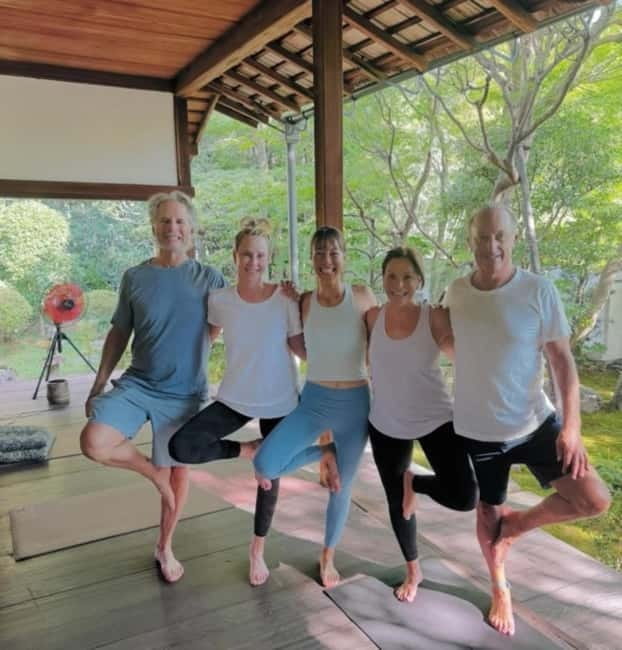
- A private session inside Myoshinji: You visit a normally non-public area of this historic Rinzai Zen temple complex.
- Three connected activities: The two hours combine a Zen lesson, a yoga session, and Japanese tea.
- Best for beginners: The pace and teaching suit someone new to Zen or yoga more than an experienced practitioner.
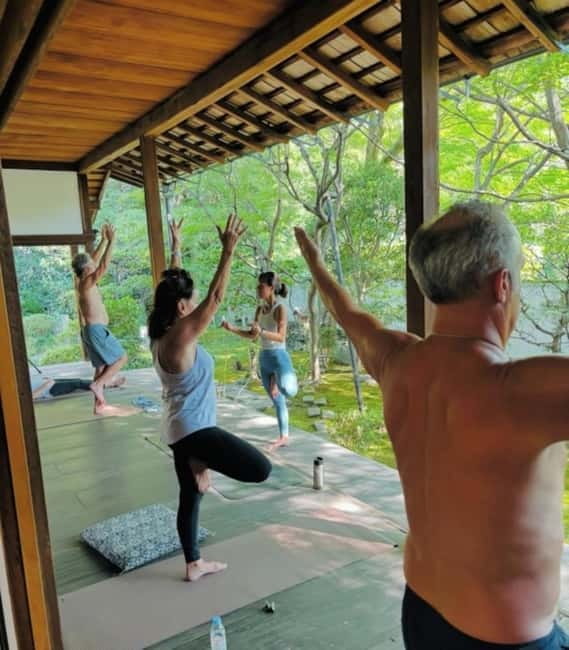
- Garden-side yoga: You practice while hearing birds, leaves, and the breeze in a quiet temple setting.
- English instruction by Agasa: Agasa leads the session and makes time for questions and cultural discussion.
- Meet at the South Entrance: Look for the large gate and guide there. Do not go to the North Entrance.
A quieter side of Myoshinji Temple
Myoshinji is a historic Rinzai Zen temple in Kyoto, and this activity takes you beyond the usual quick temple visit. Instead of simply viewing buildings and gardens, you spend time learning how Zen shapes thought, space, and daily practice.
The access to a normally non-public section gives the visit much of its appeal. You are not being rushed through a crowded sightseeing route. You have a calm place for discussion, meditation, movement, and tea. That change of pace matters in Kyoto, where a full day of temples can leave you admiring beautiful places without having time to sit with what you are seeing.
You should arrive at the South Entrance, not the North Entrance. The guide waits by the large gate. This detail is worth taking seriously, since starting at the wrong entrance could create needless stress before an activity that depends on arriving calm and focused.
The session lasts two hours. That is long enough to give each part room to breathe, but short enough to fit into a busy Kyoto schedule. You do not need to set aside an entire morning or afternoon.
More zen sittings and garden visits in Kyoto:
- Kyoto Zen Meditation & Garden Tour at a Zen Temple with Lunch
★ 5.0 · 441 reviews - Kyoto: Zen Experience in a Hidden Temple
★ 5.0 · 437 reviews - Kyoto: Tea Ceremony Meditation – Make Matcha with Tea Master
★ 4.8 · 406 reviews
Learning Zen through five key elements
The first part introduces Zen and its five key elements. The exact elements are not listed in the activity details, so you should expect an introductory framework rather than a technical course in Zen philosophy.
I like this approach because it gives the visit structure. You are not simply told to sit quietly and find peace. You receive ideas to consider, then discuss them with the instructor and the group. The connection between Zen and Japanese gardens is also part of the lesson, helping you look at temple spaces with more attention.
The discussion matters as much as the explanation. You can ask questions, test your understanding, and connect the ideas to your own daily life. Since the instruction is in English, you do not need prior knowledge of Japanese culture or Buddhist practice to take part.
The activity asks for a quiet and respectful manner during discussion and meditation. That is not a difficult rule, but it does shape the mood. This is not a loud social class or a sightseeing talk where people wander in and out. You should be ready to listen, sit quietly, and let other people have their space.
For a first introduction to Zen, this part can be useful because the temple itself gives the subject a real setting. You are learning about Zen in a working religious environment, not only from a classroom presentation.
Yoga beside the temple garden
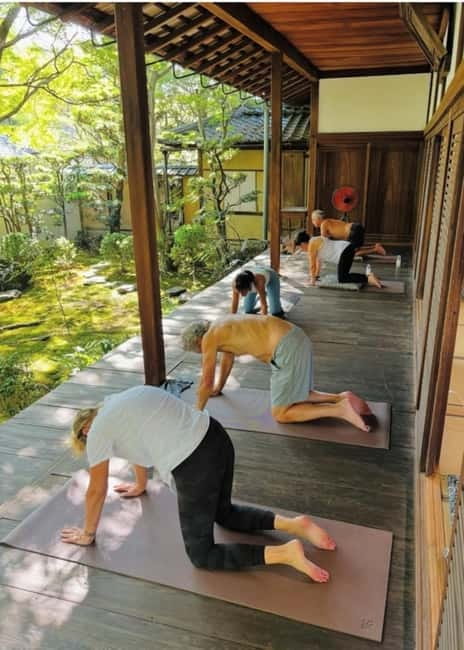
The yoga session brings the lesson into the body. You practice in a temple setting while looking toward a garden and listening to birdsong, rustling leaves, and the breeze.
That setting is the key attraction. The yoga itself is not presented as an advanced fitness class. It uses Zen principles and appears aimed at beginners or people who want a gentle introduction. You should bring comfortable clothing, a towel, water, and a change of clothes.
The private format helps here. You are not joining a large public class where the instructor must keep things moving for many different levels. The exact group size is not provided, but the activity is described as a private group experience. That usually means you can ask questions and receive more personal attention than in a standard drop-in class.
Still, keep your expectations realistic. A verified booking gave the activity four out of five and described it as ideal for someone at beginner level, while noting that it felt weak for someone already experienced in meditation and yoga. That is a fair way to view it. The special part is the place and the connection to Zen, not challenging poses or a demanding workout.
If you want vigorous exercise, this is probably the wrong choice. If you want to slow down, move gently, and understand why the surroundings matter, the yoga fits the rest of the session well.
What makes the garden setting valuable
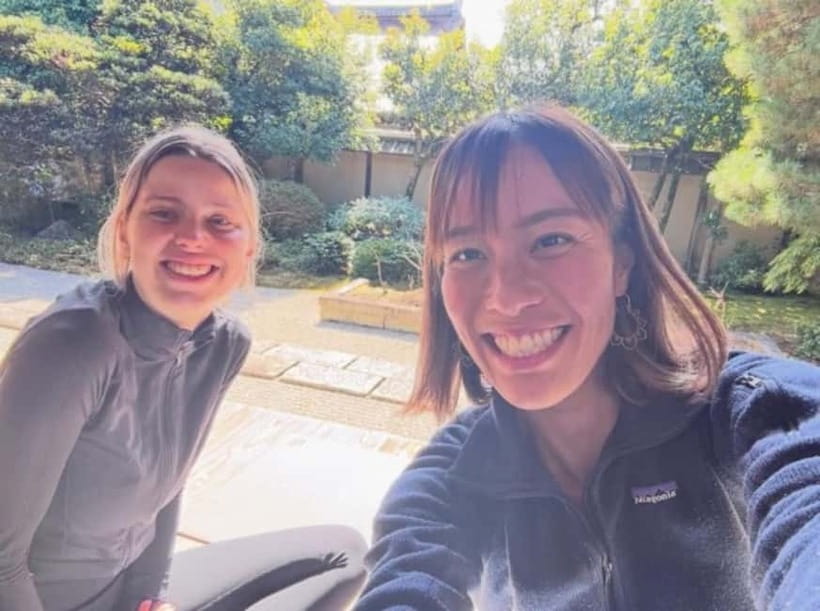
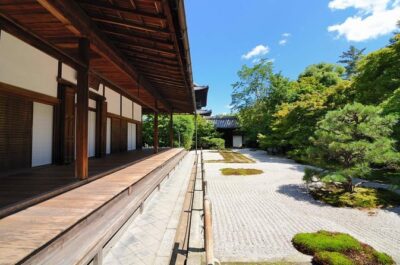
A Japanese garden is not only decoration in this experience. The Zen session uses the garden as a way to discuss ideas of order, attention, and simplicity. The yoga then lets you experience the same quiet setting through sound, breath, and movement.
I like that the activity does not separate culture from practice. You are not visiting the temple for a quick photograph and then heading elsewhere for yoga. The lesson, the garden, and the physical session all point in the same direction.
You might find that the garden changes the way you notice small things. The provided details emphasize birdsong, moving leaves, and a gentle breeze rather than grand scenery. That tells you what kind of beauty to expect: close, quiet, and easy to miss if you are in a hurry.
This also means the experience depends partly on your attitude. If you keep checking the clock or expecting constant entertainment, two hours may feel slow. If you want a pause from sightseeing, the same pace can feel like the main reward.
More temples worth an hour in Kyoto:
- Kyoto: Tea Ceremony Ju-An at Jotokuji Temple
★ 4.9 · 3,207 reviews - Arashiyama Bamboo, Temple, Monkeys, or Secret Sake Brewery
★ 4.8 · 886 reviews - Kyoto: Arashiyama Bamboo Forest, Monkeys, Matcha & Temple Tour
★ 5.0 · 759 reviews - Kyoto: Arashiyama Bamboo, Temple, Matcha, Monkeys & secret spots
★ 5.0 · 219 reviews
Japanese tea and open conversation
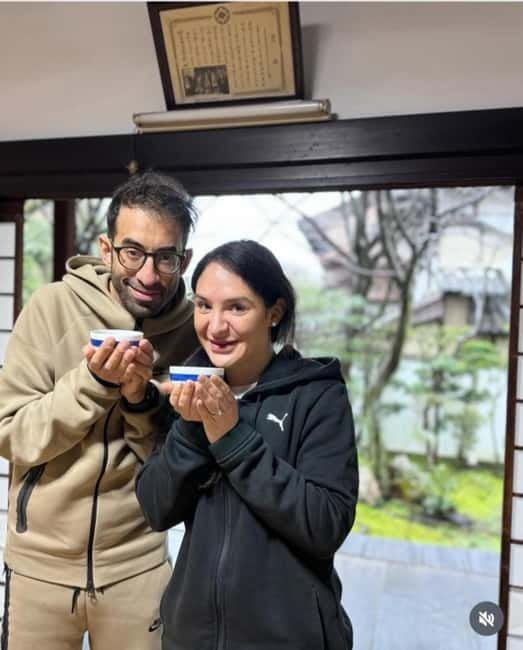
The final section is a Japanese tea session. Tea gives the activity a relaxed ending after the more focused Zen discussion and yoga practice.
You can ask questions and share cultural insights with the instructor and other participants. That makes the tea portion more than a drink break. It is your chance to clarify ideas from the first part and talk about what you noticed during the yoga session.
The tea session also gives the experience a social side without turning it into a crowded group event. You can meet other people who chose the activity for similar reasons, while still spending time in a quiet temple environment.
Agasa is the named instructor associated with the experience. A verified booking described Agasa as kind, thoughtful, gracious, and informative, and credited the instruction with helping the participant learn a great deal. Those qualities matter here because the activity depends on explanation and conversation as much as on movement.
You should not expect a formal tea ceremony unless that is specifically stated elsewhere when booking. The information provided describes a Japanese tea session, questions, and cultural exchange. That points to a simple, conversational close rather than a full ceremony with an elaborate sequence of rituals.
The value of $96 for two hours
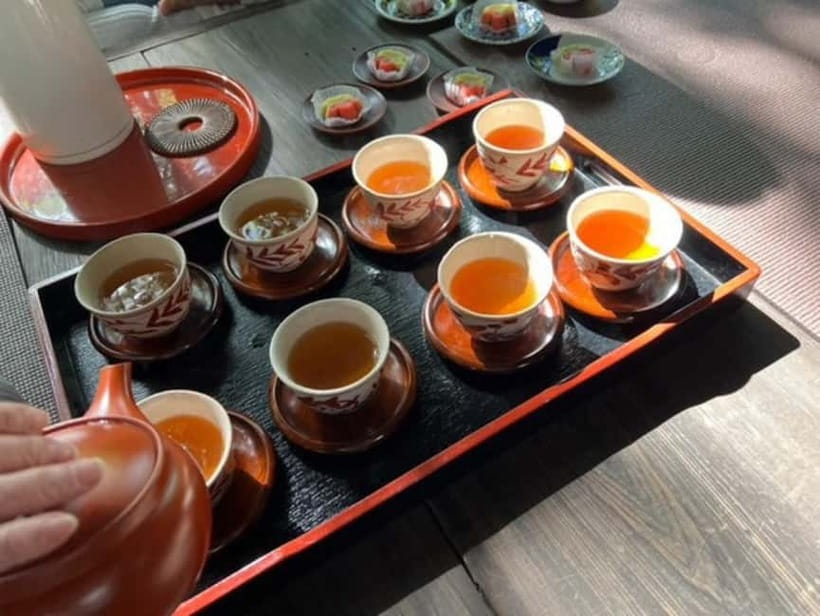
At $96 per person, this is not a cheap yoga class. You are paying for more than exercise, though. The price includes temple admission, the Zen session, the yoga session, Japanese tea, and a mini Zen guidebook.
The strongest value comes from the setting and access. A standard temple visit may let you see public areas, but this activity includes time in a normally non-public section of Myoshinji. You also receive guided context instead of having to interpret the temple and garden on your own.
The private group format adds value for people who want to ask questions. An English-speaking instructor can explain ideas as you go, which is especially helpful if Zen is new to you. You are also paying for a planned cultural experience that combines several related activities in one visit.
The price is harder to justify if your main goal is yoga training. An experienced practitioner may find the class too simple, and the activity does not promise an advanced sequence. In that case, you may get more from the temple access and cultural discussion than from the physical practice.
I would view the $96 as reasonable for a first-time cultural introduction, especially if you value calm settings and personal instruction. I would not book it solely for a workout.
Who will enjoy this most
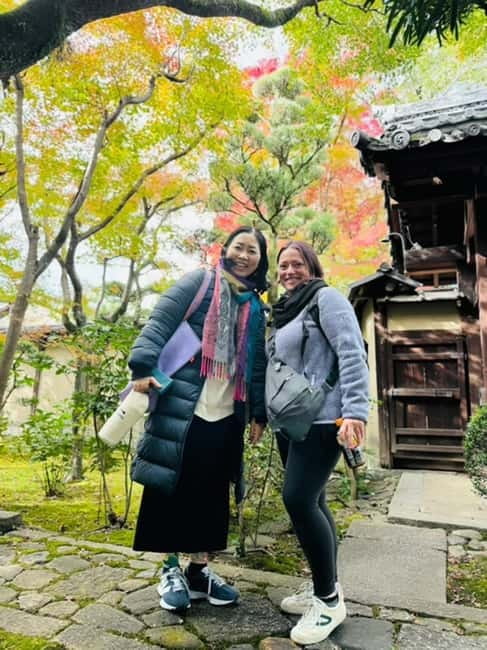
This experience suits you if you are curious about Zen but do not know where to begin. The teaching is in English, the session is structured, and you have a chance to ask questions instead of trying to understand a temple visit on your own.
It is also a good fit if you want a quieter break during a busy Kyoto itinerary. Two hours gives you time to slow down without sacrificing a full day of sightseeing.
Beginners in yoga should feel more at home here than advanced practitioners. You do not need to arrive with a meditation background. The activity is designed around introduction, reflection, and simple practice.
It may not suit you if you want a strong physical challenge, a long meditation retreat, or a detailed study of Rinzai Zen. The session is an accessible introduction, not a certification class or a specialist seminar.
The activity is not suitable for pregnant women, people with heart problems, people with a cold, or people over 70 years old. Those limits should guide your decision before booking.
Practical preparation for the temple session
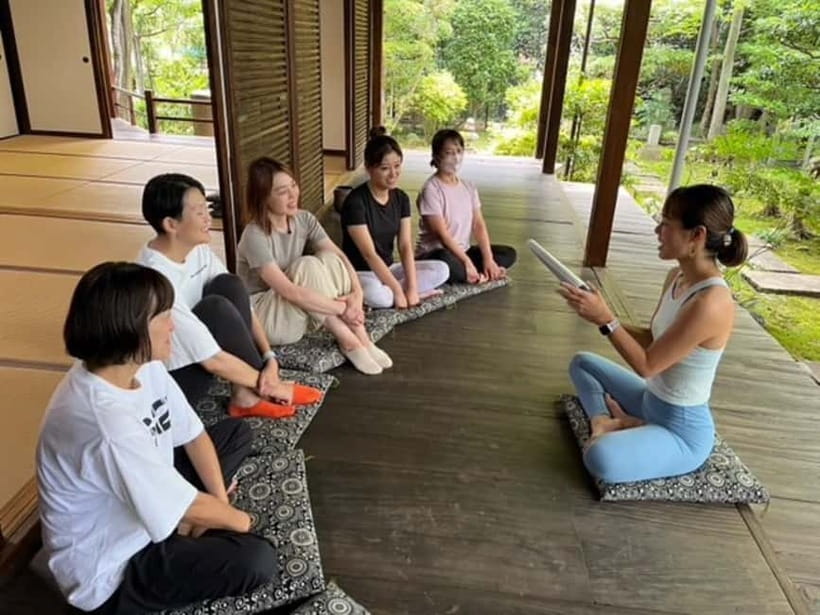
Wear comfortable clothing that allows easy movement. Bring water, a towel, and a change of clothes. These items are simple, but having them ready keeps the yoga portion comfortable.
Plan your arrival around the meeting point. Go to the South Entrance, where there is a large gate and the guide will be waiting. The instructions specifically warn against using the North Entrance, so check your route before setting out.
A quiet and respectful attitude is part of the preparation. You will take part in meditation and discussion inside a temple, so this is not the place for loud conversation or casual behavior during the session.
The activity lasts two hours, and starting times vary. You need to check availability for the date you want. English is the listed language, and the group type is private.
Free cancellation is available up to 24 hours before the start for a full refund. You can also reserve now and pay later, which helps if your Kyoto schedule is still changing.
Myoshinji as a change from standard sightseeing
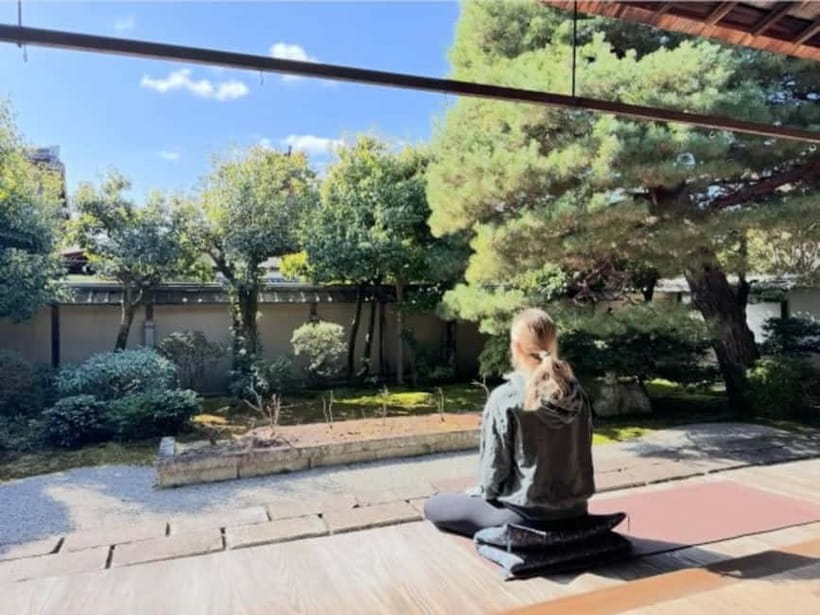
Many temple visits are built around movement: arrive, look, take photographs, and continue. This activity asks you to remain in one setting long enough to notice how it feels.
That difference can be valuable. You learn about Zen, then practice movement shaped by Zen ideas, then sit with tea and questions. The sequence encourages reflection without making the experience overly formal.
I also like that the temple is not treated as a stage set. The instructions call for respect, quiet, and attention to the setting. You are given access to a part of the temple that is not normally open to the public, but the point is not simply exclusivity. The setting supports the teaching.
The experience will not replace a broader visit to Kyoto’s temples and gardens. It gives you a more personal way to spend time in one place. If your schedule is already packed with major sights, this can be the activity that breaks up the rush.
Should you book this Zen and yoga experience?
Book it if you are new to yoga or meditation, want an English-speaking instructor, and value a calm cultural experience over a demanding class. The combination of a private temple area, garden-side yoga, Zen discussion, and tea gives the two hours a clear sense of purpose.
The strongest reasons to choose it are the peaceful Myoshinji setting and Agasa’s warm, thoughtful instruction. The main reason to skip it is also clear: experienced yoga or meditation practitioners may find the content too basic.
At $96, I would recommend it to someone seeking a meaningful pause in Kyoto, especially if a normal temple visit feels too brief. Go in expecting an introduction, not mastery. Bring comfortable clothes, arrive at the South Entrance, and let the quiet setting do much of the work.
FAQ
Where does the Zen and yoga experience take place?
It takes place at Myoshinji Temple in Kyoto, in a normally non-public part of the historic Rinzai Zen temple complex.
Where is the meeting point?
Meet at the South Entrance, not the North Entrance. The guide waits by the large gate.
How long does the activity last?
The experience lasts two hours.
What activities are included?
The session includes a Zen lesson, a yoga session, and a Japanese tea session. Temple admission and a mini Zen guidebook are also included.
Is the experience offered in English?
Yes. The instructor language is English.
Is this a private activity?
Yes. It is listed as a private group experience.
What should I bring?
Bring comfortable clothes, a change of clothes, a towel, and water.
Who should not take part?
The activity is not suitable for pregnant women, people with heart problems, people with a cold, or people over 70 years old.
Newest Kyoto experiences on the site
- Whisk Your Own Matcha: A Zen Matcha Experience at Temple★ 3.6 · 7 reviews
- Treasures of Kyoto: Gion & historical Walking Tour★ 5.0 · 6 reviews
- Kyoto tea town for matcha lovers★ 5.0 · 16 reviews
- Uji: Private immersion into Kyoto’s tea and reglious culture★ 5.0 · 17 reviews
- Kyoto Matcha Green Tea Tour★ 4.5 · 23 reviews
- Uji and Wazuka Matcha Farm Half Day Private Guided Tour★ 5.0 · 21 reviews
- Utilising upcycled Matcha! Creating matcha incense (Uji, Kyoto)★ 5.0 · 6 reviews
- Sacred Temple Yoga Experience in Japan★ 5.0 · 3 reviews
Kyoto Zen Meditation, compared.
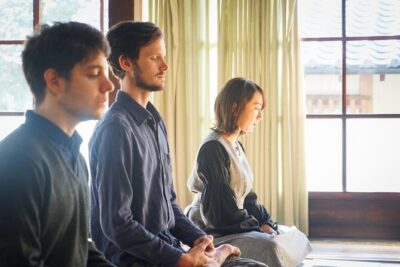
Kyoto Zen Meditation & Garden Tour at a Zen Temple with Lunch
Read our review →
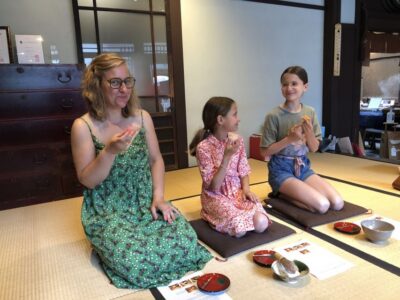
Tea Ceremony Meditation – Make Matcha with Tea Master
Read our review →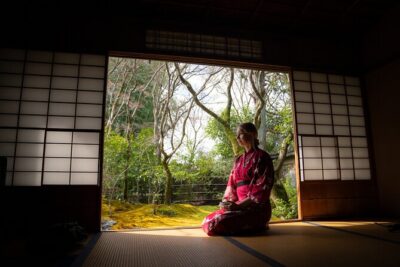
4.5-Hour Kyoto Bike Tour with Lunch and UNESCO Zen Temples
Read our review →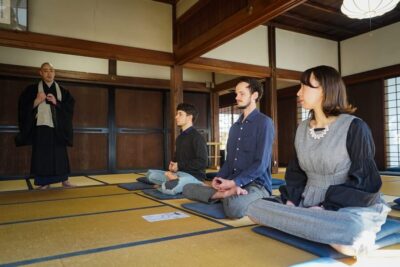
Zen Meditation and Garden Tour at a Temple with Lunch
Read our review →
Arashiyama Guided Tour, Bamboo, Monkey, Zen Temple
Read our review →Browse the lists this tour appears in