
Reviewed · KYOTO KIMONO RENTALS
Kyoto: Samurai Sword & Kimono Action Filming Experience
Inside Kyoto’s Myokaku-ji Temple, you do more than pose with a sword. You learn simple chambara moves, dress in a traditional kimono, watch professional period-drama actors work, then perform a short action scene of your own. The sword is a fake prop, and the action is carefully choreographed, but the setting gives the hour a real sense of place.
I like the small group limit of six, which gives you room to follow instructions and repeat a move without feeling lost. I also like that the instructors, including Kesuke Irie and Kazuya Naito, are working actors who know how to make beginners look lively on camera. The main consideration is physical: this is an active role-play session, not a quiet temple visit, and some people may find the fast sword movements awkward at first.
Key points before you book
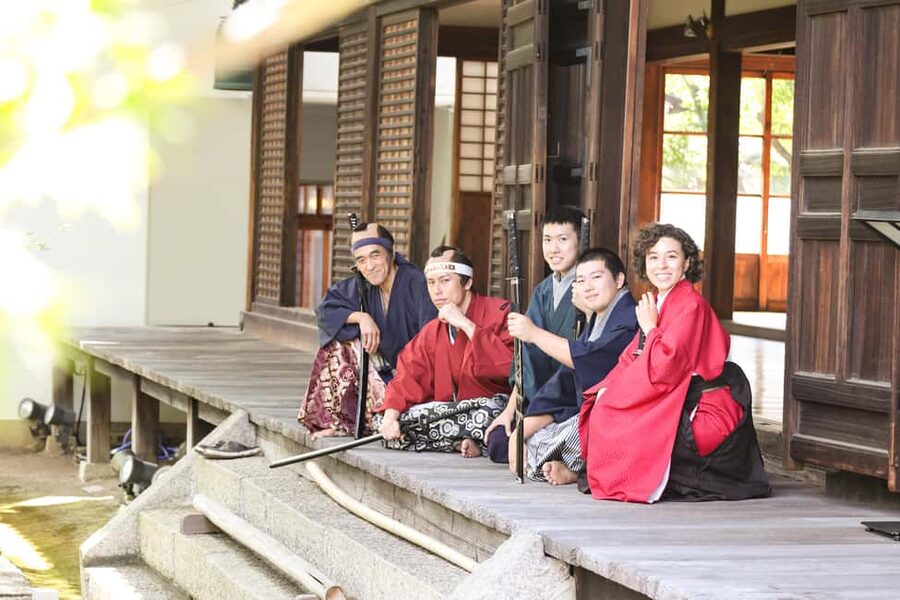
- Train inside Myokaku-ji Temple: The session takes place at the temple’s Myokaku-ji Dojo, reached just to the left after entering the main gate.
- Learn film-style sword moves: Instruction includes named techniques such as makkogiri and kesagiri, performed with a fake sword and clear guidance.
- Wear a rental kimono: The kimono fee is included, so you do not need to arrange traditional clothing separately.
- Film your own action scene: You can use your camera during the swordplay session, and a photo download service is included.
- Keep the group intimate: No more than six participants take part, with Japanese and English instruction.
- Plan for 70 active minutes: Comfortable clothing matters, and the activity is not suitable for children under five, pregnant women, people with back problems, certain pre-existing medical conditions, or people over 95.
Entering Myokaku-ji Temple for a sword lesson
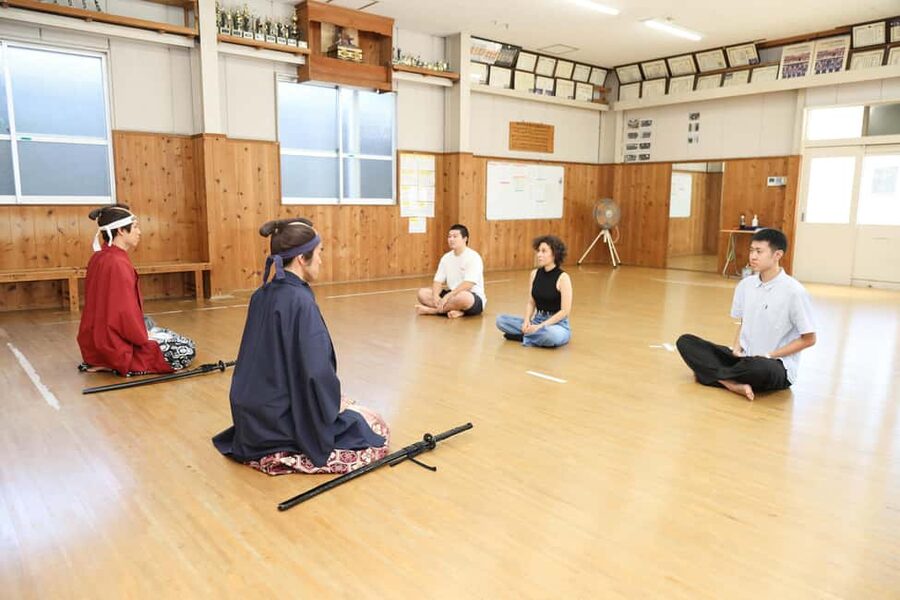
The setting does much of the work here. Myokaku-ji is a historical temple, and the activity takes place at its dojo rather than in a generic studio dressed up with paper screens. The temple is also connected with Sengoku-era warlords, including Nobunaga Oda, who stayed there about 400 years ago.
That history does not turn the session into a formal temple tour. The main purpose is swordplay and filming. Still, beginning in a place with a genuine religious and historical setting makes the activity feel less like a shopping-mall photo opportunity.
You should enter through the main gate and look for the Myokaku-ji Dojo on the left. Transportation to the temple is not included, so allow enough time to reach the meeting point on your own. The experience lasts 70 minutes, which is long enough for several parts without taking up a full afternoon of sightseeing.
The separate entrance helps the group get started quickly. Since the class is capped at six people, you are likely to spend more time participating than standing around waiting for a turn. That matters most if you are bringing children old enough to join, traveling with a partner, or hoping to record your own scene.
More kimono and yukata rentals in Kyoto:
- Kimono Tea Ceremony at Kyoto Maikoya, NISHIKI
★ 5.0 · 911 reviews - Kyoto: Kimono Rental with Hairstyling and Accessories
★ 4.8 · 653 reviews - Kyoto: Kimono Tea Ceremony at Orizuruya Gion
★ 4.9 · 618 reviews
Getting dressed in a traditional kimono
The kimono portion is not just a costume pickup. You learn about the traditional process of putting it on and then wear it during the experience. The rental fee is included in the $127 price, which keeps the cost easier to judge.
I like this arrangement because the kimono supports the action scene rather than being an extra expense added at the end. You get the visual effect of a period character while taking part in a guided activity. It also gives you something to photograph before the sword work begins.
Wear comfortable clothes underneath and choose shoes and clothing that allow easy movement. The instructions specifically call for clothing suitable for physical activity. A kimono can look elegant, but it is not the easiest outfit for quick steps, turns, and choreographed sword gestures.
The clothing is part of the fun, but you should not book this as a full kimono cultural lesson. The information provided focuses on learning how to wear the kimono and using it as part of the samurai role-play. The sword training and filming remain the main event.
Learning makkogiri and kesagiri with actors
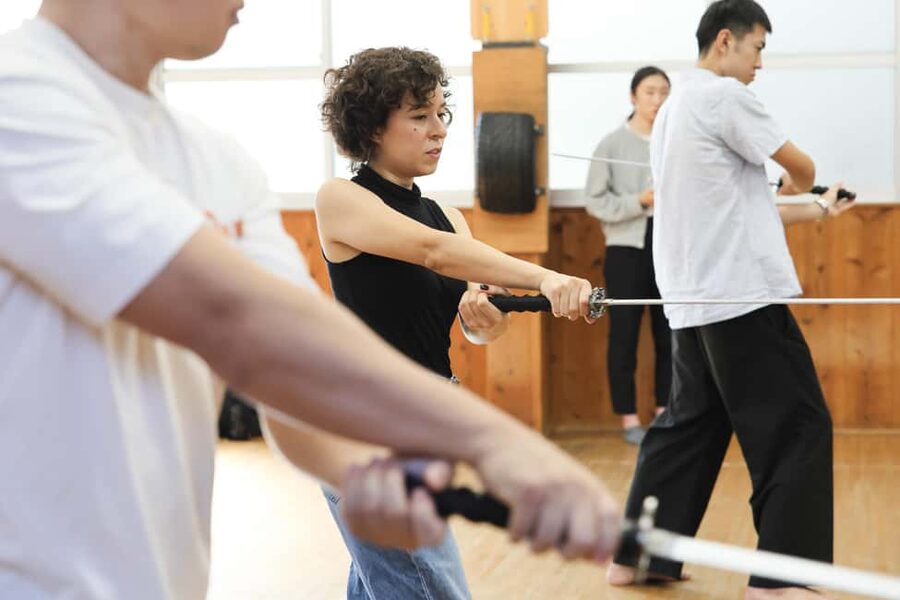
The instructors begin by showing you how to hold and wield the sword. You learn techniques called makkogiri and kesagiri, then practice the movements needed for a staged fight.
These are performance techniques, not combat training. The wording around actual sword fighting can sound more serious than the activity really is, but the experience uses fake swords and choreographed moves. You are learning how a sword fight can look on camera, not preparing for a real confrontation.
That distinction is useful. Beginners can concentrate on posture, timing, and expression instead of worrying about handling a sharp blade. The instructors guide each movement, and the small group makes it easier to see what you should do next.
Kesuke Irie and Kazuya Naito are identified as actors who have appeared in Japanese movies and television programs. Their background helps explain why the instruction includes more than simply swinging a prop. They can show you how to make a basic movement readable and dramatic, even if your technique is not polished.
You should expect to laugh at yourself. Several parts of the activity call for theatrical movement, and the point is not perfection. One useful tip is to commit to the role. Holding back can make the scene look stiff, while a little extra expression usually works better on camera.
Watching a professional chambara performance
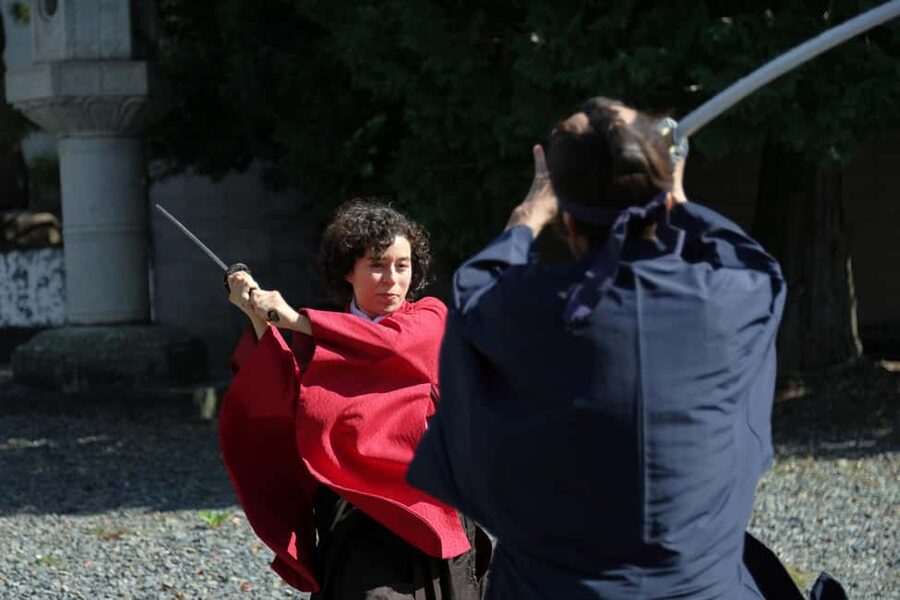
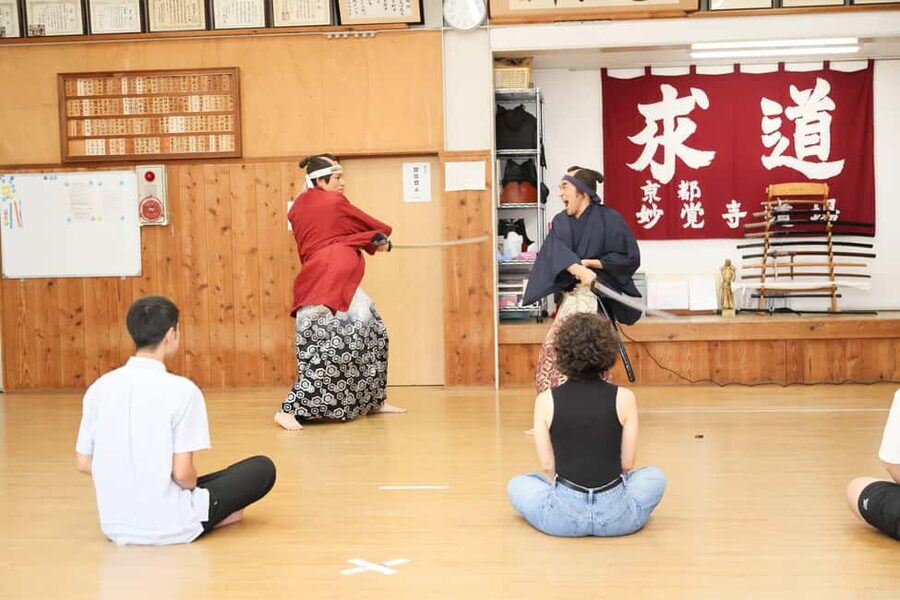
Before your own filmed sequence, the instructors perform a chambara demonstration. Chambara is Japanese sword-action cinema, built around stylized movement, timing, and dramatic exchanges.
This demonstration gives you a visual lesson before you have to perform. You can see how the sword is positioned, how the actors react to an attack, and how a simple movement gains force through timing. It also shows the gap between trained performers and first-time participants, which is part of the humor.
The professional performance is one of the strongest reasons to book this rather than simply rent a costume for photographs. You receive a live look at the style, then try a short version with coaching. The activity connects watching, learning, and performing in a clear order.
Do not expect a long theatrical production. The session is only 70 minutes and includes dressing, instruction, the demonstration, and filming. Think of this as a compact introduction to screen swordplay.
More samurai experiences in Kyoto:
- Kyoto Samurai Experience
★ 5.0 · 1,294 reviews - Kyoto: Kendo and Samurai Experience with Uniform and Gear
★ 4.9 · 815 reviews - Kyoto: Samurai Sword Class by Experts in Traditional Arts
★ 4.9 · 657 reviews - Skip the lines Basic Ticket at SAMURAI NINJA MUSEUM KYOTO
★ 4.5 · 632 reviews
Filming your own samurai scene
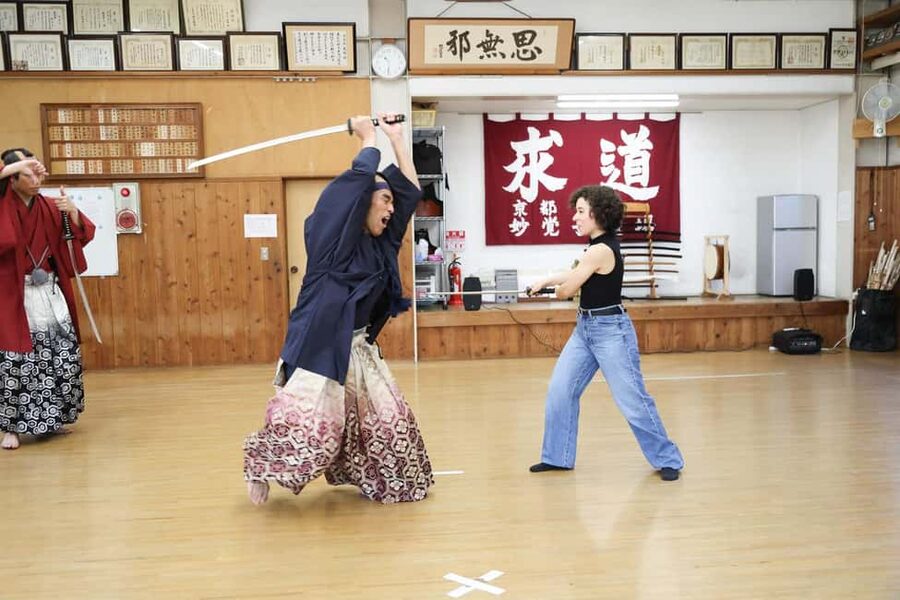
The final swordplay session turns the lesson into a short action sequence. You perform the techniques you have learned, and you are welcome to record the scene with your own camera.
Bring a phone or camera that is easy for someone else to use. The activity includes photography and video recording with the customer’s camera, so you do not need to rely only on a professional photographer. You also receive access to downloaded photos or footage through the photo download service.
This is where the experience becomes especially useful as a trip memory. You are not just taking a still image in costume. You get a record of yourself attempting a staged scene, complete with the temple setting and guidance from actors.
Set your expectations correctly. Your performance may not look like a Japanese period drama. That is not a problem. The entertainment comes from trying the moves, reacting to the instructors, and seeing the finished footage afterward.
If you are filming for someone else, decide before the session who will handle the camera. You are allowed to take photos and videos during the experience, but you will get better results if the person recording is ready to follow the action rather than trying to participate and film at the same time.
Is $127 a fair price?
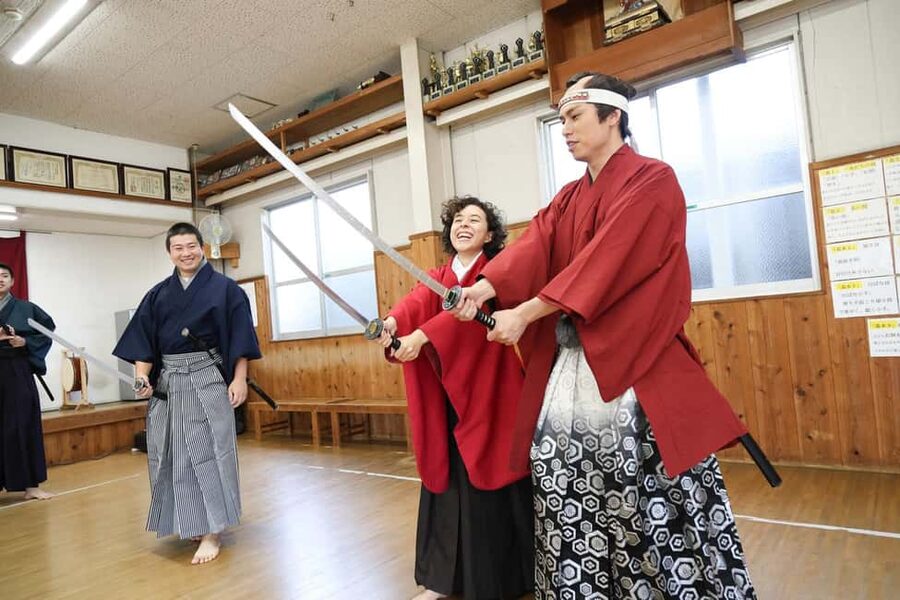
At $127 per person, this is not the cheapest costume activity in Kyoto. The price makes more sense if you value the combination of a temple setting, a rental kimono, professional instruction, a live demonstration, and downloadable footage.
You are paying for a guided production rather than a simple dress-up photo. The small group size is important here. With only six participants, the instructors can correct movements, keep the scene moving, and give each person a chance to perform.
The inclusion of the kimono rental also improves the value. You do not have to pay separately for traditional clothing, and you avoid arranging a separate dressing appointment. Photography and video recording with your camera are included as well.
Still, the price may feel high if you mainly want a kimono portrait or a short sword pose. Kyoto offers many cultural activities, so compare this with your other plans. Book it for the acting, movement, and footage, not simply for the costume.
The high rating of 4.8 from 78 bookings fits the activity’s strongest qualities: the instructors bring humor, the process is easy to follow, and the finished video gives you something personal to take home. It is especially good value for someone who has always wanted to play a samurai character rather than just look at samurai objects in a museum.
Who will enjoy this most?
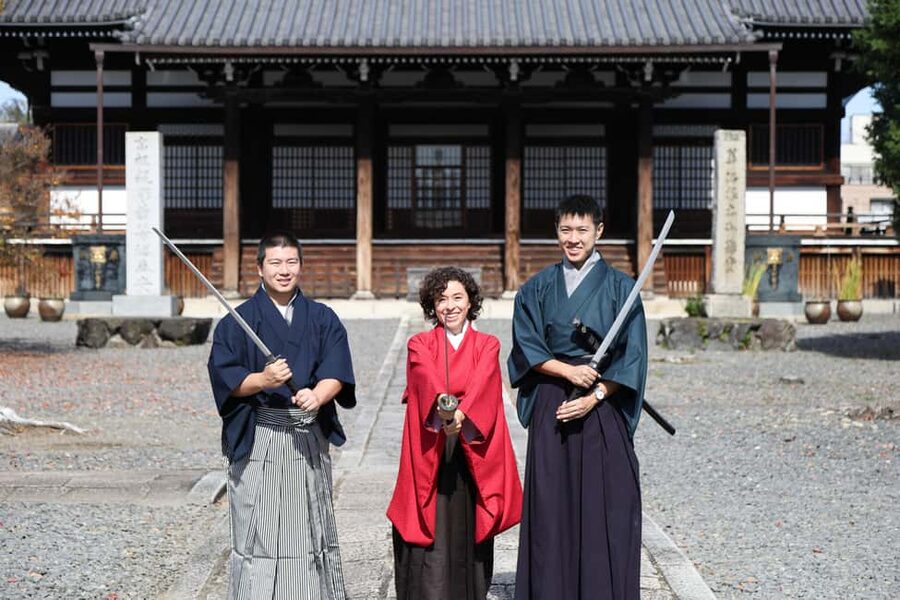
I would choose this for couples, friends, parents with older children, and solo visitors who enjoy playful activities. It also suits a parent who wants a memorable activity for a teenager. The short length makes it easy to fit between temple visits, shopping, or a meal in Kyoto.
It is a strong pick if you enjoy being on camera. You need not be a performer, but you should be willing to make big gestures and follow directions. The activity works best when you treat it as light theater rather than a serious martial-arts class.
Families should check the age and health limits carefully. Children under five cannot take part. Pregnant women, people with back problems, people with pre-existing medical conditions, and people over 95 are also listed as unsuitable.
The activity is offered in Japanese and English. That does not mean every cultural detail will be explained at length, but it does make the physical instruction more accessible to international visitors.
Practical advice for a smooth session
Wear comfortable clothing that lets you move. You will be dressing in a kimono, learning sword gestures, and taking part in a choreographed sequence, so restrictive clothes are a poor choice.
Bring a camera. Your own phone is enough if you want a simple record, and the staff can photograph or record with the customer’s camera. The downloaded footage is one of the main reasons to remember the activity as more than a one-hour diversion.
Do not bring alcohol or drugs, and smoking is not allowed. The session takes place in a temple dojo, so follow the instructors’ directions and treat the setting with care.
You can cancel up to 24 hours before the start for a full refund, and the reserve-now, pay-later option gives you some flexibility while planning a Kyoto itinerary. Starting times vary, so check availability for the date you want.
Should you book the Myokaku-ji samurai experience?
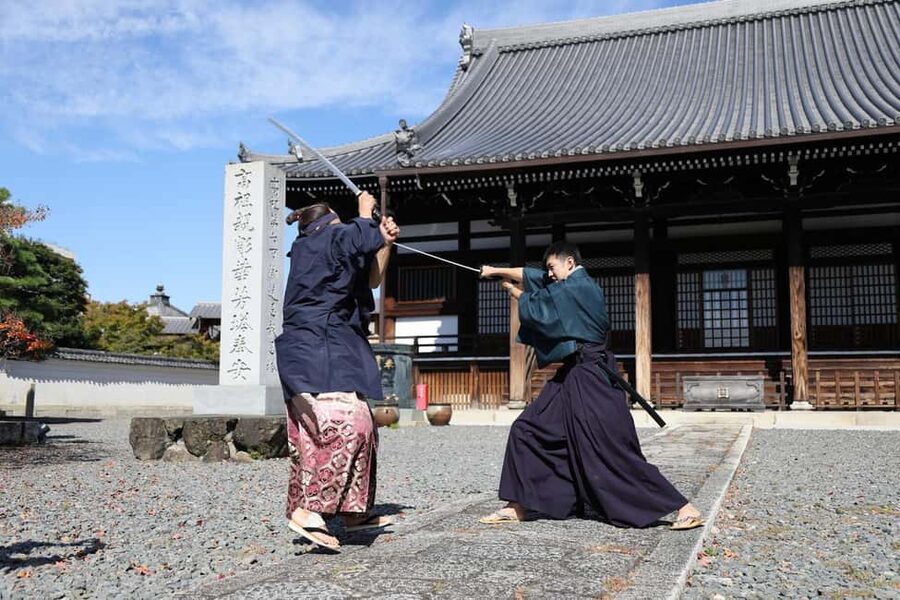
Book it if you want an active, funny, camera-friendly Kyoto experience with a strong sense of place. The best parts are the temple dojo, the actor-led coaching, the included kimono, and the chance to leave with your own staged sword scene.
Skip it if you want serious martial-arts instruction, a long temple tour, or a calm cultural lecture. This is choreographed entertainment using fake swords, and the fun depends on your willingness to play along.
For most visitors, the $127 cost is easiest to justify when shared with family or friends, especially if you care about the video. Come dressed for movement, bring a camera, and let yourself look a little theatrical. That is the whole point.
FAQ
Where does the samurai sword experience take place?
It takes place at the Myokaku-ji Dojo inside Myokaku-ji Temple in Kyoto, on Honshu. After entering through the main gate, go to the left to find the dojo.
How long does the activity last?
The experience lasts 70 minutes.
How much does the activity cost?
The listed price is $127 per person.
Is the kimono rental included?
Yes. The rental kimono and kimono fee are included in the activity price.
Are the swords real?
No. The activity uses a fake sword for the choreographed swordplay session.
Can I take photos or videos?
Yes. You are welcome to take photos and videos during the experience. Photography and video recording with the customer’s camera are included.
Do I receive footage afterward?
Yes. A photo download service is included, allowing you to download performance footage or photos as a keepsake.
What languages are available?
Instruction is available in Japanese and English.
How many people are in each group?
The group is limited to six participants.
Who should not take part?
The activity is not suitable for children under five, pregnant women, people with back problems, people with pre-existing medical conditions, or people over 95.
Newest Kyoto experiences on the site
- Treasures of Kyoto: Gion & historical Walking Tour★ 5.0 · 6 reviews
- Whisk Your Own Matcha: A Zen Matcha Experience at Temple★ 3.6 · 7 reviews
- Kyoto tea town for matcha lovers★ 5.0 · 16 reviews
- Uji: Private immersion into Kyoto’s tea and reglious culture★ 5.0 · 17 reviews
- Kyoto Matcha Green Tea Tour★ 4.5 · 23 reviews
- Uji and Wazuka Matcha Farm Half Day Private Guided Tour★ 5.0 · 21 reviews
- Utilising upcycled Matcha! Creating matcha incense (Uji, Kyoto)★ 5.0 · 6 reviews
- Sacred Temple Yoga Experience in Japan★ 5.0 · 3 reviews
Kyoto Kimono Rentals, compared.
KYOTO Tea Ceremony with kimono near by Imamiya Jinjya Shrine
Read our review →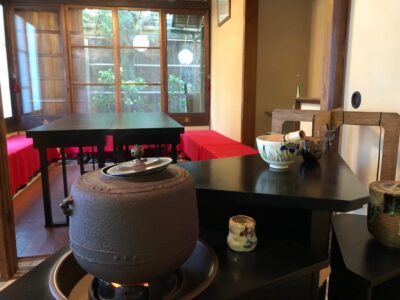
Kimono and Tea Ceremony Experience at Cultural Asset
Read our review →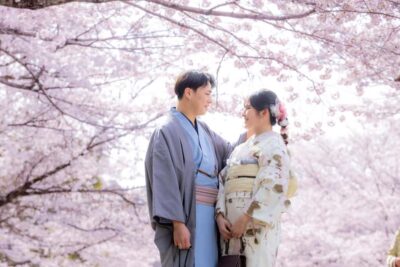
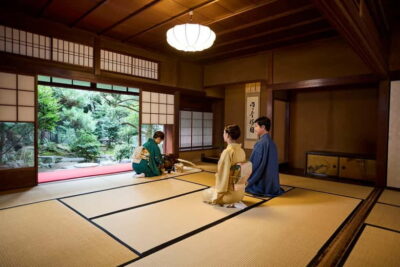
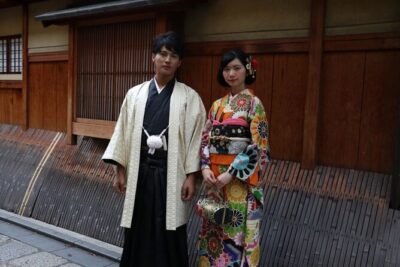
Family-Friendly Kimono & Yukata Experience at WARGO
Read our review →
1 Day Traditional Japanese Kimono Rental Experience
Read our review →Browse the lists this tour appears in