
Reviewed · NISHIKI MARKET TOURS
Kyoto: Nishiki Market and Depachika Food Tour with a Local
Kyoto’s best food introduction may be this unusual pairing: a polished department-store basement followed by the narrow aisles of Nishiki Market. In two hours, you can taste tofu skin, gyoza, tempura hamo fish, and a soy milk donut, then pause at a Shinto shrine.
I like the small group, limited to nine people, and the chance to ask a local guide what you are actually looking at. I also like the flexible start times and same-day booking potential. The main drawback is the short schedule: food lovers who want many tastings or plenty of shopping time may find the pace tight.
Key points at a glance
- Two very different food stops: Compare the refined displays at Daimaru Kyoto with the traditional stalls of Nishiki Market.
- Four included tastings: Try yuba sashimi, a soy milk donut, Nishiki gyoza, and tempura hamo fish.
- A guide makes the food legible: Your English-speaking guide explains ingredients, customs, and how Kyoto specialties fit into Japanese cuisine.
- A quiet shrine break: Nishiki-Tenmangu offers a calm change of mood after the crowded market lanes.
- Easy for a short Kyoto itinerary: The walk lasts two hours, begins at Apple Kyoto, and ends near Kyoto-Kawaramachi Station.
- Best for curious eaters: You can ask questions and get suggestions, but extra food, drinks, and purchases cost more.
Why pair a department-store basement with Nishiki Market?
Many visitors head straight to Nishiki Market, Kyoto’s famous food arcade. This tour takes a more useful route. It begins at Daimaru Kyoto, where the basement food hall, known in Japan as a depachika, gives you a clean, organized look at Japanese food culture before you enter the more crowded market.
I like that contrast. In the depachika, food is displayed with care, from traditional sweets to prepared dishes and international gourmet items. Nishiki then feels more hands-on, with stalls selling seasonal foods, Kyoto specialties, produce, knives, and cookware.
That order also helps if Japanese food is new to you. Your guide can explain an unfamiliar ingredient in a relatively calm setting, then help you recognize similar foods in Nishiki. Guides named in past bookings include Mao, Jasmine, Ai, Boris, Richard, Katz, Yoku, and Vincent. The exact guide varies, but the strongest tours rely on that personal explanation rather than simply pointing out stalls.
The route is compact, but not bland. You get food, shopping, local customs, and a shrine visit without committing half a day.
More Nishiki Market walks and tastings:
- Nishiki Market Brunch Walking Tour (7 Tastings + Brunch)
★ 5.0 · 1,355 reviews - Kimono Tea Ceremony at Kyoto Maikoya, NISHIKI
★ 5.0 · 911 reviews - Kyoto Nishiki Market Food and Culture Walking Tour
★ 5.0 · 412 reviews
Starting at Apple Kyoto and meeting your guide
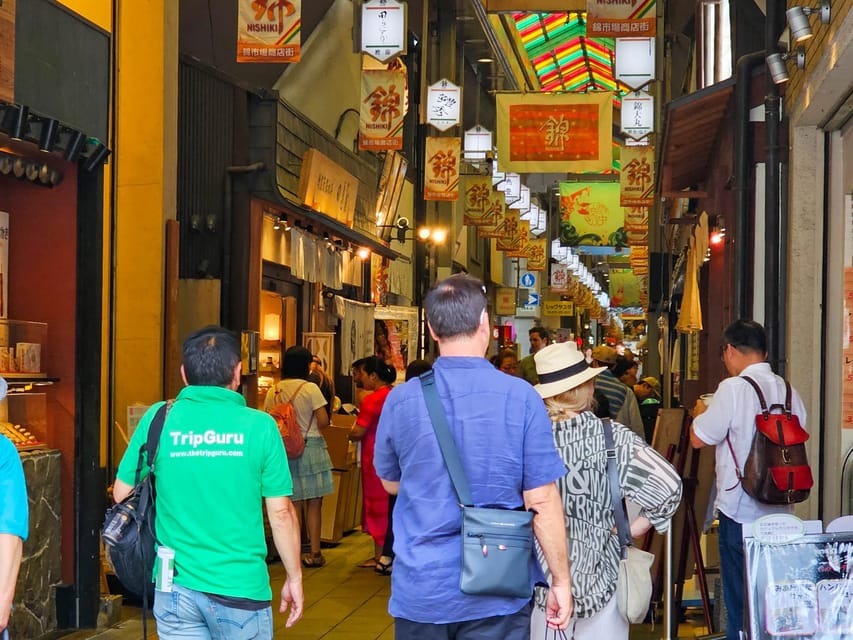
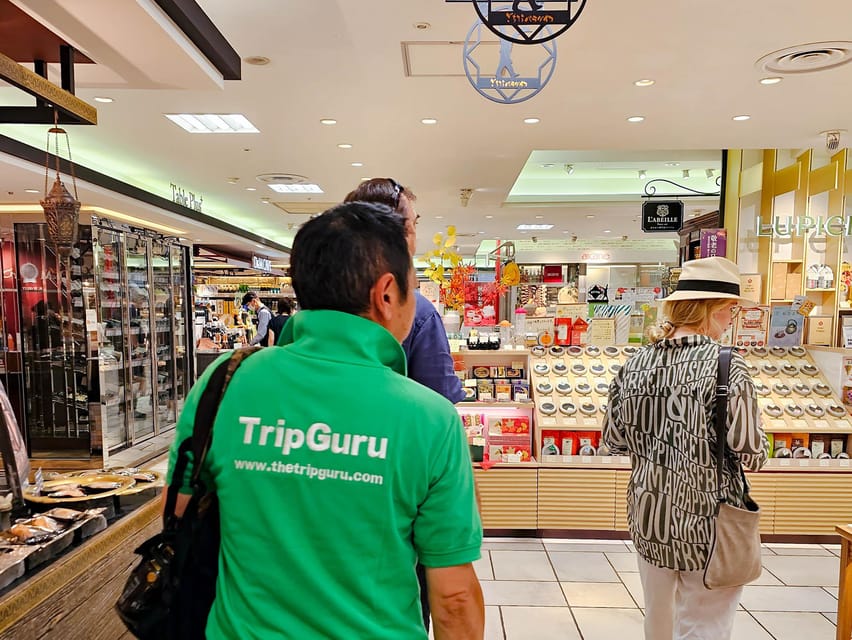
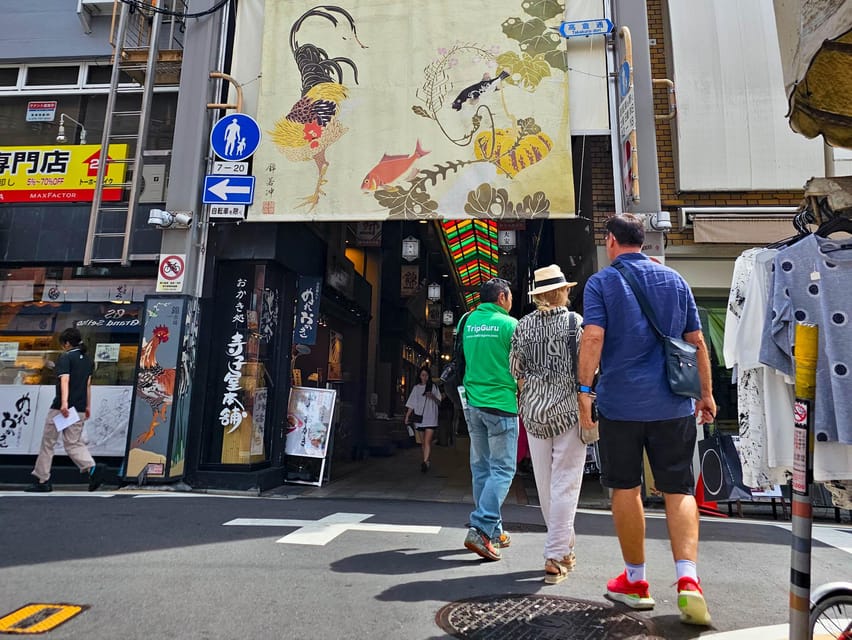
The meeting point is Apple Kyoto. Your guide will wear a TripGuru shirt or hold a TripGuru sign, so look for that rather than waiting for someone to approach you without identification.
Arrive at least 10 minutes early. Guides wait a maximum of 10 minutes before moving on, and traffic can take longer than navigation apps suggest, especially in the morning. This is a walking tour, so wear comfortable shoes. Bring cash for optional purchases, along with your phone or camera.
The group size is limited to nine people. That is small enough for questions and conversation, yet it does not guarantee a private tour. If you are hoping for a quiet, personal market visit, keep in mind that the guide may need to manage several eating preferences and shopping interests at once.
The tour is conducted in English. Guide quality appears strongest when you use the time well: ask about ingredients, local eating customs, good places to return to, and foods that suit your taste.
Daimaru Kyoto: a polished introduction to Japanese food
The first major stop is Daimaru Kyoto, with about an hour and a half listed for the food market portion of the route. This is the depachika experience, a basement food hall found beneath a Japanese department store.
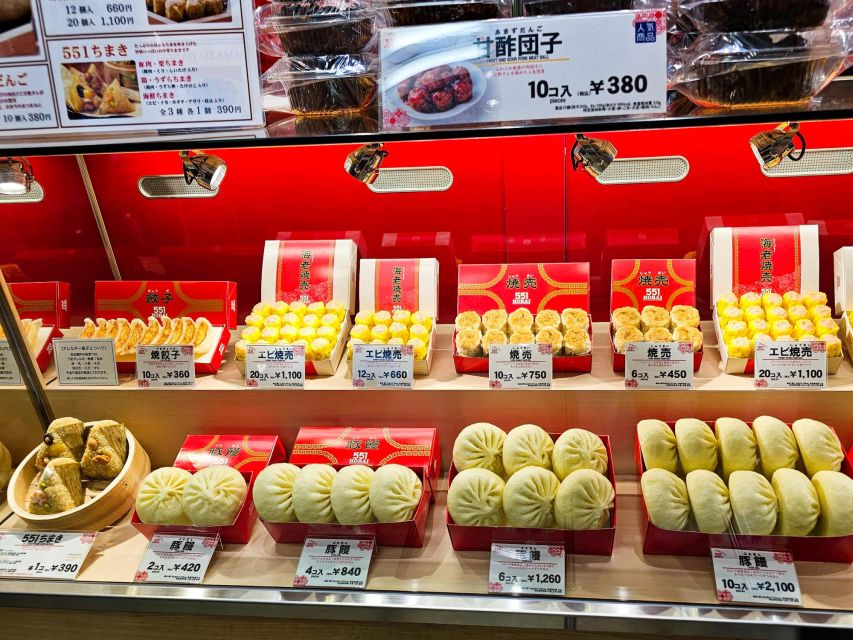
A depachika is useful for more than buying lunch. It shows how carefully Japanese food can be presented, from boxed meals and sweets to seafood, snacks, and gift foods. You may find traditional Kyoto items beside international products, which gives the stop a wider range than Nishiki Market alone.
Your included tastings begin here or along the food route, depending on the guide’s handling of the visit. The listed foods are yuba sashimi, made from tofu skin, and a soy milk donut. Yuba is closely associated with Kyoto’s refined vegetarian cooking, while the donut gives you a sweeter, more approachable counterpoint.
The guide can help explain texture and preparation, which matters with yuba. It may look delicate and familiar, but its soft, layered texture is unlike ordinary dairy-based sashimi. If you enjoy tofu, soy products, or subtle flavors, this is one of the more interesting tastings. If you prefer strong seasoning, you may find it mild.
The depachika is also where the tour can become expensive if you are easily tempted. The tour price covers the stated tastings, not every item that catches your eye. One past visitor had to be rescued from spending too much time and money in Daimaru, which is a fair warning for anyone who loves Japanese sweets and beautifully packed food.
Nishiki Market: Kyoto specialties in a narrow food arcade
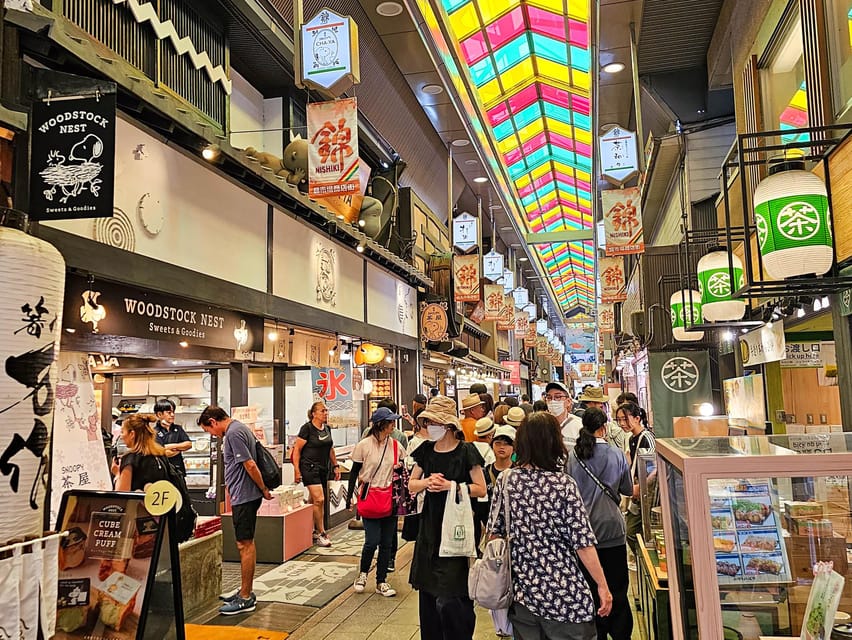
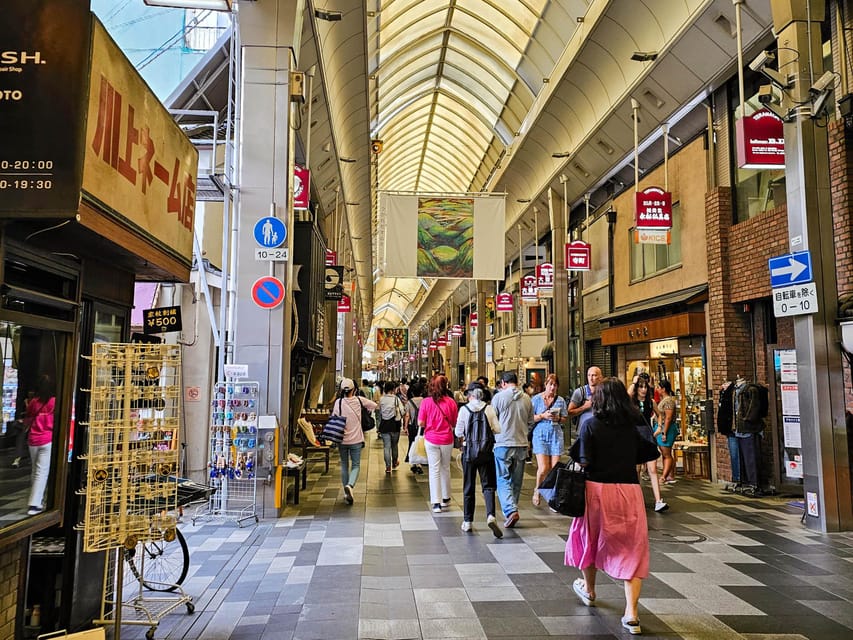
After Daimaru, the route moves to Nishiki Market, often called Kyoto’s Kitchen. The market stretches through a covered shopping street filled with food stalls and specialty shops. You can browse seasonal foods, pickles, sweets, seafood, prepared dishes, kitchen tools, knives, and cookware.
The market’s appeal is not just the number of stalls. Many businesses have been operated by the same families for generations, giving the food a sense of continuity. A guide can point out why certain items matter in Kyoto cooking instead of leaving you to guess from signs and displays.
The included Nishiki tastings are Nishiki gyoza and tempura hamo fish. Gyoza offers a familiar entry point, while hamo, or conger pike, is a more regional taste. It is especially associated with Kyoto food culture and gives the tour a chance to introduce you to a fish you might not choose on your own.
The market lanes can be crowded, so stay close to your guide. This is not a place to spread out and stroll at your own pace while the group waits. It is better to treat the tour as an introduction, noting the stalls and foods you want to revisit afterward.
That final point matters. You get a selection of tastings, but you do not get unlimited sampling. Additional food and drinks are not included, and you pay for personal purchases yourself. If you arrive hungry, you can buy more, but budget for it.
More food tours in Kyoto:
- Kyoto Night Foodie Tour in Gion (9+ dishes + 6 Sake tastings)
★ 5.0 · 1,762 reviews - Kyoto: Insider Sake Brewery Tour with Sake and Food Pairing
★ 5.0 · 704 reviews - Kyoto: Gion Food Tour 13 Dishes at 4 Eateries
★ 5.0 · 408 reviews - Kyoto Foodie Night Tour
★ 5.0 · 376 reviews
What the food tastings are really worth
At $42 per person, the value comes from access and explanation as much as from the food itself. Four small tastings alone would not justify the price for every visitor. The guide’s role is to help you choose intelligently in places where menus, customs, and ingredients may be unfamiliar.
I would think of the tour as a short orientation with food included. You are paying for a local companion who can answer questions, explain traditions, and lead you to items that may be easy to miss. Several guides have been praised for explaining ingredients, history, and customs, while also adjusting choices for children or cautious eaters.
Do not expect a full meal. The samples are a way to learn what Kyoto tastes like, not a guarantee that you will leave stuffed. One less satisfied experience came from unclear expectations about when the food would be served. To avoid that, ask your guide at the start which tastings are planned and where they will happen.
That small conversation can improve the tour. Guides have also been willing to suggest food and drink stops for later in your trip, so bring questions and mention allergies, dislikes, or dietary limits early.
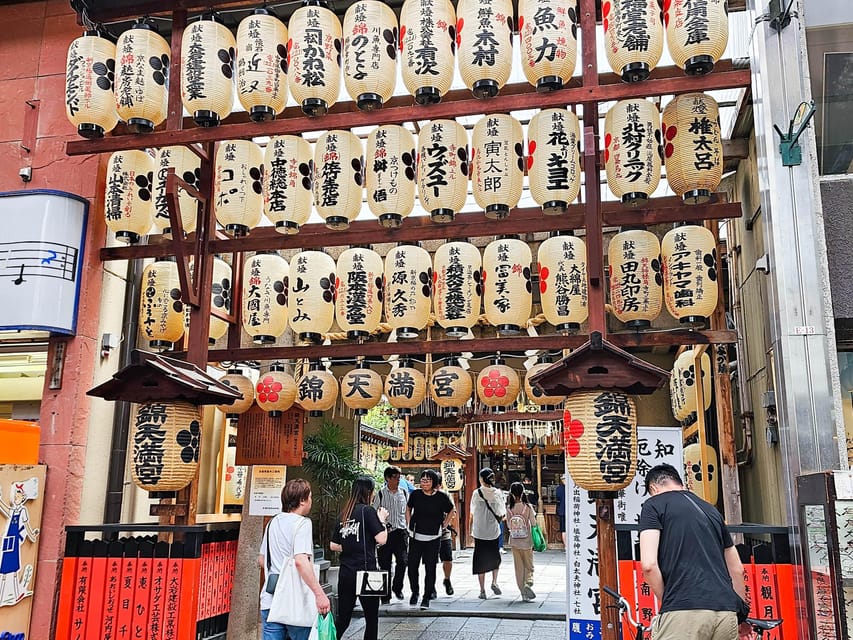
Nishiki-Tenmangu Shrine: a calm finish near the market
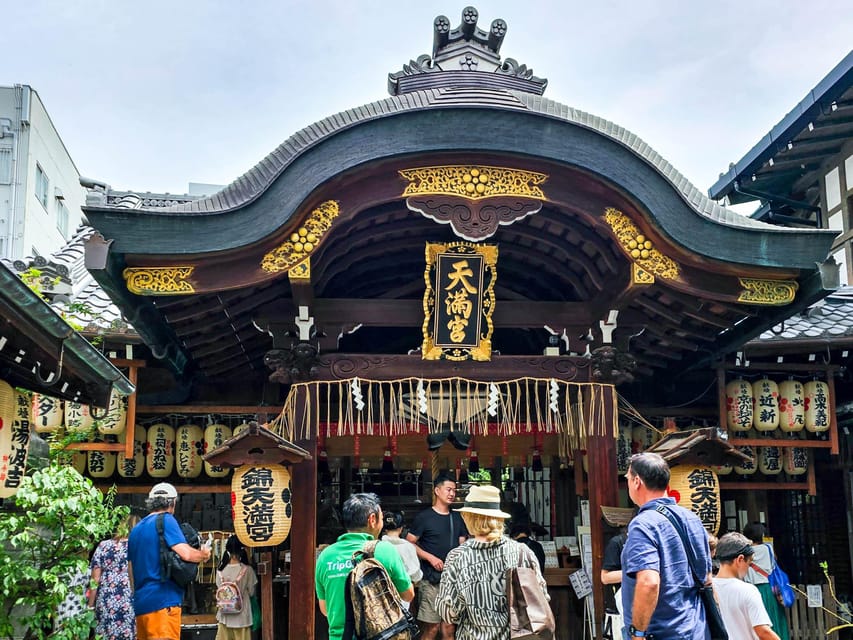
The last sightseeing stop is Nishiki-Tenmangu Shrine, close to the market and the final station area. Dedicated to the deity of learning, the shrine provides a short pause from the food stalls and shoppers.
Your guide will explain the basic customs, including cleansing your hands at the sacred water fountain. You can also look at the shrine architecture and take a moment before the tour ends. This is not a long temple or shrine visit, but it gives the route some balance.
I like this ending because food tours can otherwise blur into one long sequence of samples. The shrine adds context about everyday religious practice and lets you see a quieter side of the same neighborhood. Keep your expectations measured, though. The listed visit is about 30 minutes, and the main purpose is a brief cultural stop rather than an extended historical tour.
The tour finishes at Kyoto-Kawaramachi Station. That puts you in a useful area for continuing your day, returning to a favorite stall, or exploring nearby shopping streets.
How guides shape the experience
This tour depends heavily on the individual guide. The strongest examples include guides such as Mao, Jasmine, Boris, Ai, Richard, and Katz, who have been described as warm, patient, enthusiastic, and good at answering food and culture questions.
Boris is noted for adding history and cultural background rather than stopping at simple food descriptions. Ai has been especially helpful with practical buying advice, including what to choose for a bento and which expensive items may not offer good value. Richard has offered recommendations for food and drinks beyond the tour, while Katz has used local knowledge to explain Kyoto customs.
That range is important. You are not booking a fixed performance with identical narration every time. One guide may focus on regional cuisine, another on shopping, and another on shrine customs. A child’s preferences or a group’s interest in sake may also shape the conversation.
Most importantly, the group is not meant to pressure you into buying. The tastings are included, and extra purchases are optional. If you want to shop, say so. If you want to keep moving, say that too.
Timing, comfort, and practical limits
The activity is advertised as two hours, with multiple start times. It can fit neatly into a morning or afternoon between major Kyoto sights. Same-day booking may be available, but you still need to check the actual departure time and allow plenty of time to reach Apple Kyoto.
This is a walking tour through busy indoor and market spaces. It is not suitable for people with mobility impairments, heart problems, respiratory issues, or those who are pregnant. The provided information does not promise seating or a slow pace, so plan on standing and walking for most of the experience.
Cash is recommended. You may want to buy foods that are not part of the tasting menu, and some small market businesses may prefer cash. Comfortable shoes matter more than stylish ones here.
The tour allows free cancellation up to 24 hours before the start time, and you can reserve now and pay later. Those policies are useful if your Kyoto schedule is still shifting, but they do not remove the need to arrive on time.
Who should book this food walk?
I would recommend it to first-time Kyoto visitors who want a guided introduction to Japanese food without spending an entire day. It is also a good choice for families with adventurous children, couples who want a few planned tastings, and solo visitors who prefer not to navigate a crowded market alone.
It suits you especially well if you like asking questions. The difference between tasting yuba or hamo with context and tasting them without explanation is considerable.
I would think twice if you want a large meal, extensive free time, or a tour focused only on high-end Kyoto cuisine. The two-hour format is efficient, but it leaves limited time for lingering. You also need to be comfortable with a busy market and with the possibility that the exact flow depends on your guide.
Should you book the Nishiki Market and depachika tour?
Book it if you want four planned tastings, local food explanations, and two contrasting Kyoto food settings in one short outing. The $42 price is reasonable when you value the guide’s advice and the confidence to try unfamiliar foods, especially if this is your first visit to Japan.
Skip it if you already know Nishiki Market well or would rather spend the money on your own purchases. For most curious eaters, though, this is a practical first taste of Kyoto. Arrive early, ask what is included, keep a little cash handy, and save room for something you discover after the official tastings end.
FAQ
How long does the Kyoto food tour last?
The tour lasts two hours.
Where does the tour start?
It starts at Apple Kyoto. Your guide will wear a TripGuru shirt or hold a TripGuru sign.
Where does the tour finish?
The tour finishes at Kyoto-Kawaramachi Station.
What food is included?
The included tastings are yuba sashimi, a soy milk donut, Nishiki gyoza, and tempura hamo fish.
Is the tour conducted in English?
Yes. The tour has a live English-speaking guide.
How large is the group?
The tour is limited to nine participants.
Is hotel pickup included?
No. Hotel pickup and drop-off are not included.
Are extra food and drinks included?
No. Additional food and drinks, along with personal purchases, cost extra.
What should I bring?
Bring comfortable shoes, a camera, and cash.
How early should I arrive?
Arrive at least 10 minutes before the stated meeting time. Guides wait a maximum of 10 minutes before continuing.
Can I cancel for a full refund?
Yes. You can cancel up to 24 hours in advance for a full refund.
Who may find this tour unsuitable?
The tour is not suitable for pregnant women or people with mobility impairments, heart problems, or respiratory issues.
Newest Kyoto experiences on the site
- Whisk Your Own Matcha: A Zen Matcha Experience at Temple★ 3.6 · 7 reviews
- Treasures of Kyoto: Gion & historical Walking Tour★ 5.0 · 6 reviews
- Kyoto tea town for matcha lovers★ 5.0 · 16 reviews
- Uji: Private immersion into Kyoto’s tea and reglious culture★ 5.0 · 17 reviews
- Kyoto Matcha Green Tea Tour★ 4.5 · 23 reviews
- Uji and Wazuka Matcha Farm Half Day Private Guided Tour★ 5.0 · 21 reviews
- Utilising upcycled Matcha! Creating matcha incense (Uji, Kyoto)★ 5.0 · 6 reviews
- Sacred Temple Yoga Experience in Japan★ 5.0 · 3 reviews
Nishiki Market Tours, compared.
Nishiki Market Brunch Walking Tour (7 Tastings + Brunch)
Read our review →
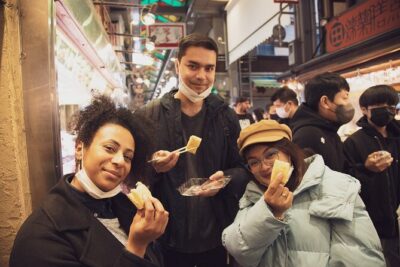
Kyoto Nishiki Market Food and Culture Walking Tour
Read our review →
Nishiki Market Tea Ceremony with Koto Performance
Read our review →
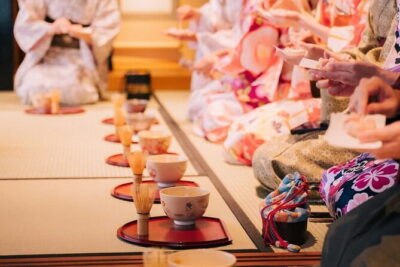
Kimono Tea Ceremony Experience at Kyoto Oritzuruya, Nishiki
Read our review →
Nishiki Market Tour with a Local Foodie & Tastings
Read our review →
Browse the lists this tour appears in