
Reviewed · GION DISTRICT TOURS
Kyoto: Ninja Experience Cafe Kyoto Gion
Kyoto’s Ninja Experience Cafe turns a simple hour indoors into a hands-on weapons lesson and photo session. You put on a ninja costume, then work through shuriken, blowgun, and katana training with instructors who explain each step clearly. I like that the activity gives you something real to do, not just a costume to wear, and I like that the staff make room for photos throughout the session. The main drawback is that anyone who comes along but skips the training must order a drink, so this works best when most of your group wants to participate.
The setting is practical: the cafe is on the sixth floor, with an elevator, and the whole activity takes place indoors. That makes it a useful rainy-day plan in Kyoto. Avoid a skirt if you can, since you will need to change into the outfit, and remember that children under three cannot take part.
Key points at a glance
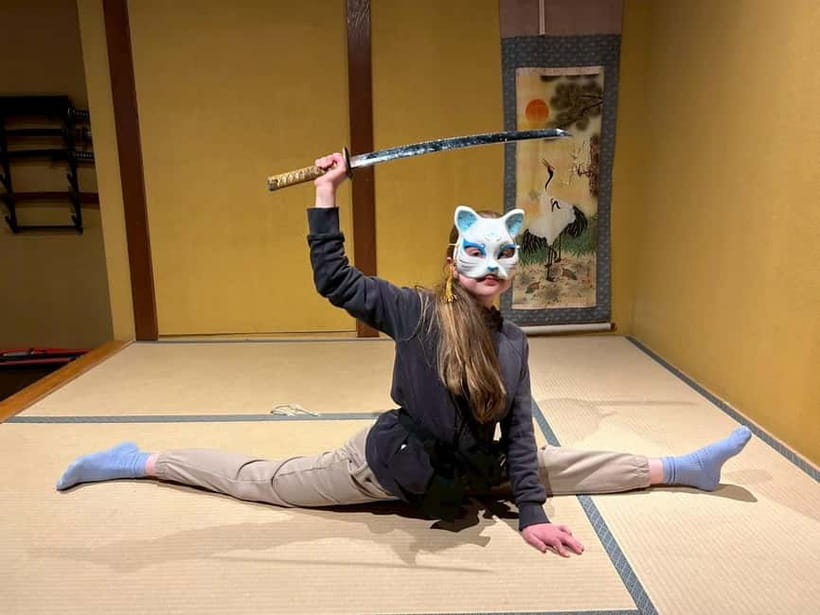
- Three different ninja weapons: Practice with shuriken throwing stars, a blowgun, and a katana.
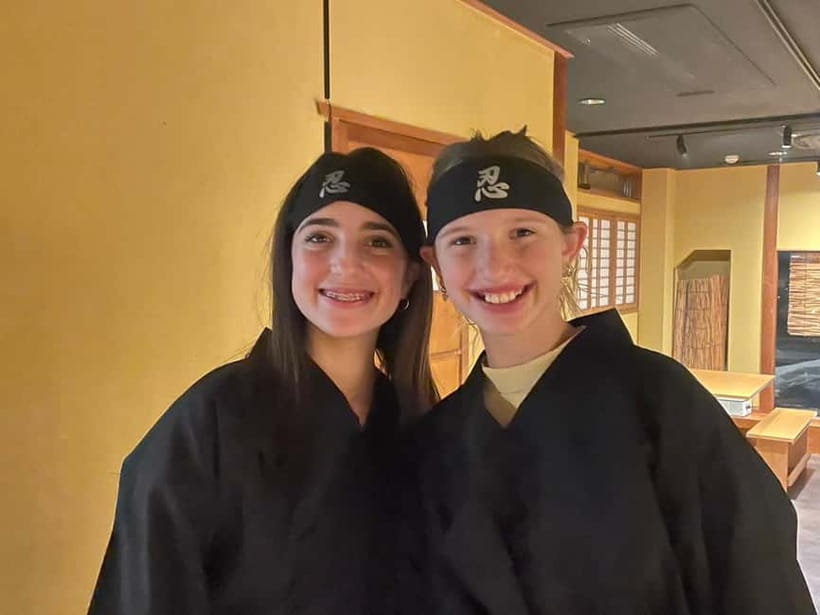
- A costume is included: Change into ninja clothing before training and use the outfit for photos.
- Small groups of up to 10: The limited size allows instructors to guide participants step by step.
- Indoor fun in Gion: The activity works well when rain, heat, or cold disrupts your sightseeing plans.
- Friendly family support: Yui and Wei gave one young participant extra encouragement and helped build her confidence.
- Flexible booking: You can cancel up to 24 hours before the activity for a full refund, and reserve now while paying later.
Putting on the ninja costume in Gion
Your visit begins at the Ninja Experience Cafe in Kyoto’s Gion district. Go to the sixth floor of the building by elevator and head directly to the cafe. The location keeps the logistics simple, especially after a day spent walking Kyoto’s narrow lanes and temple grounds.
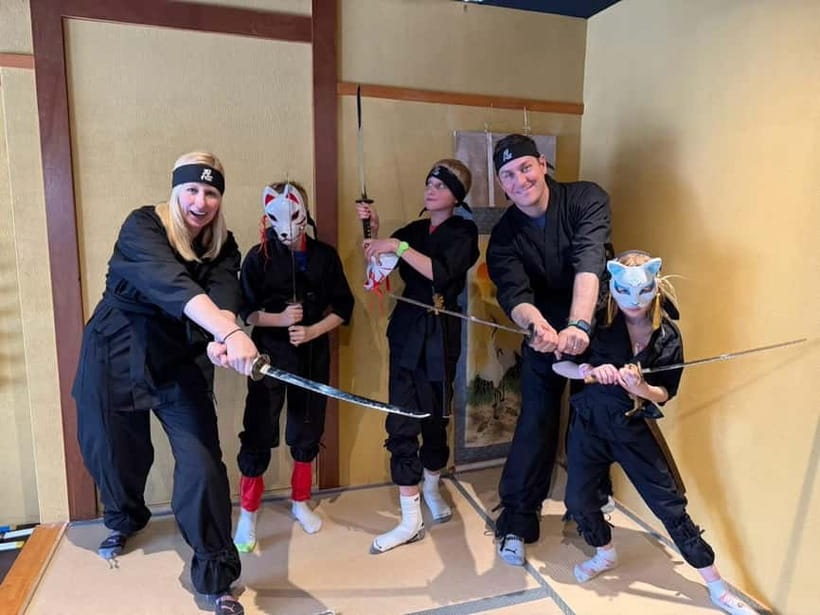
Before training starts, you change into a ninja costume. This is more than a quick photo prop. The clothing helps set the mood and makes the activity feel separate from an ordinary cafe stop. Since you need to change, wear practical clothing underneath. A skirt is best avoided, as the instructions specifically ask you not to wear one if possible.
The costume also changes the tone for children and adults. You are not standing at the edge of a display while someone explains ninja history. You are preparing to take part. That small shift is important: the experience works because you move from watching to doing almost at once.
The activity is designed for a small group of no more than 10 people. That limit matters when you are handling equipment. You should have enough room to listen, practice, and take your turn without the session feeling like a crowded demonstration.
More ways to walk Gion:
- Kyoto Geisha Walking Tour: Gion District & Hidden Gems
★ 4.7 · 3,273 reviews - Kyoto: Gion Magical Night Walking Tour with Geisha Trivia
★ 4.9 · 2,393 reviews - Kyoto: Gion Geisha District Walking Tour – Stories of Geisha
★ 4.7 · 2,187 reviews
Three weapons, three kinds of practice
The main training covers three ninja weapons: shuriken, blowgun, and katana. Each offers a different type of activity, so the hour does not rely on one repeated task.
Shuriken throwing stars
Shuriken training gives you the most instantly recognizable ninja moment. The instructor explains how to handle the throwing stars and guides you through the process. You then get repeated chances to try.
The amount of practice matters. One participant described having enough opportunities to throw shuriken several times, rather than receiving one quick attempt and moving on. That makes this section more satisfying, since you can adjust your aim and learn from the first try.
This is also one of the best parts for photos. The costume, throwing stance, and target create a clear action scene. If you want pictures that show what you actually did, shuriken practice gives you an easy moment to capture.
Blowgun accuracy
The blowgun brings a different challenge. Instead of throwing, you test your breath and aim from a distance. The session includes practice at varying distances, giving you a chance to work on precision rather than simply pose with the equipment.
This section may appeal to adults who want a small skill challenge, while children can enjoy the novelty of using something they rarely encounter. The instructors guide the process, so you are not left to guess how to hold or use it.
The blowgun also adds variety to the training. You switch from a fast throwing motion to a more controlled attempt. That keeps the session from feeling like a single photo opportunity stretched over an hour.
More ninja experiences in Kyoto:
- Skip the lines Basic Ticket at SAMURAI NINJA MUSEUM KYOTO
★ 4.5 · 632 reviews - Ninja 1-hour Hands-on Lesson by Japanese master in Kyoto -Entry
★ 5.0 · 489 reviews - Kyoto: Ninja Weapon Forging Experience
★ 4.8 · 478 reviews - Ninja 2-hour Hands-on Lesson by Japanese master in Kyoto -Medium
★ 5.0 · 218 reviews
Basic katana practice
The katana section introduces sword handling and basic practice under instructor guidance. The available information does not promise a long sword lesson or advanced technique, so it is best to think of this as a supervised introduction rather than a martial arts class.
Still, it completes the ninja theme nicely. The sword gives you a different pose and a different kind of concentration. For families, it can also be a good confidence-building moment because the instructor can slow down, explain the movement, and encourage younger participants.
Safety is built into the format. Your instructors lead you step by step, and the small group helps them keep track of the activity. You should still listen closely and follow directions, especially during the katana portion.
Friendly instructors and a relaxed pace
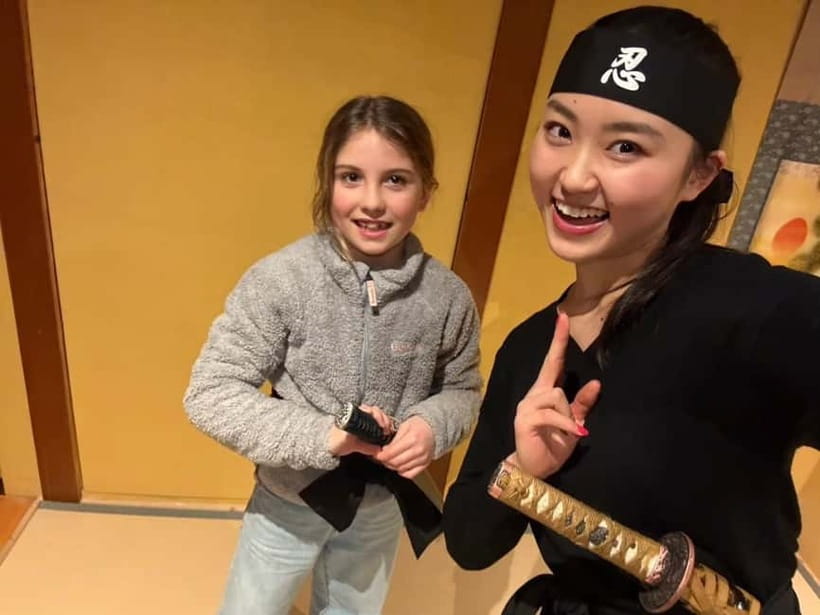
The quality of this activity depends heavily on the instructors. The strongest feedback points to a friendly, encouraging approach rather than a rushed lesson. Yui and Wei were especially praised for welcoming an entire family, even though only the husband and daughter took part in the training.
That detail is useful if your group has mixed interests. You do not have to force every person into costume and weapons practice. A nonparticipating family member can watch, take photos, and order a drink at the cafe. The staff can still involve the whole group in the atmosphere.
The same family experience also points to good support for younger participants. Yui and Wei encouraged the daughter throughout the activities and helped increase her confidence. That does not mean every child will respond in the same way, but it suggests the instructors understand that a first attempt may need patience and a little humor.
English and Japanese are available for instruction. If you are visiting from abroad, that makes the basic training easier to follow. The lesson is physical and visual, too, so demonstrations should help reinforce the spoken directions.
The pace appears relaxed rather than hurried. One account specifically valued having enough time for photos and repeated attempts with the weapons. That is a good sign for anyone who dislikes being pushed from one activity to the next.
Photos that feel part of the activity
Photography is not an afterthought here. You are encouraged to capture the costume, weapons, poses, and training moments, and the staff can help you find the best photo and video opportunities.
I would treat this as a hands-on photo session with instruction, rather than a formal weapons course. The pictures are likely to be the lasting souvenir, especially if you are traveling with children or friends who enjoy posting short videos and photos online.
The best images should come from the activity itself: a shuriken stance, a blowgun aim, or a katana pose. Because the staff help with photos, you do not need one person in your group to miss every turn behind the camera.
There is also an advantage to the indoor setting. Lighting and weather are less of a concern than they would be outdoors. You can plan this activity on a rainy afternoon without worrying about a wet costume or a canceled outdoor session.
Do not expect an expansive sightseeing view from the sixth-floor cafe. The appeal is the costume and training, not a panorama of Kyoto. That is a fair trade if your priority is a playful activity with strong picture opportunities.
What nonparticipants can do
A person who does not want to train can still come into the cafe, watch, and take photos. The cafe also offers ninja-themed food and drinks, giving nonparticipants something to do while the rest of the group handles the weapons.
There is one cost to keep in mind. People who accompany the participants without joining the training are asked to order one drink. That rule makes sense for a cafe setting, but it means the activity is not entirely free for spectators.
For a family, this arrangement can work well. One parent can take pictures while a child trains, or one person can sit out if they feel uneasy about weapons. For a larger friend group, decide in advance who wants to participate so you can judge the total cost.
Is $45 a fair price?
At $45 per person, the price covers the three weapon activities, ninja costume rental, instructor guidance, and photo opportunities. I think the value is strongest when you take part in all three sections and make use of the staff’s help with photos.
This is not the right choice if you want a long cultural lecture or a serious martial arts course. The session lasts one to two hours, and the focus is practical fun, safe practice, and memorable pictures. You are paying for a structured activity in a central Kyoto district, not simply for access to a cafe.
The small group also affects the value. With a maximum of 10 participants, the instructors can give individual direction and allow repeated attempts. That is more useful than a large, noisy group where you only get one turn.
Families should also weigh the cost carefully. Anyone under three cannot participate, and a nonparticipant must order a drink. If only one person in a family wants to train, the value may be less convincing. If two or more people are ready to take part, the package makes more sense.
Who will enjoy this most?
I would recommend the activity to:
- Families with children aged three and over who enjoy pretend play and active lessons
- Friends looking for a memorable group photo
- Solo visitors who want a guided activity rather than another temple visit
- First-time visitors seeking an easy indoor plan in Gion
- People who enjoy trying unusual equipment without committing to a full martial arts class
It may be less suitable if you dislike changing clothes, have no interest in posing for photos, or want a quiet cafe visit. The activity is built around participation, so the costume and training are central rather than optional extras.
The experience can work for mixed-age groups because people can join at different levels. The instructors guide beginners, and nonparticipants can watch. Just remember that the youngest children cannot take part, and skirts can make changing more awkward.
Timing, booking, and practical details
Allow one to two hours for the full visit. The exact start times depend on availability, so check the schedule before choosing your place in the day. Since the activity is in Gion, it can fit between other Kyoto plans, but do not assume it will take only a few minutes.
The small group size makes advance booking sensible, especially if you want a particular time. You can reserve now and pay later, which helps if your Kyoto schedule is still changing. Free cancellation is available up to 24 hours in advance for a full refund.
The instructor languages are English and Japanese. The cafe is on the sixth floor, and the building has an elevator. Wear clothing that makes changing easy, and avoid a skirt if possible.
The experience provider is Jerry Inc. The published rating is 4.9 from 20 reviews, and the strongest praise focuses on three things: the friendly instructors, the relaxed pace, and the chance to practice each weapon enough to enjoy it.
My take: book it if you want to play along
Book the Ninja Experience Cafe if you want a light, memorable Kyoto activity with real participation, simple logistics, and plenty of photo chances. The three weapons give the session enough variety, while the indoor location protects your plans from bad weather.
I would be especially comfortable recommending it to families and small friend groups. Yui and Wei’s encouragement of a young participant shows how much the staff can shape the experience, and the relaxed pace gives you time to enjoy the costume and training instead of rushing through them.
Skip it if you are looking for serious ninja history, advanced sword instruction, or a major sightseeing attraction. At $45, the best value comes from treating it as an entertaining activity and photo session, not as a full cultural course.
FAQ
Where is the Ninja Experience Cafe in Kyoto?
The cafe is in Kyoto’s Gion district on the sixth floor of its building. An elevator is available, so use it and go directly to the cafe.
How long does the ninja activity last?
The activity lasts approximately one to two hours. Check availability for the specific starting times.
What weapons can I practice?
Training includes shuriken throwing stars, a blowgun, and a katana. Ninja instructors guide you through each activity.
Is a ninja costume included?
Yes. Ninja costume rental is included in the activity price.
Are photos included?
Photo opportunities are included. The staff can help you capture photos and videos during the experience.
Can someone come along without joining the training?
Yes. A person who does not participate can watch and take photos, and can enjoy ninja-themed food and drinks at the cafe. The accompanying person is asked to order one drink.
What languages are spoken by the instructors?
Instruction is available in English and Japanese.
Can children participate?
Children under three are not permitted to take part. Children aged three and over can participate, subject to the activity’s instructions and safety guidance.
Can I cancel or pay later?
You can cancel up to 24 hours in advance for a full refund. The reserve now and pay later option lets you book without paying at the time of reservation.
Newest Kyoto experiences on the site
- Treasures of Kyoto: Gion & historical Walking Tour★ 5.0 · 6 reviews
- Whisk Your Own Matcha: A Zen Matcha Experience at Temple★ 3.6 · 7 reviews
- Kyoto tea town for matcha lovers★ 5.0 · 16 reviews
- Uji: Private immersion into Kyoto’s tea and reglious culture★ 5.0 · 17 reviews
- Kyoto Matcha Green Tea Tour★ 4.5 · 23 reviews
- Uji and Wazuka Matcha Farm Half Day Private Guided Tour★ 5.0 · 21 reviews
- Utilising upcycled Matcha! Creating matcha incense (Uji, Kyoto)★ 5.0 · 6 reviews
- Sacred Temple Yoga Experience in Japan★ 5.0 · 3 reviews
Gion District Tours, compared.

Kyoto Geisha Walking Tour: Gion District & Hidden Gems
Read our review →
Gion Magical Night Walking Tour with Geisha Trivia
Read our review →
Gion Geisha District Walking Tour – Stories of Geisha
Read our review →
Best of Kyoto: Gion, Geisha, Pagodas & Cobblestones
Read our review →

Kyoto Night Foodie Tour in Gion (9+ dishes + 6 Sake tastings)
Read our review →
Kyoto Gion Geisha District Walking Tour – The Stories of Geisha
Read our review →
Kyoto Gion: 2-Hour Geisha Culture & History Walking Tour
Read our review →Browse the lists this tour appears in