
Reviewed · KYOTO CALLIGRAPHY CLASSES
Kyoto: Local Home Visit and Japanese Calligraphy Class
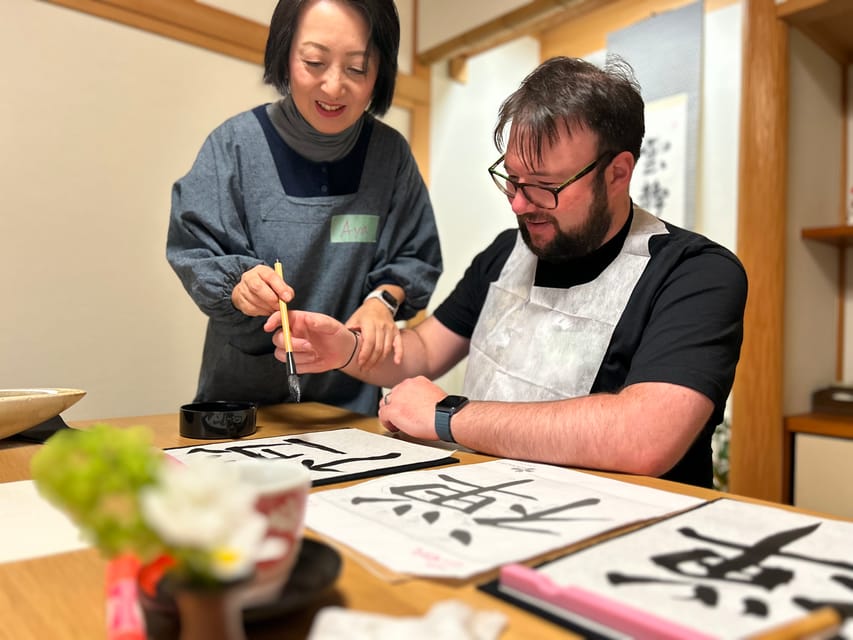
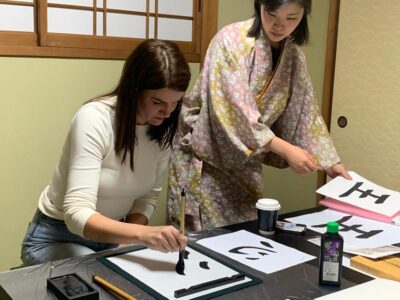
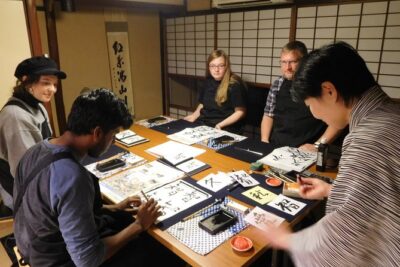
Japanese calligraphy becomes much more interesting when you are not just copying a character from a page. Near Nijo Castle, you visit a local home and learn how each brush movement gives a kanji its shape, balance, and feeling. Aya, a trained calligraphy teacher, explains the art clearly and guides you through your own piece.
I like the small private setting, which gives you room to ask questions and receive direct help. I also like that you finish with a personal artwork, rather than a disposable souvenir. The one drawback is the short one-hour format. You will learn the basics and create something pleasing, but you will not become a calligraphy expert in a single sitting.
Key points to know before booking
- A real Kyoto home near Nijo Castle: The class takes place about 200 meters west of Nijo Castle, giving the activity a personal local setting.
- Direct guidance from Aya and her team: Aya explains brush technique, calligraphy traditions, and the meaning behind the characters you choose.
- You create more than one practice stroke: You can work on several kanji and make a finished piece with your name in Japanese.
- Private groups keep the lesson personal: You receive more individual attention than in a large workshop.
- Plan carefully for the one-hour schedule: Arrive five minutes early, wear socks, and allow time to find the exact venue.
- Your materials are supplied: Ink, Japanese washi paper, and calligraphy tools are included in the $66 price.
A local home visit near Nijo Castle
The setting gives this experience a warmer feel than a standard craft workshop. You are not simply sitting in a tourist shop near a major sight. You visit a local home where people from Kyoto live, close to Nijo Castle and within easy reach of the central city.
The location is about 200 meters west of Nijo Castle, on the north side of Ebisugawa Street, just west of Nishinotoin Street. Across the road, you should see the Lions Mansion building. These details matter because the meeting instructions warn that Kyoto has several venues with similar names. Search for the venue name in your map application rather than relying on the street address alone.
A taxi driver should be given the phone number as well as the venue name. Kyoto addresses can be confusing, and arriving at the wrong branch could cost you much of your short lesson.
The home setting also shapes the mood. You remove your shoes before entering, so socks are required. Bring a clean pair, especially if you are spending the day walking around Kyoto. Bare feet are not accepted, and socks may be available for purchase if you forget them.
There is no waiting space if you arrive very early, so the practical target is five minutes before your starting time. If you arrive late, your lesson is shortened. The class cannot be offered if you are more than 15 minutes late, making punctuality especially important for an activity that lasts only one hour.
More calligraphy classes in Kyoto:
- Kyoto: Calligraphy class at Buddhist temple in city center
★ 5.0 · 167 reviews - Kyoto: Japanese Calligraphy Class
★ 4.8 · 89 reviews - Kyoto: Japanese Calligraphy Workshop
★ 4.7 · 84 reviews
Meeting Aya and learning the brush
The session begins with explanations about Japanese calligraphy and the tools in front of you. Aya has been praised for explaining both the art itself and how she learned it. Her teaching style is patient and hands-on, which matters when the brush feels unfamiliar in your fingers.
Calligraphy is not simply drawing a Japanese character. The order, direction, pressure, and speed of each stroke affect the final shape. A line can begin firmly, soften in the middle, or finish with a quick lift. Small changes in your wrist can make the character look calm, strong, delicate, or uneven.
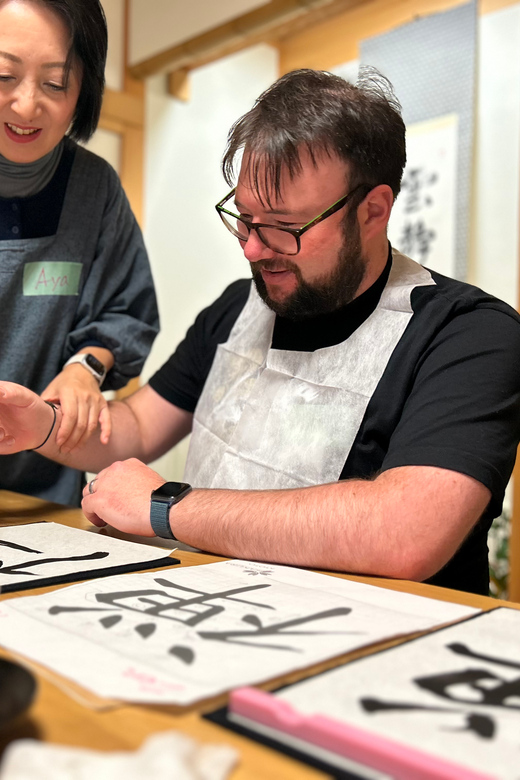
You first learn the basic brush movements and practice with guidance. The lesson is designed for beginners, so you do not need previous calligraphy experience. Aya and her assistant can correct your grip and show you how to improve the shape without taking over the work.
That balance is important. You want help, but you also want the final piece to be yours. The class gives you several chances to practice before you make the artwork you plan to keep.
The instruction is available in English and Japanese. If you want more cultural context, this is a useful chance to ask questions about the role of calligraphy in Japan, the meaning of selected kanji, and the teacher’s own training.
Choosing a kanji with personal meaning
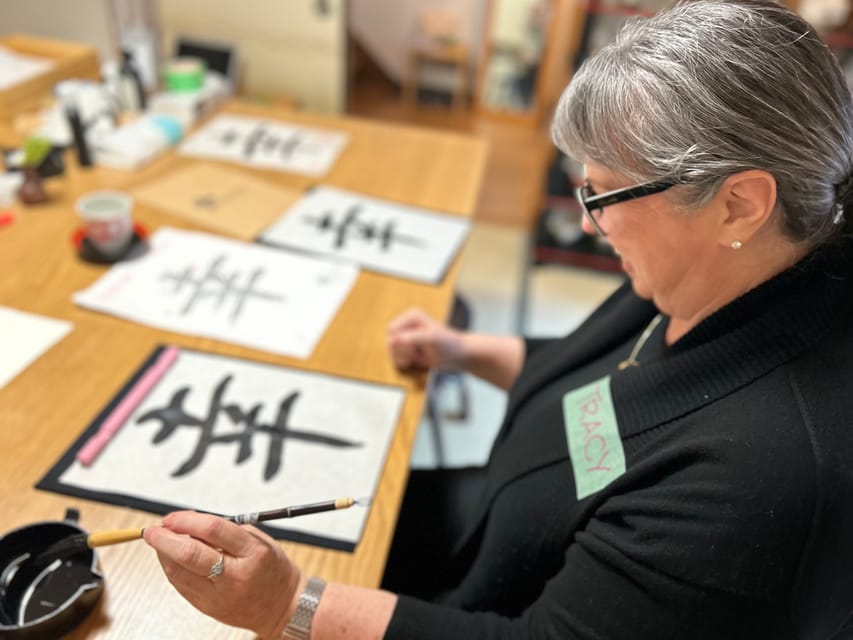
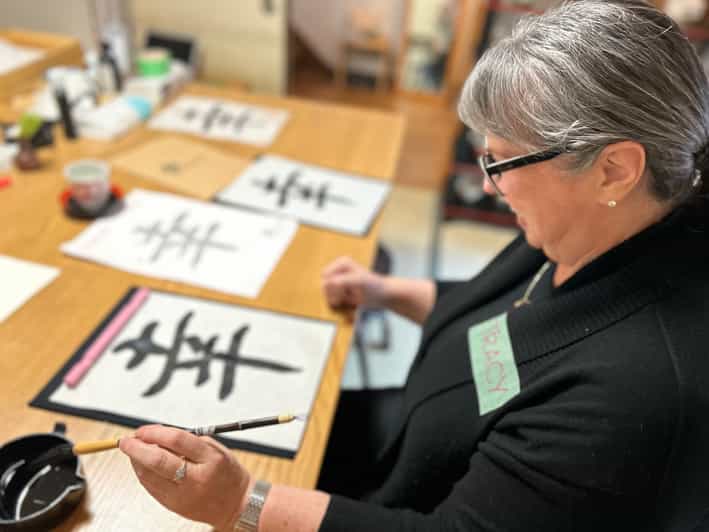
One of the best parts of the class is selecting a character that has some meaning for you. Possible themes include love, peace, strength, or wisdom. The exact selection depends on what you choose during the session, but the idea is simple: your souvenir should say something about you, not just say Kyoto.
You also have the chance to add your own name in Japanese. This small detail makes the finished artwork feel more personal. It gives you a connection between the large kanji and the person who created it.
I recommend thinking about your preferred theme before the class. You do not need to arrive with a fixed decision, but having a few ideas can save time. Since you have only one hour, you will get more out of the class if you are ready to choose a character once Aya explains the options.
There is a quiet satisfaction in seeing the finished work take shape. Your practice strokes may look uneven, as they should at the beginning. Then, with correction and a little patience, you produce a final character that reflects your own hand.
What the one-hour lesson actually gives you
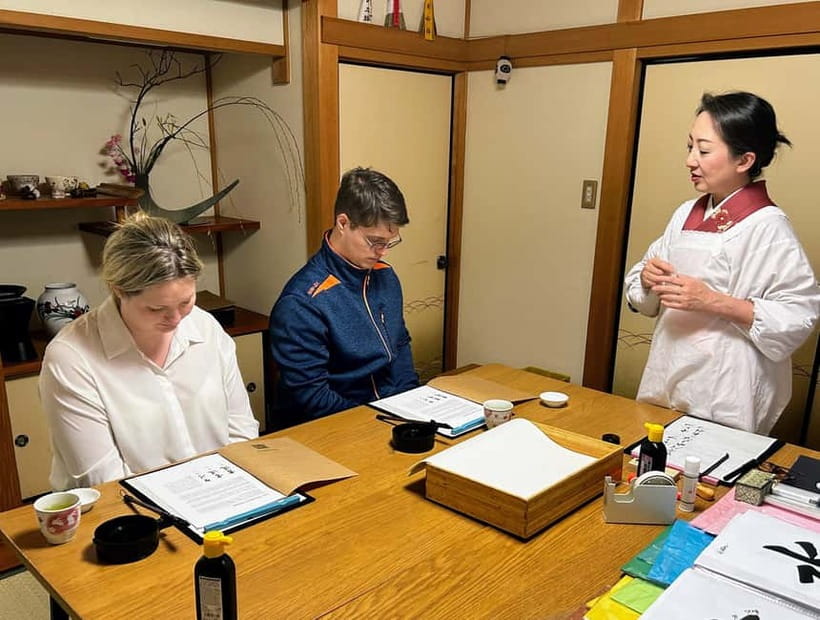
An hour is enough for an introduction, practice, instruction, and a finished keepsake. It is not enough for advanced training. Calligraphy requires years of practice, and the class does not pretend otherwise.
That limitation is worth keeping in mind when you compare this with longer art workshops. You are paying for a focused cultural experience, personal guidance, materials, and a souvenir. You are not paying for a full professional course.
The short format can work well in a busy Kyoto schedule. You might fit it between a morning visit to Nijo Castle and an afternoon at another central sight. It also makes the activity easier to add on a hot or rainy day, when an indoor creative break is welcome.
At the same time, the schedule leaves little room for delay. If you want a relaxed pace, arrive early enough to locate the home, but not so early that you are waiting without a place to sit. If your group is delayed by traffic or a crowded bus, the lesson will feel rushed.
The activity is for ages 13 and older. That makes it a better fit for teenagers and adults than for families with young children. The private format may also suit couples, friends, or solo participants who want direct help.
More craft workshops in Kyoto:
- Kyoto: 45-Minute Tea Ceremony Lesson Experience
★ 4.3 · 2,378 reviews - Ramen Cooking Class at Ramen Factory in Kyoto
★ 5.0 · 1,937 reviews - Kyoto : Chopsticks Making Workshop in Gion with Engraving Option
★ 5.0 · 958 reviews - Kyoto: Samurai Sword Class by Experts in Traditional Arts
★ 4.9 · 657 reviews
Ink, washi, and a souvenir you made yourself
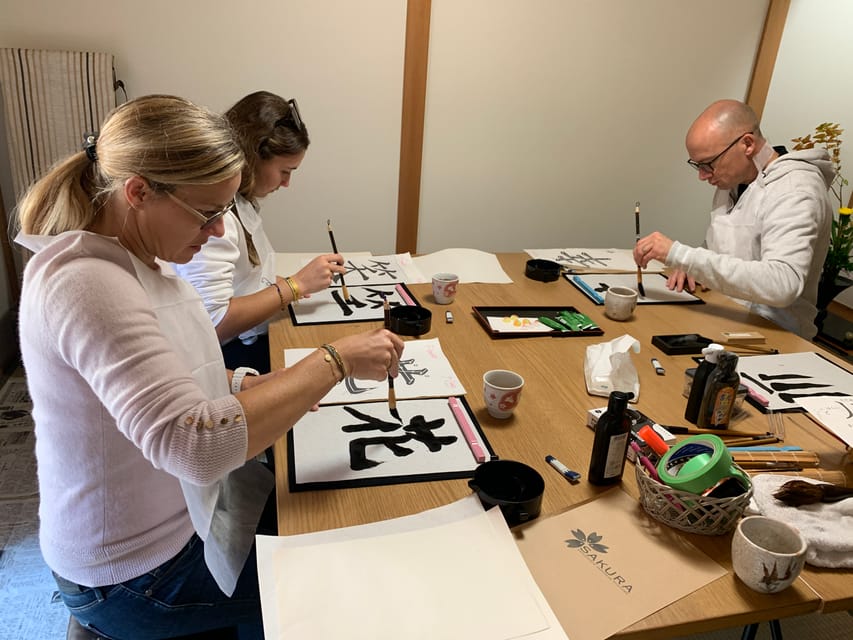
The price of $66 per person includes instruction, rental calligraphy tools, ink, and Japanese washi paper. That is a fair package if you value the teaching and the local-home setting, not just the materials.
Washi is the traditional Japanese paper used for the finished work. It has a different feel from ordinary printer paper, and the ink behaves differently on its surface. The paper gives the artwork a proper presentation and helps it feel like more than a practice sheet.
Your finished piece can go home with you as a reminder of Kyoto. Several aspects make it more memorable than a purchased souvenir: you selected the character, practiced the strokes, accepted corrections, and made the final marks yourself.
The artwork may not look exactly like a master’s work, and that is part of the point. A perfect printed character would show the skill of a machine or professional. Your piece shows the hour you spent learning.
If you enjoy bringing home something personal from a trip, this is a strong reason to choose the class. If you mainly want a polished piece of professional calligraphy, you should adjust your expectations. The value is in the process and the story behind the paper.
The strongest part: patient, personal teaching
The most consistent praise for this experience focuses on the instructors. Aya is described as warm, supportive, and skilled at giving constructive advice. Other participants have also found the teachers friendly and professional.
That matters because calligraphy can feel intimidating at first. A brush loaded with ink leaves a permanent mark, and beginners may worry about making a mistake. A patient teacher helps you understand that the early attempts are part of the lesson.
Some sessions may be especially personal if your group is the only one booked at that time. One small group received one-on-one instruction from an experienced teacher, which allowed more direct correction. You should not assume every booking will have exactly that arrangement, but the private-group format is designed to keep the class intimate.
The teachers also add context beyond brush technique. Aya has explained the background of Japanese calligraphy and her own path as a calligraphy artist. You may also receive suggestions for nearby temples and sights, a useful bonus if you are planning the rest of your day around Nijo Castle.
The hosts have also been willing to take photographs and video during the activity. This is not listed as the main feature, so do not book solely for that reason, but it can help you remember the visit, especially if you are traveling as a couple or family group.
How to fit this into a Kyoto day
The activity is near Nijo Castle, a UNESCO World Heritage Site, so it is easy to pair with sightseeing in central Kyoto. The class itself lasts one hour, but you should allow extra time to find the correct entrance and settle in.
A practical plan is to visit Nijo Castle before or after the lesson. The nearby location reduces unnecessary crossing of the city, which is useful when Kyoto’s buses are slow or crowded. You can also use the class as a calm indoor pause during a hot summer afternoon.
Do not schedule the lesson too tightly between distant attractions. The provider gives a precise meeting location, but Kyoto’s streets and addresses can still take time to navigate. The no-late-start policy makes a generous buffer worthwhile.
The class is wheelchair accessible, according to the activity information. Shoes are not worn indoors, and you should bring socks. Smoking, vaping, alcohol, drugs, and strong fragrances are not allowed.
English and Japanese are supported. The activity is a private group rather than a large public class, so you can expect a more personal exchange with the instructor.
Who will enjoy this most
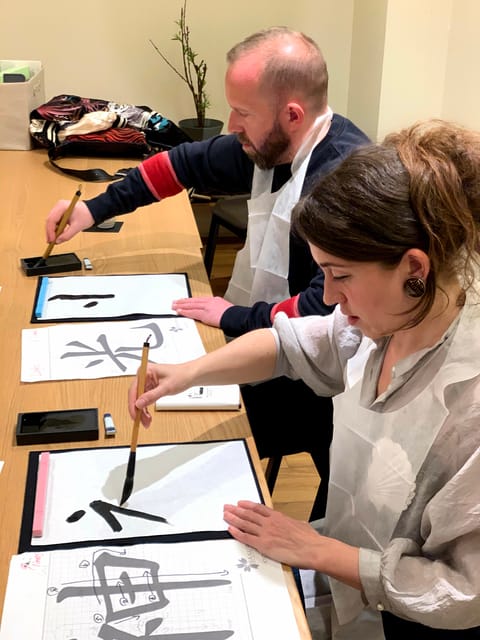
I would recommend this class to you if you want a cultural activity that produces something you can keep. It works especially well for couples, solo visitors, honeymooners, and older families with children aged 13 or above.
It is also a good choice if you want to meet local people in a home setting. The conversation with the hosts is part of the appeal, and the class offers more personal contact than a quick demonstration in a museum or shop.
You should choose it if you like slow, careful activities. Calligraphy rewards attention rather than speed. The quiet focus of holding the brush, placing the stroke, and watching the ink meet the paper can make the hour feel restful.
I would be more cautious if you want a long workshop, a formal certificate, or advanced instruction. The class gives you a taste of the craft and a finished artwork, not a full course in Japanese calligraphy.
Children under 13 cannot join, and anyone who dislikes removing shoes indoors should know that this is part of the home setting. Strong perfumes are also not permitted.
Is $66 a good value?
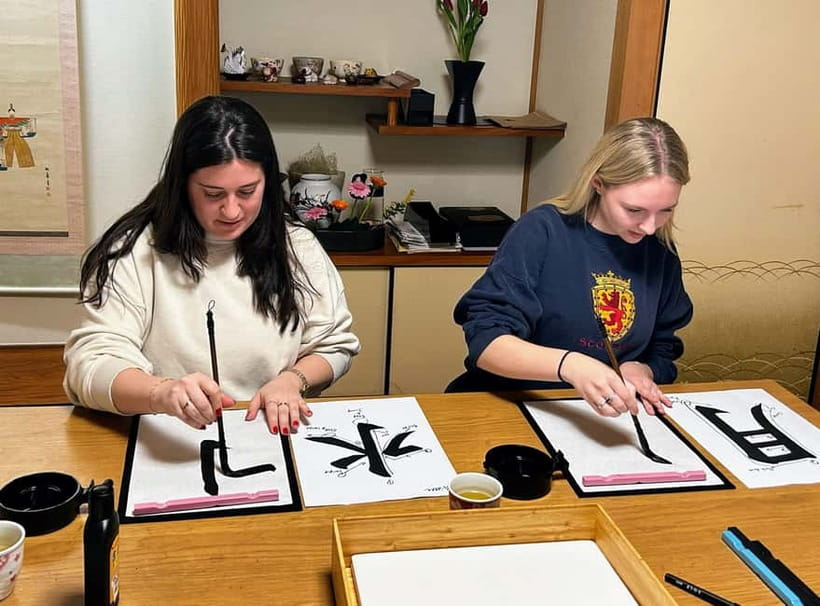
At $66 per person, the price is reasonable if you count the complete experience rather than the cost of ink and paper alone. You receive a private lesson, a teacher’s direct attention, use of tools, ink, washi paper, and a finished piece to take home.
The local home visit adds value because it changes the activity from a simple souvenir-making stop into a personal cultural meeting. You are learning in a lived-in setting near one of Kyoto’s major sights.
The one-hour limit keeps the cost from feeling excessive, but it also sets the ceiling on what you can learn. You will leave with a working idea of the basic strokes and your own artwork. You will not develop polished calligraphy technique in that time.
Free cancellation up to 24 hours before the start and the option to reserve now and pay later make it easier to fit the class into a changing Kyoto schedule. Those policies are useful if you are still arranging your sightseeing days.
Should you book this Kyoto calligraphy class?
Book it if you want a personal, hands-on Kyoto activity with a local-home setting and a souvenir you make yourself. Aya’s patient instruction, the private format, and the chance to add your name in Japanese give the hour more substance than a quick demonstration.
Think twice if you need a long lesson or want to master the art. The class is an introduction, and the clock matters. Arrive five minutes early, bring socks, search for the venue by name, and leave enough time to reach the home near Nijo Castle.
For most visitors aged 13 and older, the experience offers a thoughtful break from temple visits and sightseeing. You leave with ink on washi, a new respect for the discipline behind each stroke, and a keepsake tied to your own time in Kyoto.
FAQ
Where does the Japanese calligraphy class take place?
It takes place in a local home about 200 meters west of Nijo Castle in Kyoto. The venue is on the north side of Ebisugawa Street, just west of Nishinotoin Street.
How long does the activity last?
The calligraphy experience lasts one hour.
What does the $66 price include?
The price includes calligraphy instruction and explanations, rental calligraphy tools, ink, and Japanese washi paper.
Is the class taught in English?
Yes. Instruction is available in English and Japanese.
Do I need previous calligraphy experience?
No previous experience is stated as a requirement. The class teaches basic brush movements and is suitable for beginners.
What should I bring?
You should bring socks. Shoes are not worn indoors, and bare feet are not accepted.
Can children join the activity?
The activity is not suitable for children under 13.
Newest Kyoto experiences on the site
- Treasures of Kyoto: Gion & historical Walking Tour★ 5.0 · 6 reviews
- Whisk Your Own Matcha: A Zen Matcha Experience at Temple★ 3.6 · 7 reviews
- Kyoto tea town for matcha lovers★ 5.0 · 16 reviews
- Uji: Private immersion into Kyoto’s tea and reglious culture★ 5.0 · 17 reviews
- Kyoto Matcha Green Tea Tour★ 4.5 · 23 reviews
- Uji and Wazuka Matcha Farm Half Day Private Guided Tour★ 5.0 · 21 reviews
- Utilising upcycled Matcha! Creating matcha incense (Uji, Kyoto)★ 5.0 · 6 reviews
- Sacred Temple Yoga Experience in Japan★ 5.0 · 3 reviews
Kyoto Calligraphy Classes, compared.
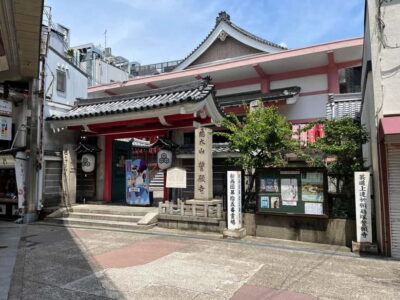
Calligraphy class at Buddhist temple in city center
Read our review →
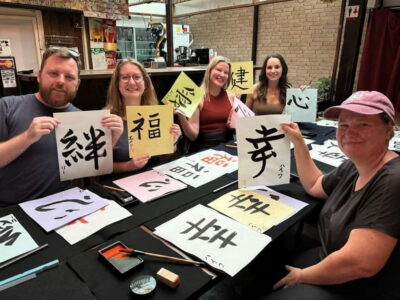
Kyoto Ninenzaka : Japanese Calligraphy Class in Townhouse
Read our review →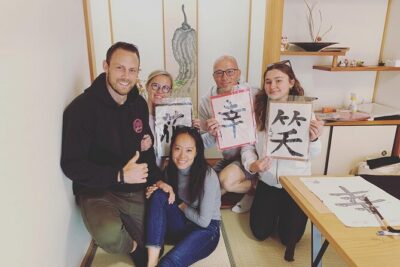
Private Japanese Calligraphy in Kyoto – Learn Shodō with a Master
Read our review →
Japanese Calligraphy – Shodo – Lesson (near Kyoto Station)
Read our review →
Browse the lists this tour appears in