
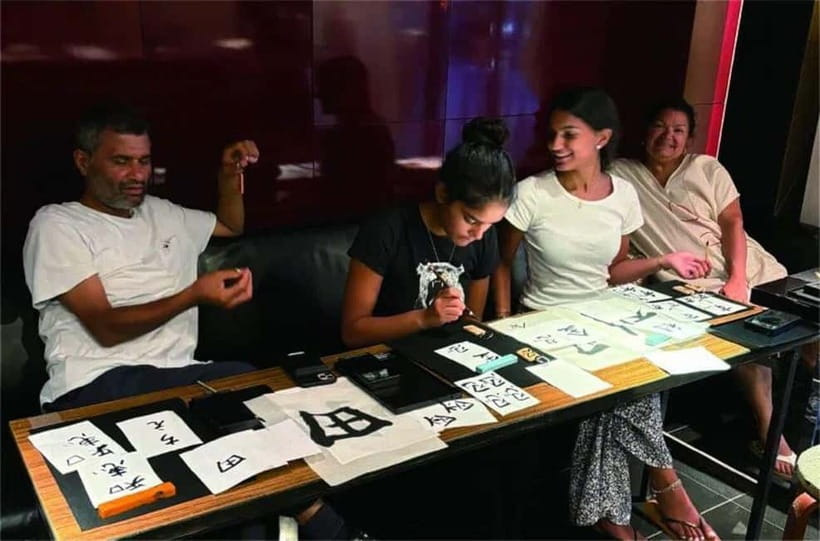
Reviewed · KYOTO CALLIGRAPHY CLASSES
Kyoto: Japanese Calligraphy Class
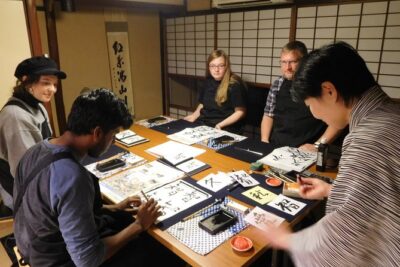
Japanese calligraphy is more than writing pretty characters. In this one-hour Kyoto class, you learn how the brush moves, how ink is applied, and how a name such as Brian or Liz can be represented with Kanji chosen for both sound and meaning. The setting near Kyoto Station makes this an easy cultural stop between trains, shopping, or sightseeing.
I like the patient, one-to-one help and the fact that you leave with something you made yourself. I also like the range of finished items, from scrolls to fans, cards, stationery, and picture frames. The main drawback is time: one hour goes quickly, so you will get a friendly introduction rather than advanced calligraphy training.
Key points
- Create personal Kanji: Staff help you choose characters for your name and explain their meanings.
- Beginner-friendly brush lesson: You receive guidance on brush grip, ink, and the order of strokes.
- Useful Kyoto location: The class takes place in front of Kyoto Station.
- Take-home souvenirs: Your writing can become a scroll, fan, postcard, stationery item, or framed piece.
- English instruction: The class is taught in English, with staff available to answer questions about Japanese writing and culture.
- Flexible format: Private and small-group sessions are available, with booking changes allowed up to 24 hours before the start for a full refund.
Why this short class works so well in Kyoto
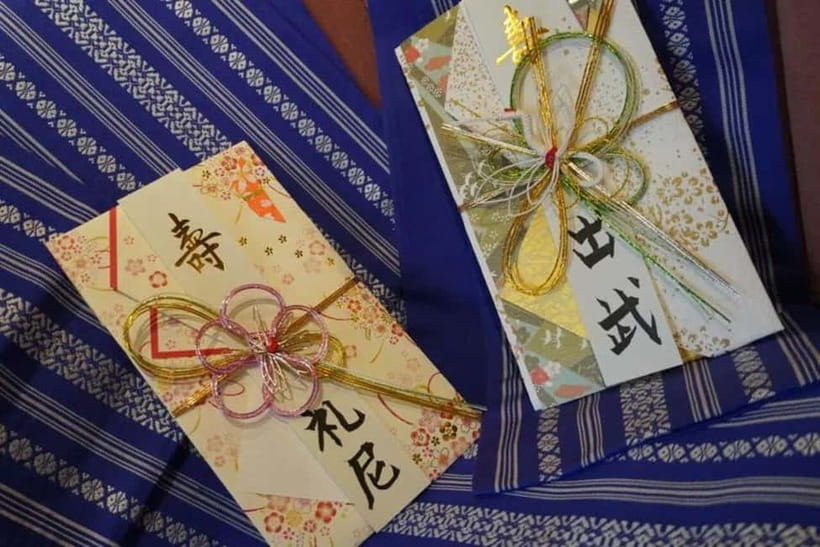
Kyoto offers plenty of temples, gardens, and old streets, but a hands-on activity gives you a different way to connect with Japan. Here, you are not only looking at Japanese writing on a sign or temple plaque. You are learning how to hold the brush, control the ink, and build a character stroke by stroke.
That makes the class especially useful if you want a cultural activity that does not take half a day. The scheduled time is about one hour, though it can vary depending on how quickly you finish each part. You can fit it into a busy Kyoto plan without giving up an entire afternoon.
The class is also well placed for a first or final activity in the city. Since the meeting point is in front of Kyoto Station, you can reach it before a train, after arriving in Kyoto, or during a break from the station area. Check the exact meeting point for the option you book, since it may vary.
More calligraphy classes in Kyoto:
- Kyoto: Calligraphy class at Buddhist temple in city center
★ 5.0 · 167 reviews - Kyoto: Japanese Calligraphy Workshop
★ 4.7 · 84 reviews - Kyoto: Local Home Visit and Japanese Calligraphy Class
★ 5.0 · 66 reviews
Starting with brush, ink, and washi paper
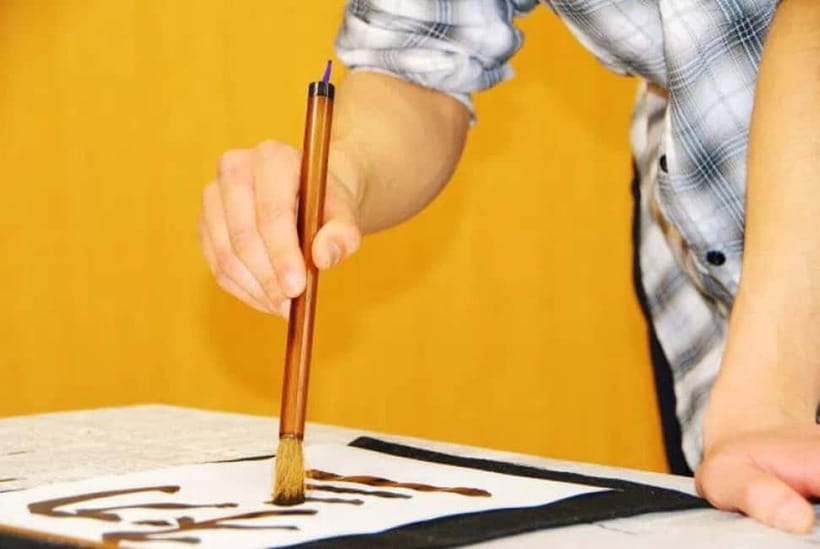
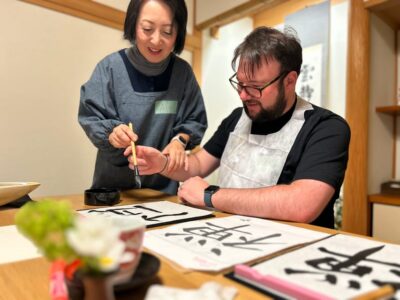
The lesson begins with a short explanation of the tools. You learn how to use the brush and how to apply ink to Japanese washi paper. This opening matters because the brush does not behave like a pencil or ballpoint pen. Pressure, angle, and speed all affect the stroke.
The instructors explain the basics in English, which removes much of the guesswork for first-time students. You do not need to know Japanese, read Kanji, or have previous art experience. The teaching style is patient and practical, with help available as you try each movement.
You will use brushes, ink, and washi paper during the class. This is a modest supply list, but it is exactly what you need to get a feel for the craft. Do not expect a long lecture on every form of Japanese calligraphy. The focus is on trying the tools yourself and producing finished work.
That balance suits most visitors. You get enough cultural context to understand what you are doing, then plenty of time to practice rather than simply watch an instructor demonstrate.
Practicing basic characters before making souvenirs
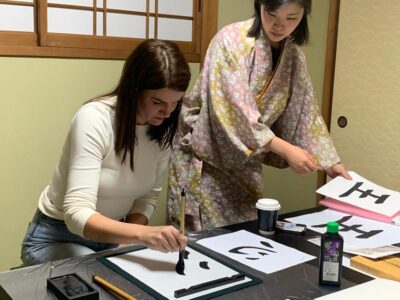
After the introduction, you practice basic characters. This stage gives you a chance to become comfortable with the brush before working on a personal piece.
The staff can show you how to set the strokes correctly and adjust your technique as you work. That individual attention is one of the strongest parts of the class. It is easy to make a brush line too heavy, too faint, or uneven, but a quick correction can make the next attempt feel much better.
You might not produce museum-quality calligraphy in an hour, and that is not the point. The value is in seeing how much a few simple instructions can change the result. You also get a quiet contrast to Kyoto’s busy sightseeing schedule. One participant described the calm, self-paced practice as a welcome break from the pace of a trip, and that is a fair way to think about it.
Once you have practiced, you can make a scroll using the Kanji characters you wrote. The scroll gives the class a traditional feel, while the other souvenir options make the activity easier for families and first-time artists.
Turning your name into meaningful Kanji
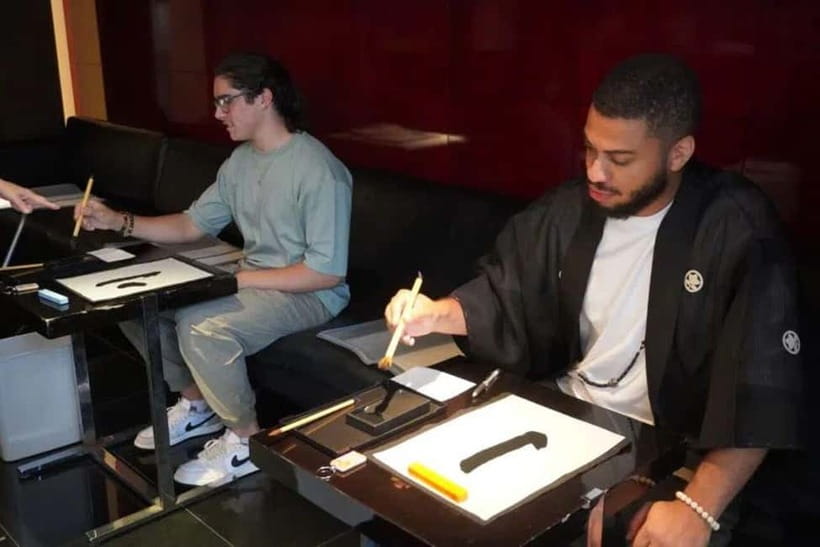
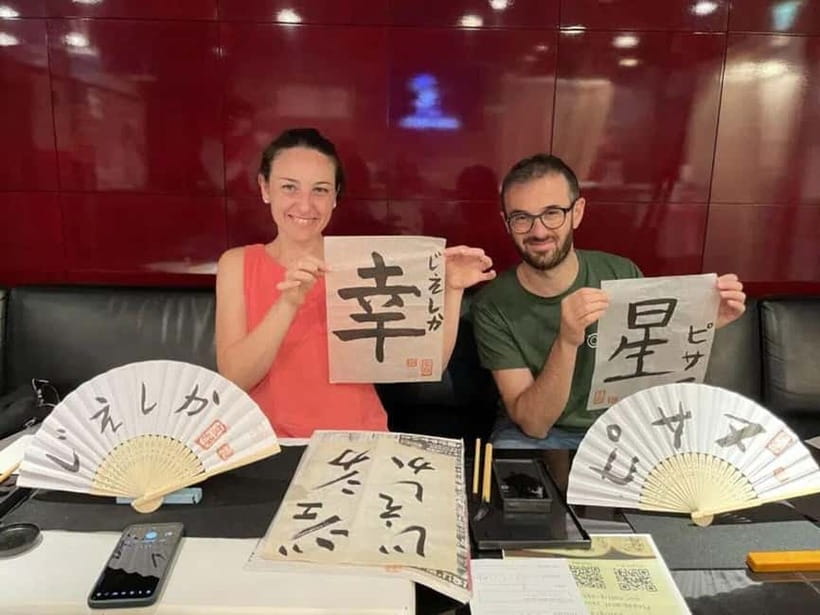
The most personal part of the activity is writing your own name and a favorite word in Kanji or alphabet letters. The staff help suggest possible Kanji and explain what each character means.
This is not a direct translation in the same way you would translate a sentence. Japanese Kanji carry meanings as well as sounds, so the staff select characters that can fit the pronunciation of your name while creating a suitable combination of ideas.
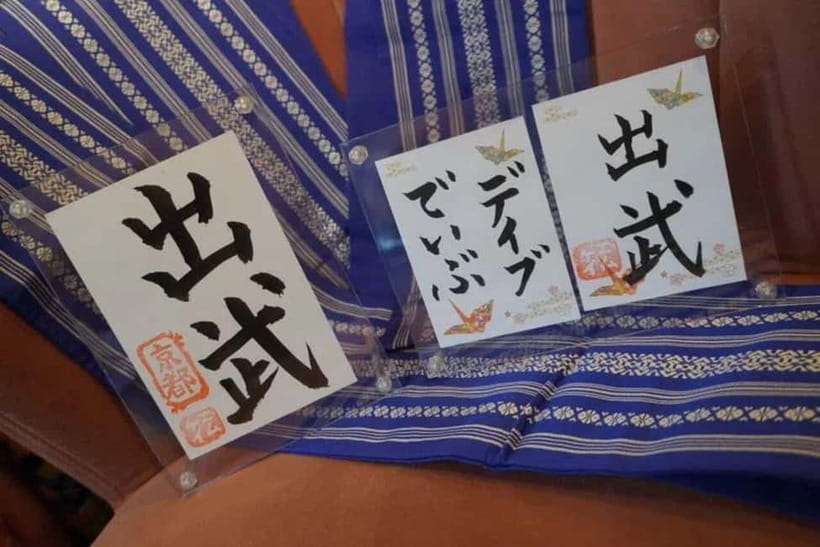
For example, the name Brian may become 武礼安. The characters can suggest martial strength or bravery, courtesy or gratitude, and peace. Liz may become 梨図, using ideas connected with pear and painting. These examples show why the process can be more interesting than simply copying a name from a chart.
You can also choose a favorite word. The staff can guide you toward possible Kanji and explain the meaning behind the selection. Ask questions as you go. The instructors are there to clarify Japanese writing and language culture, not just to correct your brush technique.
Names can be especially fun for families. Children may enjoy discovering what their names can mean in another writing system, while adults often like having a personal piece that connects a familiar name with Japanese characters.
More craft workshops in Kyoto:
- Kyoto: 45-Minute Tea Ceremony Lesson Experience
★ 4.3 · 2,378 reviews - Ramen Cooking Class at Ramen Factory in Kyoto
★ 5.0 · 1,937 reviews - Kyoto : Chopsticks Making Workshop in Gion with Engraving Option
★ 5.0 · 958 reviews - Kyoto: Samurai Sword Class by Experts in Traditional Arts
★ 4.9 · 657 reviews
Making a fan, card, or framed piece
The final stage turns your writing into souvenirs. Depending on the activity option and the work you complete, you may make items such as a Japanese fan, picture frame, postcard, stationery, or scroll.
This is where the $51 price becomes easier to judge. You are not paying only for a short demonstration. The fee includes the brushes, ink, washi paper, instruction in English, and some items you can take home. The exact souvenir mix may vary, so you should not assume every option includes every item mentioned above.
I like this practical result. A small handmade piece is easier to pack than a large craft purchase, and it carries a stronger memory of Kyoto than a generic shop item. Your brushwork may be imperfect, but that is part of its value. It shows that you made it during your trip.
The staff also appear to keep the mood light. Names associated with the class include Rena, Lana, Waka, Yoshia Kobayashi, and Kou. Instructor assignment can vary, but the teaching approach described for the class is warm, encouraging, and attentive.
How the instructors shape the experience
The quality of a beginner art class depends heavily on the instructor. Here, the strongest feature is the amount of support you receive while working.
Rena has been praised for explaining both the technical side of the art and the cultural meaning behind the strokes. Lana and Waka have provided detailed one-to-one help with stroke placement. Yoshia Kobayashi and Kou have helped participants with both calligraphy and related cultural questions.
You should expect encouragement rather than pressure. The class is designed for people who may have never held a calligraphy brush before. Staff can answer questions about Japanese writing, language, and culture while helping you improve the physical technique.
English is included, and English is the listed teaching language. That matters because the name-selection portion requires clear explanations. You want to understand why a particular Kanji has been suggested, not simply copy a character without knowing its meaning.
The instructors also help keep the class accessible for children, although children under five are not suitable for the activity. Older children can take part with their families, and the activity has worked well for family groups of four.
A calm activity for families and first-time artists
You do not need to be artistic to enjoy this class. The activity is built around trying something new, receiving help, and creating a keepsake.
Families get several benefits from the format. The class is short enough for children to manage, and the finished fan, card, or writing gives them a clear goal. Parents can also take part rather than simply watch. Children under five are excluded, so families with toddlers should plan around that rule.
Couples, solo visitors, and small groups can enjoy it as well. Private or small-group formats are available, which can make the experience more comfortable if you want personal instruction or prefer not to work with a large crowd.
The one-hour length is both a strength and a limit. It keeps the activity easy to schedule, but it also means you will not cover every major calligraphy style or spend a long time perfecting one piece. Think of it as an introduction with a handmade result, not a full course.
What the $51 price includes
At $51 per person, this class sits above a quick tourist craft activity but below the cost of a longer guided workshop. To decide if it is good value for you, look at what is bundled into the hour.
You receive use of the brushes, ink, and washi paper. English instruction is included, and you can take home some of the items you make. The personal name activity adds another layer because the staff help with both pronunciation and meaning.
The price makes the most sense if you value guided instruction and a personal souvenir. If you only want to try a brush for a few minutes, a cheaper craft activity may suit you better. If you want a finished item tied to your own name and a little cultural explanation, this class offers more.
You should also remember that the class is near Kyoto Station. That saves time and transport costs compared with an activity far across the city. It is a practical choice on a day when you are already using the station for trains or nearby sightseeing.
Timing, booking, and small practical details
The class lasts about one hour, but the exact length may change depending on how quickly you complete the activities. Starting times depend on availability, so check the schedule before choosing a time.
Private and small-group options are available. The meeting point may vary by the option you select, even though the main location is described as in front of Kyoto Station. Read the meeting instructions carefully and allow enough time to find the exact spot.
You can reserve now and pay later, which helps if you are still arranging a Kyoto itinerary. Cancellation is free up to 24 hours before the activity for a full refund. Those rules are useful if your plans depend on train bookings, weather, or a packed sightseeing day.
Because you are working with ink, wear something you can relax in. The supplied information does not state a dress code or specific cleanup policy, so use ordinary care around the materials and follow the staff’s instructions.
Who should book this Kyoto calligraphy class
I would recommend this activity to you if you want a short cultural experience with a physical souvenir. It suits first-time visitors, families with children over five, couples, and small groups looking for something quieter than another major sightseeing stop.
It is also a good pick if you are curious about the meaning of Japanese names. The Kanji portion gives you more to talk about than simply copying a standard character. You can ask why certain characters were chosen and take home a piece that feels personal.
You may want to skip it if you are seeking serious calligraphy training. One hour is enough to learn basic brush handling and create a souvenir, but not enough for advanced study. It may also feel brief if you want a long, reflective art session.
Should you book it?
Book this class if you want an easy-to-fit Kyoto activity, clear English instruction, and a souvenir made with your own hands. The strongest reasons are the patient help, the name-to-Kanji process, and the convenient location near Kyoto Station.
At $51, the value depends on how much you care about the guided experience and take-home pieces. For a quick introduction, it is a little more than a casual craft stop. For a personal cultural activity with staff support and several possible souvenirs, it is a sensible choice. Just keep your expectations focused: this is a friendly one-hour introduction, not professional training.
FAQ
Where does the Japanese calligraphy class take place?
The main location is in front of Kyoto Station in Kyoto, Japan. The exact meeting point may vary depending on the option you book.
How long does the class last?
The class takes about one hour. The time may vary depending on how quickly you complete the activities.
How much does the experience cost?
The listed price is $51 per person.
Is English instruction available?
Yes. English instruction is included, and English is the listed language for the activity.
Do I need previous calligraphy experience?
No previous experience is stated as a requirement. The class begins with basic instruction on brush use and applying ink.
What materials are included?
Use of brushes, ink, and Japanese washi paper is included.
Can I take my calligraphy home?
Yes. You can take home some of the pieces you make, such as a scroll, Japanese fan, picture frame, postcard, or stationery item. The exact items may depend on the option booked.
Can I write my own name?
Yes. You can write your own name and a favorite word in Kanji characters or alphabets. Staff can suggest possible Kanji and explain their meanings.
Are private or small-group sessions available?
Yes. Private and small-group options are available.
Can children join the class?
Children under five are not suitable for the activity. Older children can take part, and the class has been enjoyed by family groups.
Newest Kyoto experiences on the site
- Treasures of Kyoto: Gion & historical Walking Tour★ 5.0 · 6 reviews
- Whisk Your Own Matcha: A Zen Matcha Experience at Temple★ 3.6 · 7 reviews
- Kyoto tea town for matcha lovers★ 5.0 · 16 reviews
- Uji: Private immersion into Kyoto’s tea and reglious culture★ 5.0 · 17 reviews
- Kyoto Matcha Green Tea Tour★ 4.5 · 23 reviews
- Uji and Wazuka Matcha Farm Half Day Private Guided Tour★ 5.0 · 21 reviews
- Utilising upcycled Matcha! Creating matcha incense (Uji, Kyoto)★ 5.0 · 6 reviews
- Sacred Temple Yoga Experience in Japan★ 5.0 · 3 reviews
Kyoto Calligraphy Classes, compared.
Calligraphy class at Buddhist temple in city center
Read our review →
Kyoto Ninenzaka : Japanese Calligraphy Class in Townhouse
Read our review →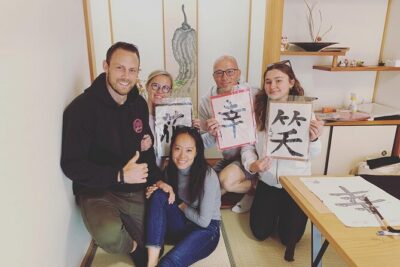
Private Japanese Calligraphy in Kyoto – Learn Shodō with a Master
Read our review →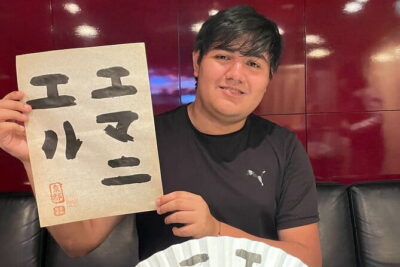
Japanese Calligraphy – Shodo – Lesson (near Kyoto Station)
Read our review →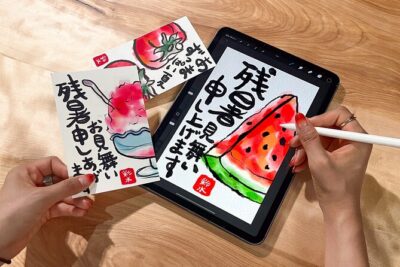
Browse the lists this tour appears in