
Reviewed · KYOTO TEMPLE TOURS
Kyoto: Hidden Gems E-Bike Tour Through Backstreets & Temples
Kyoto’s best surprise may be how quickly you can leave the crowds behind. This four-hour e-bike ride starts in Gion and threads through quiet lanes, temple grounds, shrine precincts, and the lower hills east of the city. You still see major sights, but the route makes room for places you would be unlikely to find on your own.
I like the comfortable e-bikes, especially on the gentle climbs near Nanzenji and the Philosopher’s Path. I also like the small group size, capped at eight, which gives guides such as Ben, Yuki, and Kenji room to adjust the pace and answer questions instead of delivering a fixed speech.
The main consideration is that this is still a bike tour through an active city. You need to be at least 145 centimeters tall, children under 10 cannot join, and riding in rain or narrow streets may not suit everyone. Insurance is not included, so check your coverage before booking.
Key points to know before you book
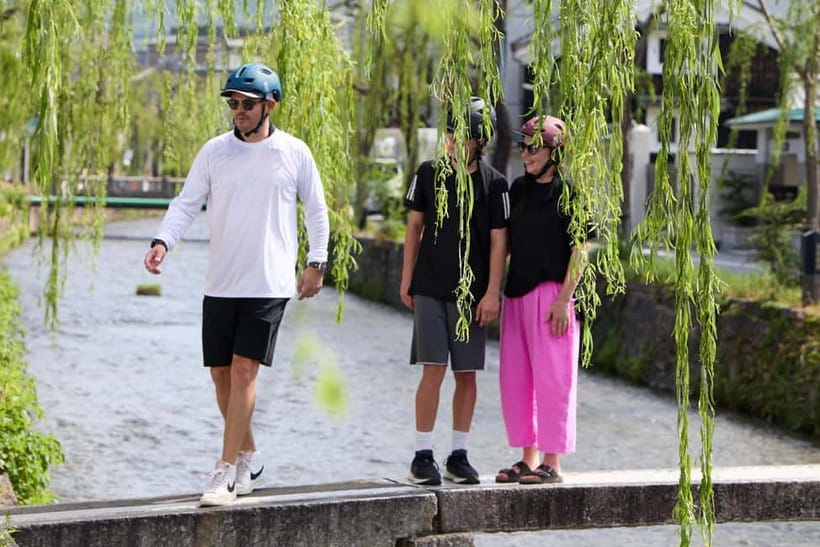
- Quiet Kyoto by bicycle: The route favors less crowded temples, shrines, and side streets while still including several major sights.
- E-bike assistance matters: The eastern side of Kyoto has some low hills, and the motor keeps the ride manageable without turning it into a workout.
- Guides shape the experience: Ben, Yuki, Kenji, and Yukio have been praised for clear explanations, patience, safety, and local pride.
- A useful first-day tour: Four hours gives you a broad look at Kyoto and helps you decide where to return later.
- Small groups feel personal: With no more than eight people, the guide can check that everyone is comfortable and following safely.
- Bring insect repellent: One rider specifically found it useful, particularly around greener paths and temple grounds.
Why an e-bike makes sense in Kyoto
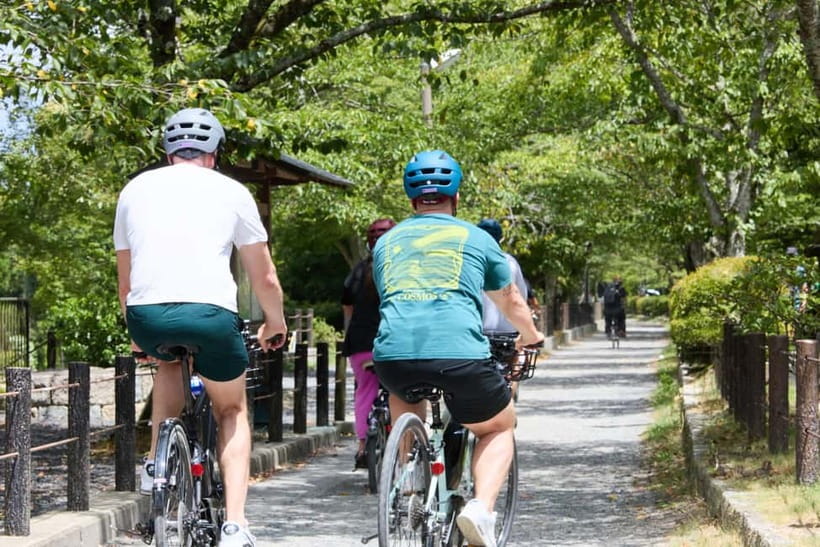
Kyoto is easy to admire on a map and harder to cover on foot. Gion, the eastern temples, the northern shrines, and the Imperial Palace are all within the same general city area, but walking between them takes time and public transport does not always place you at the right gate.
An e-bike fills that gap nicely. You cover more ground than you would on foot, yet you remain close to the streets, gardens, canals, and old buildings that disappear behind a bus window. You can also reach quieter corners without spending your morning changing buses.
The electric assistance is especially useful on the lower hills east of central Kyoto. This is not presented as a demanding cycling challenge, and the motor lets you save your energy for looking around. One rider described the ride as well balanced between pedaling and rest stops, while another noted that there are a couple of places where the e-power is helpful.
You still need basic cycling confidence. The guide leads through narrow streets, and Kyoto traffic requires attention. The strongest safety comments praise Ben for checking that everyone was still together and for placing group safety first. That matters more here than speed.
More bike days around Kyoto:
- Hidden Kyoto E-Biking tour
★ 5.0 · 1,843 reviews - Bike Tour Exploring North Kyoto plus Lunch
★ 5.0 · 1,087 reviews - Arashiyama Bamboo Forest & Hidden Gems Bike Tour (Early Bird)
★ 5.0 · 613 reviews
Starting in Gion, then leaving the crowds behind
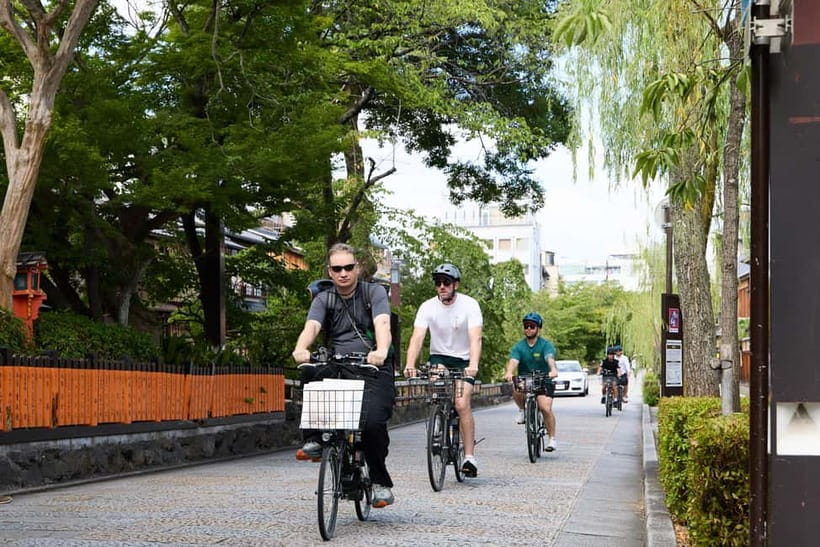
The meeting point is in front of Kyoto Tourist Lounge Gion on Yamatooji Dori Street. The guide waits outside, but finding the precise spot may take a little care. One useful warning is that signage at the start point has been described as limited, so check the Google Map location before you set out and allow time to identify the building.
Gion is a fitting place to begin. Its lanes are among Kyoto’s most famous, with traditional architecture and a strong connection to the city’s entertainment districts. The scheduled visit is about 20 minutes, enough for an introduction rather than a long architectural study.
The advantage of arriving by bike is that you do not remain fixed in the busiest part of Gion. After the opening stop, the route moves toward quieter parts of the city. Your guide can also give you early advice about popular places and the best times to visit them later on your own.
The short stop means you should not book this expecting a full Gion walking tour. Think of it as your orientation to the neighborhood and a starting point for the wider ride.
Nanzenji, where the eastern hills begin
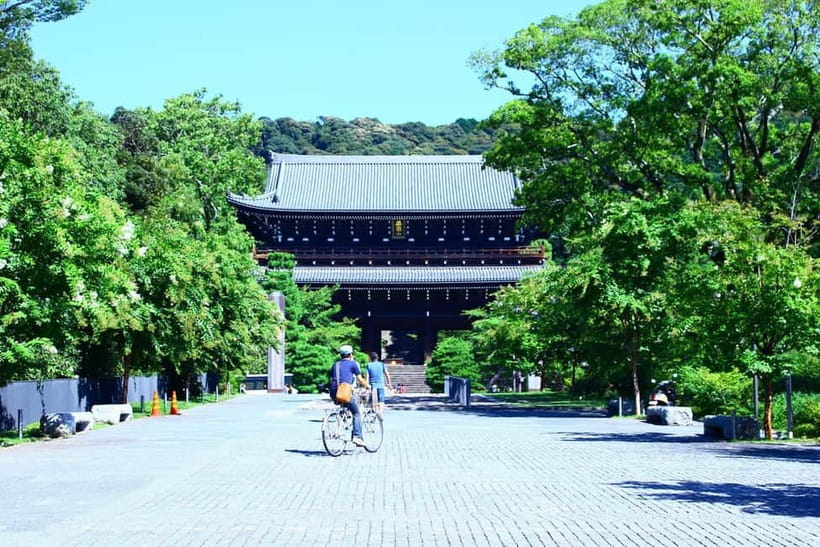
Nanzenji receives about 30 minutes, and it is one of the more substantial stops on the route. The temple is known for its broad grounds, formal gates, and the large brick aqueduct that passes through the area. The setting helps explain why the eastern edge of Kyoto feels different from the dense center.
This is also where the e-bike begins to earn its keep. The route around the eastern foothills is not a mountain ride, but it is not completely flat. You can pedal at a comfortable pace and let the motor assist when the road rises.
Thirty minutes is enough to see the main character of the temple area, listen to the guide’s explanation, and take photographs. It is not enough for an unhurried exploration of every building or garden, so keep your expectations realistic. The tour is designed to connect several places rather than give one temple an entire morning.
Guides are a major part of the stop. Ben has been praised for explaining history without unnecessary waffle, while Yuki has been described as a Kyoto local who brings pride in his home city. You get more than directions to a gate. You get context about religion, customs, and how each site fits into Kyoto.
Heian Shrine and the meaning behind the buildings
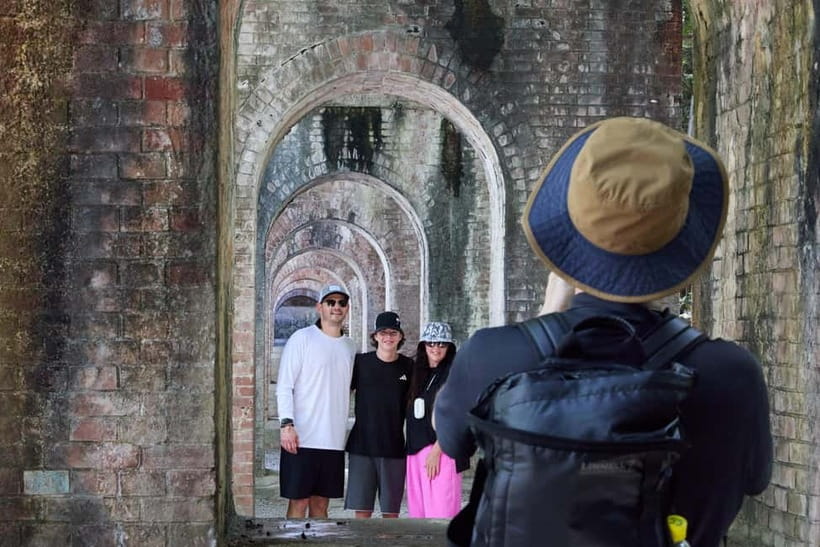
The next 30-minute stop is Heian Shrine, recognizable for its large vermilion structures and broad approach. The scale is different from Nanzenji. Here, the open entrance area and bright colors create a more theatrical first impression.
A guide adds value because shrine architecture and rituals can be easy to look at without understanding. The tour includes commentary on Kyoto’s culture, religions, and traditions, and several guides have been praised for making those explanations clear and interesting.
You will have time to look around and take photographs, though the itinerary does not promise a full visit to every section of the shrine complex. If a particular garden or building matters to you, ask the guide how much time is available before wandering too far from the group.
This is one reason the small group format helps. Guides can pause for questions and, when the schedule allows, adjust attention to the interests of the people riding with them. Kenji, in particular, has been praised for shaping the ride around the group’s skill level and interests.
More temples worth an hour in Kyoto:
- Kyoto: Tea Ceremony Ju-An at Jotokuji Temple
★ 4.9 · 3,207 reviews - Arashiyama Bamboo, Temple, Monkeys, or Secret Sake Brewery
★ 4.8 · 886 reviews - Kyoto: Arashiyama Bamboo Forest, Monkeys, Matcha & Temple Tour
★ 5.0 · 759 reviews - Kyoto Zen Meditation & Garden Tour at a Zen Temple with Lunch
★ 5.0 · 441 reviews
The Philosopher’s Path, a slower stretch of Kyoto
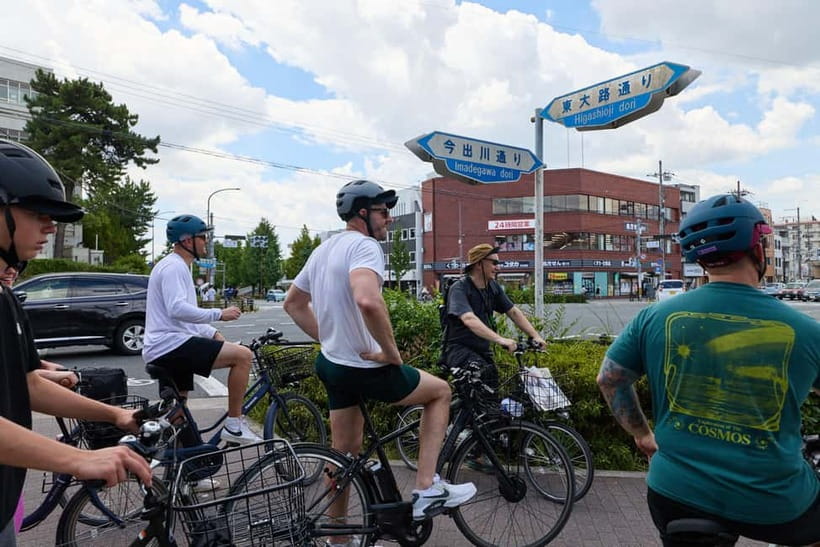
The Philosopher’s Path gives the ride a change of rhythm. The route follows a canal through a leafy part of eastern Kyoto, connecting temple areas and residential streets. It is a pleasant place to slow down, take pictures, and watch Kyoto’s quieter side unfold.
The path is especially popular during cherry blossom season, but the route’s appeal is not limited to spring. Its canal, trees, and low-key atmosphere make it a welcome pause after the larger shrine spaces. You may find pedestrians and other cyclists here, so this is not a place to race.
This stop lasts about 30 minutes. The guide may use the time to explain local history and point out details you would otherwise pass without noticing. Several guides have also taken photographs for the group at scenic points, a practical touch if you want pictures of yourself without handing your phone to a stranger.
Insect repellent is worth carrying. One rider specifically recommended it, and the greenery around the canal and temple areas can attract insects, particularly in warmer weather.
Shimogamo-jinja, a calmer shrine visit
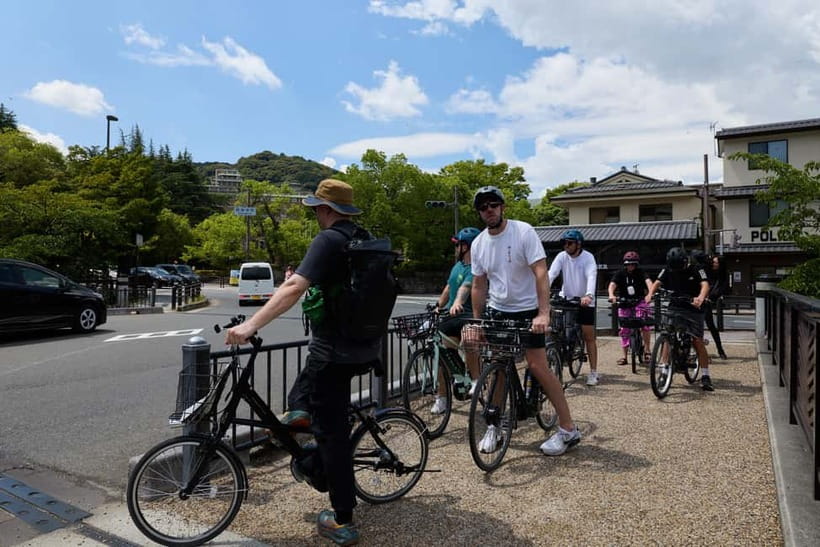
Shimogamo-jinja is scheduled for 20 minutes and gives you a different shrine experience from Heian. Its setting feels more wooded and enclosed, with a calmer mood than the wide approach at Heian Shrine.
The shorter stop works well as part of a moving tour. You can enter, look around, hear the guide’s explanation, and get a sense of the site without trying to absorb every detail. Guides have been praised for discussing religious traditions in a way that connects the buildings with everyday Japanese customs.
This is also a good point to appreciate the route design. The tour is not simply a checklist of the biggest names in Kyoto. It links well-known places with quieter spaces, so you get a broader picture of the city than you would from a single temple district.
If your priority is extensive time at each shrine, this may feel brisk. If you want variety and a chance to see several different parts of Kyoto in one morning, the 20-minute visit is a sensible tradeoff.
Kyoto Imperial Palace and the return through the city
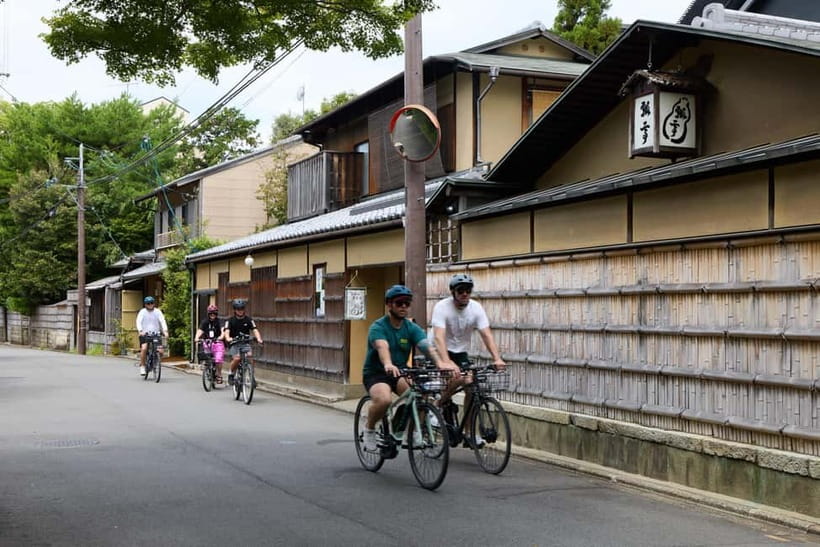
The final major stop is Kyoto Imperial Palace, with about 30 minutes to explore. The palace grounds offer broad paths and a sense of the city’s former political importance. After the narrower lanes and shaded temple areas, the open space provides a clear contrast.
Your guide can help you understand why the palace matters and point out features that may otherwise look like a series of gates, walls, and formal buildings. The stop also gives you another chance to take photographs before the ride returns to Gion.
The itinerary covers a lot in four hours: Gion, eastern Kyoto, a canal path, a southern or central shrine area, and the Imperial Palace. That range is the tour’s main strength, but it also means you should not expect a slow, detailed visit at every stop.
After the palace, you ride back to Kyoto Tourist Lounge Gion. The return point is useful if you are staying near central Kyoto or want to continue exploring Gion afterward. The guide may also offer suggestions about when to visit crowded attractions, which can help you plan the rest of your stay.
The guides make the difference
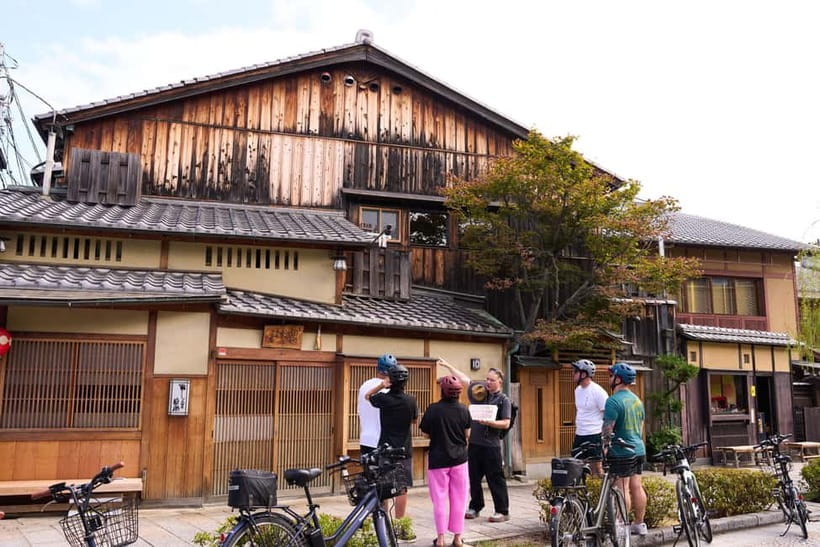
The guide names connected with this tour include Ben, Yuki, Kenji, and Yukio. Their reported strengths vary slightly, but the pattern is clear: careful riding, local pride, cultural explanations, patience, and a willingness to answer questions.
Ben appears particularly suited to riders who want plenty of historical detail without a long lecture. He has also been praised for taking photos, checking that people are keeping up, and offering practical advice about avoiding peak crowds.
Yuki brings a strong local connection to the route. He is from Kyoto and has been described as friendly, proud of his home city, and good at finding peaceful places away from the main tourist flow. Yukio has also been praised for clear English and for guiding safely through narrow streets.
Kenji is worth noting if your group has mixed cycling ability or a specific interest in Kyoto. He has been described as adjusting the outing to the group’s skill level and interests.
The exact guide is not guaranteed, so book this for the route and format rather than for one named person. Still, the guide quality is central to the experience. Without good explanations and careful navigation, an e-bike ride can become just transportation between sights.
Price, pace, and what you receive for $87
At $87 per person, this is not the cheapest way to see Kyoto, especially if your main goal is simply to reach famous landmarks. You could visit many sites independently for less by using buses and walking.
The value comes from combining several services in four hours: an e-bike, a local English-speaking guide, route planning, safety leadership, cultural explanation, and access to quieter parts of the city. You also avoid spending time working out which buses connect the eastern temples with the Imperial Palace.
For a first visit, I think the price is reasonable if you want orientation and variety. You see where different districts sit in relation to one another, then you can return to the places that deserve more time. A rider with only a short stay in Kyoto may find this particularly useful.
The value is weaker if you dislike cycling, want long temple visits, or already know Kyoto’s streets well. The tour is about movement and connections, not a deep examination of one site.
The four-hour duration fits neatly into a morning or afternoon. Check the available starting times when you book, since the exact departure schedule can change.
Who should book this ride?
I would choose this for adults, older children over the stated age limit, couples, friends, and solo visitors who want to see a lot without joining a large coach group. It also suits people who have already visited the main tourist sights and want a quieter view of Kyoto.
It is a smart first activity because it gives you a citywide sense of place. You learn which areas appeal to you, gather ideas for later visits, and receive practical guidance from someone who knows the streets.
I would be more cautious if you are not comfortable on a bicycle, have mobility concerns that make mounting an e-bike difficult, or want a completely relaxed sightseeing experience. The tour is described as suitable for a leisurely or more adventurous ride, but you still pedal through city streets and must follow the guide.
The height rule is firm: riders must be over 145 centimeters. Children under 10 and babies under 1 year are not suitable. Alcohol and drugs are not allowed, and insurance is not included.
Final call: book it for access, not just transport
Book this Kyoto e-bike tour if you want a compact introduction to the city that mixes famous places with quiet corners, and if you value a guide who can explain what you are seeing. The motor assistance, eight-person limit, and strong focus on safety make it more approachable than a standard bicycle tour.
I would especially recommend it for your first day in Kyoto, when the route can help you get your bearings fast. Just confirm the meeting point, bring insect repellent, wear clothes suited to cycling, and understand that each stop offers a snapshot rather than a full temple visit.
Skip it if you prefer to explore slowly on foot or if cycling in traffic makes you uneasy. For everyone else, $87 buys more than a bike rental. It buys a well-planned way to connect several parts of Kyoto while letting a local guide handle the route and add the meaning.
FAQ
How long is the Kyoto e-bike tour?
The tour lasts four hours, with visits to Gion, Nanzenji Temple, Heian Shrine, the Philosopher’s Path, Shimogamo-jinja Shrine, and Kyoto Imperial Palace.
Where does the tour meet?
The guide waits in front of Kyoto Tourist Lounge Gion on Yamatooji Dori Street. You should check the exact position on Google Maps because the signage at the meeting point may be limited.
What language is the tour conducted in?
The live tour guide speaks English.
How many people are in the group?
The group is limited to eight participants, allowing for a more personal pace and easier communication with the guide.
Is the tour suitable for children?
Riders must be over 145 centimeters tall. Children under 10 years and babies under 1 year are not suitable for this activity.
Is insurance included?
No. Insurance is not included in the tour price.
Newest Kyoto experiences on the site
- Treasures of Kyoto: Gion & historical Walking Tour★ 5.0 · 6 reviews
- Whisk Your Own Matcha: A Zen Matcha Experience at Temple★ 3.6 · 7 reviews
- Uji: Private immersion into Kyoto’s tea and reglious culture★ 5.0 · 17 reviews
- Kyoto tea town for matcha lovers★ 5.0 · 16 reviews
- Kyoto Matcha Green Tea Tour★ 4.5 · 23 reviews
- Uji and Wazuka Matcha Farm Half Day Private Guided Tour★ 5.0 · 21 reviews
- Utilising upcycled Matcha! Creating matcha incense (Uji, Kyoto)★ 5.0 · 6 reviews
- Sacred Temple Yoga Experience in Japan★ 5.0 · 3 reviews
Kyoto Temple Tours, compared.
Arashiyama Bamboo, Temple, Monkeys, or Secret Sake Brewery
Read our review →
Arashiyama Bamboo Forest, Monkeys, Matcha & Temple Tour
Read our review →
Kyoto Zen Meditation & Garden Tour at a Zen Temple with Lunch
Read our review →

Arashiyama Bamboo, Temple, Matcha, Monkeys & secret spots
Read our review →
Calligraphy class at Buddhist temple in city center
Read our review →Browse the lists this tour appears in