
Reviewed · GION DISTRICT TOURS
Kyoto: Gion Walking Tour
Gion is not just a place to chase a glimpse of a geisha. This 3.3-kilometer walk connects Pontocho, Gion-Kobu, Gion-Higashi, and Yasaka Shrine, giving you a clearer picture of how Kyoto’s old entertainment districts fit into the wider city.
I like the six-person limit, which keeps the walk personal and makes it easy to ask questions. I also like the guides’ practical storytelling. Jose and Saskia use photos, maps, anecdotes, and their own lives in Japan to explain details you could easily miss alone.
The main catch is that Hanamikoji-Dori is not included, and a Maiko or Geiko sighting is never promised. The route is also a steady two-hour walk, so comfortable shoes and water matter.
Key points at a glance
- Three hanamachi in one walk: See Pontocho, Gion-Kobu, and Gion-Higashi rather than only the best-known Gion streets.
- Small groups capped at six: You can hear the guide and ask about the details that interest you.
- Jose and Saskia bring local context: Their talks combine Kyoto history, Japanese customs, Maiko and Geiko life, and personal experience in Japan.
- Yasaka Shrine connects the district to its name: If time allows, the guide explains the former Gion Shrine and the Gion Festival.
- A useful first Kyoto walk: The route helps you understand places you may otherwise pass without noticing.
- Know what is not included: Hanamikoji-Dori is excluded, and a Maiko or Geiko sighting is not guaranteed.
Why this Gion walk feels different
Many first-time visitors come to Gion expecting one narrow street lined with wooden houses and hoping to spot a Geiko. This tour gives you a broader view. You walk through several historic neighborhoods and learn how the districts, shrines, bridges, theaters, and traditional buildings relate to one another.
I like that the guide does not treat Gion as a stage set. The conversation covers daily life in Japan, the routines and customs of Maiko and Geiko, the history of Kyoto, and small features of the streets themselves. Guides such as Jose and Saskia also answer general Japan questions, which makes the walk useful beyond Gion.
The six-person maximum matters here. Gion’s lanes can be narrow, and a large group would make it harder to stop without blocking the way. In a small group, you can hear explanations clearly and ask about anything from architecture to Japanese social customs.
The tour has earned a perfect 5 rating from 195 reviews, with especially strong praise for the guides’ energy, detail, flexibility, and ability to turn questions into part of the experience. That praise is consistent with the format: this is less a set speech and more a guided conversation with a route.
More ways to walk Gion:
- Kyoto Geisha Walking Tour: Gion District & Hidden Gems
★ 4.7 · 3,273 reviews - Kyoto: Gion Magical Night Walking Tour with Geisha Trivia
★ 4.9 · 2,393 reviews - Kyoto: Gion Geisha District Walking Tour – Stories of Geisha
★ 4.7 · 2,187 reviews
Starting at the Disney Store in central Kyoto
The meeting point is in front of the Disney Store at Kyoto Shijo-Kawaramachi. There is only one Disney Store in Kyoto, and the guide sits outside holding an iPad showing the GetYourGuide image and the tour name with the start time.
This is a practical meeting point in the middle of downtown, but you should still allow time to find it. The tour does not provide amenities, so arrive with water, sunscreen, and weather protection already sorted.
Available languages are English, Spanish, Dutch, and French. Saskia is a native Dutch speaker, which makes this a particularly useful option if you want to discuss Kyoto in Dutch. Jose and Saskia have also been praised for clear English, warm conversation, and their ability to adapt explanations to the group.
The usual walk lasts two hours. The morning and midday departures at 9:45 and 12:30 may include a free visit to the Gion Gallery if you want to extend the experience. That extra visit is optional, so ask the guide about it at the start.
Pontocho Alley and the Kamogawa River
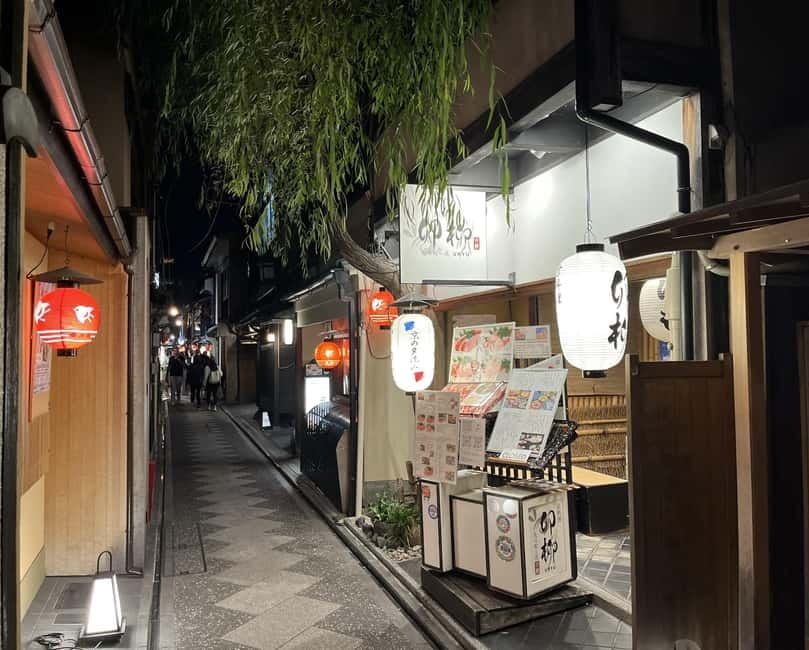
The route begins around Pontocho Alley, one of Kyoto’s best-known traditional entertainment areas. From here, the guide introduces the idea of a hanamachi, one of Kyoto’s districts associated with Geiko and Maiko arts and social life.
Pontocho is narrow and atmospheric, but the value of this stop comes from learning how to read the street. The guide points out details that may otherwise look like ordinary old buildings and explains the area’s place in Kyoto’s past.
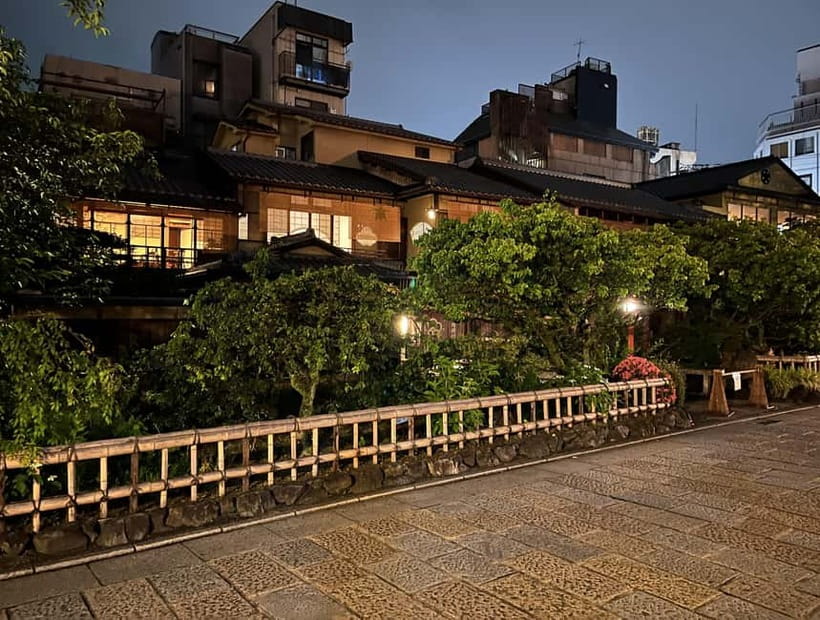
The itinerary includes Pontocho Kaburenjo, an important theater and performance venue connected to Pontocho’s traditional arts. You may also stop around the Kamogawa River, including the Yagi-san and Kita-san statues, before continuing toward Sanjo Ohashi.
The river and bridge sections help place the old districts in the wider city. Rather than seeing Gion as an isolated tourist quarter, you begin to understand how central Kyoto’s waterways, bridges, roads, and neighborhoods are to its story.
This part of the walk also gives you a chance to ask broad questions before the tour moves into the more intimate streets of Gion. If you are curious about Japanese festivals, traditional performance, or how old districts function today, this is a good time to speak up.
From Sanjo Ohashi to Gion-Kobu
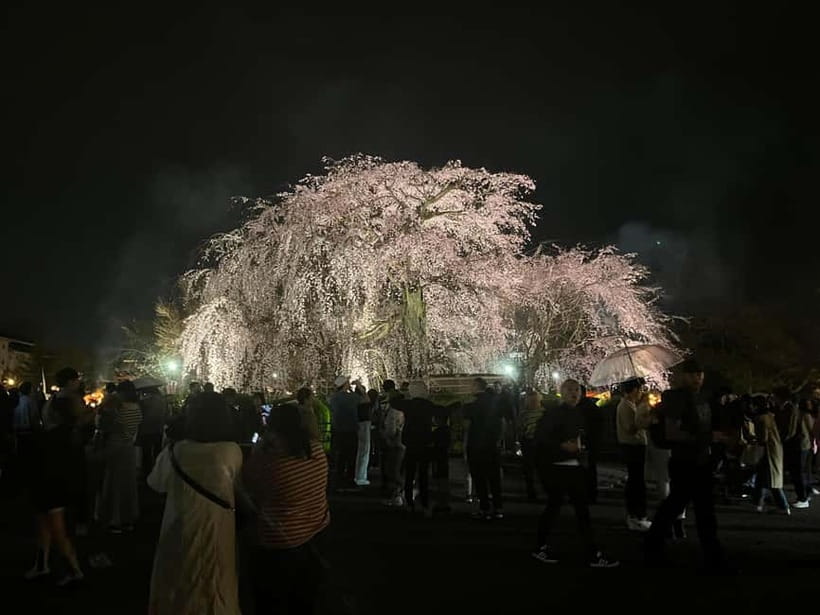
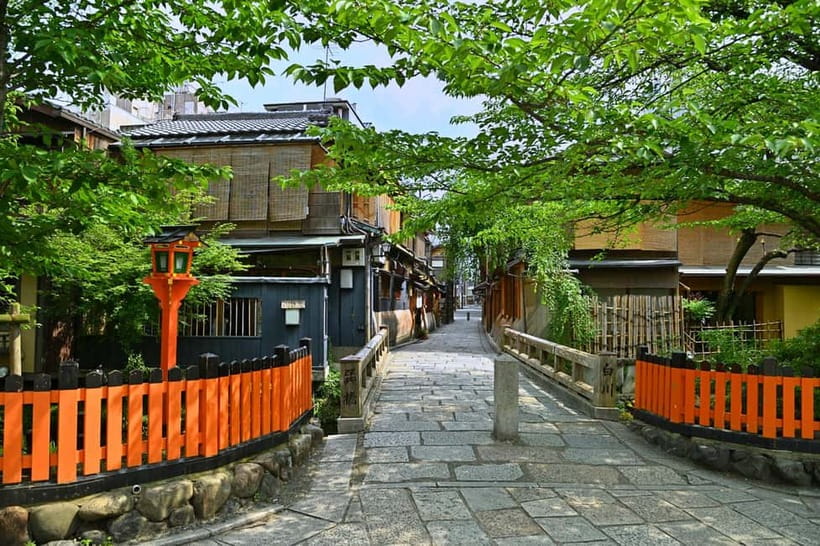
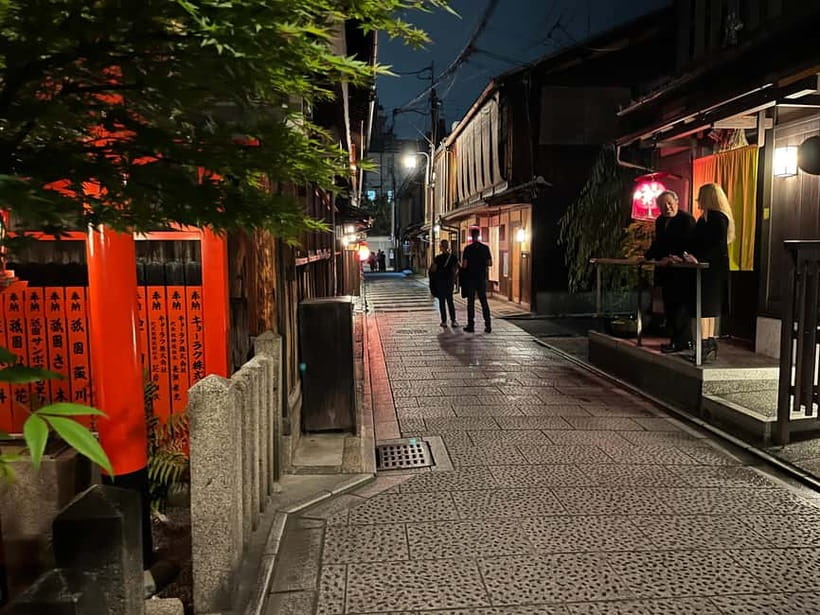
After Sanjo Ohashi, the route follows Yamato Dori toward Gion-Kobu. The walk then reaches Gion-Shinbashi Dori and Gion Shirakawa, a preserved area known for its traditional wooden buildings and quiet lanes.
Gion-Kobu is one of the key places to understand the difference between seeing a pretty street and understanding a working historic district. Your guide explains the hanamachi system, the lives of Maiko and Geiko, and the customs and routines that shape these neighborhoods.
The route also passes through a nationally preserved historic area. Here, the guide may point out the construction and appearance of Machiya houses, the traditional townhouses that give the district much of its character. I find this sort of explanation especially useful because you can look directly at a doorway, facade, or lane while learning what makes it important.
The guide’s visual material adds another layer. Jose has used maps, photos, and images showing how Kyoto has changed over time. That helps you connect the present-day street to earlier periods instead of treating the old buildings as decoration.
Gion Shirakawa can be especially attractive during cherry blossom season, usually around late March to early April. The route is adjusted then to show cherry blossoms around Gion, so the exact path may differ slightly from the standard walk.
More walking tours in Kyoto:
- Night Walk in Gion: Kyoto’s Geisha District
★ 4.5 · 2,003 reviews - Kyoto Gion Geisha District Walking Tour – The Stories of Geisha
★ 5.0 · 1,441 reviews - Nishiki Market Brunch Walking Tour (7 Tastings + Brunch)
★ 5.0 · 1,355 reviews - Kyoto Arashiyama Walking Tour: Bamboo, Monkeys, Gardens & Secrets
★ 5.0 · 1,216 reviews
Tatsumi Shrine, Tatsumi Bridge, and Gion-Higashi
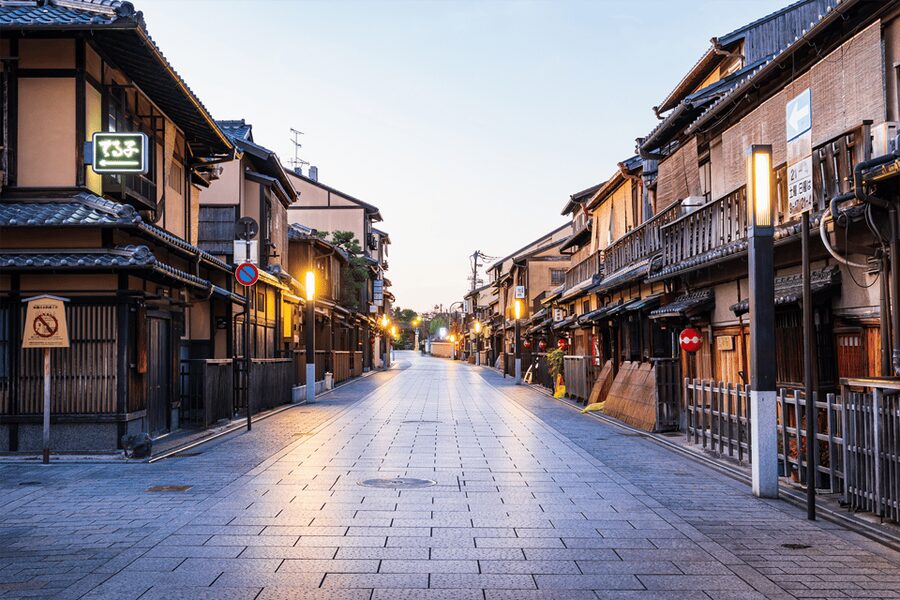
The walk continues to Tatsumi Shrine and Tatsumi Bridge before heading into Gion-Higashi. These smaller stops are part of what makes the route more useful than simply following the most famous photo locations.
At Tatsumi Shrine and the nearby bridge, you can ask about local worship, street layout, and the relationship between shrines and neighborhood life. The tour is not limited to one subject, so the guide can shift from architecture to customs, history, or modern Japan depending on what catches your attention.
Gion-Higashi gives you another look at Kyoto’s hanamachi districts. Seeing three of the city’s five hanamachi in one walk gives you a better sense of variety. The point is not to rank them, but to notice how each area has its own setting and feel.
This portion can also help correct common misunderstandings about Geiko and Maiko. The guide explains their training, work, public appearances, and daily routines rather than reducing them to costumes and photographs.
You should keep your expectations sensible. A Maiko or Geiko sighting cannot be guaranteed, and the tour is not built around pursuing one. The guides emphasize respectful observation, while the main experience remains the explanation of the district itself.
Yasaka Shrine and the origin of Gion
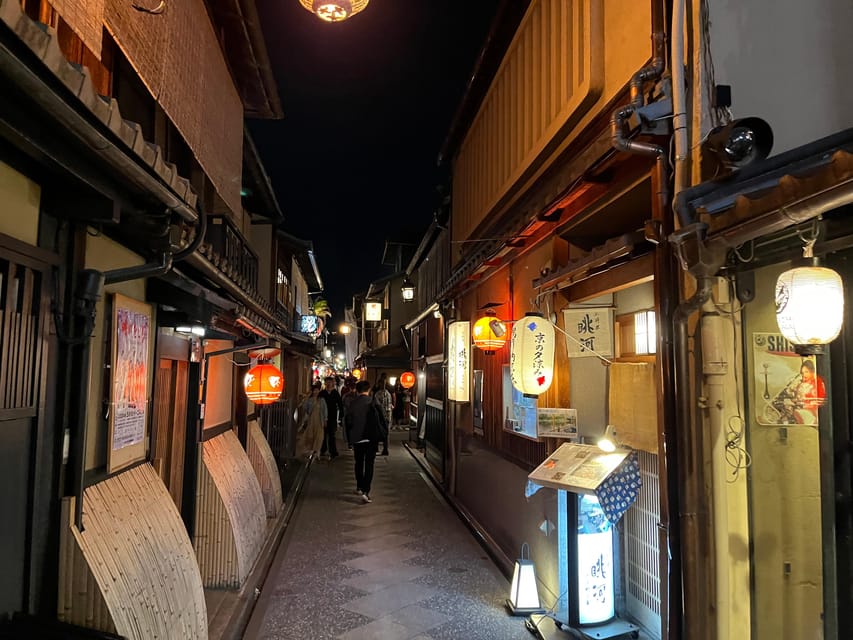
The final major stop is Yasaka Shrine, formerly called Gion Shrine. The district’s name is tied to the shrine, whose origins go back more than 1,100 years.
If time allows, the guide explains the Gion Festival, one of Japan’s three most famous and important festivals. This is a valuable connection because it shows how the shrine, the neighborhood, and Kyoto’s calendar are linked.
Yasaka Shrine also gives the walk a strong closing point. You have moved from narrow entertainment streets and river crossings to one of Kyoto’s major religious sites. The shift helps you see that Gion is not only about Geiko and old houses. It is also part of the city’s spiritual and civic life.
An evening tour can make the shrine feel particularly atmospheric, although the basic tour information does not promise a specific lighting or nighttime program. Choose your departure time based on the kind of walk you want, and check the available start times when booking.
What the guide adds to the streets
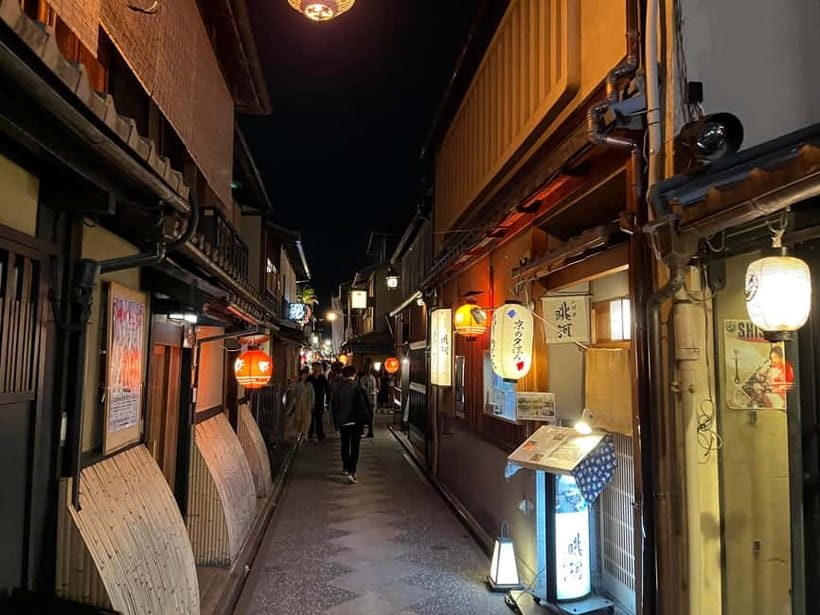
The strongest part of this experience is the guide-led interpretation. Gion is easy to walk through and surprisingly easy to misunderstand. You can see a wooden facade without knowing why it matters, pass a shrine without knowing its connection to the district, or confuse Maiko and Geiko without realizing how different their roles are.
Jose is frequently praised for his warmth, humor, preparation, and love of Kyoto. Saskia receives similar praise for her clear explanations, enthusiasm, and ability to answer repeated questions without making the conversation feel rushed.
The guides also bring personal experience of living in Japan. That does not replace local history, but it gives you a practical way to ask about everyday life, customs, food, language, and the small surprises that arise during a stay.
I especially like the question-friendly setup. If you have already spent several days in Japan and have a list of things you still do not understand, this is a good place to ask. The guide can also adjust the focus to your interests, as long as the group and time allow.
How much walking is involved
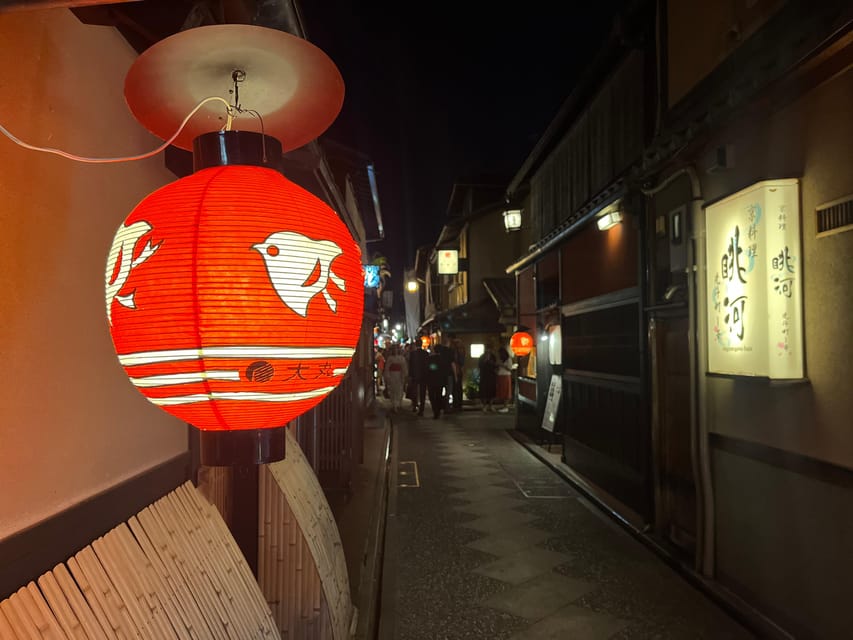
The route covers about 3.3 kilometers, or roughly two miles, over two hours. That is not a strenuous hike, but it is more than a short photo stop. You will be walking on city streets and stopping often for explanations.
The pace is generally described as sensible and manageable. The frequent stops help, since you are not walking continuously for two hours. Still, wear comfortable shoes. A sun hat, sunscreen, umbrella, and water are also sensible choices, especially in warm weather or during cherry blossom season.
The route may be less comfortable in rain, heat, or crowded periods. The small group helps with listening and movement, but it does not remove the normal challenges of central Kyoto streets.
There are no amenities included. Plan to use facilities before the tour or ask the guide about practical options along the way. The supplied information does not promise meals, drinks, entrance tickets, or transportation.
Is $35 a fair price?
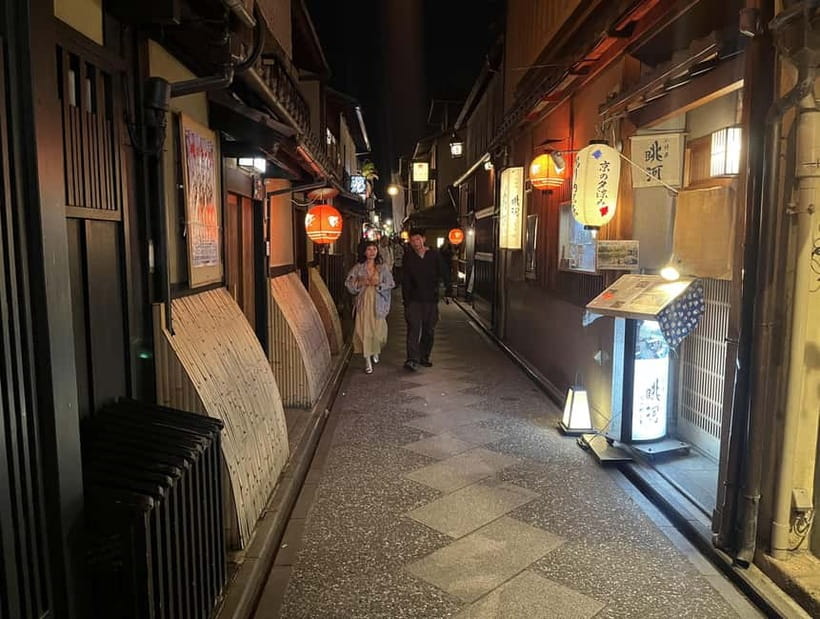
At $35 per person, this tour is priced as an affordable, guide-focused introduction to Gion. You are paying for two hours with a live guide, a small group of no more than six, and a carefully planned route through three hanamachi.
The value is strongest if you want context. If you only want to stroll through Gion and take photographs, you can do that without paying for a tour. If you want someone to explain why the streets look as they do, connect the shrine to the festival, and answer questions about Maiko and Geiko life, the price is easier to justify.
The small group also improves the value. A six-person limit means the guide can respond to individual interests, and you are less likely to spend the walk waiting for a large group to gather. Some departures may effectively feel private if few people book.
For a first visit to Kyoto, I consider this a sensible early-trip purchase. The information can help you understand later visits to Gion, Yasaka Shrine, Pontocho, and other traditional districts.
Who should book this walk?
I would choose this tour if you want:
- A clear introduction to Gion and Kyoto’s traditional districts
- A small group rather than a large flag-following crowd
- Plenty of time for questions
- More than a photo walk
- An explanation of Maiko and Geiko life without expecting a sighting
- A route that includes Pontocho, Gion-Kobu, Gion-Higashi, and Yasaka Shrine
- A guide who can also discuss general daily life in Japan
It is also a good fit for families and mixed-age groups, provided everyone can manage a two-hour city walk. One family described the guide as adapting the conversation to their interests, and another group with children found the format engaging and easy to follow.
I would look elsewhere if Hanamikoji-Dori is your main target, since it is not part of this route. I would also avoid booking solely for a Maiko or Geiko sighting, because none is promised.
Free cancellation is available up to 24 hours before the tour, and you can reserve now and pay later. That gives you some flexibility while planning a Kyoto schedule, though you should still check the available departure time before committing.
My verdict on the Gion Walking Tour
I like this tour because it treats Gion as a living part of Kyoto rather than a backdrop for a quick photograph. The route covers several districts, the guides explain small details, and the six-person limit gives you room to ask the questions that make a walk memorable.
The best reason to book is the guide’s role. Jose and Saskia bring energy, humor, maps, photos, personal stories, and a strong grasp of Kyoto’s past and present. That combination can change how you see streets you might otherwise walk past.
Book it if you want a friendly, detailed orientation to Gion and do not need a guaranteed Maiko sighting or a stop on Hanamikoji-Dori. At $35 for two hours, it is a good-value choice for understanding one of Kyoto’s most famous districts before exploring it on your own.
FAQ
How long is the Gion Walking Tour?
The tour lasts two hours and covers about 3.3 kilometers, or two miles.
How many people can join the tour?
The group is limited to six participants.
Which areas does the route visit?
The route includes Pontocho Alley, Pontocho Kaburenjo, the Kamogawa River, Sanjo Ohashi, Yamato Dori, Gion-Kobu, Gion-Shinbashi Dori, Gion Shirakawa, Tatsumi Shrine, Tatsumi Bridge, Gion-Higashi, and Yasaka Shrine.
Is Hanamikoji-Dori included?
No. Hanamikoji-Dori is not included in the itinerary.
Will I see a Maiko or Geiko?
A Maiko or Geiko sighting cannot be guaranteed.
What languages are available?
The tour is offered in English, Spanish, Dutch, and French.
Where is the meeting point?
Meet the guide in front of the Disney Store at Kyoto Shijo-Kawaramachi. The guide sits outside with an iPad showing the GetYourGuide image and the tour name with the start time.
What should I bring?
Bring comfortable shoes, a sun hat, an umbrella, sunscreen, and water.
Can I cancel the booking?
You can cancel up to 24 hours in advance for a full refund. Reserve now and pay later is also available.
Newest Kyoto experiences on the site
- Treasures of Kyoto: Gion & historical Walking Tour★ 5.0 · 6 reviews
- Whisk Your Own Matcha: A Zen Matcha Experience at Temple★ 3.6 · 7 reviews
- Kyoto tea town for matcha lovers★ 5.0 · 16 reviews
- Uji: Private immersion into Kyoto’s tea and reglious culture★ 5.0 · 17 reviews
- Kyoto Matcha Green Tea Tour★ 4.5 · 23 reviews
- Uji and Wazuka Matcha Farm Half Day Private Guided Tour★ 5.0 · 21 reviews
- Utilising upcycled Matcha! Creating matcha incense (Uji, Kyoto)★ 5.0 · 6 reviews
- Sacred Temple Yoga Experience in Japan★ 5.0 · 3 reviews
Gion District Tours, compared.
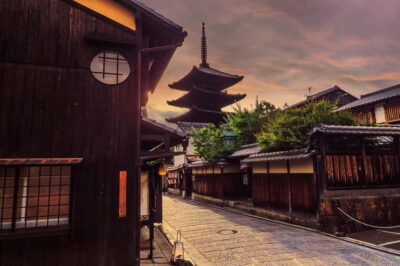
Kyoto Geisha Walking Tour: Gion District & Hidden Gems
Read our review →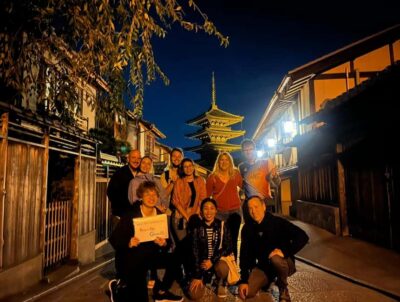
Gion Magical Night Walking Tour with Geisha Trivia
Read our review →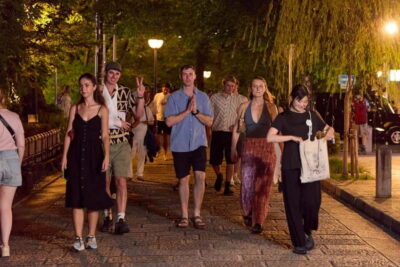
Gion Geisha District Walking Tour – Stories of Geisha
Read our review →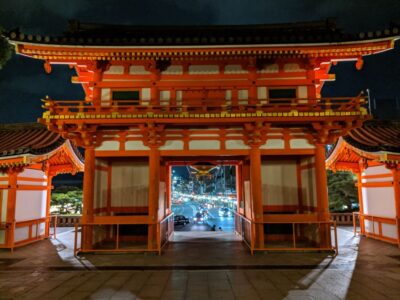
Best of Kyoto: Gion, Geisha, Pagodas & Cobblestones
Read our review →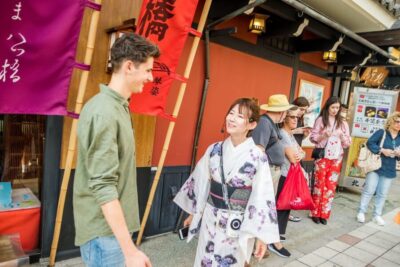
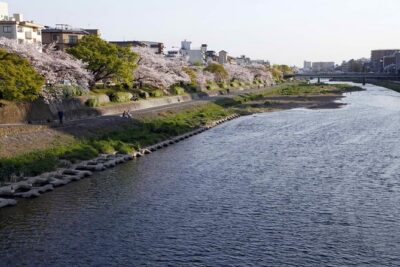
Kyoto Night Foodie Tour in Gion (9+ dishes + 6 Sake tastings)
Read our review →
Kyoto Gion Geisha District Walking Tour – The Stories of Geisha
Read our review →
Kyoto Gion: 2-Hour Geisha Culture & History Walking Tour
Read our review →Browse the lists this tour appears in