
Reviewed · GION DISTRICT TOURS
Kyoto: Gion Hidden Gems & Geisha Culture Tour
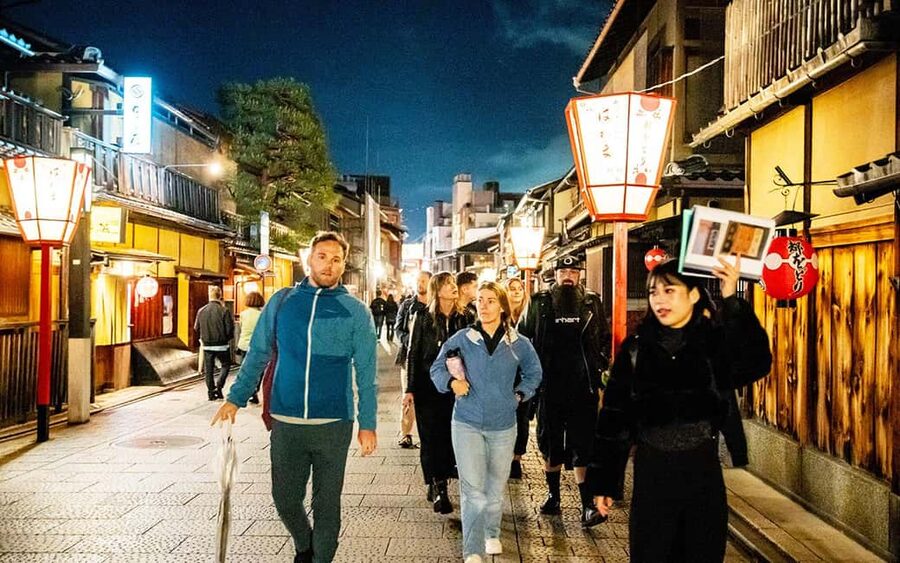
Gion’s magic appears in the spaces between its famous sights: a willow-lined canal, a quiet stone lane, a wooden townhouse, or a glimpse of a geisha hurrying to an appointment. This two-hour walk gives you that broader picture, with Gion Shirakawa and Hanamikoji Street anchoring the route.
I like the mix of major sights and less obvious corners, and I like the practical touch of local restaurant recommendations at the end. Guides such as Uta, Mai, Dan, Takumi, and Wajid have been praised for clear English and patient answers. The drawback is the pace: fitting this much into two hours means steady walking, and the route is not suitable for wheelchair users or people with mobility limits.
Key points at a glance
- Gion Shirakawa sets the mood: Willow trees, a canal, tea houses, and stone paths offer one of Kyoto’s prettiest introductions.
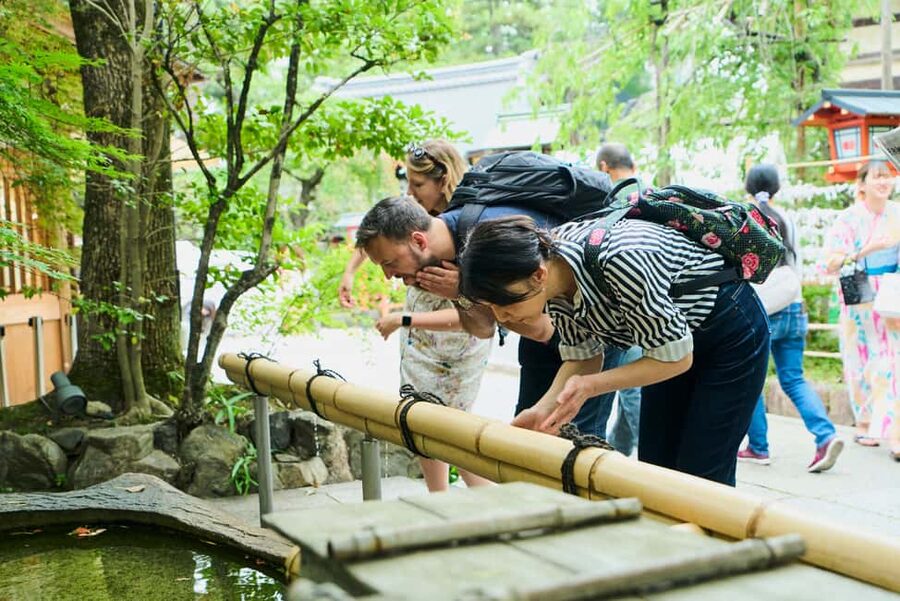
- Several important shrines fit into one walk: Tatsumi-jinja, Yasaka Shrine, and Yasui Kompira-Gu each add a different layer to the route.
- The geisha discussion is cultural, not theatrical: You learn about geiko and maiko training, dance, kimono, and hair styling.
- The route reaches Ninenzaka and Hōkan-ji: These classic Kyoto scenes can be crowded, but they are memorable.
- Evening departures have a special advantage: Streets may be quieter, and you might see a geisha or maiko heading to an engagement.
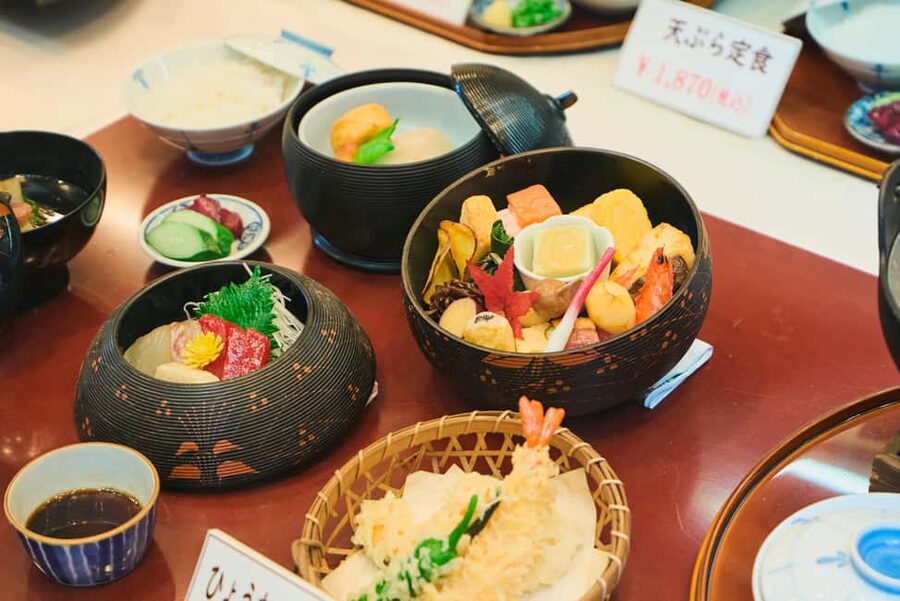
- You get useful local advice: Some guides provide restaurant suggestions, making the walk handy for your first evening in Kyoto.
Why this Gion walk works well as a first Kyoto outing
At $23 per person, this is an inexpensive way to get your bearings in one of Kyoto’s most atmospheric districts. You are not paying for a formal performance or a long temple visit. You are paying for a local guide who connects streets, shrines, customs, and architecture during a compact walk.
That distinction matters. Gion is easy to wander through, but its meaning is not always obvious from the outside. A closed teahouse, a painted wooden facade, or a woman in formal dress can raise plenty of questions. An English-speaking guide gives you context without requiring a full-day commitment.
I would consider booking this early in your Kyoto stay. It introduces the old eastern side of the city and can help you decide where to return for dinner, photography, or a slower walk. Several guides also offer food suggestions, which is useful when you finish hungry near Hanamikoji Street.
The 4.9 rating from 126 bookings reflects a consistent strength: the guides make the walk friendly and easy to follow. Names praised in the feedback include Uta, Mai, Dan, Takumi, Wajid, Alex, Kenta, Noa, and Oliver. The guide changes, so you should not book solely to meet one particular person, but the repeated praise for clear explanations and good pacing is encouraging.
More ways to walk Gion:
- Kyoto Geisha Walking Tour: Gion District & Hidden Gems
★ 4.7 · 3,273 reviews - Kyoto: Gion Magical Night Walking Tour with Geisha Trivia
★ 4.9 · 2,393 reviews - Kyoto: Gion Geisha District Walking Tour – Stories of Geisha
★ 4.7 · 2,187 reviews
Starting beside Shijo Bridge
The meeting point is the McDonald’s at Shijo Ohashi, at 105-1 Hashimoto-cho, Shimogyo-ku. Look for a guide holding a Local Guide Stars sign beside the restaurant. The front entrance can be crowded, so meeting at the side is important.
This is a practical starting point near the bridge and the Kamo River. It places you close to Gion’s main approaches, but you should arrive ready to walk rather than expecting a long orientation session. The tour lasts only two hours, and the schedule covers many stops.
Wear shoes that can handle stone paving and ordinary city walking. Bring water and sunscreen, even if the route feels shaded in places. For rain, bring an umbrella or raincoat because the tour continues in wet weather.
Gion Shirakawa and the willow-lined canal
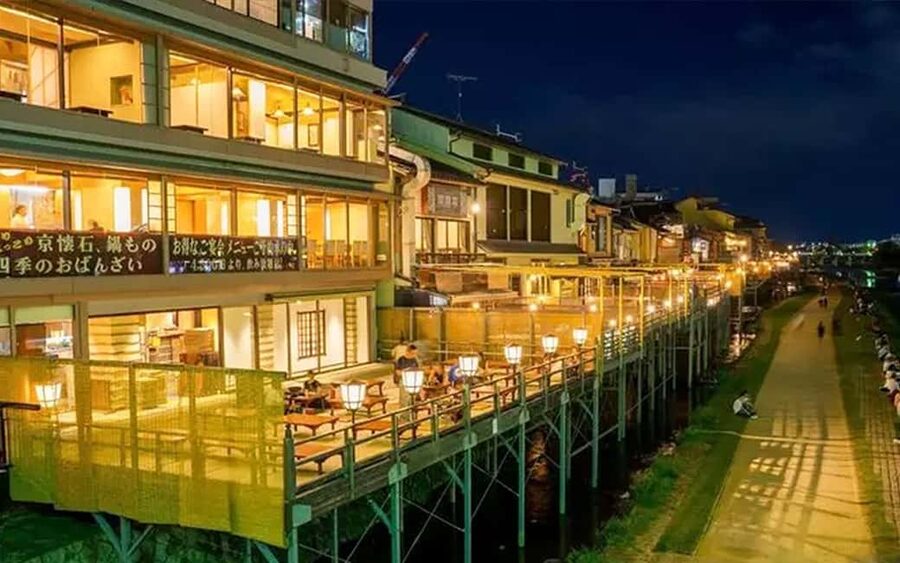
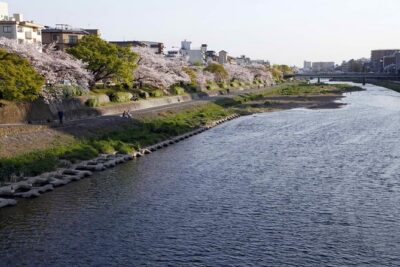
The first major scene is Shirakawa Canal, in the Gion Shirakawa area. Willow trees lean over the water, traditional tea houses line the route, and stone paths give the area a polished old-Kyoto appearance.
This is a good place for photographs, but it is also where the guide begins explaining how Gion functions. The beauty is not just decorative. The canal, narrow paths, wooden buildings, and tea houses create the setting for the district’s traditional entertainment culture.
You should expect a photo stop and a guided walk rather than a lengthy stay. The group keeps moving, which helps fit the rest of the route into two hours. If you want careful architectural photographs, you may need to return on your own later.
The area can be busy at popular times. An evening departure may feel calmer, particularly later in the day, though quiet is never guaranteed in one of Kyoto’s best-known districts. Keep your camera ready, but remember that the tour does not promise a geisha sighting.
Tatsumi-jinja and the smaller-scale side of Gion
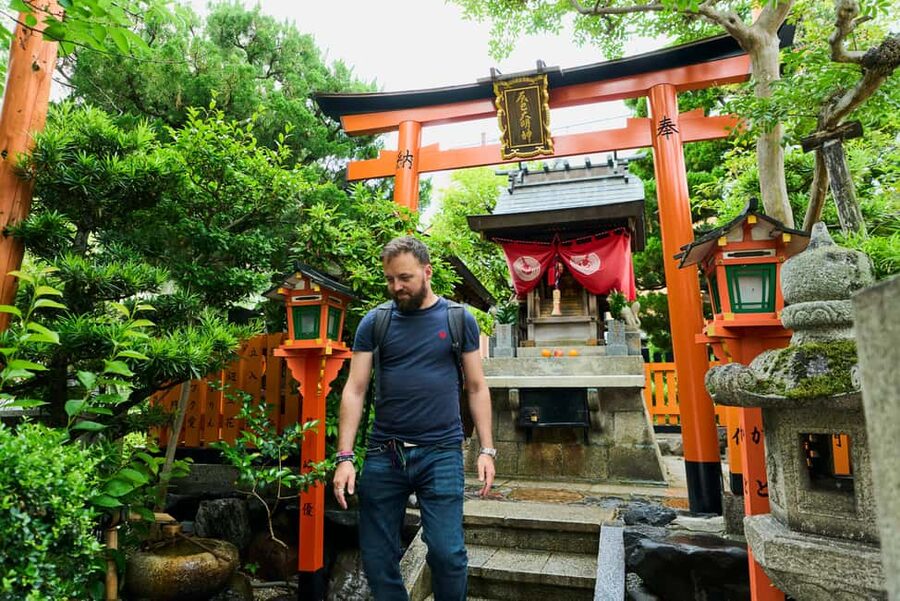
Tatsumi-jinja Shrine provides a more intimate stop after the canal. It is one of the places that can be easy to pass without understanding its place in Gion.
Here, the guide can slow the route down enough to explain shrine customs and the connection between sacred sites and the surrounding entertainment district. The value is in the setting and explanation together. You are not simply ticking off a shrine from a list.
This is also a useful reminder that Gion is not only about tea houses and dressed-up performers. Shrines, local streets, homes, and everyday movement share the same small area. That mixture gives the district its character.
More geisha and maiko evenings in Kyoto:
- Best of Kyoto: Gion, Geisha, Pagodas & Cobblestones
★ 4.9 · 2,058 reviews - Night Walk in Gion: Kyoto’s Geisha District
★ 4.5 · 2,003 reviews - Kyoto Gion Geisha District Walking Tour – The Stories of Geisha
★ 5.0 · 1,441 reviews - Kyoto Gion: 2-Hour Geisha Culture & History Walking Tour
★ 5.0 · 1,186 reviews
Yasaka Shrine, a major landmark on the route
Yasaka Shrine is one of the tour’s larger and more recognizable stops. It gives you a stronger sense of Kyoto’s public religious spaces after the quieter lanes around Shirakawa.
The guide provides a visit and photo opportunity, along with historical and cultural explanation. You may hear Japanese terms broken down in plain English, a detail that several participants especially appreciated from guides such as Wajid. That kind of explanation helps you remember what you are seeing instead of leaving you with a blur of unfamiliar names.
The shrine is an active place, not a museum set apart from city life. Be ready to show the usual respect at a religious site, follow your guide’s instructions, and avoid using flash photography inside temples. Photography is allowed, but flash is not permitted inside temple spaces.
Ninenzaka, old lanes, and Hōkan-ji’s famous view
The route then moves toward Ninenzaka and Hōkan-ji Temple. This section brings some of Kyoto’s most recognizable traditional streets into the walk.
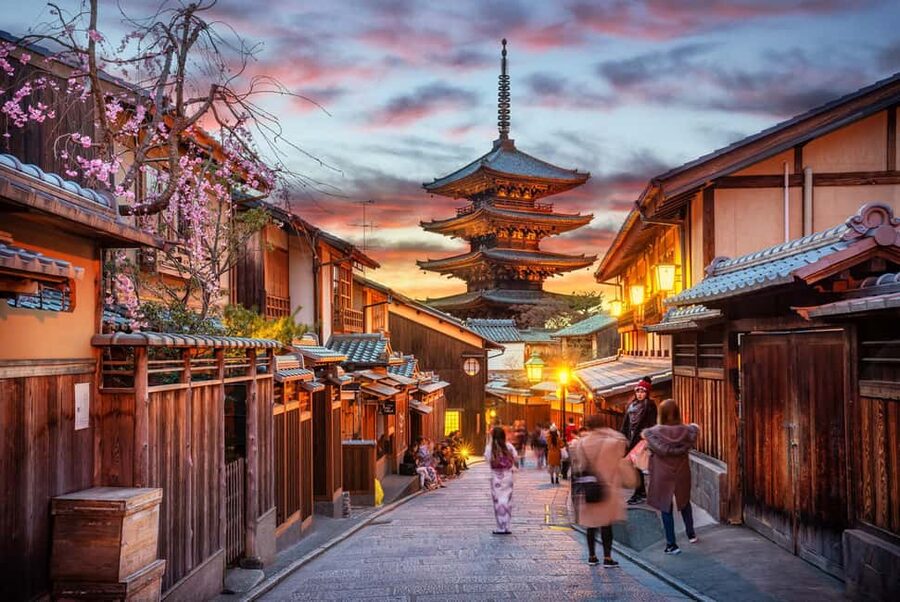
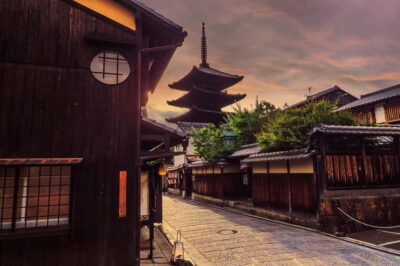
Ninenzaka is known for its sloping, stone-paved approach and old-style buildings. Edo-period wooden townhouses along the route show how Kyoto’s older streets once looked and still function. Their narrow fronts and timber construction make the walk feel very different from modern commercial streets.
Hōkan-ji is often identified by its tall pagoda, which makes a strong photograph from the surrounding lanes. The tour includes a guided visit or pass-by, depending on timing and access. Since the experience is a walking tour rather than a private temple admission program, do not expect a long interior visit at every stop.
This is one of the busiest parts of the route. That is the tradeoff for seeing classic Kyoto scenery. The guide helps you move through the crowds, but you may not have much time to browse shops or stop for snacks. If shopping in Ninenzaka matters to you, plan a separate visit.
Yasui Kompira-Gu and a different kind of shrine visit

Yasui Kompira-Gu Shrine adds variety to the itinerary. It is not simply another photo stop. The shrine is known for a large stone associated with cutting unwanted ties and forming better ones, making it a place with a distinct focus and visual feature.
Your guide can explain the meaning behind the site and its customs. This is exactly where a local explanation earns its keep. Without context, you might see an unusual stone and move on. With context, the stop becomes a memorable piece of Kyoto culture.
As with all sacred places, follow local etiquette and listen for instructions before taking photographs. The tour is designed to keep moving, so you may have only a short time here.
Hanamikoji Street and the world of geiko and maiko
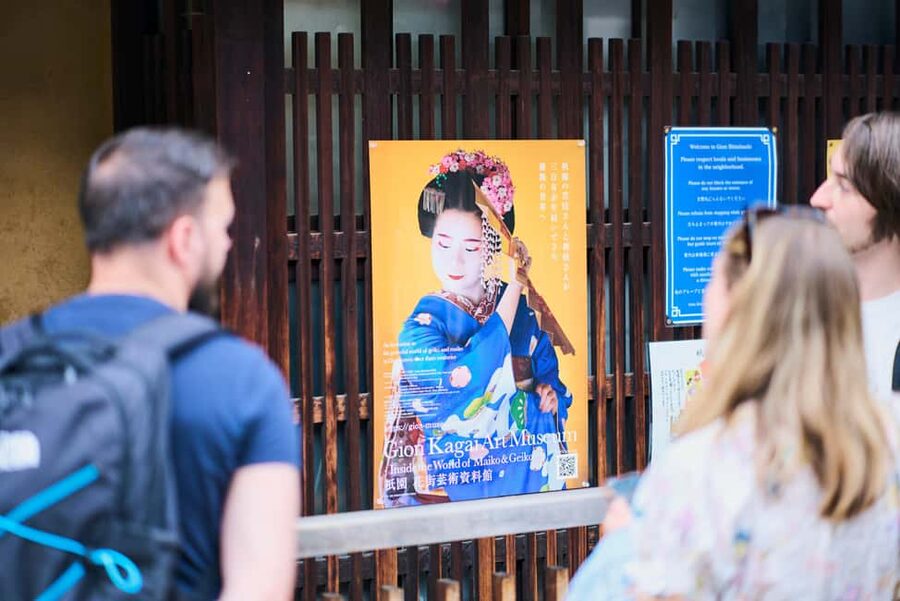
The walk ends on Hanamikoji-dori, the heart of Gion’s geisha district. This is where the tour’s cultural theme comes together.
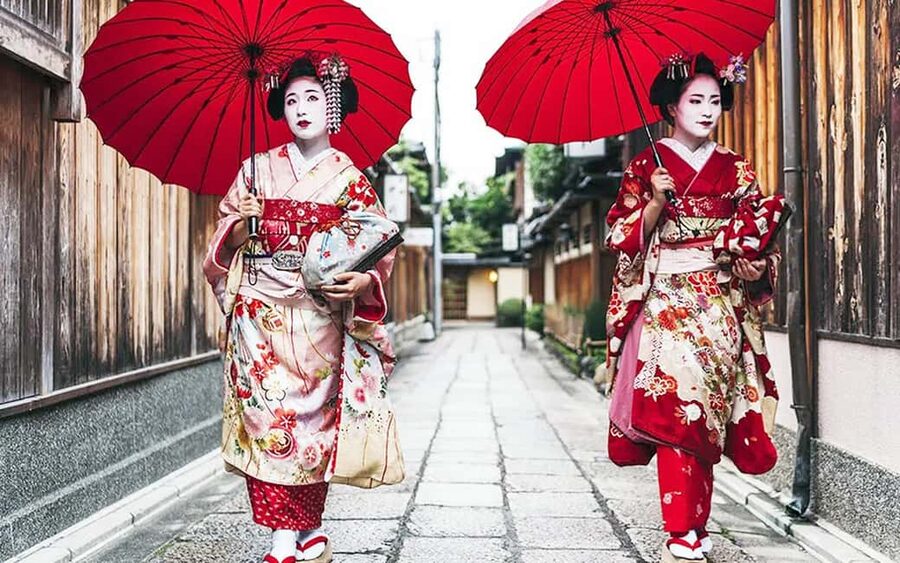
You learn about the demanding training of geiko and maiko, their formal dances, and the craftsmanship behind kimono and hairstyles. The explanation should help you see these performers as highly trained artists rather than as a simple sightseeing image.
The terms matter. Maiko are apprentice performers, while geiko are professional entertainers. The guide discusses the work, discipline, and traditions connected with both. You also learn why a formal appearance can involve so much detail, from fabric and color to hair styling and accessories.
You might see a geisha or maiko walking to an evening engagement, especially on a late afternoon or evening departure. A few participants saw one geisha, or both a geisha and a maiko, but this is luck, not a scheduled part of the tour. If you do see someone, keep your distance, do not block the lane, and avoid treating a person on the way to work like a staged attraction.
Flash photography is not allowed inside temples, and respectful behavior matters throughout Gion. This is a working neighborhood as well as a sightseeing area. Your guide can explain the culture, but you still need to act with restraint.
What the guides do best
The strongest part of this experience is the human explanation. The route itself is attractive, but you can walk through Gion without understanding much of what you see.
Guides including Uta, Mai, Dan, Takumi, Alex, Kenta, Noa, and Oliver have been praised for making history easy to follow and answering questions clearly. Uta, in particular, has been described as warm with families and good with children. That makes the tour a reasonable choice for parents with older children who can manage two hours of walking.
Several guides also adjust their pace and wait for the whole group to catch up before continuing an explanation. That is important on narrow streets, where it is easy for a group to stretch out. Still, one participant found the pace quick, and that is a fair warning. You need to be ready to walk and listen at the same time.
Group size can affect the experience. One account described a larger group that the guide still kept engaged, but a compact tour always feels easier at busy shrines and lanes. The operator and schedule do not promise a private group, so book this for the content and route rather than personal attention at every moment.
Price, timing, and the walking tradeoff
The $23 price is strong value if you want an introduction to Gion without committing to an expensive cultural dinner or private guide. You see multiple shrines, traditional streets, old townhouses, and the main geisha district in two hours.
The low price also tells you what this is not. It is not a slow photography walk, a full geisha performance, or a deep visit inside each temple. It is a brisk orientation with a live English-speaking guide.
Starting times vary, so check availability and consider how you want to use the rest of your day. A late afternoon slot can lead naturally into dinner, while an evening walk may offer cooler air, fewer people in some areas, and a more atmospheric view of Gion. Bad weather can reduce the pleasure of the walk, especially on slick stone paths, but the tour operates in rain.
Free cancellation is available up to 24 hours before the start time, and you can reserve while paying later. Those policies are helpful if your Kyoto plans are still shifting.
Who should book this walk
I would recommend it to first-time Kyoto visitors who want an efficient introduction to Gion and prefer explanations to wandering alone. It also suits you if you are curious about geisha culture but want a respectful overview rather than a staged show.
Families can book it if everyone is comfortable walking for two hours. The route includes uneven and sloping areas, so it is not suitable for wheelchair users or people with mobility impairments.
You should consider another option if you want extensive free time at each shrine, a private group, or guaranteed contact with a geisha. You should also allow extra time afterward if you hope to eat in the area, since the tour ends near restaurants but does not include a meal.
Should you book the Gion Hidden Gems and Geisha Culture Tour?
Yes, if you want a well-priced first look at Kyoto’s old eastern streets, with a guide who can explain what you are seeing. The combination of Shirakawa Canal, Yasaka Shrine, Ninenzaka, Hōkan-ji, Yasui Kompira-Gu, and Hanamikoji makes good use of two hours.
Book a later departure if you like the idea of quieter lanes and a chance, never a promise, of seeing a geisha or maiko on the way to work. Choose it early in your stay if local restaurant advice and a clear introduction to Gion would help shape the rest of your Kyoto visit.
Skip it if fast walking, crowds, rain, or uneven streets would spoil your day. For everyone else, $23 buys a useful route, cultural context, and a much better chance of understanding Gion than you would get by simply following the prettiest street.
FAQ
Where does the Gion tour meet?
Meet at the McDonald’s Shijo Ohashi store at 105-1 Hashimoto-cho, Shimogyo-ku, Kyoto-shi. The guide waits beside the restaurant with a Local Guide Stars sign because the front area can be crowded.
How long does the tour last?
The guided walk lasts two hours.
What language is the tour offered in?
The tour is conducted in English by a live local guide.
Will I definitely see a geisha?
No. You may catch a glimpse of a geisha or maiko heading to an evening engagement, but sightings are not guaranteed.
What should I bring?
Wear comfortable walking shoes and bring water and sunscreen. If rain is forecast, bring an umbrella or raincoat because the tour operates in wet weather.
Is photography allowed?
Yes, photography is allowed. Flash photography is not permitted inside temples.
Is the route suitable for wheelchair users?
No. The tour is not suitable for wheelchair users or people with mobility impairments.
Newest Kyoto experiences on the site
- Whisk Your Own Matcha: A Zen Matcha Experience at Temple★ 3.6 · 7 reviews
- Treasures of Kyoto: Gion & historical Walking Tour★ 5.0 · 6 reviews
- Kyoto tea town for matcha lovers★ 5.0 · 16 reviews
- Uji: Private immersion into Kyoto’s tea and reglious culture★ 5.0 · 17 reviews
- Kyoto Matcha Green Tea Tour★ 4.5 · 23 reviews
- Uji and Wazuka Matcha Farm Half Day Private Guided Tour★ 5.0 · 21 reviews
- Utilising upcycled Matcha! Creating matcha incense (Uji, Kyoto)★ 5.0 · 6 reviews
- Sacred Temple Yoga Experience in Japan★ 5.0 · 3 reviews
Gion District Tours, compared.
Kyoto Geisha Walking Tour: Gion District & Hidden Gems
Read our review →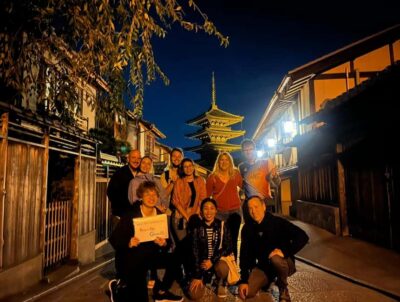
Gion Magical Night Walking Tour with Geisha Trivia
Read our review →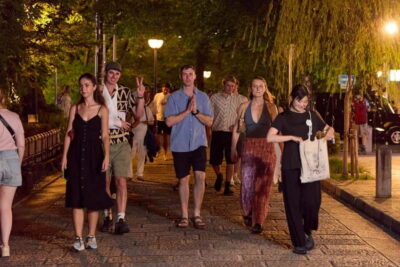
Gion Geisha District Walking Tour – Stories of Geisha
Read our review →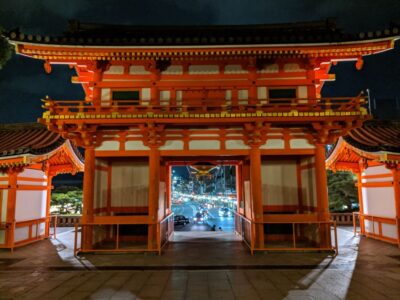
Best of Kyoto: Gion, Geisha, Pagodas & Cobblestones
Read our review →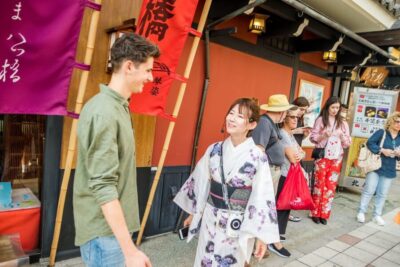
Kyoto Night Foodie Tour in Gion (9+ dishes + 6 Sake tastings)
Read our review →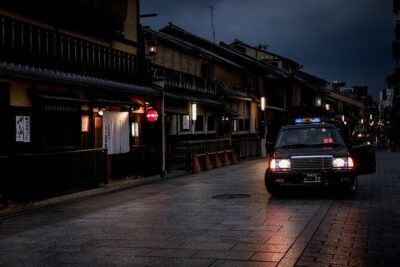
Kyoto Gion Geisha District Walking Tour – The Stories of Geisha
Read our review →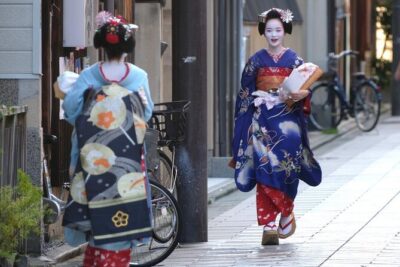
Kyoto Gion: 2-Hour Geisha Culture & History Walking Tour
Read our review →Browse the lists this tour appears in