
Reviewed · KYOTO TEA CEREMONIES
Private Tea Ceremony and Sake Tasting in Kyoto Samurai House
A private tea ceremony inside a 300-year-old samurai house gives this short Kyoto experience a setting most tea schools cannot match. You enter a family home near Kyoto Station, sit in a traditional tea room, and learn the quiet steps behind preparing and drinking Kyoto-grown Uji matcha.
I like two things right away: your group has the house to itself, and the hosts make the ritual hands-on rather than turning it into a performance you only watch. The chance to dress in a kimono or samurai clothing, then pose with a katana, adds a playful photographic side without replacing the ceremony.
The main drawback is the tight schedule. At about 50 minutes, the tea, photos, and alcohol tasting move along quickly. Kimono wear during the ceremony takes another 30 minutes and costs extra, and the experience requires at least two people.
Key points to know before booking
- A private samurai-family home: The property has remained with the same family for about 300 years and is only an eight-minute walk from Kyoto Station.
- High-grade Uji matcha: The tea is organic matcha sourced from Uji, the famous tea-producing area south of Kyoto.
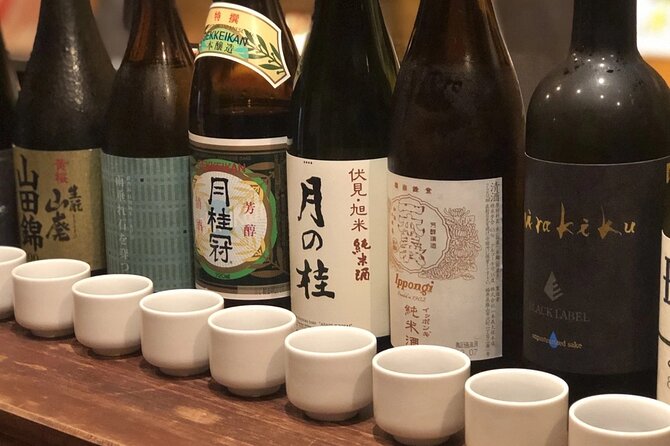
- Three tasting choices: Choose a matcha-whisking lesson, five sake shots, or two Japanese whisky shots. Alcohol is only for people over 20.
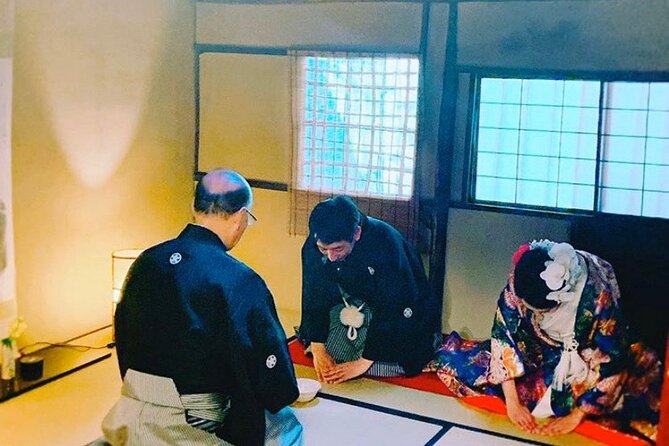
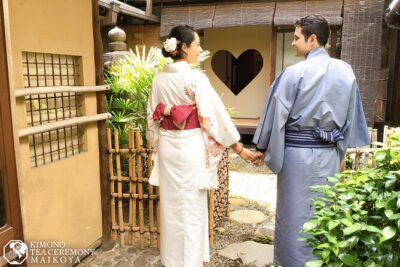
- Photos are part of the fun: You can wear a silk wedding kimono if you are a woman, or samurai clothing, and pose with a katana.
- A compact 50-minute visit: It fits neatly into a Kyoto day, but the short format leaves little room for lingering.
- Plan for the old toilet: The 300-year-old home has only one older restroom, so use the facilities before arriving if possible.
Entering a 300-year-old Kyoto samurai house
The location is practical. From Kyoto Station, you walk about eight minutes to Kyoto Samurai House at 384 Mongakucho, in Shimogyo Ward. That makes this an easy addition before a train, after arriving in Kyoto, or between sightseeing stops around the station and central Kyoto.
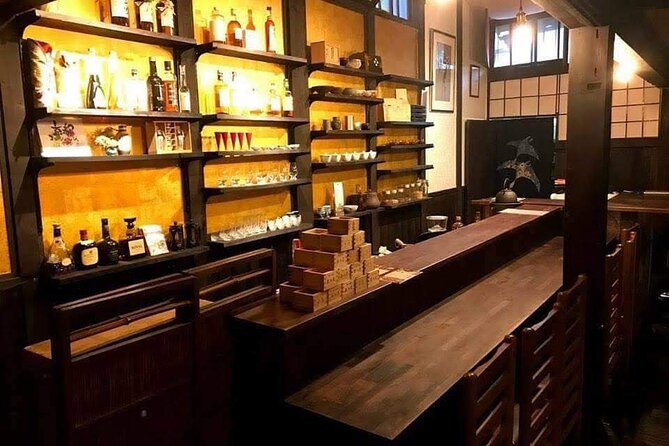
The setting matters. This is not a modern cultural center built to imitate an old house. It is a historic residence that has remained in the same family for generations, with family ties to samurai. The house gives the tea ceremony a sense of place before anyone explains a single tea utensil.
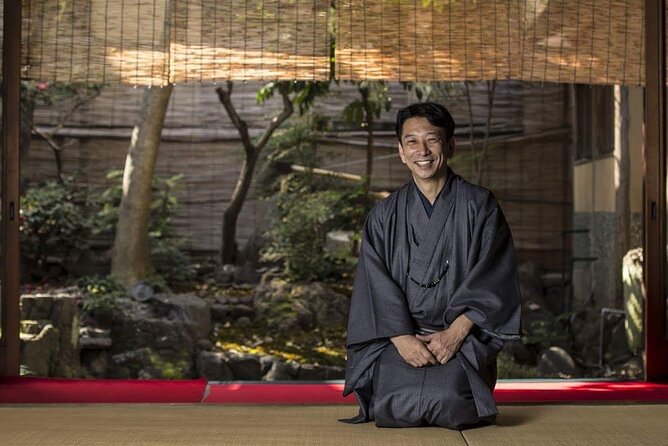
Expect an intimate visit rather than a large group lesson. Only your party participates, so you can ask questions without raising your voice or waiting for a dozen other people to finish. Several accounts describe the hosts as warm and welcoming, with strong English, and the tea master as a patient teacher.
That private format is especially useful if you are new to Japanese customs. You can ask how to hold the bowl, how to receive the tea, or why each movement matters. The hosts can also adjust the pace for a family or a couple instead of treating everyone like a seat number.
The house is old, and that brings one clear practical issue. There is only one old restroom. I would use a station restroom before walking over, especially if you are visiting with children or have limited mobility.
More tea ceremonies in Kyoto:
- Kyoto: Tea Ceremony in a Traditional Tea House in Kiyomizu
★ 4.9 · 3,519 reviews - Kyoto: Tea Ceremony Ju-An at Jotokuji Temple
★ 4.9 · 3,207 reviews - Kyoto: 45-Minute Tea Ceremony Lesson Experience
★ 4.3 · 2,378 reviews
The tea room and the way of matcha
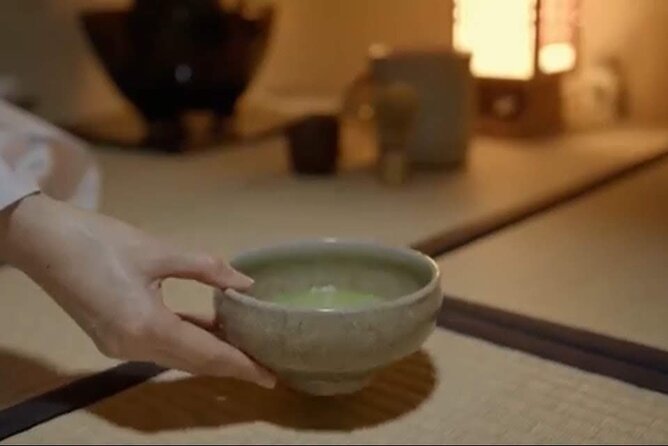
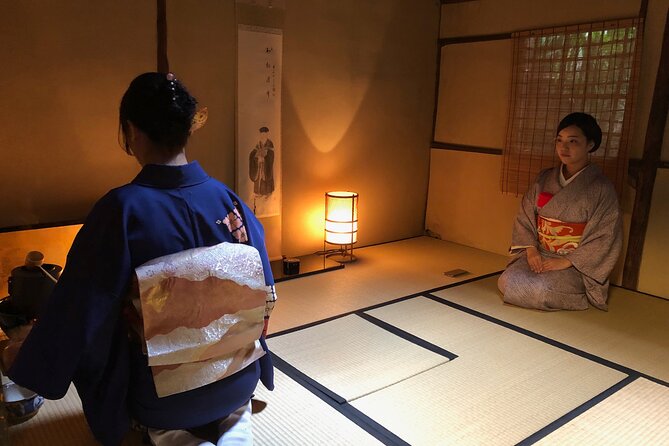
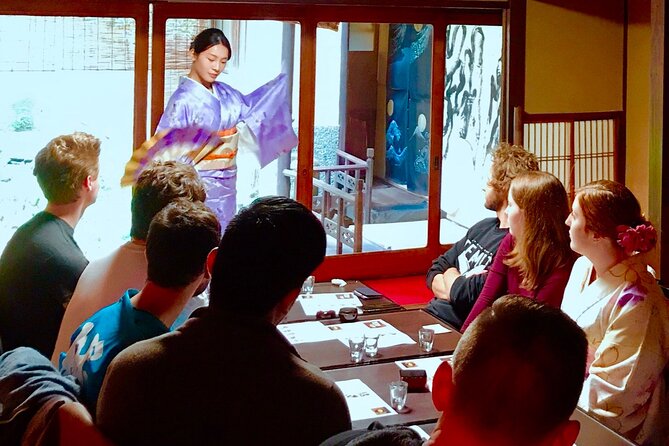
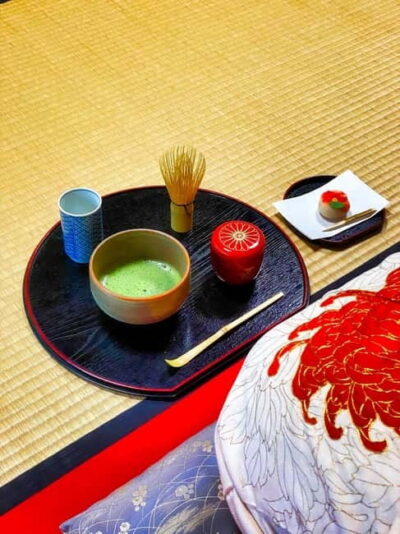
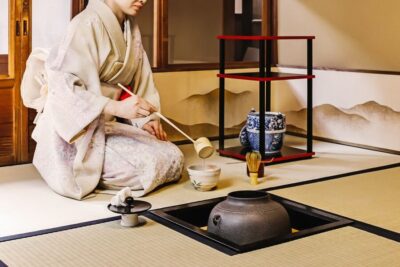
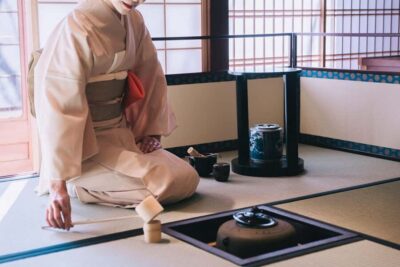
The central part of the visit takes place in a traditional tea room. The tea master explains the principles of the Japanese tea ceremony and shows you how matcha is prepared and enjoyed in a ceremonial way.
The value here is not simply drinking green tea. Matcha is powdered tea, and its preparation asks you to slow down and pay attention to the bowl, whisk, water, and gestures. The ritual gives you a small look at Cha-Do, the way of tea, where manners and quiet concentration are as important as flavor.
The matcha served here is high-grade organic tea from Uji in Kyoto. Uji is one of Japan’s best-known tea areas, so this is a more meaningful tasting than simply ordering a green drink in a café. You get to notice the texture and bitterness of properly whisked matcha, then understand why the bowl is handled with care.
The ceremony itself is presented as peaceful and thoughtful. That may appeal most to couples, parents with older children, and anyone looking for a calmer cultural activity between crowded temples and shopping streets. It is also a good choice if you want an introduction to tea ceremony without committing to a long formal session.
Keep your expectations sensible. In 50 minutes, you are receiving an introduction, not training for a tea school. You will learn the basic flow and the meaning behind it, but the time does not allow for an extended lesson in every utensil, school, or regional style.
Whisk your own Uji matcha
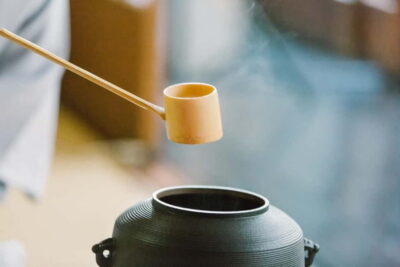
After the formal ceremony, you can choose to make your own matcha with a bamboo whisk. This is one of the best parts for families and hands-on learners because it turns the lesson into something you do with your own hands.
The whisking looks simple, but the movement takes practice. You will see how quickly the powder and water become a frothy drink, and you can compare your result with the tea master’s preparation. It is also a useful option for anyone who does not drink alcohol or is under 20.
For children, this choice keeps the visit focused on Japanese culture rather than making the sake tasting the main event. People under 20 receive the matcha-whisking lesson after the tea ceremony. The description also says that alcohol is only served to people over 20, so families should plan on the tea option for younger members.
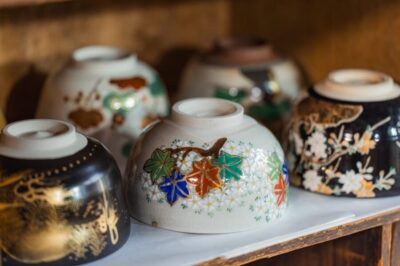
You can buy matcha bowls at the house if you want a physical reminder of the activity. That purchase is optional, of course, but it gives the lesson a practical afterlife. A bowl bought in the place where you learned to whisk matcha can be more meaningful than a generic souvenir from a station shop.
Sake or Japanese whisky after the ceremony
For people over 20, the next choice is either a sake tasting or a Japanese whisky tasting. The listed options are five sake shots or two whisky shots. You choose one of the three paths: matcha whisking, sake, or whisky.
The sake portion is explained rather than poured without context. You learn about different flavors and local styles while tasting several samples. The small servings make this a tasting, not a drinking session, but five shots can still add up. Eat beforehand, especially if you have more sightseeing afterward.
The Japanese whisky option is shorter, with two shots. Some sessions have included well-known bottles, including Yamazaki, but the exact whisky selection is not specified and should not be assumed. Choose this option if you are more interested in Japanese spirits than rice wine, and ask the host what is being served on the day.
I like the way the alcohol comes after the tea. The order lets the ceremony remain the calm heart of the visit, while the sake or whisky creates a more conversational finish. The host can explain flavors in a relaxed setting, and you can ask questions about what makes one sample different from another.
Alcohol is not the right choice for everyone. Under-20 participants receive matcha instruction instead, and anyone avoiding alcohol should simply select the whisking lesson. If you are booking for a mixed-age family, this is easy to arrange, but make the choice clear when you arrive.
More samurai experiences in Kyoto:
- Kyoto Samurai Experience
★ 5.0 · 1,294 reviews - Kyoto: Kendo and Samurai Experience with Uniform and Gear
★ 4.9 · 815 reviews - Kyoto: Samurai Sword Class by Experts in Traditional Arts
★ 4.9 · 657 reviews - Skip the lines Basic Ticket at SAMURAI NINJA MUSEUM KYOTO
★ 4.5 · 632 reviews
Kimono, samurai clothing, and katana photos
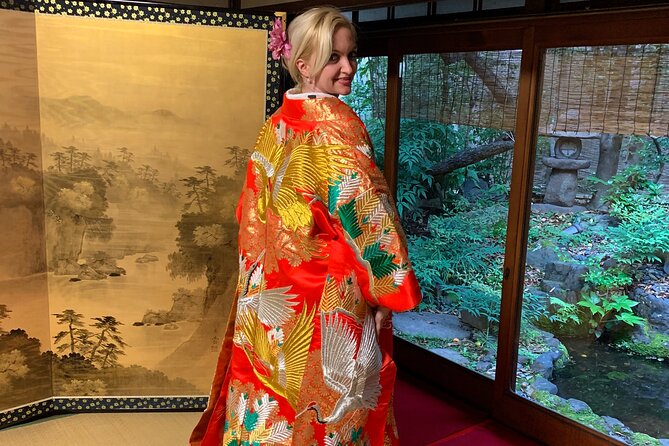
The dress-up portion is an unexpected bonus for many people. Women can wear an authentic silk wedding kimono, while other participants can pose in samurai clothing and hold a katana for photos. You are allowed to take pictures during the visit.
This is best understood as a short photo session, not a full-day kimono rental. You do not need to wear the clothing around Kyoto, which is useful if you want the image and the cultural experience without spending hours managing formal clothing on crowded streets.
The wedding kimono is for women only, according to the activity details. Men and other members of the group can use samurai outfits or haori-style clothing, as described in the visit. The exact clothing available may depend on the group and the day, so do not book expecting a specific costume unless the provider confirms it.
Wearing the clothing after the tea ceremony gives the visit a lighter second act. The tea room is quiet and formal; the sword poses are more playful. Families often enjoy this contrast, and children can take part in the photo moment. One family even received a toy umbrella shaped like a sword for the children, though extras like that should not be counted on.
If you want to wear a kimono during the ceremony itself, plan for an additional 30 minutes and an extra cost. That arrangement is limited to one group and is described as a special booking option through the provider’s own website. The standard experience is the safer choice if your schedule is tight.
How much value do you get for $99?
At $99 per person, this is not the cheapest way to drink matcha in Kyoto. You are paying for the private setting, the historic house, the tea master, the host’s explanations, the tasting choice, and the chance to use the costumes and house as a photo backdrop.
The price makes more sense for two or more people booking together. A private tea lesson in a family residence offers a different experience from a public ceremony where you sit with strangers and follow a fixed script. You also avoid spending half a day on transportation, since the house is close to Kyoto Station and the visit lasts about 50 minutes.
For a couple, the ceremony, photos, and sake or whisky tasting create a compact cultural date. For a family, the value depends on how many people will take part and whether everyone enjoys the tea lesson. Children can join, but only those over 20 can select alcohol, and the formal tea portion may hold their attention better if they enjoy hands-on activities.
The visit is also good value if you want one polished cultural stop rather than several separate bookings. You receive ceremony, instruction, costume photos, and a tasting in one place. The tradeoff is that each part is brief.
Who will enjoy this most?
I would recommend this for couples, small families, first-time visitors to Kyoto, and anyone who wants a personal introduction to tea ceremony. It is especially useful for people staying near Kyoto Station or fitting several activities into one busy day.
It also suits visitors who care about atmosphere. The old home, family connection, and traditional tea room give the visit more character than a lesson in a modern rented studio. If you like asking questions and talking with local hosts, the private format gives you room to do that.
Families should think about the age and patience of their children. The hosts have welcomed children and adapted the visit for them, but the tea ritual is quiet and deliberate. The samurai clothing and sword photos help balance that serious opening.
This may not suit someone looking for a long tea ceremony, a full kimono dressing service, or a broad sake education. It is a short introduction with several elements, not a half-day study session. People over 120 kilograms are advised not to book, so check this point before paying.
Timing, booking, and small practical cautions
The standard visit lasts about 50 minutes. Build in walking time from Kyoto Station, and do not book it so tightly against a train that a small delay creates stress.
A mobile ticket is available, and confirmation is received at booking. The minimum booking is two people, so solo visitors cannot reserve this experience alone under the stated rules. It is a private activity, meaning only your group takes part.
The activity is non-refundable and cannot be changed after booking. That is important because the short duration may tempt you to fit it between uncertain plans. Book only when your Kyoto schedule is firm.
The experience requires a minimum number of participants. If the provider cancels because that minimum is not met, you are offered another date or experience, or a full refund. That is different from canceling yourself, which does not qualify for a refund under the stated policy.
Should you book the Kyoto Samurai House tea ceremony?
Book it if you want a private, compact cultural experience with a memorable setting. The strongest reasons are the 300-year-old family home, the organic Uji matcha, the personal tea instruction, and the choice between matcha, sake, and whisky. The kimono and katana photos add a welcome bit of fun.
Skip it if you need a flexible booking, dislike short scheduled activities, or want a full kimono dressing session included in the base price. Also think twice if your group includes someone who cannot manage the old restroom or if you want a solo booking.
For most couples and small groups, $99 buys more than a cup of tea. It buys access to a private home, a calm lesson, a taste of Japanese hospitality, and a set of photographs you cannot get at a standard café. Keep your expectations focused on an introduction, and this is an easy Kyoto experience to add near the station.
FAQ
Where does the tea ceremony take place?
It takes place at Kyoto Samurai House, 384 Mongakucho, Shimogyo Ward, Kyoto, 600-8222, Japan. The house is about an eight-minute walk from Kyoto Station.
How long does the experience last?
The standard activity lasts approximately 50 minutes.
Is this a private activity?
Yes. Only your group participates in the activity.
What are the tasting choices?
You can choose a matcha-whisking lesson, a sake tasting with five shots, or a Japanese whisky tasting with two shots.
Can people under 20 drink sake or whisky?
No. Alcohol is provided only to people over 20. Participants under 20 receive a matcha-whisking lesson after the tea ceremony.
Can I wear a kimono during the tea ceremony?
You can request this option, but it takes an additional 30 minutes and costs extra. It is limited to one group and is offered as a special plan through the provider’s website. The wedding kimono is for women only.
Is the experience refundable if I cancel?
No. The experience is non-refundable and cannot be changed for any reason. If the provider cancels because the minimum number of participants is not met, you are offered another date or experience, or a full refund.
More Bars and Sake Stops in Kyoto
- Kyoto: Izakaya Bars Guided Walking Tour
★ 4.9 · 815 reviews - Kyoto Sake Brewery & Tasting Walking Tour
★ 5.0 · 623 reviews - Kyoto Bar Hopping Night Tour
★ 5.0 · 613 reviews - Kyoto Local Bar Crawl in Kawaramachi Area
★ 5.0 · 378 reviews
More Sake Tastings in Kyoto
- Kyoto Night Foodie Tour in Gion (9+ dishes + 6 Sake tastings)
★ 5.0 · 1,762 reviews - 3-Hour Kyoto Insider Sake Brewery Tour with Tastings & Pairings
★ 5.0 · 917 reviews - Arashiyama Bamboo, Temple, Monkeys, or Secret Sake Brewery
★ 4.8 · 886 reviews - Kyoto: Insider Sake Brewery Tour with Sake and Food Pairing
★ 5.0 · 704 reviews
Newest Kyoto experiences on the site
- Treasures of Kyoto: Gion & historical Walking Tour★ 5.0 · 6 reviews
- Whisk Your Own Matcha: A Zen Matcha Experience at Temple★ 3.6 · 7 reviews
- Kyoto tea town for matcha lovers★ 5.0 · 16 reviews
- Uji: Private immersion into Kyoto’s tea and reglious culture★ 5.0 · 17 reviews
- Kyoto Matcha Green Tea Tour★ 4.5 · 23 reviews
- Uji and Wazuka Matcha Farm Half Day Private Guided Tour★ 5.0 · 21 reviews
- Utilising upcycled Matcha! Creating matcha incense (Uji, Kyoto)★ 5.0 · 6 reviews
- Sacred Temple Yoga Experience in Japan★ 5.0 · 3 reviews
Kyoto Tea Ceremonies, compared.
Tea Ceremony in a Traditional Tea House in Kiyomizu
Read our review →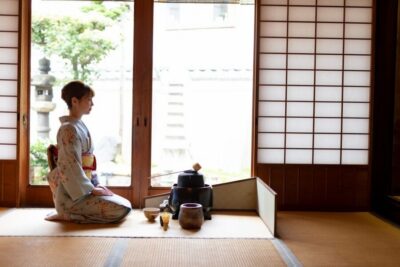
Tea Ceremony in 100-year-old Kyo-Machiya Townhouse
Read our review →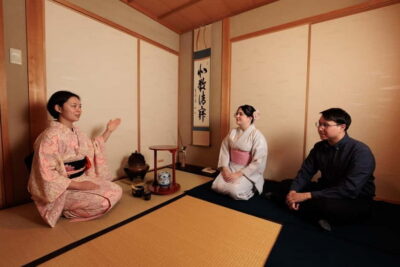
Browse the lists this tour appears in