
Reviewed · KYOTO SAMURAI EXPERIENCES
Kyoto Samurai Experience
The most unusual part of this Kyoto experience is the setting: you learn swordsmanship inside a traditional samurai house, not in a modern studio built for tourists. A master swordsman leads the practical work, while the session also covers Bushido, Zen meditation, historic clothing, tea, and the house itself.
I like the mix of hands-on practice and quiet cultural details. You do more than pose with a sword: you learn basic movements, wear a kimono, and take part in meditation. I also like the choice of morning or afternoon times, which makes this easier to fit around Kyoto sightseeing.
The main drawback is the price, $119.38 per person, and the location may feel out of the way. A group can reach 14 people, so the experience may feel less personal when the session is full. Comfortable clothes and suitable footwear matter because this is an active lesson.
Key points at a glance
- Historic samurai house: Learn in a traditional building that gives the lesson a stronger sense of place than a standard activity room.
- Sword practice with expert guidance: Handle a martial arts sword and learn basic techniques under a trained instructor.
- Kimono and meditation included: The session combines physical practice with clothing, Zen meditation, and samurai philosophy.
- About 1 hour 45 minutes: It fits neatly into a Kyoto day without taking over your schedule.
- Morning or afternoon choice: Pick the time that works best with temples, markets, and other plans.
- Small-group format: The maximum is 14 people, though a full session may feel less intimate than a smaller class.
What the Kyoto Samurai Experience actually gives you
Kyoto has no shortage of cultural activities. Some are mainly photo stops. This one asks you to pay attention, listen carefully, and take part.
The session lasts about 1 hour 45 minutes. You meet at Kyoto Samurai Experience, also listed as Waraku111, in Inabacho in Nakagyo Ward. The activity ends at the same place, so you do not need to arrange a second pickup point.
The central lesson covers samurai clothing, the Bushido idea of the Way of the Warrior, Zen meditation, and the handling of a martial arts sword. That combination gives the experience a useful rhythm. You begin with background and preparation, move into active practice, then slow down with meditation.
I would not book this expecting a full historical course on the samurai. You get an accessible introduction, with enough context to make the physical work meaningful. The strongest value comes from doing several connected activities in one session rather than simply hearing a talk.
More samurai experiences in Kyoto:
- Kyoto: Kendo and Samurai Experience with Uniform and Gear
★ 4.9 · 815 reviews - Kyoto: Samurai Sword Class by Experts in Traditional Arts
★ 4.9 · 657 reviews - Skip the lines Basic Ticket at SAMURAI NINJA MUSEUM KYOTO
★ 4.5 · 632 reviews
Entering the traditional samurai house
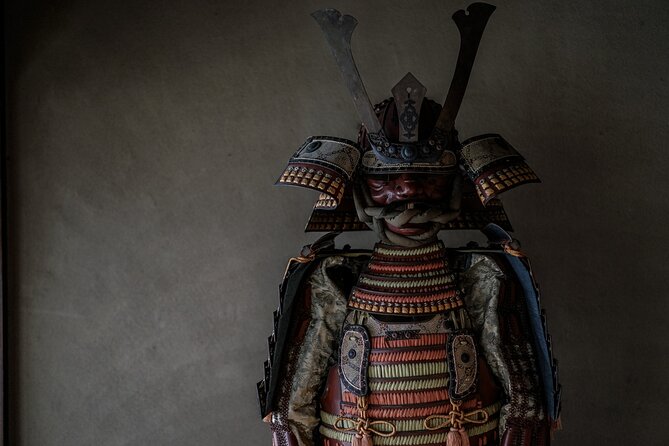
The building is a major part of the experience. A preserved samurai house gives you something a themed attraction cannot quite copy: the room, materials, and scale help you picture the setting in which the lesson takes place.
You learn about the house and its connection to samurai life before or during the practical portion. Several parts of the experience also bring in old objects and traditional culture, including historic swords, tea, a sweet, and an old drum. Some sessions have included a short performance on a traditional Japanese string instrument.
These details are not the main event, but they prevent the sword lesson from feeling disconnected. You get a sense of the world around the weapon, not just a staged demonstration.
The setting has one practical limitation. The meeting point is near public transportation, but it may be out of the way compared with Kyoto’s most famous temple areas. Allow extra time to reach Inabacho, especially if you are connecting from a distant part of the city. The same location is used for the return, so your route remains simple once you arrive.
Changing into a kimono before practice
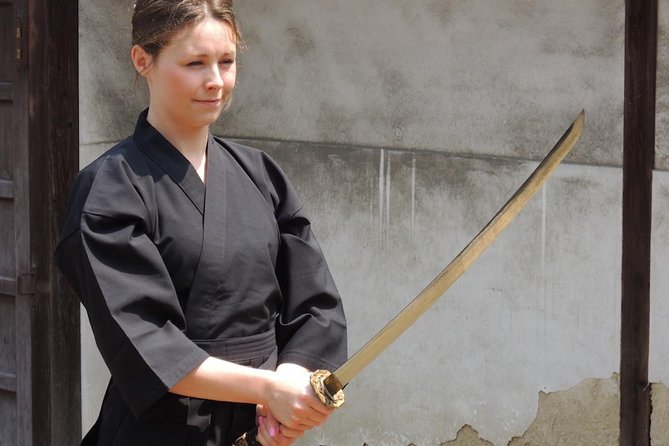
You change into traditional clothing before beginning the sword work. This is more than a photo opportunity. The clothing changes how you move, and it gives you a small physical sense of how formal dress affects posture and gesture.
You should wear comfortable clothes underneath and proper footwear for an athletic activity. Avoid treating this as a completely passive cultural demonstration. You will be standing, moving, and repeating sword motions, so ease of movement matters more than dressing up for the journey to the meeting point.
The clothing portion also works well for families and couples. Parents and children can share the preparation, while friends get photos that feel connected to the activity rather than simply posed in front of a backdrop. Minors must be accompanied by an adult.
Learning Bushido and the Way of the Warrior
Bushido is presented as the Way of the Warrior. The point is not simply to learn how to swing a sword. The instructor explains the values and discipline associated with samurai practice, giving the movements a cultural frame.
That context matters. Without it, sword handling can become a quick novelty. With it, you begin to see why posture, control, attention, and respect are part of the lesson.
The instruction is designed for beginners. You do not need previous martial arts experience, but you do need to follow directions closely. The focus is on basic swordsmanship, not on a long combat course or advanced training.
The teaching style is one of the strongest parts of the activity. The master swordsman demonstrates the craft, while the wider team helps explain the process. English support is available, and the staff has been praised for clear explanations and a welcoming manner. That is especially useful when instructions involve precise movement.
A few more Kyoto tours worth putting on the shortlist
- PERFECT KYOTO 1-Day Bus Tour
★ 5.0 · 13,518 reviews - Kyoto: Fushimi Inari, Kinkakuji, Bamboo Grove 1 Day Bus Tour
★ 4.8 · 4,316 reviews - Kyoto: Tea Ceremony in a Traditional Tea House in Kiyomizu
★ 4.9 · 3,519 reviews - Kyoto Geisha Walking Tour: Gion District & Hidden Gems
★ 4.7 · 3,273 reviews
Handling a sword and learning the basic movements
The practical sword section is the reason most people book this activity. You handle a martial arts sword and practice the fundamentals under supervision. The session is structured, so you are not left to guess how to stand or move.
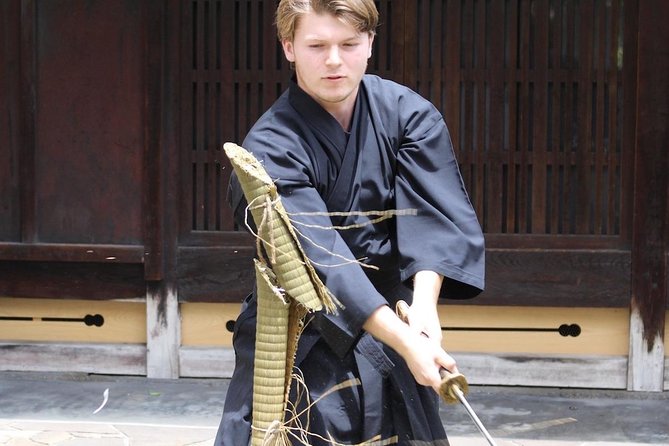
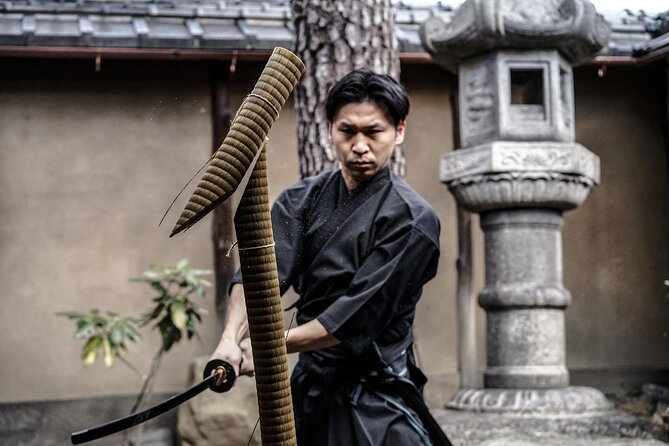
Some accounts of the experience include a controlled cutting exercise, described as trying a proper katana strike or cutting an object. You should see this as a carefully guided part of the lesson, not as free-form swordplay. The instructor’s direction is central.
The activity feels physical without being a full workout. You should have a moderate level of fitness and be comfortable with an athletic session. The supplied information does not set out a detailed age range, but minors need an accompanying adult.
A full group can include up to 14 people. That is still a manageable maximum for a cultural activity, but it matters if you want constant individual attention. In a smaller group, you are likely to get more room and more direct correction. In a fuller session, you may spend some time watching others take their turn.
That waiting time is not necessarily wasted. It lets you see the technique again before trying it yourself. Still, anyone expecting a private lesson should know that this is a small-group experience, not a one-on-one class.
Zen meditation brings the pace down
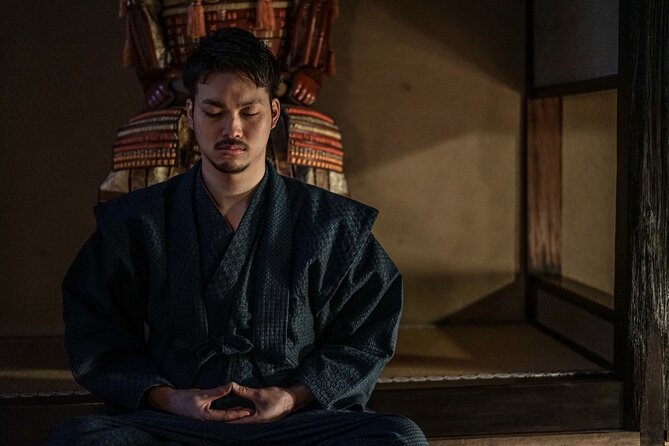
The meditation portion gives the session a welcome change of pace. After the concentration and movement of sword practice, you sit quietly and learn about Zen meditation.
This is one of the most thoughtful elements of the program. Samurai culture is often reduced to armor, swords, and dramatic poses. Meditation shows another side of disciplined practice, one based on stillness and attention.
You do not need meditation experience. The activity presents it as an introduction, and it works as a calm closing section. If you are booking this between busy sightseeing stops, the quieter finish may be just as valuable as the sword work.
The session may also include tea and a sweet. These small touches help connect the practical lesson with everyday Japanese customs. They are not a substitute for a dedicated tea ceremony, but they add texture to a short experience.
How the timing fits into a Kyoto day
At 1 hour 45 minutes, the experience is long enough to feel substantial but short enough to combine with other plans. You can choose a morning or afternoon departure, which gives you room to arrange it around temples, meals, or shopping.
I would avoid placing it too tightly between major reservations. You need time to reach the house, and the active lesson may run at an unhurried pace. A little breathing room also helps if you want to stay for photos or speak with the staff afterward.
The fixed meeting point is useful for independent planning. You make your own way there, take part in the session, and finish back at the same address. There is no broader Kyoto transport element included, so factor in your own train, subway, bus, or taxi cost.
The location issue is worth weighing. One account found the trip worthwhile despite the less convenient position, while the broader practical point is simple: the house is part of the reason for the location. If you only want a quick activity near Kyoto Station, this may not be the easiest choice.
Is $119.38 a fair price?
At $119.38 per person, this is not a budget activity. You are paying for more than a short sword demonstration, though. The price covers a roughly 105-minute session in a traditional house, instruction from a skilled swordsman, kimono use, sword practice, Bushido discussion, and Zen meditation.
It can offer fair value if you want a focused cultural activity with real participation. You also get the setting and the help of staff who can explain what is happening in English. The photos taken during the session, which may be shared quickly, add a useful souvenir.
The value is weaker if you mainly want to hold a sword for a few minutes and take pictures. You may also feel the cost more sharply if your session is full and you spend a fair amount of time watching others. Before booking, decide if you want a structured lesson or simply a samurai-themed photo stop.
For families, couples, and friends, the price can make sense because the activity creates a shared memory and works across age groups, provided everyone can manage the physical side. Solo participants may also enjoy it, but the small-group social setting is part of the format.
Weather, comfort, and practical preparation
The experience can include time outdoors, so dress for the day’s conditions. Staff have supplied hot tea and hand warmers in cold weather, and water, wet cloths, and electrolyte candies during very hot conditions. That is helpful, but you should still arrive prepared.
Wear comfortable clothes and appropriate footwear. You may change into a kimono, but your base clothing and shoes still need to support movement. This is not the place for restrictive clothing or footwear that makes standing and stepping awkward.
The activity is near public transportation. Check the route before leaving, since the meeting point in Nakagyo Ward may not sit beside the main sightseeing corridors. Confirmation is provided when you book, and the activity ends at the starting point.
The cancellation terms are straightforward: you can cancel for a full refund up to 24 hours before the start time. Changes or cancellations inside 24 hours are not accepted for a refund, and rescheduling depends on availability. Keep those rules in mind if your Kyoto schedule is still shifting.
Who will enjoy this most?
I would recommend this to you if you want an activity that combines history, movement, and quiet cultural practice. It suits people who enjoy learning by doing and who would rather spend two hours taking part than simply listening to a guide.
Families can make good use of it, since children and adults can share the lesson, with an adult required for minors. Couples also get a useful mix of playful photos, focused instruction, and meditation. Friends may enjoy comparing their movements and learning together.
It is less suited to you if you dislike group activities, have limited physical ability, or want a private lesson. The maximum group size is 14, and the activity calls for moderate fitness. If your main goal is a long, technical martial arts course, this short introduction will not go far enough.
The activity is also a good fit for a repeat visitor to Kyoto who has already seen many temples. It gives you a different way to connect with Japanese culture, through clothing, movement, objects, and the physical setting.
Should you book the Kyoto Samurai Experience?
Book it if you want a well-rounded introduction to samurai culture rather than a quick photo session. The combination of a traditional house, kimono, sword instruction, Bushido, Zen meditation, and small cultural details gives the 1 hour 45 minutes a clear purpose.
I would pause only if the $119.38 price strains your budget, if you need a central location, or if you expect a private lesson. For everyone else, this is a strong choice for a memorable Kyoto afternoon or morning, especially when you value hands-on learning and a setting with genuine character.
FAQ
How long does the Kyoto Samurai Experience last?
The experience lasts approximately 1 hour and 45 minutes.
Where does the activity start?
It starts at Kyoto Samurai Experience, also listed as Waraku111, in Inabacho, Nakagyo Ward, Kyoto, Japan.
Where does the activity end?
The activity ends back at the meeting point.
Is a morning session available?
Yes. You can choose between a morning or afternoon departure.
What will I learn during the session?
You will learn about samurai clothing, Bushido, Zen meditation, and basic swordsmanship techniques.
Do I get to wear a kimono?
Yes. The experience includes changing into traditional clothing before the sword practice.
How large can the group be?
The maximum group size is 14 people.
Can children take part?
Minors can take part when accompanied by an adult. Participants should also have a moderate level of physical fitness and wear comfortable clothing and suitable footwear.
Can I cancel for a refund?
Yes. You can cancel at least 24 hours before the scheduled start time for a full refund. Cancellations or changes made less than 24 hours before the start time are not accepted for a refund.
Newest Kyoto experiences on the site
- Treasures of Kyoto: Gion & historical Walking Tour★ 5.0 · 6 reviews
- Whisk Your Own Matcha: A Zen Matcha Experience at Temple★ 3.6 · 7 reviews
- Kyoto tea town for matcha lovers★ 5.0 · 16 reviews
- Uji: Private immersion into Kyoto’s tea and reglious culture★ 5.0 · 17 reviews
- Kyoto Matcha Green Tea Tour★ 4.5 · 23 reviews
- Uji and Wazuka Matcha Farm Half Day Private Guided Tour★ 5.0 · 21 reviews
- Utilising upcycled Matcha! Creating matcha incense (Uji, Kyoto)★ 5.0 · 6 reviews
- Sacred Temple Yoga Experience in Japan★ 5.0 · 3 reviews
Kyoto Samurai Experiences, compared.
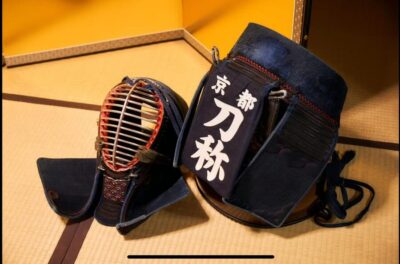
Kendo and Samurai Experience with Uniform and Gear
Read our review →
Skip the lines Basic Ticket at SAMURAI NINJA MUSEUM KYOTO
Read our review →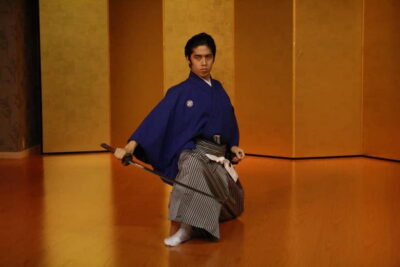
Samurai Training with Modern day Musashi in Kyoto
Read our review →
Private Tea Ceremony and Sake Tasting in Kyoto Samurai House
Read our review →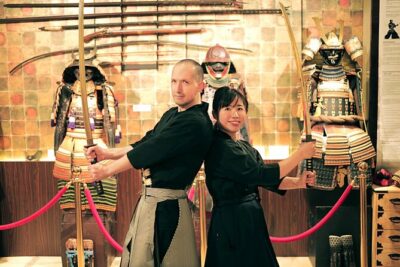
Kyoto Sword Experience – includes Museum Ticket/Ninja Experience
Read our review →
Browse the lists this tour appears in