
Reviewed · KYOTO SAMURAI EXPERIENCES
Samurai Training with Modern day Musashi in Kyoto
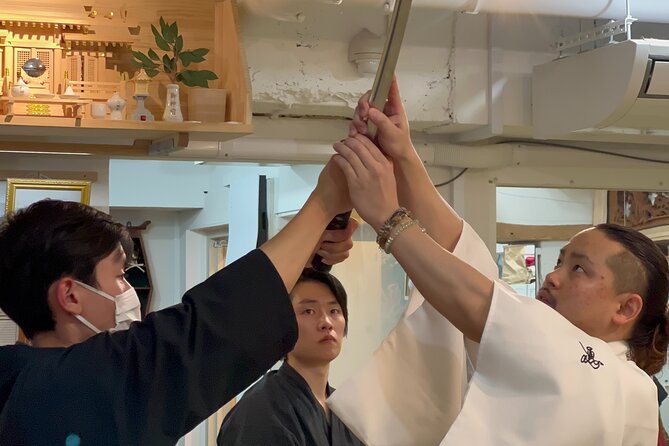
The most interesting part of this Kyoto activity is that it takes place in a working martial arts dojo, not a stage built only for sightseeing. Yushin Sensei and his instructors teach basic sword etiquette, movement, and kata while you wear traditional training clothes. The room also has the feel of a real school, complete with student name plaques and a Shinto shrine.
I like the hands-on format, especially learning how to draw, wield, and sheath a katana rather than simply posing with one. I also like the small-class aim, the friendly English support from Jordan and John, and Yushin Sensei’s two-katana performance. The main consideration is simple: mat cutting with a real katana is not currently offered, so book this for instruction and demonstration, not for cutting practice.
Key points before you book
- Real dojo setting: Train at Yushinkan International in central Kyoto, in a martial arts school used by regular students.
- Traditional dress included: Put on a dōgi, obi, and hakama before beginning the lesson.
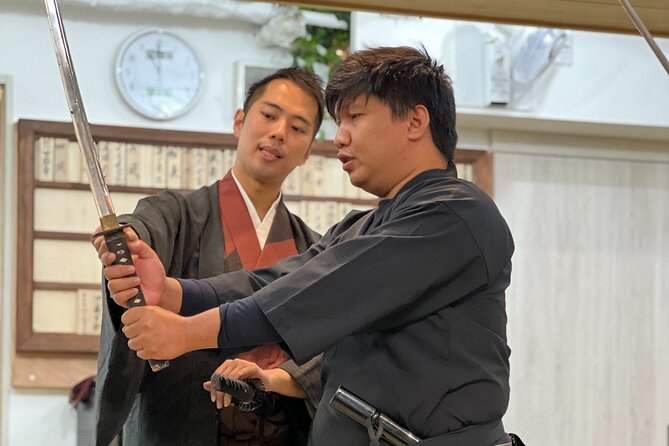
- Actual sword form: Practice drawing, sheathing, handling, and a short kata with an iaito.
- Yushin Sensei’s performance: Watch a distinctive two-katana demonstration at the end.
- Family-friendly from age 12: Teenagers and adults can take part, though a moderate level of fitness is required.
- Allow up to two hours: The stated duration is about 1 hour 45 minutes, but class length can vary with group size.
A real dojo instead of a staged samurai show
Kyoto has no shortage of activities built around samurai imagery. Some are little more than costume photos and a quick pose. This experience takes a more serious route. You enter a functioning dojo where martial arts are practiced, taught, and treated with care.
The dojo is at 452-4 Matsugaechō in Nakagyo Ward, a central Kyoto location near public transportation. The training room is on the basement level of a building, so do not expect a grand temple-like entrance. The plain setting is part of the appeal. Inside, you find the visual details that make the place feel like a school: wooden plaques bearing student names, training space, and a shrine connected to the practice.
I like this because the setting gives the lesson some weight. You are not simply handed a plastic sword and told to make a dramatic pose. You are asked to pay attention to posture, control, and respect for the equipment.
The tone is still relaxed. Jordan and John help explain the lesson in English, while Yushin Sensei leads the technical side. The combination works well for first-time students. You get the formality of Japanese sword practice without being left guessing about what to do.
More samurai experiences in Kyoto:
- Kyoto Samurai Experience
★ 5.0 · 1,294 reviews - Kyoto: Kendo and Samurai Experience with Uniform and Gear
★ 4.9 · 815 reviews - Kyoto: Samurai Sword Class by Experts in Traditional Arts
★ 4.9 · 657 reviews
Dressing in dōgi, obi, and hakama
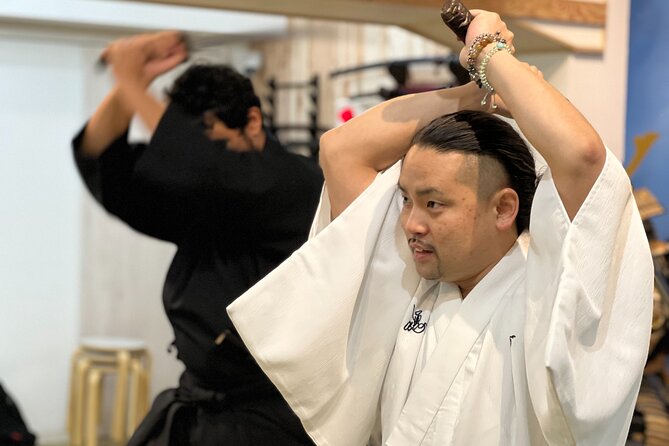
The session begins with traditional training gear. You put on a dōgi, tie an obi, and wear hakama. This does more than create good photographs, although you will certainly have plenty of photo opportunities during the activity.
The clothing changes the way you move. A hakama is not everyday sightseeing wear, and it encourages you to slow down and pay attention to your stance. The outfit also helps explain why traditional sword training puts so much focus on ceremony and controlled motion.
This part is especially useful for families and teenagers. The clothing gives the activity a clear beginning, and it helps turn a short lesson into something that feels like an event. Parents can watch and take photos as the class progresses.
You should still remember that this is a physical activity, not only a costume session. You will stand, move, repeat forms, and handle a sword under instruction. The operator asks participants to have moderate physical fitness, and the minimum age is 12.
The first lesson: culture, safety, and sword etiquette
Before you begin the movements, the instructors explain samurai culture and swordsmanship. The lesson covers what swords were used for, who could use them, and the rules for handling one safely.
That background matters. Without it, drawing a sword can look like a series of theatrical gestures. With it, you begin to see the practice as a discipline built around patience, awareness, and restraint.
The instructors also discuss the parts of a Japanese sword and how swords are made. You may get to see an actual historical katana during this part of the session. The goal is not to turn you into a swordsman in one afternoon. It is to give you a clear first look at the objects, customs, and movements connected to the art.
I appreciate the balance here. The history does not replace the practical lesson, and the practical lesson does not ignore the cultural side. You get information in short sections, followed by movement, which keeps the session from becoming a lecture.
Learning to draw, sheath, and wield a katana
The main hands-on section teaches the basic actions of handling a katana. You work on drawing, holding, moving, and returning the sword to its scabbard. The instructors watch your form and make corrections.
For a beginner, this is harder than it looks. The motion needs control, and small changes in hand position or posture affect the whole movement. You will not be asked to swing wildly or perform movie-style combat. The focus is on clean, deliberate technique.
The swords used for practice are iaito, training swords designed for safe practice while retaining the weight and feel of a real sword. The experience information also makes clear that sharp katana use is restricted, particularly for younger participants. This is an important distinction: you receive genuine sword-training practice, but not a license to handle a sharpened weapon.
This is where the instructors’ attention matters most. Jordan and John assist with explanations and corrections, while Yushin Sensei brings the experience of more than 20 years of practice. The class is intended to be personal, with six participants per class as the normal target, although a small number of booking parties can change the final count. The absolute maximum is nine people.
That group size is a good reason to book ahead. A crowded class would make sword practice less comfortable, but the stated limit keeps the lesson manageable.
A few more Kyoto tours worth putting on the shortlist
- PERFECT KYOTO 1-Day Bus Tour
★ 5.0 · 13,518 reviews - Kyoto: Fushimi Inari, Kinkakuji, Bamboo Grove 1 Day Bus Tour
★ 4.8 · 4,316 reviews - Kyoto: Tea Ceremony in a Traditional Tea House in Kiyomizu
★ 4.9 · 3,519 reviews - Kyoto Geisha Walking Tour: Gion District & Hidden Gems
★ 4.7 · 3,273 reviews
The short kata gives the session a clear purpose
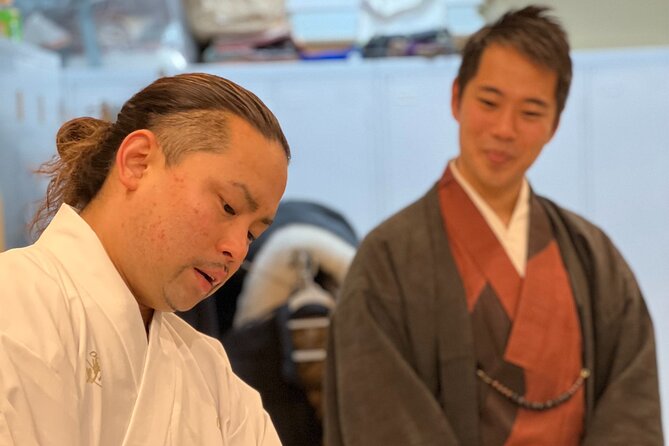
After the basic movements, you learn an actual kata, or formal sequence. A kata links several actions into one routine, so you begin to understand how the separate pieces fit together.
Do not expect a full martial arts course. You are learning a short form in one session, and the pace depends on the number of participants. Still, the kata gives you something concrete to practice and remember after leaving Kyoto.
It also reveals why this activity is more satisfying than a simple demonstration. You are not only watching a master perform. You are trying to reproduce a controlled sequence yourself, with guidance on timing and form.
You may be able to take photos or video while learning, as long as the instructors allow it at the appropriate moments. Ask before filming, and keep your phone safely out of the way during sword movements.
Yushin Sensei’s two-katana demonstration
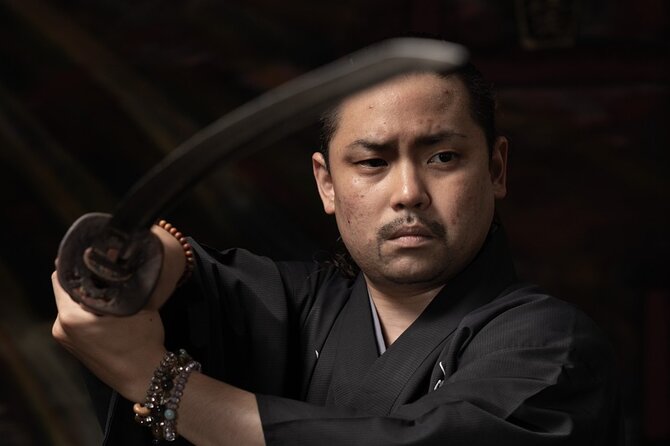
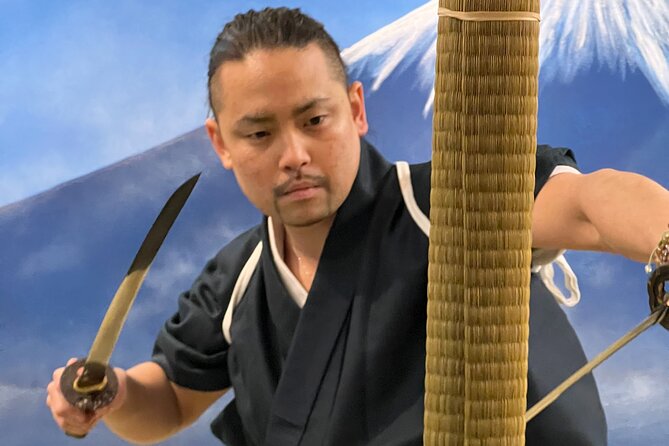
The final performance is the visual high point. Yushin Sensei demonstrates sword technique, including a two-katana performance that is presented as a special feature of this experience.
The display gives you a useful contrast. Your movements are slow and carefully explained because you are learning. Sensei’s are fast, precise, and practiced. Seeing the difference helps you understand that the lesson is an introduction, not a condensed version of professional training.
The current activity description specifically says that mat cutting with a real katana is not offered. Older descriptions of the experience refer to cutting demonstrations, so it is worth being clear: do not book expecting to cut a mat yourself, or expecting that a cutting display will be part of every session. The two-katana performance and sword presentation are the safer expectations.
For many people, this is a better fit than a cutting show. You spend more time learning basic handling and etiquette, then watch the master demonstrate skills beyond the reach of a first-time student.
How much value do you get for $132.65?
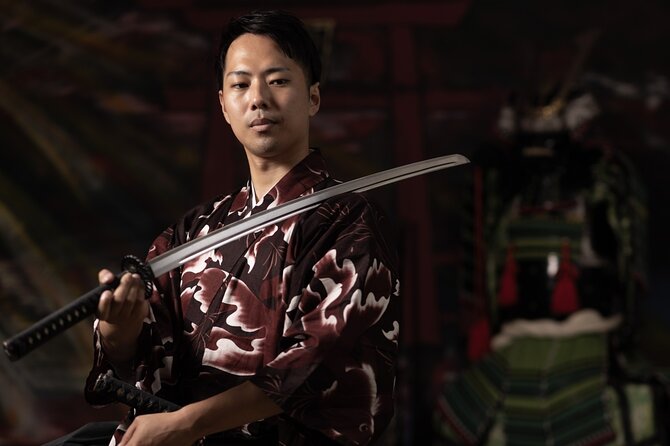
At $132.65 per person, this is not a cheap add-on activity. The value depends on what you want from a samurai experience.
If you want a quick costume photo, you can find less expensive options in Kyoto. If you want a guided introduction in a real dojo, with traditional clothing, hands-on instruction, cultural background, and a master’s performance, the price is easier to justify.
The session lasts about 1 hour 45 minutes, with a possible range of 1.5 to 2 hours. That gives you enough time for dressing, explanation, practice, the kata, and the demonstration without taking an entire day from your Kyoto plans.
I see the strongest value in the personal instruction. You are not paying only for access to a room and a costume. You are paying for teachers who correct your form, explain the meaning behind the practice, and answer questions about swords and samurai culture.
The experience also works well as a family activity. Parents can join rather than simply watch, and teenagers from age 12 can take part. Several families have used it as a birthday activity or a shared Kyoto memory. The class is serious enough for adults with martial arts experience, but friendly enough for beginners.
Who will enjoy this Kyoto activity most?
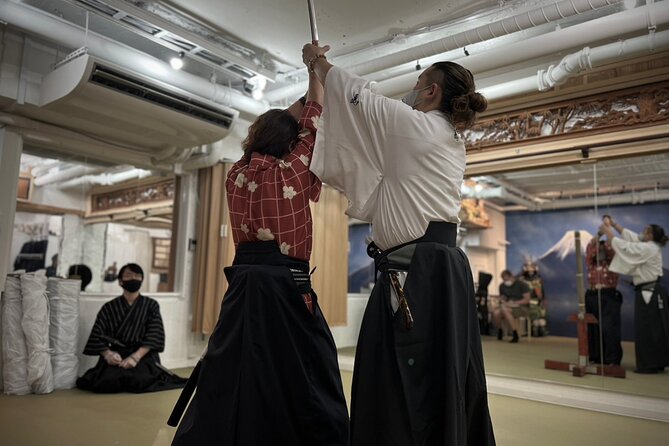
You should consider booking if you:
- Want a samurai experience with real instruction rather than a staged photo opportunity.
- Like martial arts, Japanese history, or traditional craft.
- Are visiting Kyoto with teenagers aged 12 or older.
- Prefer a small-group activity with time for questions.
- Want to wear traditional clothing and leave with a short kata to remember.
- Are comfortable standing and moving for up to two hours.
It may not be the best choice if your main goal is mat cutting, combat choreography, or handling a sharpened katana. The session is built around safe training swords, discipline, and form.
It is also not ideal if you want a completely passive activity. You will be asked to listen closely, repeat movements, and accept corrections. That active format is the point, but it may not suit someone looking only for entertainment.
Timing, meeting point, and cancellation details
The experience begins and ends at 452-4 Matsugaechō, Nakagyo Ward, Kyoto, 604-8034. It is near public transportation, and the detailed location description identifies the dojo as being in a basement-level space within a central building. Give yourself enough time to find the entrance, especially if you are moving through Kyoto with a family group.
Confirmation is sent within 48 hours of booking, subject to availability. A mobile ticket is provided. The activity is popular, so the recent booking pace suggests that you should avoid leaving it until the last minute if your Kyoto dates are fixed.
You can cancel for a full refund if you do so at least 24 hours before the local start time. Cancellations or changes made within 24 hours are not refunded or accepted.
Should you book Samurai Training with Modern-day Musashi?
I would book this if you want substance behind the samurai theme. The real dojo, traditional gear, basic iaido instruction, English support, and Yushin Sensei’s two-katana performance make it more than a costume stop.
Go in with the right expectations. You will learn a short kata, not master swordsmanship. You will handle an iaito under supervision, not practice mat cutting with a sharpened katana. For a first introduction to samurai culture in Kyoto, that is a sensible and rewarding balance.
At $132.65, it is best for people who value instruction and atmosphere over a low-cost photo opportunity. Families with teenagers, couples, martial arts fans, and curious first-time visitors should find plenty to enjoy. If that sounds like your kind of Kyoto memory, this is a strong choice.
FAQ
Where does the samurai training take place?
The activity takes place at Yushinkan International at 452-4 Matsugaechō, Nakagyo Ward, Kyoto, 604-8034, Japan. The dojo is near public transportation and is located in a basement-level complex.
How long does the experience last?
The listed duration is about 1 hour 45 minutes. The full session can take between 1.5 and 2 hours, depending on the number of participants.
What clothing do participants wear?
You dress in samurai training gear, including a dōgi, obi, and hakama.
What will I learn?
You learn about samurai culture and swordsmanship, then practice drawing, sheathing, and wielding a katana. You also learn an actual kata, or formal sword routine.
Are real swords used?
The training uses iaito, which are designed for safe practice while retaining an authentic feel. The experience does not currently offer mat cutting with a real katana.
Is there a demonstration?
Yes. Yushin Sensei gives katana demonstrations, including a distinctive two-katana performance.
What is the minimum age?
Participants must be at least 12 years old. A moderate level of physical fitness is required.
What is the cancellation policy?
You receive a full refund if you cancel at least 24 hours before the experience start time. Cancellations and changes within 24 hours are not accepted, and the payment is not refunded.
Newest Kyoto experiences on the site
- Treasures of Kyoto: Gion & historical Walking Tour★ 5.0 · 6 reviews
- Whisk Your Own Matcha: A Zen Matcha Experience at Temple★ 3.6 · 7 reviews
- Kyoto tea town for matcha lovers★ 5.0 · 16 reviews
- Uji: Private immersion into Kyoto’s tea and reglious culture★ 5.0 · 17 reviews
- Kyoto Matcha Green Tea Tour★ 4.5 · 23 reviews
- Uji and Wazuka Matcha Farm Half Day Private Guided Tour★ 5.0 · 21 reviews
- Utilising upcycled Matcha! Creating matcha incense (Uji, Kyoto)★ 5.0 · 6 reviews
- Sacred Temple Yoga Experience in Japan★ 5.0 · 3 reviews
Kyoto Samurai Experiences, compared.
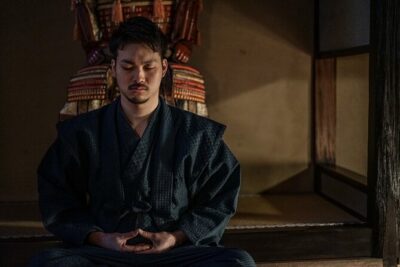
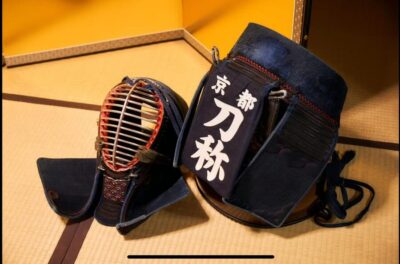
Kendo and Samurai Experience with Uniform and Gear
Read our review →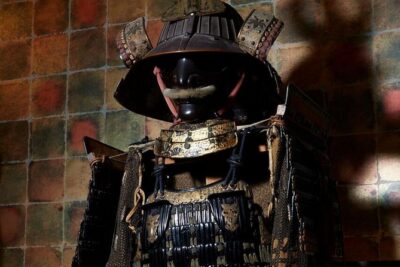
Skip the lines Basic Ticket at SAMURAI NINJA MUSEUM KYOTO
Read our review →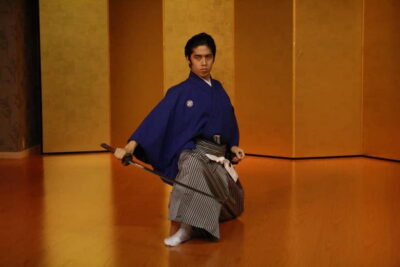
Private Tea Ceremony and Sake Tasting in Kyoto Samurai House
Read our review →
Kyoto Sword Experience – includes Museum Ticket/Ninja Experience
Read our review →
Browse the lists this tour appears in