
Reviewed · KYOTO SAMURAI EXPERIENCES
Samurai School in Kyoto: Samurai for a Day
The most interesting part of this Kyoto activity is that you do not just watch samurai performers. You learn a few of the same stylized movements, including how to bow, draw a sword, strike, and return the blade to its scabbard. Kenbu is part martial art, part stage performance, so the lesson has both discipline and theater.
I like the small groups of up to 10 people and the patient English instruction. I also like that the costume, photo session, certificate, and traditional towel give you something concrete to take home. The main consideration is timing: the performance and costume changes can make the visit run longer than the advertised 90 minutes, and the photo session may feel rushed when another class is waiting.
Key points to know before you book
- You handle a sword under instruction, learning the bow, draw, sheath, strike, and thrust.
- The class takes place at Kembu Kyoto Dojo, on the first basement floor of the GOZAN building.
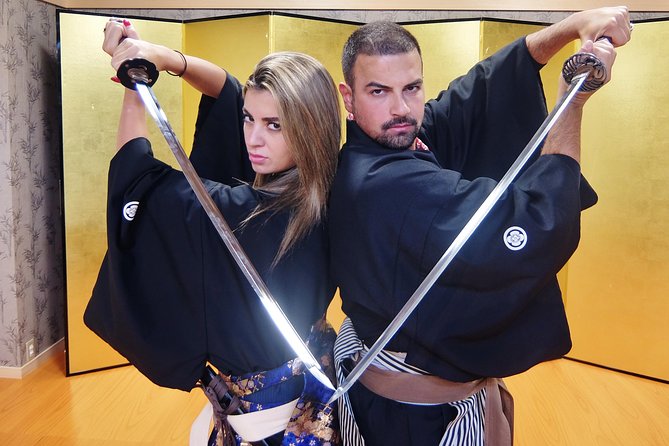
- A costume photo session is included, with a samurai uniform, belt, Japanese-style socks, and sword.
- You can upgrade to a longer lesson, adding walking, folding-fan movements, and more kenbu choreography.
- A short performance adds context, helping you see how the movements work on stage.
- The $66.32 price covers useful extras, including an English-speaking instructor, photos, a certificate, and a tenugui towel.
What the Kyoto Samurai for a Day experience really offers
This is a practical introduction to samurai performing arts, not a museum lecture and not a full martial arts course. You spend your time moving, listening, dressing up, and trying a sword routine under close instruction.
The focus is kenbu, a Japanese sword performance art that uses controlled gestures, formal posture, music, and poetry. The class gives you a taste of that discipline without asking you to commit to a long training program. You will not become a swordsman in an hour and a half, but you will understand why a simple draw or bow requires care.
The activity suits visitors who want a cultural experience with a physical element. It also works well for families with older children and teenagers who may lose interest during a long museum visit. The lesson is active, but the required fitness level is only moderate.
More samurai experiences in Kyoto:
- Kyoto Samurai Experience
★ 5.0 · 1,294 reviews - Kyoto: Kendo and Samurai Experience with Uniform and Gear
★ 4.9 · 815 reviews - Kyoto: Samurai Sword Class by Experts in Traditional Arts
★ 4.9 · 657 reviews
Finding the dojo in Kyoto’s Higashiyama Ward
The meeting point is at 35 Sanchome, Higashiyama Ward, Kyoto 605-0005, near public transportation. On arrival, go to the first basement floor using the stairs on the right side of the GOZAN building.
This is one place where a few extra minutes help. You are asked to arrive between 10 and 3 minutes before the start time, but I would aim for the earlier end of that window. Finding a basement studio in an unfamiliar building can take longer than expected, especially if you are coming straight from another Kyoto sight.
There is no hotel pickup or drop-off, so you handle your own transport. Food and drinks are not included, which is no problem for a short class, but plan your meal before or after if this falls between sightseeing stops.
The opening film and first lesson in samurai manners
The session begins with a short three-minute film about basic samurai practices. This gives you a quick frame for the lesson before you put on the costume.
You then meet the English-speaking instructor and learn how to bow properly. That first bow matters because the class is not simply about waving a sword around for a photograph. Respect, control, and correct posture are part of the activity.
The instructor explains each movement before you try it. That makes the class accessible even if you have no martial arts background. At the same time, you need to pay attention. One piece of feedback from the experience is that the instructor can be strict with younger children who make repeated mistakes. I see that as a useful safety point, but families should prepare children to listen carefully and follow directions.
Children between 5 and 11 are best suited to the class if they already attend some kind of class or martial arts school. The instruction requires focus, patience, and a willingness to repeat movements rather than simply play with the sword.
Dressing as a samurai and learning the sword
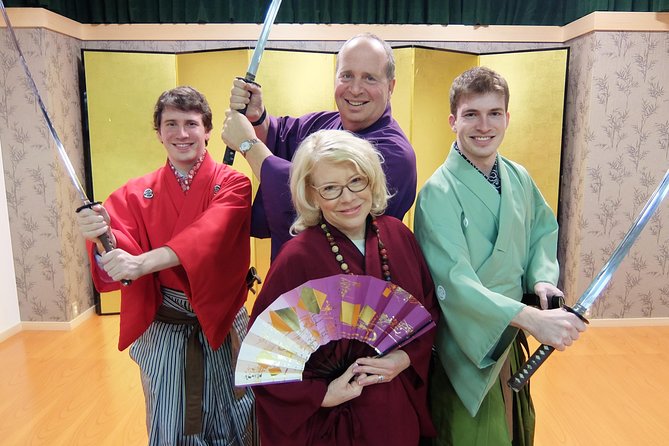
After the introduction, you put on a samurai uniform with a white belt and Japanese-style socks. The sword is part of the outfit and the lesson, so this is more than a costume rental with a quick photograph.
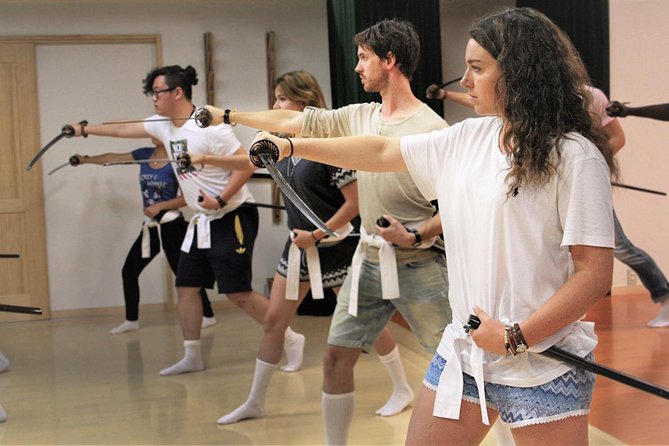
The first sword skills are basic but surprisingly tricky. You learn how to draw the blade and place it back into its protective scabbard. You also practice several striking movements. The instructor shows you how to hold the sword and how to make each action controlled and deliberate.
The equipment and movements are handled under safety instructions. Follow the teacher closely, even if a motion seems simple. The purpose is not speed. It is learning the shape, rhythm, and discipline of the movement.
You may also learn how to strike or thrust toward a potential opponent in a stylized way. This is performance training, so the lesson is designed around choreography rather than combat practice. That distinction is important. If you want realistic self-defense or a formal martial arts qualification, this is not the right activity.
For a first-time visitor, the sword lesson is the strongest part of the experience. You are not merely told about samurai customs. You use your hands, adjust your posture, and remember the sequence through practice.
A few more Kyoto tours worth putting on the shortlist
- PERFECT KYOTO 1-Day Bus Tour
★ 5.0 · 13,518 reviews - Kyoto: Fushimi Inari, Kinkakuji, Bamboo Grove 1 Day Bus Tour
★ 4.8 · 4,316 reviews - Kyoto: Tea Ceremony in a Traditional Tea House in Kiyomizu
★ 4.9 · 3,519 reviews - Kyoto Geisha Walking Tour: Gion District & Hidden Gems
★ 4.7 · 3,273 reviews
The costume photos and what to expect
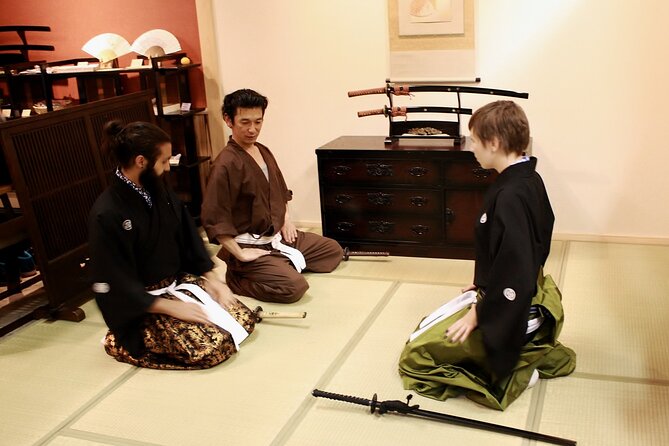
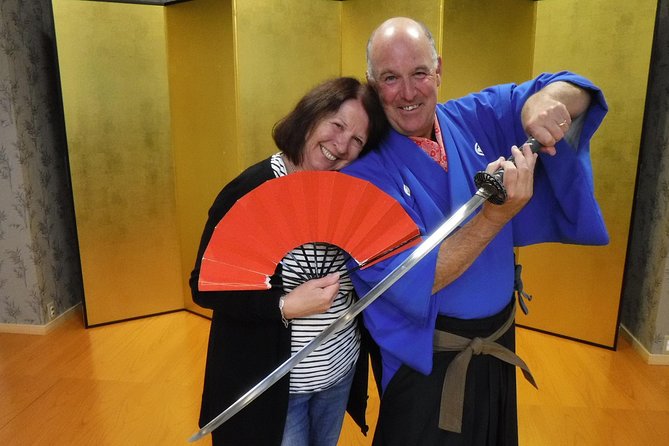
The photo session gives you time to see yourself in the complete costume, sword included. It is a natural break in the lesson and a good chance to record the experience with your own camera.
I would keep your photo expectations realistic. The session is included, but the time available can be limited when another group is waiting. If photographs matter a great deal to you, be ready before the camera comes out and decide quickly which poses you want.
The outfit is one of the activity’s best family features. Parents can take pictures of children, couples can pose together, and a group can create a useful trip memory without arranging a separate costume rental. You also receive a lesson completion certificate and a tenugui, a traditional Japanese hand towel.
The certificate is a small extra, but it works well for children and teens. The towel is more practical than a standard souvenir and takes almost no space in your luggage.
Watching kenbu as a stage performance
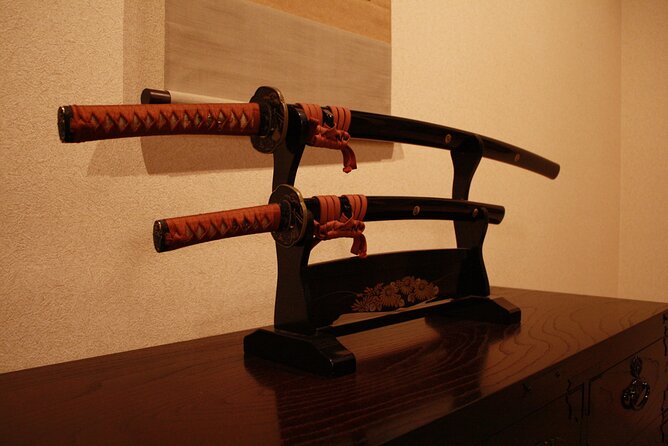
The experience includes a samurai performance, though the exact order can vary. Some sessions train first and watch the show afterward. In other cases, the performance may come near the beginning.
The show is not an unrelated add-on. It demonstrates what the movements look like when performed with precision, music, and a poem. After trying the sword yourself, you can better appreciate the timing, posture, and control required from the performers.
The performance is also the part most likely to affect your schedule. One version of the experience may include a longer opening show, and some visitors find that this takes close to an hour before the hands-on sword portion begins. If your booking is tied to another reservation, allow extra time at the end and do not plan a tight connection.
The performers are highly trained, and one instructor is described as an active competitor with seven generations of family training in the samurai arts. The experience provider is Ginbu Co., Ltd., formerly Samurai Kenbu Co., Ltd. That background helps explain why the show feels like a serious performance rather than a quick tourist demonstration.
The longer option and the folding fan lesson
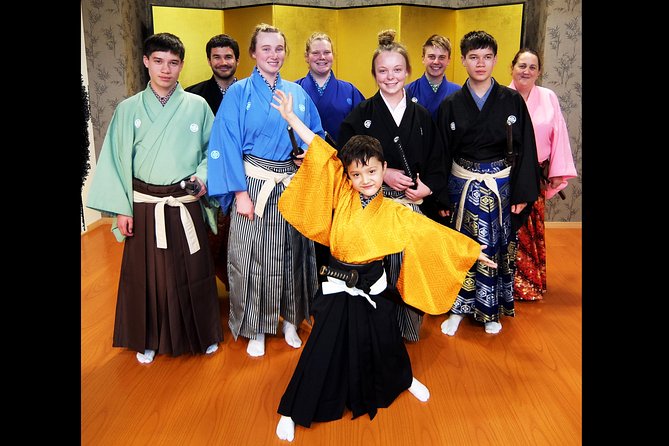
The standard session gives you the essential sword movements, costume, photos, and closing bow. If you choose the longer option, you continue with more detailed kenbu practice.
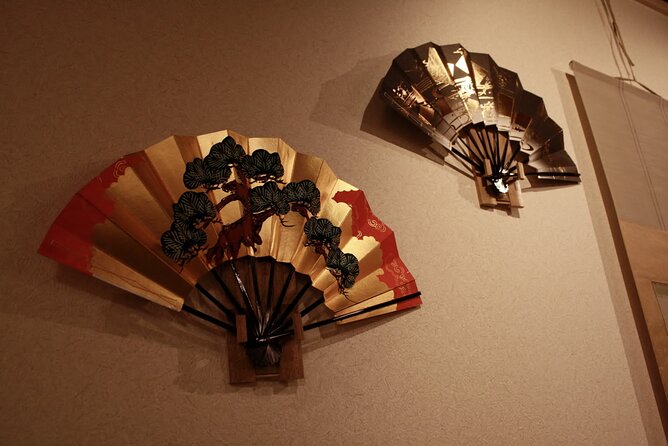
The extended lesson may include stylized walking, folding-fan movements, and a more demanding choreography sequence. You can then perform with your sword on stage while music and a poem accompany the routine.
This upgrade is worth considering if you have a strong interest in Japanese performing arts, martial arts, or the mechanics of choreography. It gives you more time to repeat movements and understand how the separate actions fit together.
For a family that mainly wants costume photos and a first taste of samurai culture, the shorter option may be enough. For an adult or teenager who enjoys learning physical skills, the longer session offers better value because it turns a quick introduction into a more complete class.
How much value do you get for $66.32?
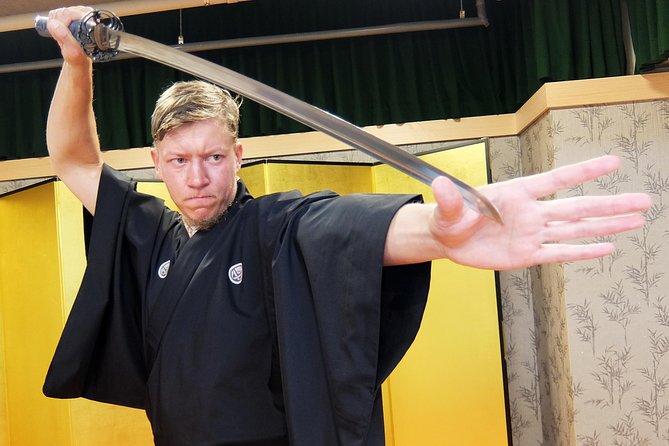
At $66.32 per person, this is not the cheapest indoor activity in Kyoto. The price becomes easier to justify when you count what is included: an English-speaking instructor, sword instruction, costume use, a photo shoot, a completion certificate, and a tenugui towel.
You are also paying for a small-group setting. The maximum is 10 people, which gives the instructor a better chance to watch your movements than a large stage workshop would. Group size can still affect the pace, but the class is intimate enough for direct correction and help.
The value is strongest if you take part fully. Someone who only wants to watch a show can find better options elsewhere. Someone who wants to dress up, learn a skill, take photos, and see a performance gets several connected activities for one price.
The longer upgrade can improve the value for serious enthusiasts, but the exact cost of the upgrade is not provided here. Check the selected option carefully before booking so you know how much lesson time is included.
Who will enjoy this most?
I would recommend the experience to:
- Martial arts fans who want a short introduction to kenbu
- History buffs who prefer doing something over listening to a long talk
- Families with children and teenagers who can follow instructions
- Couples looking for a shared activity and costume photos
- Visitors seeking a rainy-day indoor plan in Kyoto
- Anyone interested in Japanese performance traditions
It is less suitable if you dislike costumes, have limited mobility, or want a quiet, purely academic presentation. You should be comfortable standing, walking, changing clothes, and moving a sword through controlled patterns.
Wear clothing that works for exercise and changing. A single hoodie or tight clothing is not ideal. You do not need advanced fitness, but you do need enough freedom of movement to practice the lesson safely.
Practical details that can affect your visit
The activity lasts approximately 1 hour 30 minutes, but allow additional time because the performance, costume changes, or photographs may run over. Mobile tickets are accepted, and confirmation is provided when you book.
The experience ends at the same meeting point. It is near public transportation, but there is no included transfer service.
For safety, follow every instruction given on the day. The sword work is controlled, yet the class still involves equipment and movement. Arrive early enough to find the building and basement without rushing.
Free cancellation is available if you cancel at least 24 hours before the local start time. Cancellations or changes made within 24 hours are not refunded or accepted, and you must make the cancellation yourself through Viator.
Should you book the Samurai for a Day class?
Book it if you want an active Kyoto experience that combines hands-on sword practice and traditional performance. The class gives you more than a costume photograph, while the show gives useful context for the movements you learn.
I would choose the longer option for martial arts fans, older children, and anyone who likes practicing choreography. Choose the shorter session if your priority is a first taste, a few photos, and a compact indoor activity.
The main caution is timing. Keep your schedule loose, arrive early, and understand that the performance may be longer than expected. If you can accept that, the $66.32 fee buys a memorable mix of instruction, costume, performance, and souvenirs in a small Kyoto setting.
FAQ
How long does the Samurai for a Day experience last?
The listed duration is approximately 1 hour 30 minutes. You should allow extra time because the performance, costume changes, or photo session may cause the visit to run over.
Where does the activity meet?
The meeting point is at 35 Sanchome, Higashiyama Ward, Kyoto 605-0005. Enter the GOZAN building and go to the first basement floor using the stairs on the right side.
Is the lesson taught in English?
Yes. An English-speaking local guide or instructor leads the class.
What will I learn during the class?
You learn how to bow, draw a samurai sword, return it to its scabbard, and perform basic strikes and thrusts. The longer option can include stylized walking, folding-fan movements, and more advanced kenbu choreography.
What is included in the price?
The experience includes the English-speaking instructor, a photo shoot, a tenugui towel, and a lesson completion certificate. Hotel transfers, food, and drinks are not included.
Is the activity suitable for children?
Children from 5 to 11 are preferably attending a class or martial arts school. All participants should be able to follow safety instructions and have a moderate level of physical fitness.
Can I cancel for a refund?
You can cancel for a full refund up to 24 hours before the experience start time. Cancellations or changes made less than 24 hours before the start are not accepted or refunded.
Newest Kyoto experiences on the site
- Treasures of Kyoto: Gion & historical Walking Tour★ 5.0 · 6 reviews
- Whisk Your Own Matcha: A Zen Matcha Experience at Temple★ 3.6 · 7 reviews
- Kyoto tea town for matcha lovers★ 5.0 · 16 reviews
- Uji: Private immersion into Kyoto’s tea and reglious culture★ 5.0 · 17 reviews
- Kyoto Matcha Green Tea Tour★ 4.5 · 23 reviews
- Uji and Wazuka Matcha Farm Half Day Private Guided Tour★ 5.0 · 21 reviews
- Utilising upcycled Matcha! Creating matcha incense (Uji, Kyoto)★ 5.0 · 6 reviews
- Sacred Temple Yoga Experience in Japan★ 5.0 · 3 reviews
Kyoto Samurai Experiences, compared.
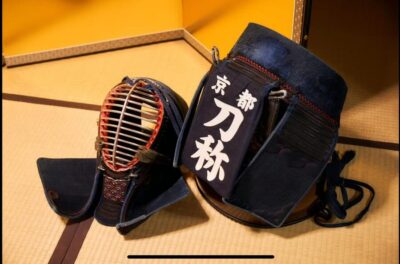
Kendo and Samurai Experience with Uniform and Gear
Read our review →
Skip the lines Basic Ticket at SAMURAI NINJA MUSEUM KYOTO
Read our review →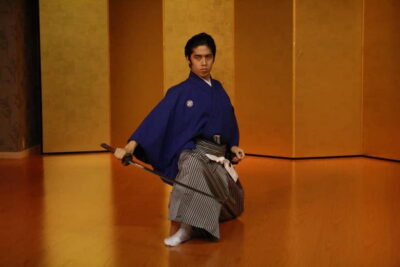
Samurai Training with Modern day Musashi in Kyoto
Read our review →
Private Tea Ceremony and Sake Tasting in Kyoto Samurai House
Read our review →
Kyoto Sword Experience – includes Museum Ticket/Ninja Experience
Read our review →
Browse the lists this tour appears in