Reviewed · PRIVATE
Scenic Green Tea Fields of Hidden Kyoto & Local Tea Exp (Private)
Kyoto’s best tea country lies beyond the city’s usual sightseeing circuit. This private trip carries you to Wazuka’s carefully planted tea hills, where rows of Uji tea climb slopes in clean, curved patterns that look almost designed by hand. You also visit Byodo-in, a temple famous enough to appear on Japan’s 10-yen coin, then finish among rural temples and tea-growing villages.
I like two things right away. First, the private van and pinpoint pickup save you from piecing together buses and taxis in the countryside. Second, the route joins famous sights with places that feel more local, including farmer-supplied tea cafes and working tea fields. The main drawback is the price for one or two people, since $250.38 is charged per group, not per person, and temple admissions and tea purchases come extra.
Key points to know before booking
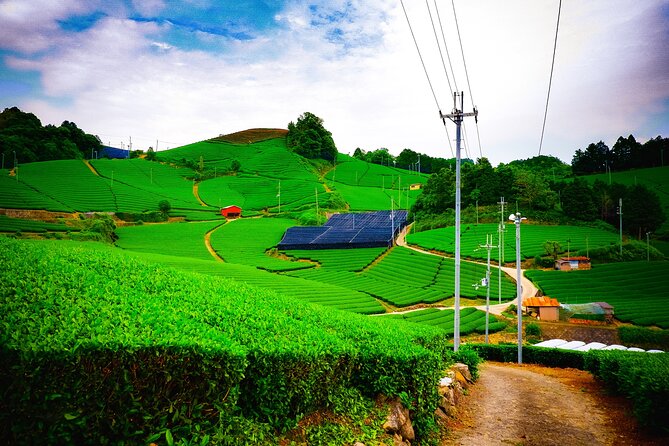
- Wazuka’s tea fields are the visual highlight: Geometric rows climb the hills and look striking in every season, including winter.
- Guide Daiki shapes the day: Expect commentary on tea, Japanese history, monks, samurai, and the ninja traditions connected with the region.
- Byodo-in gives the tour historical weight: Two hours here lets you see the Phoenix Hall and understand why it represents Buddhist paradise.
- The private vehicle matters: Groups of two to six ride in an air-conditioned Nissan van, while solo visitors use an open-air convertible Mini Cooper.
- Tea costs less outside central Kyoto: Premium tea is offered at roughly one-half to one-third of city prices, though your drinks and purchases are not included.
- The afternoon schedule is full: Starting at 1 p.m., you spend about five and a half hours on the road, at temples, and in tea country.
Why this tour reaches beyond central Kyoto
Central Kyoto is excellent for major temples, gardens, and old streets, but it can give you a narrow picture of the region. This outing shows the countryside that supports one of Japan’s most famous food and drink traditions. You trade dense city streets for cedar groves, mountain roads, tea farms, and small religious sites.
The route also helps connect tea with place. You do not simply sit down with a bowl of matcha and leave. You see where tea is grown, visit a cafe supplied by local farmers, and stop in Ujitawara, an area associated with the development of Japanese green tea and matcha.
Guide Daiki is an important part of the experience. His approach, as described in the tour information, includes Japanese culture and history rather than only directions and photo stops. He is also known for being patient with photography and flexible at the end of the day, including dropping people near a restaurant when practical. That kind of help can make a private outing feel much easier than a fixed group excursion.
The timing is worth noting. Pickup is set for 1 p.m., so this is not a sunrise tour or an early-morning tea harvest visit. You will have the afternoon and early evening, with roughly 30 minutes at each tea-field stop and longer periods at Byodo-in and Shoju-in.
A few more Kyoto tours worth putting on the shortlist
- PERFECT KYOTO 1-Day Bus Tour
★ 5.0 · 13,518 reviews - Kyoto: Fushimi Inari, Kinkakuji, Bamboo Grove 1 Day Bus Tour
★ 4.8 · 4,316 reviews - Kyoto: Tea Ceremony in a Traditional Tea House in Kiyomizu
★ 4.9 · 3,519 reviews
Byodo-in Phoenix Hall: begin with Kyoto’s famous coin temple
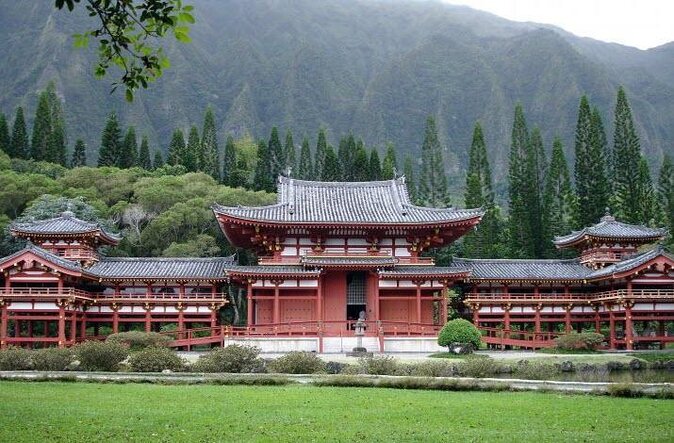
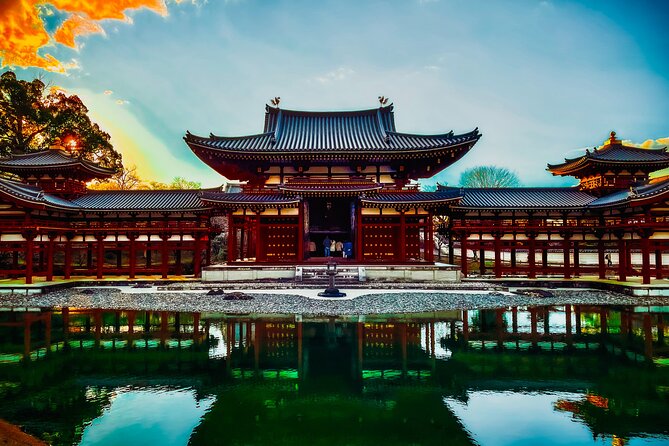
The tour opens with about two hours at Byodo-in Temple. The centerpiece is Phoenix Hall, one of Japan’s most recognizable buildings and the image printed on the 10-yen coin. Its design represents the Buddhist Pure Land, or paradise, and the building has survived centuries of conflict and change.
Two hours gives you time to do more than hurry past the famous view. Admission is not included, so budget ¥600 per person. The temple visit may be the most familiar stop on the route, but it provides useful context for the rural sites that follow. You begin with a major monument, then move outward to the tea country that many visitors never reach.
This stop also suits visitors who want a strong historical anchor. The tour connects the area’s tea traditions with monks, samurai, and ninja culture. You should not expect a formal lecture, but Daiki’s role is to explain how people and institutions shaped the region.
Byodo-in can be a busy place, and the wider route may change with crowd levels or unexpected closures. The private format helps because your group is not tied to a large coach schedule, but it cannot remove crowds at a major temple.
Wazuka-cha Cafe: taste the tea where it is grown
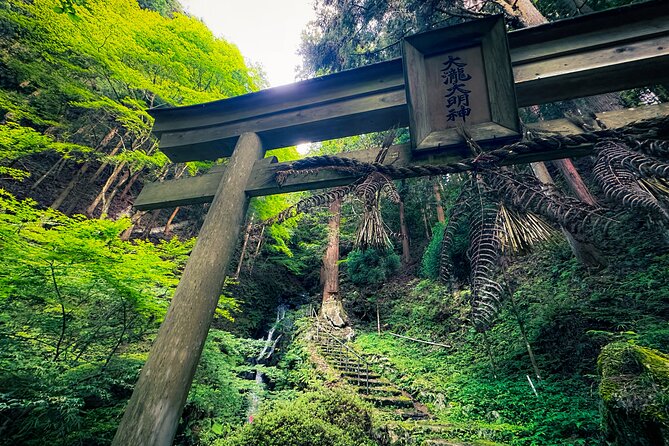
The next major stop is a Wazuka tea cafe, where you can try green tea, matcha, and matcha desserts. The cafe is supplied by local farmers, so this is a chance to taste tea in the same broad region where you have been seeing the fields.
Your own coffee or tea is not included. That is a small extra cost, but it is worth treating the cafe as part of the experience rather than skipping it. The point is not only refreshment. You can compare the flavor and preparation of local tea with what you have already tried in Kyoto’s city center.
The description positions Wazuka tea as a particularly pure and authentic expression of Uji-area tea. I would treat that as a regional specialty rather than a contest you need to settle. The useful point for you is that Wazuka is a major growing area, and the cafe gives you a direct link between farm, product, and cup.
Shopping is another reason to allow time here. Premium tea is available at around one-half to one-third of city prices. If you want to bring tea home, this may be the best buying opportunity on the route. Ask Daiki or the cafe staff about the types you are considering, then leave room in your luggage. Tea is light, practical, and easier to transport than many Japanese food souvenirs.
Ishitera Tea Plantation: the photo stop worth the drive
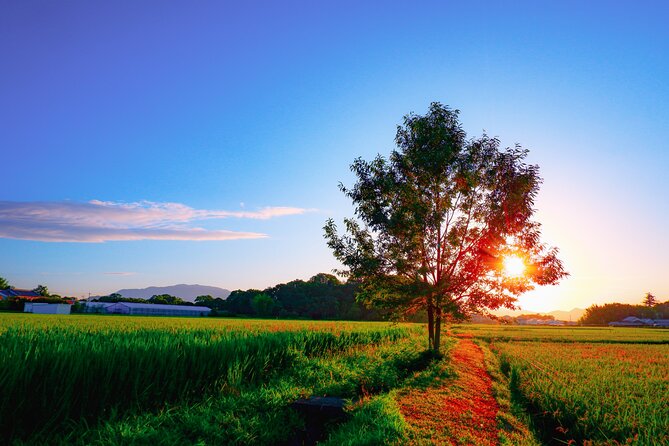
At Ishitera Tea Plantation, you spend about 30 minutes among the famous rows of green tea. This is the moment built for photographs. The fields are planted in tight, orderly curves that climb toward the hills, creating the visual effect described as tea reaching to the sky.
The appeal changes with the season. In spring and summer, the foliage has a fresh green look. In autumn and winter, the rows remain striking because tea is an evergreen crop. You should not expect a flower display or a formal farm tour here. The value is the view, the setting, and the chance to see a working tea-growing area rather than a decorative garden.
A short walk is required, and there may be uneven ground or stairs at different stops. Wear shoes you can use comfortably on rural paths. Thirty minutes is enough for a few careful photographs, but it will feel short if you want a long walk or extensive landscape photography.
This stop also shows why private transport matters. The tea fields are not presented as a simple central-Kyoto attraction. Having a vehicle take you between villages lets you see several growing areas without spending your day working out rural connections.
Same city, a completely different kind of day:
- Kyoto Geisha Walking Tour: Gion District & Hidden Gems
★ 4.7 · 3,273 reviews - Kyoto: Tea Ceremony Ju-An at Jotokuji Temple
★ 4.9 · 3,207 reviews - Kyoto: Gion Magical Night Walking Tour with Geisha Trivia
★ 4.9 · 2,393 reviews - Kyoto: 45-Minute Tea Ceremony Lesson Experience
★ 4.3 · 2,378 reviews
Ujitawara: a second view of Japan’s tea tradition

The stop in Ujitawara-cho lasts about 30 minutes and adds another side of tea country. This area is described as one of Japan’s best-known green tea regions and as a place linked with the invention of Japanese green tea and matcha.
You stop at a beautiful tea field where you can walk into the farm area and take photographs. Compared with Ishitera, this visit gives you another angle on the planting and terrain. The two stops are similar in subject, but not pointless duplicates. Tea fields change with slope, road position, and the surrounding forest, and the second stop gives you more time to see the countryside at a slower pace.
If tea is your main reason for booking, pay attention here. Ask questions about what you are seeing, how tea fields differ from one another, and which teas are best for drinking at home. The tour is private, so you can make that conversation part of the outing instead of waiting for a guide to address a whole bus.
The tradeoff is that this route includes several short stops rather than one long farm visit. If you want hands-on tea picking or a full production demonstration, that is not promised here. You are getting scenery, tasting, local context, and shopping.
Shoju-in Temple: a memorable final stop in the tea country
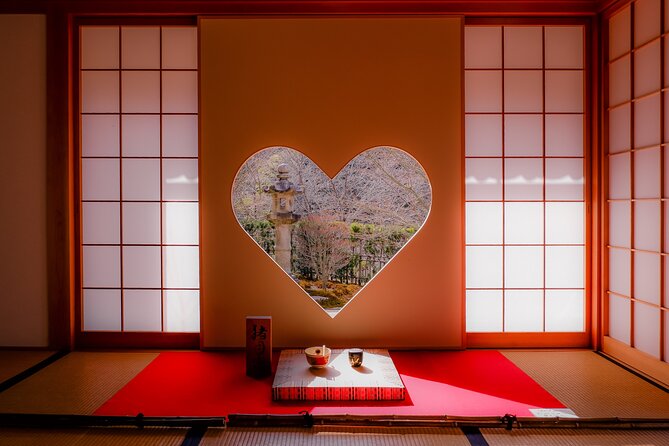
The final stop is Shoju-in, also written as Seijuin in the tour details. The temple sits in Kyoto’s southern countryside, about an hour from central Kyoto by car. Its best-known feature is a heart-shaped window in the tea room, which gives the visit an instantly recognizable photo.
The planned stay is about one and a half hours, making this a more substantial stop than the two tea-field visits. Admission costs ¥1,000 per person. That extra fee is easy to overlook when comparing prices, so include it in your budget.
Shoju-in is especially useful for people who want more than tea scenery. It adds a quiet temple setting and a visual detail that feels very different from Byodo-in’s grand Phoenix Hall. One temple represents a major Buddhist vision in a famous architectural form. The other gives you a more intimate countryside stop.
The drive is part of the experience, but it can also be tiring. An hour on rural roads each way is not the same as walking between central Kyoto sights. If you dislike car travel, this may not be your best half-day. If you enjoy seeing cedar groves, mountain roads, and smaller temples, the drive helps explain the value of leaving the city.
Private transport makes the rural route practical
The vehicle depends on group size. Groups of two to six use an air-conditioned Nissan van. Solo visitors ride in a convertible Mini Cooper. Fuel and highway fees are included, which removes two costs that can make a private countryside trip harder to judge.
Pinpoint pickup and drop-off are offered, and the start and end locations can be different. That is useful if you want to begin at your accommodation and finish near dinner. It also explains why the tour can work well on a day when you have luggage plans or a restaurant reservation, though you should confirm the exact pickup and drop-off details when booking.
The vehicle is not just a comfort feature. It is the reason this route fits several widely separated stops into five and a half hours. Public transport can reach many Kyoto-area sights, but tea fields and smaller rural temples are harder to combine efficiently.
The convertible Mini Cooper sounds fun for a solo visitor, especially on the roads through tea country. It is still wise to think about the weather and your comfort before choosing this option. The tour information describes it as open-air, so conditions may matter more than they would in the van.
What the $250.38 price really buys you
The tour costs $250.38 per group, with up to six people. For a full group, that works out to about $41.73 per person before admissions and personal purchases. For one person, the same group price is much harder to justify unless the private vehicle, flexible transport, and rural access are your main priorities.
Included in the price are the vehicle, fuel, highway fees, and pickup and drop-off service. The price does not include ¥600 for Byodo-in, ¥1,000 for Shoju-in, or your own tea, coffee, matcha dessert, and tea purchases. For two people, the admission fees add ¥3,200 total. For six people, they add ¥9,600 total.
I see good value here for a small group that would otherwise need several taxis or a rental car. You are paying for access and time, not just entry to a single temple. The private format also lets you focus on photography, tea shopping, or history without adjusting to strangers.
For a solo visitor, the value depends on your priorities. The convertible Mini Cooper and private guide make the outing distinctive, but the per-group price is high compared with a regular shared excursion. A solo tea enthusiast or photographer may find it worthwhile. A budget-minded visitor should compare it with a group tour before booking.
The tour has a 4.9 rating from 32 reviews, with 97 percent recommended. The most consistent strengths are Daiki’s energy, patience, historical explanations, and willingness to adjust the end of the day when possible. Those qualities matter more on a private tour because your time with the guide is the main product.
Who should book this Kyoto tea tour
I would point this tour toward you if you have already seen several central Kyoto temples and want a different side of the region. It also fits couples, families, and small groups who value a private vehicle and want to visit places that are awkward to connect by train.
It is a particularly good match for:
- Tea drinkers who want local tasting and shopping
- Photographers who want tea rows and the heart-shaped window at Shoju-in
- History fans interested in Buddhist temples and tea culture
- Small groups splitting the private cost
- Solo visitors who like the idea of a convertible countryside ride
- People who prefer a flexible guide to a fixed large-group schedule
I would think twice if your time in Kyoto is very short and you have not yet seen the city’s main sights. I would also hesitate if you want a hands-on tea-making lesson, a tea harvest, or a long walk through one farm. Those activities are not part of the stated plan.
The tour requires some walking and stairs, and the itinerary can change because of closures, road conditions, or crowd levels. Seasonal routes may also be offered during cherry blossom, plum blossom, or autumn leaf periods, but you should not assume a particular seasonal stop unless it is confirmed for your date.
Should you book it?
Book this experience if you want Kyoto’s tea country, not just another temple inside the city. The tea fields and local cafe are the heart of the day, while Byodo-in and Shoju-in give the route historical and visual variety.
For six people, the cost is attractive. For two to four, it remains reasonable if you value private transport and a guide who can explain the places you are seeing. For one person, book only if the rural access, tea focus, and Mini Cooper ride are worth the fixed group price.
I would reserve it for an afternoon when you can accept a little road time and want to end the day with tea, countryside views, and smaller temples. It is not the cheapest way to see Kyoto, but it reaches a part of Kyoto that ordinary city sightseeing rarely touches.
FAQ
How long does the tour last?
The experience lasts approximately five hours and 30 minutes.
What time does the tour start?
The stated start time is 1 p.m.
How many people can join the private tour?
The tour is for your private group, with up to six people. Groups of two to six use an air-conditioned Nissan van. Solo visitors use a convertible Mini Cooper.
Are temple admission fees included?
No. Byodo-in costs ¥600 per person, and Shoju-in costs ¥1,000 per person. These fees are paid separately.
Is tea included in the tour price?
No. Your own coffee, tea, matcha, desserts, and tea purchases are not included.
Can I cancel for a full refund?
Yes, if you cancel at least 24 hours before the experience start time. Cancellations or changes made less than 24 hours in advance are not refunded or accepted.
Newest Kyoto experiences on the site
- Treasures of Kyoto: Gion & historical Walking Tour★ 5.0 · 6 reviews
- Whisk Your Own Matcha: A Zen Matcha Experience at Temple★ 3.6 · 7 reviews
- Kyoto tea town for matcha lovers★ 5.0 · 16 reviews
- Uji: Private immersion into Kyoto’s tea and reglious culture★ 5.0 · 17 reviews
- Kyoto Matcha Green Tea Tour★ 4.5 · 23 reviews
- Uji and Wazuka Matcha Farm Half Day Private Guided Tour★ 5.0 · 21 reviews
- Utilising upcycled Matcha! Creating matcha incense (Uji, Kyoto)★ 5.0 · 6 reviews
- Sacred Temple Yoga Experience in Japan★ 5.0 · 3 reviews
Private, compared.
Fushimi Inari Hidden Hiking Tour (Private Option Available)
Read our review →
Private Kyoto Tour with a Local, Highlights & Hidden Gems, Personalised
Read our review →
Kyoto 6hr Private Tour with Government-Licensed Guide
Read our review →
10 Must-see Spots in Kyoto One Day Private Tour (up to 7 people)
Read our review →
Kyoto 4hr Private Tour with Government-Licensed Guide
Read our review →
Private Kyoto Tour with Licensed Guide & Vehicle (Max 15 persons)
Read our review →