Reviewed · PRIVATE
SHIRAKAWA Japanese Culture Experiences with private English staff
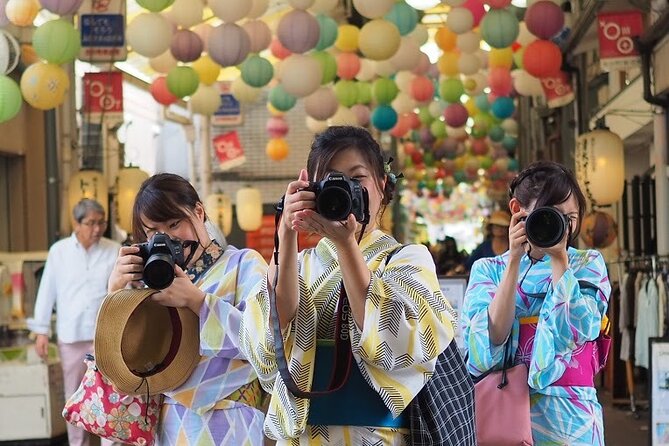
Kyoto’s Furukawacho Shopping Arcade gives this experience its character. Instead of moving from one famous temple to the next, you spend time in a local shopping street, beneath hanging lanterns, learning skills tied to everyday Japanese life. You choose two workshops: knife sharpening, obanzai cooking, or calligraphy.
I like the practical side of the program. You can learn a skill you may use at home, then carry away a finished hanging scroll or a better sense of Kyoto’s home cooking. I also like the private format, with an English-speaking staff member assigned to your group rather than a large mixed crowd.
The main drawback is that you cannot freely count on your first-choice workshops. Availability is checked after booking, and the experience accepts only groups of two to six people. The booking is also non-refundable, so confirm your plans before paying.
Key points to know before booking
- Choose two of three workshops: Knife sharpening, obanzai cooking, or Japanese calligraphy.
- Work inside a local shopping arcade: Furukawacho is described as the kitchen and daily-life base of the neighborhood.
- Learn from local specialists: An artisan with 26 years of sharpening experience leads the knife session, while chef-owner Nishimura teaches obanzai.
- Private English support: Your group receives an English-speaking staff member throughout the workshops.
- Plan for a three-hour visit: The individual sessions last about 70 or 90 minutes, with two workshops included.
- Book only when your plans are firm: The activity costs $98.53 per person and is non-refundable.
Why Furukawacho Shopping Arcade changes the experience
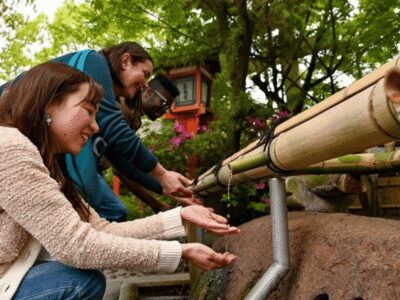
The setting is more than a meeting point. Furukawacho Shopping Arcade is a local shopping street in Kyoto’s Shirakawa area, built around the idea of Retro and Modern. Lanterns hang from the roof, and the arcade functions as a place where local people shop and manage ordinary daily life.
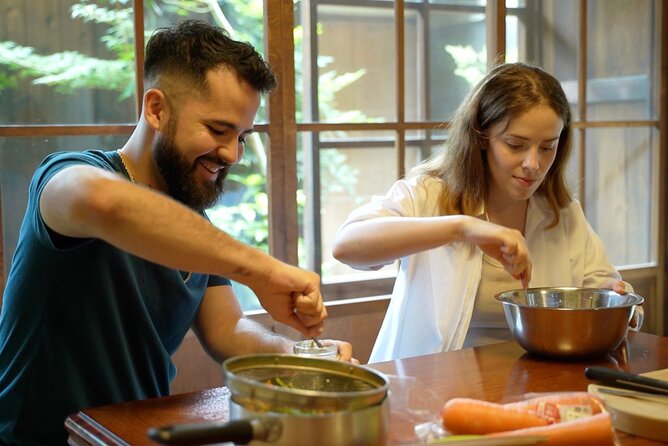
That matters because the workshops connect to the street around you. You are not simply shown a cultural activity in a blank classroom. For obanzai, you buy ingredients from shops in the arcade before cooking. For knife sharpening, you visit a store devoted to sharpening cutting tools. For calligraphy, you work with the basic tools used to write Japanese characters.
I like this link between place and activity. Kyoto can easily become a parade of temples, gardens, and formal cultural sites. This visit gives you a look at another side of the city, where food shopping, craft skills, and household traditions still matter.
The arcade is also convenient. The meeting point is near public transportation, and the activity begins and ends at Furukawacho Shopping Arcade. You arrange your own way there because private transportation is not included.
A few more Kyoto tours worth putting on the shortlist
- PERFECT KYOTO 1-Day Bus Tour
★ 5.0 · 13,518 reviews - Kyoto: Fushimi Inari, Kinkakuji, Bamboo Grove 1 Day Bus Tour
★ 4.8 · 4,316 reviews - Kyoto: Tea Ceremony in a Traditional Tea House in Kiyomizu
★ 4.9 · 3,519 reviews
Choosing between the three workshops
You select two workshops from the three choices. The provider checks availability after booking, so send your preferences by message and understand that your preferred combination may not be possible.
Each choice gives you a different kind of souvenir. Knife sharpening offers a useful skill. Obanzai gives you a cooking lesson tied to Kyoto family food. Calligraphy lets you create a finished hanging scroll. Your best choice depends on whether you want something practical, edible, or decorative.
Knife sharpening with a 26-year artisan
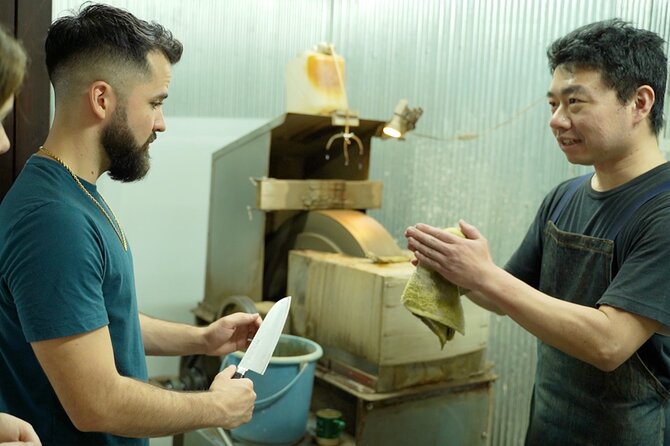
The knife sharpening workshop lasts about 90 minutes. You visit a shop that specializes in sharpening cutting tools on a whetstone, then receive instruction from an artisan with 26 years of experience.
This is not the sort of activity you usually fit into a first visit to Kyoto. It is a quiet, hands-on look at the care given to kitchen tools. The practical value is clear: you learn how to sharpen knives properly, which may make everyday cooking more enjoyable after you return home.
I would choose this session if you cook often or enjoy craft demonstrations that involve close attention and technique. It may be less appealing if you want a purely sightseeing-based activity or if you would rather make something you can display immediately.
The session is also a reminder that Japanese food culture involves more than recipes. Knives, preparation, and maintenance all shape the final meal. An English-speaking staff member helps your group follow the instruction and ask questions.
Obanzai cooking with chef-owner Nishimura
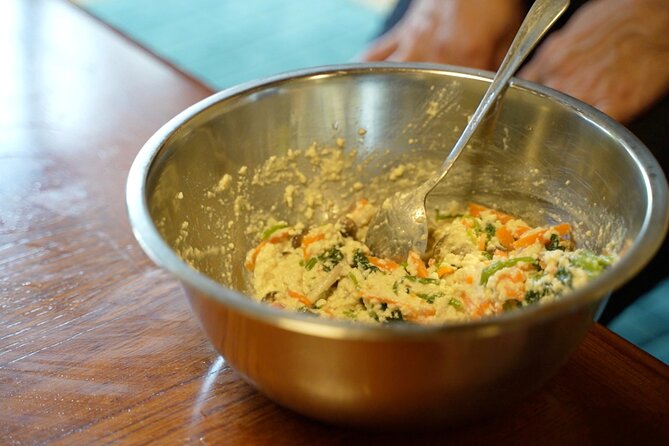
The obanzai workshop lasts about 70 minutes and is led by Nishimura, the chef-owner of Kyo-gohan Nishimura, an obanzai shop in the arcade.
Obanzai is a Kyoto term for home-cooked dishes, with recipes passed through families over generations. The lesson focuses on the kind of food connected to household cooking rather than restaurant spectacle. You first buy ingredients at shops in Furukawacho, then prepare the dishes with Nishimura.
That shopping step makes this the most place-based option of the three. You see where ingredients come from, then use them in a dish linked to Kyoto’s home food traditions. The session is relatively short at 70 minutes, so it is designed as a focused introduction rather than a full cooking course.
I would pick obanzai if food is one of your main reasons for visiting Kyoto. It also suits families and groups who want to do something together. The limitation is that the exact ingredients and dishes are not specified in advance, so you should not book expecting a particular menu.
Same city, a completely different kind of day:
- Kyoto Geisha Walking Tour: Gion District & Hidden Gems
★ 4.7 · 3,273 reviews - Kyoto: Tea Ceremony Ju-An at Jotokuji Temple
★ 4.9 · 3,207 reviews - Kyoto: Gion Magical Night Walking Tour with Geisha Trivia
★ 4.9 · 2,393 reviews - Kyoto: 45-Minute Tea Ceremony Lesson Experience
★ 4.3 · 2,378 reviews
Calligraphy and your own hanging scroll
The calligraphy workshop lasts about 90 minutes. You learn the shape of kanji and the use of the brush, ink, and suzuri, the inkstone used to prepare ink. You then practice writing and ask the instructor how to write kanji for your name.
The final result is a one-of-a-kind hanging scroll. That gives this option a clear keepsake, unlike knife sharpening, where the main reward is the technique itself. It also offers a gentle introduction to Japanese writing without requiring you to already know kanji.
I would choose calligraphy if you want a calm activity and a physical memento from Kyoto. It may be the easiest option for someone who prefers an artistic lesson over cooking or tool maintenance. The session still requires patience, since the lesson includes learning brush handling and character shapes before producing the finished piece.
What the private English support adds
This is a private activity for your own group of two to six people. An English-speaking staff member attends all workshops, which gives you a direct way to follow instructions and ask questions during the lesson.
The private format is useful because each workshop involves technique. Sharpening a knife, preparing obanzai, and controlling a calligraphy brush are not activities where you want to miss a demonstration. With your own group, the pace and questions stay focused on the people you came with.
The group limit is important. Solo bookings are not accepted, and groups larger than six cannot take part in the same reservation. If you are traveling alone, you would need to arrange to join a group separately, but the stated course accepts groups from two to six only.
There is no named English guide provided in the details. The local specialists are identified by role, including the 26-year sharpening artisan and Nishimura for obanzai, while the English-speaking staff member supports communication.
Timing, meeting point, and the three-hour plan
The full experience takes about three hours. The workshop choices themselves run for 70 or 90 minutes, so allow time for moving between activities, explanations, and the arcade portion of the visit.
You meet at:
古川趣蔵 Furukawashuzo / 白川まちづくり会社
546-1 Furukawachō, Higashiyama Ward, Kyoto, 605-0026, Japan
The experience ends back at the meeting point. That makes it easy to continue your Kyoto plans afterward, but you should not assume the activity will deliver you to another neighborhood.
The arcade is near public transportation. Private transportation is not included, so you are responsible for reaching the meeting point and returning to your accommodation or next stop.
The activity is often booked about 39 days ahead. That pattern suggests you should not leave it until the last few days of a busy Kyoto visit, especially if you want a particular pair of workshops. Confirmation is subject to availability, and the provider contacts you by email or message after booking.
Is $98.53 per person a fair price?
At $98.53 per person, this is not a cheap drop-in lesson. The value depends on what you want from a Kyoto activity.
You receive two workshops, a private English-speaking staff member, and access to local specialists. The fee also covers a program built around an actual neighborhood shopping arcade rather than a generic cultural demonstration. If you choose calligraphy, you leave with a hanging scroll. If you choose obanzai, the ingredient shopping and cooking give you a direct connection to Kyoto food culture. With knife sharpening, the useful skill may continue paying off at home.
The price looks stronger for a group of two to six people who value private attention. It is less compelling if you only want a quick introduction to Japanese culture or if you are mainly seeking a low-cost cooking class.
Since only two workshops are included, compare the price with the amount of time you will spend actively participating. This is a compact, tailored cultural session, not a full-day excursion. You are paying for access, instruction, interpretation, and the setting.
Who will enjoy this most?
I would recommend this experience to you if you want a break from Kyoto’s major sights and prefer to take part in something rather than simply look around. It suits couples, families, and small groups who can commit to a three-hour block.
Food-focused visitors should consider obanzai first. Home cooks should look closely at knife sharpening. Anyone searching for a personal souvenir may prefer calligraphy.
It also works well for a repeat visit to Kyoto. If you have already seen several temples and want a closer look at ordinary local culture, the shopping arcade offers a useful change of pace.
This is not the best match for a solo visitor, a group larger than six, or anyone who needs fixed workshop choices. You should also avoid booking if your Kyoto schedule is uncertain, since the activity cannot be canceled for a refund or changed after purchase.
How to choose your two activities
Use this quick guide when sending your preferences:
- Choose knife sharpening and obanzai if you enjoy cooking and want the most practical pair.
- Choose obanzai and calligraphy if you want one food activity and one lasting souvenir.
- Choose knife sharpening and calligraphy if you prefer craft and technique over cooking.
- Choose all three as preferences, but understand that only two are included and availability decides the final combination.
The private English staff helps with communication, but you should still send your preferred workshops clearly by message. If one is unavailable, the prepaid fee is refunded to the credit card used for payment, according to the provided terms.
My verdict: book it for local culture, not a sightseeing checklist
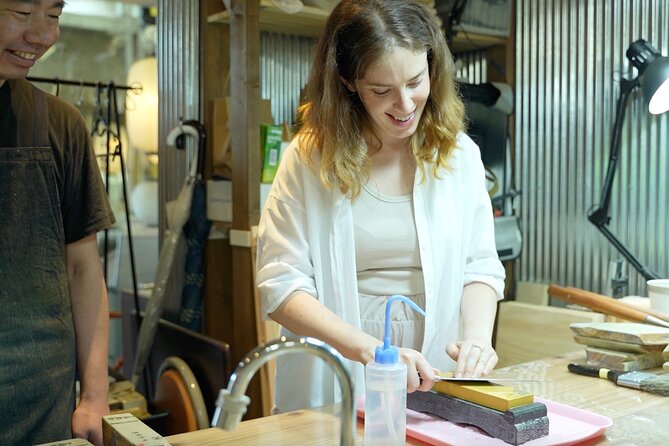
I would book this if I wanted a small, hands-on look at Kyoto life. The strongest features are the local arcade setting, the choice of two distinct workshops, and the access to people who work in those fields. The obanzai session with Nishimura and the knife lesson with a 26-year sharpening artisan give the program a useful sense of place.
I would skip it if I needed flexible cancellation, private transportation, or a guaranteed workshop combination. But for a group of two to six with firm plans, $98.53 buys more than a demonstration. You get time in a local shopping street, practical instruction, and a choice between a skill, a meal, and a keepsake.
FAQ
Where does the experience take place?
It takes place at Furukawacho Shopping Arcade in the Shirakawa area of Kyoto, Japan.
What is the meeting point?
Meet at 古川趣蔵 Furukawashuzo / 白川まちづくり会社, 546-1 Furukawachō, Higashiyama Ward, Kyoto, 605-0026, Japan.
Where does the activity end?
The activity ends back at the meeting point in Furukawacho Shopping Arcade.
How long does the experience last?
The full experience lasts approximately three hours.
How many workshops are included?
You choose two workshops from knife sharpening, obanzai cooking, and calligraphy.
Can I choose any two workshops?
You can state your preferred workshops, but participation depends on reservation availability. Your preferred choice may not be available.
Is English assistance provided?
Yes. An English-speaking staff member attends your group at all the workshops.
How many people can participate?
The activity accepts groups of two to six people only.
Is transportation included?
Private transportation is not included. The meeting point is near public transportation.
Can I cancel for a refund?
No. The experience is non-refundable and cannot be changed after booking. If a requested workshop is unavailable, the prepaid fee is refunded to the card used for payment.
Newest Kyoto experiences on the site
- Treasures of Kyoto: Gion & historical Walking Tour★ 5.0 · 6 reviews
- Whisk Your Own Matcha: A Zen Matcha Experience at Temple★ 3.6 · 7 reviews
- Kyoto tea town for matcha lovers★ 5.0 · 16 reviews
- Uji: Private immersion into Kyoto’s tea and reglious culture★ 5.0 · 17 reviews
- Kyoto Matcha Green Tea Tour★ 4.5 · 23 reviews
- Uji and Wazuka Matcha Farm Half Day Private Guided Tour★ 5.0 · 21 reviews
- Utilising upcycled Matcha! Creating matcha incense (Uji, Kyoto)★ 5.0 · 6 reviews
- Sacred Temple Yoga Experience in Japan★ 5.0 · 3 reviews
Private, compared.
Fushimi Inari Hidden Hiking Tour (Private Option Available)
Read our review →
Private Kyoto Tour with a Local, Highlights & Hidden Gems, Personalised
Read our review →
Kyoto 6hr Private Tour with Government-Licensed Guide
Read our review →
10 Must-see Spots in Kyoto One Day Private Tour (up to 7 people)
Read our review →
Kyoto 4hr Private Tour with Government-Licensed Guide
Read our review →
Private Kyoto Tour with Licensed Guide & Vehicle (Max 15 persons)
Read our review →