
Reviewed · KYOTO KIMONO RENTALS
Men’s Kimono Lesson and Shopping in Kyoto
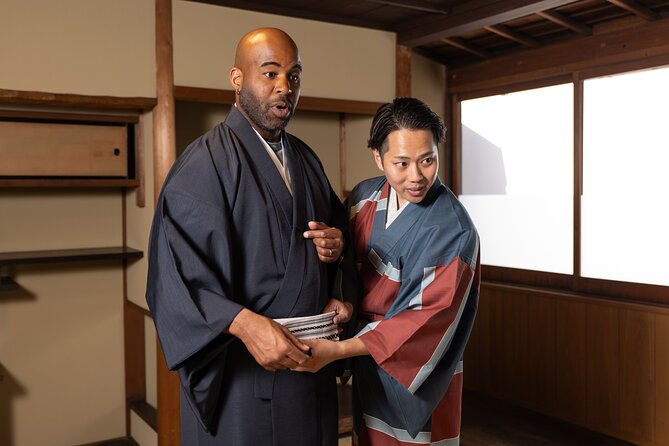
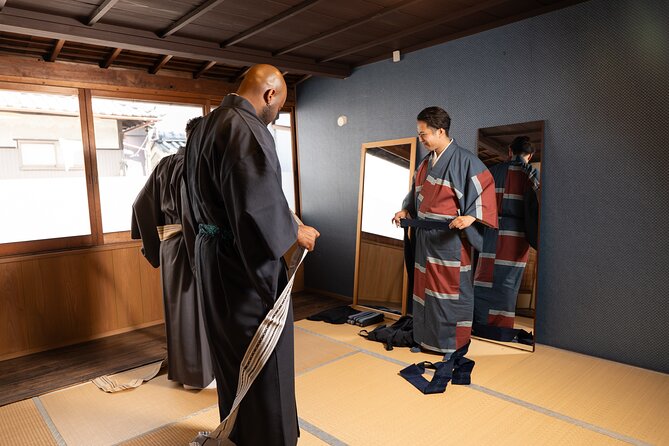
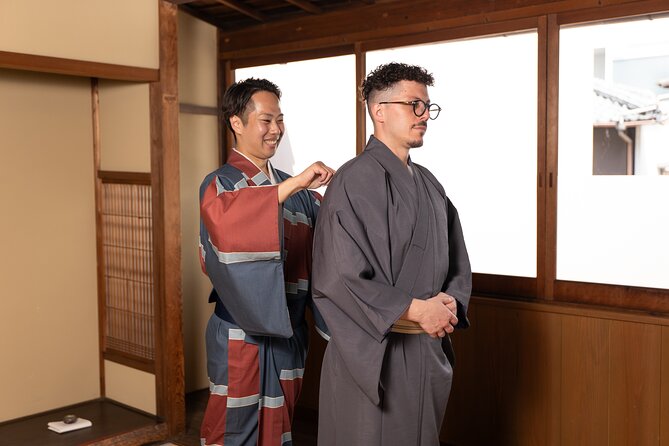
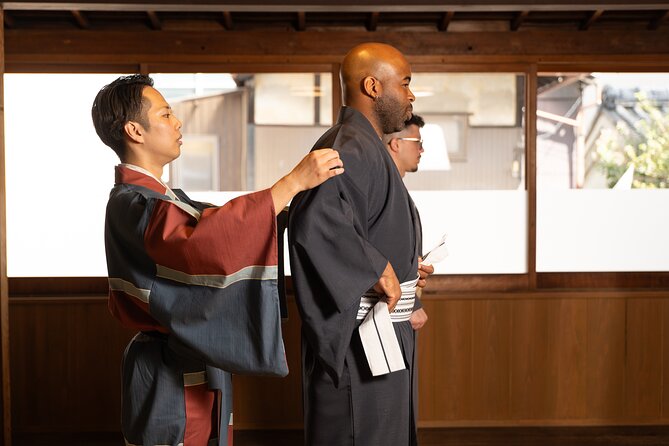
The best part of this Kyoto experience is that you do not simply rent a costume for a photograph. Shogo teaches you how to put on men’s kimono yourself, from the juban worn underneath to the final folding and storage. His nearly 10 years of daily kimono wear give the lesson a practical feel.
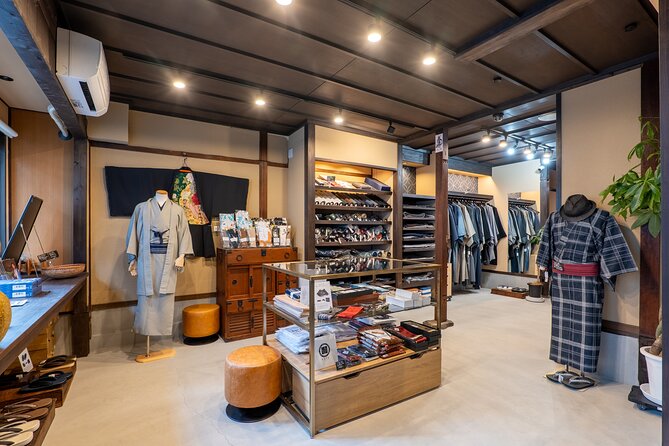
I like two things here. First, the class takes place in a real men’s kimono store run by a company with more than 20 years of experience. Second, the group is limited to four people, so you can ask direct questions and get help with fit, color, and the meaning of each piece.
The main consideration is the shopping portion. You are welcome to learn without buying, but the session is also designed to help you choose a kimono if you want one. At $65.15 for about two hours, it offers more than a basic try-on, though a visitor only seeking a quick photo may prefer a simpler rental.
Key points
- Learn from Shogo in person: The host is the creator of Let’s Ask Shogo, a popular YouTube channel focused on Japanese culture and kimono.
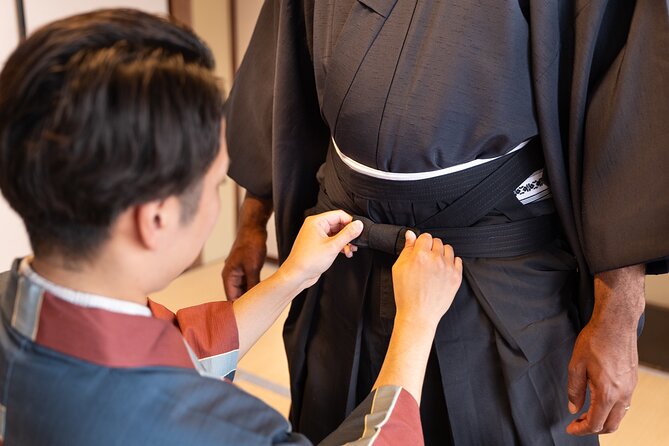
- Dress yourself step by step: Practice putting on the juban, kimono, and related pieces rather than relying entirely on a dresser.
- Study authentic clothing: The lesson happens inside a long-established men’s kimono shop, not a staged photo studio.
- Get calm buying advice: Shogo and the shop staff can help with size, color, and selecting pieces without requiring a purchase.
- Bring one female companion to watch free: Harumi, Shogo’s wife, may also teach or dress women for an added fee.
- Expect a small class: The maximum group size is four, which leaves room for questions and individual help.
Why this Kyoto kimono lesson is different from a rental
Many kimono activities in Kyoto focus on getting dressed quickly, taking photographs, and returning the clothing before the next appointment. That can be fun, but it leaves you dependent on someone else to manage the layers and ties.
This lesson takes a slower and more useful route. Shogo explains the clothing as you handle it, showing how the pieces fit together and why proper order matters. You are not just wearing a kimono for an hour. You are learning enough to understand what you have on and, with practice, to put it on again.
That difference matters if you already own Japanese clothing, study Japanese culture, practice budo, or want a stronger connection to the clothing beyond the usual tourist photograph. It also helps beginners who feel nervous about touching a traditional garment incorrectly.
The format remains approachable. You do not need prior kimono experience, and the lesson is intended for beginners as well as people with a serious interest in men’s traditional clothing. Shogo’s role is part teacher and part guide, with explanations that connect the practical steps to cultural meaning.
More kimono and yukata rentals in Kyoto:
- Kimono Tea Ceremony at Kyoto Maikoya, NISHIKI
★ 5.0 · 911 reviews - Kyoto: Kimono Rental with Hairstyling and Accessories
★ 4.8 · 653 reviews - Kyoto: Kimono Tea Ceremony at Orizuruya Gion
★ 4.9 · 618 reviews
Meeting Shogo at the Kyoto kimono shop
The activity begins at 432 Iwatoyamacho in Kyoto’s Shimogyo Ward, postal code 600-8445. It is near public transportation, and the shop and classroom are described as easy to find and air conditioned.
The setting is important. You are learning inside a working men’s kimono store operated by a company with more than two decades of experience. That gives you access to actual garments and staff who deal with sizing and selection, rather than clothing chosen only for a short photo session.
Shogo is the public face of Let’s Ask Shogo, a YouTube channel with more than 1.8 million subscribers. If you have watched his videos, meeting him in person may be part of the appeal. The lesson still has value if you do not know the channel, since the focus is on clear instruction and practical use.
The small maximum of four people is another advantage. Kimono dressing involves folds, ties, and adjustments that can be hard to follow in a large group. With fewer participants, you have a better chance to stop and ask about a loose layer, an unfamiliar term, or a fit problem.
The first layers: learning the juban and kimono order
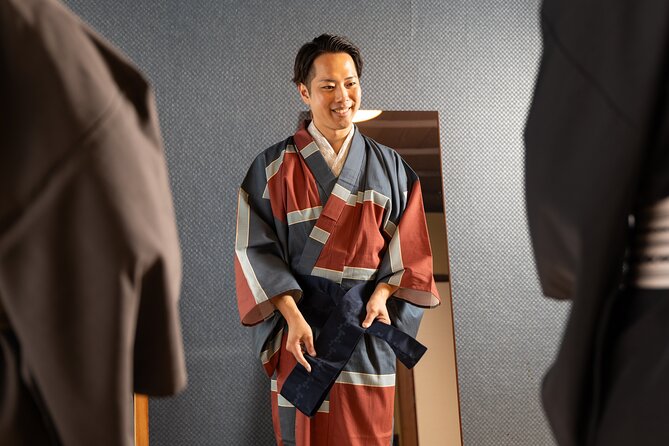
The lesson includes the proper procedure for putting on a juban, the undergarment worn beneath the main kimono. This is one of the useful details that a quick rental experience may skip.
The juban affects how the kimono sits and how the neckline looks. Learning to place it correctly gives you a better base for the rest of the outfit. Shogo then guides you through the main kimono and the other pieces needed to complete the look.
Expect instruction rather than a theatrical demonstration. You learn by following the process, with Shogo helping as needed. The aim is for you to understand the sequence and handle the clothing with more confidence.
This is also where patience matters. Traditional clothing can feel unfamiliar at first, especially if you are used to modern Western garments that require little adjustment. The class gives you time to ask questions and repeat steps instead of rushing to a finished outfit.
The lesson also covers cultural meaning. Shogo explains what the pieces represent and how men’s kimono is worn, giving you a clearer sense of why the clothing is arranged in a particular way. That context makes the hands-on work easier to remember.
Practicing until you can dress yourself
One of the strongest reasons to choose this activity is the chance to learn the method, not just receive the result. The goal is that you can wear a kimono by yourself after the session.
That does not mean you will master every detail instantly. Kimono dressing uses techniques that take repetition, and your first attempt may need correction. Still, leaving with a working understanding is far more useful than leaving with only a set of photographs.
Shogo is described as patient and attentive, adjusting the lesson to individual needs. That matters for a first-timer. Some people will want cultural explanation, while others will focus on the mechanics of dressing. The small format allows the lesson to respond to those interests.
You also learn how to fold the kimono after wearing it. Folding is not a decorative extra. It helps you handle the garment properly and gives you a practical habit to take home. If you later buy a kimono, this part of the lesson becomes especially useful.
The activity is also suitable for someone who already owns a kimono but lacks confidence putting it on. You can use the session to check your method and ask questions about combining pieces. One visitor with an existing kimono added a haori after receiving help choosing a suitable piece, which shows how the lesson can support a growing wardrobe.
More market walks in Kyoto:
- Nishiki Market Brunch Walking Tour (7 Tastings + Brunch)
★ 5.0 · 1,355 reviews - Kyoto Nishiki Market Food and Culture Walking Tour
★ 5.0 · 412 reviews - Kyoto: Nishiki Market Tea Ceremony with Koto Performance
★ 4.8 · 294 reviews - Kyoto: Local Food Tasting Tour at the Nishiki Market
★ 4.7 · 135 reviews
Understanding the pieces instead of wearing a costume
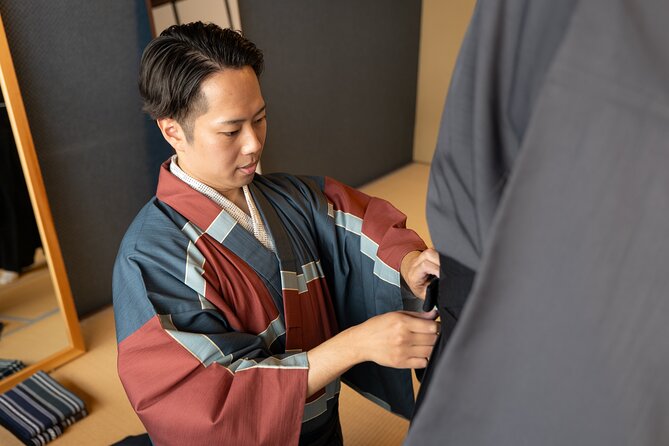
A kimono can look simple at first glance, but the outfit depends on layers, proportions, and careful arrangement. The lesson helps you see those details.
Shogo explains the clothing in a way that connects the garment to Japanese tradition. You can ask about the role of individual pieces, how they should fit, and what makes an outfit look balanced. The instruction is especially useful if you are interested in the clothing as part of Japanese culture rather than as a one-time costume.
The experience also gives you a chance to examine materials and construction in a proper shop. You might find yourself noticing differences in color, pattern, texture, and form that are easy to miss when a staff member dresses you quickly.
That said, this is an introduction rather than a formal multi-day course. Two hours is enough to learn the main dressing process and ask plenty of questions, but not enough to cover every style, formality level, fabric, or regional variation. Keep your expectations at the right level and the time should feel well used.
Browsing the men’s kimono collection
After the lesson, you can look through the shop’s selection. This is not a compulsory sales stop. The activity is designed to support a purchase, but you can make clear that you only want to learn.
That distinction matters. Several specific details make the shopping element useful: staff can help with the correct size and color, Shogo can explain what you are considering, and you can see the clothing after learning how the pieces work together.
Shopping before the lesson can feel confusing. You may not know which layers are essential, what proportions look right, or how a haori works with a kimono you already own. Shopping after the lesson gives you a better basis for judging what you need.
The store can also help you avoid a common mistake: buying a single attractive garment without understanding how it fits into a complete outfit. Shogo and the shop owner have helped visitors choose pieces for a full set, including size and color decisions.
Still, you should decide your budget before browsing. Traditional clothing can encourage impulse purchases, especially once you understand more about the garments. The good news is that the experience does not require you to buy anything, and the guidance is intended to be helpful rather than forceful.
If you are serious about taking home a kimono, use the session to ask practical questions. You can discuss what works with clothing you already own, what size you need, and which pieces are most useful for your plans. If you are not buying, enjoy the shop as part of the lesson and say so clearly.
What the $65.15 price includes
At $65.15 per person, this is not the cheapest way to put on a kimono in Kyoto. The price makes more sense if you value instruction, access to an authentic shop, and the chance to ask questions directly.
A basic rental tends to prioritize appearance and convenience. This experience adds teaching from Shogo, hands-on dressing practice, cultural explanation, folding instruction, and optional help with a purchase. You are paying for time and personal attention, not just for access to clothing.
The value is strongest for three types of visitors:
- Someone who wants to learn how to dress independently.
- Someone interested in Japanese history and traditional clothing.
- Someone considering buying a men’s kimono and wanting help before spending more.
The value is weaker if your only goal is a fast photograph in Kyoto. In that case, a rental with professional dressing may be simpler and less expensive. You should also remember that the listed price does not include a kimono purchase. If you buy clothing, that is an additional decision and cost.
Because the class is limited to four people, the price also buys a more personal setting than a large group activity. I would view it as an introductory lesson with shopping advice, not as a full wardrobe consultation or a long cultural course.
Bringing a female companion
One female partner or friend can watch the session free per booking. This is a useful detail if you are traveling together and she wants to see the lesson without taking part in the men’s dressing practice.
The activity also offers an option for women to take part for an extra fee. Harumi, Shogo’s wife, may dress or teach women, so you can ask about that after booking.
The key point is to clarify your plan in advance. The standard experience centers on men’s kimono, while women’s instruction is an added arrangement. A companion who only wants to watch should be covered by the free observer provision, but anyone wanting to be dressed or taught should ask about the additional fee.
Timing, group size, and practical planning
The activity lasts about two hours and ends back at the starting point. That makes it easy to fit into a Kyoto day without giving up an entire morning or afternoon.
I would avoid placing an important timed reservation immediately afterward. The lesson itself is scheduled for two hours, but you may want a little breathing room for questions or browsing. Since the experience is in Kyoto’s Shimogyo Ward and near public transportation, it can work well alongside other central Kyoto plans.
Confirmation is sent within 48 hours of booking, subject to availability. The activity has a maximum of four participants, and most people can take part. A mobile ticket is provided, so keep it available on your phone.
The cancellation terms are straightforward but strict close to the start time. You can cancel for a full refund up to 24 hours before the experience begins. Changes or cancellations made less than 24 hours ahead are not accepted for a refund.
Who will get the most from this lesson
I would choose this experience over a standard rental if you want to understand men’s kimono and use what you learn later. It is a particularly good match for first-time wearers who feel uncertain about the layers and for people who already own a garment but need instruction.
It also suits culture-focused visitors, students of Japanese history, martial artists, and anyone who prefers a conversation with a specialist over a fast photo stop. Shogo’s YouTube background may appeal to fans of Let’s Ask Shogo, but you do not need to follow the channel to benefit from the class.
The experience is less suitable if you want a large cultural show, a walking tour, or a full day of sightseeing. It stays in one shop and classroom for about two hours. It also centers on men’s clothing, so a woman who wants her own lesson should arrange Harumi’s added instruction.
Should you book the Men’s Kimono Lesson and Shopping in Kyoto?
Book it if you want to learn, not simply rent. The strongest feature is the chance to put on the clothing yourself while Shogo explains the order, purpose, and meaning of the pieces. The authentic shop, four-person limit, and optional buying advice add real value.
I would skip it only if you want a quick costume photograph or have no interest in handling the clothing. For everyone else, $65.15 is a fair price for a focused introduction, especially if you may purchase a kimono later. Go in with a clear budget, tell Shogo whether you are shopping or only studying, and you should get a useful and memorable look at men’s traditional clothing in Kyoto.
FAQ
Where does the men’s kimono lesson meet?
The experience starts at 432 Iwatoyamacho, Shimogyo Ward, Kyoto, 600-8445, Japan. It ends back at the same meeting point.
How long does the experience last?
The lesson and shopping experience lasts approximately two hours.
How many people can join?
The activity has a maximum of four participants.
Is the lesson suitable for beginners?
Yes. The experience is designed for beginners and culture enthusiasts, with step-by-step guidance on wearing men’s kimono.
Who teaches the lesson?
Shogo teaches the experience. He is the creator of the Let’s Ask Shogo YouTube channel and has worn kimono daily for nearly 10 years.
Can I buy a kimono during the experience?
Yes. You can receive help choosing and purchasing a kimono at the men’s kimono store, but buying anything is optional.
Can a female companion attend?
One female guest can watch for free per booking. Harumi, Shogo’s wife, may dress or teach women for an additional fee.
Is the activity near public transportation?
Yes. The meeting point is near public transportation.
What is the cancellation policy?
You can cancel up to 24 hours before the start time for a full refund. Cancellations or changes made less than 24 hours before the experience are not accepted for a refund.
Newest Kyoto experiences on the site
- Treasures of Kyoto: Gion & historical Walking Tour★ 5.0 · 6 reviews
- Whisk Your Own Matcha: A Zen Matcha Experience at Temple★ 3.6 · 7 reviews
- Kyoto tea town for matcha lovers★ 5.0 · 16 reviews
- Uji: Private immersion into Kyoto’s tea and reglious culture★ 5.0 · 17 reviews
- Kyoto Matcha Green Tea Tour★ 4.5 · 23 reviews
- Uji and Wazuka Matcha Farm Half Day Private Guided Tour★ 5.0 · 21 reviews
- Utilising upcycled Matcha! Creating matcha incense (Uji, Kyoto)★ 5.0 · 6 reviews
- Sacred Temple Yoga Experience in Japan★ 5.0 · 3 reviews
Kyoto Kimono Rentals, compared.
KYOTO Tea Ceremony with kimono near by Imamiya Jinjya Shrine
Read our review →
Kimono and Tea Ceremony Experience at Cultural Asset
Read our review →
Family-Friendly Kimono & Yukata Experience at WARGO
Read our review →
1 Day Traditional Japanese Kimono Rental Experience
Read our review →Browse the lists this tour appears in