Reviewed · PRIVATE
Kyoto Adventures Private English Tour With Hotel Pick Up
Kyoto’s biggest challenge is not finding beautiful sights. It is fitting them together without losing half the day to crowded buses, confusing train changes, and long walks between far-flung districts. This private car tour tackles that problem by linking Kinkakuji, Arashiyama, Fushimi Inari, and Gion in one long day.
I like the door-to-door convenience and the freedom to linger. You can spend longer at a temple, shorten a stop, or pause for lunch at Nishiki Market instead of marching behind a fixed group. The private vehicle also makes this a strong choice for families or groups of up to six.
The main catch is important: the tour does not include a tour guide, and the experience may feel more like a private driver with sightseeing stops than a fully guided cultural tour. Communication and guiding have been excellent with some drivers, including Aka, Usama, Nomi, and Hassan, but the level of explanation may depend on who is assigned.
Key points to know before booking
- Six major Kyoto areas in one day: The route covers Kinkakuji, Arashiyama, Nishiki Market, Nijo Castle, Kiyomizu-dera, Fushimi Inari, and Gion.
- Private air-conditioned vehicle: Your group travels together without waiting for other participants or changing between crowded buses and trains.
- Flexible timing: You can adjust how long you spend at each stop, within the overall 8 to 9 hour day.
- Admissions cost extra: Temple and castle entry fees are not included, and food and drinks are also your responsibility.
- Guiding quality can vary: Some assigned guides have been praised for explanations, patience, photos, and local tips, while others have provided mainly transportation.
- Best value for a full group: At $476.24 for up to six people, the cost works much better for six than for one or two.
Why a private car helps in Kyoto
Kyoto’s sights are spread across the city. Kinkakuji is in the northwest, Arashiyama lies farther west, Fushimi Inari is in the southeast, and Gion and Kiyomizu-dera sit around the eastern edge of the central districts. Public transportation is useful, but this particular combination requires planning and repeated transfers.
A private vehicle gives you a simple base for the day. You leave your hotel, visit the sights, return to the car, and continue. You do not need to work out which bus reaches the next temple or keep checking the last train connection.
That convenience matters most during a short stay. You can see a broad slice of Kyoto in one day, though you should understand the tradeoff. Seven stops create a busy schedule, and each place gets only about an hour to an hour and a half. You will see the highlights, not every garden, hall, trail, or museum.
The tour lasts about 8 to 9 hours. That is a full day, so wear comfortable shoes and keep your expectations realistic. This is a sightseeing sweep, not a slow temple study.
A few more Kyoto tours worth putting on the shortlist
- PERFECT KYOTO 1-Day Bus Tour
★ 5.0 · 13,518 reviews - Kyoto: Fushimi Inari, Kinkakuji, Bamboo Grove 1 Day Bus Tour
★ 4.8 · 4,316 reviews - Kyoto: Tea Ceremony in a Traditional Tea House in Kiyomizu
★ 4.9 · 3,519 reviews
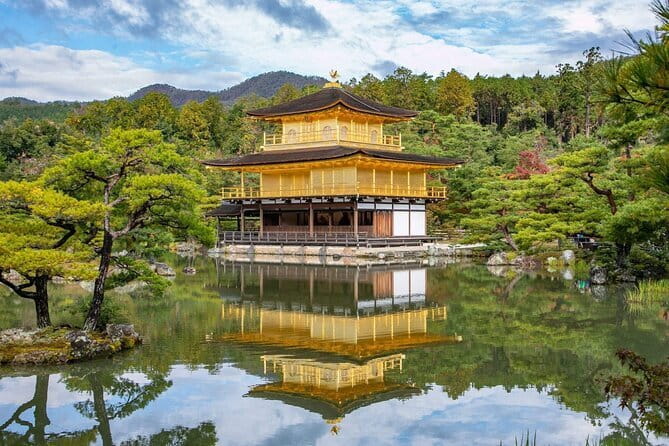
Kinkakuji, Kyoto’s Golden Pavilion
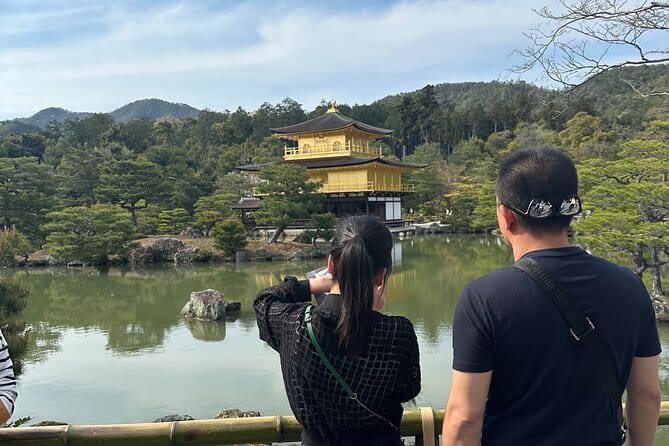
Kinkakuji is the classic first image many people have of Kyoto. The upper floors of this Zen Buddhist temple are covered in gold leaf and reflect in a pond surrounded by carefully arranged gardens.
The suggested visit lasts about one hour. That is enough to walk the main path, view the pavilion from the pond, and see the surrounding grounds at a sensible pace. You do not enter the Golden Pavilion itself, so the appeal is the exterior view and the garden setting.
The listed admission price is ¥500, paid separately. That small fee is easy to overlook when comparing tour prices, but it is part of the day’s additional cost.
I would use this stop for photographs and a first taste of Kyoto’s temple design. It is also one of the places most likely to feel crowded, so the private vehicle helps with getting there but cannot make the grounds private. Keep your visit focused, since the day has many more stops ahead.
Arashiyama and the bamboo forest
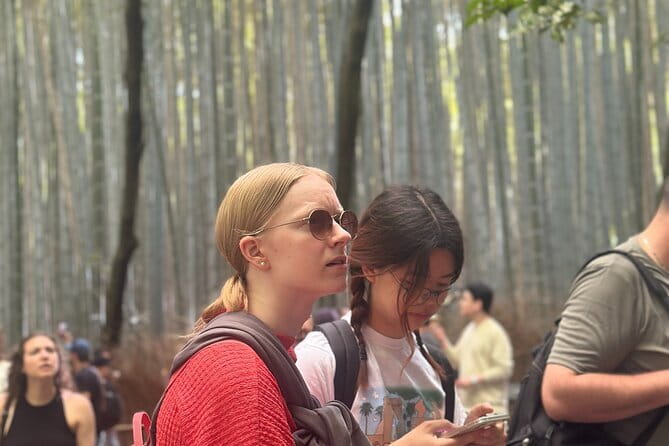
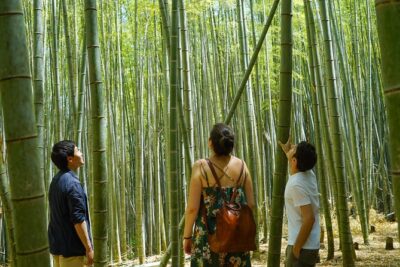
Arashiyama brings a different mood. The bamboo grove gives you a narrow walking route beneath tall green stalks, while nearby Tenryu-ji adds a UNESCO World Heritage temple and landscaped gardens.
The planned stop is about 90 minutes. That allows time for part of the bamboo walk and a visit to Tenryu-ji, but it is not enough for every corner of the wider Arashiyama area. If the bamboo grove is your main reason for booking, tell your driver or guide early and protect enough time for it.
The information provided lists admission as free, but Tenryu-ji and other Kyoto sights can have separate paid areas. Since all entry tickets are excluded, confirm the current fee at the gate and carry some Japanese yen.
Arashiyama is one of the stops where flexibility helps. You might prefer a quick bamboo walk and more garden time, or the reverse. A driver who communicates well can help you make that choice. Guides such as Aka and Hassan have been praised for waiting patiently and helping with site questions, but that level of assistance is not guaranteed as part of the basic inclusions.
Nishiki Market for lunch and local flavor
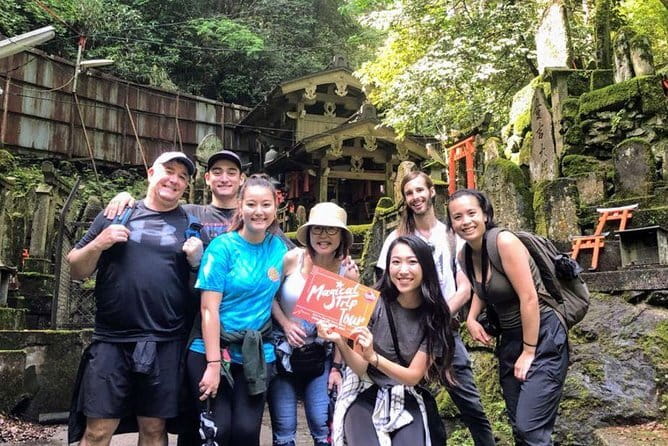
Nishiki Market is the natural food stop on this route. The entrance is free, and vendors sell a range of food and other goods. Prices vary, so bring cash if you want to snack or make purchases.
This is not a sit-down lunch arranged for you. You choose what to eat and how long to browse. That makes the stop flexible, but it also means you should not expect food or drinks to be included in the tour price.
The suggested duration is 90 minutes. That gives you time to walk through the market and eat, though you may want to keep the meal simple so the afternoon schedule stays on track. If you have dietary restrictions, the tour information does not promise special arrangements, so ask before booking.
I like this pause because it breaks up a long run of temples. Kyoto is more than polished wooden halls and scenic gardens, and Nishiki gives you a chance to see everyday food culture in a concentrated setting. It is also one of the few stops where you control nearly everything: what you buy, what you taste, and how long you browse.
Same city, a completely different kind of day:
- Kyoto Geisha Walking Tour: Gion District & Hidden Gems
★ 4.7 · 3,273 reviews - Kyoto: Tea Ceremony Ju-An at Jotokuji Temple
★ 4.9 · 3,207 reviews - Kyoto: Gion Magical Night Walking Tour with Geisha Trivia
★ 4.9 · 2,393 reviews - Kyoto: 45-Minute Tea Ceremony Lesson Experience
★ 4.3 · 2,378 reviews
Nijo Castle and the shogun’s former residence
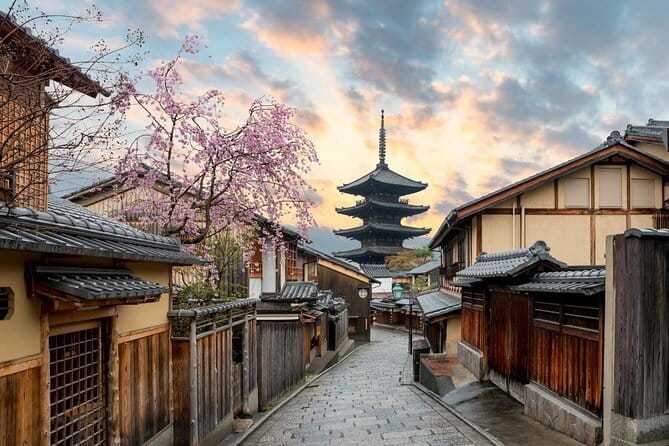
Nijo Castle offers a change from religious sites. It is a UNESCO World Heritage Site with historic buildings, gardens, and the famous Ninomaru Palace. The castle is tied to Japan’s military rulers, giving the day a political and residential counterpoint to Kyoto’s temples and shrines.
The planned stop lasts about one hour. That should let you see the main buildings and gardens, but the grounds can reward a longer visit if you want to read signs and take your time.
The listed ticket price is ¥1,000, paid separately. Add this to the ¥500 Kinkakuji admission and the ¥500 Kiyomizu-dera ticket when working out your daily spending. Fushimi Inari and Gion do not have a general admission charge, according to the tour details.
Nijo Castle is a good place to ask for context if you have a guide who offers explanations. Some assigned guides have provided useful background and practical tips, while the experience has also been described as mostly self-guided. If historical interpretation matters to you, make that clear before the vehicle leaves your hotel.
Kiyomizu-dera and the wooden stage
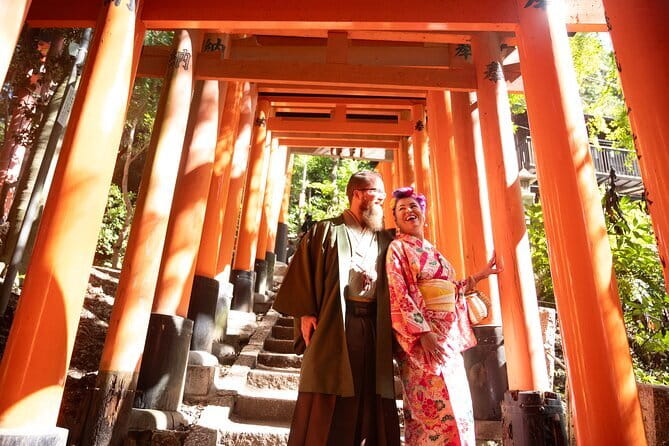
Kiyomizu-dera is one of Kyoto’s most memorable temple settings. Its wooden stage projects from the hillside and gives you broad views across the city. The temple complex also offers a chance to see traditional architecture in a dramatic setting.
The stop lasts about one hour, with a listed admission price of ¥500. You will pay this separately. The approach to the temple involves walking, and the wider area around it is known for slopes and traditional streets, so comfortable footwear is more useful here than stylish shoes.
One hour is enough for the main viewpoint and a look around, but it is short if you want to explore every lane near the temple. Ask to stay longer if this is one of your priorities. The tour’s private format lets you make that request, though the total day still has limits.
This is another stop where a guide can add real value. A driver who simply points you toward the entrance leaves you to work out the temple’s meaning alone. A guide who explains the site, helps with navigation, and answers questions changes the quality of the visit. The tour details do not guarantee that level of service, so set your expectations before paying.
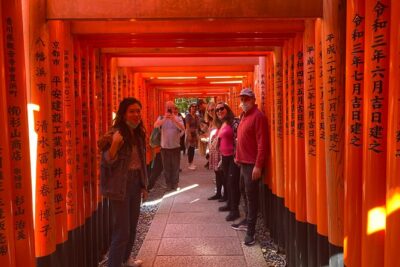
Fushimi Inari’s thousands of red torii
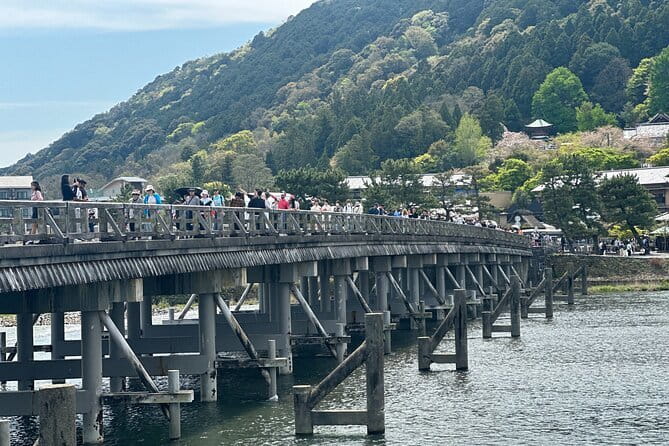
Fushimi Inari-taisha is famous for its rows of red torii gates climbing Mount Inari. The shrine’s lower paths are the easiest part to reach, while the trails continue uphill for anyone with more time and energy.
The suggested visit is 90 minutes. That is enough to walk through the first tunnel of gates and get a feel for the shrine, but it is not enough for a leisurely climb to every upper section. If you want to walk farther, ask how much time remains before you leave.
There is no general entry fee listed for Fushimi Inari. You should still plan for a walking visit rather than a quick roadside photograph. The shrine is one of the day’s most active stops, and the path can be physically more demanding than the short temple visits.
I would place your personal priority here before the tour begins. If you want only the famous lower gates, 90 minutes works well. If you hope to hike much higher, you may need to shorten another stop. That is the sort of choice this private format allows.
Gion, from Tatsumi Bridge to Hanamikoji Street
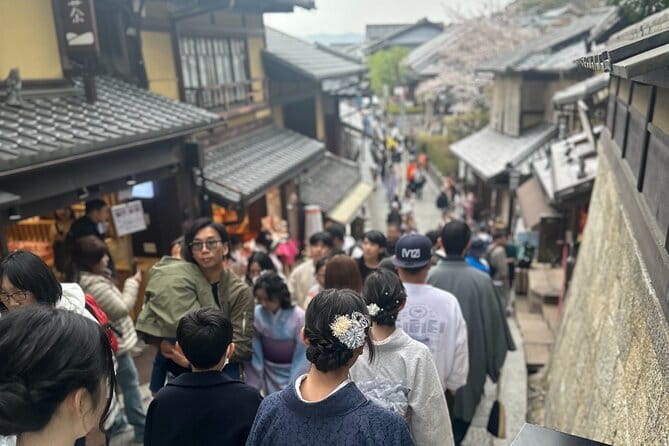
Gion closes the day with Kyoto’s traditional entertainment district. The area includes wooden streets, upscale restaurants, boutiques, and the Tatsumi Bridge area. Hanamikoji Street is another key place to walk through.
The planned visit lasts about 70 minutes. That gives you time to stroll and take in the district, but it is not a full evening of dining or cultural performance. Gion Corner is mentioned as a local performance venue, though no admission or show is included in this tour.
You may see geisha or maiko in the district, but no sighting is guaranteed. Treat the area as a living neighborhood, not a stage set. Walk quietly, follow local rules, and avoid blocking narrow streets for photographs.
Gion is a fitting final stop because you can explore at your own pace after a long day in the vehicle. If you are tired, the short walk may be enough. If you are still energetic, ask for more time here and reduce an earlier stop.
Driver, guide, and the biggest point to clarify
The experience includes fuel and a private air-conditioned vehicle. It does not include a tour guide. That distinction should guide your buying decision.
Some outings have featured guides named Aka, Usama, Nomi, and Hassan. Aka has been praised for clear communication, patience, temple explanations, and a calming manner. Usama has been described as friendly and helpful during a full day, while Nomi has also been praised for photography. Hassan has been described as attentive, patient, and able to explain the sites.
At the same time, the tour can feel like a private driver service with self-guided sightseeing. Some visitors received limited information and expected more cultural explanation. One outing also lost about 45 minutes because of confusion over the pickup point.
I recommend sending a very specific pickup message before the day begins. Include your hotel name, entrance or meeting point, your preferred start time, and a clear statement that you want site explanations if a guide is available. Use WhatsApp if that is the communication method provided to you, since direct contact has helped some groups coordinate smoothly.
Do not assume that a driver who takes you to a temple will escort you inside or explain its history. Ask what is included in your particular booking.
What the $476.24 group price really buys
The price is $476.24 for a group of up to six people. For six, that works out to about $79.37 per person before admissions, food, and drinks. For two people, it is about $238.12 each, which is a much harder value to justify unless private transport is a top priority.
You are paying for time, routing, privacy, fuel, and the convenience of a private vehicle. You are not paying for temple tickets, lunch, or a guaranteed specialist guide.
For a family or group of friends, the price can make sense. Dividing the cost among six people turns a long day of private transportation into a reasonable shared expense. It also removes the need to coordinate several taxis or manage a complicated public transport route.
For a solo visitor or couple, compare the price with your own need for convenience. If you are comfortable using Kyoto’s trains and buses, a self-guided day will likely cost less. If you have limited time, mobility concerns related to repeated transfers, or a strong preference for door-to-door travel, the private car may earn its keep.
Who will get the most from this tour
I would recommend this experience most strongly to a group of four to six people who want to cover Kyoto’s headline sights in one day. Families may appreciate the private space and the ability to adjust the pace without holding up strangers.
It also suits first-time visitors who have not had time to plan routes between distant districts. You can see major temples, a castle, a food market, a shrine, a bamboo grove, and Gion without spending the day reading transit maps.
I would be more cautious if your main goal is detailed history, religious context, or slow photography. In that case, confirm the guide arrangement before booking or choose a tour that specifically guarantees a professional English-speaking guide.
The route is also demanding. Seven stops in 8 to 9 hours means frequent movement. You will get a useful introduction to Kyoto, but you will not fully explore every place.
Cancellation is free if you cancel at least 24 hours before the start time. Changes or cancellations inside that window are not accepted for a refund. Confirmation arrives at booking, and the experience is described as suitable for most participants and near public transportation, though the actual tour uses a private vehicle.
Should you book this Kyoto day tour?
Book it if you value private transportation and flexible timing more than nonstop historical commentary. It is especially good value for a full group and a practical way to connect Kyoto’s scattered sights in a single day.
Before booking, ask who will drive, whether that person will guide you inside the sites, and how much explanation you can expect in English. If you receive a strong guide such as Aka, Usama, Nomi, or Hassan, the day can be friendly, patient, informative, and easy to adjust. If not, expect a comfortable private ride with self-guided visits.
My final call: choose this tour for convenience, coverage, and control over your schedule. Skip it if you want a formal temple expert or a slow, deeply explained visit at each stop.
FAQ
How long does the Kyoto private car tour last?
The experience lasts approximately 8 to 9 hours.
How many people can join the private tour?
The vehicle and price cover a private group of up to six people.
Is hotel pickup offered?
Yes. Hotel pickup is offered, but you should provide a precise meeting point to avoid confusion at the start.
Is transportation included?
Yes. The experience includes a private air-conditioned vehicle and fuel surcharge.
Are temple and castle admission fees included?
No. Entry tickets are not included. Listed prices include ¥500 for Kinkakuji, ¥1,000 for Nijo Castle, and ¥500 for Kiyomizu-dera.
Is food included?
No. Food and drinks are not included. Nishiki Market is suggested as a place to buy lunch, and prices vary by vendor.
Is a tour guide included?
No tour guide is included in the stated inclusions. The level of explanation may depend on the driver or guide assigned to your group.
Which places does the tour visit?
The planned stops are Kinkakuji Temple, Arashiyama, Nishiki Market, Nijo Castle, Kiyomizu-dera Temple, Fushimi Inari-taisha Shrine, and Gion.
Can I choose how long to stay at each stop?
Yes. The private format allows flexible timing, although the overall experience lasts about 8 to 9 hours and the full route may require adjusting some visits.
Can I cancel for a full refund?
Yes, if you cancel at least 24 hours before the experience start time. Cancellations or changes made less than 24 hours before the start time are not accepted for a refund.
Newest Kyoto experiences on the site
- Treasures of Kyoto: Gion & historical Walking Tour★ 5.0 · 6 reviews
- Whisk Your Own Matcha: A Zen Matcha Experience at Temple★ 3.6 · 7 reviews
- Kyoto tea town for matcha lovers★ 5.0 · 16 reviews
- Uji: Private immersion into Kyoto’s tea and reglious culture★ 5.0 · 17 reviews
- Kyoto Matcha Green Tea Tour★ 4.5 · 23 reviews
- Uji and Wazuka Matcha Farm Half Day Private Guided Tour★ 5.0 · 21 reviews
- Utilising upcycled Matcha! Creating matcha incense (Uji, Kyoto)★ 5.0 · 6 reviews
- Sacred Temple Yoga Experience in Japan★ 5.0 · 3 reviews
Private, compared.
Fushimi Inari Hidden Hiking Tour (Private Option Available)
Read our review →
Private Kyoto Tour with a Local, Highlights & Hidden Gems, Personalised
Read our review →
Kyoto 6hr Private Tour with Government-Licensed Guide
Read our review →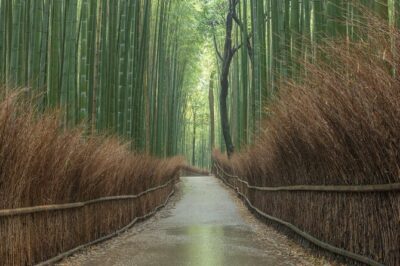
10 Must-see Spots in Kyoto One Day Private Tour (up to 7 people)
Read our review →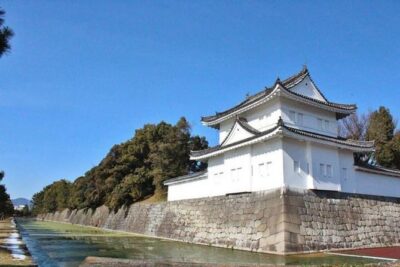
Kyoto 4hr Private Tour with Government-Licensed Guide
Read our review →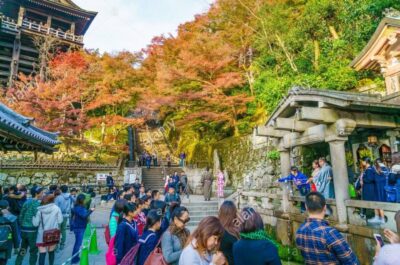
Private Kyoto Tour with Licensed Guide & Vehicle (Max 15 persons)
Read our review →