
Reviewed · CITY TOURS
Guided Kyoto City Cherry Blossom One Day Private Tour
Kyoto’s great challenge is not finding beautiful places. It is choosing among them. This private eight-hour tour takes you from Arashiyama’s bamboo grove to Fushimi Inari’s red gates, with a driver-guide handling the roads, parking, and timing. You get a broad first look at the city without spending your day studying transit maps.
I like the one-on-one attention and the practical ease of a private car. Guides such as Malik, Sag, Imran Khan, and Hamza have been praised for good timing, useful local advice, photography help, and clear explanations. The tradeoff is simple: at $569, this is a sizable spend, especially since lunch and entry fees are extra.
Key points at a glance
- Six major Kyoto stops: Cover Arashiyama, Kinkakuji, Kiyomizu-dera, Fushimi Inari, Gion, and Nishiki Market in one day.
- Private transport: Ride in an air-conditioned vehicle with road tolls and a mobile hotspot included.
- Flexible guidance: A private group lets you move at your own pace within the day’s schedule.
- Useful guide support: Previous guide names include Malik, Sag, Imran Khan, and Hamza, with praise for timing, parking advice, history, and photos.
- Extra costs to plan for: Lunch and admission fees are not included, though listed entry charges are generally no more than $7 per stop.
- Early start: The tour begins at 8:00 am from Kyoto Station and returns there at the end.
Why this private Kyoto day works
Kyoto rewards slow wandering, but a first visit can become a scramble. The famous sights sit in different parts of the city, and moving between them takes time. This tour solves that problem with private transportation and a fixed route that links the city’s best-known eastern, northern, western, and southern sights.
You begin at Kyoto Station at 8:00 am. Pickup is offered on request, but the stated meeting point is Kyoto Station in Shimogyo Ward. From there, the vehicle takes you between stops, so you are not left figuring out bus routes after every temple visit.
The day is built around roughly one hour at each stop. That is enough to see the main setting, take photos, and hear background from your guide. It is not enough for a slow, detailed study of every temple compound, a long hike up Mount Inari, or an unhurried meal at Nishiki Market.
That distinction matters. I see this as a high-coverage introduction to Kyoto, not a leisurely temple retreat. If you are in town for only one full day, the route makes good sense. If you have several days, you may prefer to spend an entire morning in one district.
A few more Kyoto tours worth putting on the shortlist
- PERFECT KYOTO 1-Day Bus Tour
★ 5.0 · 13,518 reviews - Kyoto: Fushimi Inari, Kinkakuji, Bamboo Grove 1 Day Bus Tour
★ 4.8 · 4,316 reviews - 10 Must-see Spots in Kyoto One Day Private Tour (up to 7 people)
★ 5.0 · 1,108 reviews
Arashiyama bamboo grove: Kyoto’s most familiar view
The first stop is Bamboo Forest Street in Arashiyama, on the western edge of Kyoto. Tall bamboo rises on both sides of the path, creating one of Japan’s most recognizable natural scenes. The area was already popular during the Heian Period, from 794 to 1185, when court nobles came here for its scenery.
Your allotted hour gives you time to walk through the grove and take in the filtered light and soft movement of the stalks. This is one of the tour’s most visually striking stops, but it is also one where timing matters. The route is famous, so the path can feel crowded, especially during popular seasons.
Admission is not included. The tour data identifies the stop as Bamboo Forest Street and gives one hour there, but it does not promise a longer Arashiyama visit or additional sites such as nearby temples. If bamboo is your main reason for booking, ask your guide how much walking time you can spend in the grove itself.
Kinkakuji: the Golden Pavilion and a layered past
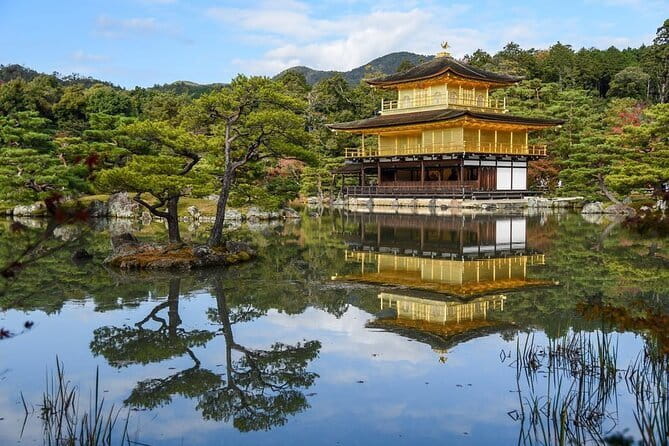
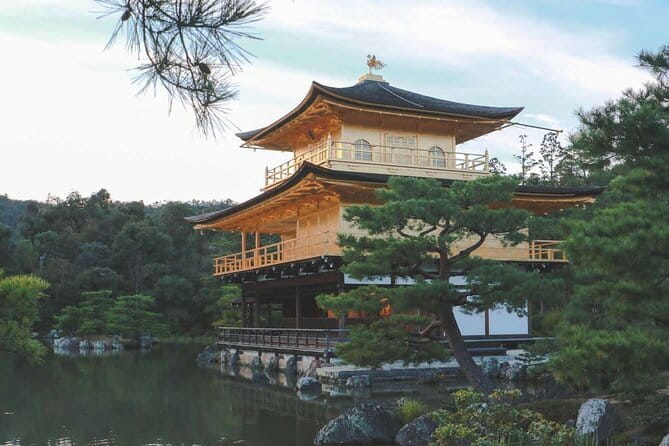
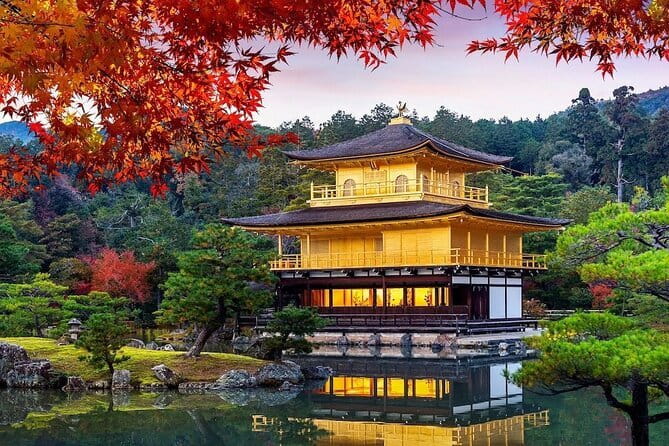
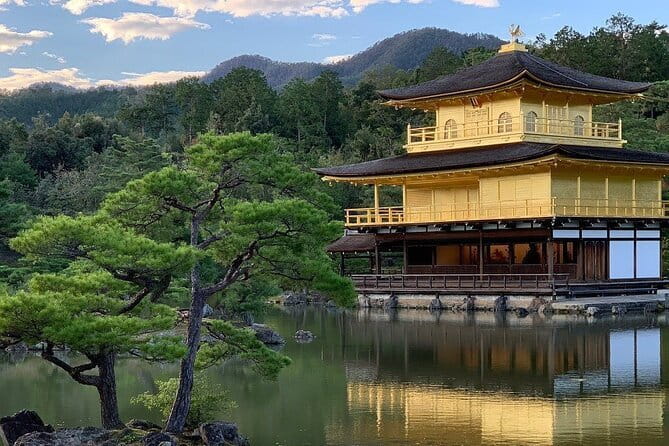
Kinkakuji, officially Rokuon-ji, is the Golden Pavilion. Its top two floors are covered in gold leaf, and the building is set beside a pond that gives you the classic Kyoto photograph. The site began in 1397 as a retirement villa for shogun Ashikaga Yoshimitsu before becoming a Zen temple after his death.
The building has also been rebuilt more than once. The current structure dates to 1955, after a monk set the temple on fire in 1950. That detail adds weight to what might otherwise seem like a quick photo stop. You are looking at a modern reconstruction of a much older religious and political site.
One hour is a sensible amount of time for the main view and temple grounds. You should not expect a long meditation session or an extensive visit through every corner of the complex. Admission is extra, with listed itinerary entry fees capped at no more than $7, though the exact charge for each stop should be confirmed when booking.
Kiyomizu-dera: a temple with a famous wooden stage
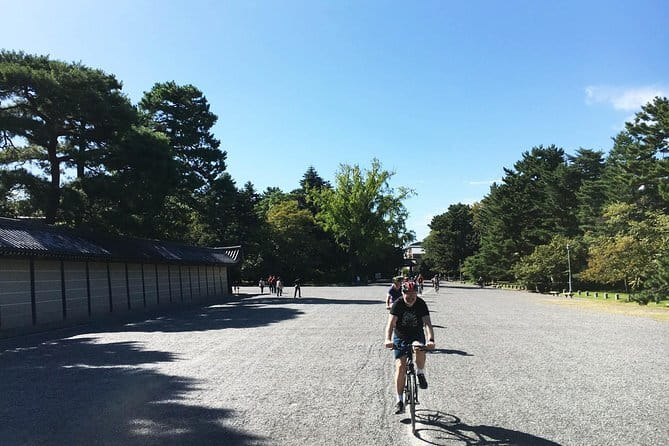
Kiyomizu-dera is one of Kyoto’s best-known temples and one of the oldest, founded in 778. Its name means Pure Water Temple, a reference to the Otowa Waterfall that runs through the grounds. The temple is also known for its large wooden stage and its strong connection to Kyoto’s religious past.
The one-hour visit lets you see the main temple setting and the waterfall area. Your guide can add context about the temple’s Buddhist background. Kiyomizu-dera was associated with the Hosso sect until becoming independent in 1965, a useful reminder that religious institutions in Japan have their own long and sometimes complicated stories.
The practical catch is that Kiyomizu-dera is not just a single building beside a parking area. You will need to walk through the approach and temple grounds, often among shops and other sightseers. Wear comfortable shoes, and do not treat the one-hour slot as a full exploration of the surrounding Higashiyama area.
Same city, a completely different kind of day:
- Kyoto: Tea Ceremony in a Traditional Tea House in Kiyomizu
★ 4.9 · 3,519 reviews - Kyoto Geisha Walking Tour: Gion District & Hidden Gems
★ 4.7 · 3,273 reviews - Kyoto: Tea Ceremony Ju-An at Jotokuji Temple
★ 4.9 · 3,207 reviews - Kyoto: Gion Magical Night Walking Tour with Geisha Trivia
★ 4.9 · 2,393 reviews
Fushimi Inari: red torii gates with room to choose your pace
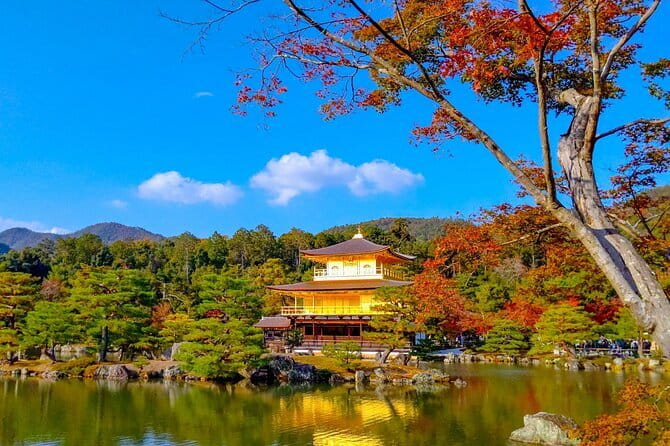
Fushimi Inari Taisha is dedicated to Inari, the Shinto deity linked with rice, agriculture, fertility, and prosperity. Its most famous feature is the long run of red torii gates, known as the Senbon Torii. Individuals and businesses donate the gates, hoping for favor and blessings.
This is the stop where the fixed one-hour format matters most. The shrine paths lead up Mount Inari, and you cannot walk every section in an hour. You will need to decide with your guide whether your priority is the lower shrine buildings, the first torii tunnel, or a faster climb for more of the hillside route.
I like the fact that the private format gives you room to make that choice. A family with young children might stay near the lower paths, while a fit group may want to walk farther. The included child seat is useful for families, but the tour information does not specify the seat type, so arrange the details before departure.
Fushimi Inari is free to enter according to the supplied tour details, though general entry costs are listed separately as not more than $7 for applicable stops. The main cost here is time and energy. Good shoes will help.
Gion: wooden streets and geisha culture
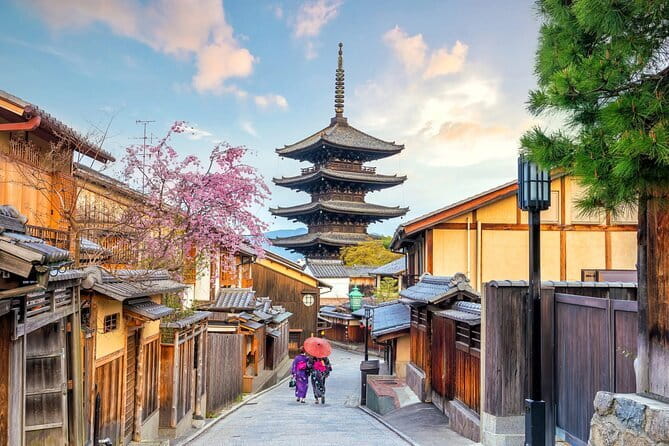
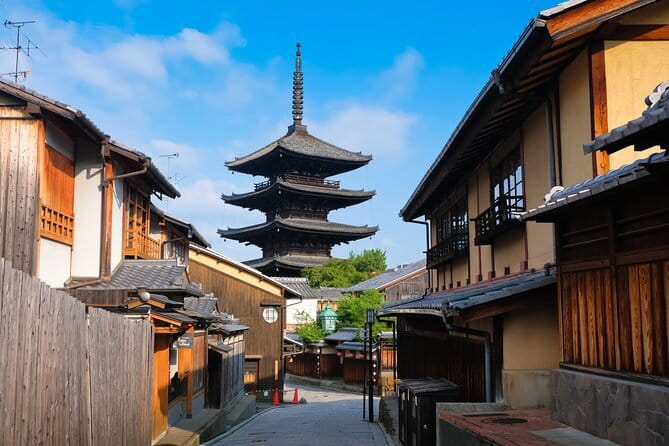
Gion is Kyoto’s historic district of wooden machiya houses, teahouses, and traditional entertainment. It is also closely linked with geisha culture, though a short daytime stop should not be treated as a guaranteed performance or private cultural encounter.
The hour here is best used for a walk through the district and a look at its traditional street design. Your guide can help explain what you are seeing and point out the difference between a historic neighborhood and a formal temple visit.
Keep your expectations realistic. The supplied details do not promise entry into a teahouse, a geisha appearance, or a specific cultural show. Gion is valuable as a street-level change of pace after several major religious sites. You move from monumental buildings to Kyoto’s older urban fabric.
Nishiki Market: Kyoto’s Kitchen in one hour
Nishiki Market is a narrow, five-block shopping street with more than 100 shops and restaurants. It is known as Kyoto’s Kitchen and has served as a center for food and commerce for centuries.
This is the most flexible stop on the route. You might browse food stalls, look at local products, or choose a quick bite. But lunch is not included, and one hour passes quickly if you want to eat and shop. Ask your guide for a practical lunch suggestion, as the guides have been praised for pointing people toward good places to eat.
The market is also a place where private touring has limits. Your vehicle will not turn the market into a private food walk, and the tour does not include tastings or drinks. You pay for your own meal and alcoholic beverages. Still, it is a useful final stop because you can finish with food rather than another large temple compound.
What the private vehicle adds
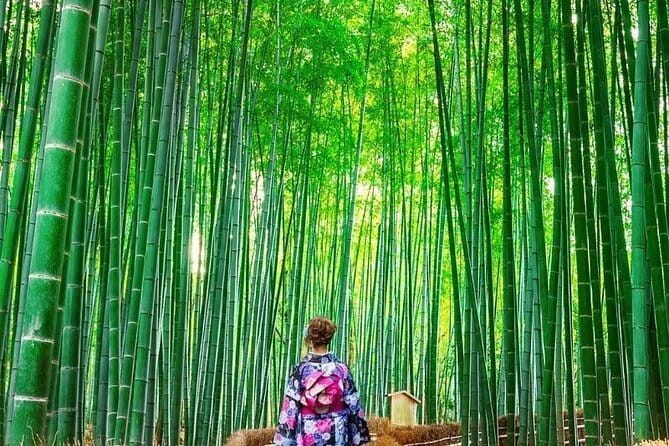
The air-conditioned vehicle is the backbone of the day. Kyoto’s major sights are spread across the city, and private transportation removes much of the effort involved in connecting them. Road tolls are included, and a hotspot is provided on board.
The private setup also means only your group participates. That matters if you want to ask questions, stop for photos, or adjust the pace at a particular site. Hamza was specifically praised for knowing where to park for easier access, while Imran Khan was praised for arriving on time at each pickup and keeping the vehicle clean.
Those details are more important than they sound. A delayed pickup can cut short your time at the next temple. Efficient parking can save a tiring walk. A clean, cool vehicle gives you a place to rest between busy stops.
The guide’s role may vary. Names associated with the experience include Malik, Sag, Imran Khan, and Hamza, but you should not assume you will receive a particular person unless the provider confirms it. The strongest guide qualities described for this service are timing, local route sense, history explanations, lunch suggestions, and help with photos.
Is $569 a fair price?
At $569, this is not a budget sightseeing option. The value depends on how many people are in your private group and how much you value time, comfort, and direct assistance. The supplied information does not state whether the price is per person or for the entire group, so confirm that before paying.
For a larger family or group, private transportation can make the figure more reasonable than separate taxis, especially when you add the convenience of a planned route. For one or two people, the cost is harder to justify unless you strongly prefer private guiding and want to cover all six areas in one day.
The price includes the vehicle, private transport, child seat, mobile hotspot, and road tolls. It does not include lunch, alcoholic drinks, or admission fees. Listed entry fees are not more than $7 per itinerary stop, but you should budget for several small payments along with food.
I would compare this tour with the cost of arranging six separate visits yourself. Public transportation may cost less, but it requires more planning and can be slower between distant districts. This tour charges you for convenience and coverage, not for a slow, specialized study of Kyoto’s temples.
Who should book this day?
This tour suits you if you have one full day in Kyoto and want to see the city’s major names without handling transport yourself. It also fits families, older adults who prefer a vehicle between stops, and repeat visitors who want a guide to add context to places they missed before.
The private format is useful for groups with different interests. One person can ask about temple history, another can focus on photos, and a family can discuss how much walking is comfortable. The child seat is a helpful inclusion for parents, although exact arrangements should be confirmed in advance.
You may want another style of tour if you prefer long walks, quiet temple gardens, or several hours in one neighborhood. The schedule moves quickly, and the one-hour stops leave little room for wandering beyond the named locations. Wheelchair service is not included, so anyone with mobility needs should confirm whether the route and vehicle are suitable before booking.
Timing, cancellation, and practical details
The stated start time is 8:00 am, with the tour beginning at Kyoto Station and ending back at the meeting point. Hotel pickup is offered on request, so arrange that detail before the day rather than assuming it is automatic.
Confirmation is provided at booking. The activity is near public transportation, and most people can participate. Bring comfortable shoes, plan for walking at each site, and carry money for lunch and entry charges.
Free cancellation is available if you cancel at least 24 hours before the local start time. Cancellations within 24 hours are not refunded, and changes inside that period are not accepted.
Should you book this Kyoto tour?
Book it if your priority is seeing the six headline sights in one organized day. The route is broad, the vehicle is private, and the guide can make the history easier to follow. Good timing, parking help, clean transport, photo assistance, and lunch advice are all practical strengths.
Skip it if you have several Kyoto days and would rather take your time in one district at a time. At $569, plus meals and admissions, you are paying for comfort and coverage. For a group that wants the classic Kyoto checklist with minimal transport stress, that can be a fair trade. For a solo visitor on a tight budget, it may not be.
FAQ
Where does the tour start and finish?
It starts at Kyoto Station at 8:00 am and ends back at the meeting point.
Is hotel pickup available?
Yes. Pickup is offered on request, but you should arrange the details before the tour.
How long does the tour last?
The experience lasts approximately eight hours.
Is this a private tour?
Yes. Only your group participates in the activity.
What transportation is included?
An air-conditioned vehicle, private transportation, road tolls, a child seat, and a mobile hotspot are included.
Are lunch and admission fees included?
No. Lunch and alcoholic beverages are not included. Entry fees are also separate, with the provided information stating that applicable fees are no more than $7 per itinerary stop.
Can I cancel for a full refund?
Yes, if you cancel at least 24 hours before the experience starts. Cancellations or changes made within 24 hours are not accepted for a refund.
Newest Kyoto experiences on the site
- Treasures of Kyoto: Gion & historical Walking Tour★ 5.0 · 6 reviews
- Whisk Your Own Matcha: A Zen Matcha Experience at Temple★ 3.6 · 7 reviews
- Kyoto tea town for matcha lovers★ 5.0 · 16 reviews
- Uji: Private immersion into Kyoto’s tea and reglious culture★ 5.0 · 17 reviews
- Kyoto Matcha Green Tea Tour★ 4.5 · 23 reviews
- Uji and Wazuka Matcha Farm Half Day Private Guided Tour★ 5.0 · 21 reviews
- Utilising upcycled Matcha! Creating matcha incense (Uji, Kyoto)★ 5.0 · 6 reviews
- Sacred Temple Yoga Experience in Japan★ 5.0 · 3 reviews
City Tours, compared.
Calligraphy class at Buddhist temple in city center
Read our review →
Private departure transfer from Kyoto city to Kansai International airport
Read our review →
Full-Day City Highlights Bike Tour with Light Lunch
Read our review →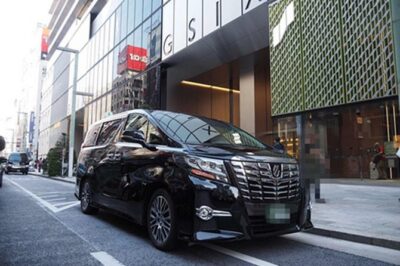
Private departure transfer from Kyoto city to Osaka Itami International airport
Read our review →
Discovering Kyoto A Tailored Private Tour of the City’s Treasures
Read our review →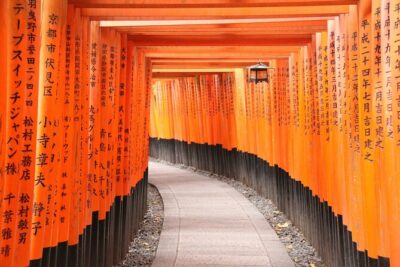
Browse the lists this tour appears in