Reviewed · PRIVATE
Treasures of Kyoto: Geishas & Traditions Private Tour
Kyoto’s geisha district makes the most sense on foot, with someone who can explain what you are seeing. This private walk threads through Gion and Higashiyama, linking kabuki, geiko traditions, Shinto, Buddhism, and old Kyoto streets in about two and a half hours.
I like the private format, which lets you stop for questions and adjust the pace. I also like the route’s range: Minamiza Theatre and Shinbashi Dori give you cultural context, while Chion-in, Maruyama Park, and Yasaka Shrine add temples, gardens, and open space. The main drawback is that the tour covers many stops quickly, and some are brief photo and explanation points rather than full visits.
Key points to know before booking
- Gion is the main character: You walk through traditional streets and former geisha entertainment areas rather than simply ticking off major monuments.
- The guide makes the difference: Hosts named Ted, Guia, Ahmed, Maha, Kako, and Shohei have led tours, with especially strong praise for cultural explanations and family-friendly conversation.
- You get a private experience: Only your party participates, so questions and walking speed can be shaped around your group.
- The route mixes traditions: Expect discussion of geiko life, kabuki, Shinto and Buddhist customs, temple design, and Kyoto’s old street plan.
- This is a walking tour: Stairs at Chion-in and a moderate fitness level are required.
- The price reflects personal attention: At $135.45 per person, the value improves for couples, families, or small groups that want a guide focused only on them.
Starting beside the Kamo River in Gion
The walk begins at Kawabatacho in Kyoto’s Higashiyama Ward, near the Gion side of the Kamo River. The meeting point is close to public transportation, which matters in Kyoto, where a short route on the map can still involve crowded streets and confusing turns.
You begin with the Statue of Izumo no Okuni, a free stop honoring the woman associated with the origin of kabuki theater. The 20-minute visit gives your guide a useful opening: Kyoto’s performance traditions did not appear out of nowhere, and the city’s entertainment culture has long been tied to particular neighborhoods and theaters.
Next comes Minamiza Theatre, also free to view from the tour route. Its roots reach back to the early Edo period, making it an important link between historic Kyoto and the performing arts still associated with the city. You should expect an explanation of the theater’s place in kabuki history rather than a performance or interior theater tour.
That distinction matters. If you want to watch kabuki, this experience does not include a show. If you want to understand why Minamiza belongs on a Gion walking route, the stop works well.
A few more Kyoto tours worth putting on the shortlist
- PERFECT KYOTO 1-Day Bus Tour
★ 5.0 · 13,518 reviews - Kyoto: Fushimi Inari, Kinkakuji, Bamboo Grove 1 Day Bus Tour
★ 4.8 · 4,316 reviews - Kyoto: Tea Ceremony in a Traditional Tea House in Kiyomizu
★ 4.9 · 3,519 reviews
Gion and the etiquette of geiko culture
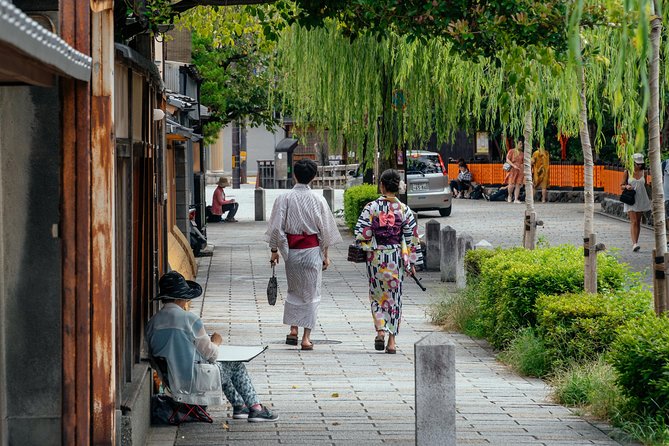
The route then moves into Gion, including the Gion Shinbashi area and the streets south of Shijo. These areas are protected for their traditional buildings and historic appearance, so the walk is as much about the setting as the individual sights.
The geisha theme is handled through explanation rather than a staged encounter. At Shinbashi Dori, you stand outside traditional banquet buildings and learn about the geiko world, including the education and working life connected with the district. You might see women dressed as geiko or maiko during the walk, but that is not presented as a guaranteed part of the experience.
This is where a respectful guide matters. The strongest guiding style here is not gawking or treating the neighborhood like a film set. It is learning why the area exists, how traditional entertainment works, and how to behave around people who live and work there.
The stop at Gion itself is listed for about 10 minutes, with another 10 minutes at Shinbashi Dori. That is enough for a focused explanation and photographs, but not enough for a long, unhurried study of every lane. The private format helps because you can ask direct questions instead of waiting behind a large group.
Tatsumi Daimyojin Shrine and Kyoto’s blended faiths
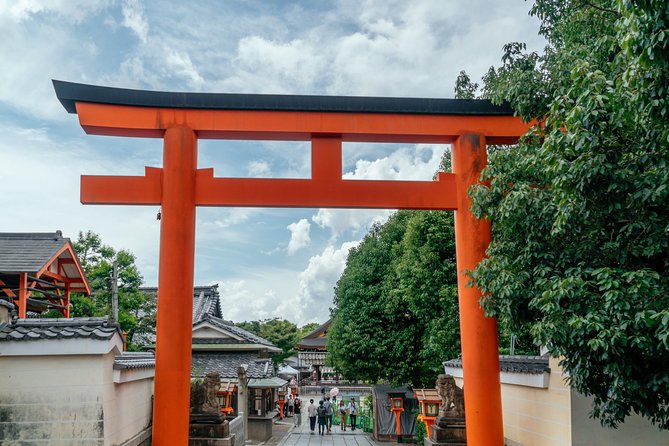
Tatsumi Daimyojin Shrine provides one of the tour’s best teaching moments. Here, the guide explains Japanese religion, including the relationship between Shinto and Buddhism.
You will not need prior knowledge to follow the discussion. The point is to see how Japanese religious life has often included both traditions, rather than forcing every shrine and temple into separate boxes. That context gives the rest of the walk more meaning, especially when you later visit Yasaka Shrine and Chion-in Temple.
The stop is scheduled for about 20 minutes. It is a good length for a short visit and conversation, though anyone hoping for a formal religious lesson should keep expectations in check. This is a neighborhood walk with cultural interpretation, not a specialist theology tour.
Guides have been praised for explaining these differences clearly and answering questions from children as well as adults. That makes this experience a good fit for families. One guide, Ted, is especially effective with children around ages 10 to 14, adapting the discussion and giving detailed answers rather than speaking only to the adults.
Chion-in Temple, steps, and a change of pace
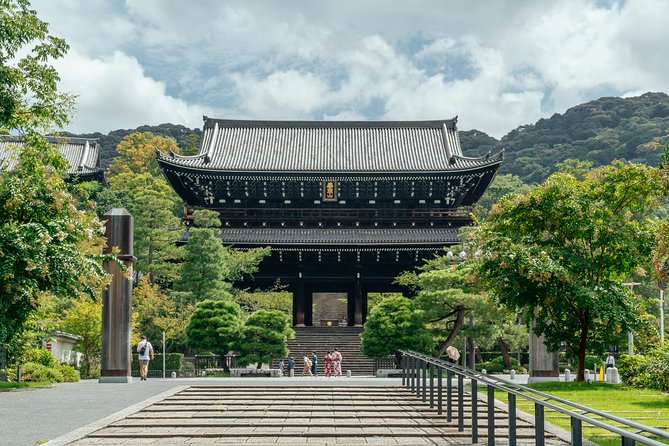
From the shrine, the route heads toward Chion-in Temple. The listed visit lasts about 10 minutes and includes walking up steps for a better view of the temple and garden area.
This is one of the tour’s more physical sections. The route is not described as strenuous, but the steps and the general amount of walking mean you should have a moderate fitness level. Comfortable shoes are a sensible choice, and anyone who has trouble with stairs should take that into account before booking.
The short stop also shows the limits of this itinerary. You get a look at an important temple setting and a chance to hear the guide’s explanation, but you will not have time for a slow, full temple visit. The benefit is momentum: you see several different parts of eastern Kyoto in one outing.
Same city, a completely different kind of day:
- Kyoto Geisha Walking Tour: Gion District & Hidden Gems
★ 4.7 · 3,273 reviews - Kyoto: Tea Ceremony Ju-An at Jotokuji Temple
★ 4.9 · 3,207 reviews - Kyoto: Gion Magical Night Walking Tour with Geisha Trivia
★ 4.9 · 2,393 reviews - Kyoto: 45-Minute Tea Ceremony Lesson Experience
★ 4.3 · 2,378 reviews
Maruyama Park and Yasaka Shrine
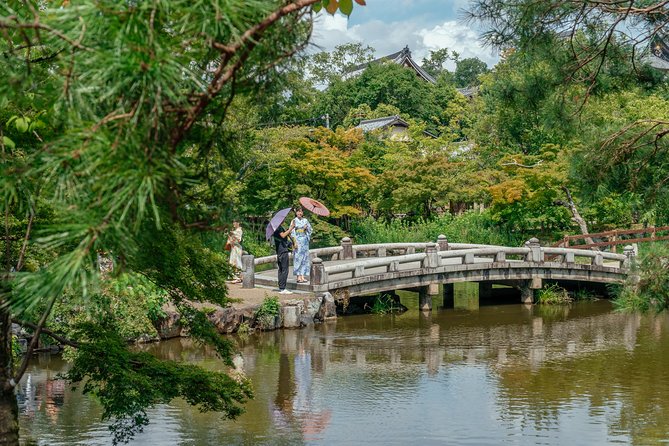
A 20-minute walk through Maruyama Park follows Chion-in. The park gives you a break from close-packed lanes and traditional buildings, with room to walk and look around before the route returns to major cultural sights.
Yasaka Shrine comes next, with about 10 minutes scheduled. Its history is linked by legend to a date before the Heian period, and the guide can place the shrine within Kyoto’s long religious story. As with Tatsumi Daimyojin, the value is the explanation around the site. You are not simply being pointed toward a gate and sent on your way.
The itinerary lists Yasaka Shrine again near the end, paired with a picturesque five-story Buddhist pagoda and sweeping views from the top. The details describe the finish as Yasaka no To, and the meeting information also names Yasaka no To Temple. Since the supplied route uses Yasaka Shrine for both entries, you should confirm the exact final stop with the provider if the pagoda visit is especially important to you.
That small ambiguity is worth noting, but it does not undermine the overall route. The final section remains in the Higashiyama area and ends near a local cafe. Food and drinks are not included, so any cafe stop is a chance to finish on your own rather than a prepaid tasting.
Shijo Dori and the old street plan
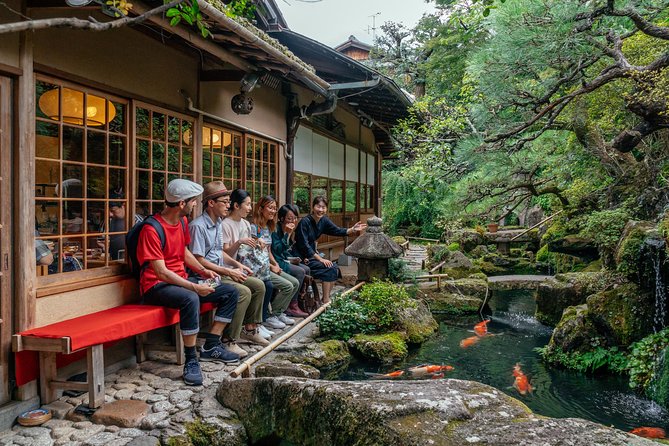
Shijo Dori adds a broader city view to the quieter lanes. The name refers to Fourth Avenue in the plan of Heian-kyo, Kyoto’s ancient capital. Your guide can show how the modern street fits into the older shape of the city.
The walk here lasts about 10 minutes. It is not the kind of stop that needs a long formal visit, but it helps connect Gion to the wider city. You see how a historic district is not isolated from everyday Kyoto. Shops, traffic, pedestrians, temples, and old buildings all share the same route.
I find this kind of explanation more useful than a list of dates. You leave with a better sense of how Kyoto developed, not just a collection of names to remember.
Nene-no-Michi and Higashiyama’s old lanes
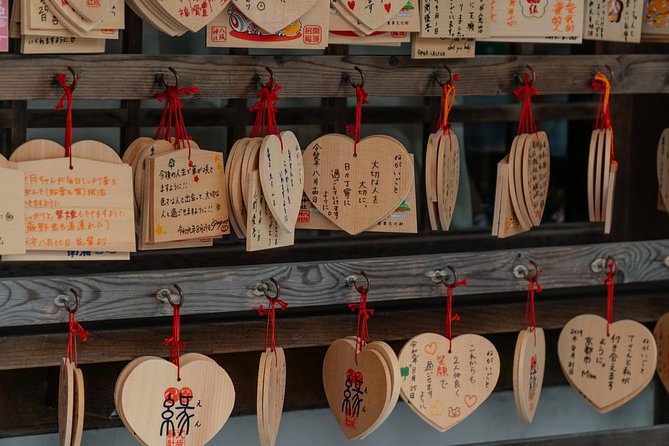
Nene-no-Michi is another 10-minute walking section. The street takes its name from Nene, who commissioned Kodaiji Temple in 1605. Even without entering Kodaiji, the connection gives the lane a personal link to Kyoto’s political and religious past.
This part of the tour is about atmosphere and orientation. The route moves through the Higashiyama area toward the finish, and your guide helps you avoid getting turned around in the backstreets. That practical help is valuable in a district where several attractive lanes can look similar.
The short timing means you should not expect a full Kodaiji visit. Instead, you get a walk through an area tied to the temple and an explanation of why the street matters.
What the private format really adds
A private tour is not automatically better than a group tour, but here it fits the subject. Gion is full of small details, social rules, and questions that can be difficult to explore in a crowd.
With only your party present, you can ask about geiko training, religious customs, kabuki, temple architecture, or the meaning of a particular street. You can also spend a little longer at a favorite stop, within the fixed two-and-a-half-hour schedule.
The guides bring different personalities. Ted is repeatedly described as warm, passionate, and particularly good with families. Guia is praised for making history and culture come alive. Shohei gives the walk a relaxed, local-friend feel, while Maha is noted for steering the group away from crowds and finding a temple setting the party would not have reached alone. Ahmed has led discussions about Japanese customs, and Kako has kept the walk engaging even in rain.
Because hosts can vary, you should not book this expecting one named guide unless your confirmation specifically identifies that person. The consistent strength to look for is a guide who can explain rather than simply lead.
Timing, price, and physical demands
The experience lasts approximately 2 hours and 30 minutes. That is long enough to get your bearings in Gion and Higashiyama, but short enough to fit into a busy Kyoto day.
At $135.45 per person, the price is not a bargain for a simple walk. It becomes easier to justify if you are traveling as a family or small private party and want direct attention instead of a large group. Group discounts are available, which may improve the cost for some bookings.
The route includes many free outdoor stops, so you are paying mainly for the guide’s time, local interpretation, navigation, and the ability to ask questions. No hotel pickup or drop-off is included, and food and drinks are extra.
Plan for regular walking, some stairs, and changing surfaces in old neighborhoods. Service animals are allowed, and the tour operates near public transportation. The experience is carbon neutral, a useful detail for people who consider the environmental side of sightseeing.
Who should book this Kyoto walk?
I would choose this tour if you have limited time in Kyoto and want Gion explained rather than photographed from the outside. It also suits first-time visitors who want a clear introduction to geiko culture, shrines, temples, and the Higashiyama streets without building the route themselves.
Families are a strong match, especially if your children ask many questions. The private setting lets the guide adjust the conversation, as Ted did for children aged 10 and 14. Couples and small groups who prefer a relaxed walk over a fixed lecture will also get good value.
You may want another experience if you need extended time inside temples, a kabuki performance, a meal, or a guaranteed encounter with geiko or maiko. This is an interpretive neighborhood walk, not a theatrical show or formal temple tour.
Book at least 24 hours ahead if your plans might change. Free cancellation is available until that point, while cancellations or changes made less than 24 hours before the start time are not refunded or accepted.
Should you book Treasures of Kyoto?
Book it if you want personal guidance through Gion’s traditions and value clear explanations more than long visits at individual monuments. The mix of geiko culture, kabuki, Shinto, Buddhism, old streets, and temple grounds gives you a useful first look at eastern Kyoto.
Skip it if you prefer to wander alone, spend an hour inside each temple, or keep costs low by using a self-guided route. For everyone else, the private format, family-friendly guiding, and compact route make this a practical way to understand a part of Kyoto that can otherwise feel beautiful but hard to read.
FAQ
How long does the tour last?
The tour lasts approximately 2 hours and 30 minutes.
Is this a private tour?
Yes. Only your group participates, so the experience is private rather than shared with a larger group.
Where does the tour start?
It starts at Kawabatacho, Higashiyama Ward, Kyoto, 605-0076, Japan.
Where does the tour end?
The listed end point is Yasaka Kamimachi, Higashiyama Ward, Kyoto, 605-0827, Japan, near Yasaka no To Temple.
What places are included on the route?
The route includes the Statue of Izumo no Okuni, Minamiza Theatre, Gion, Tatsumi Daimyojin Shrine, Shinbashi Dori, Chion-in Temple, Maruyama Park, Yasaka Shrine, Shijo Dori, Nene-no-Michi, and a final Yasaka Shrine or Yasaka no To section.
Is food included?
No. Food and beverages are not included. The tour finishes near a local cafe.
Is hotel pickup included?
No. Hotel pickup and drop-off are not included.
Can I cancel for a full refund?
Yes, if you cancel at least 24 hours before the experience start time. Cancellations made less than 24 hours before the start time are not refunded, and changes within that period are not accepted.
Newest Kyoto experiences on the site
- Treasures of Kyoto: Gion & historical Walking Tour★ 5.0 · 6 reviews
- Whisk Your Own Matcha: A Zen Matcha Experience at Temple★ 3.6 · 7 reviews
- Kyoto tea town for matcha lovers★ 5.0 · 16 reviews
- Uji: Private immersion into Kyoto’s tea and reglious culture★ 5.0 · 17 reviews
- Kyoto Matcha Green Tea Tour★ 4.5 · 23 reviews
- Uji and Wazuka Matcha Farm Half Day Private Guided Tour★ 5.0 · 21 reviews
- Utilising upcycled Matcha! Creating matcha incense (Uji, Kyoto)★ 5.0 · 6 reviews
- Uji Tea Ceremony and UNESCO Heritage Walking Tour★ 5.0 · 20 reviews
Private, compared.
Fushimi Inari Hidden Hiking Tour (Private Option Available)
Read our review →
Private Kyoto Tour with a Local, Highlights & Hidden Gems, Personalised
Read our review →
Kyoto 6hr Private Tour with Government-Licensed Guide
Read our review →
10 Must-see Spots in Kyoto One Day Private Tour (up to 7 people)
Read our review →
Kyoto 4hr Private Tour with Government-Licensed Guide
Read our review →
Private Kyoto Tour with Licensed Guide & Vehicle (Max 15 persons)
Read our review →