
Reviewed · 1-DAY TOURS
Kyoto Private Day Trip – Enjoy Your First-Time Visit to Kyoto!
Kyoto packs centuries of temples, shrines, castle walls, and old lanes into one very busy city. This seven-hour private tour gives you a practical first look, moving from the red torii gates of Fushimi Inari to the gold pavilion at Kinkakuji, with a guide handling the route and explaining what you are seeing.
I like the flexible private format, especially if you want help fitting major sights into one day. I also like the chance to ask for a custom plan, with guides such as Kei, Fumi, Kai, Jun, and Tetsu praised for adjusting schedules, arranging lunch suggestions, and helping families or slower walkers. The main catch is that transport, entrance fees, lunch, and personal costs are extra, so the $99.10 price is only the starting point.
Key points to know before booking
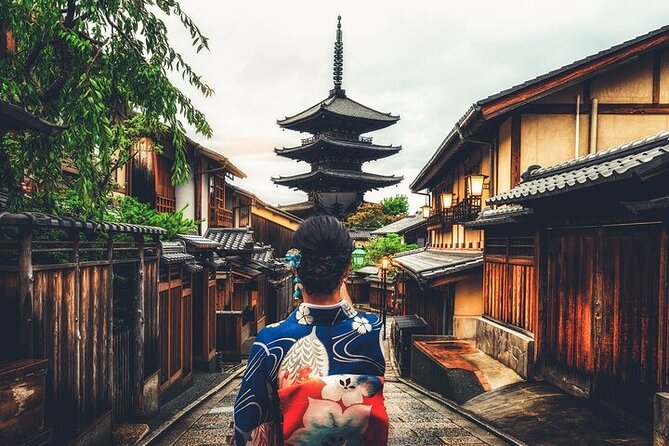
- Six Kyoto stops in about seven hours: You cover Fushimi Inari, Kiyomizu-dera, Sanneizaka, Hanamikoji Street, Nijo Castle, and Kinkakuji.
- Private means only your party joins: You can ask questions freely and adjust the pace more easily than on a large bus tour.
- The route is made for first-time visitors: It combines Kyoto’s most recognizable shrine, temple, castle, old streets, and Gion district.
- Custom planning is available: Contact the operator two weeks ahead if you want something different from the standard route.
- Walking is a major part of the day: Comfortable clothing and shoes matter, especially around Fushimi Inari, Kiyomizu-dera, and Sanneizaka.
- Budget for extras: Admission, transport, food, and drink are not included. Taxi costs are also yours if you choose the taxi option.
Why this route works for a first day in Kyoto
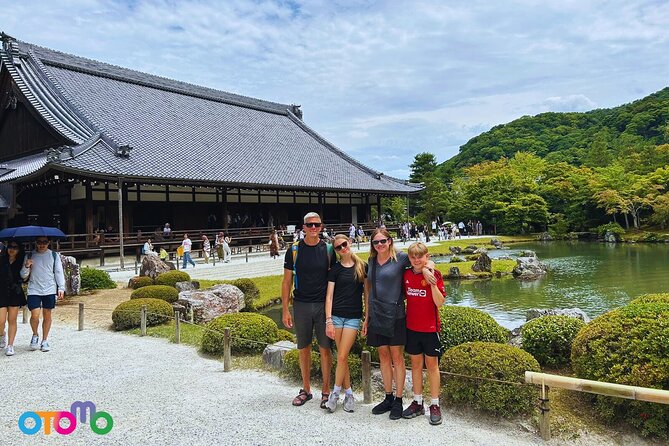
Kyoto is not a city you can understand from one postcard stop. Its major sights are spread across different areas, and a day of independent planning can turn into a string of train platforms, bus stops, and map checks.
This tour gives you a clear framework. You visit the famous places most first-time visitors want, while a private guide can explain the religious customs, political history, local stories, and practical details that are easy to miss when you are on your own.
The route also gives you a useful sample of Kyoto’s different personalities. Fushimi Inari feels spiritual and atmospheric. Kiyomizu-dera and the old lanes below it offer classic Kyoto scenery. Nijo Castle connects the city to the Tokugawa shoguns, while Kinkakuji provides the highly polished final image many people picture before arriving.
The schedule is tight. You have about 32 minutes at Fushimi Inari, 45 minutes at Kiyomizu-dera, an hour around Sanneizaka, 10 minutes on Hanamikoji Street, 55 minutes at Nijo Castle, and 40 minutes at Kinkakuji. That is enough for an introduction, but not enough for a slow, unrushed study of every site.
A few more Kyoto tours worth putting on the shortlist
- PERFECT KYOTO 1-Day Bus Tour
★ 5.0 · 13,518 reviews - Kyoto: Fushimi Inari, Kinkakuji, Bamboo Grove 1 Day Bus Tour
★ 4.8 · 4,316 reviews - 10 Must-see Spots in Kyoto One Day Private Tour (up to 7 people)
★ 5.0 · 1,108 reviews
Fushimi Inari and the tunnel of red torii
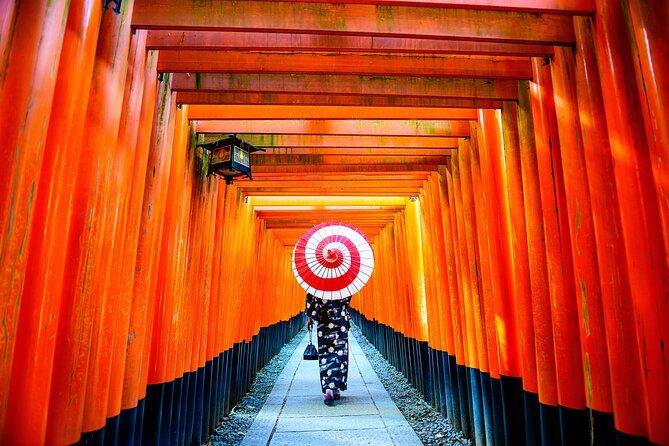
Your first stop is Fushimi Inari Taisha, one of Kyoto’s most recognizable shrines. Its approach is lined with thousands of vermilion torii gates, creating the famous Senbon-torii, or thousand torii, effect.
The gates were donated as prayers for prosperity and success, and the long passage has a different mood from the open courtyards of many Japanese shrines. You walk beneath repeated layers of red and orange, with glimpses of wooded hillside between them.
The planned 32 minutes is best treated as a focused introduction. You can see the key approach and take photographs, but you should not expect to walk far up the mountain in that time. If Fushimi Inari is your main priority, ask about spending longer here when arranging a custom itinerary.
A guide is useful at this stop because the shrine is more than a scenic tunnel. You can ask about the fox statues, shrine customs, and the meaning behind the donated gates rather than simply moving through with a camera.
Kiyomizu-dera and Kyoto from the temple stage
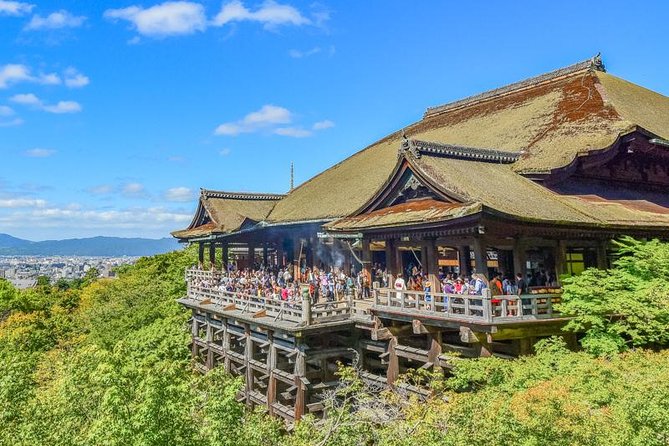
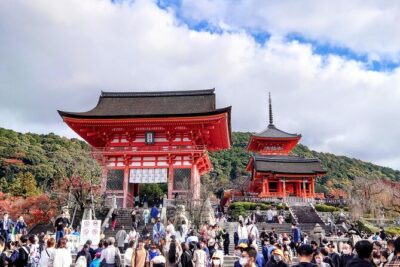
Kiyomizu-dera is one of Kyoto’s essential temples and a World Heritage site. Its wooden stage is famous for its view across the city, making this one of the clearest places on the route to connect a major monument with Kyoto’s wider setting.
The temple began with the enshrinement of a statue of Kannon, according to the information provided for the tour. Your guide can add context as you move through the complex, but the 45-minute stop will keep the visit fairly brisk.
Admission is not included. The supplied tour details list a Kiyomizu-dera admission charge of ¥5,370 per person, though the wording also presents ¥5,370 as an estimated standard-tour cost, so I would confirm the exact current breakdown before you pay. Entrance fees for the other paid sights are also separate.
Kiyomizu-dera is connected directly to the next section of the day, the old streets of Sanneizaka. That pairing makes sense. You see the temple first, then continue through the traditional approach rather than treating the temple as an isolated photo stop.
Sanneizaka, Ninen-zaka, and a slower hour on old Kyoto streets
Sanneizaka is one of the more enjoyable parts of the route because it gives you time to walk rather than simply arrive, look, and leave. The lane forms part of the approach to Kiyomizu-dera and is lined with Kyoto-style buildings, shops, and places to pause.
It is associated with Kita no Mandokoro, the wife of Toyotomi Hideyoshi, and the district is protected as an Important Preservation District for Groups of Traditional Buildings. The nearby Ninen-zaka area adds to the old-town feel.
The planned hour here is valuable. You can browse, take photographs, and stop for a snack or small purchase, although the tour details do not include lunch or personal spending. This is also a good point to tell your guide if you need a slower pace.
The stone lanes and hills require comfortable shoes. Families can manage the route, but you should be clear about mobility needs from the start. One guide, for example, was praised for quickly adjusting the day to suit a family member’s abilities, which is exactly the sort of benefit a private booking can provide.
Same city, a completely different kind of day:
- Kyoto: Tea Ceremony in a Traditional Tea House in Kiyomizu
★ 4.9 · 3,519 reviews - Kyoto Geisha Walking Tour: Gion District & Hidden Gems
★ 4.7 · 3,273 reviews - Kyoto: Tea Ceremony Ju-An at Jotokuji Temple
★ 4.9 · 3,207 reviews - Kyoto: Gion Magical Night Walking Tour with Geisha Trivia
★ 4.9 · 2,393 reviews
Hanamikoji Street and a quick look at Gion
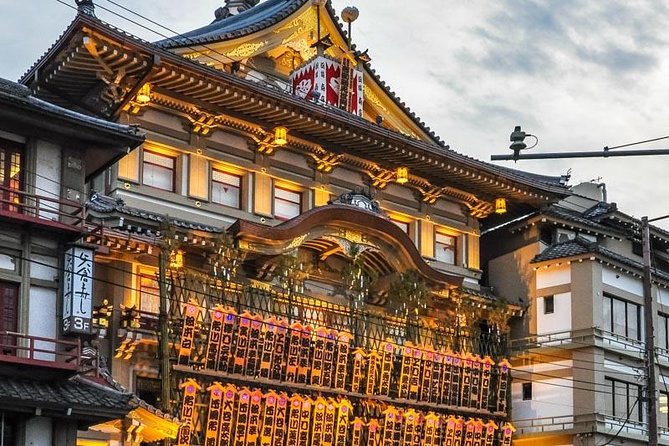
Hanamikoji Street is the main avenue of Kyoto’s Gion area. Its traditional-looking buildings and nearby religious sites offer a short look at one of the city’s best-known historic districts.
The scheduled 10 minutes is brief. Think of this as a scenic pass through Gion rather than a full neighborhood visit. If you want more time for Gion, tea houses, or nearby streets, ask for a custom schedule before the tour.
The district has strong connections to Kyoto’s traditional arts and entertainment culture, but you should remain respectful and avoid treating private entrances or working areas as photo sets. A guide can help you understand what you are seeing and how to behave appropriately.
Nijo Castle and the story of Tokugawa power

Nijo Castle shifts the tone from religious Kyoto to political Kyoto. It was tied to the glory and eventual fall of the Tokugawa shogunate, making it an important stop for understanding Japan’s transition from shogun rule to the modern era.
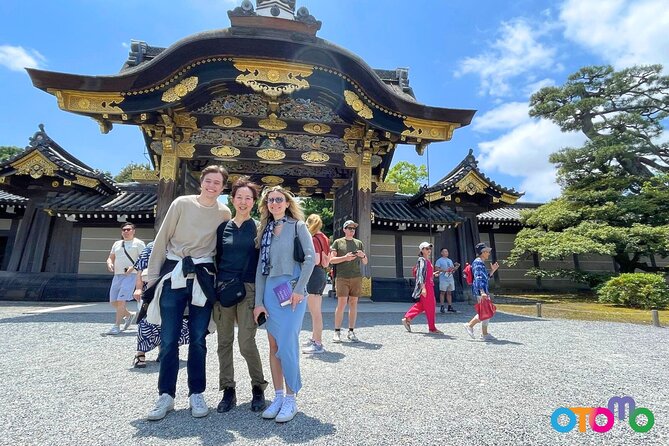
The castle is also known for its ornate architecture and gardens. After the crowds and walking around Kiyomizu-dera, the gardens can offer a calmer part of the day, with time to sit and look around.
The planned visit is 55 minutes, and admission is extra. That gives you a useful overview, but not a leisurely exploration of every room and garden section. If castle interiors are especially important to you, ask your guide how much of the visit will focus on the palace buildings versus the grounds.
Nijo Castle is one place where a guide’s explanation adds real value. Architectural details and political events can be easy to blur together when you are moving quickly. A good guide can link the building to the people who used it and explain why this castle matters beyond its appearance.
Kinkakuji, Kyoto’s famous Golden Pavilion
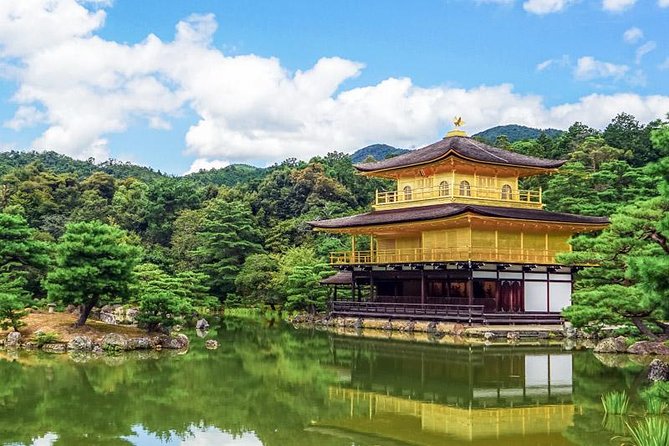
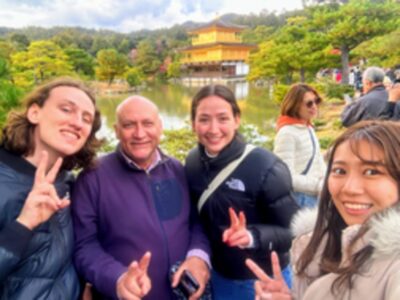
Kinkakuji, also called the Golden Pavilion, is the final major stop. The gold-covered building sits beside a pond and is one of Kyoto’s most photographed sights.
The planned 40 minutes is enough to follow the viewing route and see the pavilion from the main angles. It is not a quiet, private viewing. Kinkakuji is busy throughout the year, so the experience depends heavily on timing and patience.
This is where a guide who watches the clock can help. Josh was specifically praised for arranging the day around major visitor peaks, and Kei was praised for choosing an efficient order and ending at the Golden Pavilion. The route cannot remove crowds, but smart timing may make the day less frustrating.
Kinkakuji is visually striking, but it is also the least flexible stop on the route. You follow the designated path and cannot wander freely around the grounds. I would enjoy it for what it is: a polished final image of Kyoto, not a long, contemplative temple visit.
What a private guide adds to the day
The best reason to book this experience is not simply transportation from one sight to another. It is the ability to shape the day around your interests and ask questions without holding up a group.
Several guides are singled out by name in the supplied feedback. Kei was praised for planning around busy periods, giving lunch suggestions, and explaining the sights clearly. Fumi was praised for flexibility and for building an itinerary around the city’s main highlights. Kai was described as strong at translating language and cultural differences, while Jun was praised for creating an efficient first-day route.
Other guide experiences point to useful practical strengths. Tokiko continued to show a group the city after a late arrival. One guide helped a family with children, stayed patient, and offered historical detail. Another guide, Kazu, found an okonomiyaki restaurant, while Kiriko helped arrange a tea house stop for tea and dessert.
These examples show what you can reasonably seek from the private format: clear communication, schedule advice, photo help, food suggestions, and adjustments when your group needs them. They do not guarantee that every guide will deliver the same style, so tell the operator what matters to you before the day begins.
Cost, transport, and the real value of $99.10
The advertised price is $99.10 per person for the private guide service. That is a fair starting point if you value personal attention and want help covering a lot of ground, but it is not an all-in price.
You pay separately for transportation, entrance fees, lunch, drinks, and personal purchases. If you choose the taxi preference, all taxi fares for you and the guide are also your responsibility. The standard tour lists estimated additional costs of ¥5,370 per person, while the custom option adds necessary expenses for the guide, so check the final amount before booking.
Public transport may keep costs lower, but it can take time and energy. A limo option is available if you want to travel around Kyoto by private car, though that will change the total cost. The limo may suit a group that values comfort, has children, or wants to reduce transfers, while independent train and bus travel may suit a budget-focused group.
Group discounts are available, which can improve the value for a family or small party. Since the tour is private, the cost is also easier to justify when you split it among several people who want the same itinerary.
Custom versus standard itinerary
The standard route is the safer choice if this is your first Kyoto visit and you want the city’s headline sights. It has a clear rhythm and covers places that are difficult to skip on a first day.
The custom option makes more sense if you have already visited one or two of these sites, have children, need a gentler pace, or want time for food, shopping, tea, or a neighborhood not included in the standard route. You must contact the guide two weeks in advance to plan it properly.
If you choose custom planning but do not respond to the operator, the standard itinerary will be used. Hotels can be selected as meeting points only when they are within Kyoto city.
The tour begins and ends at the Bus Ticket Centre and Information Centre near Kyoto Station, at 902 Higashishiokoji, Shimogyo Ward. The listed start and finish make it practical for a day based around Kyoto Station, but you should allow time to find the exact meeting point inside the station area.
Who should book this Kyoto day trip?
I would choose this tour if you are visiting Kyoto for the first time, have only one full day, and want a guide to reduce the planning burden. It is also a strong fit for families, small groups, and people who want explanations in English while moving between major sights.
It suits you less if you prefer slow temple visits, long meals, or a single neighborhood explored in depth. Six stops in seven hours is a lot, and the schedule includes walking, transfers, crowds, and separate admission payments.
The tour has a 4.9 rating from 97 ratings and a 99 percent recommendation rate, which supports the idea that the format usually works well. Still, one poor experience in the supplied feedback involved a customized tour where the guest felt time and money were wasted, so clear communication about your goals is important.
You can cancel for a full refund up to 24 hours before the start time. Changes or cancellations inside that 24-hour window are not accepted, based on local time.
Should you book it?
Book this Kyoto private day trip if your priority is seeing the essential sights with a flexible human guide rather than building the day yourself. The strongest value comes from schedule control, cultural explanation, and help with practical choices such as lunch, photos, timing, and family needs.
I would choose the custom option only if you contact the operator early and explain your pace, interests, mobility needs, and must-see places. Otherwise, the standard itinerary is a sensible first-day introduction, provided you are comfortable with extra costs and a busy walking schedule.
FAQ
How long is the Kyoto private day trip?
The tour lasts approximately seven hours.
Which places are included in the standard itinerary?
The standard route includes Fushimi Inari Shrine, Kiyomizu-dera Temple, Sanneizaka, Hanamikoji Street, Nijo Castle, and Kinkakuji Temple.
Is this a private tour?
Yes. Only your group participates in the activity.
Are entrance fees included?
No. Entrance fees are not included. The supplied details list admission to Kiyomizu-dera as ¥5,370 per person, and other admission charges may also apply.
Is transportation included?
No. Transportation fees are separate. If you choose the taxi preference, you also pay all taxi fares for both your group and the guide.
Can I customize the itinerary?
Yes. Choose the customizable tour option and contact the guide two weeks in advance. If you do not respond, the standard itinerary will be used.
Can my hotel be the meeting point?
A hotel can be selected as the meeting point only if it is located within Kyoto city.
Where does the tour start and finish?
It starts and ends at the Bus Ticket Centre and Information Centre at 902 Higashishiokoji, Shimogyo Ward, Kyoto.
What should I wear?
Wear comfortable clothing and shoes because the day involves substantial walking.
Newest Kyoto experiences on the site
- Treasures of Kyoto: Gion & historical Walking Tour★ 5.0 · 6 reviews
- Whisk Your Own Matcha: A Zen Matcha Experience at Temple★ 3.6 · 7 reviews
- Kyoto tea town for matcha lovers★ 5.0 · 16 reviews
- Uji: Private immersion into Kyoto’s tea and reglious culture★ 5.0 · 17 reviews
- Kyoto Matcha Green Tea Tour★ 4.5 · 23 reviews
- Uji and Wazuka Matcha Farm Half Day Private Guided Tour★ 5.0 · 21 reviews
- Utilising upcycled Matcha! Creating matcha incense (Uji, Kyoto)★ 5.0 · 6 reviews
- Sacred Temple Yoga Experience in Japan★ 5.0 · 3 reviews
1-Day Tours, compared.
Fushimi Inari, Kinkakuji, Bamboo Grove 1 Day Bus Tour
Read our review →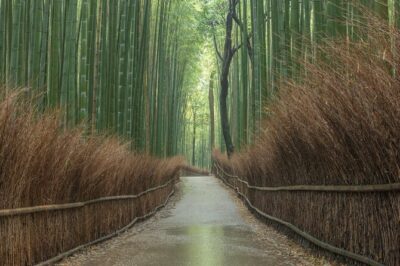
10 Must-see Spots in Kyoto One Day Private Tour (up to 7 people)
Read our review →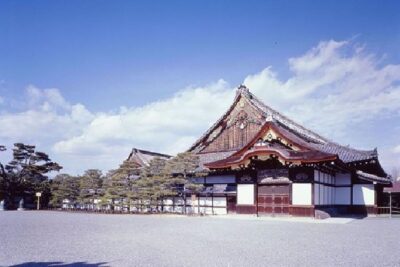
Kyoto Customized Private Tour: See Top Attractions in 1 Day
Read our review →
From Kyoto / Osaka: Kyoto Must-see Spots & Nara Park One Day Tour
Read our review →
Nara, Osaka & Kobe Day Trip – 3 Cities in 1 Day
Read our review →Browse the lists this tour appears in