
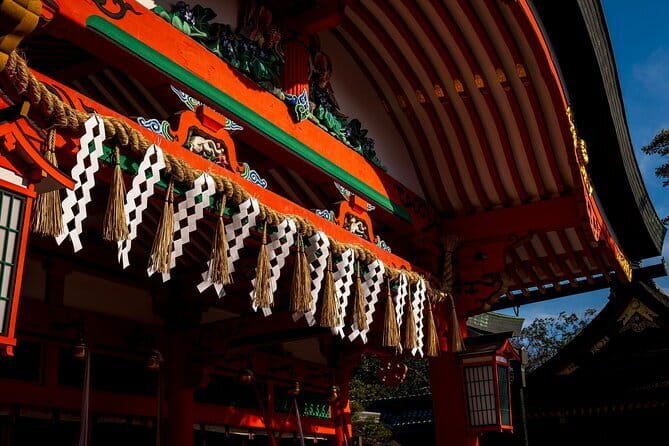
Reviewed · KYOTO PHOTOSHOOTS
Kyoto Photography Masterclass – Private Photography Lesson
Kyoto is a photographer’s city, but its best pictures are not always the easiest to find. This private lesson puts you beside a professional photographer who can help you choose the right angle, adjust your settings, and make sense of difficult light. You move through Gion’s wooden streets, Pontocho’s lanterns, and the temple lanes near Kiyomizudera rather than sitting in a classroom.
I like the one-to-one format, since your guide can match the lesson to your skill level and let you work at your own pace. I also like the practical approach: you can review photos during the session, reset the camera, and try again. The main drawback is the $170 per person price, which makes the tour a better buy for serious photographers or small groups than for someone seeking only a guided walk.
Key points before you book
- Three private hours: Only your group takes part, so the guide can focus on your camera and your questions.
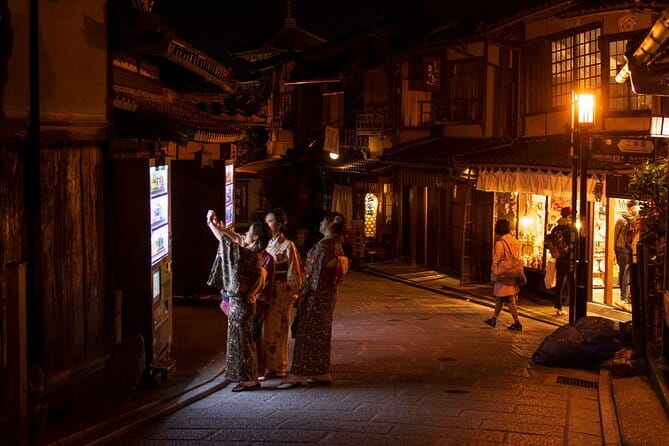
- Strong night option: Pontocho and Kiyomizudera provide a useful setting for long exposure and low-light practice.
- A real lesson, not only a photo walk: Expect help with settings, composition, lighting, and reviewing your images.
- Eight Kyoto stops: The route includes Gion, Pontocho, Gion Corner, Minamiza Theater, Yasaka Shrine, Hokan-ji Temple, Ninenzaka, and Kiyomizudera.
- Equipment is not supplied by default: Bring your own camera, and request a tripod if you need one.
- Private pricing: The cost makes more sense when shared by a small group eligible for a group discount.
Why this Kyoto photo lesson works
Many Kyoto tours point out attractive places and leave you to take the same picture as everyone else. This experience aims to do more. Your guide helps you decide what belongs in the frame, how to handle changing light, and which camera settings fit the scene.
That matters in Kyoto because the city’s visual appeal is often subtle. A narrow wooden façade, a paper lantern, a temple roof, or a quiet stone lane may look flat if photographed from the wrong spot. A professional guide can help you notice texture, pattern, reflections, shadows, and the connection between old buildings and present-day life.
The private format is the biggest advantage. If you are new to photography, you can ask basic questions without slowing down a group. If you already know your camera, you can spend more time on composition, manual settings, or night work. You are not locked into a fixed teaching pace.
The lesson lasts about three hours. That is long enough to cover several parts of eastern Kyoto, but not long enough for an exhaustive photography course. Think of it as a focused field lesson with a Kyoto route attached, not a full-day workshop.
More photoshoots in Kyoto:
- Kyoto: Maiko Makeover and Photoshoot Experience
★ 4.7 · 239 reviews - Kyoto: Private Photoshoot Service
★ 5.0 · 158 reviews - Your Private Vacation Photography Session In Kyoto
★ 5.0 · 110 reviews
Choosing between street and night photography
The experience is described in two useful ways: a street-focused session and a night-focused session. The stops provided are the same broad Kyoto sights, but the light and photographic problems change sharply depending on the time of day.
A street session suits you if you want to work with architecture, people, details, and the contrast between old and new Kyoto. Gion’s machiya houses, temple approaches, shop fronts, and quiet paths give you plenty of subjects without needing elaborate equipment.
A night session is better if you want to learn how to control difficult light. Lanterns, signs, temple illumination, and dark lanes can produce striking pictures, but only when your settings are under control. You will work on long exposure and the challenge of keeping a photograph sharp in low light.
One especially useful feature is the chance to review pictures during the lesson. A guide named Irven is specifically associated with a night session in which the participant used a supplied tripod, checked the results, and made repeated adjustments. That kind of immediate correction is worth more than a generic lecture. You see the problem in your own photograph, change the setup, and check the result again.
A tripod is available upon request, but it is not automatically included. Ask for one when booking if you plan to concentrate on night photography.
Gion and Pontocho: Kyoto’s best opening frames
The meeting point is by the Statue of Izumo-no-Okuni near Kawabatacho in Higashiyama Ward. From there, the route starts in Gion, one of Kyoto’s most recognizable areas.
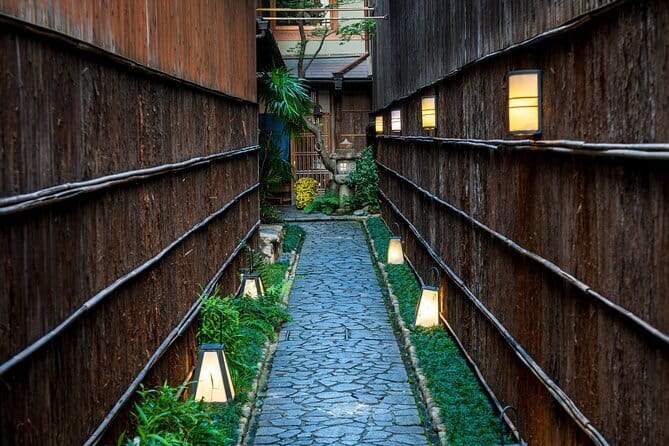
Gion is a good place to begin because it gives you several types of subject at once. Traditional wooden machiya houses provide repeating lines and textures. Narrow streets create strong perspective. Lanterns, entrances, signs, and doorways offer small details when a wide view feels too ordinary.
Your guide can help you avoid treating every street as a postcard. Look for patterns, framing, and the way light falls across the buildings. The value of a photo lesson here is not simply being shown Gion. It is learning why one viewpoint works better than another.
The route then reaches the Pontocho District. Pontocho is especially suited to evening photography, when its narrow passage and lantern-lit façades take on a quieter, more atmospheric look. The space is tight, so your lens choice and framing matter. You might find that a wide view captures the full lane, while a longer lens isolates a sign or a patch of warm light.
Pontocho can also test your patience. It is not a place where you can rely on broad scenery. You need to pay attention to small changes in light and detail. That makes it useful for learning, but less satisfying if you only want grand temple views.
Gion Corner and Minamiza Theater
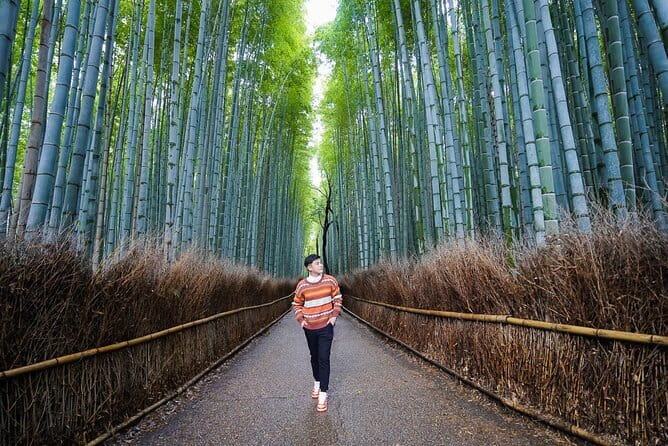
Gion Corner adds another cultural reference to the route. It helps place the surrounding streets in their traditional performing-arts setting, though the stop is best understood as an exterior and area-focused photo opportunity unless your guide tells you otherwise. The supplied information does not promise an admission ticket or a performance.
Minamiza Theater brings a different architectural subject. Its façade and location near the old entertainment quarter can give you stronger shapes and formal details than the small lanes of Gion. Your guide can help you decide whether to make a clean architectural frame or include the surrounding street to show how the theater fits into modern Kyoto.
These two stops are useful because they keep the walk from becoming a string of temples. Kyoto photography is not only about gates and roofs. The city’s cultural identity also appears in theaters, signs, shop fronts, and streets where older traditions continue beside daily life.
Same city, a completely different kind of day:
- PERFECT KYOTO 1-Day Bus Tour
★ 5.0 · 13,518 reviews - Kyoto: Fushimi Inari, Kinkakuji, Bamboo Grove 1 Day Bus Tour
★ 4.8 · 4,316 reviews - Kyoto: Tea Ceremony in a Traditional Tea House in Kiyomizu
★ 4.9 · 3,519 reviews - Kyoto Geisha Walking Tour: Gion District & Hidden Gems
★ 4.7 · 3,273 reviews
Yasaka Shrine: color, gates, and changing light
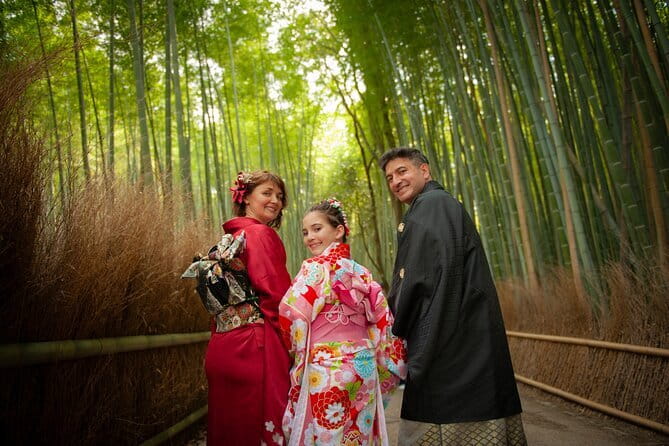
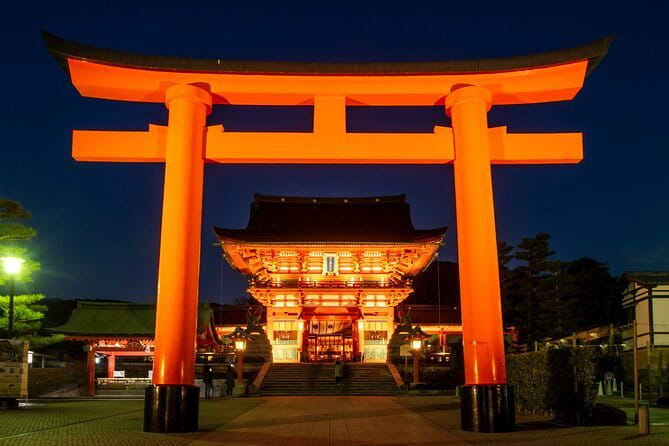
Yasaka Shrine offers a larger religious setting after the tighter streets of Gion and Pontocho. The shrine gives you room to work with gates, architectural details, open approaches, and strong blocks of color.
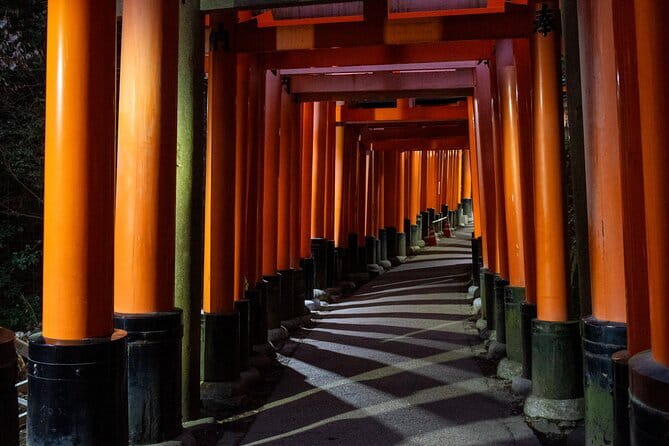
A shrine is a good classroom for composition because it contains both close-up and wide-angle subjects. You can practice symmetry, leading lines, and detail shots without changing neighborhoods. If the light is harsh, your guide can help you look for shaded textures or adjust exposure so bright surfaces do not lose their detail.
The experience does not promise special access, reserved viewpoints, or a private ceremony. You are visiting a public cultural site with a photographer’s guidance. That distinction matters. The lesson improves how you see the place, but it does not turn the tour into a behind-the-scenes temple visit.
Hokan-ji and the famous Yasaka Pagoda view
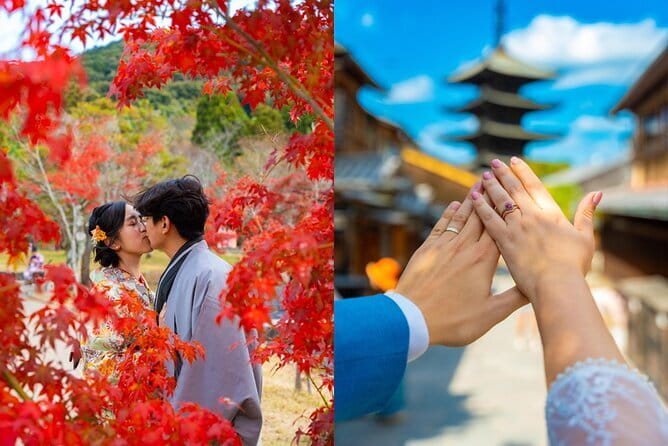
Hokan-ji Temple is one of the most recognizable stops on the route, largely because of its pagoda and the surrounding streets. The approach near the pagoda gives you a classic Kyoto image, with traditional buildings guiding the eye toward the tall structure.
This is where composition advice can make a real difference. A straight-on view may be obvious, while a lower angle, a tighter crop, or a frame using the nearby houses can give the photograph more depth. Your guide’s local knowledge is useful here because the best position may depend on the available light and the amount of activity in the street.
The area can also feel crowded and visually busy. That is not necessarily a flaw. It gives you a chance to learn how to wait, simplify the frame, or use people as part of the composition. If you want a completely empty pagoda photograph, conditions may not cooperate.
Ninenzaka and the approach to Kiyomizudera
The route continues through Ninenzaka, one of Kyoto’s most photogenic historic lanes. Its slope, wooden buildings, tiled roofs, shop signs, and layered views create a natural sequence of subjects.
Ninenzaka rewards a slower pace. You can photograph the full street, then switch to details such as rooflines, steps, textures, or repeating façades. A guide can also help you avoid taking only the familiar uphill view. Turn your attention in both directions and look for how the street changes as it rises.
The main practical issue is that this is a popular part of Kyoto. You may need to work around other people, and the narrow street leaves limited room to set up. That makes the private lesson particularly useful for learning quick composition rather than waiting indefinitely for a perfect empty frame.
Kiyomizudera Temple closes the route and provides the largest visual payoff. The temple is useful in daylight for its architecture, elevated views, and layered rooflines. At night, its illuminated form can appear more dramatic, and the session shifts toward long exposure, steadiness, and controlled highlights.
Do not expect the tour to include an entrance ticket unless your booking details say otherwise. The stated inclusions cover a local guide, a professional photographer guide, and a licensed English-speaking in-person guide. Admission fees are not listed among the included items.
What you will learn with your camera
The lesson covers camera settings, composition, lighting, and other techniques. Those words are broad, so the most useful benefit depends on the way you participate. Bring questions and show the guide the kind of pictures you want to make.
For beginners, the priority may be learning how shutter speed, aperture, and sensitivity affect a photograph. For a more experienced photographer, the focus may shift to choosing a stronger frame, working with low light, or making a series of images that tell a story about a place.
Night photography is the clearest specialty. Lanterns and illuminated temples create bright points against dark surroundings. Long exposure can help you capture more detail, but it also makes camera movement more noticeable. A tripod can help, and one is available on request.
The repeated process of taking a picture, reviewing it, and resetting the camera is a major strength. You do not have to wait until you return home to discover that the image is too dark, blurred, or poorly framed. You can correct it while the scene is still in front of you.
Bring your own camera because one is not supplied. The information does not specify a camera type, so confirm that your equipment is suitable for the lesson if you have questions. A phone may be useful for extra snapshots, but the activity is presented as a professional photography lesson rather than a smartphone class.
Price, group size, and practical value
The price is $170 per person, and group discounts are available. Since the activity is private, only your group participates. That makes the price easier to justify for two or more people who want the same lesson, particularly if everyone shares an interest in photography.
For one person, $170 is a serious expense for three hours. You are paying for personal instruction, local route planning, and the chance to work directly with a professional photographer. You are not simply paying for transportation or a long list of sights.
I would book it if improving your pictures is a central goal of your Kyoto visit. I would skip it if you mainly want to see temples quickly, since a standard walking tour may cover the sights at lower cost. The value depends on using the guide’s time well. Ask questions, show your settings, and request feedback on actual images.
The tour is confirmed at booking, uses a mobile ticket, and begins and ends at the Statue of Izumo-no-Okuni. It is near public transportation, and most people can participate. Service animals are allowed. The activity offers free cancellation up to 24 hours before the start time, but changes or cancellations inside that window are not accepted.
Who should book this private Kyoto lesson
This is a strong fit for:
- A beginner who wants hands-on help instead of a general photography talk
- A couple or small group with similar camera interests
- A photographer who wants to practice Kyoto street scenes
- Anyone specifically seeking instruction in night photography
- A visitor who prefers a flexible private pace
It is less suitable if you do not own a camera, want a large group social experience, or have no interest in photography itself. The guide can show you attractive places, but the main product is instruction.
The experience currently carries a 5 out of 5 rating from 11 ratings, with 100 percent recommending it. That is a small sample, so I would treat it as encouraging rather than decisive. The most useful evidence is the practical structure: patient instruction, a requested tripod for night work, and photo review during the lesson.
Should you book it?
Book the Kyoto Photography Masterclass if you want to leave Kyoto with better camera habits, not just a folder of quick snapshots. The private format, local route, and repeated image review give you a real chance to improve in three hours.
Choose the night version if low light and long exposure are your priorities, and request the tripod ahead of time. Choose the street-focused approach if you care more about Gion’s architecture, Ninenzaka’s details, shrine composition, and the relationship between old streets and present-day Kyoto.
At $170 per person, this is not a casual sightseeing bargain. It is a focused lesson with a professional guide. For a photographer who wants personal coaching in some of Kyoto’s most useful settings, that can be money well spent.
FAQ
How long does the Kyoto Photography Masterclass last?
The private lesson lasts approximately three hours.
Is this a private activity?
Yes. Only your group participates in the activity.
Where does the tour start?
It starts at the Statue of Izumo-no-Okuni in Kawabatacho, Higashiyama Ward, Kyoto.
Where does the tour end?
The activity ends back at the meeting point.
What locations are included?
The route includes Gion, Pontocho District, Gion Corner, Minamiza Theater, Yasaka Shrine, Hokan-ji Temple, Ninenzaka, and Kiyomizudera Temple.
Is a professional photographer included?
Yes. The experience includes a professional photographer guide, a local guide, and a licensed English-speaking in-person local guide.
Do I need to bring my own camera?
Yes. A camera is not included. A tripod is available upon request.
Does the lesson include night photography?
The experience offers a night photography format focused on Kyoto after dark, including long exposure and low-light techniques.
Can I cancel for a full refund?
Yes. You can cancel for a full refund up to 24 hours before the experience start time. Cancellations or changes made less than 24 hours before the start are not accepted.
Newest Kyoto experiences on the site
- Treasures of Kyoto: Gion & historical Walking Tour★ 5.0 · 6 reviews
- Whisk Your Own Matcha: A Zen Matcha Experience at Temple★ 3.6 · 7 reviews
- Kyoto tea town for matcha lovers★ 5.0 · 16 reviews
- Uji: Private immersion into Kyoto’s tea and reglious culture★ 5.0 · 17 reviews
- Kyoto Matcha Green Tea Tour★ 4.5 · 23 reviews
- Uji and Wazuka Matcha Farm Half Day Private Guided Tour★ 5.0 · 21 reviews
- Utilising upcycled Matcha! Creating matcha incense (Uji, Kyoto)★ 5.0 · 6 reviews
- Sacred Temple Yoga Experience in Japan★ 5.0 · 3 reviews
Kyoto Photoshoots, compared.
Private Photoshoot Experience in Kyoto ( Gion )
Read our review →
Kyoto Gion Kiyomizudera Kimono Yukata Hairstyle | Photoshoot
Read our review →Browse the lists this tour appears in