
Reviewed · KYOTO CALLIGRAPHY CLASSES
Kyoto: Japanese Calligraphy Class in 150 years old townhouse
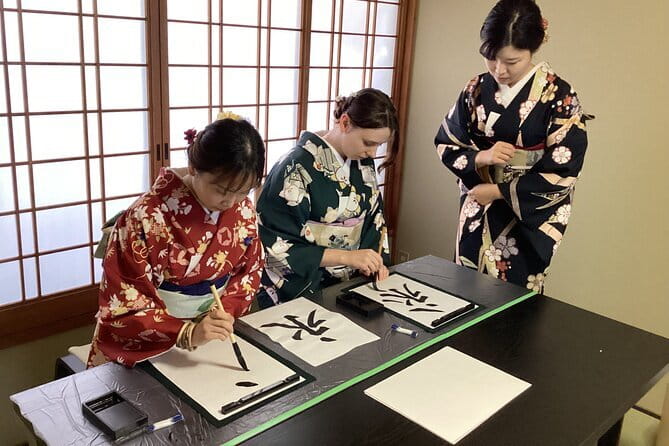
The best part of this Kyoto activity is its setting: you learn Japanese calligraphy inside a 150-year-old townhouse in the atmospheric Ninenzaka area. The class gives you a quiet break from Kyoto’s busy sightseeing streets, with a master and assistant guiding you through brushwork, ink, and the meaning behind the characters.
I like two things here. First, the teaching is patient and friendly, even when your first attempts look more like nervous twigs than elegant characters. Second, you create a take-home souvenir instead of simply watching a demonstration. The main consideration is time: 50 minutes is enough for a satisfying introduction, but it may feel rushed if you want extended practice.
Key points at a glance
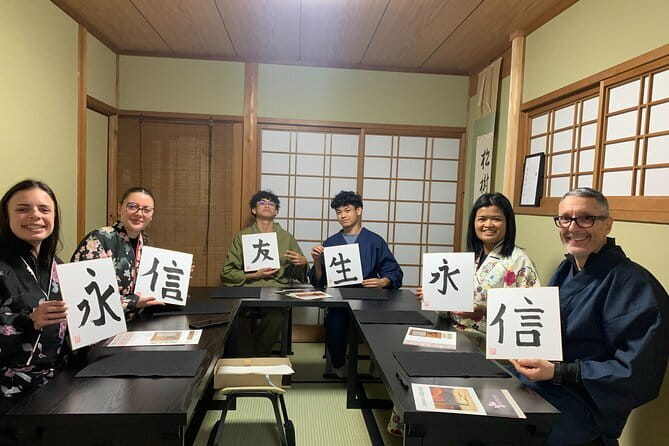
- A 150-year-old townhouse in Ninenzaka: The traditional building gives the lesson a fitting Kyoto setting.
- A master and helpful assistant: Instruction is patient, with support for beginners and teenagers.
- English-language classes every day: You can learn the basics without needing Japanese.
- A finished calligraphy piece to take home: Your practice becomes a personal souvenir.
- A compact 50-minute lesson: Easy to fit into a sightseeing day, though serious learners may want more time.
- Small enough to feel personal: The maximum group size is 18 people.
Learning calligraphy in Kyoto’s old Ninenzaka quarter
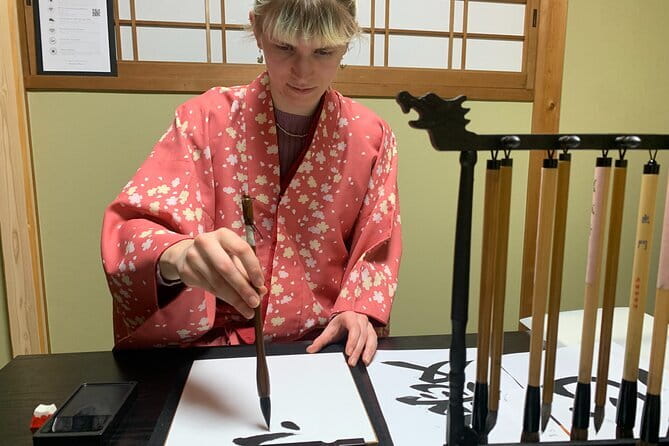
Ninenzaka is one of Kyoto’s most atmospheric areas, with traditional buildings, sloping lanes, and a strong sense of old Kyoto. A calligraphy lesson here feels more fitting than one held in a modern office or a generic classroom.
The meeting point is Tea Ceremony & Cultural Experience Kangetsu Kyoto at 349-19 Masuyacho, in Higashiyama Ward. The activity begins and ends there, which keeps the logistics simple. You do not need to change locations halfway through the lesson or worry about finding a separate return point.
The townhouse setting matters because calligraphy is not only about producing a neat character. It is also about slowing down, paying attention, and respecting the tools and the space. The old building helps create that mood before the brush even touches the paper.
You should expect a calm indoor activity rather than a sightseeing tour. There is no long walk, temple visit, or performance built into the session. That is useful if your Kyoto schedule is already full of shrines, shops, and narrow streets. The class gives you a quieter hour without taking up half a day.
More calligraphy classes in Kyoto:
- Kyoto: Calligraphy class at Buddhist temple in city center
★ 5.0 · 167 reviews - Kyoto: Japanese Calligraphy Class
★ 4.8 · 89 reviews - Kyoto: Japanese Calligraphy Workshop
★ 4.7 · 84 reviews
What happens during the 50-minute class
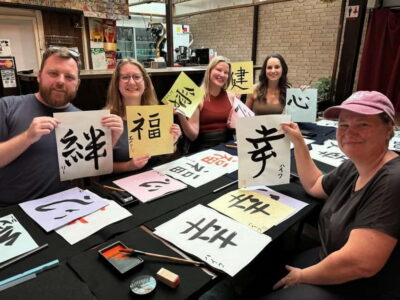
The class is designed for beginners, so you do not need prior art experience or Japanese language skills. The teaching begins with a short introduction to Japanese calligraphy and the background of the language. This context gives the characters more meaning than simple decorative marks.
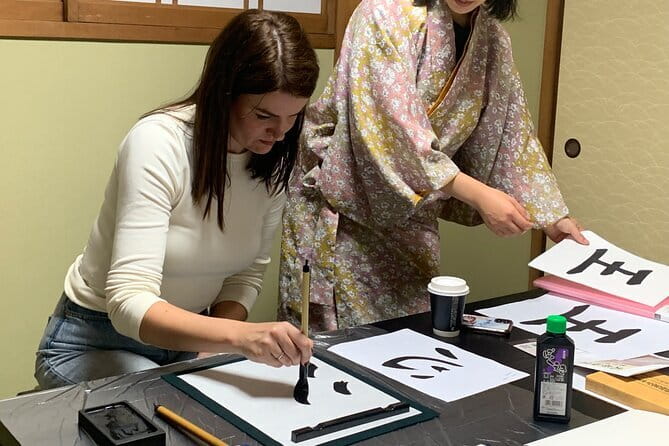
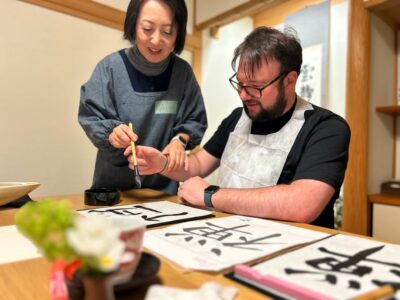
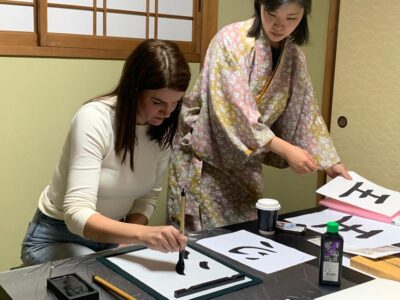
You then work through the basic techniques needed to form the characters. The instructors demonstrate how the brush should be handled and guide you as you try it yourself. Expect to make several attempts. One of the useful features of the lesson is the willingness to correct and encourage you rather than simply showing you a perfect finished example.
The master leads the instruction, with an assistant available to help. This arrangement is especially useful when the class includes people at different skill levels. You can receive help while the main lesson continues, rather than waiting for the teacher to reach you.
The atmosphere is peaceful, but you do need to concentrate. Brush angle, pressure, and the order of the strokes all matter. Calligraphy rewards a steady hand and patience, though you should not expect museum-quality work on your first try. The point is to understand the process and leave with something you made yourself.
At the end, you have a finished piece to take home. That gives the activity a clear payoff. You are not left with only a few photographs or a general memory of watching someone else work.
Why the instructors matter for first-time students
The strongest feature of this class is the teaching style. The master and assistant are described as kind, patient, and helpful, which makes a real difference in an activity where beginners can feel self-conscious.
Calligraphy is easy to admire and harder to perform. The brush can feel unfamiliar, and a small mistake changes the shape of a character. Patient instruction lets you try again without turning the class into a test.
This is also a good choice if you are visiting with a teenager. A 17-year-old can participate, and the activity offers a more hands-on cultural experience than simply viewing calligraphy in a museum. It also works well for adults who want to learn something new without committing to a long workshop.
The class is taught in English every day. That does not mean the lesson loses its Japanese character. Instead, you can understand the explanations and ask for help while working with a traditional art form.
The maximum group size is 18 people. That is not a private lesson, but it is limited enough for the instructors to offer guidance. If the class fills, you should expect a shared workshop atmosphere rather than one-to-one coaching.
The real value of a $43 Kyoto activity
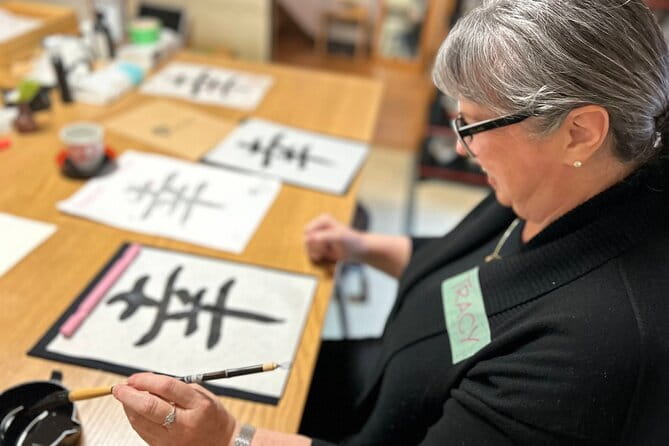
At $43 per person, this is not the cheapest short activity in Kyoto. It is also more than the cost of buying a calligraphy-themed souvenir in a shop. The value comes from the combination of instruction, setting, cultural background, and the piece you create.
You are paying for a guided introduction rather than a product alone. The teacher explains the basics, helps you practice, and gives you a clearer sense of why the art looks and feels the way it does. The 150-year-old townhouse adds atmosphere that a casual shopping stop cannot provide.
The price makes the most sense for someone who values participation. If you want a keepsake with a personal connection, the class offers more than a ready-made item. You can remember the awkward first strokes, the corrections, and the satisfaction of producing a finished character.
The value is less convincing if you want serious technical training. Fifty minutes is short. One person found the class slightly rushed and would have preferred 90 minutes. That is a fair concern, especially if you already practice calligraphy or want detailed instruction in several characters.
I would view this as a compact cultural workshop, not a full course. Its short format is useful for most sightseeing plans, but it limits how much practice you can fit in.
More craft workshops in Kyoto:
- Kyoto: 45-Minute Tea Ceremony Lesson Experience
★ 4.3 · 2,378 reviews - Ramen Cooking Class at Ramen Factory in Kyoto
★ 5.0 · 1,937 reviews - Kyoto : Chopsticks Making Workshop in Gion with Engraving Option
★ 5.0 · 958 reviews - Kyoto: Samurai Sword Class by Experts in Traditional Arts
★ 4.9 · 657 reviews
A peaceful change of pace during a busy Japan trip
Kyoto sightseeing can become repetitive in a particular way: temple, steps, photographs, gift shop, then another temple. A calligraphy class changes the rhythm. You sit down, focus on a physical task, and spend less time trying to cover another attraction.
That makes this activity useful during a longer Japan trip. If you have been moving between cities for two weeks, a calm indoor class can give you a welcome pause. You still learn about Japanese culture, but you do so with your hands rather than by reading signs or following a guide through a crowded site.
The class also suits a mixed-interest group. One person may enjoy art, another may like language, and someone else may simply want a Kyoto souvenir. Since the lesson includes background information, technique, and a finished piece, it offers several points of interest without requiring specialist knowledge.
You should not book it expecting a dramatic performance or a major cultural ceremony. Its appeal is quieter. You are there to learn, concentrate, and make something.
Practical details that can make or break the visit

Wear socks. This is an explicit requirement, and if you forget them, you will need to purchase a pair. That small detail can easily be missed when packing for a warm Kyoto day, so check before leaving your hotel.
Children under 12 cannot participate. The class can suit older children and teenagers, but families with younger children will need another plan for them. This age rule is important because the session requires attention and careful handling of the brush.
The activity lasts about 50 minutes. Allow additional time to reach the townhouse, particularly if you are coming through the Ninenzaka area on foot. The meeting address is in Higashiyama, near public transportation, but the surrounding streets can be busy and slow at popular times.
A mobile ticket is provided, which is convenient when you are moving around Kyoto. Confirmation normally arrives at booking. If you book within eight hours of the start time, confirmation is sent as soon as possible and depends on availability.
The activity requires good weather under its operating policy. Since the class takes place indoors, this may seem unexpected, but poor weather can still lead to a cancellation or schedule change. If that happens, you are offered another date or a full refund.
You can cancel for a full refund up to 24 hours before the start time. Changes or cancellations made within 24 hours are not accepted for a refund, so keep the local Kyoto time in mind.
Who should book this calligraphy class
I would recommend it most strongly to first-time visitors who want a manageable cultural activity in a traditional setting. It fits well between sightseeing stops and does not require a full morning or afternoon.
It is also a good match for:
- Couples looking for a quiet shared activity
- Families with children aged 12 and older
- Teenagers who prefer making something to simply viewing monuments
- Adults curious about Japanese writing and brush technique
- Anyone who wants a personal souvenir from Kyoto
- Visitors who need a calm break from a packed itinerary
The class may be less suitable if you want advanced calligraphy instruction. You will learn the fundamentals, but the short session leaves limited time for repeated practice. If you already have experience with the art, you may wish for a longer lesson.
It is also not ideal for anyone who dislikes sitting still or concentrating on fine hand movements. The class is peaceful, but it is not passive. You need to pay attention to the instructor and work through your own attempts.
How to fit it into a Ninenzaka day
Because the class begins and ends at the same townhouse, it is easy to pair with time in eastern Kyoto. You can plan it as a pause within a day centered on Ninenzaka and nearby sights, rather than treating it as a separate cross-city excursion.
Try not to schedule it too tightly against another fixed activity. The lesson itself is about 50 minutes, but you also need time to arrive, locate the meeting point, and settle in. Ninenzaka can be crowded, and walking through the area may take longer than a map suggests.
Booking ahead is sensible. The activity is booked, on average, about 25 days in advance, which signals that popular dates can fill before your visit. That is especially worth noting if your Kyoto schedule is fixed or you are visiting during a busy period.
A mobile ticket keeps check-in straightforward. Have it ready on your phone, wear socks, and arrive with enough time to avoid rushing into a lesson that is meant to be calm.
Should you book the Kangetsu calligraphy experience?
Book it if you want a short, hands-on Kyoto activity with patient teaching, an old-town setting, and a souvenir you create yourself. The class is especially appealing if your itinerary already includes many temples and you want a change of pace.
The $43 price is fair for an introductory workshop in a historic townhouse, though the 50-minute limit keeps it from being a serious course. If you want more time to practice, this may leave you wishing for another 40 minutes.
For most beginners, though, the format works. You learn the basic ideas, receive help from the master and assistant, and leave with a tangible reminder of your time in Kyoto. Bring socks, allow a little extra time around Ninenzaka, and think of it as a focused cultural interlude rather than a complete calligraphy education.
FAQ
Where does the calligraphy class take place?
The class takes place at Tea Ceremony & Cultural Experience Kangetsu Kyoto, at 349-19 Masuyacho, Higashiyama Ward, Kyoto, 605-0826, Japan.
How long does the activity last?
The calligraphy class lasts approximately 50 minutes.
Is the class suitable for beginners?
Yes. The course is designed for beginners and introduces essential calligraphy techniques in a supportive setting.
Is the class taught in English?
Yes. English-language experiences are available every day.
Can children participate?
Children under 12 years old are not allowed to participate. Participants aged 12 and older can join.
Do I need to bring anything special?
You must wear socks. If you forget, you will need to purchase socks.
How many people can join the class?
The maximum group size is 18 people.
What happens if the activity is canceled because of bad weather?
You will be offered a different date or a full refund if the activity is canceled due to poor weather.
Newest Kyoto experiences on the site
- Treasures of Kyoto: Gion & historical Walking Tour★ 5.0 · 6 reviews
- Whisk Your Own Matcha: A Zen Matcha Experience at Temple★ 3.6 · 7 reviews
- Kyoto tea town for matcha lovers★ 5.0 · 16 reviews
- Uji: Private immersion into Kyoto’s tea and reglious culture★ 5.0 · 17 reviews
- Kyoto Matcha Green Tea Tour★ 4.5 · 23 reviews
- Uji and Wazuka Matcha Farm Half Day Private Guided Tour★ 5.0 · 21 reviews
- Utilising upcycled Matcha! Creating matcha incense (Uji, Kyoto)★ 5.0 · 6 reviews
- Sacred Temple Yoga Experience in Japan★ 5.0 · 3 reviews
Kyoto Calligraphy Classes, compared.
Calligraphy class at Buddhist temple in city center
Read our review →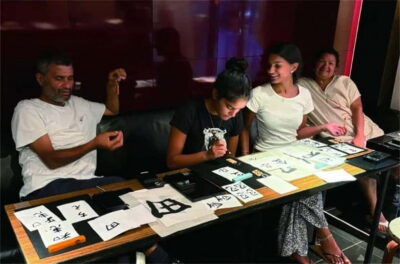
Kyoto Ninenzaka : Japanese Calligraphy Class in Townhouse
Read our review →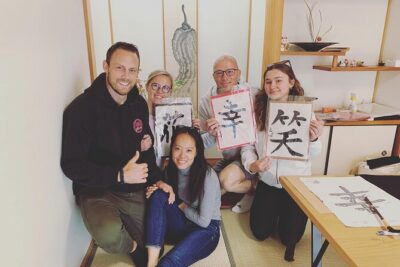
Private Japanese Calligraphy in Kyoto – Learn Shodō with a Master
Read our review →
Japanese Calligraphy – Shodo – Lesson (near Kyoto Station)
Read our review →
Browse the lists this tour appears in