Reviewed · KYOTO TOURS
Kyoto|10 miso & soup tastings, miso balls & light meal
The surprise here is how different miso can taste. In 90 minutes, you compare 10 kinds of miso and miso soup, then turn your favorite into a practical soup pack you can use at home. This is less a cooking class than a friendly lesson in one of Japan’s most important everyday foods.
I like the side-by-side tasting, which makes regional and fermentation differences easy to notice. I also like the small group size, limited to five people, and the chance to ask questions while making something with your hands. The main consideration is language: Hasumi is warm and helpful, but one English-speaking participant found some explanations difficult to follow.
Key points
- Ten miso styles in one sitting: Taste pastes and prepared soups, then compare color, aroma, saltiness, sweetness, and depth.
- Hasumi leads the session: Instruction is available in English and Japanese, with a relaxed pace for beginners.
- Make your own miso balls: Choose toppings and prepare portable soup portions that only need hot water.
- Small central Kyoto setting: The apartment venue is within about 10 minutes of Shijo, Karasuma, and Omiya Stations.
- Useful for food shopping later: You leave with a better idea of which miso to buy in Japan or take home.
- Dietary requests are possible: Vegan, vegetarian, gluten-free, halal-friendly, and allergy-free arrangements can be made with advance notice.
Why Ten Miso Samples Change the Way You Taste Japan
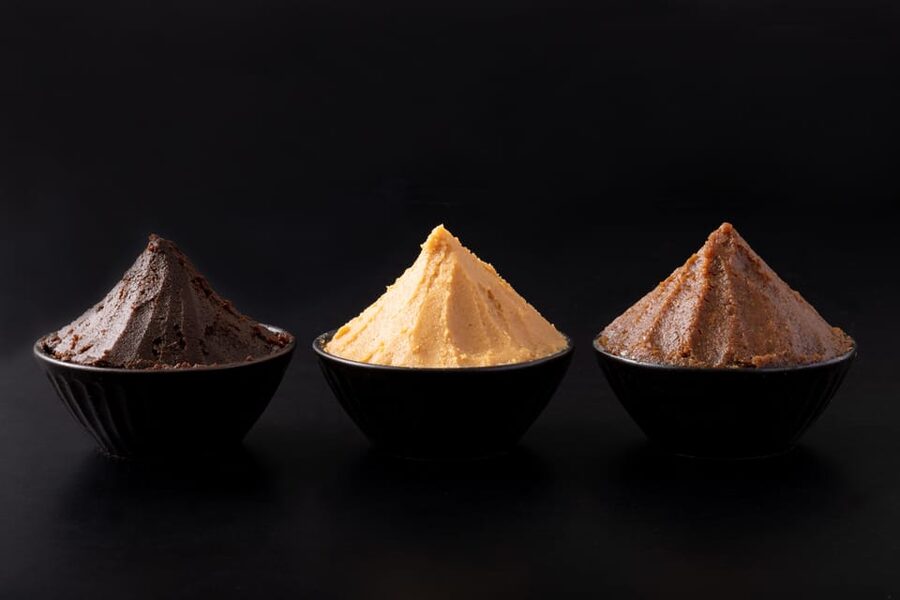
Miso often sits quietly on supermarket shelves, packed in tubs with labels that may mean little if you do not read Japanese. White miso, red miso, blended miso, regional miso, and darker aged varieties can look similar at first, yet taste quite different.
This workshop gives you a useful shortcut. Instead of buying several tubs and hoping for the best, you taste them side by side. You can pay attention to the points that matter in a real kitchen: Is it sweet or salty? Light or forceful? Smooth or earthy? Does it taste better as a dip, a soup base, or part of a cooked dish?
The tasting includes both miso paste and miso soup. That matters because hot water changes the balance. A paste that seems strong on a spoon may become a pleasant, rounded broth. Another may taste mild as a soup but lose its character when mixed with other ingredients.
I like this format because it turns an abstract food lesson into a shopping tool. After the workshop, you should have a clearer sense of what you like instead of relying only on color or an attractive package.
A few more Kyoto tours worth putting on the shortlist
- PERFECT KYOTO 1-Day Bus Tour
★ 5.0 · 13,518 reviews - Kyoto: Fushimi Inari, Kinkakuji, Bamboo Grove 1 Day Bus Tour
★ 4.8 · 4,316 reviews - Kyoto: Tea Ceremony in a Traditional Tea House in Kiyomizu
★ 4.9 · 3,519 reviews
Starting With a Quiz and the Basics of Fermentation
The session opens with an introduction to the instructor and venue, followed by a short quiz and visual aids. The aim is to make basic miso information easy to follow, even if you have never cooked Japanese food.
You learn about miso’s place in Japanese home cooking, the meaning of color differences, regional styles, and the basic fermentation process. The class also covers commonly discussed health benefits and the cultural role of miso in everyday meals.
This part is not meant to turn you into a fermentation specialist. That is a good thing. The useful question is not only how miso is made, but how the process affects what you taste. Time, ingredients, and local habits all help explain why one paste may be mellow and sweet while another is darker, saltier, or more intense.
Hasumi is the named instructor for the experience, and the class is offered in English and Japanese. Her warm manner helped create a comfortable setting, though you should keep the language point in mind. One participant who expected detailed English explanations had trouble understanding the differences between the miso types and the instructions.
If you are comfortable asking for repetition, watching demonstrations, and learning through tasting, this should be manageable. If you need highly detailed English instruction for every step, you may want to approach the class with modest expectations.
The Ten-Paste Tasting: A Practical Lesson in Regional Style
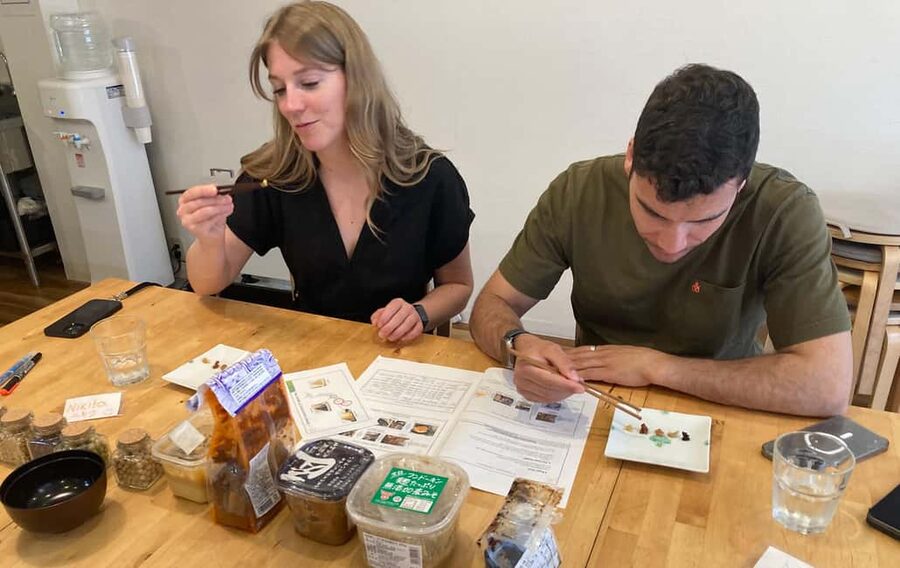
The tasting is the heart of the workshop. You try ten miso varieties from different areas of Japan, first as pastes and then as soup. The number is large enough to show a real range without taking up the whole day.
Expect the differences to be more noticeable than you might guess. Color can offer a clue, but it does not tell the whole story. Two pale pastes may have different levels of sweetness or salt. Two dark pastes may vary in intensity and aftertaste.
You will be guided to compare the samples rather than simply swallow them one after another. Look for aroma first. Then notice how the paste feels on your tongue, how long the taste stays, and what happens after it is mixed with hot water.
This is also a good time to ask practical questions. You can discuss which miso works well for soup, how regional habits affect flavor, and which style might suit your own cooking. The class is especially useful for anyone who has wondered what to choose in a Japanese grocery store.
The tasting receives the strongest praise for good reason. It gives you many small discoveries in a short period. You may find that the miso you expected to like is not your favorite, or that a bold-looking paste becomes your preferred soup.
Turning Your Favorite Paste Into a Miso Ball
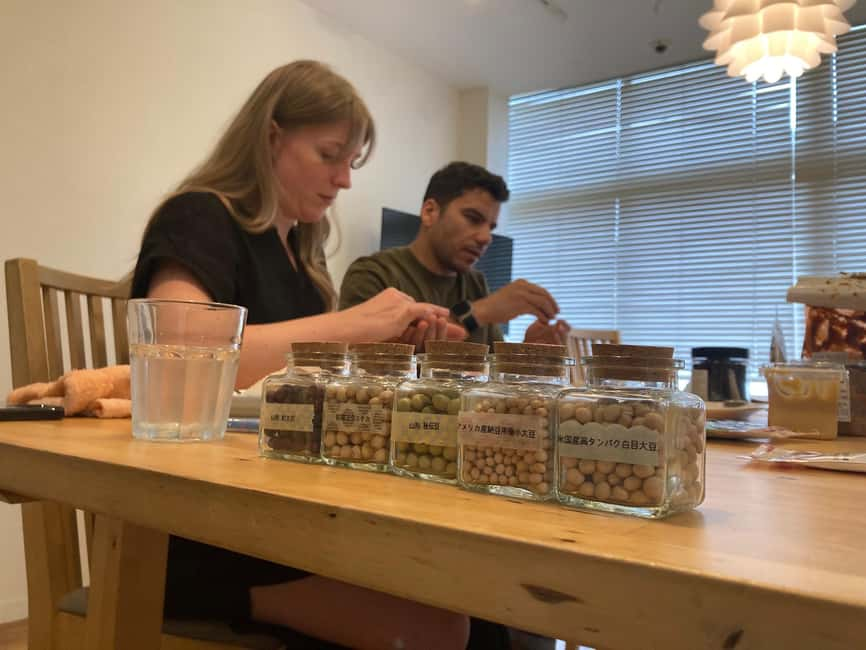
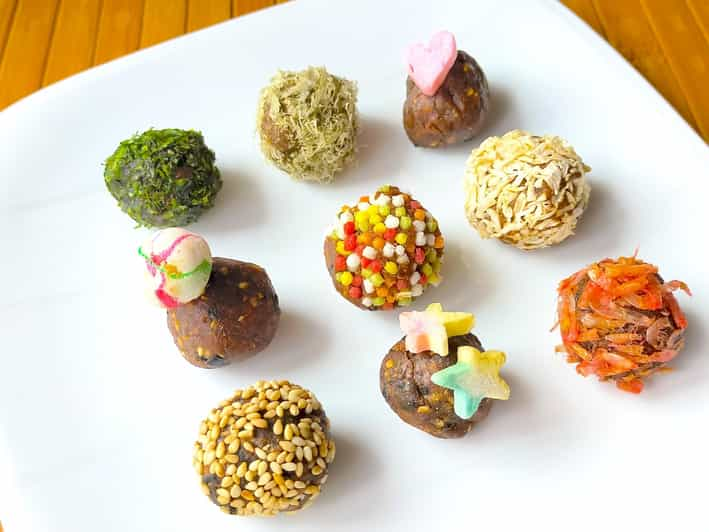
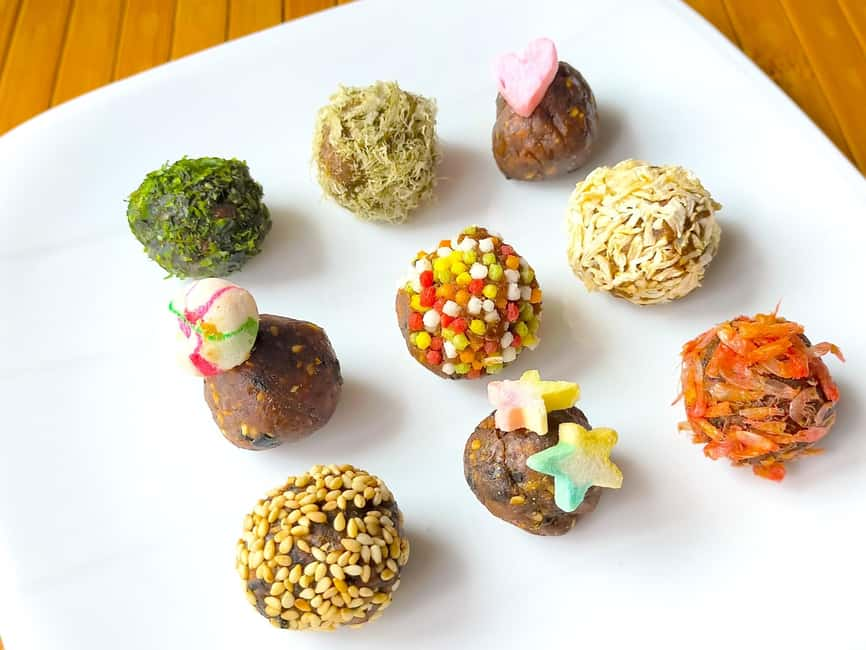
After tasting, you choose the miso you like best and make a miso ball, also described as a miso soup pack. This is a simple portion of miso prepared with toppings so it can be stored and turned into soup by adding hot water.
The activity gives the tasting a practical ending. You are not only deciding which miso tastes best. You are also learning how a portion can be prepared for later use or shared with someone at home.
You can choose your own toppings. The available information does not specify every topping, so do not arrive expecting a fixed recipe or a particular ingredient list. The point is to make an original soup portion based on your preferred miso and selected additions.
This is beginner-friendly work. No prior cooking knowledge is required, and the activity is simple enough to fit comfortably into the 90-minute schedule. Comfortable clothes and water are the only listed items to bring.
I like this part because it gives you something more useful than a souvenir photograph. The miso ball connects the lesson to an ordinary Japanese meal. It also shows why miso is so practical: a small amount can become a quick soup with very little preparation.
Same city, a completely different kind of day:
- Kyoto Geisha Walking Tour: Gion District & Hidden Gems
★ 4.7 · 3,273 reviews - Kyoto: Tea Ceremony Ju-An at Jotokuji Temple
★ 4.9 · 3,207 reviews - Kyoto: Gion Magical Night Walking Tour with Geisha Trivia
★ 4.9 · 2,393 reviews - Kyoto: 45-Minute Tea Ceremony Lesson Experience
★ 4.3 · 2,378 reviews
A Light Miso Meal With Several Uses for the Same Ingredient
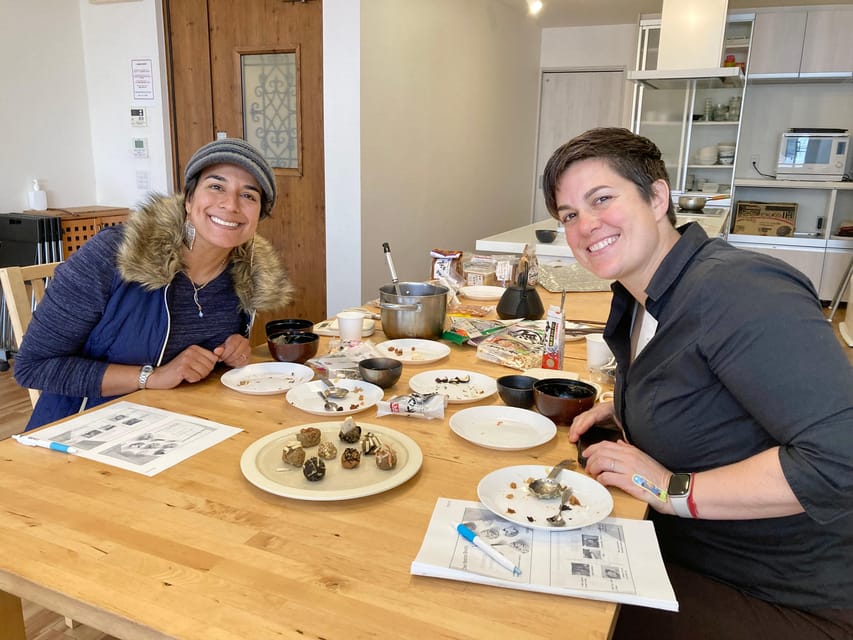
The final part involves preparing and enjoying a light meal together. Miso appears in several simple forms, allowing you to see how the same paste changes when used with different ingredients and preparation methods.
Do not read light meal as a full restaurant lunch or dinner. The price covers the workshop, tastings, and the hands-on food activity, but the experience is not designed as a substantial dining event. Drinks and a separate full meal should not be expected.
This closing activity helps pull the lesson together. You have tasted miso on its own, tried it as soup, made a soup pack, and then used it in food. That progression makes the ingredient easier to understand than a lecture alone.
The food also gives you a chance to test your favorite miso in a more complete setting. A paste that tasted excellent by itself may work differently with other ingredients. That is useful information if you plan to cook with miso after your trip.
A Small Group in Central Kyoto
The venue is in an apartment building in central Kyoto. You take the elevator to the third floor and press the doorbell for room 302. A Japanese restaurant is located on the first floor, which can help you identify the building when you arrive.
The meeting point is within a 10-minute walk of Shijo Station on the Kyoto Municipal Subway Karasuma Line, Karasuma Station, or Omiya Station on the Hankyu Kyoto Line. It is about a 15-minute walk from Nishiki Market and roughly 30 minutes from Kyoto Station by train or bus.
These distances make the workshop easy to add to a day in central Kyoto. You could visit Nishiki Market first, then walk to the class, though the market walk may take longer depending on your exact starting point. You could also schedule it near shopping or sightseeing around Shijo and Karasuma.
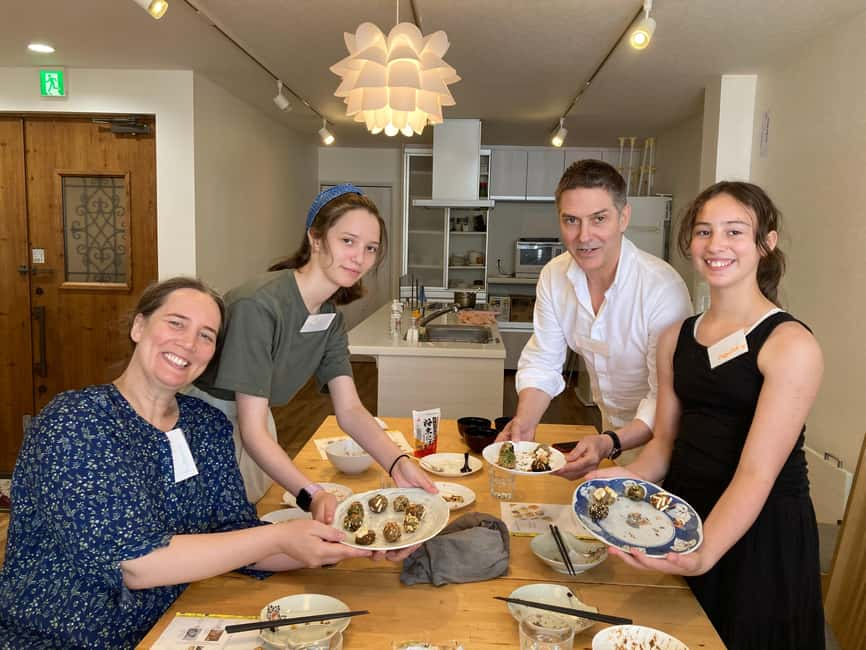
The small group limit of five is important. Miso tasting involves subtle differences, and a crowded room would make questions and discussion harder. With fewer people, you have more room to taste at your own pace and take part in the miso-ball preparation.
The setting is not a grand cooking school or a formal restaurant. It is a compact, personal workshop. That suits the subject. Miso belongs to home kitchens, and the apartment setting supports that everyday feel.
Is $56 a Fair Price for 90 Minutes?
At $56 per person, this is not the cheapest way to eat miso in Kyoto. A bowl of miso soup costs far less, and a supermarket visit lets you inspect many tubs of paste without paying for a class.
The value comes from comparison and explanation. You taste ten styles, learn why they differ, make a miso soup pack, and prepare a light meal. If you would otherwise buy several varieties without knowing what to do with them, the guided tasting can save you from expensive guesswork.
The workshop is also a good use of time on a rainy day or during a return visit to Kyoto. It does not require a full day, and the central location makes the 90-minute schedule easy to fit between other plans.
The price makes less sense if you already know Japanese miso well, regularly cook with several varieties, or want a substantial meal. You are paying for instruction, tasting range, and personal participation, not quantity of food.
Free cancellation up to 24 hours before the start gives you some planning room. The reserve-now, pay-later option is also useful if your Kyoto schedule is still shifting.
Dietary Needs and Language Considerations
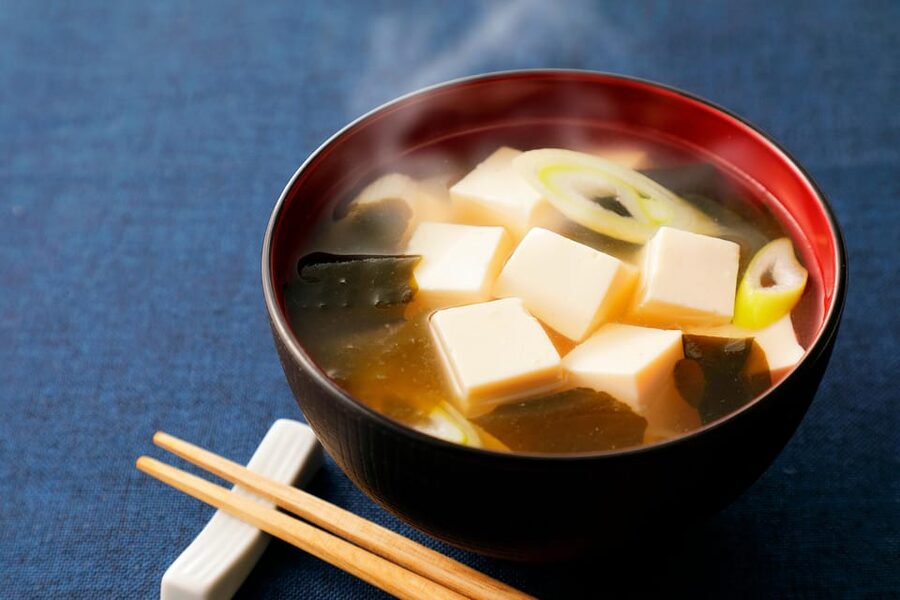
Dietary requests should be made at the time of reservation. Vegan, vegetarian, gluten-free, halal-friendly, and allergy-free arrangements are available when ingredients are prepared in advance.
That advance notice matters. Do not wait until you arrive and assume every sample or topping can be changed on the spot. Tell the provider exactly what you need when booking.
The class is offered in English and Japanese. The content is beginner-friendly, and the tasting itself gives you a visual and sensory way to follow along. Still, the English level may not be equally easy for everyone, particularly when the instructor is explaining fine differences between similar pastes.
If you have limited English or Japanese, use the tasting as your main guide and ask short questions. The format includes demonstrations and comparisons, not only spoken explanation. You can also review basic miso vocabulary before arriving, including white miso, red miso, blended miso, sweet, salty, and fermented.
Who Will Get the Most From This Workshop?
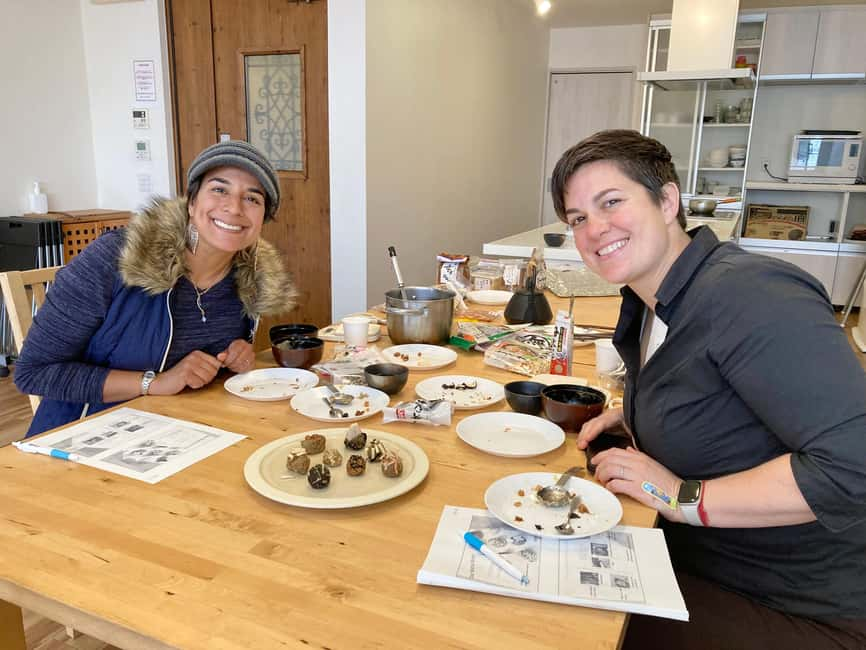
You will get the most from this experience if you enjoy food education, Japanese home cooking, or small hands-on activities. It suits beginners particularly well because you do not need to know how to cook or understand miso before you arrive.
It is also useful for people who plan to shop for food in Japan. After tasting ten varieties, the labels and colors on a supermarket shelf may seem less mysterious. You can make a better choice based on flavor rather than packaging alone.
Families and small groups may appreciate the manageable pace, though the supplied information does not set a minimum age. If you are booking for children, confirm age suitability directly with the provider.
This is less suitable for someone seeking a long cooking class, a large meal, or a broad tour of Kyoto. It focuses tightly on one ingredient. That narrow subject is its strength if miso interests you, but it will not satisfy someone looking for several Japanese dishes or a full market-to-table experience.
Getting Ready for the Miso Session

Wear comfortable clothes and bring water. Since the class includes tasting and simple preparation, avoid arriving rushed or overly full if you want to notice the differences between ten samples.
Allow extra time to find the apartment entrance. The location is central, but an apartment building can be less obvious than a restaurant with a large sign. Use the provided Google Maps location, look for the Japanese restaurant on the first floor, then take the elevator to the third floor and press the bell for 302.
Plan your day around the 90-minute session rather than treating it as a quick stop. You need time to arrive, taste carefully, prepare the soup pack, and take part in the light meal.
Should You Book the Kyoto Miso Workshop?
I would book this if you want a focused, friendly look at Japanese food culture and like the idea of tasting before buying. The ten-sample comparison is the strongest reason to go, followed by the useful miso-ball activity and the small group size.
I would skip it if you want a full meal, a polished culinary school, or detailed English instruction at every moment. The language issue is real, even though the instructor is kind and the format is easy to follow through tasting and demonstration.
For most curious food lovers, $56 is reasonable for the range of samples, the hands-on work, and the practical knowledge you can use after leaving Kyoto. Book with dietary needs stated in advance, arrive with time to find room 302, and keep your expectations focused on miso rather than a broad Japanese cooking class.
FAQ
How long does the miso workshop last?
The experience lasts 90 minutes.
How many types of miso will I taste?
You will taste 10 different kinds of miso and miso soup from different regions of Japan.
Do I need cooking experience?
No. The workshop is designed for beginners and does not require prior cooking knowledge.
Who teaches the workshop?
Hasumi leads the session. Instruction is available in English and Japanese.
How many people can join?
The group is limited to five participants.
Can I make my own miso soup pack?
Yes. You choose your favorite miso and prepare a miso ball, or soup pack, with toppings of your choice.
What should I bring?
Bring water and wear comfortable clothes.
Can dietary restrictions be accommodated?
Yes. Vegan, vegetarian, gluten-free, halal-friendly, and allergy-free options are available with advance notice.
Where is the meeting point?
The venue is in central Kyoto. It is within a 10-minute walk of Shijo Station, Karasuma Station, and Omiya Station. Take the elevator to the third floor and press the doorbell for room 302.
Is transportation included?
No. Transportation to and from the activity location is not included.
Newest Kyoto experiences on the site
- Treasures of Kyoto: Gion & historical Walking Tour★ 5.0 · 6 reviews
- Whisk Your Own Matcha: A Zen Matcha Experience at Temple★ 3.6 · 7 reviews
- Uji: Private immersion into Kyoto’s tea and reglious culture★ 5.0 · 17 reviews
- Kyoto tea town for matcha lovers★ 5.0 · 16 reviews
- Kyoto Matcha Green Tea Tour★ 4.5 · 23 reviews
- Uji and Wazuka Matcha Farm Half Day Private Guided Tour★ 5.0 · 21 reviews
- Utilising upcycled Matcha! Creating matcha incense (Uji, Kyoto)★ 5.0 · 6 reviews
- Sacred Temple Yoga Experience in Japan★ 5.0 · 3 reviews
Kyoto Tours, compared.
Fushimi Inari, Kinkakuji, Bamboo Grove 1 Day Bus Tour
Read our review →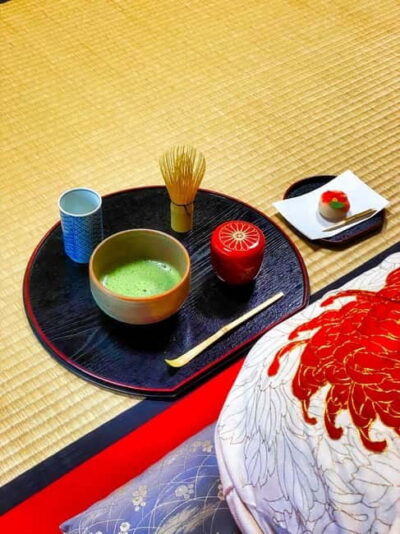
Tea Ceremony in a Traditional Tea House in Kiyomizu
Read our review →
Kyoto Geisha Walking Tour: Gion District & Hidden Gems
Read our review →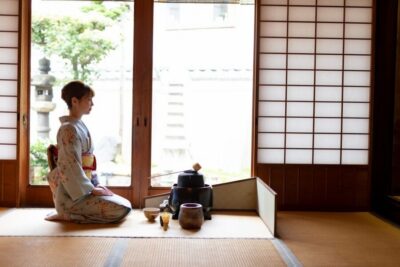
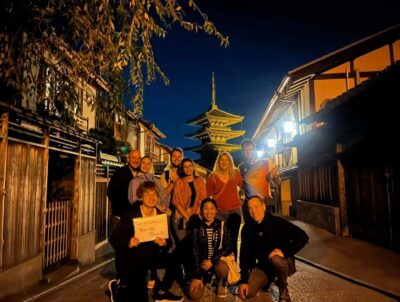
Gion Magical Night Walking Tour with Geisha Trivia
Read our review →