
Reviewed · KYOTO SAMURAI EXPERIENCES
Katana Shopping with Professional Guidance in Kyoto
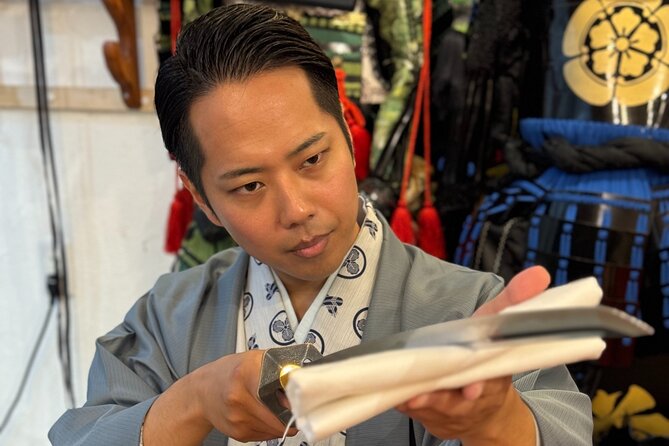
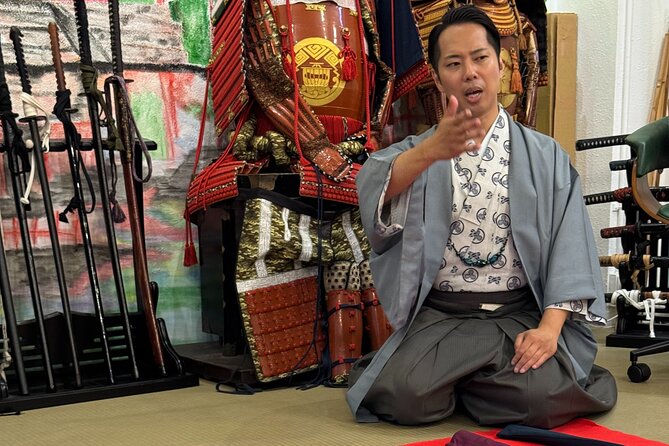
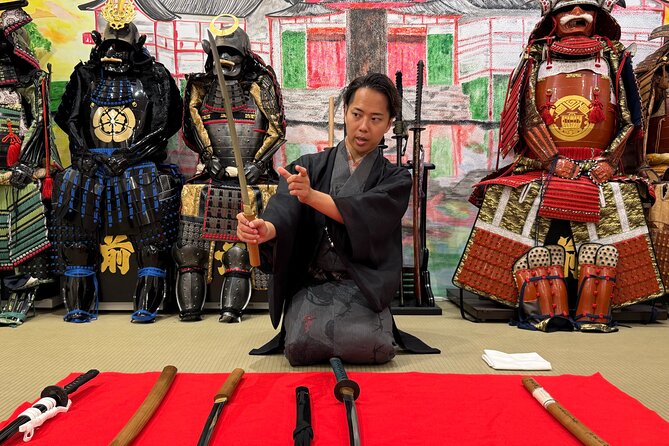
The unusual part of this Kyoto experience is the setting: you shop for a Japanese katana inside a private Kenjutsu dojo, not a regular souvenir store. Shogo, the guide from Let’s Ask Shogo, works with Yushin Sensei, a martial arts teacher who trains more than 20 students and hand-selects genuine blades, including some more than 600 years old.
I like the direct access to people who practice and preserve Japanese sword culture, and I like having Shogo handle the language gap while explaining what you are seeing. The main drawback is clear: this is for serious buyers, not for someone who only wants to meet a YouTuber or browse swords for an hour.
Key points at a glance
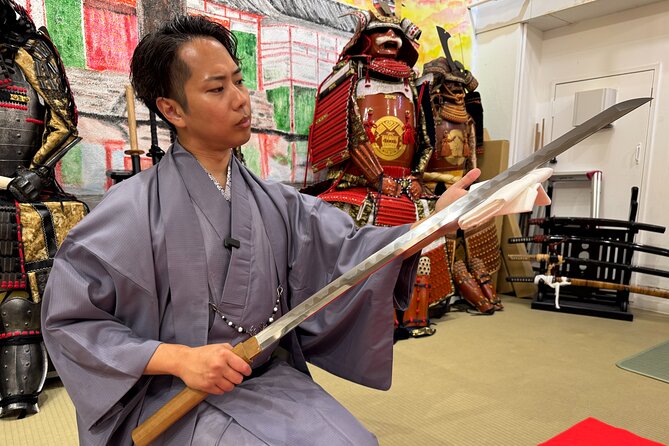
- A real dojo setting: Visit a private Kyoto training space connected to active Kenjutsu practice.
- Two specialist guides: Shogo translates and helps with the purchase, while Yushin Sensei brings martial arts and sword knowledge.
- Hand-selected blades: Some katana are several centuries old, with attention paid to fittings, condition, care, and preservation.
- Private for your group: The listed rate is $65.32 for up to 10 people, not per person.
- A focused one-hour visit: The short format works best if you already know you want to buy a Japanese katana.
- Support beyond the appointment: Purchase guidance, maintenance advice, payment help, and shipping updates may be part of the assistance.
Why this is not an ordinary Kyoto shopping stop
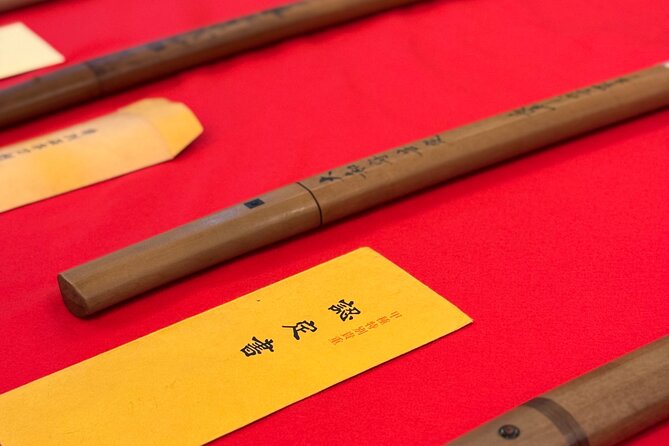
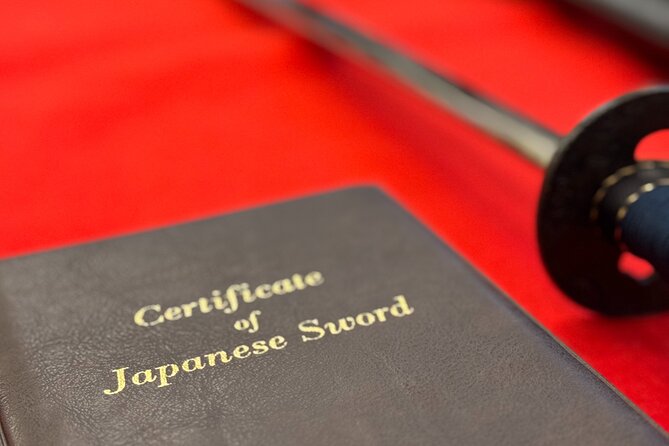
Kyoto has plenty of places to buy souvenirs, but this experience aims at a very different kind of purchase. A genuine Japanese katana is not simply a decorative object you pick up beside a magnet or folding fan. Its blade, fittings, age, paperwork, condition, and care all matter.
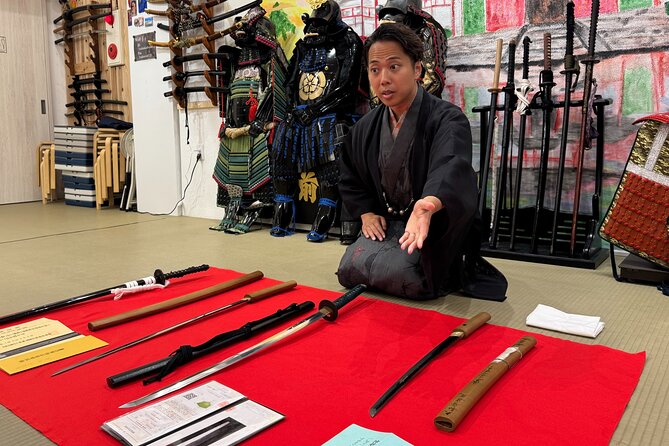
That is why the dojo setting makes sense. You are meeting a master who trains people in Kenjutsu, a Japanese sword discipline, and who personally selects blades for sale. The setting connects the object to living practice instead of treating it as a costume prop.
You also have Shogo beside you as translator and guide. His role matters because sword terminology can be hard to follow even when you speak Japanese, and much harder when you do not. He has more than 10 years of Iai experience and has helped more than 50 people purchase a katana.
I would treat this as a buying consultation with a strong cultural setting, not as a museum visit. You may see beautiful swords and learn a great deal, but the purpose is to help you choose one for purchase.
More samurai experiences in Kyoto:
- Kyoto Samurai Experience
★ 5.0 · 1,294 reviews - Kyoto: Kendo and Samurai Experience with Uniform and Gear
★ 4.9 · 815 reviews - Kyoto: Samurai Sword Class by Experts in Traditional Arts
★ 4.9 · 657 reviews
What happens during the one-hour visit
The meeting point is at 452-2 Matsugaecho in Kyoto’s Nakagyo Ward. From there, the activity begins and ends at the same location. The supplied details do not give a minute-by-minute schedule, so you should expect the hour to be shaped by your questions, interests, and buying goals.
The first stage is likely getting oriented in the dojo and meeting the people guiding you. Yushin Sensei leads a private training space with more than 20 Kenjutsu students, giving the visit a working martial arts context. Do not expect a large commercial showroom or a long public demonstration. This is a private appointment for your group.
The central part is the sword selection. You may examine blades that were hand-picked by the master, including swords said to be more than 600 years old. The value here is not just seeing an old object. You can ask why a particular blade appeals to a collector, how its fittings relate to the sword, and what care it needs after purchase.
Shogo helps translate and explains the choices in practical terms. This is especially useful if you have a budget, a preferred period, a particular style of fittings, or a personal reason for wanting a katana. One person who bought through this service had fittings that reflected personal hobbies and a zodiac sign. That detail shows how specific the selection can become when you explain what you want.
The final part is the decision stage. You are not required to buy simply because you book the appointment, but the experience is designed for people who are seriously considering a purchase. If you already have a clear idea of your budget and priorities, you will make better use of the short visit.
The guides make the difference
Shogo is best known for Let’s Ask Shogo, a YouTube channel with more than 1.8 million followers. His online presence may be what first brings people to the experience, but his useful role here is more practical: he translates, explains, responds to questions, and helps you work through a major purchase.
You should not book this only to meet a familiar online personality. The activity itself warns against that. The appointment is intended for a buyer who wants help finding and purchasing a Japanese katana.
Yushin Sensei adds the martial arts side. He teaches Kenjutsu and personally selects blades. That gives you access to someone concerned with how swords are made, preserved, handled, and understood within Japanese sword culture.
I like this combination because the guides serve different purposes. Shogo can help make the conversation clear for an international buyer, while Yushin Sensei brings the dojo setting and sword-practice background. You are not relying on a guide who only knows the sales pitch.
What you can learn about the swords
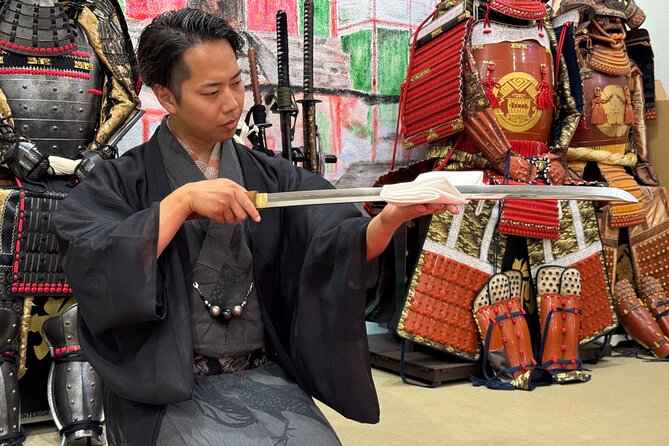
The available details do not promise a fixed inventory, so the exact blades you see will depend on what is available when you visit. Some may be hundreds of years old, and some may be suited to a collector, martial artist, or first-time serious buyer.
You can expect the focus to go beyond the blade itself. The people who bought through this service received help with katana history, collection, preservation, and maintenance. Fittings such as the fuchi, kashira, and menuki may matter as much to your personal connection with a sword as the blade does.
That is an important point for a first-time buyer. A sword can appeal because of its age, shape, maker, fittings, condition, or the way all those elements work together. You may arrive with one idea of your perfect katana and find that another sword fits your interests better.
The guidance can also help you avoid a poor match. A beautiful old sword may not suit your budget, display plans, experience level, or maintenance expectations. The supplied price of $65.32 covers the appointment, not the katana, so you need to think of the experience as an advisory fee before a potentially much larger purchase.
More market walks in Kyoto:
- Nishiki Market Brunch Walking Tour (7 Tastings + Brunch)
★ 5.0 · 1,355 reviews - Kyoto Nishiki Market Food and Culture Walking Tour
★ 5.0 · 412 reviews - Kyoto: Nishiki Market Tea Ceremony with Koto Performance
★ 4.8 · 294 reviews - Kyoto: Local Food Tasting Tour at the Nishiki Market
★ 4.7 · 135 reviews
Why the translation service matters
Language is one of the biggest practical concerns when buying a specialized Japanese object. A basic shop conversation may be enough for a souvenir, but a serious katana purchase can involve details about age, care, fittings, shipping, and payment.
Shogo’s presence is meant to remove that barrier. He can help you understand the explanations and make sure your own preferences are understood. This is particularly useful if you have questions that are too detailed for casual translation.
The support may continue after the appointment. One buyer received guidance on maintenance and follow-up updates through the shipping process. Another had trouble getting payment authorized, but received help from the team while the purchase was completed.
That does not mean every booking will involve the same level of aftercare or the same shipping arrangement. It does show why you should ask clear questions before paying for a sword: what is included, how will it be shipped, what care is needed, and what documents or restrictions apply to your destination.
The value of $65.32 for a private group
At $65.32 for a group of up to 10 people, the listed fee is modest when divided among several members of a family or party. It is also a private activity, so your appointment is not shared with another booking.
The fair way to judge the price is not by comparing it with a one-hour sightseeing walk. You are paying for access to a specialist buying setting, translation, personal guidance, and a connection to a working dojo. If you are already planning to purchase a katana, that can be useful insurance against making an uninformed choice.
For one person, the cost is still reasonable as a consultation, but only if you are genuinely considering the purchase. If you simply want to see swords, $65.32 may feel expensive for an hour because the experience is not built as a general cultural attraction.
The real financial decision comes after the appointment. The cost of the sword is not provided, and antique or specially selected katana can vary greatly in price. Set your spending limit before you arrive, and tell the guides early. A clear budget gives them a better chance of showing you suitable options.
Who should book this experience
I would choose this for a collector, martial artist, or someone who has wanted a genuine Japanese katana for years. It is also a good fit if you have researched swords but do not feel confident judging age, fittings, condition, or care on your own.
The private format suits couples, families, or small groups where one person is making the purchase and the others want to understand the choice. Since the price covers up to 10 people, a group can share the appointment, though the buyer should remain the main focus.
You should skip it if you want a quick samurai-themed photo opportunity, a casual look at antiques, or a chance to meet Shogo without buying. The experience is direct about this point, and respecting it will make the appointment better for everyone.
Most people can participate, according to the available information. The activity lasts about an hour, and no special physical requirement is listed. Confirmation is sent within 48 hours of booking, subject to availability, so do not assume the appointment is final until you receive it.
Smart preparation before you arrive
Start by deciding why you want a katana. Are you collecting, practicing martial arts, honoring Japanese culture, or looking for a particular type of artwork? Your answer will help the guides understand what to show you.
Set a budget before the visit and be honest about it. You can also prepare a short list of preferences:
- Approximate age or period
- Blade style or size
- Fittings that interest you
- Display or collection plans
- Maintenance concerns
- Shipping destination
You should also think about how much guidance you need. A first-time buyer may want an explanation of every major part, while an experienced collector may prefer to focus on specific blades and fittings.
Do not rush the decision simply because you are in Kyoto. The point of professional guidance is to help you choose carefully. If you need more time to think, ask how the purchase process works before committing.
Practical limits and things to keep in mind
The one-hour format is helpful for a focused appointment, but it is not a full course in Japanese sword history or Kenjutsu. You will need to keep your questions relevant to the purchase.
The exact selection is also not guaranteed in advance. Hand-selected blades sound appealing, but the right sword for you depends on what is available and what the guides learn about your taste and budget.
The experience is private, which is a strength for serious buyers, but it also means you do not get the energy or comparison of a large public shop. Some people will prefer browsing alone. I think this works better for someone who wants an informed conversation.
Finally, remember that buying a Japanese katana involves more than choosing an attractive blade. Maintenance, preservation, payment, and shipment all matter. The guidance can help, but you remain responsible for making sure the purchase and delivery arrangements suit your home country.
Cancellation and booking details
You can cancel for a full refund up to 24 hours before the local start time. Cancellations or changes made less than 24 hours before the appointment are not accepted for a refund.
The activity begins and ends at the Kyoto meeting point. It is listed as a private experience, with only your group taking part. Bring your booking confirmation on your phone, since the ticket is mobile.
Should you book Katana Shopping with Professional Guidance?
Book it if you are ready to discuss a real purchase and want help from people connected to Japanese sword practice. The combination of a working Kyoto dojo, Yushin Sensei’s sword selection, and Shogo’s translation and buying support gives the hour a clear purpose.
I would not book it as a general sightseeing activity. The appointment is short, the sword price is separate, and the focus stays on choosing and purchasing. If that matches your goal, the $65.32 group fee offers useful personal guidance at a reasonable cost. If you only want to look at katana, spend your time at a museum or ordinary shop instead.
FAQ
Where does the katana shopping experience begin?
It begins at 452-2 Matsugaecho, Nakagyo Ward, Kyoto, 604-8034, Japan.
Where does the activity end?
The activity ends back at the meeting point.
How long does the experience last?
The experience lasts approximately one hour.
How much does the experience cost?
The listed price is $65.32 per group, for up to 10 people.
Is this a private activity?
Yes. Only your group participates.
Who guides the experience?
Shogo from Let’s Ask Shogo provides translation and sword shopping guidance. Yushin Sensei leads the dojo and selects genuine katana.
Is this experience meant for casual sightseeing?
No. It is intended for people who are seriously considering purchasing a Japanese katana, not for people who only want to meet Shogo or look at swords.
Can I cancel for a full refund?
Yes. You can cancel at least 24 hours before the local start time for a full refund. Cancellations or changes made less than 24 hours before the start time are not accepted for a refund.
Newest Kyoto experiences on the site
- Whisk Your Own Matcha: A Zen Matcha Experience at Temple★ 3.6 · 7 reviews
- Treasures of Kyoto: Gion & historical Walking Tour★ 5.0 · 6 reviews
- Kyoto tea town for matcha lovers★ 5.0 · 16 reviews
- Uji: Private immersion into Kyoto’s tea and reglious culture★ 5.0 · 17 reviews
- Kyoto Matcha Green Tea Tour★ 4.5 · 23 reviews
- Uji and Wazuka Matcha Farm Half Day Private Guided Tour★ 5.0 · 21 reviews
- Utilising upcycled Matcha! Creating matcha incense (Uji, Kyoto)★ 5.0 · 6 reviews
- Sacred Temple Yoga Experience in Japan★ 5.0 · 3 reviews
Kyoto Samurai Experiences, compared.
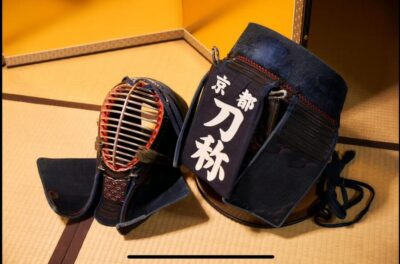
Kendo and Samurai Experience with Uniform and Gear
Read our review →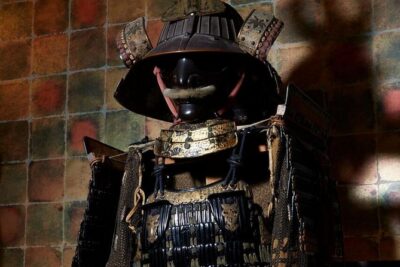
Skip the lines Basic Ticket at SAMURAI NINJA MUSEUM KYOTO
Read our review →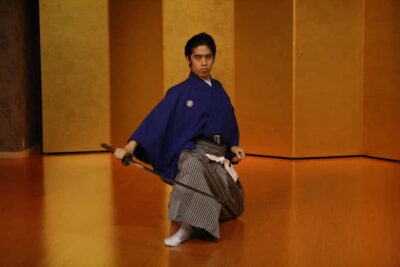
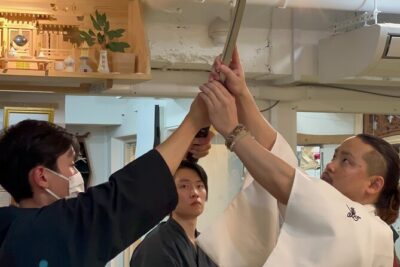
Samurai Training with Modern day Musashi in Kyoto
Read our review →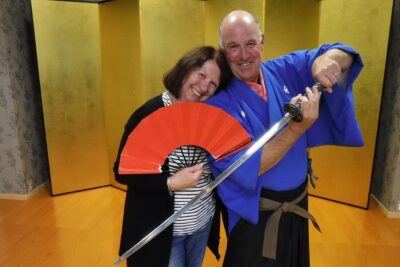
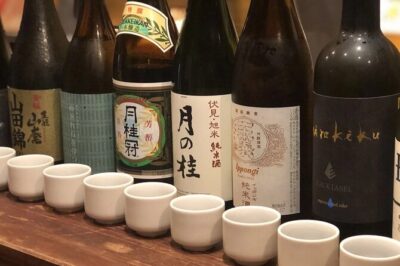
Private Tea Ceremony and Sake Tasting in Kyoto Samurai House
Read our review →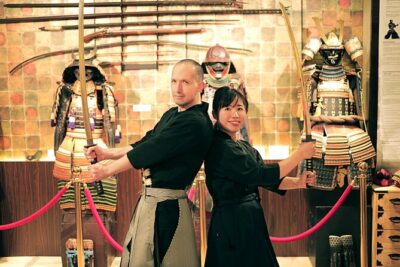
Kyoto Sword Experience – includes Museum Ticket/Ninja Experience
Read our review →Browse the lists this tour appears in