
Reviewed · KYOTO TEA CEREMONIES
Experience a tea ceremony in an authentic tearoom, in Kyoto!
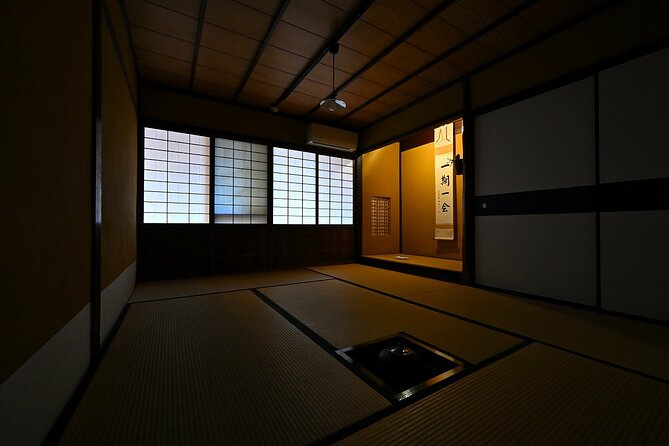
Kyoto’s tea ceremony is not just a cup of green tea. Here, you enter a 130-year-old townhouse tea room through the garden, watch a careful demonstration, then prepare your own matcha. Host Kaori explains the customs in clear English, so you can follow the meaning behind each movement rather than simply sit and watch.
I like two things right away: the small setting, limited to 10 people, and the hands-on lesson. You taste matcha with dried sweets from Kyoto’s long-established Shioyoshi-ken confectionery, then learn how to whisk tea without needing a full set of tea utensils at home.
The main consideration is the short length. At about 45 minutes, this is an introduction, not a full study of chanoyu. The price is fair if you want a focused cultural activity, but some people may find about $40 high for one tea and a couple of small sweets.
Key points at a glance
- Enter through a garden: The tea room is inside a 130-year-old Kyoto townhouse, giving the experience a strong sense of place before the ceremony begins.
- Watch, then make your own matcha: Kaori demonstrates the process and guides you through preparing tea yourself.
- Taste wasanbon sweets: The small dried sweets come from Shioyoshi-ken, a long-established Kyoto confectionery.
- Learn the meaning behind the ritual: The lesson covers tea ceremony customs, the history of tea, and how to appreciate and drink matcha.
- Small groups keep it personal: The maximum group size is 10, and some bookings may be arranged as private or near-private sessions.
- Plan for floor sitting: A stool can be provided if traditional kneeling or sitting is difficult, but visitors with bad knees should mention this when arranging the experience.
Entering the 130-year-old Kyoto townhouse
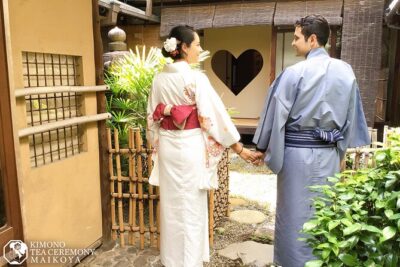
The meeting point is at 22-26 Nishinokyo Ikenouchicho in Nakagyo Ward, near public transportation. This is not a grand temple complex or a staged tourist hall. You go to a residential part of Kyoto and enter an old townhouse, then make your way through the garden to the tea room.
That arrival matters. The setting gives you a glimpse of how tea ceremony fits into Japanese architecture and daily culture. The room is not separated from the history of the building. Its age, garden entrance, and quiet interior help create the pause that the ceremony is meant to encourage.
You should allow enough time to find the address. The meeting point is the start and finish of the activity, and the experience does not include a separate sightseeing stop afterward. Since the confirmation is subject to availability and may arrive within 48 hours, check your booking details before setting out.
The group limit is 10 people. A small class suits this activity well because the host can explain the gestures, answer questions, and watch your technique as you prepare tea. Some family groups and smaller parties have received what felt like a private ceremony, but you should not assume that every departure will be private.
More tea ceremonies in Kyoto:
- Kyoto: Tea Ceremony in a Traditional Tea House in Kiyomizu
★ 4.9 · 3,519 reviews - Kyoto: Tea Ceremony Ju-An at Jotokuji Temple
★ 4.9 · 3,207 reviews - Kyoto: 45-Minute Tea Ceremony Lesson Experience
★ 4.3 · 2,378 reviews
Watching the ceremony before taking part
The session begins with an introduction to the history and culture of Japanese tea ceremony. You learn why the process is treated as a complete art form, combining tea, movement, utensils, architecture, sweets, and a calm state of mind.
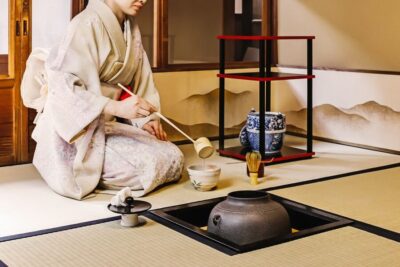
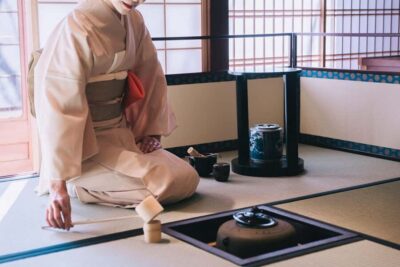
The host then demonstrates the ceremony. Expect attention to small details: how the tea is prepared, how the bowl is handled, and how the tea and sweets are appreciated. This is not a performance designed only for photographs. The point is to show you the customs clearly enough that you can take part with understanding.
Kaori has been praised for her calm manner, patience, and clear English. That is useful here. Tea ceremony has rules that can feel puzzling if nobody explains them. A good host makes those rules feel practical rather than intimidating, and the information provided for this experience points strongly in that direction.
The setting also keeps the lesson grounded. You are not only hearing about Japanese tea culture in a classroom. You are sitting in an actual tea room, inside an old Kyoto home, watching the host carry out the process in front of you.
Sweets from Shioyoshi-ken and the taste of matcha
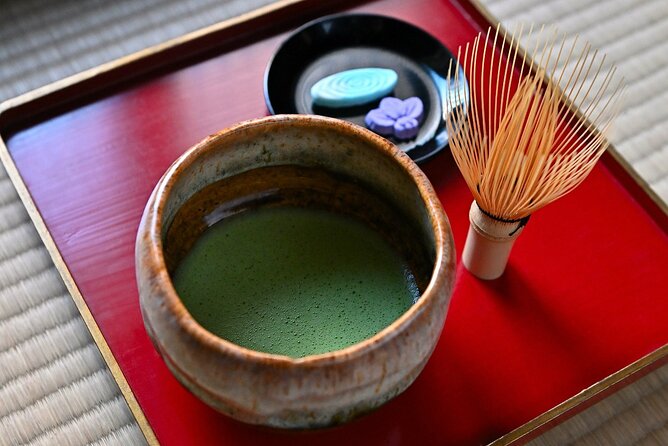
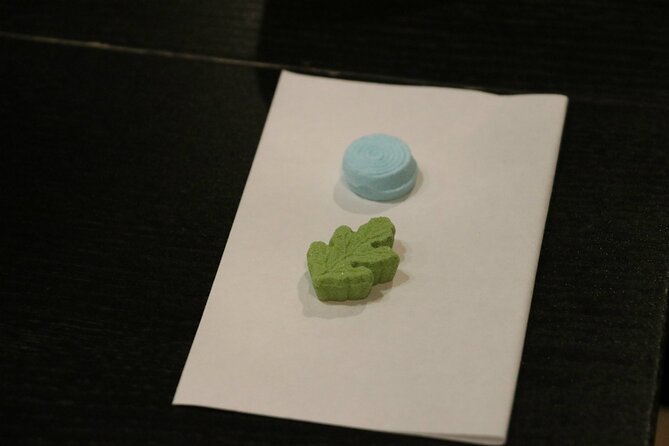
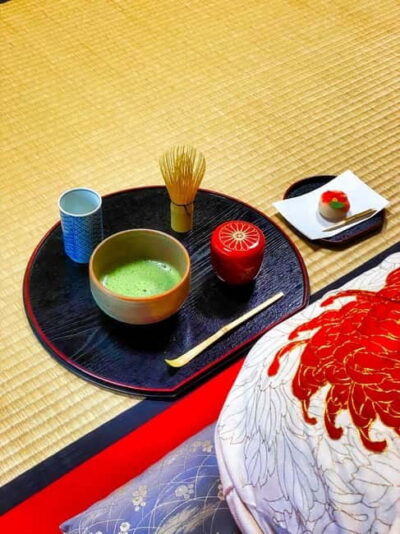
Before drinking the tea, you are served dried sweets from Shioyoshi-ken, a long-established Japanese confectionery in Kyoto. These sweets are made with wasanbon, a fine Japanese sugar used in traditional tea settings.
The sweets are small and quite sweet. That is deliberate. Their sweetness prepares your mouth for matcha’s grassy, bitter edge. If you expect a large dessert course, you will be disappointed. Think of the sweets as part of the ceremony, not a snack or a meal.
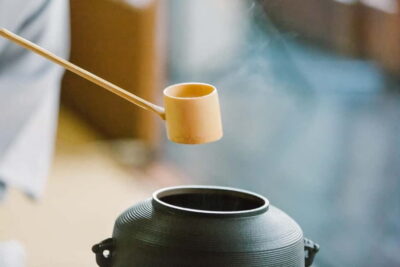
The matcha comes from a historic shop in Kyoto. You learn how to appreciate it, how to drink it, and how the sweet changes its flavor. The tea is whisked into a fine, foamy drink, and the host explains the correct way to handle the bowl and take part in the ritual.
Food allergies and dietary needs are not described in the available information, so ask the provider before booking if this is important to you. The experience specifically includes traditional dried sweets, and there is no promise of substitutions.
Making your own matcha
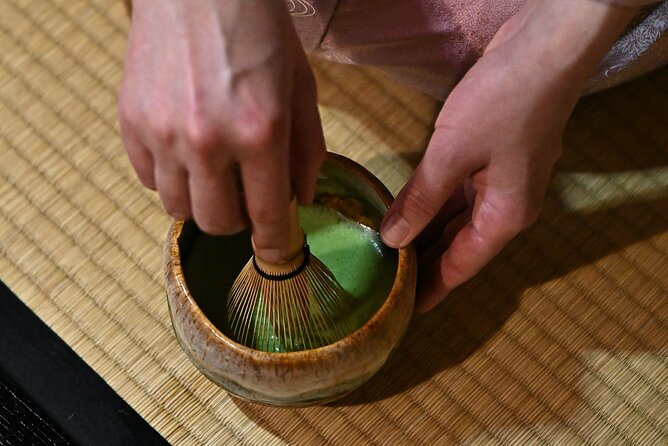
The hands-on section is the strongest reason to choose this activity over a ceremony that you only watch. After the demonstration, you make your own matcha with step-by-step instruction.
You do not need prior experience. The lesson is designed for beginners, and the host explains the process slowly enough for you to follow. You learn how to measure and whisk the tea, then have the chance to taste the result. Expect your first bowl to be part lesson, part experiment. The skill is simple to try, but getting the texture and foam right takes practice.
This practical element also gives the experience a life beyond Kyoto. You learn tips for preparing matcha at home without traditional tea utensils. That makes the activity more useful than a one-time ceremony. If you enjoy the tea, you can buy a whisk or other equipment later and continue the habit.
One person who enjoyed the session bought a matcha brush afterward. That is not part of the activity, and no shopping stop is included, but it shows the lesson can give you enough confidence to continue exploring Japanese tea at home.
A few more Kyoto tours worth putting on the shortlist
- PERFECT KYOTO 1-Day Bus Tour
★ 5.0 · 13,518 reviews - Kyoto: Fushimi Inari, Kinkakuji, Bamboo Grove 1 Day Bus Tour
★ 4.8 · 4,316 reviews - Kyoto Geisha Walking Tour: Gion District & Hidden Gems
★ 4.7 · 3,273 reviews - Kyoto: Gion Magical Night Walking Tour with Geisha Trivia
★ 4.9 · 2,393 reviews
What the 45-minute length really means
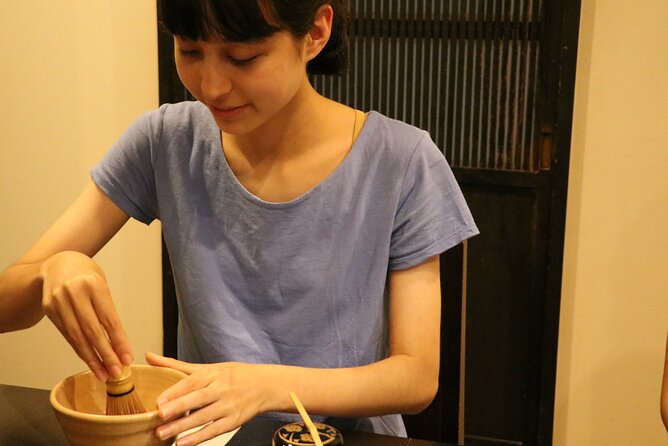
The advertised duration is about 45 minutes. Some descriptions from participants refer to an experience closer to an hour, so allow a little flexibility, but plan your day around the official approximate time.
This short format works well for families, first-time visitors, and anyone building a busy Kyoto schedule. You get the basic structure: cultural introduction, demonstration, sweets, matcha, and hands-on preparation. You do not spend half a day on formal etiquette or advanced tea study.
I see the length as both a strength and a limit. A compact lesson is easier to fit between temples, shopping, and dinner. It also keeps children and first-time participants engaged. On the other hand, if you want to study the spiritual side of chanoyu in depth, this will feel like a sample rather than a complete course.
The activity is best treated as a thoughtful introduction. You will come away knowing more about the purpose of the ceremony and how to prepare matcha, but not as a trained tea practitioner.
Sitting comfort and accessibility
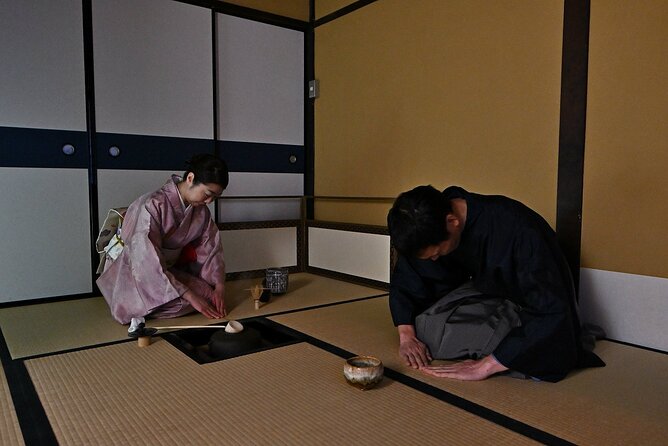
Traditional tea ceremony often involves sitting on the floor. The available information specifically notes that a stool can be provided, and one person with bad knees found the experience manageable with that option.
Still, this is worth taking seriously. A stool may make the session easier, but it does not turn the tea room into a chair-based activity. If kneeling, crouching, or getting up from the floor is difficult, contact the provider in advance and explain what you need.
The host has also been described as understanding when people could not sit in the traditional way. That suggests a welcoming approach, but comfort can vary from person to person. Wear clothing that lets you sit comfortably and avoid assuming that the formal posture is required for everyone.
The experience is suitable for families, but very young children may find the quiet ritual harder to follow. The short length helps, and the chance to make tea adds a hands-on break.
The value at about $39.63
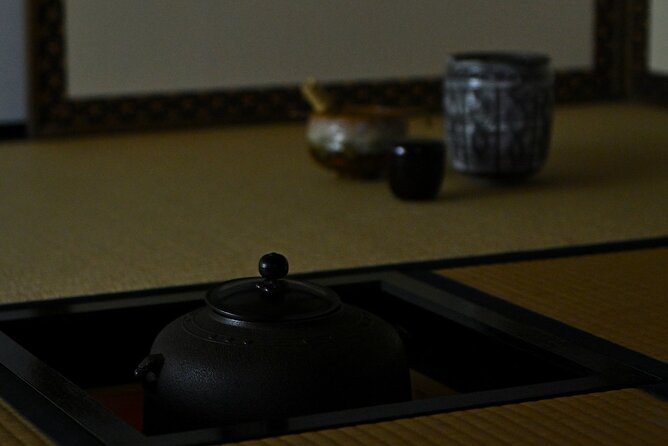
At roughly $39.63 per person, this is not the cheapest way to drink matcha in Kyoto. You can find tea and sweets for less at a café. The price pays for more than the ingredients, though. It covers a guided ceremony in an old townhouse, cultural explanation, access to an authentic tea room, and hands-on instruction.
The value is strongest if you care about context. You are learning why the sweets are served, how to drink the tea, what the gestures mean, and how to repeat the process at home. The small group size also gives the host a chance to correct your technique and answer questions.
The value is weaker if you mainly want a quick taste of matcha or a costume photo. There is no stated kimono dress-up element for visitors, and the experience does not promise a full meal, a long tour of the townhouse, or extended time in a garden.
One criticism of the activity focused on the short duration and the small portion of sweets. That is a fair concern. The sweets are tiny, and the session is tightly focused. I would book it for cultural understanding and participation, not for food or entertainment alone.
Who will enjoy this Kyoto tea experience
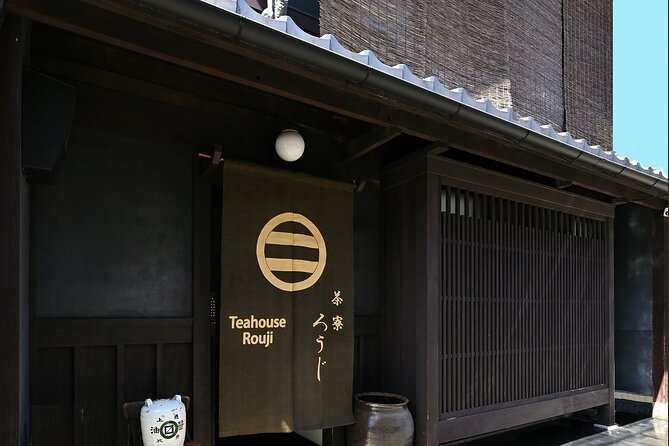
This activity suits you if you want a calm cultural break from Kyoto’s busy sightseeing routes. It is especially good for first-time visitors who want an introduction without committing to a long formal lesson.
Families can also fit comfortably into the format. The activity has been described as a good length for a family, and making matcha gives children and teenagers something active to do. Adults who enjoy architecture, ritual, Japanese food culture, or traditional crafts will find more to notice in the setting and explanation.
It is also a good choice for people who feel unsure about Japanese etiquette. You can ask questions in English and learn the basic customs before trying them. The host, Kaori, is repeatedly described as friendly, patient, and clear in English, which lowers the pressure for beginners.
You may want to choose another activity if you need wheelchair-level accessibility, dislike floor-based rooms, or expect a long ceremony with several courses of sweets and tea. The available information does not provide full accessibility specifications, so ask before booking if you have specific mobility needs.
Booking, timing, and cancellation details
The experience uses a mobile ticket and ends back at the meeting point. Confirmation is sent within 48 hours, subject to availability. The maximum group size is 10 people, and the activity requires a minimum number of bookings. If that minimum is not reached, you can be offered another date or experience, or receive a full refund.
You can cancel for a full refund up to 24 hours before the start time. Cancellations or changes made less than 24 hours in advance are not accepted for a refund. The cut-off follows Kyoto local time.
Pay close attention to the confirmed start time. One scheduling dispute resulted in a party arriving at a time the provider did not expect, and the group could not take part. The provider and booking platform gave different accounts of the communication, so the practical lesson is simple: check the final confirmation, save it on your phone, and contact the provider promptly if the time changes.
Should you book it?
Book this tea ceremony if you want a short, hands-on introduction to Japanese tea in a genuine old Kyoto setting. The townhouse, garden entrance, clear English instruction, traditional sweets, and chance to whisk your own matcha make it more meaningful than simply ordering green tea at a café.
I would not book it for a large meal, a kimono experience, or an advanced tea course. The sweets are modest, the session is brief, and floor sitting may not suit everyone. For most first-time visitors who want to understand the ritual and take home a practical skill, the price is reasonable. Confirm the time carefully, ask about seating if needed, and arrive ready to slow down for 45 quiet minutes.
FAQ
Where does the tea ceremony take place?
It takes place at 22-26 Nishinokyo Ikenouchicho, Nakagyo Ward, Kyoto, Japan. The tea room is inside a 130-year-old Kyoto townhouse.
How long does the activity last?
The listed duration is approximately 45 minutes. Some descriptions refer to a session closer to an hour, so allow a little flexibility.
What is included in the tea ceremony?
You receive an introduction to tea ceremony history and culture, a demonstration, matcha, traditional dried sweets, instruction on drinking tea, and a chance to make your own matcha.
Who leads the experience?
The host is Kaori. The experience information and participant accounts describe her as an English-speaking host who explains the ceremony clearly and patiently.
Can beginners make matcha?
Yes. The activity is designed to explain the process to beginners, including how to prepare matcha and how to make it at home without traditional tea utensils.
How many people can join?
The maximum group size is 10 people. Smaller groups may have a more private-feeling session, but a private ceremony is not guaranteed for every booking.
Is the tea ceremony suitable for people who cannot sit traditionally?
A stool is available if traditional floor sitting is difficult. Contact the provider in advance if you have mobility concerns, since full accessibility details are not provided.
Is a kimono included?
No kimono dress-up or visitor kimono rental is listed as part of the activity. You should book this for the tea lesson and setting, not for a costume experience.
What is the cancellation policy?
You can cancel up to 24 hours before the start time for a full refund. Cancellations or changes made less than 24 hours in advance are not accepted for a refund.
Newest Kyoto experiences on the site
- Whisk Your Own Matcha: A Zen Matcha Experience at Temple★ 3.6 · 7 reviews
- Treasures of Kyoto: Gion & historical Walking Tour★ 5.0 · 6 reviews
- Kyoto tea town for matcha lovers★ 5.0 · 16 reviews
- Uji: Private immersion into Kyoto’s tea and reglious culture★ 5.0 · 17 reviews
- Kyoto Matcha Green Tea Tour★ 4.5 · 23 reviews
- Uji and Wazuka Matcha Farm Half Day Private Guided Tour★ 5.0 · 21 reviews
- Utilising upcycled Matcha! Creating matcha incense (Uji, Kyoto)★ 5.0 · 6 reviews
- Sacred Temple Yoga Experience in Japan★ 5.0 · 3 reviews
Kyoto Tea Ceremonies, compared.
Tea Ceremony in a Traditional Tea House in Kiyomizu
Read our review →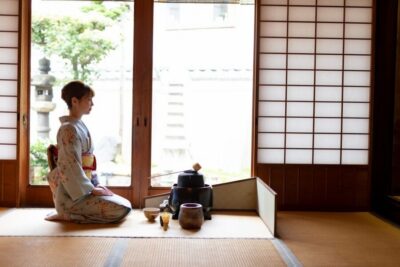
Tea Ceremony in 100-year-old Kyo-Machiya Townhouse
Read our review →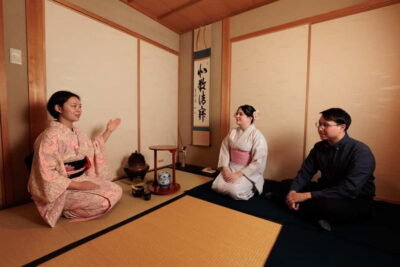
Browse the lists this tour appears in