Reviewed · KYOTO TOURS
Early Half Day to Kyoto Highlights
Kyoto’s biggest sights are spread across the city, but this five-hour morning tour links three of them before the day gets crowded. You visit the red gates of Fushimi Inari, Arashiyama’s bamboo, and Kinkakuji, the Golden Pavilion, while a local English-speaking guide explains Shinto, Buddhism, Japanese society, and the city’s past.
I like the early 8:00 start and the small group, capped at eight people. I also like the efficient route: guide Indra handles the public transport and timing, so you can see a lot without spending your whole day figuring out trains and connections.
The tradeoff is clear: this is a brisk outing, not a slow temple day. You pay $94.71, then add about ¥1,300 for transport and ¥500 to enter Kinkakuji, and each major stop gets about 90 minutes.
Key points at a glance
- Three major Kyoto sights before lunch: Fushimi Inari, Arashiyama Bamboo Forest, and Kinkakuji are all covered in roughly five hours.
- An 8:00 am departure: The early start is designed to reduce crowd pressure at Fushimi Inari and the bamboo grove.
- A small group of up to eight: This gives you more room to ask questions and makes it easier for the guide to keep everyone moving.
- Guide Indra leads the experience: He explains Shinto, Buddhism, Japanese society, and the history behind each stop in English.
- Public transport is part of the tour: Walking and local transit are used instead of a private vehicle, with about ¥1,300 payable per person.
- Your afternoon remains open: The tour returns to Kyoto Station, leaving time for another sight, a meal, or a slower stroll.
Why this early Kyoto route works
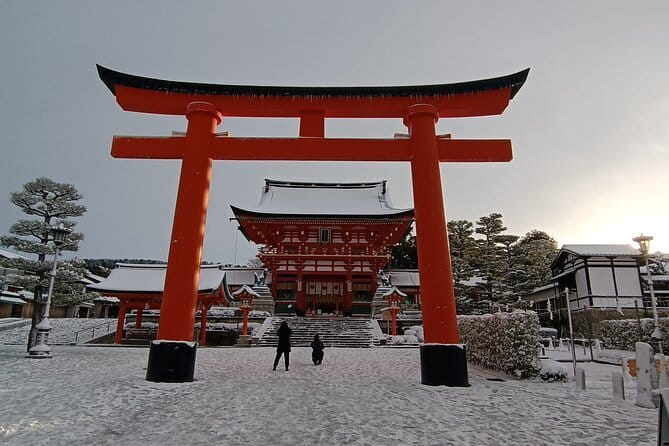
Kyoto can be awkward to cover in a short visit. Its famous places sit in different parts of the city, and the most popular ones are not arranged in a neat line from Kyoto Station. Fushimi Inari is southeast of the station, Arashiyama is west, and Kinkakuji is farther north. You can do this route yourself, but you need to watch train times, local connections, walking distances, and opening access.
That is where this tour earns its keep. You meet at Starbucks in Kyoto Tower Sando, directly by Kyoto Station, at 8:00 am. From there, you travel by public transport and on foot, with Indra managing the sequence. Several people praised his ability to keep the schedule moving while still making time for questions and explanations.
The group size matters. With no more than eight people, this is not a large coach outing where you wait for a crowd to assemble at every corner. The format should feel closer to a guided walk with a few companions, although you still need to keep pace with the group.
The route is also a good fit if you have only one or two days in Kyoto. You see three headline sights in the morning and return to the starting point. That leaves the afternoon available for Gion, Nishiki Market, Kyoto Station, another temple, or a rest.
A few more Kyoto tours worth putting on the shortlist
- PERFECT KYOTO 1-Day Bus Tour
★ 5.0 · 13,518 reviews - Kyoto: Fushimi Inari, Kinkakuji, Bamboo Grove 1 Day Bus Tour
★ 4.8 · 4,316 reviews - Kyoto: Tea Ceremony in a Traditional Tea House in Kiyomizu
★ 4.9 · 3,519 reviews
Meeting at Kyoto Tower and starting by train
The meeting point is Starbucks Coffee at Kyoto Tower Sando, in front of Kyoto Station. The booking details include a picture of the exact location, which is useful because the station area is large and has many entrances, shops, and signs.
Plan to arrive with enough time to find the café and get oriented. The stated start time is 8:00 am, so this is not a tour for a late breakfast or a relaxed hotel departure. You will want comfortable shoes, a phone with the mobile ticket available, and enough room in your morning for walking and transit.
Public transportation costs about ¥1,300 per person and is not included in the tour price. That extra cost is worth noting when you compare the experience with a private car tour or a larger sightseeing bus. It also means the morning feels more like a real Kyoto outing, with the guide showing you how the city connects rather than keeping you behind a vehicle window.
The tour ends back at Kyoto Station. That makes the starting point practical for the rest of your day. You can pick up luggage, catch another train, or continue sightseeing from one of the city’s main transport hubs.
Fushimi Inari’s red gates before the crowds
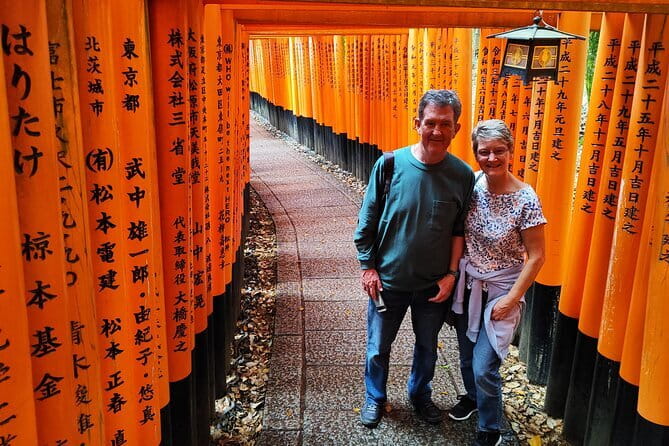
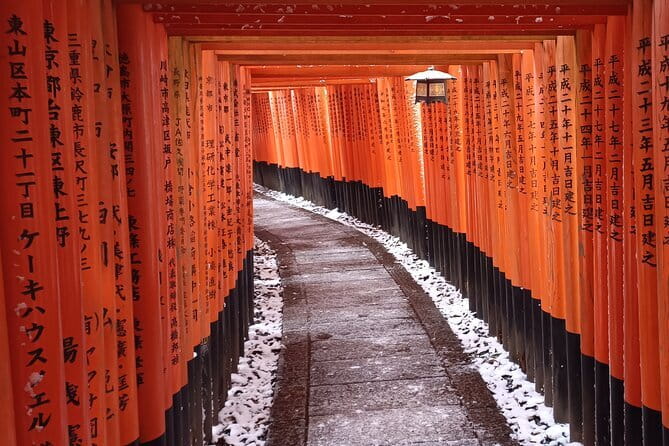
Fushimi Inari-taisha is the first major stop, with about 90 minutes set aside for the shrine. Its famous rows of red torii gates climb through the wooded grounds, creating one of Japan’s most recognizable sights.
The early timing is the main advantage here. Fushimi Inari is free to enter, and the shrine remains a public religious site rather than a single enclosed attraction. The paths can become crowded later, especially around the lower gates and the most photographed sections. Starting early gives you a better chance to enjoy the setting without constant interruptions.
Indra uses the visit to explain Shinto, one of the key parts of Japanese culture. That context helps you read the place properly. You are not just walking through a long red tunnel for photographs. You learn why shrines matter, how Shinto fits into Japanese life, and what makes Fushimi Inari different from a Buddhist temple.
Ninety minutes is enough for an introduction and a good walk through the main area. It is not enough to explore every path on the mountain, so you should not expect a full summit hike. The stop is best understood as a focused visit to the shrine’s most important and recognizable sections.
You should also expect walking on paths and some uphill movement. The provided information does not promise a particular walking distance or route, so anyone with limited stamina should keep the schedule in mind. Most people can participate, but this is still an active morning rather than a sit-down sightseeing trip.
Arashiyama Bamboo Forest and the wider setting
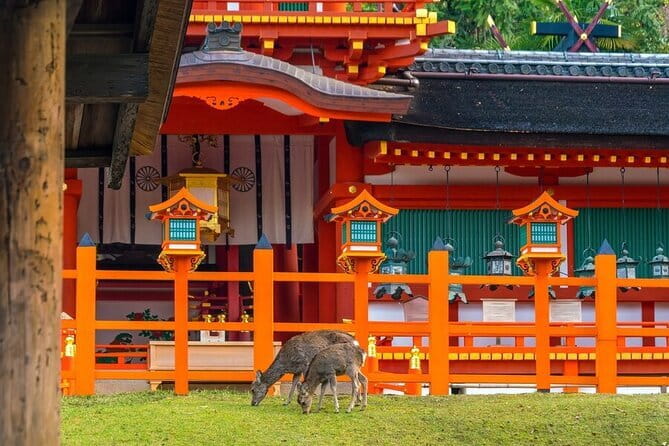
The second major stop is Arashiyama Bamboo Forest, with another 90 minutes allotted. The tall bamboo creates a striking natural corridor, and the surrounding Arashiyama area adds more than a single photo stop.
The tour description places emphasis on the beauty of nature and on Japanese society. That combination is useful. A quick visit to the bamboo grove can otherwise become a short walk, a few photographs, and a search for the exit. With a guide, you get a chance to connect the scenery with the way Japanese people relate to public places, nature, and shared cultural sites.
The bamboo forest is one of Kyoto’s most popular places, so the early start helps here too. The route does not promise an empty path. No timed visit can remove all other people from such a famous spot. It does, however, put you there earlier than many casual visitors who begin their day later.
Arashiyama is reached by public transportation from Fushimi Inari, so this part of the tour also shows the practical value of joining a guide. You avoid having to work out the connection while watching the clock. Indra’s role is especially useful because the morning has three major stops and a fixed ending time.
The 90-minute window gives you enough time to see the bamboo and absorb the area without losing the entire morning. It also limits what can be covered. This is not a broad Arashiyama tour with every nearby attraction. If you want a long visit or a full day in the district, you may prefer to return on your own later.
Same city, a completely different kind of day:
- Kyoto Geisha Walking Tour: Gion District & Hidden Gems
★ 4.7 · 3,273 reviews - Kyoto: Tea Ceremony Ju-An at Jotokuji Temple
★ 4.9 · 3,207 reviews - Kyoto: Gion Magical Night Walking Tour with Geisha Trivia
★ 4.9 · 2,393 reviews - Kyoto: 45-Minute Tea Ceremony Lesson Experience
★ 4.3 · 2,378 reviews
Kinkakuji and the Golden Pavilion
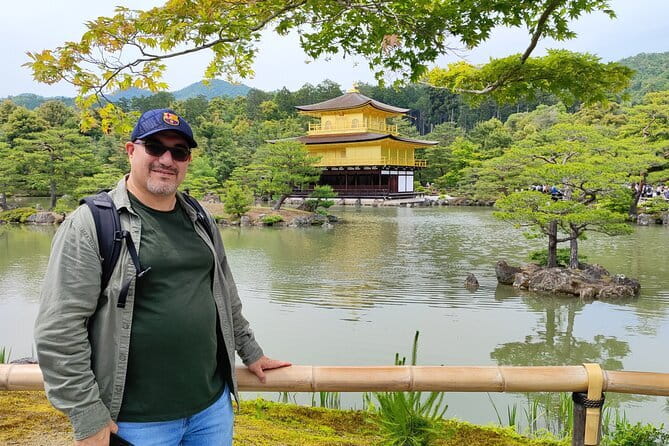
Kinkakuji, or the Golden Pavilion, is the final main stop. Entry costs ¥500 per person and is not included in the tour price. About 90 minutes is reserved for the visit.
The pavilion is known for its gold-covered exterior and its position beside the pond. The standard visit centers on the view across the water and the path through the temple grounds. It is a highly polished, carefully framed sight, quite different from the walking paths at Fushimi Inari and the natural feel of Arashiyama.
Here, Indra explains Buddhism in Japan and the temple’s history. That adds needed context, since the pavilion can otherwise feel like a quick photograph followed by a quick exit. You get a chance to understand how this temple fits into Japanese religious life and Kyoto’s long cultural story.
Kinkakuji is also the stop where the extra entrance fee applies. At ¥500, it is modest, but you should include it in your budget along with transport. The tour price is $94.71 per person, so the total cost is not just the advertised base price.
The visit is not presented as a long study of the temple grounds. Like the other stops, it is a focused introduction. If Kinkakuji is your personal priority, you may wish you had more time, but the fixed 90-minute slot is part of what allows the tour to cover all three sights and still finish around midday.
What guide Indra adds
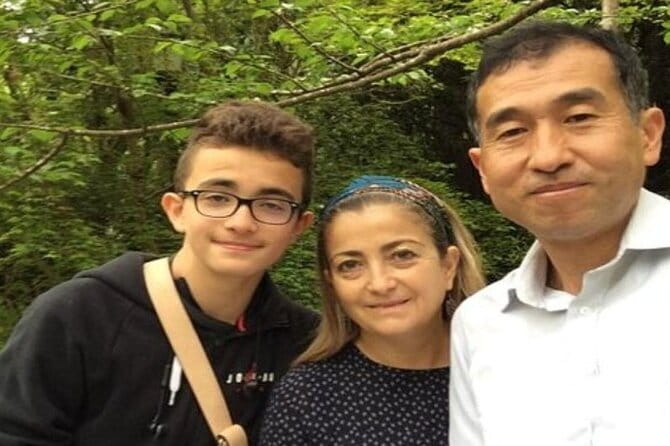
Indra is the named guide for this experience, and his role is central to its value. The strongest praise focuses on his friendliness, clear explanations, storytelling, and ability to manage the schedule. He is also described as someone who answers questions and adjusts when possible.
That matters because this route has several moving parts. You need to leave each sight on time, find the right public transport, and keep the group together. A guide who knows the sequence can save you the small delays that add up quickly in Kyoto.
The subject matter is broad but connected. At Fushimi Inari, you learn about Shinto. At Kinkakuji, the focus shifts to Buddhism. At Arashiyama, the discussion turns toward Japanese society and the relationship between people and natural places. This gives the morning more shape than three unrelated photo stops.
The small group makes the teaching more personal. A maximum of eight people means you have a better chance to ask a question without holding up a large crowd. It also explains why the experience can feel close to a private tour, even though it is not marketed as fully private.
Price, extra costs, and overall value
The listed price is $94.71 per person. On top of that, budget about ¥1,300 per person for public transportation and ¥500 for Kinkakuji admission. Gratuity is also not included.
The fair question is what you receive for that price. You are paying for an experienced local English-speaking guide, route planning, explanations at three major sites, and help with public transport. You are not paying for a private vehicle, meals, hotel pickup, or entrance to Kinkakuji.
I see the value most clearly for a first-time Kyoto visitor with limited time. If you already know the train system, have a carefully planned route, and enjoy exploring temples without a guide, you could spend less by going independently. But you would also take on the planning and navigation yourself.
You should also consider the cost of time. Doing these three places independently can take longer, especially if you make a wrong connection or linger too long at the first stop. The tour’s main product is an efficient morning with cultural explanation built in.
Because the group is capped at eight, the price is easier to justify than it would be for a large bus tour. Still, I would not book it expecting a quiet, slow, luxury experience. It is a focused sightseeing route that uses public transit and keeps moving.
Who should book this half-day tour
I would choose this experience if you want Kyoto’s major sights but do not want to spend your whole day arranging them. It suits first-time visitors, short-stay visitors, solo visitors who prefer company, and anyone who wants historical and cultural explanation along with photographs.
It is also a smart first morning in Kyoto. After the tour, you will have a useful sense of the city’s layout and several ideas for what deserves more time. You can then spend the afternoon at a slower pace.
You may want a different plan if your main goal is a deep visit to one temple or a long hike through Fushimi Inari. The schedule gives each major stop about 90 minutes, so the experience favors range over depth. It also requires an early start and a willingness to walk and use public transportation.
The tour requires good weather. If poor weather causes cancellation, you are offered another date or a full refund. You can cancel for a full refund if you do so at least 24 hours before the start time. Changes or cancellations made later are not accepted.
Should you book it?
Book this tour if you value efficient planning, a small group, and a strong guide more than extra time at any single sight. Indra’s schedule control and explanations are the main reasons to choose it, while the early start gives you a better shot at seeing Fushimi Inari and Arashiyama before the busiest part of the day.
Skip it if you prefer independent travel, dislike fixed schedules, or want to explore each site at length. For everyone else, this is a practical way to cover three essential Kyoto sights, learn how Shinto and Buddhism shape the city, and still have the afternoon free.
FAQ
Where does the tour start?
It starts at Starbucks Coffee at Kyoto Tower Sando, in front of Kyoto Station, at Kyoto Tower Building, 7211 Higashishiokoji-cho, Shimogyo Ward, Kyoto 600-8216.
What time does the tour begin?
The tour starts at 8:00 am.
How long does the experience last?
The experience lasts approximately five hours.
Which places are visited?
The tour visits Fushimi Inari-taisha Shrine, Arashiyama Bamboo Forest, and Kinkakuji Temple, also called the Golden Pavilion.
Is transportation included?
Public transportation is used during the tour, but the cost is not included. The stated amount is about ¥1,300 per person.
Is the Kinkakuji entrance fee included?
No. Kinkakuji admission costs ¥500 per person and is paid separately.
Who guides the tour?
The tour is led by an experienced local English-speaking guide. The named guide for this experience is Indra.
How large is the group?
The maximum group size is eight people.
Does the tour return to Kyoto Station?
Yes. The activity ends back at the meeting point near Kyoto Station.
Newest Kyoto experiences on the site
- Treasures of Kyoto: Gion & historical Walking Tour★ 5.0 · 6 reviews
- Whisk Your Own Matcha: A Zen Matcha Experience at Temple★ 3.6 · 7 reviews
- Kyoto tea town for matcha lovers★ 5.0 · 16 reviews
- Uji: Private immersion into Kyoto’s tea and reglious culture★ 5.0 · 17 reviews
- Kyoto Matcha Green Tea Tour★ 4.5 · 23 reviews
- Uji and Wazuka Matcha Farm Half Day Private Guided Tour★ 5.0 · 21 reviews
- Utilising upcycled Matcha! Creating matcha incense (Uji, Kyoto)★ 5.0 · 6 reviews
- Sacred Temple Yoga Experience in Japan★ 5.0 · 3 reviews
Kyoto Tours, compared.
Fushimi Inari, Kinkakuji, Bamboo Grove 1 Day Bus Tour
Read our review →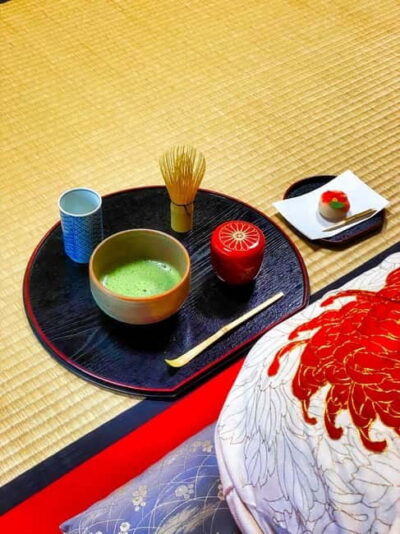
Tea Ceremony in a Traditional Tea House in Kiyomizu
Read our review →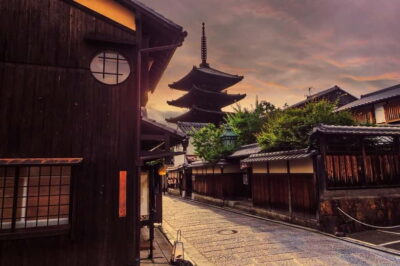
Kyoto Geisha Walking Tour: Gion District & Hidden Gems
Read our review →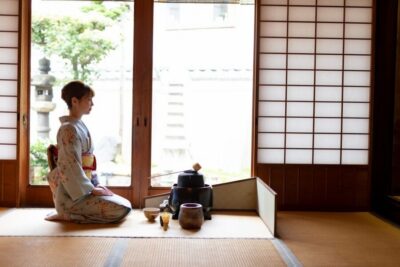
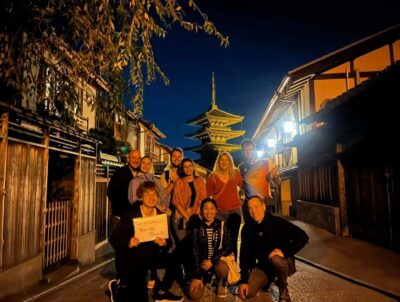
Gion Magical Night Walking Tour with Geisha Trivia
Read our review →