
Reviewed · KYOTO KIMONO RENTALS
A Unique Antique Kimono and Tea ceremony Experience in English
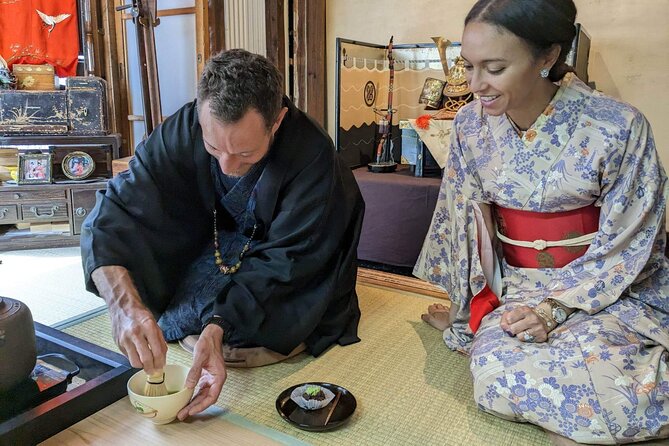
An 80-year-old antique kimono is the star of this Kyoto experience. At Miyagawa Tokusaburo Shoten, Toku and his family help you choose one from their collection, dress you in it, and guide you through a traditional tea ceremony in a quiet home near Katsura Imperial Villa. I like the small six-person limit and the patient, personal teaching from a host with more than 20 years of tea ceremony experience.
I also like that this is not a large hall with a scripted show. You visit a 100-year-old private house, learn why each gesture matters, and taste matcha with Japanese sweets. The trade-off is location: this is in a residential area away from central Kyoto, and the setting is a family home rather than a grand garden or temple.
Key points to know before booking
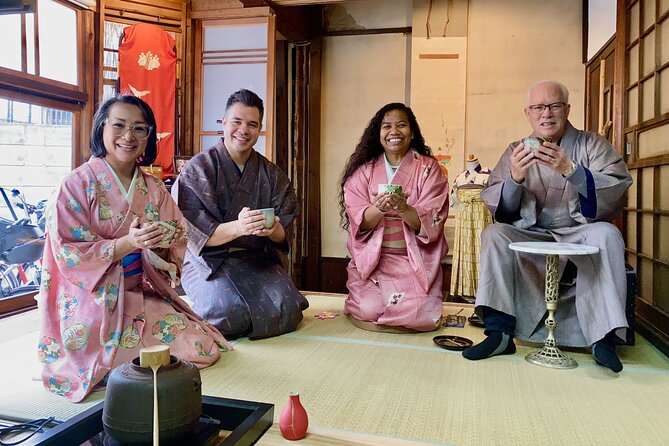
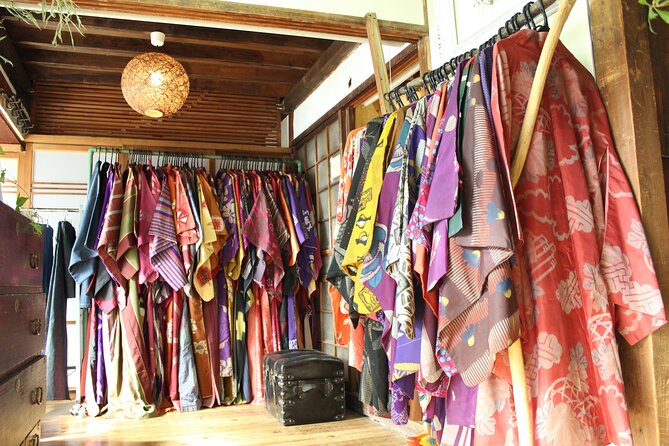
- Choose a genuine antique kimono: Toku helps you select from a large collection of older garments, obis, and accessories.
- Meet Toku and his family: The hosts are praised for their warm welcome, clear English, and careful help with dressing and photographs.
- Learn the meaning behind the ceremony: You receive explanations of etiquette, tea preparation, samurai connections, and the spirit of sharing time.
- Enjoy a very small group: The experience is capped at six people, with some sessions possibly operating with only two participants.
- Expect a residential setting: The old house feels personal and calm, but it does not offer the gardens or formal architecture found at some temple-based ceremonies.
A quiet Kyoto setting near Katsura Imperial Villa
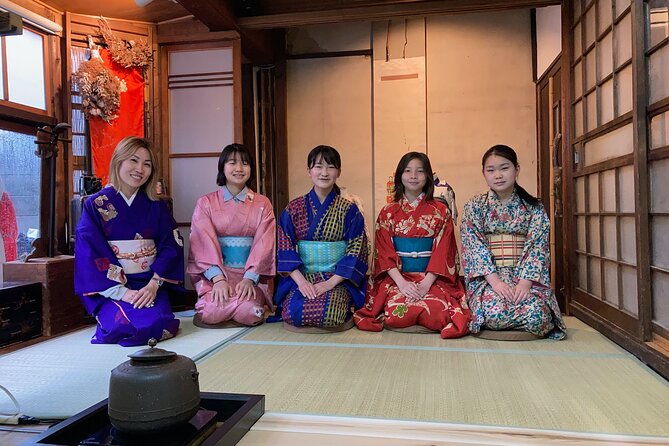
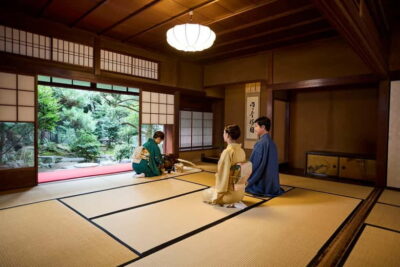
The experience takes place at Miyagawa Tokusaburo Shoten, at 32-4 Katsuranozatocho in Kyoto’s Nishikyo Ward. The house is more than 100 years old, and its location near Katsura Imperial Villa gives the visit a slower feel than a tea activity in central Kyoto.
I like this change of pace. Kyoto’s famous sights can be crowded, and a tea ceremony can lose some of its calm when several groups are being moved through the same room. Here, you arrive in a residential neighborhood and enter a family-run space connected to kimono and tea traditions.
You should set your expectations carefully. This is not a polished temple courtyard, a landscaped garden, or a museum display. One critical assessment found the residential setting too ordinary and the kimono collection less exotic than expected. That is a fair concern if you are seeking grand architecture or a picture-perfect garden.
For me, the home is part of the point. The value comes from meeting the people who run the shop, hearing Toku’s personal story, and seeing how clothing and tea remain connected in a working family setting. You are paying for close contact and instruction, not for an elaborate backdrop.
More tea ceremonies in Kyoto:
- Kyoto: Tea Ceremony in a Traditional Tea House in Kiyomizu
★ 4.9 · 3,519 reviews - Kyoto: Tea Ceremony Ju-An at Jotokuji Temple
★ 4.9 · 3,207 reviews - Kyoto: 45-Minute Tea Ceremony Lesson Experience
★ 4.3 · 2,378 reviews
Choosing an antique kimono with Toku
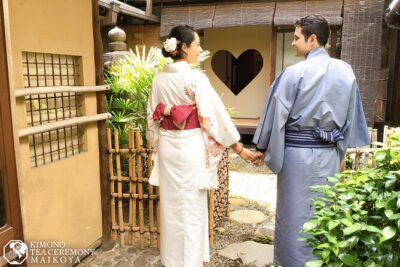
The activity begins with the kimono selection. Toku helps you choose a garment, an obi, and accessories from a sizable collection. Several people particularly enjoyed having a real choice rather than being placed into one standard costume.
The garments are described as antique, with some more than 80 years old. You may also have access to hair ornaments, and reviews describe Toku or his family helping with hair styling. The exact selection will depend on what is available on the day, but the range appears to be one of the experience’s strongest features.
This is more than a quick costume rental. Toku has experience as a kimono fitter, and the dressing process is treated as part of the lesson. He helps arrange the layers and obi so you can take part in the ceremony properly.
Expect the clothing to feel snug. Traditional kimono dressing uses firm layers and a tightly tied obi. That is normal, but it can be less comfortable than a casual yukata. If you dislike restrictive clothing, tell the host early and ask what adjustments are possible.
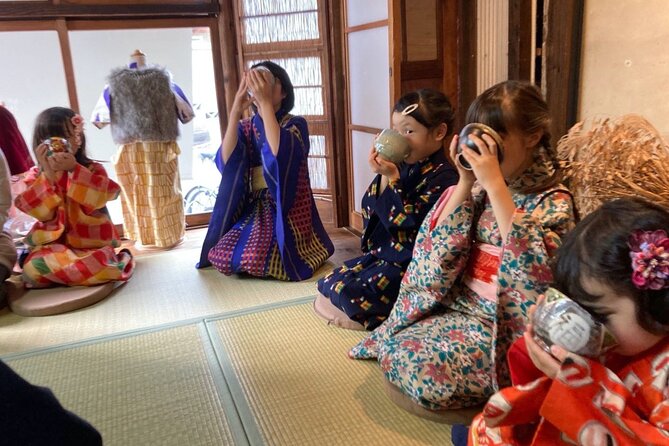
The experience has also worked well for families. Parents describe children being included in the dressing and tea steps, and one family had a good visit with a two-and-a-half-year-old child. Young children may not sit still through every moment, but the hosts appear used to making the activity welcoming for families.
Tea ceremony instruction in clear English
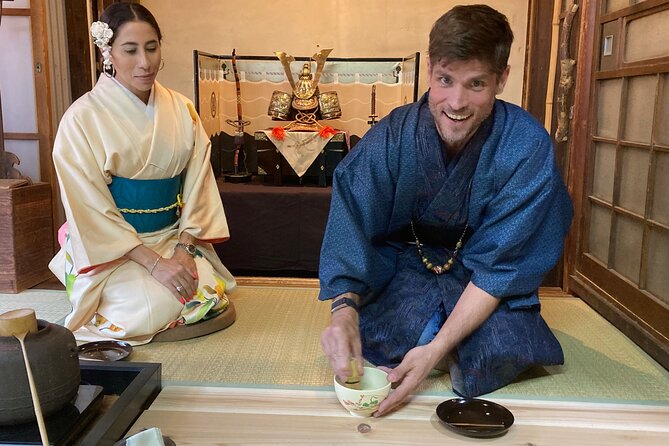
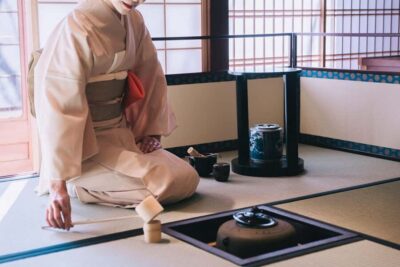
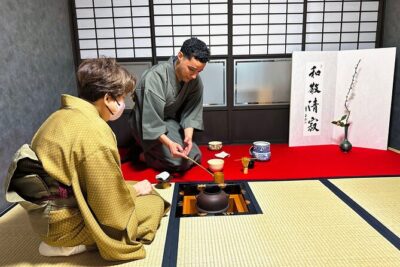
Once dressed, you move into the tea portion of the visit. The ceremony is explained step by step in English, including manners, movements, and the reasons behind the order of events.
This matters because tea ceremony can look mysterious if you only watch from a distance. A host may turn a bowl, place a utensil, or pause before serving tea, and without explanation those actions can seem like decoration. Here, Toku explains the etiquette so you can follow the ceremony rather than simply pose for photographs.
You learn about matcha preparation and take part in making the tea. Green tea and Japanese sweets are included. The focus is not on tasting several varieties of tea. In fact, one less-positive assessment expected more tea tasting and more detail about the production process, and found the 90-minute session too slow for the amount learned.
That criticism is useful. Book this if you want a guided introduction to one traditional ceremony, not a full tea-production class or a specialist tasting. The experience emphasizes behavior, setting, family tradition, and the meaning of the ritual.
The connection between samurai culture and tea ceremony is also discussed. This adds useful context, since tea was not simply a way to drink powdered green tea. It was tied to hospitality, discipline, social relationships, and the careful use of space and objects.
I particularly like the emphasis on attention. The ceremony asks you to slow down and focus on the person serving tea, the bowl in your hands, and the movements taking place in front of you. That is a valuable lesson in a city where it is easy to rush from one major sight to the next.
Why the hosts make such a difference
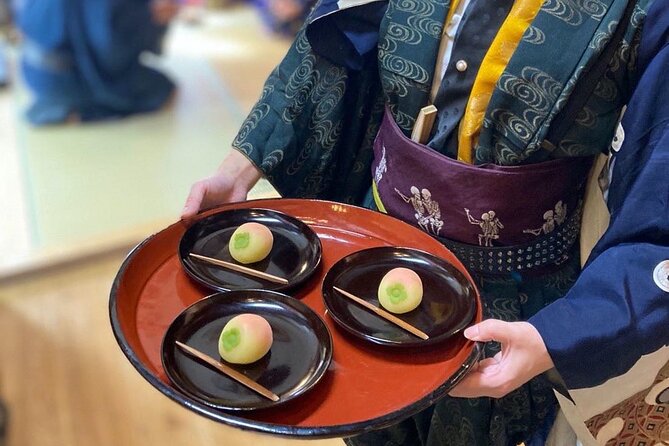
The strongest part of this activity is the people. Toku explains his background and how he became a kimono fitter, while his wife and assistant help with dressing, hair, photographs, and the flow of the ceremony.
The hosts are repeatedly described as kind, patient, and welcoming. That warmth matters in a ceremony where you may worry about making a mistake. Rather than expecting you to know how to sit, bow, hold the bowl, or receive the sweets, they explain each step and allow time for questions.
Photographs are another useful touch. The hosts take pictures during the ceremony and while you are wearing the kimono. You should still ask before taking or requesting particular photos, but the activity is designed to give you time for pictures rather than rushing you in and out.
The family-run nature of the experience also gives it a personal quality. You hear about the house, the family connection to tea, and the effort involved in preserving old customs. For many people, that human contact will be more memorable than another formal presentation.
The English availability is important. You do not need prior knowledge of Japanese tea ceremony, and the activity is designed for English-speaking participants. The explanation may be conversational rather than academic, but the main etiquette and cultural ideas are covered.
More kimono and yukata rentals in Kyoto:
- Kimono Tea Ceremony at Kyoto Maikoya, NISHIKI
★ 5.0 · 911 reviews - Kyoto: Kimono Rental with Hairstyling and Accessories
★ 4.8 · 653 reviews - Kyoto: Kimono Tea Ceremony at Orizuruya Gion
★ 4.9 · 618 reviews - KYOTO Tea Ceremony with kimono near by Imamiya Jinjya Shrine
★ 5.0 · 343 reviews
What the 90-minute schedule feels like
The full activity lasts about one hour and 30 minutes and ends back at the meeting point. The time generally breaks into three parts: choosing and putting on the kimono, learning about the ceremony, and preparing and sharing matcha with sweets.
The kimono fitting can take a meaningful part of the session. That is good news if you enjoy clothing, photographs, and personal attention. It may feel slow if your main goal is to learn how tea is grown, processed, and graded.
The tea ceremony itself is deliberately unhurried. You are shown what to do and given time to follow along. This pace helps families and first-time participants, especially anyone who feels uncertain about formal Japanese etiquette.
The group limit is six people. That is small enough for direct questions and personal help, while still allowing you to share the occasion with others. A small group also makes it easier to hear the explanations and take photographs without turning the ceremony into a crowded production.
The entire activity returns to the starting point, so you do not need to arrange a second pickup location. Build extra time around the booking if you are coming from central Kyoto, since the address is in Nishikyo Ward rather than beside the city’s best-known downtown sights.
Is $99.10 a fair price?
At $99.10 per person, this is not the cheapest way to drink matcha in Kyoto. You can find simple tea tastings for much less, especially at cafés or tourist sites.
The price makes more sense when you count what is included: the antique kimono rental, fitting help, accessories, the tea ceremony, green tea, Japanese sweets, English instruction, and a small group capped at six. You are also paying for time with a specialist rather than a quick serving at a counter.
I would call it good value for someone who wants a complete cultural activity with photographs and clothing. It is weaker value for someone who only wants to taste matcha or see a beautiful building.
The current rating is 4.9 from 109 ratings, with 97 percent recommending the activity. That supports the view that the personal welcome and kimono portion work very well for most people, while the occasional poor rating points to a clear mismatch in expectations rather than a universal problem.
Before booking, ask yourself what you want from a tea ceremony. If you picture a temple garden, formal architecture, and several kinds of tea, this may disappoint. If you picture a quiet home, a rare kimono, direct instruction, and time with a Japanese family, the price is easier to justify.
Getting there and planning the visit
The meeting point is Miyagawa Tokusaburo Shoten, 32-4 Katsuranozatocho, Nishikyo Ward, Kyoto, 615-8073. The experience is near public transportation, and one detailed account describes it as an easy trip by metro or a roughly 15-minute taxi ride.
Because the activity starts and ends at the same address, save the exact location before leaving your hotel. A residential neighborhood can be harder to recognize than a temple entrance or major station. Allow enough time to arrive without rushing, since the ceremony begins at a private home rather than a large public venue.
Mobile tickets are accepted. Confirmation normally arrives at booking, though reservations made within one day of the start time are confirmed as soon as possible, subject to availability.
Free cancellation is available up to 24 hours before the start time for a full refund. Cancellations or changes inside that period are not accepted for a refund. Service animals are allowed.
Who will enjoy this most?
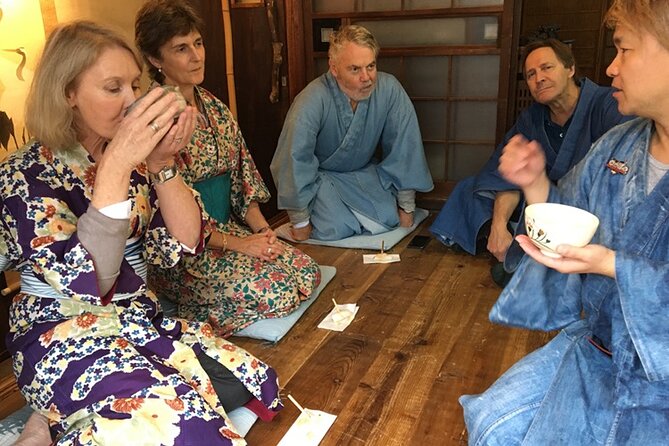
I would recommend this activity to couples, families, and solo visitors who want close contact with local hosts. It also suits anyone who has already seen Kyoto’s major temples and wants a quieter activity away from the central sightseeing route.
It is a good choice for first-time tea ceremony participants because the etiquette is explained instead of assumed. The small group and patient teaching also help if you are nervous about sitting, bowing, or handling the tea bowl correctly.
Families should find the welcome reassuring. Children have been included in the ceremony, and the hosts have shown flexibility with younger participants. Still, the activity has a calm pace, so very young children may not enjoy every minute.
I would think twice if your priority is scenery. This is a private residence in a normal neighborhood. The house is old and atmospheric, but it does not replace a visit to Katsura Imperial Villa or a temple garden.
I would also skip it if you want an advanced lesson in matcha production. You learn how matcha is prepared and served, but the main subject is tea ceremony etiquette and hospitality.
Should you book the antique kimono tea ceremony?
Book it if you want a personal, family-run experience built around a genuine antique kimono and a carefully explained tea ceremony. Toku’s kimono fitting, the small group, the old house, and the time for photographs give the visit more substance than a quick costume photo stop.
Skip it if you want a grand setting, a garden, or a long tasting of different teas. The residential location is plain, and the 90-minute format may feel stretched if your interest is limited to matcha itself.
For most visitors who value people and tradition over polished scenery, I think the activity is worth considering. Arrive with the right expectations, and you are likely to leave with more than photographs: you will understand why the tea ceremony asks you to slow down and give full attention to the moment.
FAQ
Where does the tea ceremony take place?
It takes place at Miyagawa Tokusaburo Shoten, 32-4 Katsuranozatocho, Nishikyo Ward, Kyoto, 615-8073, Japan.
How long does the activity last?
The experience lasts approximately one hour and 30 minutes.
Is the activity available in English?
Yes. The tea ceremony and explanations are available in English.
How many people can join?
The experience has a maximum of six participants.
Is the kimono rental included?
Yes. The antique kimono rental fee is included in the price.
What else is included?
The tea ceremony experience includes green tea and Japanese sweets.
Is lunch or dinner included?
No. Lunch and dinner are not included.
Does the experience end at the starting point?
Yes. The activity ends back at the meeting point.
Can I cancel for a full refund?
Yes. You can cancel at least 24 hours before the start time for a full refund. Cancellations made less than 24 hours before the start time are not refunded.
Are service animals allowed?
Yes. Service animals are allowed, and the meeting point is near public transportation.
Newest Kyoto experiences on the site
- Treasures of Kyoto: Gion & historical Walking Tour★ 5.0 · 6 reviews
- Whisk Your Own Matcha: A Zen Matcha Experience at Temple★ 3.6 · 7 reviews
- Kyoto tea town for matcha lovers★ 5.0 · 16 reviews
- Uji: Private immersion into Kyoto’s tea and reglious culture★ 5.0 · 17 reviews
- Kyoto Matcha Green Tea Tour★ 4.5 · 23 reviews
- Uji and Wazuka Matcha Farm Half Day Private Guided Tour★ 5.0 · 21 reviews
- Utilising upcycled Matcha! Creating matcha incense (Uji, Kyoto)★ 5.0 · 6 reviews
- Sacred Temple Yoga Experience in Japan★ 5.0 · 3 reviews
Kyoto Kimono Rentals, compared.
KYOTO Tea Ceremony with kimono near by Imamiya Jinjya Shrine
Read our review →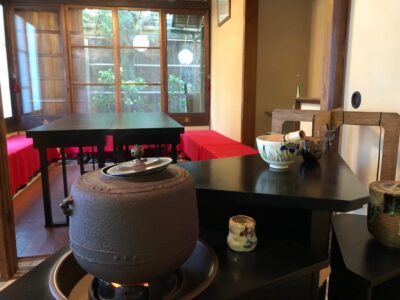
Kimono and Tea Ceremony Experience at Cultural Asset
Read our review →
Family-Friendly Kimono & Yukata Experience at WARGO
Read our review →
1 Day Traditional Japanese Kimono Rental Experience
Read our review →Browse the lists this tour appears in