
Reviewed · KYOTO KIMONO RENTALS
Elegant Tea Ceremony While Wearing Kimono Experience in Kyoto
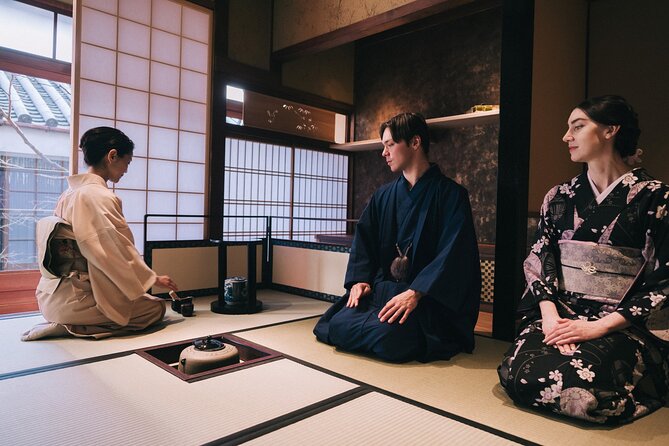
Kyoto’s tea tradition feels more personal when you are dressed for it. At Nishiki Orizuruya, you choose a kimono, have it fitted by staff, and sit down to prepare your own matcha in a traditional tea room. The hands-on tea making and the chance to wear your kimono around the neighborhood make this more than a photo stop.
I like the careful dressing service, including free hair styling for women, and the small-group format, capped at 10 people. I also like the choice of follow-up activities: calligraphy, gold leaf art, or a guided walk through Nishiki Market. The main drawback is that the tea ceremony can feel light on historical explanation for some visitors, and sitting on the floor may be difficult unless you request a chair.
Key points to know
- Kimono fitting comes first: Choose your outfit and accessories, then let the staff dress you.
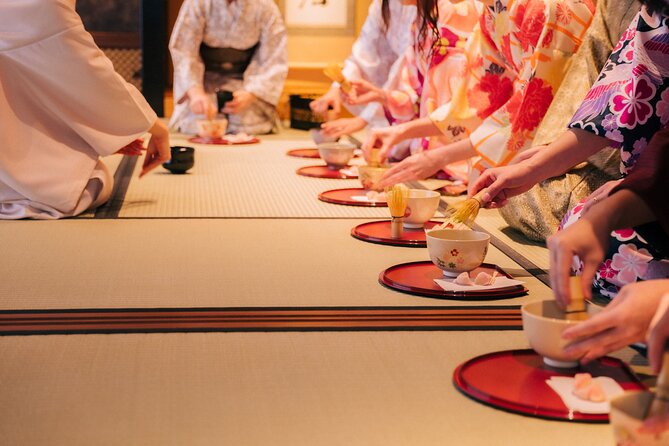
- The tea ceremony is hands-on: You watch a demonstration, then whisk your own matcha.
- Seasonal sweets add context: Wagashi comes from a Kyoto confectionery with 100 years of tradition.
- Three add-ons give the experience a different shape: Pick calligraphy, gold leaf art, or a Nishiki Market walk.
- The location is highly convenient: Nishiki Orizuruya is about one minute from Nishiki Market.
- Small groups keep it manageable: The maximum is 10 people, though weekend demand can make the area busy.
What the Nishiki Orizuruya experience feels like
This is a polished introduction to several Kyoto customs in one sitting. You are not simply watching a tea master from across the room. You get dressed, take part in the ritual, make matcha, taste a traditional sweet, and then choose a second cultural activity.
The setting is Nishiki Orizuruya, a traditional tea house at 452 Jūmonjichō in Nakagyo Ward. It is close to Nishiki Market, Kyoto’s famous food street, so the experience fits neatly into a day of market browsing and central Kyoto sightseeing.
The standard tea ceremony lasts about 90 minutes. The longer choices run about 130 minutes for gold leaf art and 150 minutes for the Nishiki Market tour. Allow some extra time around the appointment for dressing, photographs, and the transition between activities.
The English guidance is an important part of the value. A tea ceremony has many small movements, and it is easy to miss their meaning if you are only copying what others do. Guides such as Ruriko have explained the customs clearly, while Lina has led the market walk. Your assigned guide may differ, but English instruction is included.
More tea ceremonies in Kyoto:
- Kyoto: Tea Ceremony in a Traditional Tea House in Kiyomizu
★ 4.9 · 3,519 reviews - Kyoto: Tea Ceremony Ju-An at Jotokuji Temple
★ 4.9 · 3,207 reviews - Kyoto: 45-Minute Tea Ceremony Lesson Experience
★ 4.3 · 2,378 reviews
Choosing and wearing your kimono
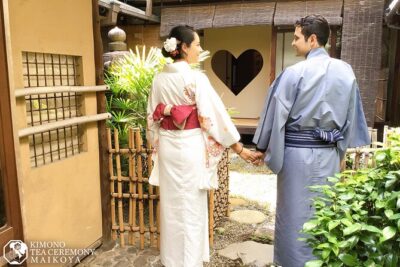
The dressing stage is one of the strongest parts of the visit. You choose from available kimonos and accessories, then staff help you put everything on properly. Several people have praised the patience and attention to detail of the dressing team, including their ability to accommodate different body sizes.
For women, free hair styling is included. Hair decorations add to the formal look and make photographs more distinctive than a quick rental-shop fitting. Men also receive kimono dressing, though the choice of men’s outfits is described as less varied than the women’s selection.
You should arrive at least 10 minutes before your reserved time. That matters here because the session begins with preparation, not with everyone already seated in the tea room. Arriving late could shorten the part you most want, especially the photographs or the explanation before the ceremony.
The kimono is fitted for the activity, so you should expect a dressed-up outfit rather than ordinary sightseeing clothes. Some participants have been allowed to keep the kimono on while walking in the area until 6pm. Ask the staff about the current arrangement before you leave the tea house, since this detail may depend on the plan and the day.
The outfit also creates a practical consideration. Traditional floor seating can be hard for anyone with knee, hip, or back problems. A chair has been provided for people who could not sit on the floor, so tell the staff before the ceremony begins. That small request can make the difference between enjoying the tea and enduring it.
Making matcha in a formal tea room
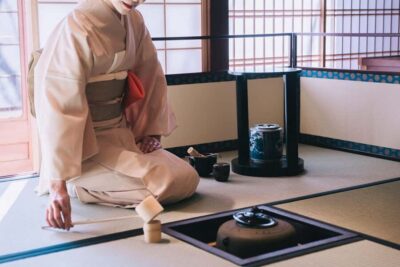
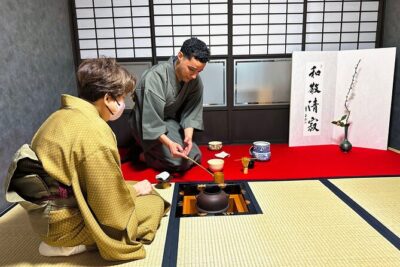
The tea ceremony begins with a demonstration by a professional tea master. You watch the preparation, learn the basic movements, and then use a bamboo whisk to make your own matcha.
The point is not to become a tea expert in one visit. It is to slow down and notice the order of the actions: the tools, the whisking, the way the tea is presented, and the quiet attention given to the cup. Making the tea yourself also removes some of the distance that can come with watching a formal performance.
The ceremony is described as peaceful and intimate, with English explanation throughout. Ruriko has been singled out for explaining the meaning behind the ceremony, and the tea host is generally praised for clear English and an engaging manner. Still, one account found that the historical background and significance of each step were not explained in much depth.
That difference is worth keeping in mind. If you want a detailed lecture on tea schools, architecture, or centuries of Japanese history, this may feel too brief. If you want a calm, guided introduction with time to participate, it is better suited to your needs.
You will also taste seasonal wagashi, the traditional sweets served with matcha. These come from a confectionery with a 100-year history. The sweet is not just a snack. Its role is to balance the bitterness of the tea and prepare your palate for the matcha.
If you have allergies, tell the staff ahead of time. Allergies involving the sweets and tea have been accommodated, but the supplied information does not specify which substitutions are available. Do not wait until the tray arrives.
Picking the right activity after tea
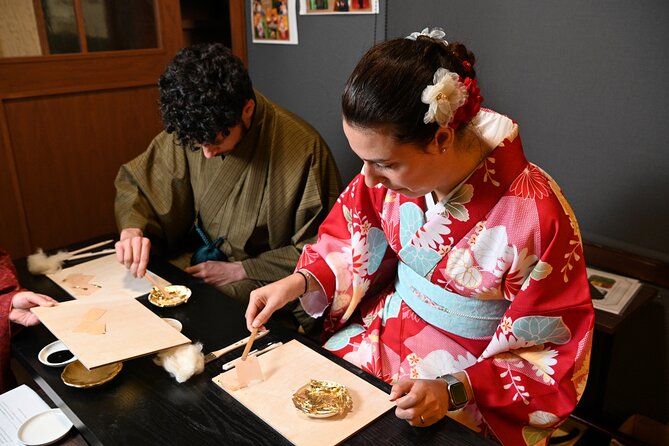
The add-on choice shapes the rest of the experience. All plans include the kimono and tea ceremony, but each extended option suits a different kind of visitor.
More kimono and yukata rentals in Kyoto:
- Kimono Tea Ceremony at Kyoto Maikoya, NISHIKI
★ 5.0 · 911 reviews - Kyoto: Kimono Rental with Hairstyling and Accessories
★ 4.8 · 653 reviews - Kyoto: Kimono Tea Ceremony at Orizuruya Gion
★ 4.9 · 618 reviews - KYOTO Tea Ceremony with kimono near by Imamiya Jinjya Shrine
★ 5.0 · 343 reviews
Calligraphy for a personal keepsake
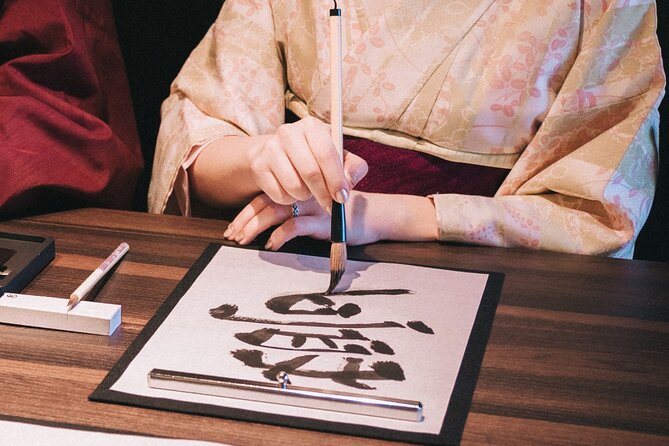
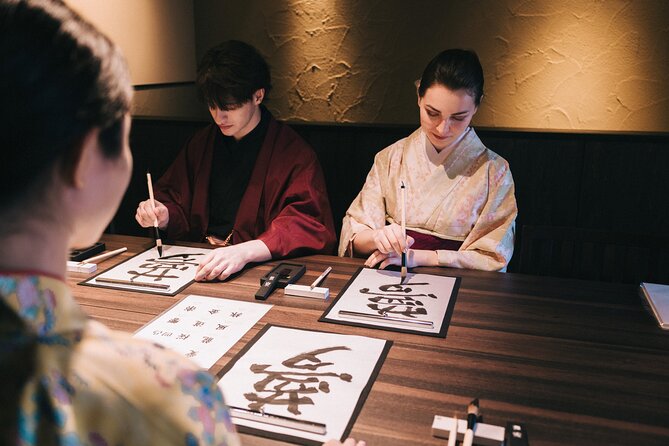
The calligraphy option adds Japanese brush writing after the tea and sweets. You use brush and ink to write a favorite kanji on washi paper.
This is a good choice if you want a quieter creative activity and a souvenir that feels connected to the culture. You do not need to arrive with a perfect kanji in mind, though selecting a meaningful character before the visit can make the finished piece more personal.
Calligraphy also gives families a second activity with a clear result. Children aged 5 and above may join, and the staff have been especially welcoming with children. There is no child discount, so include every participant in your budget.
Gold leaf art for a hands-on souvenir
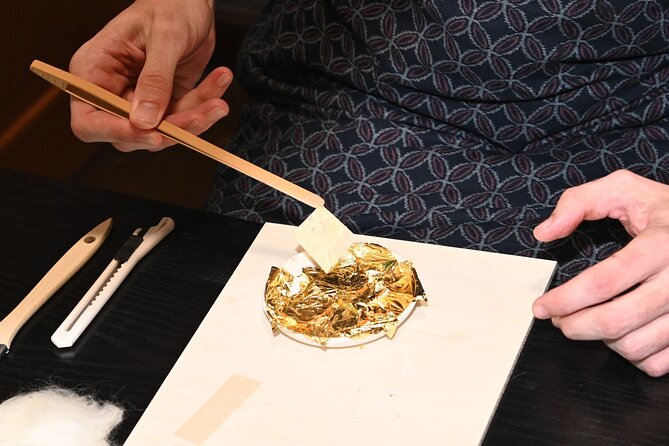
The gold leaf plan lasts about 130 minutes. After tea, you decorate a small plate with high-purity gold leaf and take the finished item home.
This option suits you if making something matters more than learning to write. The work is hands-on, but the final plate is also a useful reminder of the visit. Gold leaf is delicate, so you should expect a careful craft activity rather than a fast decoration task.
It is a practical choice for people who want a souvenir created during the appointment instead of spending more time shopping later.
Nishiki Market for food and local streets
The 150-minute plan pairs tea with an English-guided walk around Nishiki Market and nearby streets. Nishiki is known as Kyoto’s Kitchen, and the walk adds food culture, shrines, historic shops, and local shopping streets to the day.
This is the best choice if you want context beyond the tea room. You move from a quiet ritual into one of central Kyoto’s main public spaces. The contrast helps you understand how traditional food, commerce, and religious sites sit close together in the city.
It is also the most useful option for first-time visitors who have not yet explored the market. The guide can help you get your bearings and point out details you might pass while browsing alone. The tradeoff is that Nishiki Market can be crowded on weekends, holidays, and during special events.
Why the location works so well
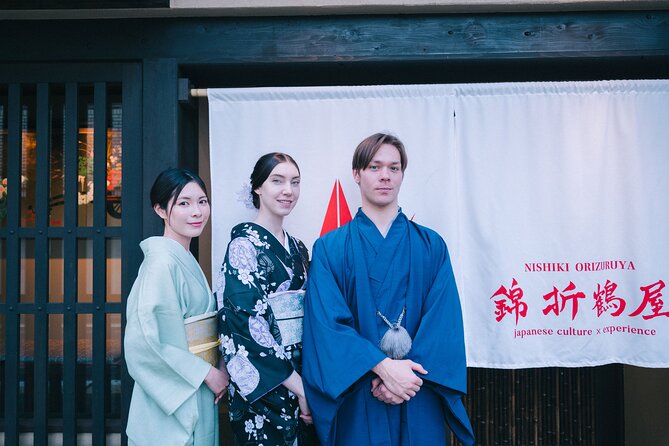
The meeting point is only about a minute from Nishiki Market. That makes it easy to combine the appointment with lunch, snack shopping, or a walk through central Kyoto.
The location is near public transportation, and the tour begins and ends at Nishiki Orizuruya. There is no separate return transfer to plan. For the market option, you finish the guided portion back at the same meeting point.
The nearby market is both an advantage and a limitation. You have a major Kyoto sight right outside, but the area may be busy. If you prefer quiet streets and a slower photographic setting, book a time outside the busiest periods when possible.
The central location also makes this a useful rainy-day plan, since the main cultural activities take place indoors. In severe weather or a natural disaster such as a typhoon, the activity is canceled and fully refunded.
Is the $50.58 price good value?
At about $50.58 per person, the value depends on how much of the package you use. You are paying for kimono rental, dressing, women’s hair styling, English guidance, the tea ceremony, matcha, sweets, and one additional activity when you select an extended plan.
A simple tea demonstration alone might cost less, but it would not include the outfit, styling, personal tea preparation, and cultural add-on. Here, the clothing and staff time are a major part of what you are buying. The price makes more sense if you want photographs and participation, not just a cup of tea.
The package is also efficient for a short Kyoto stay. In roughly two to two and a half hours, you cover several activities that might otherwise require separate bookings. Families should remember that children pay the same listed rate, with no child discount.
The small maximum of 10 people helps justify the cost. You are less likely to be lost in a large demonstration, and staff can help with dressing, tea preparation, photographs, or seating needs. The tradeoff is that the experience remains a prepared cultural activity rather than a private tea ceremony designed just for your group.
Who will enjoy this most
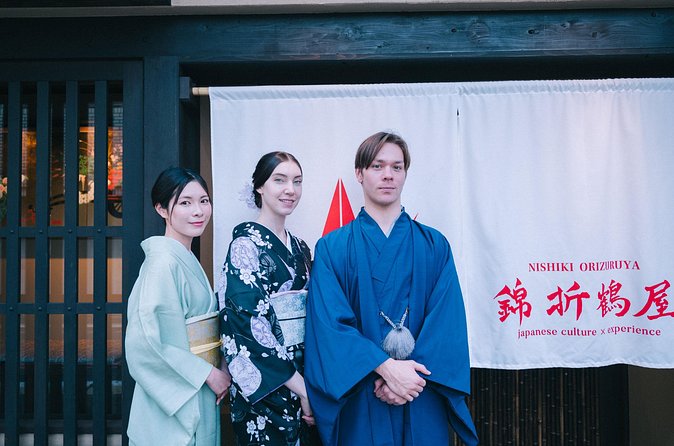
I would recommend this to first-time Kyoto visitors who want a friendly introduction to traditional arts without committing to a full-day program. It also suits families, couples, and friends who want photographs and a clear activity structure.
The calligraphy plan fits someone who likes a personal memento. Gold leaf works for anyone who prefers craft and decoration. The market plan is the best match if you want food, shops, shrines, and neighborhood context as well as tea.
You should think twice if you dislike dressing up, do not want to follow a formal sequence, or are looking for advanced instruction in Japanese tea. The experience is accessible and welcoming, but it is still an introductory session.
If floor seating worries you, ask for a chair. The staff have accommodated this request, and there is no reason to stay silent and uncomfortable.
Booking and practical details
Confirmation is sent within 48 hours of booking, subject to availability. The activity is non-refundable and cannot be changed after booking, so check your date, time, and chosen plan carefully before paying.
The experience accepts children aged 5 and above. There is no child discount. Keep valuables with you, since you are responsible for your own belongings.
Plan to arrive 10 minutes early at Nishiki Orizuruya, 452 Jūmonjichō, Nakagyo Ward, Kyoto, postal code 604-8121. The activity ends at the same location.
Should you book this Kyoto tea ceremony?
Book it if you want to do more than watch a tea ceremony. The combination of kimono fitting, hair styling for women, matcha preparation, seasonal sweets, and a choice of calligraphy, gold leaf, or Nishiki Market gives you a full cultural session in a convenient part of Kyoto.
Choose the market plan for the most complete introduction to the neighborhood. Choose calligraphy or gold leaf if you want a take-home object. If your main goal is a calm tea lesson, the 90-minute plan is enough, but request a chair if needed and ask for more explanation during the ceremony.
At $50.58, it is a fair buy for a well-organized, small-group introduction, especially when you value the outfit and the hands-on parts. Just book only when your schedule is firm, since the cancellation terms are strict.
FAQ
Where does the tea ceremony take place?
It takes place at Nishiki Orizuruya, 452 Jūmonjichō, Nakagyo Ward, Kyoto, 604-8121, Japan.
How close is the venue to Nishiki Market?
Nishiki Orizuruya is about a one-minute walk from Nishiki Market.
How long does the basic tea ceremony last?
The tea ceremony plan lasts approximately 90 minutes.
How long are the extended plans?
The gold leaf plan lasts about 130 minutes, and the Nishiki Market plan lasts about 150 minutes.
Is kimono rental included?
Yes. All plans include kimono rental and dressing assistance.
Is hair styling included?
Free hair styling is included for women.
Can I make my own matcha?
Yes. You first watch a demonstration, then prepare your own matcha with a bamboo whisk.
What sweets are served?
Seasonal wagashi, traditional Japanese sweets, are served with the matcha. They come from a confectionery with 100 years of tradition.
Can children join?
Children aged 5 and above may join. There is no child discount.
What happens in severe weather?
The activity may be canceled during severe weather or a natural disaster such as a typhoon. In that case, it is fully refunded.
Newest Kyoto experiences on the site
- Treasures of Kyoto: Gion & historical Walking Tour★ 5.0 · 6 reviews
- Whisk Your Own Matcha: A Zen Matcha Experience at Temple★ 3.6 · 7 reviews
- Kyoto tea town for matcha lovers★ 5.0 · 16 reviews
- Uji: Private immersion into Kyoto’s tea and reglious culture★ 5.0 · 17 reviews
- Uji and Wazuka Matcha Farm Half Day Private Guided Tour★ 5.0 · 21 reviews
- Kyoto Matcha Green Tea Tour★ 4.5 · 23 reviews
- Utilising upcycled Matcha! Creating matcha incense (Uji, Kyoto)★ 5.0 · 6 reviews
- Sacred Temple Yoga Experience in Japan★ 5.0 · 3 reviews
Kyoto Kimono Rentals, compared.
KYOTO Tea Ceremony with kimono near by Imamiya Jinjya Shrine
Read our review →
Kimono and Tea Ceremony Experience at Cultural Asset
Read our review →
Family-Friendly Kimono & Yukata Experience at WARGO
Read our review →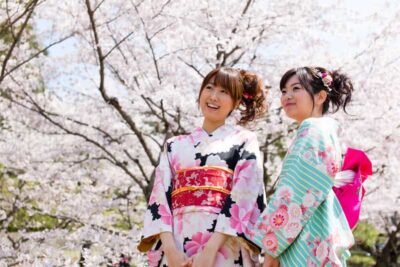
1 Day Traditional Japanese Kimono Rental Experience
Read our review →Browse the lists this tour appears in