
Reviewed · KYOTO NINJA EXPERIENCES
Ninja 1-hour Hands-on Lesson by Japanese master in Kyoto -Entry
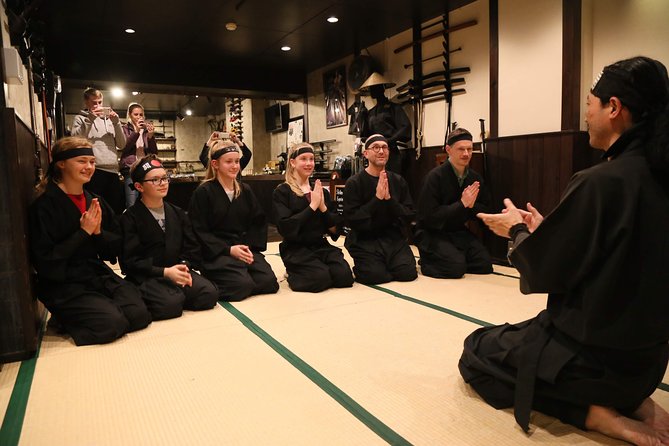
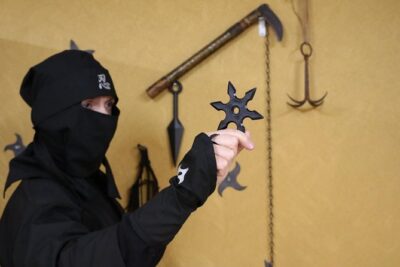
Kyoto’s NINJA DOJO and STORE gives you a hands-on hour with swords, shuriken, kunai, and blow darts, but it starts more quietly than you might expect. You’ll learn ninja breathing, walking, and meditation before moving to the weapons and hidden features of the dojo.
I like the small maximum group of six, which gives each person time to try the techniques. I also like that the English-speaking instructors, including Sho and Jack, mix basic history with demonstrations, humor, and careful practice. The main drawback is the short format: you sample many skills, but you won’t leave with a detailed study of ninja culture or martial arts.
Key points to know before booking
- Small Kyoto dojo class: Sessions have a maximum of six people, so the lesson feels more personal than a large stage show.
- Several hands-on skills: You’ll practice sword movements, kunai and shuriken throwing, and ninja blowgun techniques.
- More than dress-up: The class includes breathing, meditation, stealth walking, and an introduction to traps and secret features.
- Ninja clothing included: You change into ninja clothes for the lesson, adding to the fun and making photographs more memorable.
- Good for families: Children, teenagers, couples, and adults can take part, and many families use it as a break from temples and shrines.
- One-hour commitment: The pace is quick and lively, but the lesson gives only an introduction rather than advanced training.
What this Kyoto ninja class is really like
This is not a museum tour or a formal martial arts course. It is a compact activity built around participation. You arrive at the dojo and store in Shimogyo Ward, change into ninja clothing, and take part in a sequence of short lessons and demonstrations.
The tone is playful, but the class also tries to explain why the movements and tools mattered. Instructors teach in English and use demonstrations to show how a ninja might move, breathe, hide, or handle a weapon. The result is part cultural lesson, part physical activity, and part family entertainment.
I would set your expectations carefully. The experience gives you a taste of several ninja skills rather than mastery of any one of them. You will have plenty to do in an hour, but the timetable leaves little room for long historical explanations or extended individual practice.
More ninja experiences in Kyoto:
- Skip the lines Basic Ticket at SAMURAI NINJA MUSEUM KYOTO
★ 4.5 · 632 reviews - Kyoto: Ninja Weapon Forging Experience
★ 4.8 · 478 reviews - Ninja 2-hour Hands-on Lesson by Japanese master in Kyoto -Medium
★ 5.0 · 218 reviews
Starting with ninja breathing, meditation, and walking
The lesson begins with the quieter side of ninja training. You learn about ninja meditation, known as Kuji-In, along with breathing and walking methods. These exercises help explain that stealth was not only about weapons. Control, balance, and calm movement were just as important.
For many people, this opening is the most unusual part of the class. It gives the session some structure before the more exciting target work begins. Children may be eager to reach the swords and throwing stars, but the basic movements help them understand what the instructor is demonstrating later.
The walking practice also provides one of the memorable dojo features: an introduction to a ninja trick house with gimmicks, traps, and secret areas. The experience includes walking in darkness over a floor with spikes, with the instructor showing you how to move safely. This is presented as a demonstration and guided exercise, not a free-for-all.
Pay attention during this section. The class moves quickly, and the techniques are easier to enjoy when you follow the instructions closely. You are not simply watching someone in costume perform. You are expected to copy the movements and take part.
Seeing the dojo’s tricks and hidden details
The trick-house section gives the lesson a strong sense of place. Rather than practicing only in an open room, you get an introduction to the kinds of concealed doors, traps, and hidden features associated with a ninja setting.
This part is especially effective for children and teenagers because it turns a historical idea into something they can physically explore. Adults may find it more theatrical, but that is part of the appeal. The activity does not pretend to recreate a working medieval training compound. It uses the dojo’s features to show how concealment and surprise fit into the ninja image.
The instructor demonstrates how to approach the traps and unusual spaces. You then try the movement yourself. It is a short section, but it breaks up the weapon training and keeps the hour from feeling like a simple target-throwing session.
If you are seeking a serious, detailed course in Japanese military history, this will feel light. If you want a clear, active way to introduce your family to ninja ideas, it works well.
Practicing the ninja sword
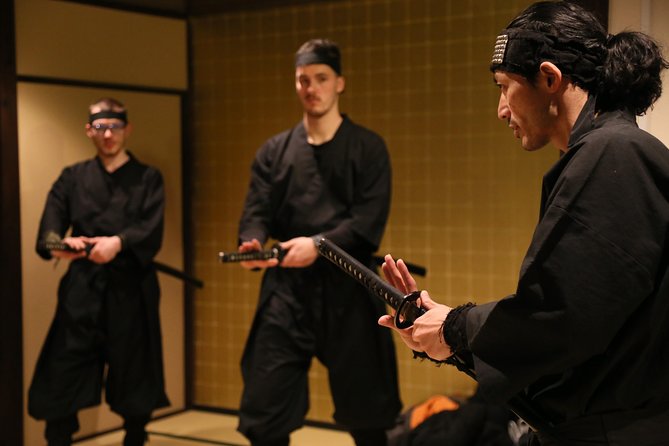
The sword portion follows the introduction to ninja movements. You receive instruction in basic sword handling and practice the movements under guidance. The focus is on learning the technique and taking part, not on combat or advanced fencing.
This is one of the parts that makes the experience feel different from a costume photo stop. You are not only putting on ninja clothes. You are shown how the sword is handled and given a chance to practice the motions yourself.
The class format matters here. With no more than six people, the instructor can watch each participant and keep the activity organized. Several people who attended as families found that both children and adults could take part, though the pace may feel brisk if everyone wants extended practice.
The sword work is also a good reason to listen closely to the safety instructions. The experience includes weapons, but the activity is structured and supervised. You should follow the instructor’s directions rather than treating the sword as a prop for unscripted play.
More craft workshops in Kyoto:
- Kyoto: 45-Minute Tea Ceremony Lesson Experience
★ 4.3 · 2,378 reviews - Ramen Cooking Class at Ramen Factory in Kyoto
★ 5.0 · 1,937 reviews - Kyoto : Chopsticks Making Workshop in Gion with Engraving Option
★ 5.0 · 958 reviews - Kyoto: Samurai Sword Class by Experts in Traditional Arts
★ 4.9 · 657 reviews
Throwing kunai and shuriken at targets
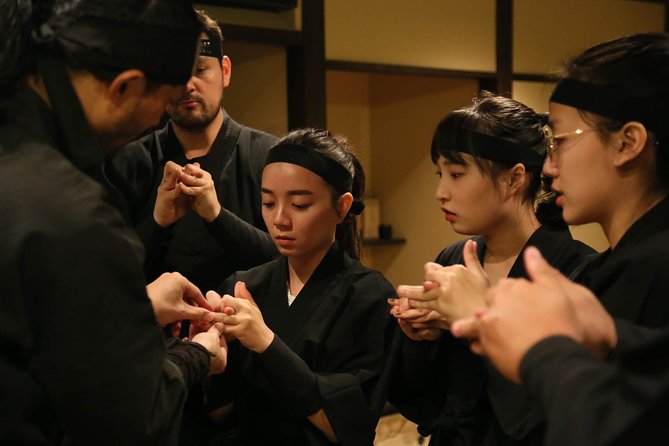
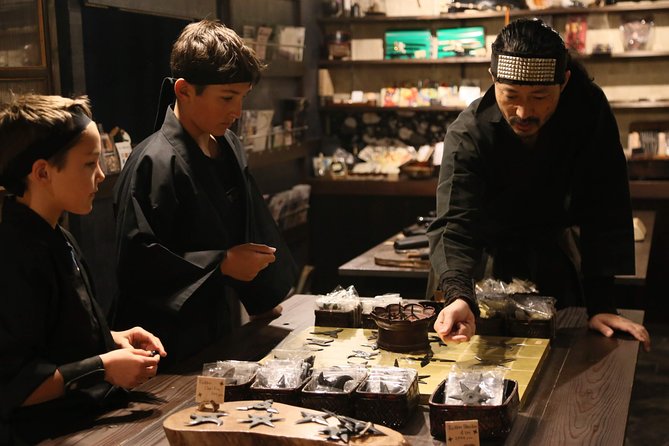
The throwing section introduces kunai, or ninja daggers, and shuriken, often called ninja stars. You learn the basic approach, watch a demonstration, and then take your own turns at the targets.
This is usually the most immediately satisfying part of the class. You can see the result of each attempt, and the instructor can offer quick corrections. It also gives the group an easy rhythm: demonstration, practice, encouragement, and another turn.
The class may include other simple throwing exercises, such as a chopstick toss. That sounds easy until you try it. It adds a bit of comedy and shows that accuracy depends on technique rather than simply throwing harder.
You should not expect competition-level accuracy after one hour. The value is in trying a skill that you would not normally encounter on a Kyoto sightseeing day. The staff also take care with the weapons, which helps make the activity suitable for families with older children.
Finishing with the ninja blowgun
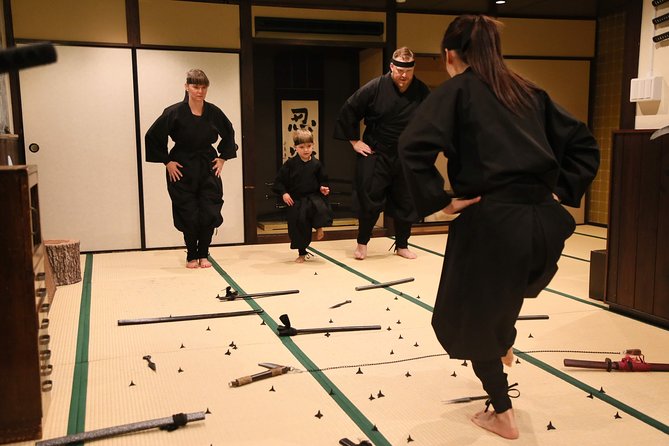
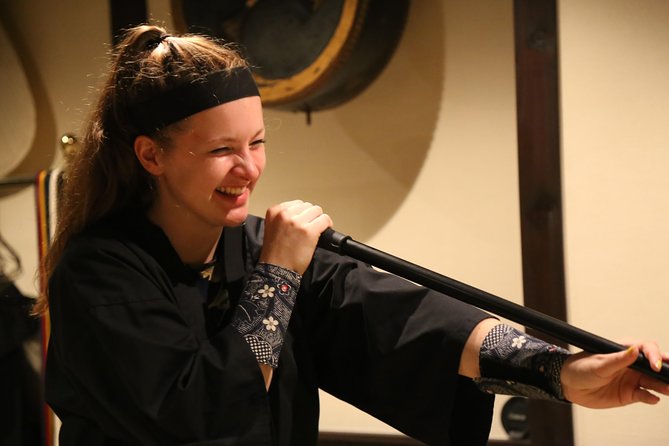
The ninja blowgun, or blow dart, session rounds out the weapons practice. You aim at wooden targets and learn how to use the blowgun under instruction. It is a small detail, but many people find it more difficult and more fun than expected.
This part gives the lesson a different physical challenge. Sword practice involves controlled movement, while throwing tests aim and release. The blowgun requires breath control, which ties back to the breathing exercises at the beginning.
Because the activity packs several weapons into one hour, you get a taste rather than a long practice period with each tool. That is ideal if you want variety. It is less satisfying if your main goal is to become skilled with one particular weapon.
The instructor keeps the energy moving, so the hour tends to pass quickly. Make use of every turn, especially if you are visiting with children who may want to repeat their favorite activity.
The instructors and English instruction
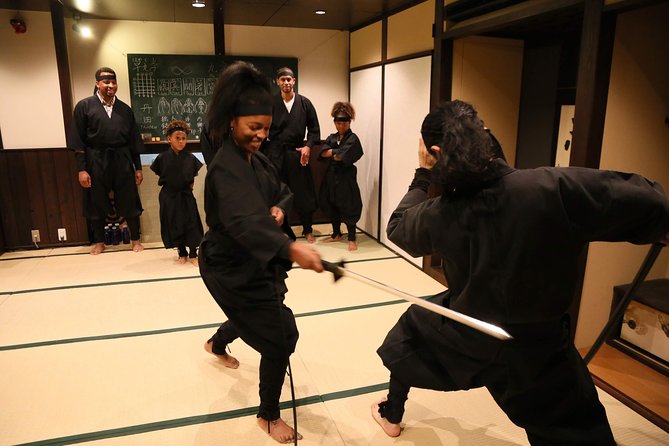
The class is taught in English by Japanese instructors who have trained in ninja arts. Names mentioned by people attending the experience include Sho and Jack. The instructor you meet can vary, but the common point is direct teaching, demonstrations, and a friendly tone.
Sho is described as an instructor who explains ninja history clearly and uses humor during the practical work. Jack is also noted for making the class both interesting and easy to follow. The staff may share additional cultural details when time allows, and the atmosphere can feel personal when the group is small.
You should not expect an academic lecture. The historical background is brief and aimed at helping you understand the purpose of the movements and weapons. One hour cannot cover the full story of ninjas, samurai, Japanese warfare, and martial traditions.
That limitation is worth keeping in mind because the word authentic can mean different things. This is a real lesson with guided practice and cultural explanation, but it is also designed as a fun activity for visitors. It is not a long-term martial arts apprenticeship.
Is the $80.58 price good value?
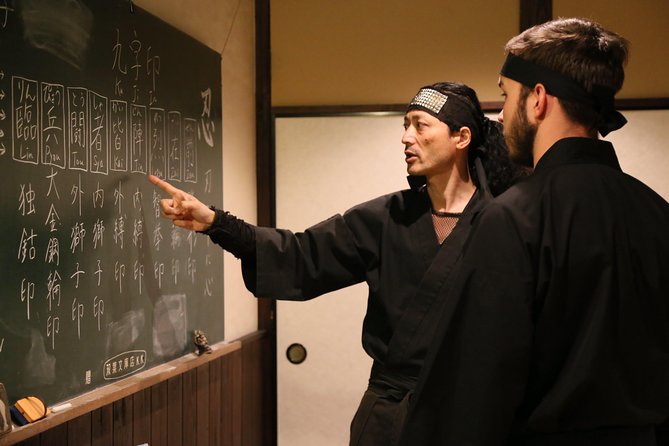
At $80.58 per person, this is not the cheapest one-hour activity in Kyoto. The price makes more sense when you count what is included: an English-speaking instructor, ninja clothing rental, admission, several different activities, and access to the dojo setting.
You are also paying for an activity that works for a mixed group. A child can enjoy the costumes and targets, while an adult can pay attention to the breathing, movement, and cultural background. That flexibility helps if your family members do not all enjoy temples, museums, or long walking tours.
The value is weaker if you want detailed history or serious martial arts instruction. In that case, one hour provides too little depth. You may prefer a longer class, since some people wished they had booked the two-hour version after enjoying the shorter session.
For a family, couple, or small group looking for something active between sightseeing stops, the price is easier to justify. The air-conditioned dojo can also provide a useful break from Kyoto’s outdoor temples and shrines, particularly during a hot day.
Who will enjoy this most?
This class suits families with school-age children and teenagers, especially those already interested in ninjas, anime, or Japanese weapons. Several children described the session as a favorite part of their trip, and the mix of dress-up, movement, targets, and hidden rooms gives them plenty to remember.
Adults can enjoy it too. Couples and friends may find the activity funny and slightly competitive without needing prior experience. You do not need to arrive with martial arts training, and most people can take part.
It is also a good choice for a rainy-day plan if the session goes ahead, though the operating information says the experience requires good weather and may be changed or refunded if poor weather causes cancellation. Check the status of your booking if conditions are uncertain.
I would think twice if you dislike costume activities, staged trick rooms, or quick introductions. The class has real instruction, but it is still built to entertain. It will not satisfy someone seeking a long, quiet study of ninja history.
Location, timing, and practical details
The meeting point is NINJA DOJO and STORE KYOTO, at 528 Hakurakutencho, second floor, in Kyoto’s Shimogyo Ward, postal code 600-8422. The activity ends at the same place, so you do not need to arrange a separate return transfer.
There is no hotel pickup or drop-off, and food and drinks are not included. The venue is near public transportation, which makes it practical to fit into a day in central Kyoto. Allow enough time to find the second-floor entrance and arrive ready for the one-hour session.
A mobile ticket is accepted, and confirmation is provided at booking. Service animals are allowed, and most people can participate. Since the class uses weapons and movement, listen carefully to the instructor and mention any concern before the practical work begins.
The group limit is six. If you are booking for a family or a small party, that number may let you share the experience without being separated into a large crowd. The activity also has a minimum number of participants, so the provider may offer another date or a refund if that minimum is not reached.
Free cancellation is available up to 24 hours before the start time for a full refund. Cancellations or changes made less than 24 hours before the start are not refunded, so do not leave changes until the last minute.
How this fits into a Kyoto day
The one-hour length makes this easy to combine with other plans. You can place it between temple visits, shopping, or a meal without giving up half a day. The central location and return to the same meeting point also keep the logistics simple.
I would not schedule it as the only activity of the day. The class is a lively introduction, not a full picture of Kyoto or Japanese martial traditions. Pair it with a museum, historic district, or temple visit if you want the activity to sit within a wider cultural day.
For families, it can be a smart change of pace. Kyoto sightseeing involves plenty of walking and quiet observation. An hour of movement, targets, costumes, and jokes can reset everyone’s energy before the next stop.
Should you book this ninja lesson?
Book it if you want a short, active Kyoto experience with direct instruction, costumes, weapons practice, and a small group. It is especially suitable for families, teenagers, couples, and anyone who wants a break from shrine and temple visits.
Skip it if you want an in-depth historical course or advanced martial arts training. The lesson moves fast and covers many subjects at an introductory level.
For most people, the strongest reason to book is the variety. In one hour, you meditate, practice ninja breathing and walking, explore dojo tricks, handle a sword, throw kunai and shuriken, and use a blowgun. That is a lot of ground to cover, and the price is reasonable when you want a memorable activity rather than another passive sightseeing stop.
FAQ
How long is the ninja lesson?
The entry-level lesson lasts approximately one hour.
Where does the experience start and finish?
It starts and ends at NINJA DOJO and STORE KYOTO, 528 Hakurakutencho, second floor, in Shimogyo Ward, Kyoto.
How many people can join the class?
The activity has a maximum of six participants.
Is the lesson taught in English?
Yes. A Japanese instructor trained in ninja arts teaches the lesson in English.
Is ninja clothing provided?
Yes. Ninja clothes are rented for use during the training.
What weapons and skills will I practice?
The lesson includes sword training, kunai training, shuriken throwing, and ninja blowgun practice. It also covers Kuji-In meditation, breathing, walking, and an introduction to ninja traps and trick-house features.
Can I cancel for a full refund?
Yes, if you cancel at least 24 hours before the experience start time. Cancellations made less than 24 hours before the start are not refunded.
Newest Kyoto experiences on the site
- Treasures of Kyoto: Gion & historical Walking Tour★ 5.0 · 6 reviews
- Whisk Your Own Matcha: A Zen Matcha Experience at Temple★ 3.6 · 7 reviews
- Kyoto tea town for matcha lovers★ 5.0 · 16 reviews
- Uji: Private immersion into Kyoto’s tea and reglious culture★ 5.0 · 17 reviews
- Kyoto Matcha Green Tea Tour★ 4.5 · 23 reviews
- Uji and Wazuka Matcha Farm Half Day Private Guided Tour★ 5.0 · 21 reviews
- Utilising upcycled Matcha! Creating matcha incense (Uji, Kyoto)★ 5.0 · 6 reviews
- Sacred Temple Yoga Experience in Japan★ 5.0 · 3 reviews
Kyoto Ninja Experiences, compared.
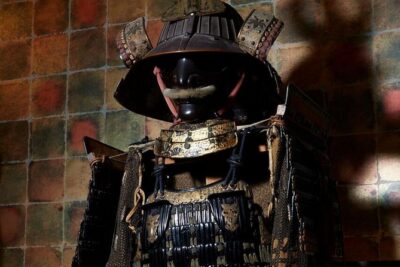
Skip the lines Basic Ticket at SAMURAI NINJA MUSEUM KYOTO
Read our review →
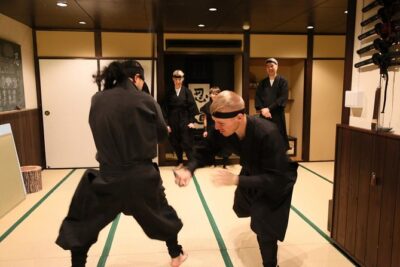
Ninja 2-hour Hands-on Lesson by Japanese master in Kyoto -Medium
Read our review →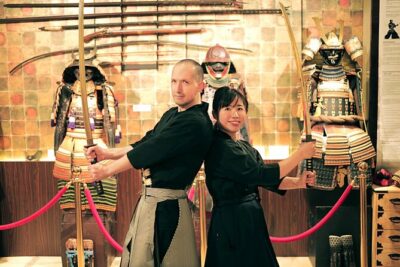
Kyoto Sword Experience – includes Museum Ticket/Ninja Experience
Read our review →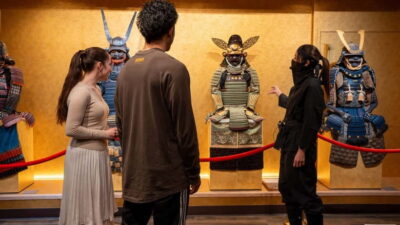
Ninja Experience (Family Friendly) at Samurai Ninja Museum KYOTO
Read our review →
Forge Your Own Ninja Weapon with Japanese Tin Casting
Read our review →
Authentic Ninja Weapon Forging Experience in Kyoto
Read our review →Browse the lists this tour appears in