
Reviewed · KYOTO NINJA EXPERIENCES
Ninja 2-hour Hands-on Lesson by Japanese master in Kyoto -Medium
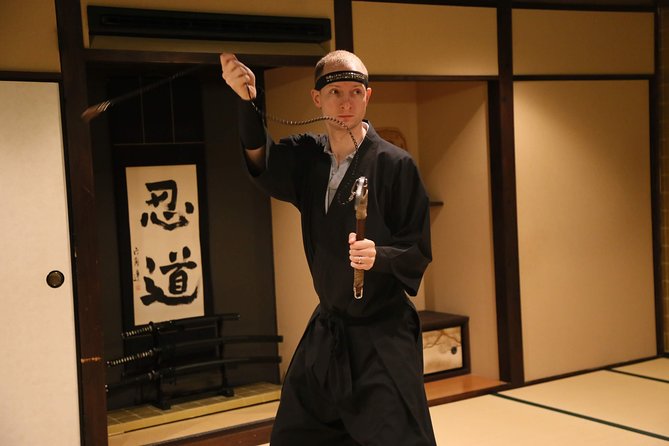
Kyoto’s NINJA DOJO and STORE turns ninja lore into a hands-on two-hour class. You begin with ninja clothing, then work through meditation, breathing, stealthy walking, sword movements, throwing stars, kunai, a sickle with chain, rope techniques, and blow darts. It is more active than a museum visit and more structured than a photo stop.
I like the small maximum group of six, which gives the instructor time to correct movements and keep the class moving. I also like the range of activities: this is not simply a sword pose followed by a souvenir-shop visit. The main consideration is that $95.51 is a serious price for two hours, so you should want instruction and participation, not just a costume photo.
Key points
- You wear rented ninja clothing throughout the training, making the class feel like an activity rather than a quick demonstration.
- The two-hour lesson covers many skills, including Kuji-In meditation, ninja breathing, walking, swords, kunai, shuriken, ropes, and blow darts.
- The group is limited to six people, a useful size for an English-language lesson with hands-on practice.
- The class suits families and adults, with examples ranging from young children to middle-aged couples and solo visitors.
- Photos and videos may be taken during the session and sent by email afterward, adding value for people who want a record of the experience.
- The meeting point is central Kyoto, at NINJA DOJO and STORE KYOTO in Shimogyo Ward, with the activity ending where it starts.
What the two-hour Kyoto ninja class is really like
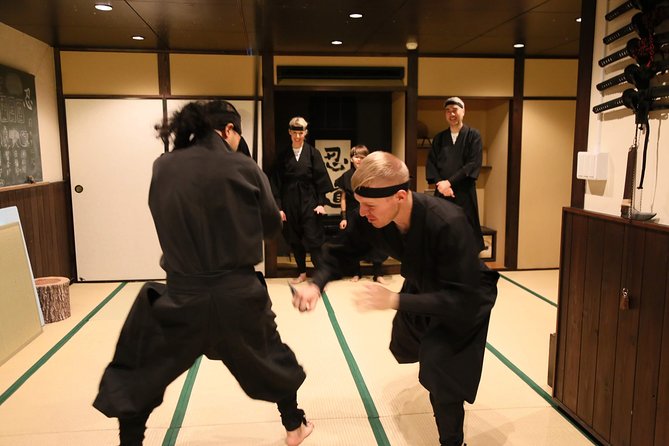
This is a compact lesson built around participation. You are not watching a performer run through a staged ninja show while you sit in the audience. The sensei demonstrates techniques, explains their purpose, and gives you time to try them yourself.
The class is described as an elementary-level lesson with five additional techniques beyond the basic introduction. That makes it a good match for first-timers. You do not need prior martial-arts training, and the format is meant to make the movements accessible even if you are not especially limber.
The instructors teach in English. The class combines physical practice with cultural explanation, although the balance leans toward doing rather than listening to a long lecture. If your main goal is a detailed academic study of ninja history, this will feel light. If you want a clear introduction with plenty of action, the format makes sense.
More ninja experiences in Kyoto:
- Skip the lines Basic Ticket at SAMURAI NINJA MUSEUM KYOTO
★ 4.5 · 632 reviews - Ninja 1-hour Hands-on Lesson by Japanese master in Kyoto -Entry
★ 5.0 · 489 reviews - Kyoto: Ninja Weapon Forging Experience
★ 4.8 · 478 reviews
Getting dressed at NINJA DOJO and STORE KYOTO
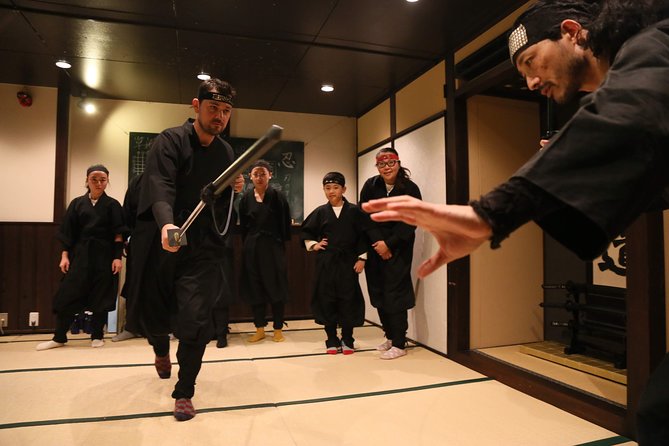
The meeting point is NINJA DOJO and STORE KYOTO, at 528 Hakurakutenchō, second floor, in Kyoto’s Shimogyo Ward. The scheduled start time is 10:00 a.m., and the venue is near public transportation.
Arrive early enough to find the entrance and change without rushing. One practical detail from the class routine is that you remove your shoes at the door, place them in the provided shoe boxes, and use slippers for the stairs and training area. A 15-minute arrival cushion is sensible, especially if you are navigating Kyoto’s streets for the first time.
The rental clothing is part of the admission price. Staff help you get dressed, which matters if you are bringing children or simply want the process to go quickly. Once everyone is in costume, the class can shift from ordinary sightseeing to something more playful and focused.
The clothing also makes the photo side of the activity work well. You are not trying to create a convincing ninja portrait in regular vacation clothes. The outfit, the training poses, and the equipment give you a proper visual record of the morning.
Kuji-In meditation and the first ninja techniques
The class begins with ninja meditation called Kuji-In. You learn hand signs and breathing techniques before moving into physical exercises. This opening gives the lesson a useful rhythm: first settle your attention, then learn how the body should move.
Ninja breathing is not just a decorative ritual in the program. It gives you a simple way to think about control and concentration before handling equipment. The meditation section also helps younger participants slow down before the more exciting parts begin.
Next comes ninja walking. This is one of the more interesting sections because it shows that ninja training is not only about weapons. Foot placement, balance, silence, and awareness are all part of the picture presented in class.
You also receive an introduction to the gimmicks and traps found in a ninja trick house. The supplied details do not promise a full walk-through attraction, so you should think of this as an introduction rather than a large maze or escape room. Still, it adds a bit of context and helps explain why stealth and awareness mattered in ninja stories and training traditions.
Sword handling, kunai, and shuriken practice
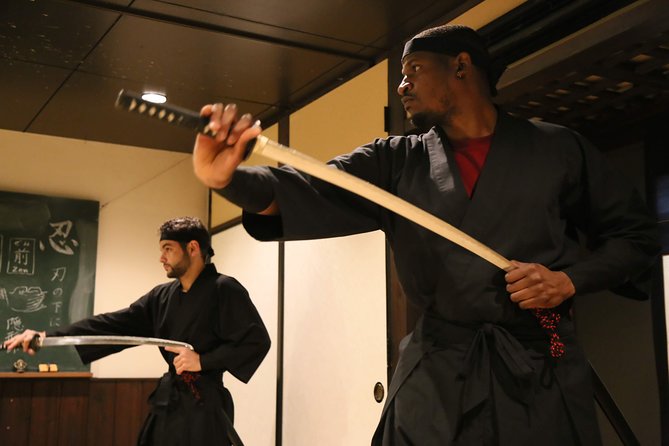
The equipment work is the heart of the class. You receive instruction in handling a ninja sword, then move on to smaller tools and throwing techniques. The sensei demonstrates each activity before you try it, which keeps the lesson manageable for beginners.
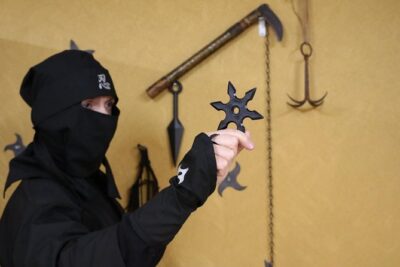
The program includes kunai, a dagger-like tool associated with ninja imagery, and shuriken, often called ninja stars. You also handle a stick-type shuriken. These different shapes give the session some variety and help prevent the experience from becoming one repeated throwing exercise.
A ninja sword is used in combination with shuriken practice as well. The exact sequence can depend on the group and the pace of instruction, but the list of activities makes clear that the class moves through several pieces of equipment rather than spending the entire time on one weapon.
You may also practice against targets. That detail matters because it gives the activities a clear focus. You are not simply holding props for photographs. You are learning a basic movement, aiming at a target, and seeing how the technique feels in your own hands.
This is still an introductory class, not professional combat training. The value comes from trying a wide range of techniques under instruction. You leave with a better sense of how much coordination these movements require, even at a basic level.
More craft workshops in Kyoto:
- Kyoto: 45-Minute Tea Ceremony Lesson Experience
★ 4.3 · 2,378 reviews - Ramen Cooking Class at Ramen Factory in Kyoto
★ 5.0 · 1,937 reviews - Kyoto : Chopsticks Making Workshop in Gion with Engraving Option
★ 5.0 · 958 reviews - Kyoto: Samurai Sword Class by Experts in Traditional Arts
★ 4.9 · 657 reviews
Rope work, kusarigama, and blow darts
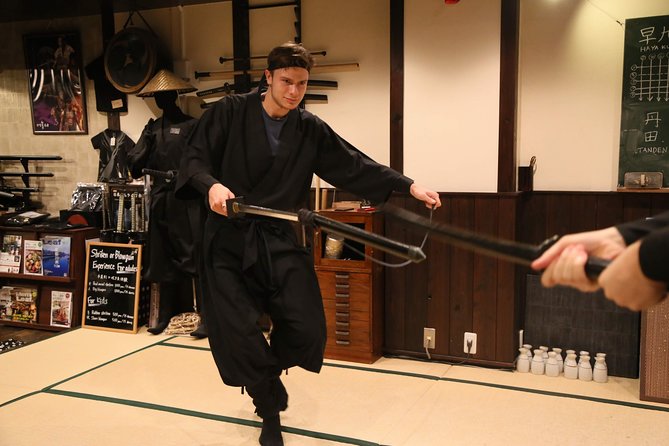
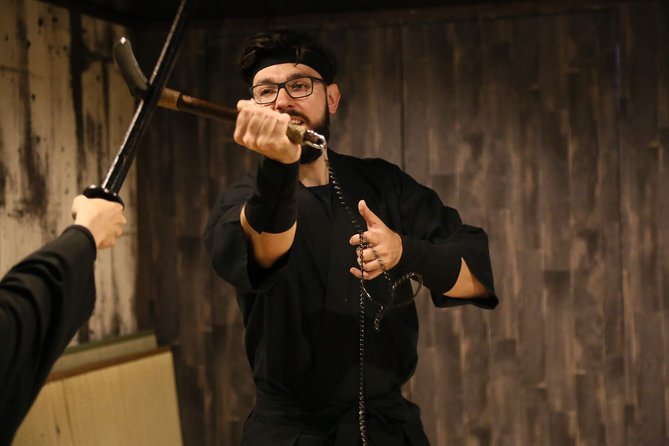
The later sections broaden the lesson beyond the familiar sword and throwing star. You are introduced to rope techniques, kunai with rope, and the kusarigama, a sickle with a chain. These tools are visually striking, but they also require more explanation than a simple sword pose.
The class includes a ninja blowgun with darts. For many people, this will be one of the most memorable parts because it is less familiar than the standard ninja images used in films and games. You get to try the activity rather than only hearing about it.
The wide equipment list is a strength, but it also creates a trade-off. Two hours is enough for an energetic introduction, not for mastery. Each technique receives limited time, so you should book this for variety and fun rather than deep practice in one discipline.
That variety works particularly well for families. A child who is less interested in meditation may enjoy targets or blow darts. An adult who comes for the sword may find the rope work or Kuji-In more interesting than expected. The class keeps changing before one activity has time to become dull.
The instructors and the value of a small group
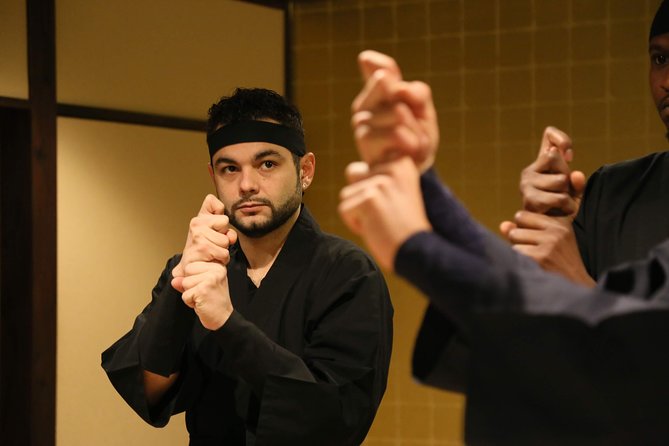
The Japanese sensei are trained in ninja arts and teach in English. Several parts of the class depend on clear demonstrations, so English instruction is an important part of the experience, not a minor convenience.
The teaching style is described as patient, humorous, and disciplined. That combination suits a group made up of different ages and confidence levels. Children can enjoy the playful side, while adults can pay attention to technique and cultural explanation.
Sho is one of the staff members associated with welcoming participants at the door. Other staff members help with clothing and take photographs during the session. The experience is not presented as a one-person performance, and that support is useful when a small group includes families or solo participants.
A group cap of six is one of the strongest practical features. In a large class, you might spend more time waiting for equipment or watching someone else attempt a technique. With six or fewer people, the sensei has a better chance to see what you are doing and keep the lesson personal.
That said, group size can vary below the maximum. You should not assume a private lesson unless your booking specifically says so. The small-group promise means a maximum of six, not exclusive use of the dojo.
Photos, videos, and the costume value
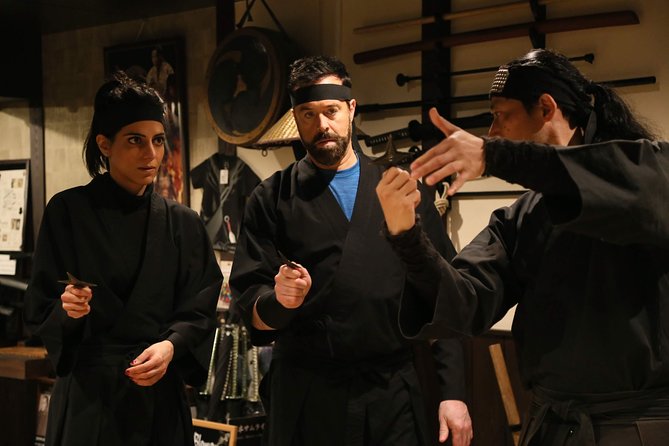
Staff take photos and videos during the training, and the material may be sent to you by email, including through Google Photos. This is a useful extra because it is difficult to take good action photos while you are learning to throw, strike, or move quietly.
The photo element is also one reason the clothing rental matters. You get more than a quick picture beside a display. The images can show you in several positions, using different pieces of equipment, and taking part in the lesson.
Do not treat the photography as the main reason to book. The activity is still built around instruction, and the photo service is an added benefit. But if you are visiting Kyoto with children, or marking a special trip with a partner, those images can make the price feel easier to justify.
The dojo also has a store, so you can browse ninja-themed purchases before or after the lesson. Food and drinks are not included, and the activity does not include hotel pickup or drop-off.
Who will enjoy this Kyoto experience most
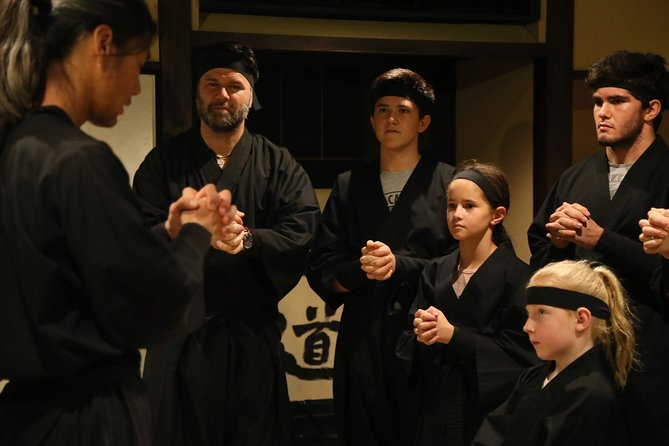
I would recommend this class to families, couples, solo visitors, and older children who like active cultural activities. It has worked for children from about five years old through teenagers, as well as adults in their 20s and 50s. The official information says most people can participate, and the reported range of ages supports that broad appeal.
It is also a good choice if you are traveling alone. A solo visitor can join a small class without needing to assemble a group, and the structured activities make conversation with other participants easy.
You do not need to be athletic. One useful feature is that the class remains accessible to adults who are not very flexible. The movements may still require some care, but the lesson is designed for beginners rather than trained martial artists.
I would think twice if you dislike dressing up, handling training equipment, or taking part in group instruction. The costume and the hands-on tools are central to the experience. This is not a quiet cultural talk.
Is $95.51 a fair price for two hours?
At $95.51 per person, this is not a bargain activity. Kyoto offers plenty of low-cost sights, and you can see temples and gardens for much less. The question is what you are comparing it with.
The price includes the two-hour lesson, an English-speaking Japanese sensei, admission, and ninja clothing rental. You also receive a small group format capped at six, plus the possibility of photos and videos sent after the class. For a family, the total rises quickly, but the clothing, instruction, and unusual equipment are all bundled into one appointment.
I think the price is reasonable if you want a planned, participatory experience that everyone in your party can do together. It is less convincing if you mainly want a costume photo or a short demonstration. The class has enough activities to fill two hours, but you should value the teaching and the chance to try several techniques.
There is also an intangible benefit: it gives you a break from the standard Kyoto route. After temples, shrines, markets, and walks, a morning of meditation, sword work, and target practice changes the pace.
Timing, cancellation, and practical planning
The scheduled start is 10:00 a.m. The tour begins and ends at NINJA DOJO and STORE KYOTO, so you arrange your own transport. There is no hotel pickup or drop-off, and food and drinks are not included.
Mobile tickets are available, and confirmation is received when you book. Service animals are allowed, and the activity is near public transportation.
Free cancellation is available up to 24 hours before the local start time. Inside that 24-hour window, the amount paid is not refunded and changes are not accepted. The operator also requires good weather and a minimum number of participants. If poor weather or low enrollment cancels the class, you are offered another date or experience, or a full refund.
The weather rule is worth noting even though much of the activity takes place at a dojo. Keep your plans flexible until you are inside that 24-hour cancellation window.
Should you book the Kyoto ninja lesson?
Book it if you want an active Kyoto experience with costumes, instruction, and many different techniques rather than another sightseeing stop. The small group, English teaching, wide equipment selection, and family-friendly pace give the class real substance.
I would especially choose it for a parent and child, a family with mixed ages, or a solo visitor seeking something unusual. The class is playful, but it is not only a photo opportunity. You meditate, practice breathing and walking, handle several types of equipment, and receive guidance from a Japanese sensei.
Skip it if your budget is tight or if you want a serious, detailed course in ninja history. Two hours gives you a broad first lesson, not expert training. For most people who enjoy hands-on activities, though, the combination of dressing up, learning useful movements, trying targets, and taking home photos makes this one of Kyoto’s more memorable side trips.
FAQ
Where does the ninja lesson begin?
The class begins at NINJA DOJO and STORE KYOTO, 528 Hakurakutenchō, second floor, in Kyoto’s Shimogyo Ward. It ends back at the same meeting point.
What time does the activity start?
The scheduled start time is 10:00 a.m.
How many people can join the class?
The activity has a maximum of six participants.
Is ninja clothing included?
Yes. Ninja clothing rental during the training is included in the price.
What techniques are covered?
The lesson includes Kuji-In ninja meditation, ninja breathing, ninja walking, an introduction to ninja trick-house gimmicks and traps, sword training, kunai, kusarigama, rope techniques, kunai with rope, shuriken, stick-type shuriken, ninja sword with shuriken, and a ninja blowgun.
Can I cancel for a full refund?
Yes, if you cancel at least 24 hours before the experience start time. Cancellations or changes made less than 24 hours before the start are not refunded or accepted. If the operator cancels because of poor weather or insufficient participants, you are offered another date or experience, or a full refund.
Newest Kyoto experiences on the site
- Treasures of Kyoto: Gion & historical Walking Tour★ 5.0 · 6 reviews
- Whisk Your Own Matcha: A Zen Matcha Experience at Temple★ 3.6 · 7 reviews
- Kyoto tea town for matcha lovers★ 5.0 · 16 reviews
- Uji: Private immersion into Kyoto’s tea and reglious culture★ 5.0 · 17 reviews
- Kyoto Matcha Green Tea Tour★ 4.5 · 23 reviews
- Uji and Wazuka Matcha Farm Half Day Private Guided Tour★ 5.0 · 21 reviews
- Utilising upcycled Matcha! Creating matcha incense (Uji, Kyoto)★ 5.0 · 6 reviews
- Sacred Temple Yoga Experience in Japan★ 5.0 · 3 reviews
Kyoto Ninja Experiences, compared.
Skip the lines Basic Ticket at SAMURAI NINJA MUSEUM KYOTO
Read our review →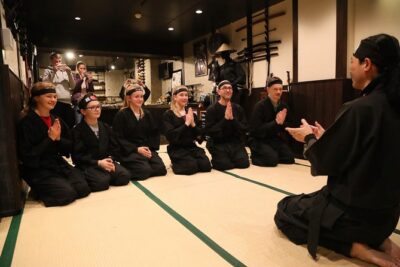
Ninja 1-hour Hands-on Lesson by Japanese master in Kyoto -Entry
Read our review →
Kyoto Sword Experience – includes Museum Ticket/Ninja Experience
Read our review →
Ninja Experience (Family Friendly) at Samurai Ninja Museum KYOTO
Read our review →
Forge Your Own Ninja Weapon with Japanese Tin Casting
Read our review →
Authentic Ninja Weapon Forging Experience in Kyoto
Read our review →Browse the lists this tour appears in