
Reviewed · KYOTO TEA CEREMONIES
Authentic Kyoto Tea Ceremony: Camellia Flower Teahouse
Kyoto’s tea ceremony is not just a cup of matcha. At Camellia Flower Teahouse, you learn why the room, utensils, gestures, and seasonal sweet all matter, then try the craft yourself. The ceremony lasts about 45 minutes, which gives you a clear look at the tradition without swallowing half a day.
I like the small groups of no more than eight, which leave room for questions and personal help. I also like the choice of sitting on the floor or using chairs and tables. That simple option makes the experience easier for children and anyone who finds floor sitting uncomfortable.
The main drawback is that the room may feel plain and compact rather than grand or theatrical. This is a hands-on cultural lesson in a convenient Higashiyama location, not a lavish stage show. The teahouse is not wheelchair accessible, and children must be at least six years old.
Key points to know before you book
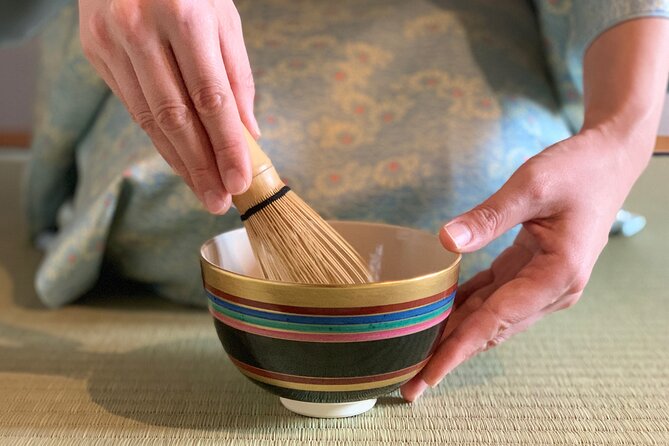
- You make your own matcha: The instructor demonstrates the process, then gives you a bowl, scoop, and whisk to prepare your tea.
- The session lasts about 45 minutes: It fits neatly between sightseeing stops in Higashiyama.
- English instruction is provided: The instructors speak English fluently and come from one of Kyoto’s three main tea ceremony schools.
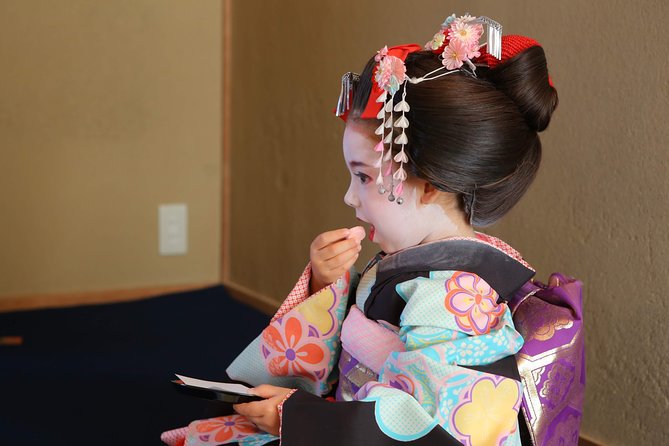
- A seasonal sweet comes with the tea: Its sweetness balances the strong, grassy taste of matcha.
- You can choose floor seating or chairs: Ask for the seating style that suits you.
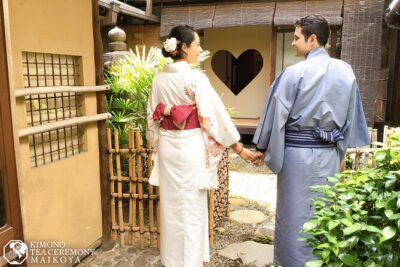
- Kimono rental is optional: You can request it separately for an additional fee, but it is not included in the listed price.
What happens inside the Camellia Flower teahouse
Your meeting point is Tea Ceremony Camellia FLOWER at 349-13 Masuyacho in Kyoto’s Higashiyama Ward. The activity begins and ends there, so you do not spend time waiting for a bus, finding a distant pickup point, or changing locations halfway through the session.
The opening is a short introduction to matcha and the tea ceremony. You hear how the ritual connects with Japanese ideas of respect, cleanliness, mindfulness, and attention to the person receiving the tea. This introduction gives the movements a purpose. Without it, the careful handling of a bowl or whisk can look like a string of mysterious rules.
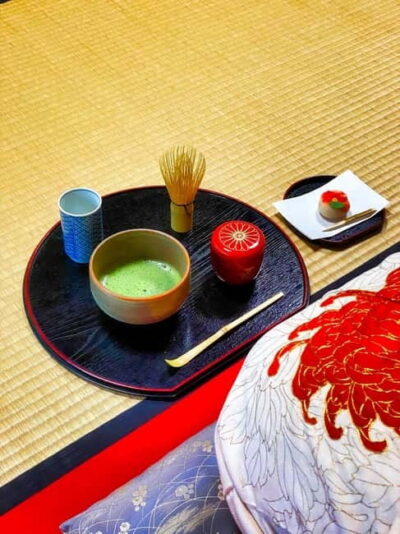
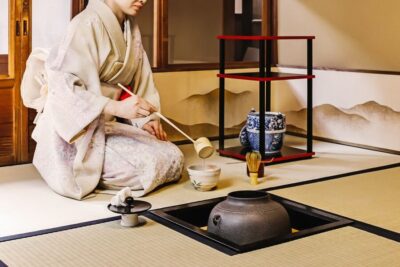
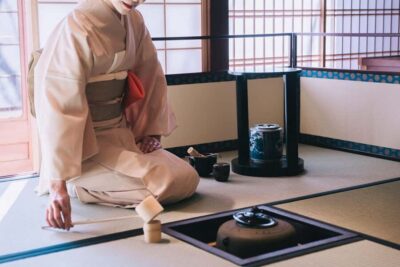
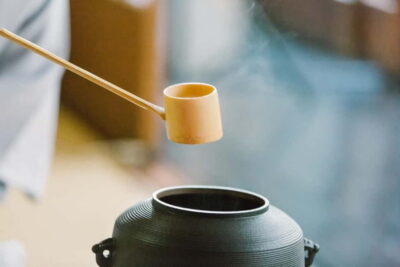
Your instructor then explains the main utensils. You receive a tea bowl, tea scoop, and bamboo whisk for the practical portion. The equipment is not merely decorative. Each item has a role, and the way you handle it is part of showing care for the tea and for the person who will drink it.
The host also points out the room’s decoration and layout. In a tea ceremony, the setting is part of the message. Seasonal details, the arrangement of objects, and the way the space is used all help create the calm mood. The session does not treat the ceremony as a recipe alone. It places the tea within the wider culture of Kyoto.
More tea ceremonies in Kyoto:
- Kyoto: Tea Ceremony in a Traditional Tea House in Kiyomizu
★ 4.9 · 3,519 reviews - Kyoto: Tea Ceremony Ju-An at Jotokuji Temple
★ 4.9 · 3,207 reviews - Kyoto: 45-Minute Tea Ceremony Lesson Experience
★ 4.3 · 2,378 reviews
Watching the traditional tea preparation
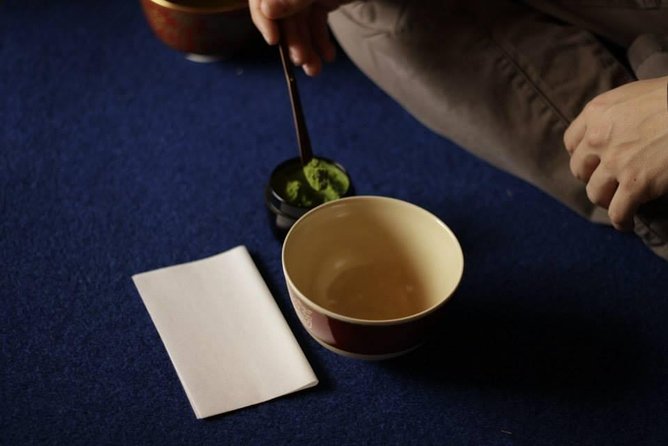
After the introduction, your instructor performs the ceremony. This is your chance to watch the order of the movements before you attempt them yourself. The process is precise, and the small gestures carry meaning. You may notice the cleaning of the utensils, the handling of the bowl, and the measured preparation of the matcha.
The best part of this demonstration is the explanation alongside it. The host describes what is happening instead of asking you to sit silently and guess. English-speaking instructors make it easier to ask about customs, the schools of tea, the tools, and the reasons behind each stage.
The ceremony has a quiet, focused pace. That can be a welcome break after a morning of temples, shops, and busy streets. Several people describe the experience as calming, especially after a full day of sightseeing. You still receive plenty of information, but the lesson is not rushed or overloaded.
You also taste matcha prepared by the instructor, along with a seasonal sweet. The sweet is an important part of the experience, since its sugary flavor softens matcha’s bitter edge. If this is your first bowl of matcha, the pairing helps you appreciate why Japanese tea service includes both tastes.
Your turn to whisk a bowl of matcha
The session ends with the part most people remember: you prepare your own tea. The instructor shows you how to use the scoop and whisk, then lets you practice the basic technique. You do not simply watch a performance. You take part in the work.
Whisking matcha looks easy until you try to create the right froth. Your first bowl may be less smooth than the instructor’s, and that is part of the lesson. The exercise shows why tea masters train for years and why the ceremony values careful repetition.
I like this hands-on ending because it changes the experience from a cultural display into a small act of participation. You leave with a better sense of the effort behind the drink. You also have a practical memory of Japan that is more useful than a quick photograph of someone else preparing tea.
You are encouraged to ask questions throughout the session. Families can use the practical section to keep children involved, while adults may want to ask about the history, schools, utensils, or etiquette. The instructors aim to make the ceremony welcoming rather than intimidating.
Why the Higashiyama location helps
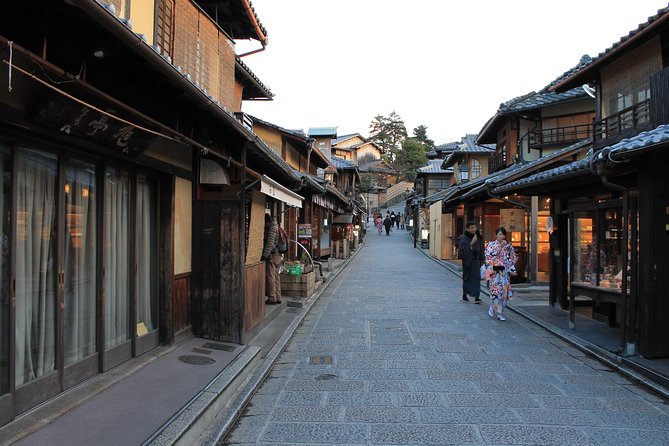
The teahouse is in Higashiyama Ward, one of Kyoto’s main sightseeing areas. You can combine the 45-minute ceremony with time in the surrounding part of the city, rather than making a special trip far outside the center.
The location is near public transportation, and the meeting point is fixed and easy to plan around. Pickup and drop-off are not provided, so you need to make your own way there. That is a small tradeoff, but it also means you control the rest of your day.
The area makes this a useful midday or afternoon stop. You can schedule the ceremony before or after other Higashiyama sights. Give yourself enough time to find the address and arrive ready to begin, since the activity has a set start time and lasts only about 45 minutes.
A few more Kyoto tours worth putting on the shortlist
- PERFECT KYOTO 1-Day Bus Tour
★ 5.0 · 13,518 reviews - Kyoto: Fushimi Inari, Kinkakuji, Bamboo Grove 1 Day Bus Tour
★ 4.8 · 4,316 reviews - Kyoto Geisha Walking Tour: Gion District & Hidden Gems
★ 4.7 · 3,273 reviews - Kyoto: Gion Magical Night Walking Tour with Geisha Trivia
★ 4.9 · 2,393 reviews
A small group with room for questions
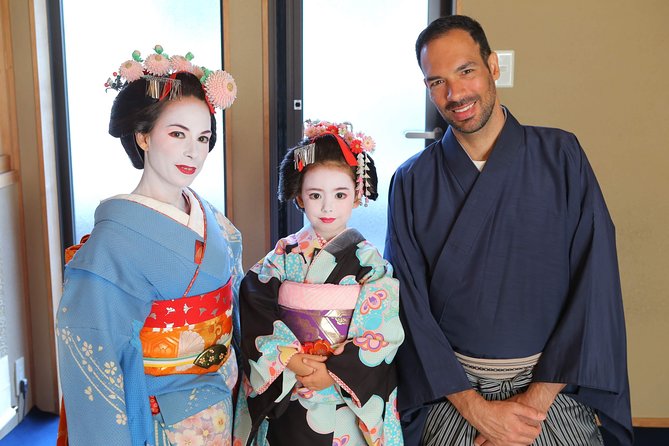
The maximum group size is eight people. That is large enough to give the session a friendly feel but small enough for the instructor to watch your technique and answer questions.
The group size matters most during the whisking practice. In a large class, you might wait for help or struggle to see the demonstration. Here, the instructor has a better chance to correct basic handling and help you feel comfortable with the bowl and whisk.
The experience suits solo visitors, couples, families with older children, and small groups of friends. Children under six cannot join, but children aged six and older can participate. Families have found the ceremony engaging for children around seven and eight because it includes both a demonstration and a task.
Group discounts are available, although the supplied details do not give the discount amount. If you are booking for several people, check the price shown for your date before paying.
Floor seating, chairs, and the comfort question
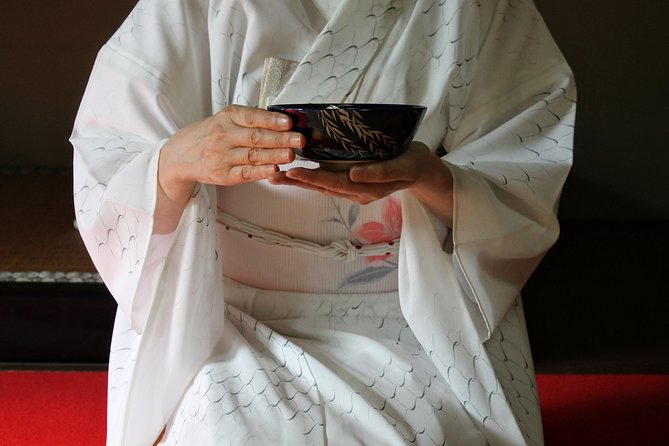
Traditional tea ceremonies often involve sitting on the floor. Camellia provides that option, but chairs and tables are also available if you prefer them. You should request or confirm your preferred arrangement when booking or arriving.
This choice makes the session more inclusive, but it does not make the teahouse wheelchair accessible. If you use a wheelchair, this experience is not suitable according to the stated access information. Service animals are allowed.
The room itself may not match the grand image some people have of Kyoto tea culture. One account describes a very small, plain room, while other descriptions focus on the traditional atmosphere, bamboo flooring, flowers, and peaceful setting. Your enjoyment will depend partly on what you expect. If you want a polished, elaborate interior, you may find the surroundings modest. If your priority is instruction and participation, the simple room may keep attention on the ceremony.
Is kimono rental worth adding?
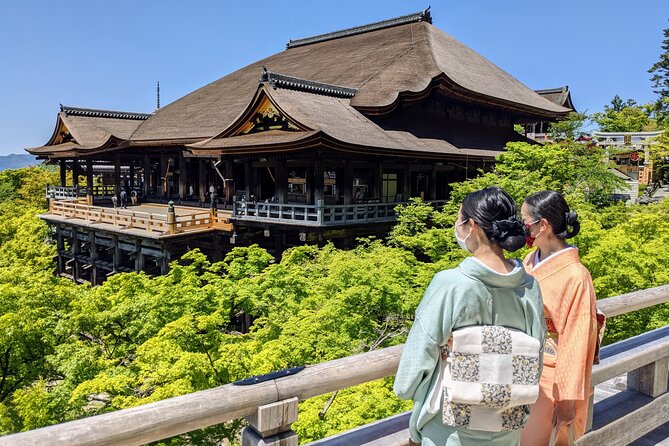
Kimono rental is not included in the $36.48 price, but you can request it by message for an extra charge. The tea ceremony works without traditional clothing, so you do not need to pay more to understand or enjoy the ritual.
Still, clothing can shape the occasion. A few people found that renting a kimono, with assistance in dressing and a quick updo, made the ceremony feel more special and helped with photographs. If you already plan to wear a kimono while exploring Higashiyama, pairing it with the tea ceremony may make sense.
I would treat kimono rental as a style choice, not a requirement. The core value of the session comes from the explanation, demonstration, tasting, and practice. Add the clothing if you want the visual experience and do not mind the extra cost.
What the $36.48 price buys you
At $36.48 per person, this is a reasonably priced introduction to one of Japan’s best-known cultural traditions. You receive instruction from an English-speaking tea practitioner, a seasonal sweet, a bowl of prepared matcha, and the chance to make your own tea.
The price is strongest for first-time visitors who want context. You are not paying only for a drink. You are paying for an explanation of the room, utensils, etiquette, and ideas behind the ritual, plus the equipment and guidance needed for hands-on practice.
The value is less clear if you already have extensive tea ceremony experience or want a long, formal ceremony. At about 45 minutes, this is an introduction rather than a full study of the subject. One family found it a little short, though still worthwhile. That short length is also why it fits so neatly into a sightseeing day.
Who will enjoy this most
I would recommend this experience to you if you want a calm cultural activity with clear English explanations and direct participation. It works particularly well for first-time visitors to Japan who want more than a quick look at matcha.
Families should note the six-and-up age rule. Older children can take part in making the tea, but very young children cannot join. The small group and friendly teaching style help, especially for children who may lose interest during a ceremony that only involves watching.
This also suits anyone who wants a quiet break from Kyoto’s busy sightseeing routes. The ritual slows you down without demanding several hours. It can be a thoughtful addition to a day of temples and gardens.
You may want to skip it if you need step-free wheelchair access, if you dislike structured cultural demonstrations, or if you expect a large, ornate tea room. You should also consider the additional cost if the kimono option is part of your plan.
Practical details that can affect your visit
Confirmation arrives at booking, and mobile tickets are supported. The activity begins and ends at the Camellia Flower meeting point. There is no hotel pickup or drop-off, so plan your route through Higashiyama before the day begins.
Photos and short videos are permitted. That lets you record part of the demonstration, but you should still follow the instructor’s guidance and avoid letting a phone distract you from the movements.
The experience is listed as requiring good weather. If poor weather causes cancellation, you are offered another date or a full refund. You can cancel for a full refund up to 24 hours before the start time. Within 24 hours, changes and refunds are not accepted.
Should you book the Camellia Flower ceremony?
I would book it if you want a compact, well-explained introduction to Kyoto’s tea tradition. The strongest features are the small group, fluent English instruction, seasonal sweet, and chance to whisk your own bowl. Those details give the 45 minutes real substance.
I would not book it expecting a lavish room or an extended formal ceremony. The setting can be simple, and the session moves at an introductory pace. For most visitors, though, the modest room is a fair trade for a practical lesson in matcha and the ideas behind the ritual.
Book this if you want to understand what you are seeing, not just take a photo of tea preparation. Add the kimono only if the clothing is important to your day. Otherwise, the basic experience at $36.48 gives you a useful, peaceful, and genuinely participatory slice of Kyoto culture.
FAQ
Where does the tea ceremony take place?
It takes place at Tea Ceremony Camellia FLOWER, 349-13 Masuyacho in Kyoto’s Higashiyama Ward. The activity ends back at the same meeting point.
How long does the experience last?
The ceremony lasts approximately 45 minutes.
Is the experience conducted in English?
Yes. The instructors speak English fluently and come from one of Kyoto’s three main schools of tea ceremony.
Can I make my own matcha?
Yes. Tea bowls, tea scoops, and tea whisks are provided, and each participant has the opportunity to prepare a bowl of matcha.
Are chairs available?
Yes. You may sit on the floor, or use chairs and tables if you prefer.
Can children join the ceremony?
Children aged six and older can join. Children under six cannot participate.
Is kimono rental included?
No. Kimono rental is not included in the listed price. You can request it by message for an additional charge.
Newest Kyoto experiences on the site
- Treasures of Kyoto: Gion & historical Walking Tour★ 5.0 · 6 reviews
- Whisk Your Own Matcha: A Zen Matcha Experience at Temple★ 3.6 · 7 reviews
- Kyoto tea town for matcha lovers★ 5.0 · 16 reviews
- Uji: Private immersion into Kyoto’s tea and reglious culture★ 5.0 · 17 reviews
- Kyoto Matcha Green Tea Tour★ 4.5 · 23 reviews
- Uji and Wazuka Matcha Farm Half Day Private Guided Tour★ 5.0 · 21 reviews
- Utilising upcycled Matcha! Creating matcha incense (Uji, Kyoto)★ 5.0 · 6 reviews
- Sacred Temple Yoga Experience in Japan★ 5.0 · 3 reviews
Kyoto Tea Ceremonies, compared.
Tea Ceremony in a Traditional Tea House in Kiyomizu
Read our review →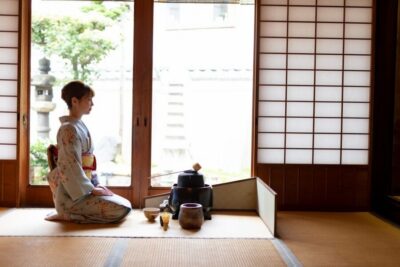
Tea Ceremony in 100-year-old Kyo-Machiya Townhouse
Read our review →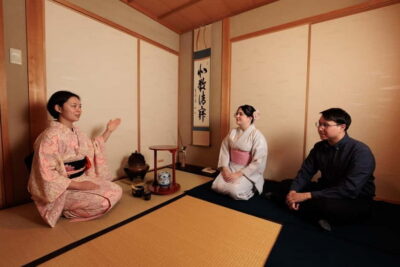
Browse the lists this tour appears in