Reviewed · KYOTO TOURS
Sacred Pathways: Discover the Philosopher’s Path of Kyoto
Kyoto’s Philosopher’s Path is at its best when you slow down, and this small-group walk does exactly that. You follow the canal beneath trees, pause at Ginkakuji’s remarkable garden, and continue toward Nanzenji, one of Kyoto’s major Zen temples. I especially like the easy pace and the way guides such as Kevin and Craig connect temple details to Japanese art, culture, and daily life.
I also like that the group never exceeds eight people, so you can ask questions without shouting across a crowd. Entrance fees are included, which keeps the day simple. The main consideration is the distance: about 5 kilometers, or 3 miles, over four hours, so this is not a good pick if you want a short, mostly seated sightseeing outing.
Key points at a glance
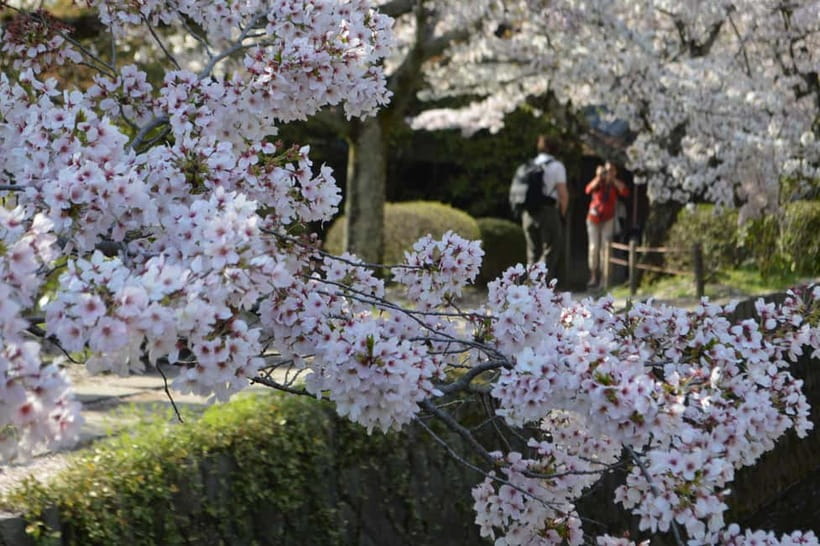
- A quiet canal-side walk: Follow the Philosopher’s Path beneath trees and beside running water at the foot of Kyoto’s Eastern mountains.
- Ginkakuji’s garden: Visit the Silver Pavilion area for carefully arranged gravel, stones, moss, and woodland scenery.
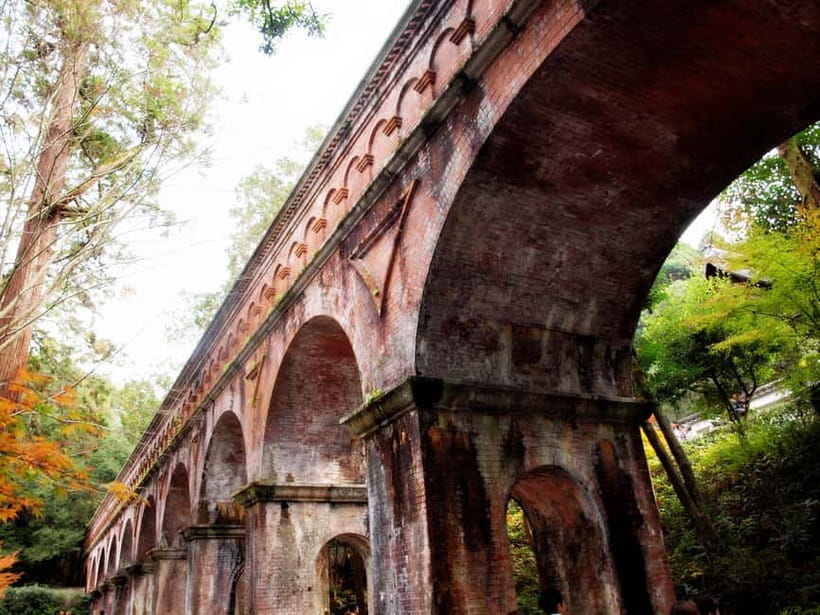
- Nanzenji and its aqueduct: See imposing temple architecture alongside a striking brick aqueduct.
- Zen with useful context: Learn how Zen shaped Japanese arts and culture rather than simply checking temples off a list.
- Small groups: The maximum of eight people makes conversation and photo stops easier.
- Simple pricing: The $64 fee includes entrance fees and a bilingual guide, but food and drinks cost extra.
Why the Philosopher’s Path works best at a slow pace
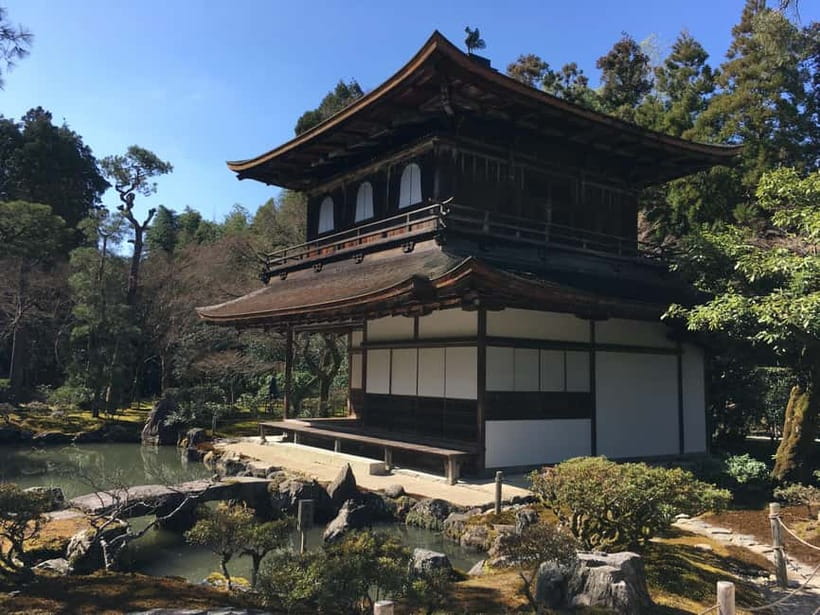
The Philosopher’s Path is a walking route rather than a single monument. Its charm comes from the sequence: a canal, trees, temple gates, gardens, side streets, small shops, and quiet corners where you can stop for a moment.
The canal gives the walk a natural rhythm. You hear the water and leaves instead of the constant traffic found on some of Kyoto’s main streets. Depending on the season and weather, the path can feel leafy, damp, bright, or almost hushed. The route is especially appealing if you want a break from packed sightseeing districts.
A guide adds value here because the path itself does not explain everything. A garden of raked gravel can look simple until someone explains how its shapes, stones, and empty space work together. The same is true of temple architecture. You see the roofline and courtyard at once, but context helps you understand why the design feels restrained and why Zen ideas became so important to Japanese arts.
You should expect a relaxed outing, not a race from one famous gate to the next. The guide’s job is to help you notice details, answer questions, and leave room for photographs. That slower rhythm is one of the strongest reasons to choose this tour.
A few more Kyoto tours worth putting on the shortlist
- PERFECT KYOTO 1-Day Bus Tour
★ 5.0 · 13,518 reviews - Kyoto: Fushimi Inari, Kinkakuji, Bamboo Grove 1 Day Bus Tour
★ 4.8 · 4,316 reviews - Kyoto: Tea Ceremony in a Traditional Tea House in Kiyomizu
★ 4.9 · 3,519 reviews
Ginkakuji gives the walk its most polished garden stop
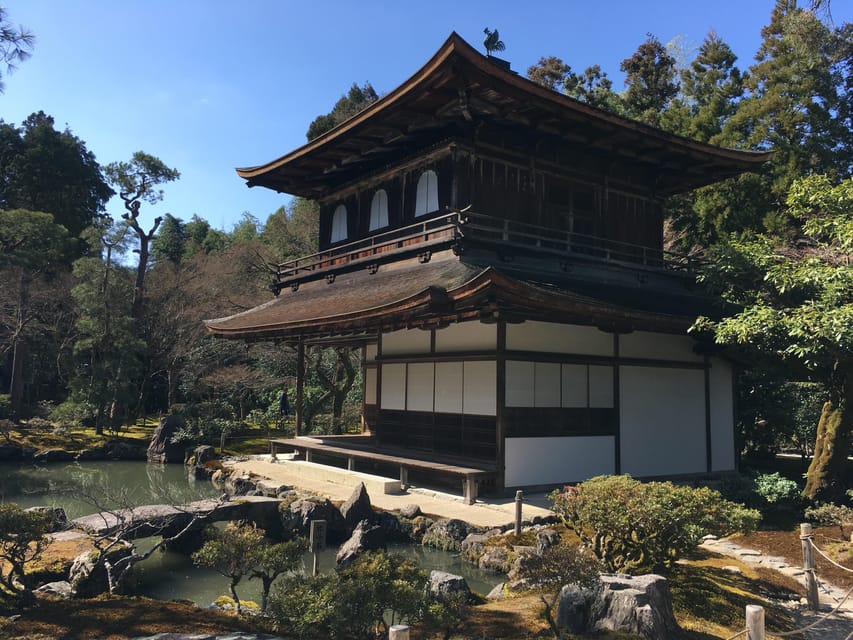
Ginkakuji, often called the Silver Pavilion, is the tour’s most famous individual sight. The name can mislead you. The pavilion is not simply a shiny silver version of Kyoto’s Golden Pavilion. The real attraction here is the setting, especially the garden and the way the buildings sit within it.
You can expect carefully raked gravel, placed stones, moss, and greenery arranged with a sense of control and restraint. The garden rewards quiet attention. Rather than offering one grand view from a single spot, it encourages you to notice texture, spacing, and changes in light as you move.
This is where the Zen theme becomes more than a slogan. Your guide can explain how ideas associated with Zen influenced garden design, tea culture, painting, architecture, and other forms of artistic expression. That connection helps you understand why a garden built from modest materials can carry such importance.
Ginkakuji can also be one of the busier stops on the route. The small-group format helps, but you should not expect to have the entire site to yourself. The walk becomes quieter as you move away from the main temple approach, which is another reason the complete route is more satisfying than a quick visit to the pavilion alone.
The Philosopher’s Path is about the spaces between temples
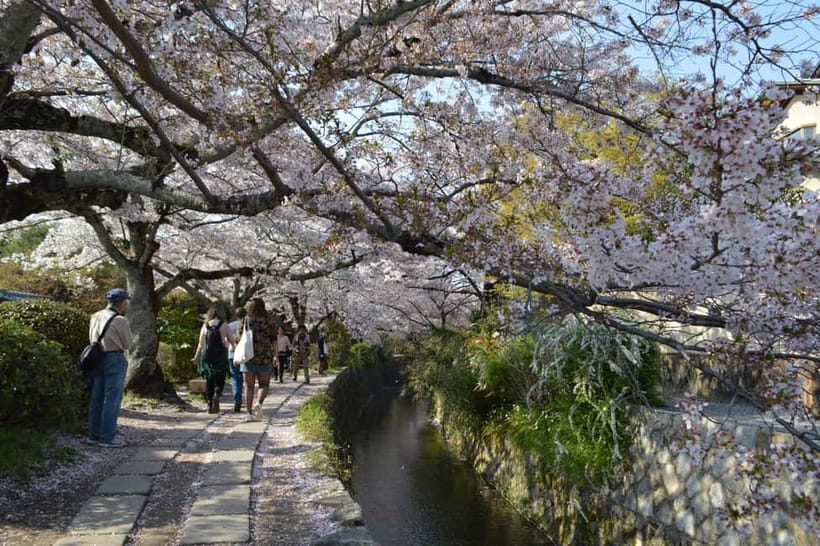
The path follows the foot of Kyoto’s Eastern mountains and is lined with trees, water, cafes, and small shops. It is not a dramatic mountain hike, but it is still a proper walk. The full outing covers roughly 5 kilometers, so comfortable shoes matter more than stylish ones.
I like this part of the experience because it gives you time to see Kyoto as a lived-in place. You might pause at a cafe for tea or browse handcrafted goods along the route. Food and drinks are not included, so these stops are optional purchases rather than part of the tour price.
The path also gives the guide room to connect the sights. A good explanation of Kyoto is not just a list of dates and temple names. It should show how religion, design, nature, and city life overlap. The guides associated with this experience, including Kevin and Craig, are long-term Kyoto residents, and that local perspective is useful when you want more than a memorized script.
Kevin is repeatedly noted for answering questions, matching the group’s walking speed, and offering further Kyoto recommendations. Craig is described as having lived in Kyoto for 13 years and bringing an easy, personal approach to the walk. Guide assignments can vary, so you should not assume one particular person will lead your departure, but the supplied guide feedback gives you a clear idea of the style to expect: conversational, informed, and open to questions.
Nanzenji adds scale and strong architectural contrast
Nanzenji brings a different mood from Ginkakuji. Where Ginkakuji is best known for its refined garden setting, Nanzenji makes a bigger architectural impression. It is regarded as one of Kyoto’s prominent Zen temples, and its grounds include an imposing aqueduct.
The aqueduct is an especially useful reminder that Kyoto’s old religious sites are not frozen museum pieces. Its brick arches create a sharp contrast with the wooden temple structures and traditional gardens around it. It is also one of the tour’s most memorable photo subjects because the engineering has a strong visual presence.
Your guide can help place Nanzenji within Kyoto’s religious and cultural story. Without that background, you may see a large temple complex, a gate, and a brick structure. With context, you can better understand how the temple grounds relate to Zen practice and how later construction became part of the visual identity of the site.
Nanzenji can feel more expansive than the quieter sections of the Philosopher’s Path. That change is welcome. The tour does not give you one continuous mood from start to finish. Instead, it moves between intimate natural spaces, polished gardens, and grand temple architecture.
Same city, a completely different kind of day:
- Kyoto Geisha Walking Tour: Gion District & Hidden Gems
★ 4.7 · 3,273 reviews - Kyoto: Tea Ceremony Ju-An at Jotokuji Temple
★ 4.9 · 3,207 reviews - Kyoto: Gion Magical Night Walking Tour with Geisha Trivia
★ 4.9 · 2,393 reviews - Kyoto: 45-Minute Tea Ceremony Lesson Experience
★ 4.3 · 2,378 reviews
What a four-hour schedule feels like
Four hours is long enough to give the route proper attention without turning it into a full-day commitment. You have time to walk, listen, stop for photographs, and ask questions. You are not expected to rush through both major temple areas.
The exact meeting point can vary according to the option you book, so check your confirmation carefully. Starting times also vary, and morning conditions can be pleasant for a walking route. Still, you should choose based on your own schedule and not assume every departure begins early.
The pace is described as chill, but the distance remains real. A relaxed 5-kilometer walk can still tire you, especially if you have already spent the morning sightseeing. People over 95 and children under 10 are not considered suitable for the standard experience. For families with younger children, the company asks you to inquire about a private tour.
The route is not designed for people who want to stay on a bus or move between sights by vehicle. You should be comfortable walking for much of the four hours. The reward is a better sense of how the temples and neighborhoods connect.
Small groups make the cultural side work
The group limit of eight is one of the tour’s practical strengths. You can hear the guide without a microphone, ask a follow-up question, and take a photograph without holding up a large procession. Small groups also move more lightly through residential and religious areas.
That matters on the Philosopher’s Path. A large group with a flag can turn a quiet route into a public performance. Here, the smaller size makes it easier to pause without creating a traffic jam or drawing unwanted attention.
Private tours are also available. You should consider that option if you are traveling with children under 10, want to set a custom pace, or prefer a more personal schedule. The standard experience is available in English or French, so select the language that best suits your group.
The guide is not there only to point out buildings. The strongest part of the experience is the chance to ask why a garden looks the way it does, how Zen affected art, or what makes one temple different from another. That kind of exchange is hard to get from a guidebook paragraph.
Is $64 a fair price?
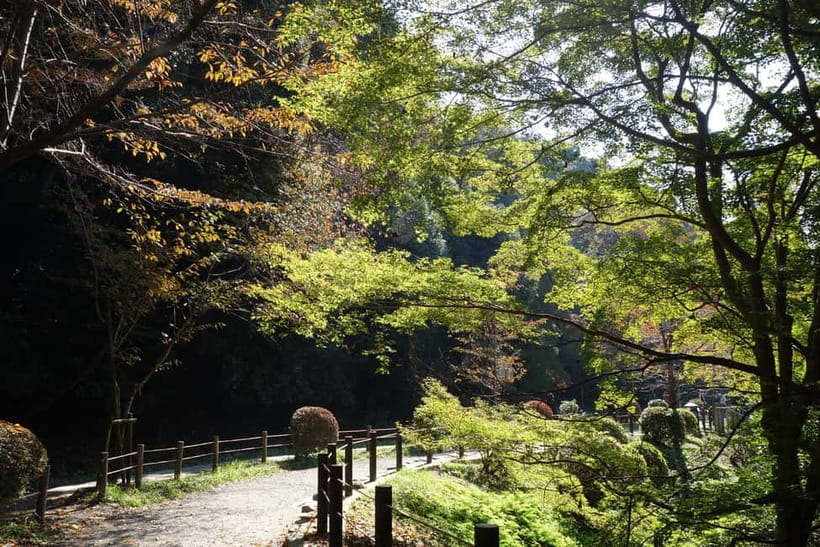
At $64 per person, the tour sits in a reasonable range for a four-hour guided walk, especially because all entrance fees are included. You do not need to carry cash for the included temple admissions, and you avoid the small hassle of working out which tickets you need at each stop.
The price also pays for more than access. You are buying local explanation, a planned route, and a small group. If you visited the Philosopher’s Path, Ginkakuji, and Nanzenji independently, you could save on guiding costs, but you would need to research the sites, manage the route, and decide how much time to spend at each stop.
Food and drinks are extra. That is fair, since cafes along the path are optional and people have different tastes. Just bring a payment method for anything you choose to buy, even though the main entrance fees are covered.
The value is strongest for first-time visitors who want cultural context and a calm introduction to eastern Kyoto. If you already know these temples well and prefer to wander entirely alone, the guide fee may be harder to justify.
What the strong feedback tells you to expect
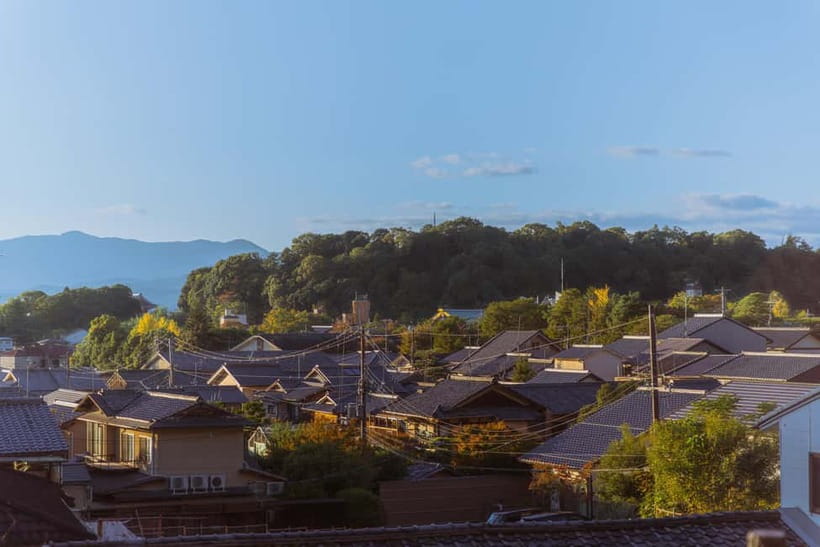
The most consistent praise centers on the guides’ explanations, friendly manner, and ability to match the group’s speed. Kevin is singled out for his history and culture knowledge, his fun approach, and useful Kyoto recommendations. Craig is praised for making questions easy and sharing the city as a long-term resident.
The relaxed pace is another clear strength. You should have time to take photographs rather than being hurried from gate to gate. The route also includes quieter areas, which can be a welcome change from Kyoto’s best-known central sights.
The tour has an overall rating of 4.9 from 20 reviews, with the supplied comments giving it top marks. One comment raised concern about paying extra money, but it does not explain what the additional charge involved. I would check the exact booking option and final price before paying, particularly if you select a private version.
The rain need not ruin the day. One account found that wet weather changed the mood of the gardens and reduced the number of people around. Still, a rainy forecast means you should bring suitable clothing and shoes, since the activity remains an outdoor walk.
Who should book Sacred Pathways
I would choose this tour if you want Kyoto’s temples explained in plain language and prefer a walking route to a bus-based city tour. It suits couples, solo visitors, friends, and small families with older children who can manage the distance.
It is also a good choice if you care about gardens, Zen, photography, and the relationship between nature and architecture. The route gives you both quiet canal scenery and major temple sights, so it has more range than a simple garden visit.
You may want a different plan if you dislike walking, need a fully accessible route, or want to spend most of the day shopping and eating. Food is not part of the tour, and cafe time is only a possible pause, not a scheduled feature.
Book it if you want someone to explain why these places matter. Skip it if you already have strong knowledge of eastern Kyoto and would rather set your own route and pace. For most first-time visitors, the combination of Ginkakuji, Nanzenji, and the Philosopher’s Path makes the $64 fee a sound way to spend four hours.
FAQ
How long is the Sacred Pathways tour?
The tour lasts four hours and includes about 5 kilometers, or 3 miles, of walking.
What places does the tour visit?
The experience includes Kyoto’s Philosopher’s Path, Ginkakuji Temple and its garden, and Nanzenji, including its impressive aqueduct.
Are entrance fees included?
Yes. All entrance fees are included in the tour price.
Are food and drinks included?
No. Food and drinks are not included, though you may find cafes along the route where you can purchase refreshments.
What languages are available?
The tour offers live guides in English or French.
How large is the group?
Small groups have no more than eight people. Private tours are also available.
Is the tour suitable for young children?
The standard tour is not suitable for children under 10. If you want to book with younger children, the company asks you to inquire about a private tour.
Newest Kyoto experiences on the site
- Treasures of Kyoto: Gion & historical Walking Tour★ 5.0 · 6 reviews
- Whisk Your Own Matcha: A Zen Matcha Experience at Temple★ 3.6 · 7 reviews
- Kyoto tea town for matcha lovers★ 5.0 · 16 reviews
- Uji: Private immersion into Kyoto’s tea and reglious culture★ 5.0 · 17 reviews
- Kyoto Matcha Green Tea Tour★ 4.5 · 23 reviews
- Uji and Wazuka Matcha Farm Half Day Private Guided Tour★ 5.0 · 21 reviews
- Utilising upcycled Matcha! Creating matcha incense (Uji, Kyoto)★ 5.0 · 6 reviews
- Sacred Temple Yoga Experience in Japan★ 5.0 · 3 reviews
Kyoto Tours, compared.
Fushimi Inari, Kinkakuji, Bamboo Grove 1 Day Bus Tour
Read our review →
Tea Ceremony in a Traditional Tea House in Kiyomizu
Read our review →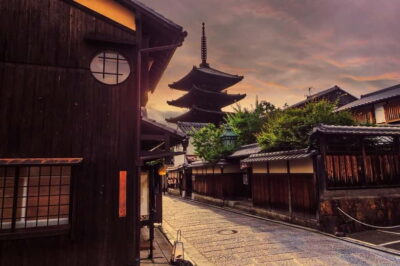
Kyoto Geisha Walking Tour: Gion District & Hidden Gems
Read our review →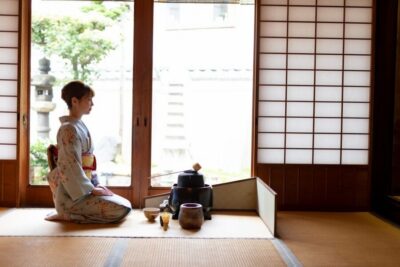
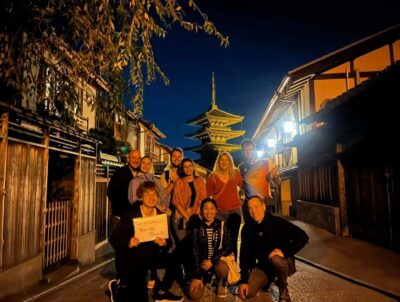
Gion Magical Night Walking Tour with Geisha Trivia
Read our review →