
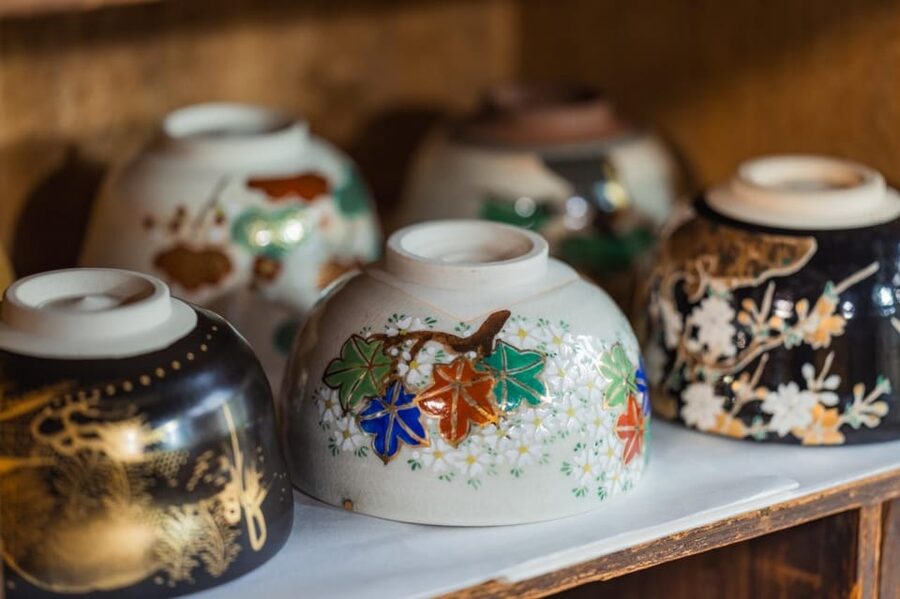
Reviewed · KYOTO TEA CEREMONIES
Kyoto: Table-Style Tea Ceremony at a Kyo-Machiya
A tea ceremony does not have to mean kneeling on the floor. This table-style experience lets you sit in a chair while learning the customs, movements, and meaning behind Japanese tea. You’ll also make your own matcha, write your name in Japanese, and explore a more than 100-year-old townhouse.
I especially like the setting and the range of activities. The house includes a garden, old Buddhist and Shinto altars, antiques, and plenty of photo spots. I also like the warm welcome: you can begin with sake, juice, or tea before the formal part starts.
The main consideration is location. You’re not in central Kyoto, but in Fushimi, about 20 to 25 minutes by train from the main sightseeing districts. That is a small price for a quieter setting, though you should allow time to find the townhouse and arrive early if you add the kimono option.
Key points to know before booking
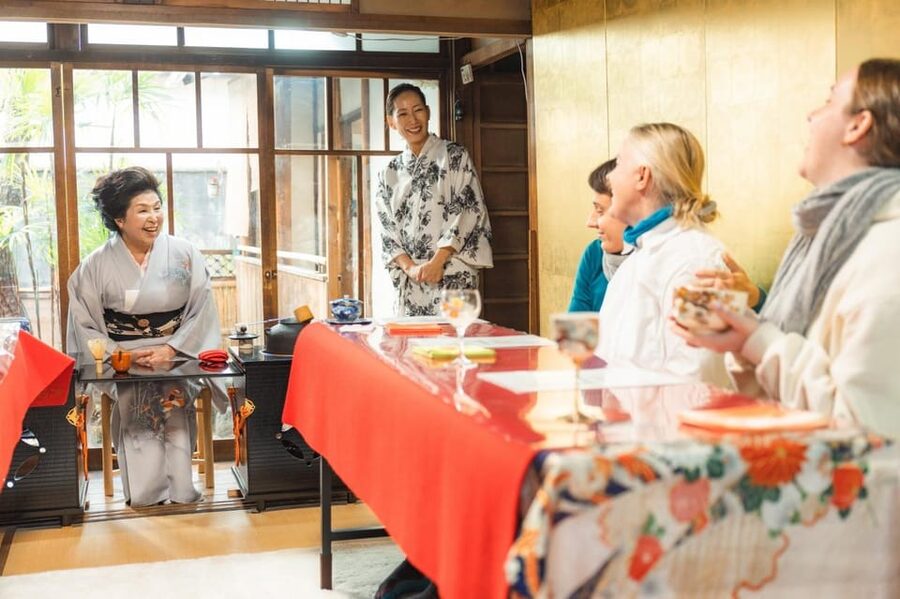
- Chair-based tea ceremony: Enjoy the ritual without sitting on tatami floors.
- 100-year-old Kyo-Machiya: Walk through a traditional townhouse with a garden, antiques, and household altars.
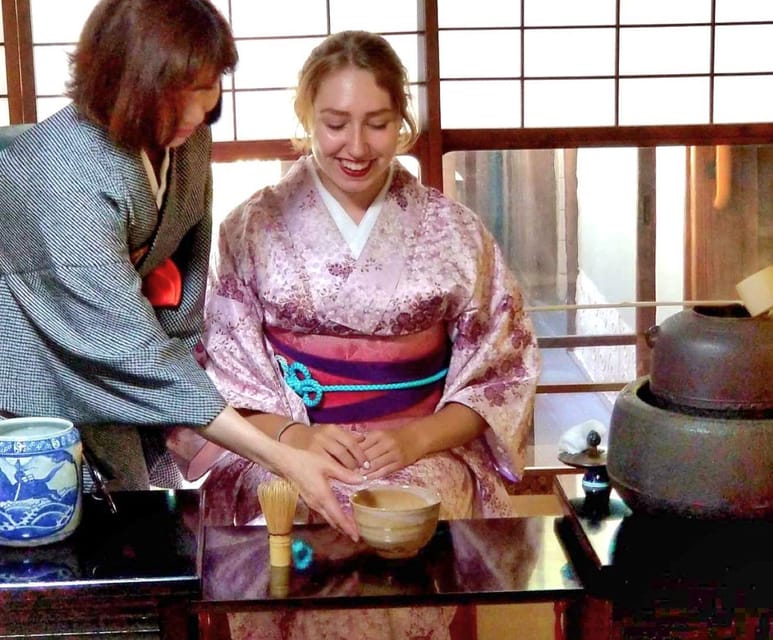
- Hands-on matcha making: Whisk your own creamy green tea with a bamboo chasen.
- More than tea: Add calligraphy, flower arranging, photo props, sweets, and a welcome drink.
- Optional kimono rental: Arrive 30 minutes early if you choose to dress in traditional clothing.
- Convenient Fushimi setting: Combine the visit with sake shops, Fushimi Inari, or a trip toward Uji.
Entering a Kyoto townhouse in Fushimi
The experience takes place in southern Kyoto, in the Fushimi area. This is a historic district known for sake, shopping arcades, casual restaurants, and easy rail connections. It feels different from the packed lanes around Gion, which is part of the appeal.
From Kintetsu Kyoto Station, take an express train toward Kintetsu Momoyama-Goryo-mae. The ride is about 15 minutes, though the full journey from central Kyoto is generally around 25 minutes. From Keihan Gion-Shijo, use Fushimi-Momoyama Station, about 20 minutes away.
The final walk is short but the directions matter. Head west along the Otesuji shopping arcade, then turn right near Mizuho Bank or the Rakuten mobile shop. From the JR Momoyama Station, walk northwest, pass Gokogu Shrine, continue to the arcade, and turn right at the same landmarks. Look for the old townhouse with a blue curtain and guides in kimono.
I recommend allowing extra time for this first visit. The meeting point is not difficult once you reach the arcade, but this is not a large attraction with a prominent street sign. The area itself makes arriving early pleasant, since you can browse shops or look for lunch nearby.
More tea ceremonies in Kyoto:
- Kyoto: Tea Ceremony in a Traditional Tea House in Kiyomizu
★ 4.9 · 3,519 reviews - Kyoto: Tea Ceremony Ju-An at Jotokuji Temple
★ 4.9 · 3,207 reviews - Kyoto: 45-Minute Tea Ceremony Lesson Experience
★ 4.3 · 2,378 reviews
A welcome drink before the formal ritual
The first part is relaxed. You may receive sake, juice, or Japanese tea as a welcome drink, depending on the arrangement for your session. This gives you time to settle in before the more formal tea ceremony begins.
That small pause helps because Japanese tea etiquette can seem exact at first. You’ll hear about manners, the order of the ceremony, and the meaning of the utensils and gestures. The explanations are given in English, and the format is designed for people who have never attended a tea ceremony before.
A short PowerPoint presentation explains how the tea ceremony developed and how it connects with Japanese ideas of courtesy, cleanliness, and attention. This is useful context. Without it, the ceremony could seem like a series of beautiful but mysterious movements. With it, you have a clearer idea of why the host cleans, turns, presents, and receives the tea in a particular way.
The presentation also keeps the experience approachable for families and teenagers. You are not expected to know Japanese customs in advance, and questions are welcome throughout the session.
Purifying yourself at the garden basin
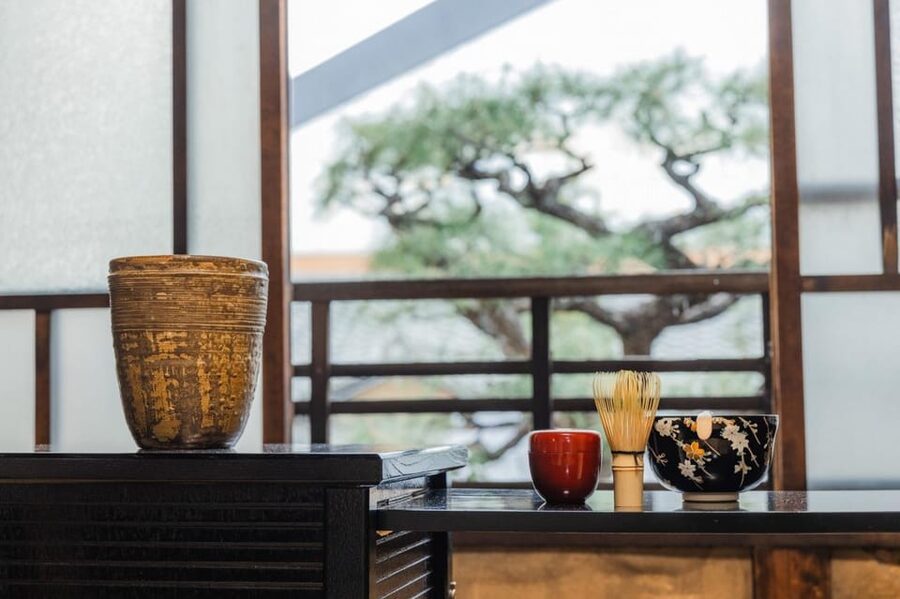
Before the ceremony, you may be shown how to purify yourself at a stone basin in the garden. This resembles the cleansing ritual found at Japanese shrines. It is a simple action, but it gives you a physical introduction to the idea of leaving ordinary concerns behind before entering a sacred or respectful space.
The garden also provides one of the best places for photographs. Umbrellas, folding fans, and a katana are available as props, so the photo session has a playful side. If you rent a kimono, this is when the old house and garden become especially useful as a backdrop.
There is a balance here. This is a cultural activity, but it is also designed to be enjoyable and photogenic. The props do not replace the ceremony. They give you a chance to relax, especially if you are traveling with children or with friends who enjoy taking pictures.
You can also walk through parts of the townhouse. Look for the old Buddhist and Shinto altars, traditional details, and antiques. The plain exterior may not suggest much from the street, but the inside gives you a glimpse of Kyoto home life from an earlier period.
Watching the tea ceremony at a table
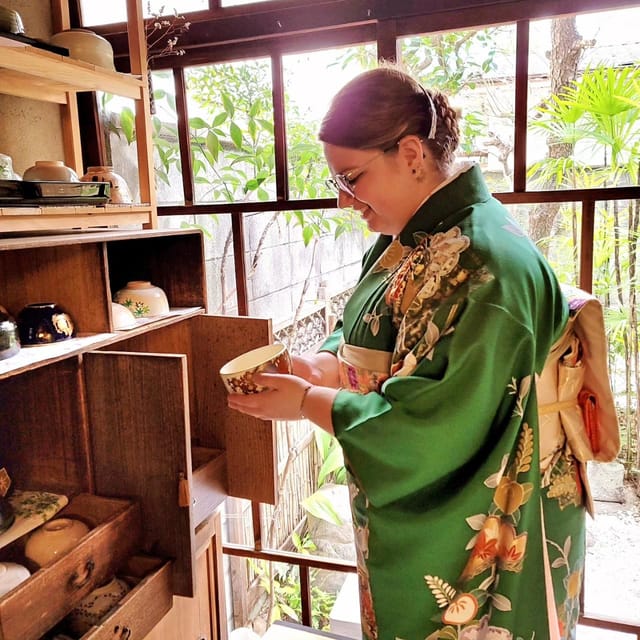
The central ceremony is performed while you sit at a table and chair. That detail matters. Traditional tea experiences often involve sitting in seiza, the formal kneeling position, which can be uncomfortable for anyone with stiff knees, limited flexibility, or a leg injury.
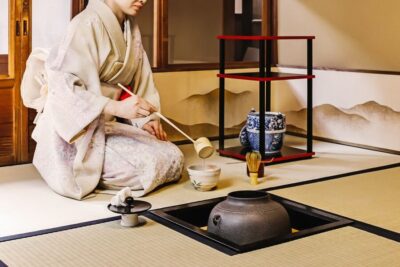
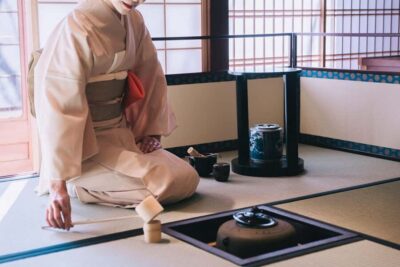
The hosts demonstrate how the tea is prepared and served. You’ll learn where to place your hands, how to receive the bowl, and how to show respect for the tea and the person who prepared it. The point is not to memorize a long list of rules. It is to understand the calm rhythm and thoughtful gestures that shape the ceremony.
The staff are described as patient, polite, and comfortable explaining the process in English. That makes a difference. You can ask why an action is performed instead of simply copying it. The tone is friendly rather than severe, so you can enjoy the ceremony without worrying about making a mistake.
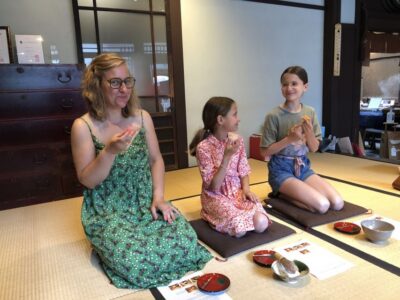
Traditional sweets accompany the tea. Their sweetness balances the strong, grassy flavor of matcha and prepares your palate for the drink. If you have never had straight matcha, do not expect a sweet latte. The flavor can be earthy and intense, which is exactly why the sweet is served alongside it.
A few more Kyoto tours worth putting on the shortlist
- PERFECT KYOTO 1-Day Bus Tour
★ 5.0 · 13,518 reviews - Kyoto: Fushimi Inari, Kinkakuji, Bamboo Grove 1 Day Bus Tour
★ 4.8 · 4,316 reviews - Kyoto Geisha Walking Tour: Gion District & Hidden Gems
★ 4.7 · 3,273 reviews - Kyoto: Gion Magical Night Walking Tour with Geisha Trivia
★ 4.9 · 2,393 reviews
Making your own frothy matcha
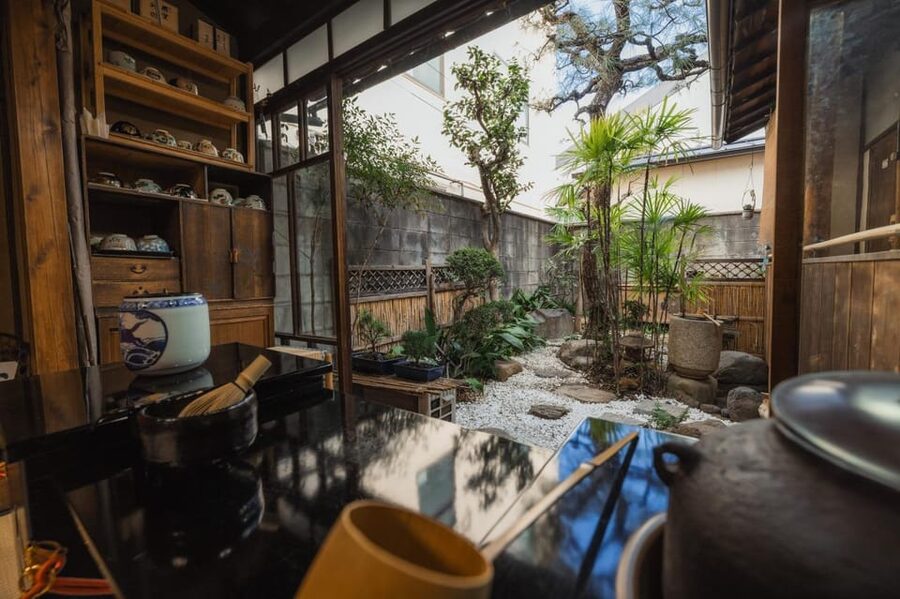
The hands-on portion is one of the strongest reasons to book this experience. You’ll use a bamboo whisk to prepare your own matcha, working the powder and hot water into a creamy, foamy drink.
It looks easy when a trained host does it. Your own bowl may take more effort. That is part of the fun, and the instructors guide you through the movements without making the task feel like a test.
The activity also includes latte art using thick tea. This adds a more playful touch to the formal ceremony and gives you something practical to remember after you leave. You are not simply watching someone prepare matcha. You are learning how the texture changes as you whisk and how the drink is meant to be handled.
The format suits first-time visitors. You get enough explanation to understand what you are doing, but the session does not require prior knowledge of tea schools or Japanese language.
Calligraphy, flower arranging, and a personal keepsake
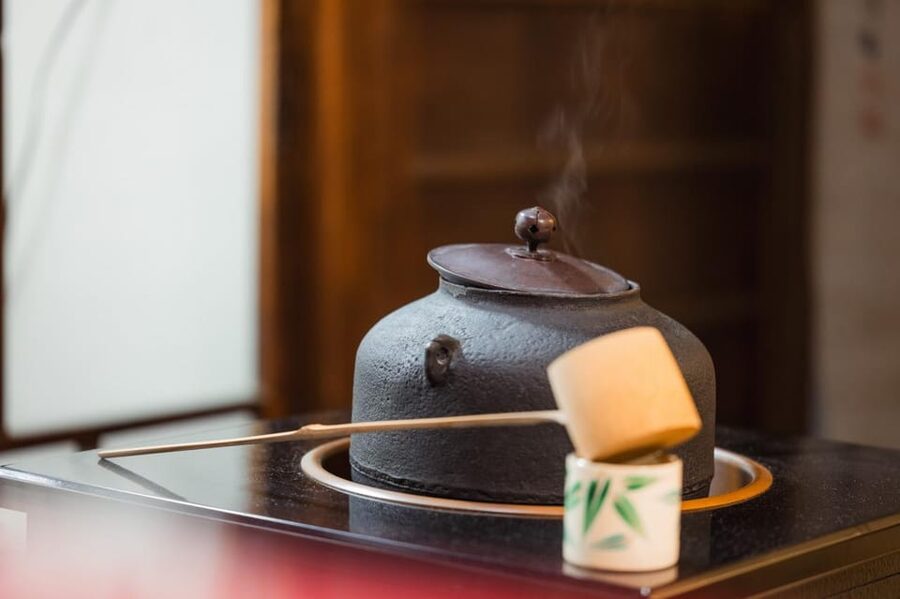
The program includes Japanese calligraphy. You can write your name in hiragana or kanji, and some sessions also introduce katakana. This is a good activity for families because each person leaves with a personal result rather than only photographs.
Your name can be written on a hanging scroll or an envelope in Japanese characters. That small keepsake gives the afternoon a lasting purpose. It also helps you see that Japanese writing is not simply a different alphabet. The choice between hiragana, katakana, and kanji reflects different writing systems and meanings.
Flower arranging is another included activity. It offers a quiet contrast to the photo props and matcha preparation. You get to work with the principles of balance and presentation that appear throughout Japanese arts, from the tea room to the garden.
Do not expect a full professional calligraphy or ikebana course in 90 minutes. These are introductory activities, designed to give you a taste of each tradition. The benefit is variety. In one visit, you learn about tea, writing, flowers, manners, architecture, and clothing without spending an entire day in a formal school.
Should you add the kimono option?
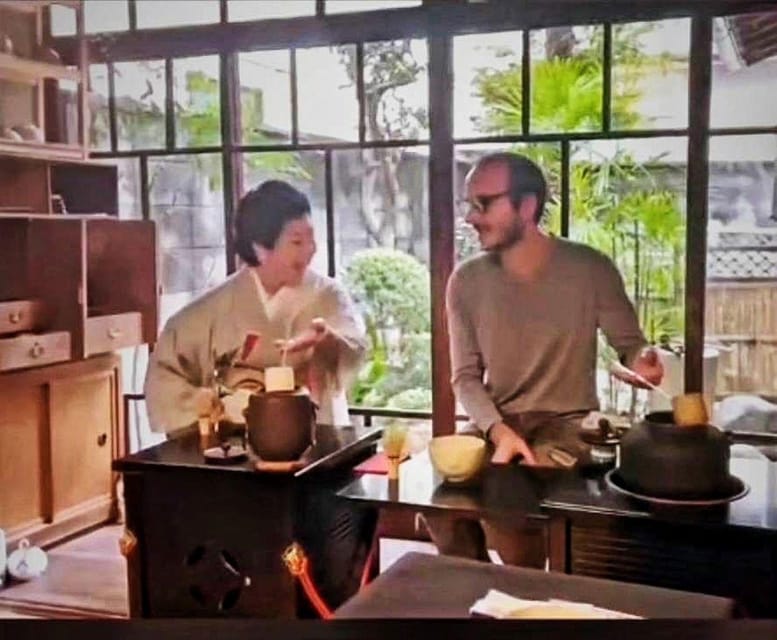
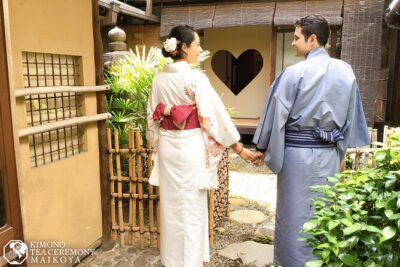
The kimono rental is optional, and it changes the feel of the visit. Staff help you choose and put on the clothing, with hairstyling included in some arrangements described by visitors who selected the option. You then have time for photos around the townhouse and garden before taking part in the ceremony.
The kimono option requires an earlier arrival, 30 minutes before the scheduled start. Plan for that extra time. It is not a last-minute add-on to squeeze in after arriving at the meeting point.
I would add it if you want photographs, are celebrating a special occasion, or want the ceremony to feel more theatrical and memorable. The clothing also helps you connect visually with the old house and traditional setting.
Skip it if you dislike restrictive clothing, have limited time, or mainly want to learn about matcha. Pregnant visitors are asked not to wear a kimono for health and safety reasons. Wheelchair users cannot take part in this activity, and the townhouse may be challenging for anyone who has difficulty with stairs or uneven surfaces.
Why the Fushimi location works well
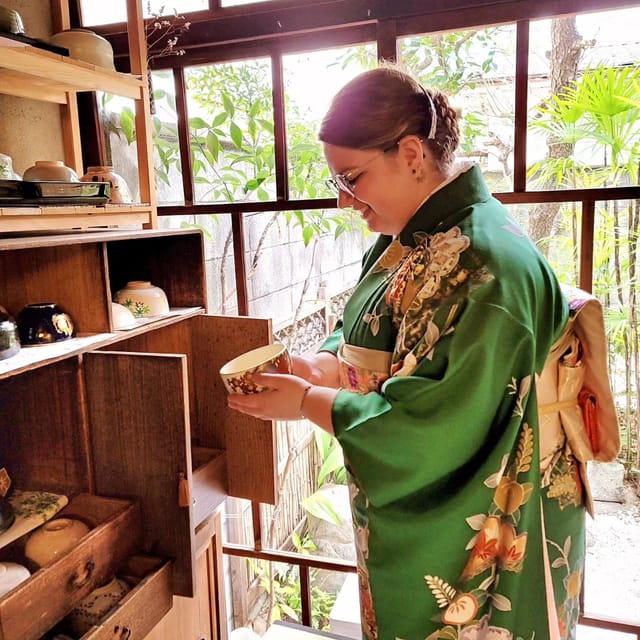
The location is more than a meeting point. Fushimi is a practical base for building a half-day around this activity.
You can visit Fushimi Inari Shrine on the same outing. From Keihan Fushimi Inari Station, the shrine is about 15 minutes away by train from the area described for the tea ceremony. Uji, the town associated with Japanese tea, is also reachable in about 20 minutes by train.
The area around the townhouse is known for sake, so you can combine the ceremony with food, shopping, or a look at local brewing culture. Osaka is about 40 minutes away by express train, and Nara about 50 minutes, making this a reasonable stop for a wider Kansai itinerary.
I would avoid scheduling the tea ceremony immediately before a major timed attraction across Kyoto. Train travel is easy, but you still need to walk from the station, locate the blue-curtained townhouse, and allow time for the session to finish. Treat it as a planned Fushimi visit rather than a quick detour from central Kyoto.
Is $45 good value for 90 minutes?
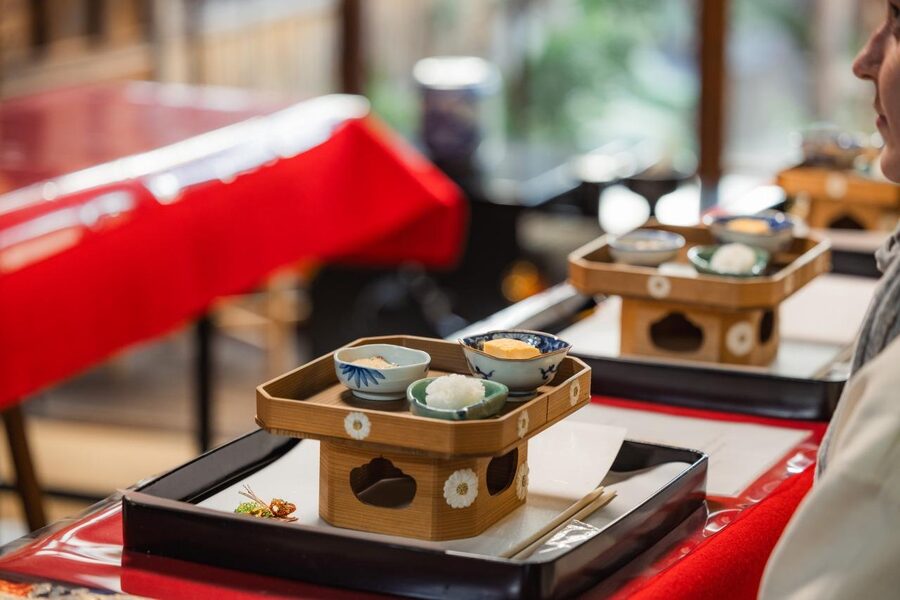
At $45 per person, the base price is fair for a 90-minute cultural activity, especially because it includes more than a demonstration. You receive the ceremony, traditional sweets, a welcome drink, matcha preparation, calligraphy, and flower arranging.
The price becomes stronger if you value personal attention. Private and small-group formats are available, and the English-speaking hosts guide you through each step. A large performance-style tea ceremony may cost less, but it will not necessarily give you the same chance to whisk your own matcha or ask questions.
The kimono rental is an extra option, so compare the final price before booking. For many people, it will be worth paying more for the clothing and photographs. For others, the tea, sweets, calligraphy, and hands-on preparation already provide plenty.
There is also value in the setting. You are not meeting in a modern studio for a quick photo opportunity. You spend time in an old townhouse, walk through its rooms, and see domestic details that help place the ceremony in everyday Kyoto culture.
Who will enjoy this experience most?
I recommend it to first-time visitors who want a gentle introduction to Japanese customs. You do not need to know anything about tea, calligraphy, or kimono etiquette before arriving.
It is particularly well suited to couples, families, and small groups. Teenagers can make matcha, write their names, and take photos, while adults can focus more on the history and manners. The chair-based format also makes it a better choice than floor-seated ceremonies for many people.
The experience may be less suitable if you want a highly formal tea-school lesson with no tourist-friendly additions. The photo props, PowerPoint, flower arranging, and calligraphy make this a broad cultural introduction rather than a strict, specialized study.
With a 4.9 rating from 1,211 reviews, the strongest pattern is clear: the hosts’ kindness, patience, English explanations, and attention to detail are central to the experience. You should book it for the welcoming instruction and the chance to participate, not only for a cup of tea.
My recommendation
Book this tea ceremony if you want several Japanese cultural activities in one well-organized 90-minute visit. The best reasons are the comfortable seating, the old townhouse, the hands-on matcha preparation, and the chance to leave with your name written in Japanese.
Add the kimono if you have time and enjoy dressing up. Arrive early, use the train directions carefully, and pair the visit with Fushimi’s sake district, Fushimi Inari, or Uji.
Skip it only if you need a wheelchair-accessible activity, dislike stairs or traditional clothing, or want a longer and more rigorous study of tea ceremony. For most first-time visitors, this offers a friendly and practical introduction without asking you to kneel on the floor for 90 minutes.
FAQ
Where does the tea ceremony take place?
It takes place in a more than 100-year-old traditional Kyoto townhouse in southern Kyoto, in the Fushimi area.
How long does the experience last?
The tea ceremony experience lasts 90 minutes. If you select the kimono option, arrive 30 minutes before the scheduled start time.
Can I sit on a chair instead of the floor?
Yes. This is a table-style tea ceremony using chairs, so you do not need to sit on the floor.
Is the activity offered in English?
Yes. The listed instructor language is English, and the ceremony, explanations, and activities are conducted in English.
What is included in the experience?
The experience includes the tea ceremony, traditional sweets, a welcome drink, thick-tea latte art, calligraphy, a hanging scroll or envelope with your name in Japanese, and flower arranging. Kimono rental is included only when that option is selected.
Can I make my own matcha?
Yes. You will use a bamboo whisk to prepare your own frothy matcha.
Is kimono rental included in the base price?
No. Kimono rental is an optional choice. If you select it, arrive 30 minutes early.
Can I take photographs?
Yes. You can take photos and videos in the townhouse and garden, including with umbrellas, folding fans, and a katana.
Is hotel pickup provided?
No. Hotel pickup and drop-off are not included. You must make your own way to the townhouse.
Is the activity suitable for wheelchair users?
No. The activity is not suitable for wheelchair users. Pregnant visitors are also asked not to wear a kimono for health and safety reasons.
Newest Kyoto experiences on the site
- Treasures of Kyoto: Gion & historical Walking Tour★ 5.0 · 6 reviews
- Whisk Your Own Matcha: A Zen Matcha Experience at Temple★ 3.6 · 7 reviews
- Kyoto tea town for matcha lovers★ 5.0 · 16 reviews
- Uji: Private immersion into Kyoto’s tea and reglious culture★ 5.0 · 17 reviews
- Kyoto Matcha Green Tea Tour★ 4.5 · 23 reviews
- Uji and Wazuka Matcha Farm Half Day Private Guided Tour★ 5.0 · 21 reviews
- Utilising upcycled Matcha! Creating matcha incense (Uji, Kyoto)★ 5.0 · 6 reviews
- Sacred Temple Yoga Experience in Japan★ 5.0 · 3 reviews
Kyoto Tea Ceremonies, compared.
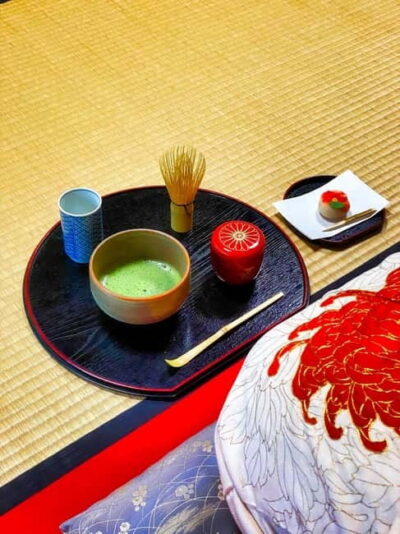
Tea Ceremony in a Traditional Tea House in Kiyomizu
Read our review →
Tea Ceremony in 100-year-old Kyo-Machiya Townhouse
Read our review →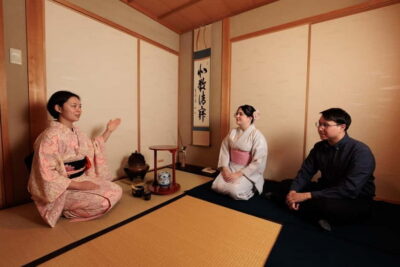
Tea Ceremony Meditation – Make Matcha with Tea Master
Read our review →Browse the lists this tour appears in